THIS OBJECT WAS SOLD
Bronze Group , Woman And Child , Japan - Meiji Period
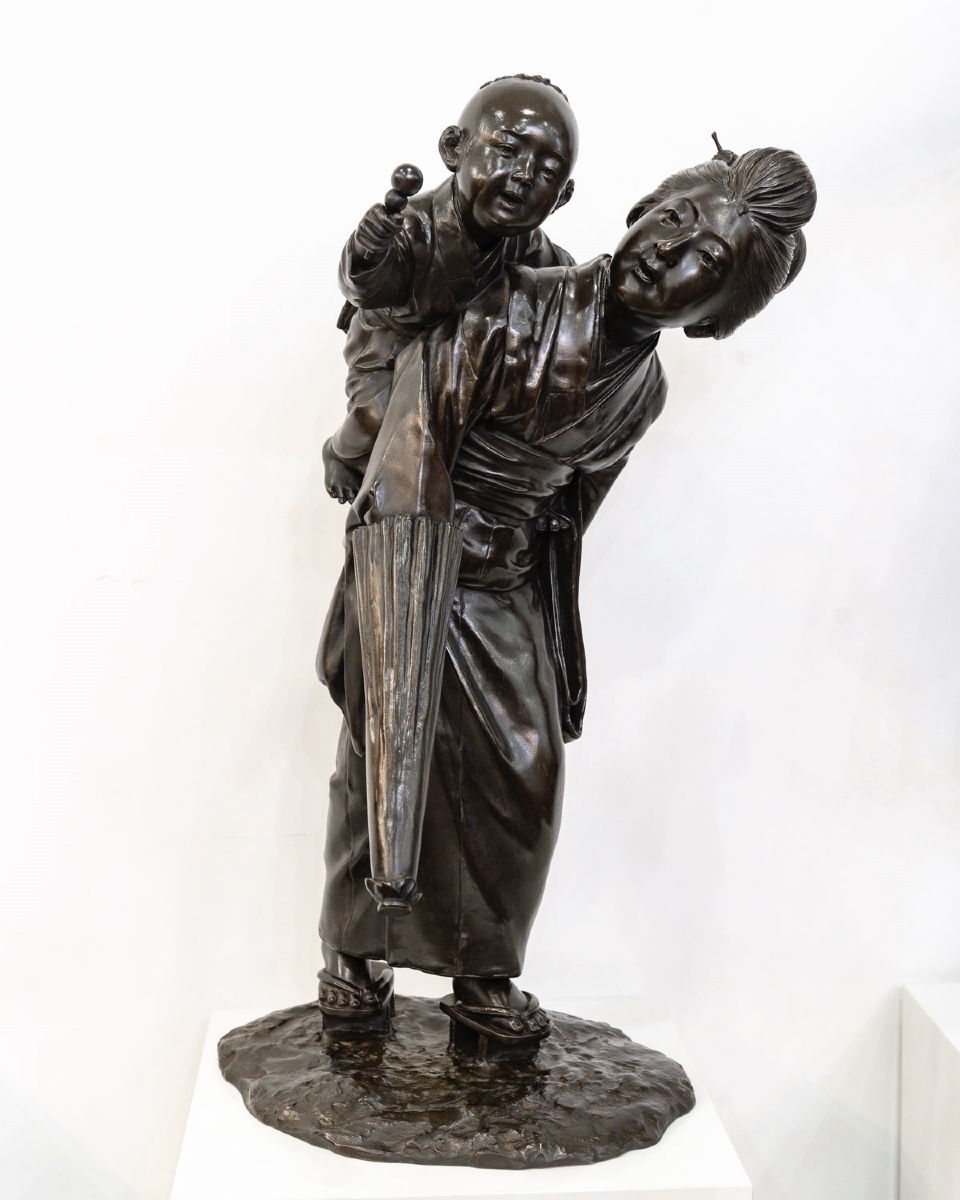


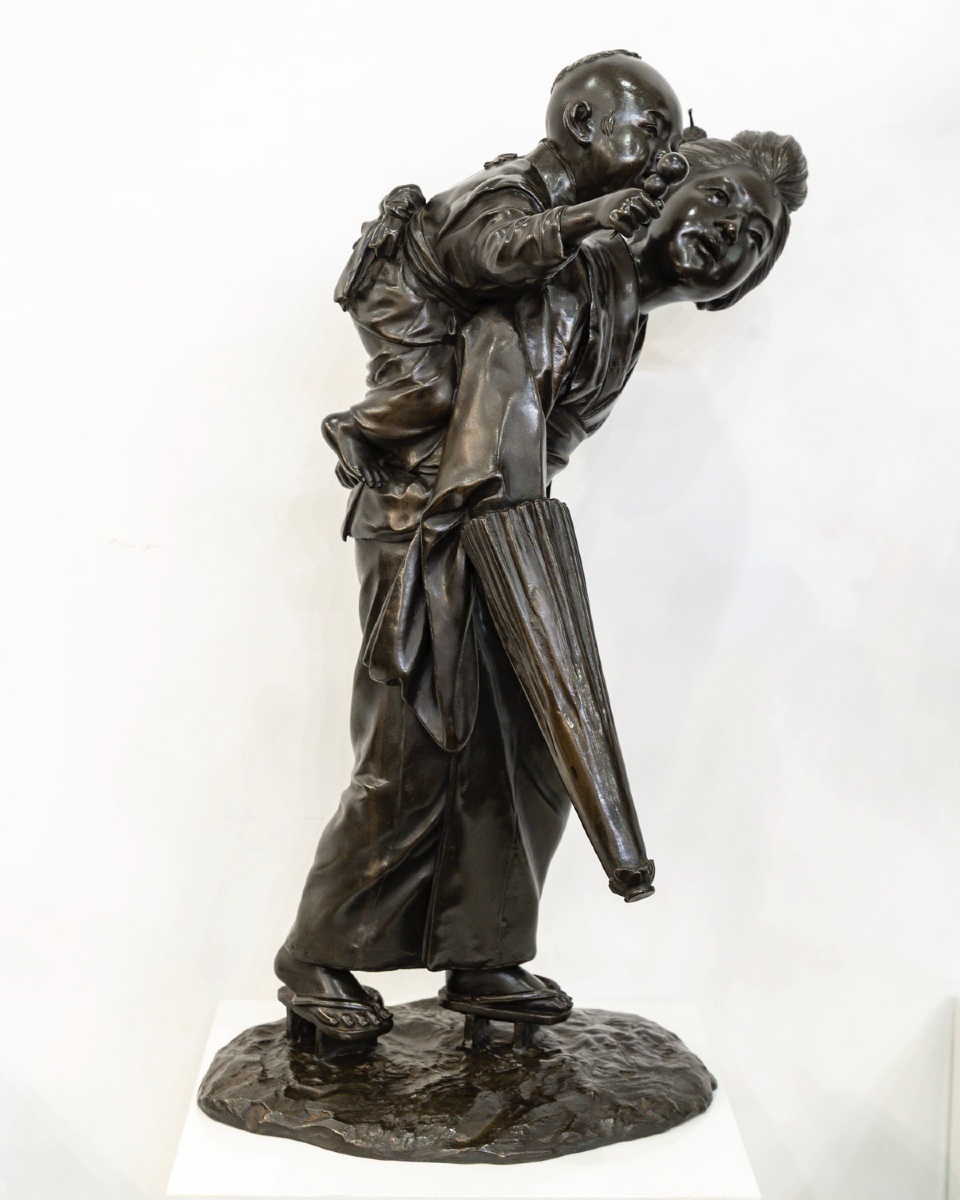


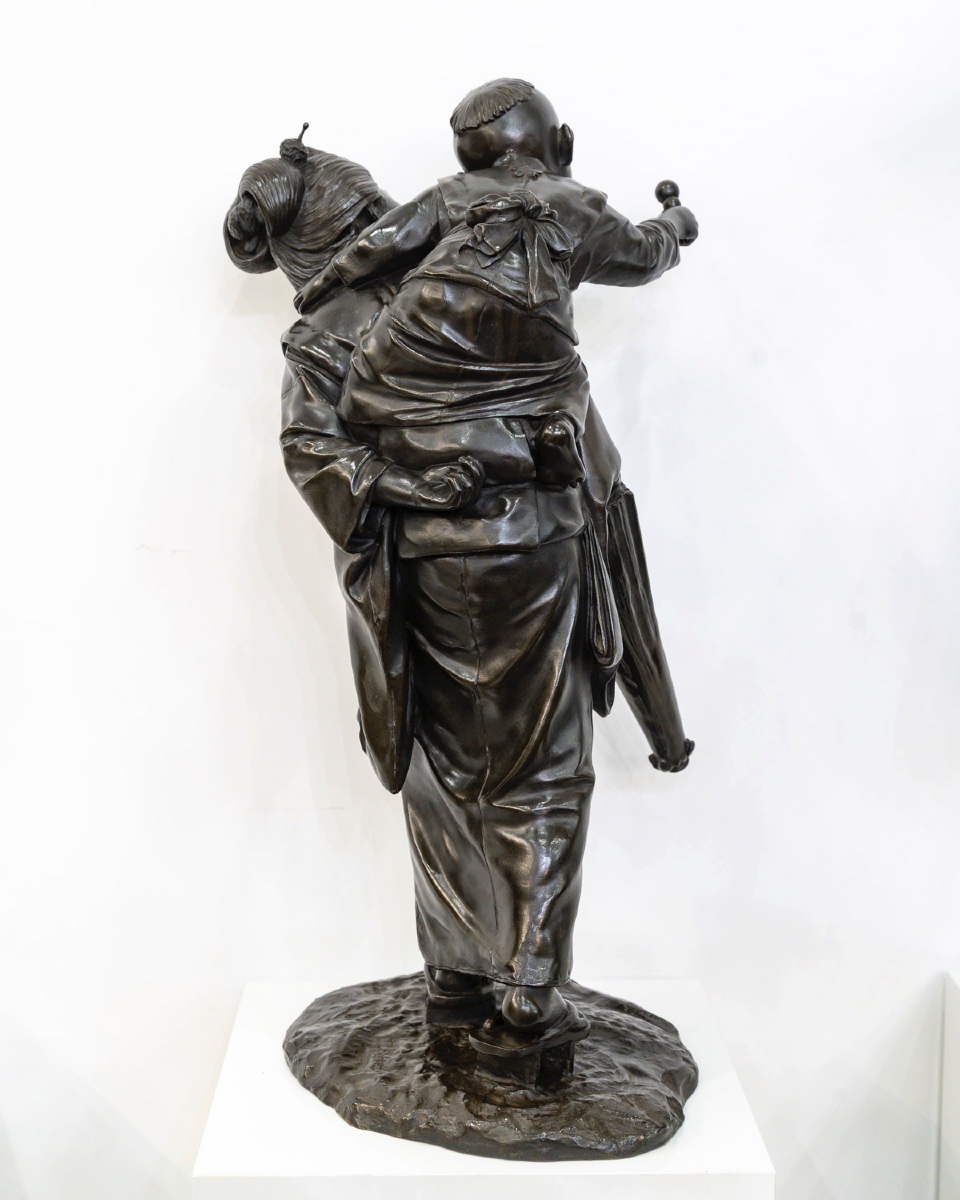

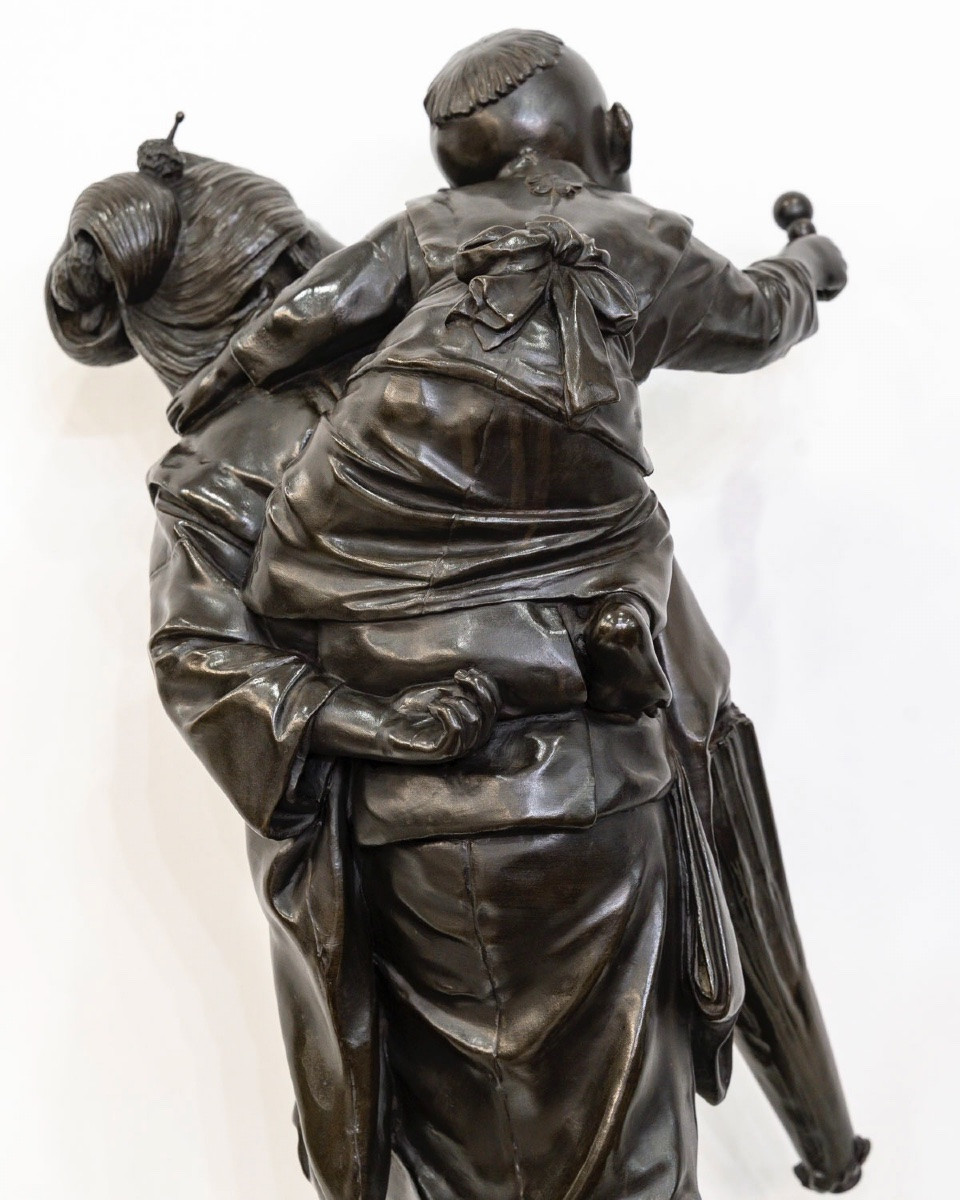


Important bronze group with brown patina , representing a mother carrying her child on her back , Japan - Meiji period .
The woman and her child appear in traditional Japanese attire , they are dressed in Kimonos .
The kimono , an emblematic element of the traditional Japanese wardrobe , represents much more than a simple item of clothing.
It is a reflection of an millennial culture , a rich history and traditions deeply rooted in Japanese society .
The woman is wearing a "nihongami" traditional Japanese hairstyle .
She carries a traditional wagasa (umbrella) , at the time reserved for the comfort of the Japanese elite , to whom it brought shade , coolness , and light protection in case of rain .
The child holds in his hand his toy "a rattle", the roundness of his face , and his eyes full of vitality reflect the freshness of early childhood .
Signature of the sculptor on the naturalistic terrace .
Ancient bronze , period late 19th century , Japan , Meiji period .
Perfect state of conservation and patina .
Height : 58 cm
The Meiji era is the historical period of Japan between 1868 and 1912 .
Initiated by the Meiji restoration , it is between the "Keiō era" and the "Taishō era" .
This period symbolizes the end of the policy of voluntary isolation called "Sakoku" and the beginning of a policy of modernization of Japan .
"Meiji" means "enlightened reign" and this period is associated with a spectacular modernization of Japan which took the country from a medieval society to an economic and military power in Asia .
While the new government put in place an active cultural policy aimed at the international influence of the archipelago , creativity was also stimulated more than ever ; artists assimilated Western techniques and concepts in record time .
An era of exceptional audacity and abundance .
The woman and her child appear in traditional Japanese attire , they are dressed in Kimonos .
The kimono , an emblematic element of the traditional Japanese wardrobe , represents much more than a simple item of clothing.
It is a reflection of an millennial culture , a rich history and traditions deeply rooted in Japanese society .
The woman is wearing a "nihongami" traditional Japanese hairstyle .
She carries a traditional wagasa (umbrella) , at the time reserved for the comfort of the Japanese elite , to whom it brought shade , coolness , and light protection in case of rain .
The child holds in his hand his toy "a rattle", the roundness of his face , and his eyes full of vitality reflect the freshness of early childhood .
Signature of the sculptor on the naturalistic terrace .
Ancient bronze , period late 19th century , Japan , Meiji period .
Perfect state of conservation and patina .
Height : 58 cm
The Meiji era is the historical period of Japan between 1868 and 1912 .
Initiated by the Meiji restoration , it is between the "Keiō era" and the "Taishō era" .
This period symbolizes the end of the policy of voluntary isolation called "Sakoku" and the beginning of a policy of modernization of Japan .
"Meiji" means "enlightened reign" and this period is associated with a spectacular modernization of Japan which took the country from a medieval society to an economic and military power in Asia .
While the new government put in place an active cultural policy aimed at the international influence of the archipelago , creativity was also stimulated more than ever ; artists assimilated Western techniques and concepts in record time .
An era of exceptional audacity and abundance .
Explore similar pieces and discover your ideal find:
bronze sculptures