THIS OBJECT WAS SOLD
André Hambourg (1909-1999) Luxembourg Gardens “la Baraque A Gauffres”
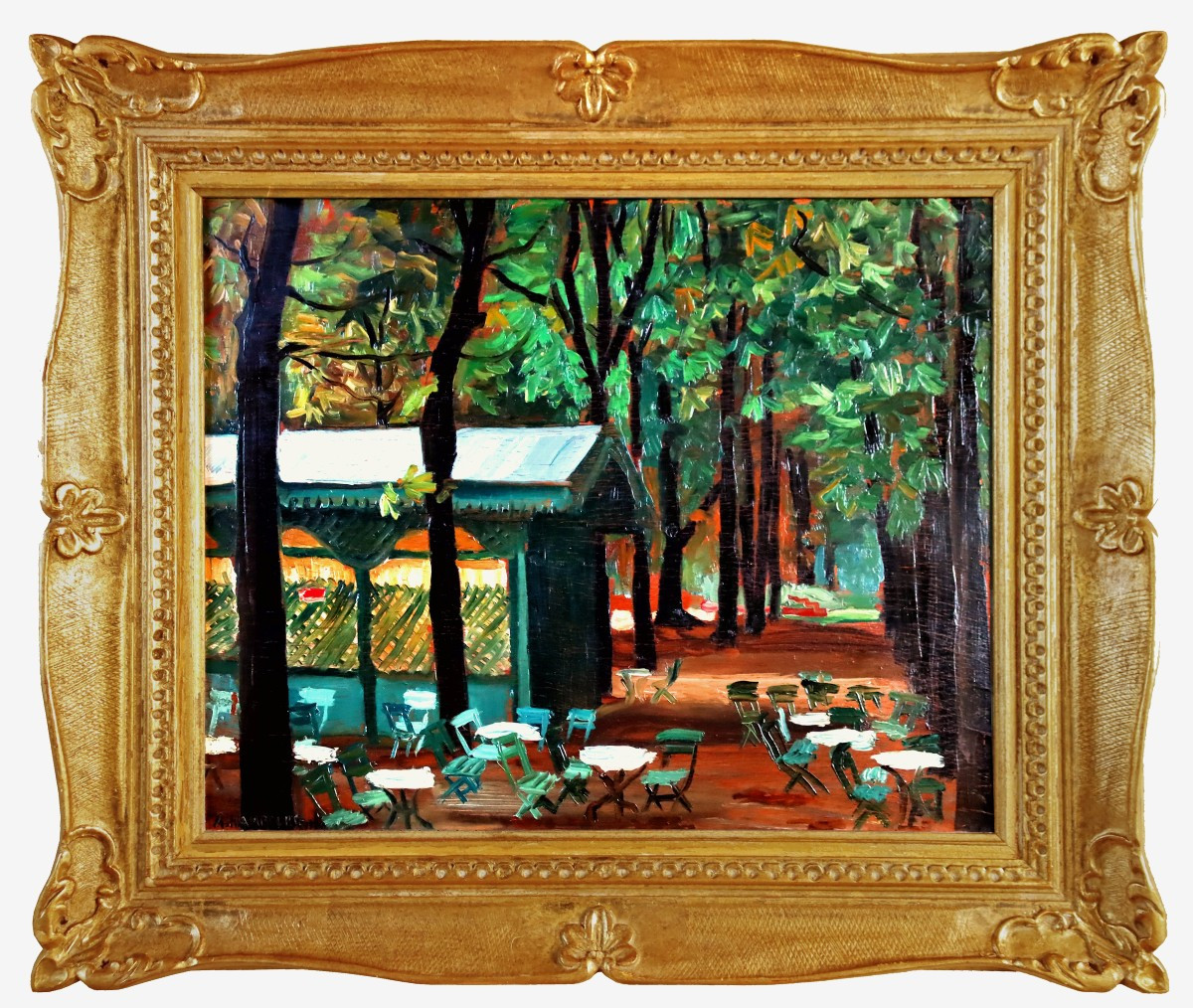

Art Deco period painting oil painting signed lower left A.HAMBOURG dated 1930 (André HAMBOURG 1909-1999) countersigned on the back by the artist and titled, various annotations and labels, to specify a certificate of authenticity in the form of an old silver photo representing the work (taken by the famous photographer of works of art located 80 rue Daguerre in Paris) photo stamped and justified on the back by André Hambourg (will be given to the future buyer) Note that this painting is listed under N°110 in the catalog raisonné (old books) of the painted work of André Hambourg. Art Deco period frame Montmartre model in gilded carved wood. Very good general condition, dimensions: 72 cm X 64 cm
Born in Paris, André Hambourg acquired a house in Normandy then a second in Saint-Rémy-de-Provence and made his regions his favorite themes. The Normandy beaches occupy a central place in André Hambourg's paintings. From Deauville to Honfleur via Trouville, he enlivens the landscape with men, women, and children who come to play by the sea. At the Lycée Louis-le-Grand, which he joined in the fourth grade, he impressed his teachers with his sketches. His parents sent him to Germany for a stay during which he tried his hand at oil painting. Upon his return, he was accepted into the École nationale supérieure des arts décoratifs, sculpture department, and became a student of the sculptor Paul Niclausse (1879-1958). In 1927, he entered the Beaux-Arts de Paris in the painting department in the studio of Lucien Simon. The colors of his early canvases are very dark, almost austere, and imbued with violence. From 1929 onward, he participated in numerous Parisian exhibitions such as the Salon des Tuileries, the Salon des Indépendants, and the Salon d'Automne. In 1929, he organized his first exhibition at the Galerie du Taureau in Paris. During the summer of 1930, he discovered Brittany and traveled to Provence. He was impressed by the colors of the landscapes he encountered. His palette was enriched with ochre and yellow. André Hambourg left for Algeria in 1933. Faced with the landscapes that unfolded before him and the luminosity that emanated from the city of Algiers, he understood that he had to reinvent his painting. He endeavored to adapt the truth without betraying it and not to paint by copying life in a realistic manner. During the Second World War, he carried out missions aboard combat ships to produce illustrated reports. He remained obsessed with the horrors of war and his painting regained the darkness of his beginnings. In 1947 and 1948, the Naval General Staff invited him aboard the battleship Richelieu. His paintings depict the life and activities of the crew. In the late 1950s, he painted the beaches of Deauville and Trouville. This period corresponded to a change in his painting; he drew inspiration from the subjects offered by nature and sought to capture the fleeting nature of the moment. In 1957, he visited Venice for the first time, and the city became an inexhaustible source of inspiration for him. In Venice, as in Normandy, his palette adapted to the profusion of colors that revealed themselves to him. He was appointed painter to the Navy a few decades later, in 1952. Since then, the popularity of André Hambourg's paintings has grown steadily. André Hambourg's current sales record is held by his oil painting "Central Park," estimated at between €15,000 and €17,000. It sold for €58,000 (excluding fees) at a sale held in Paris at the Hôtel Drouot.
Born in Paris, André Hambourg acquired a house in Normandy then a second in Saint-Rémy-de-Provence and made his regions his favorite themes. The Normandy beaches occupy a central place in André Hambourg's paintings. From Deauville to Honfleur via Trouville, he enlivens the landscape with men, women, and children who come to play by the sea. At the Lycée Louis-le-Grand, which he joined in the fourth grade, he impressed his teachers with his sketches. His parents sent him to Germany for a stay during which he tried his hand at oil painting. Upon his return, he was accepted into the École nationale supérieure des arts décoratifs, sculpture department, and became a student of the sculptor Paul Niclausse (1879-1958). In 1927, he entered the Beaux-Arts de Paris in the painting department in the studio of Lucien Simon. The colors of his early canvases are very dark, almost austere, and imbued with violence. From 1929 onward, he participated in numerous Parisian exhibitions such as the Salon des Tuileries, the Salon des Indépendants, and the Salon d'Automne. In 1929, he organized his first exhibition at the Galerie du Taureau in Paris. During the summer of 1930, he discovered Brittany and traveled to Provence. He was impressed by the colors of the landscapes he encountered. His palette was enriched with ochre and yellow. André Hambourg left for Algeria in 1933. Faced with the landscapes that unfolded before him and the luminosity that emanated from the city of Algiers, he understood that he had to reinvent his painting. He endeavored to adapt the truth without betraying it and not to paint by copying life in a realistic manner. During the Second World War, he carried out missions aboard combat ships to produce illustrated reports. He remained obsessed with the horrors of war and his painting regained the darkness of his beginnings. In 1947 and 1948, the Naval General Staff invited him aboard the battleship Richelieu. His paintings depict the life and activities of the crew. In the late 1950s, he painted the beaches of Deauville and Trouville. This period corresponded to a change in his painting; he drew inspiration from the subjects offered by nature and sought to capture the fleeting nature of the moment. In 1957, he visited Venice for the first time, and the city became an inexhaustible source of inspiration for him. In Venice, as in Normandy, his palette adapted to the profusion of colors that revealed themselves to him. He was appointed painter to the Navy a few decades later, in 1952. Since then, the popularity of André Hambourg's paintings has grown steadily. André Hambourg's current sales record is held by his oil painting "Central Park," estimated at between €15,000 and €17,000. It sold for €58,000 (excluding fees) at a sale held in Paris at the Hôtel Drouot.
Explore similar pieces and discover your ideal find:
Landscapes