Buddha Maravijaya Burmese Konbaung
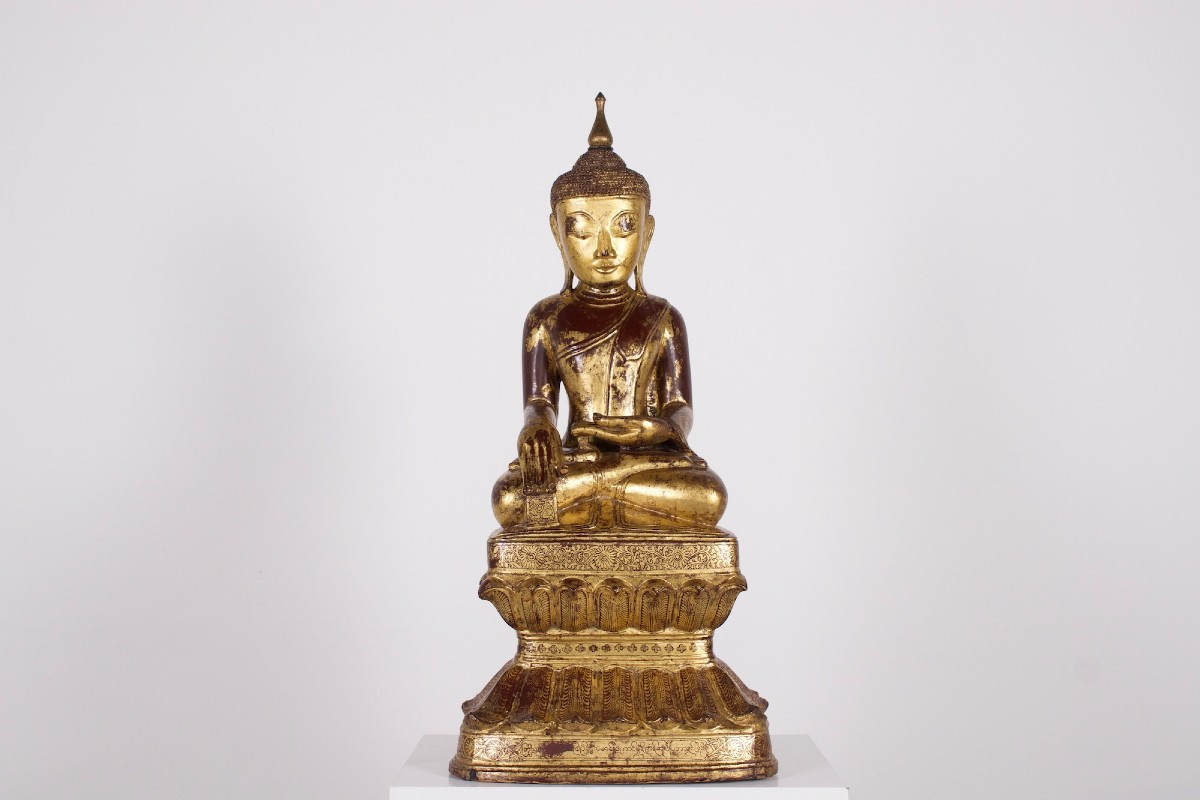
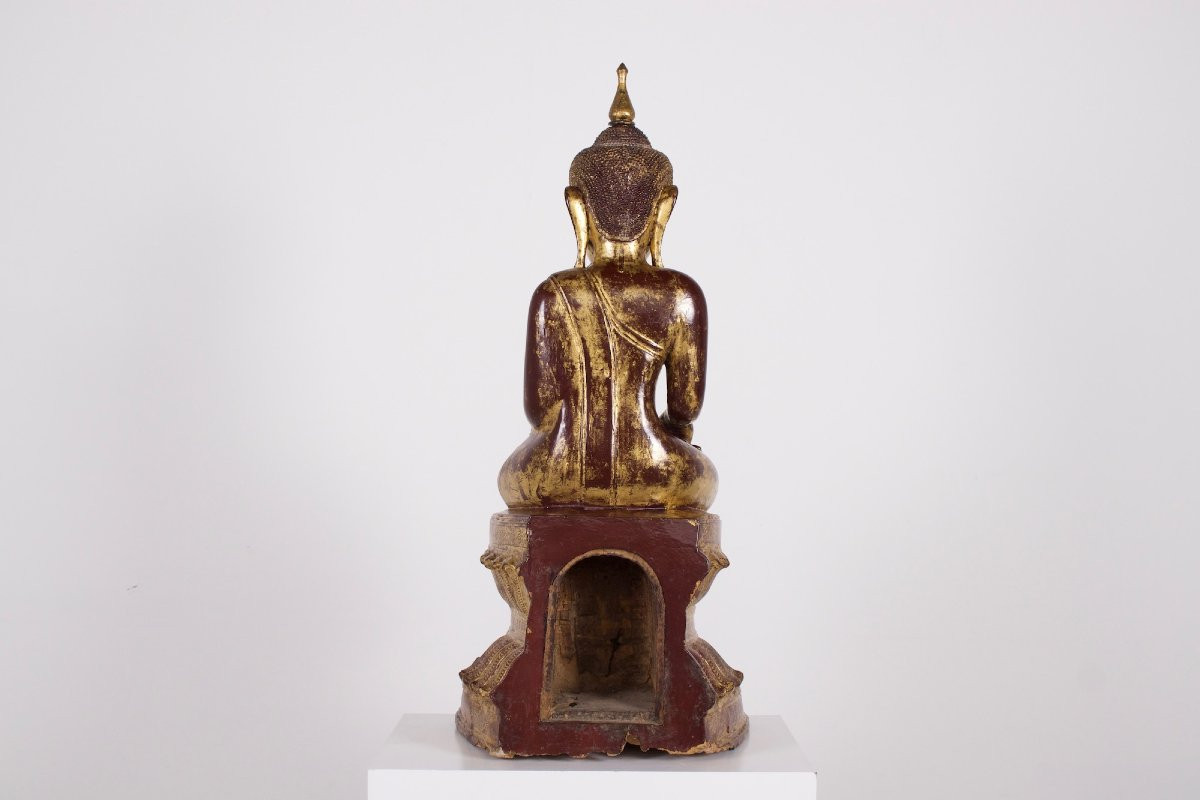
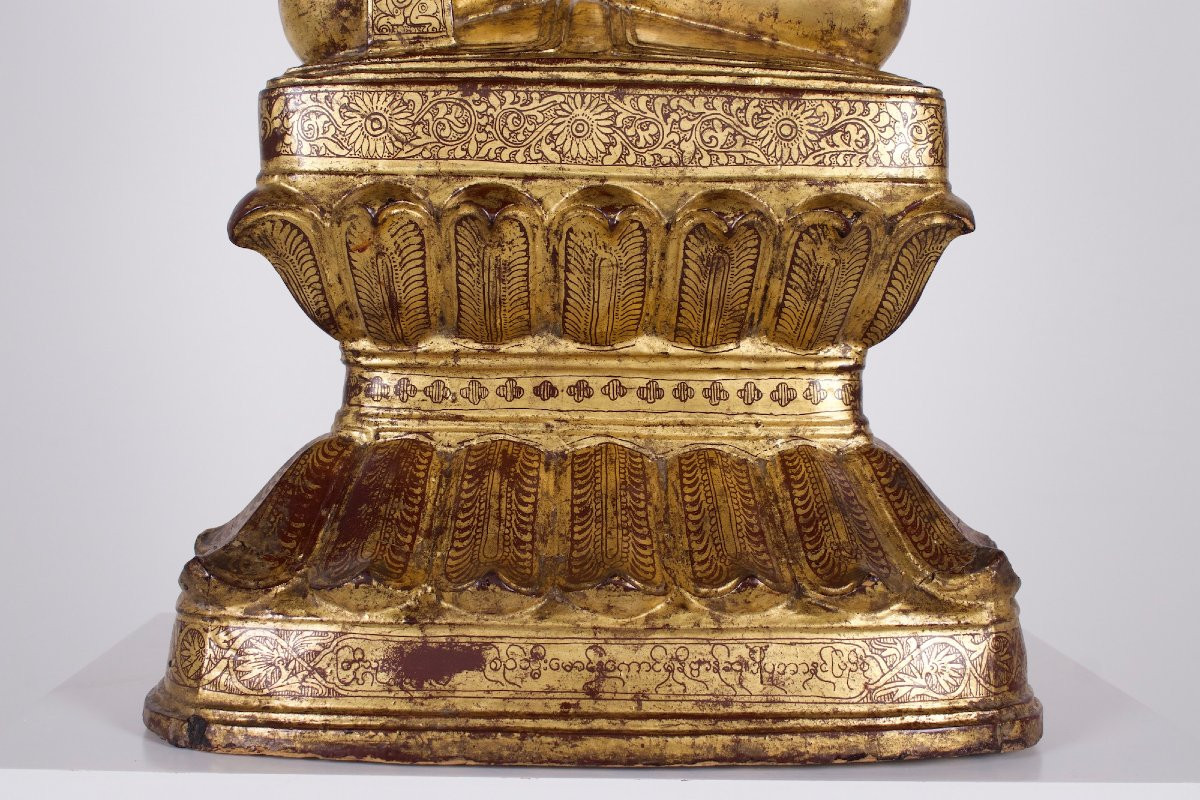
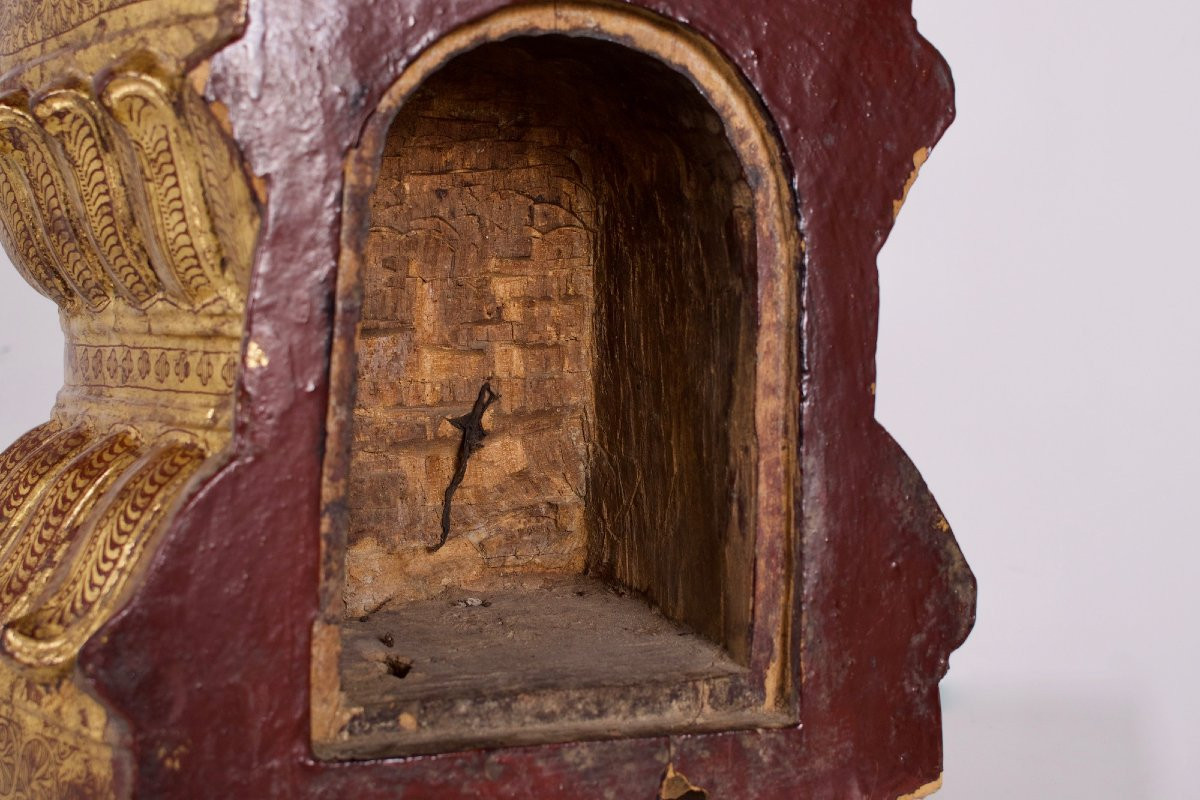
Large Maravijaya Buddha, carved wood, wine-colored lacquer and gilding. Burma (Myanmar), Shan Princely States, Konbaung period (1752-1885)The Awakened One is represented in vajrasana on his double stylized lotus base, his right hand calls the goddess of the Earth to bear witness to his awakening and his victory over Mara, demon of obstacles and illusions. The image of Buddha is very well preserved in its entirety, richly decorated. Behind the throne in double rows of lotus leaves, we see the open reliquary cavity. Presence of donor inscriptions at the foot of the face of the sculpture.Provenance: Succession Claude de Marteau.Sold with certificate of provenance.H 74 cm x W 33 cm x D 28 cmIn Theravāda Buddhism, particularly in Thailand and Burma, the posture of the seated Buddha taking the earth as witness is one of the most emblematic representations of the tradition. This posture, known as bhūmisparśa mudrā (gesture of taking the earth as witness), symbolizes the Buddha's awakening under the Bodhi tree in Bodhgayā.In Theravāda iconography, this position is omnipresent, particularly in Burmese and Thai statues. Buddha is represented in a meditative posture, legs crossed in the lotus position, the left hand resting on his knees in a gesture of concentration, while the right hand touches the ground with the tips of the fingers. This gesture evokes the moment when Siddhārtha Gautama, confronted by the assaults of the demon Māra, invokes the earth as a witness to his merits accumulated over his past lives. According to tradition, the earth itself responds by triggering a flood that carries away Māra's forces, thus sealing the Buddha's victory over illusions and his access to enlightenment. In Thailand, this posture is particularly associated with the iconography of the Sukhothai and Rattanakosin style Buddhas, where it is often depicted with slender forms and a serene expression, emphasizing the idea of transcendence and spiritual purity. In Burma, particularly in the Mandalay and Konbaung styles, the same posture is omnipresent, but the statues often present a more rounded and benevolent face, with meticulous details on the folds of the garment and the ornamentation of the base. This iconography expresses a fundamental aspect of Theravāda Buddhism: the importance of the pāramī (perfections) accumulated by the Buddha through his previous lives and the primacy of karma in the path to enlightenment. Unlike the Mahāyāna and Vajrayāna traditions, where Buddha is often represented in transcendent forms or adorned with esoteric symbols, Theravāda favors a refined and didactic approach, centered on the historical example of Gautama Buddha. Thus, the posture of taking the earth as witness becomes a constant reminder for the faithful of the power of merit and the determination necessary to achieve liberation. See this Maravijaya Buddha Burmese Konbaung in full screen mode on Vintage Addict
3 600 €
Period: 19th century
Style: Asian art
Condition: Excellent condition
Material: Gilted wood
Length: 33
Height: 74
Depth: 28
Reference (ID): 1584830
Availability: In stock
Print