THIS OBJECT WAS SOLD
Portrait Of Marie Leczszynska, Queen Of France, Circa 1725/30
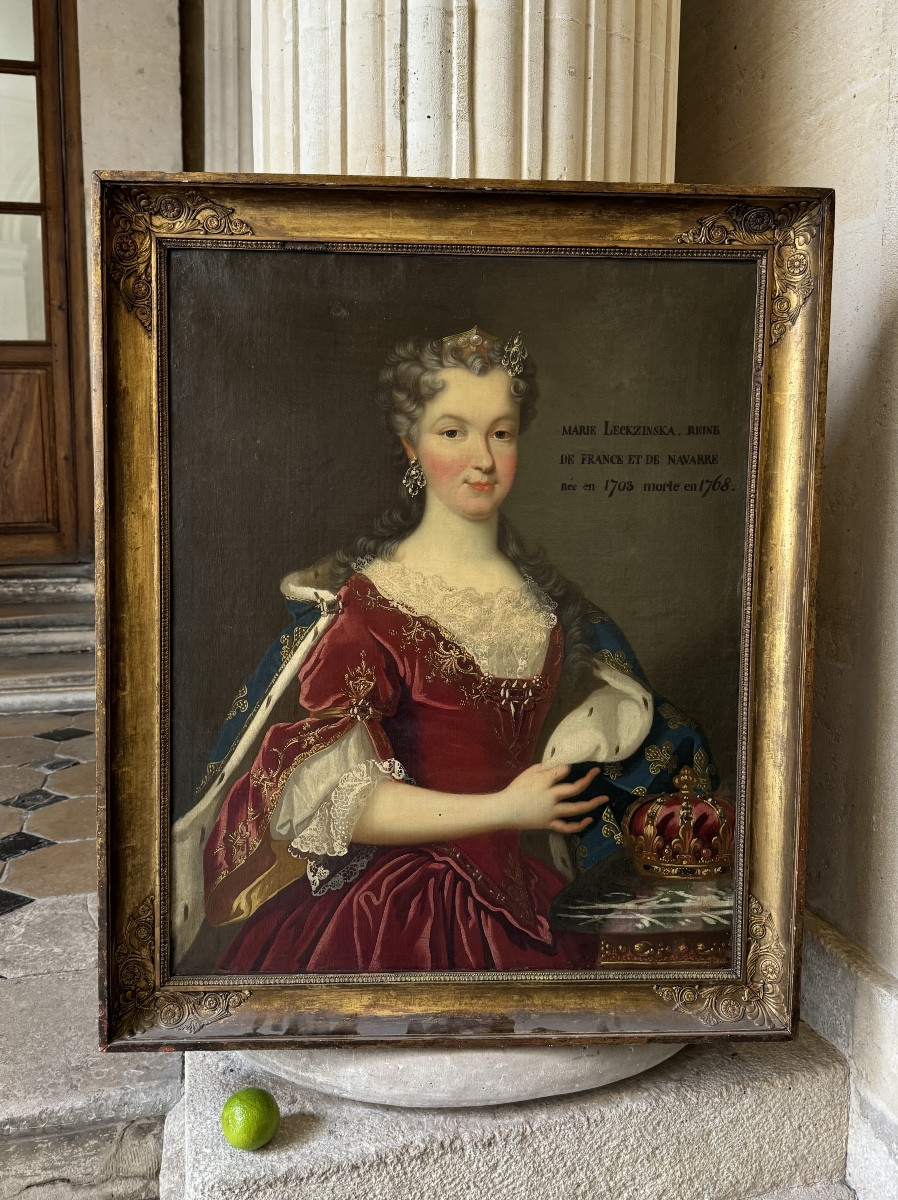
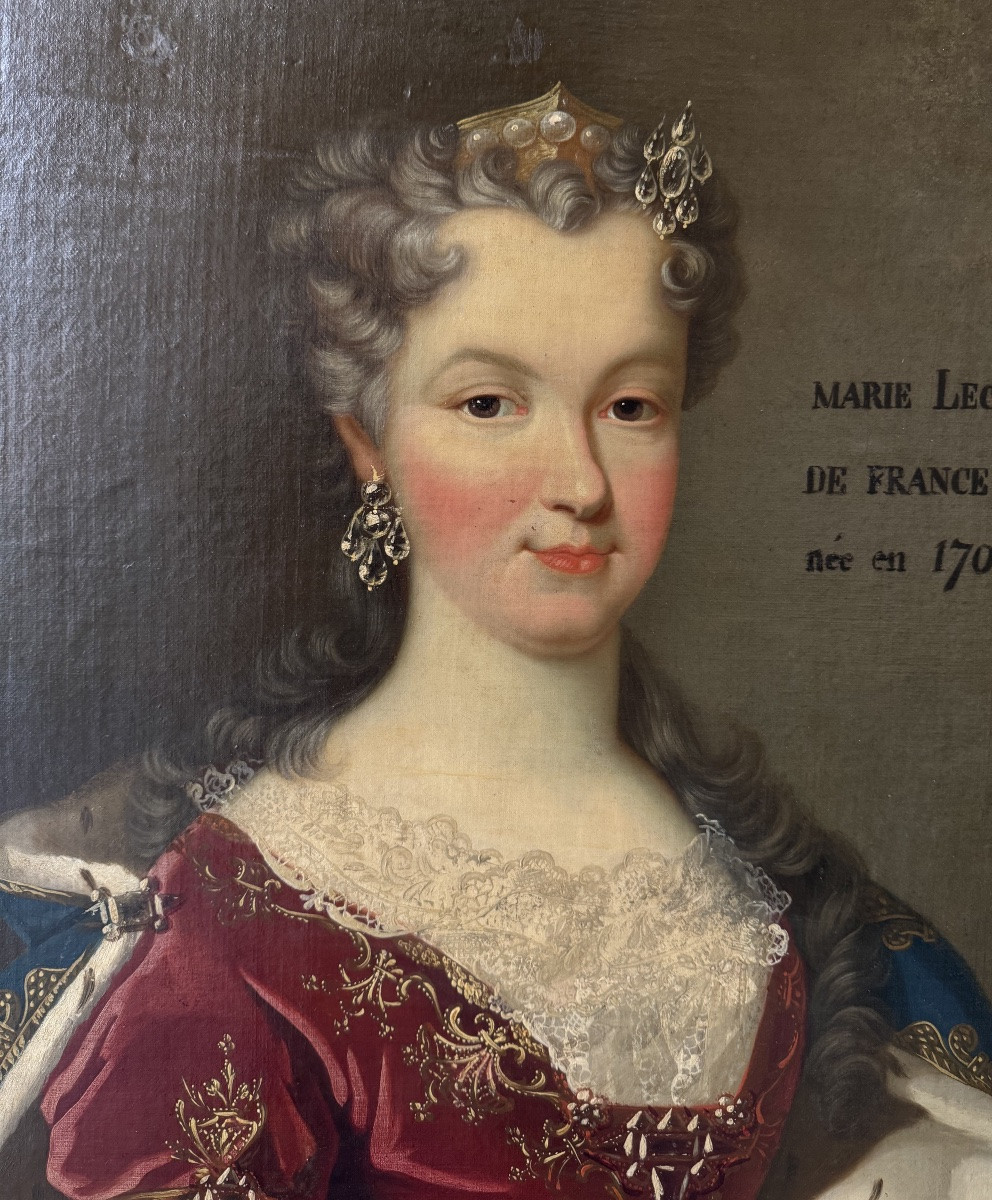
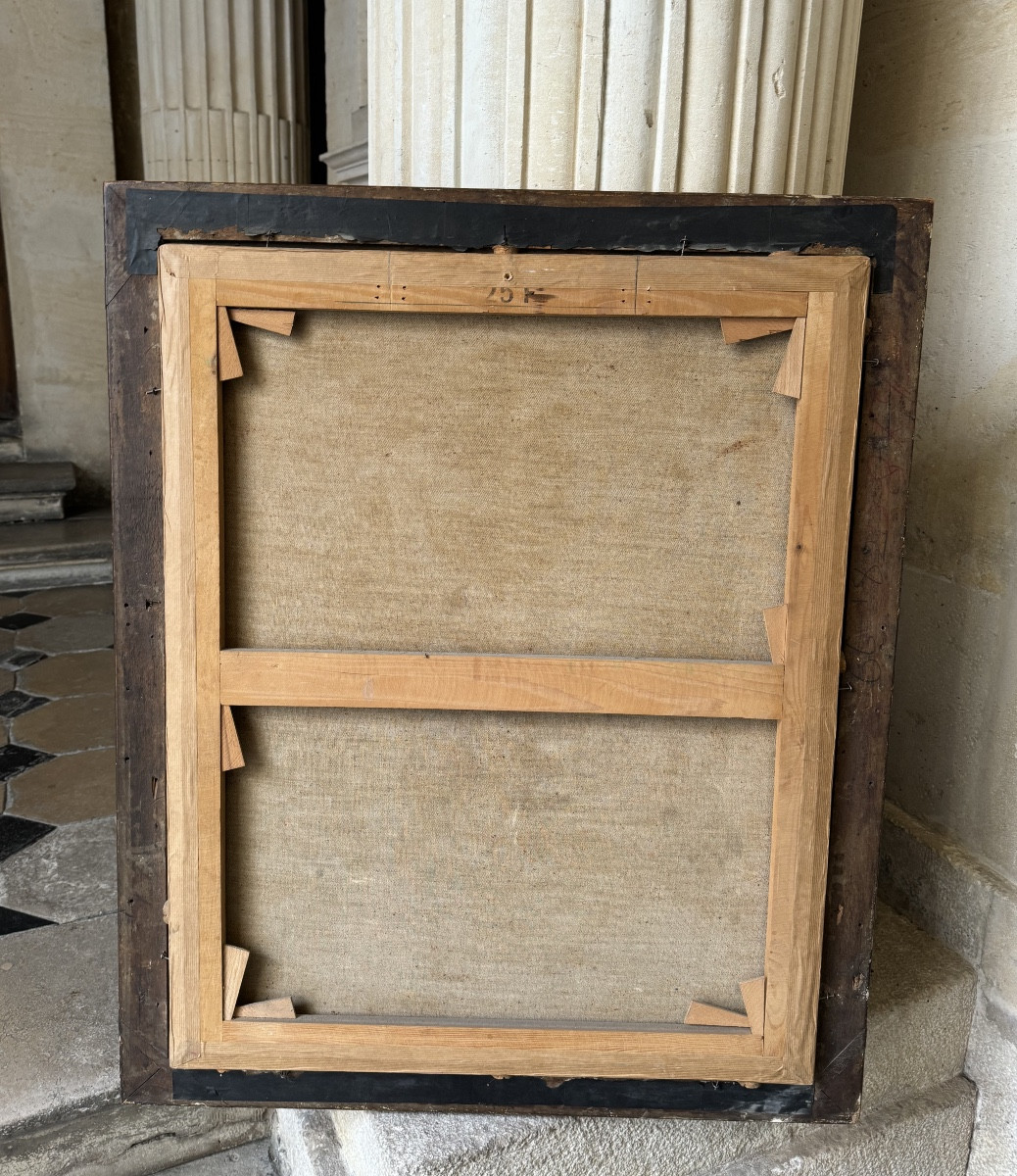
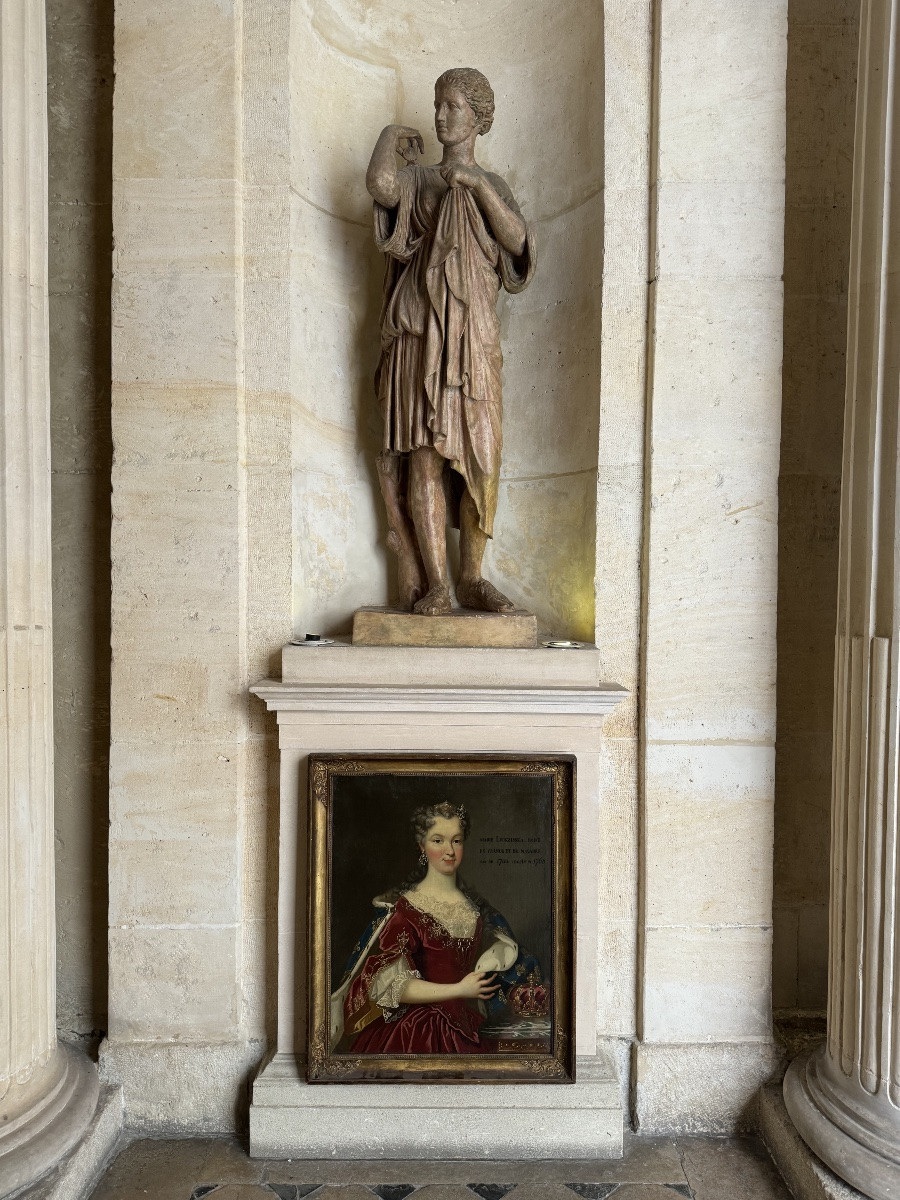


Portrait of Marie Leszczyńska, Queen of France and Naverre18th century, around 1725–1730
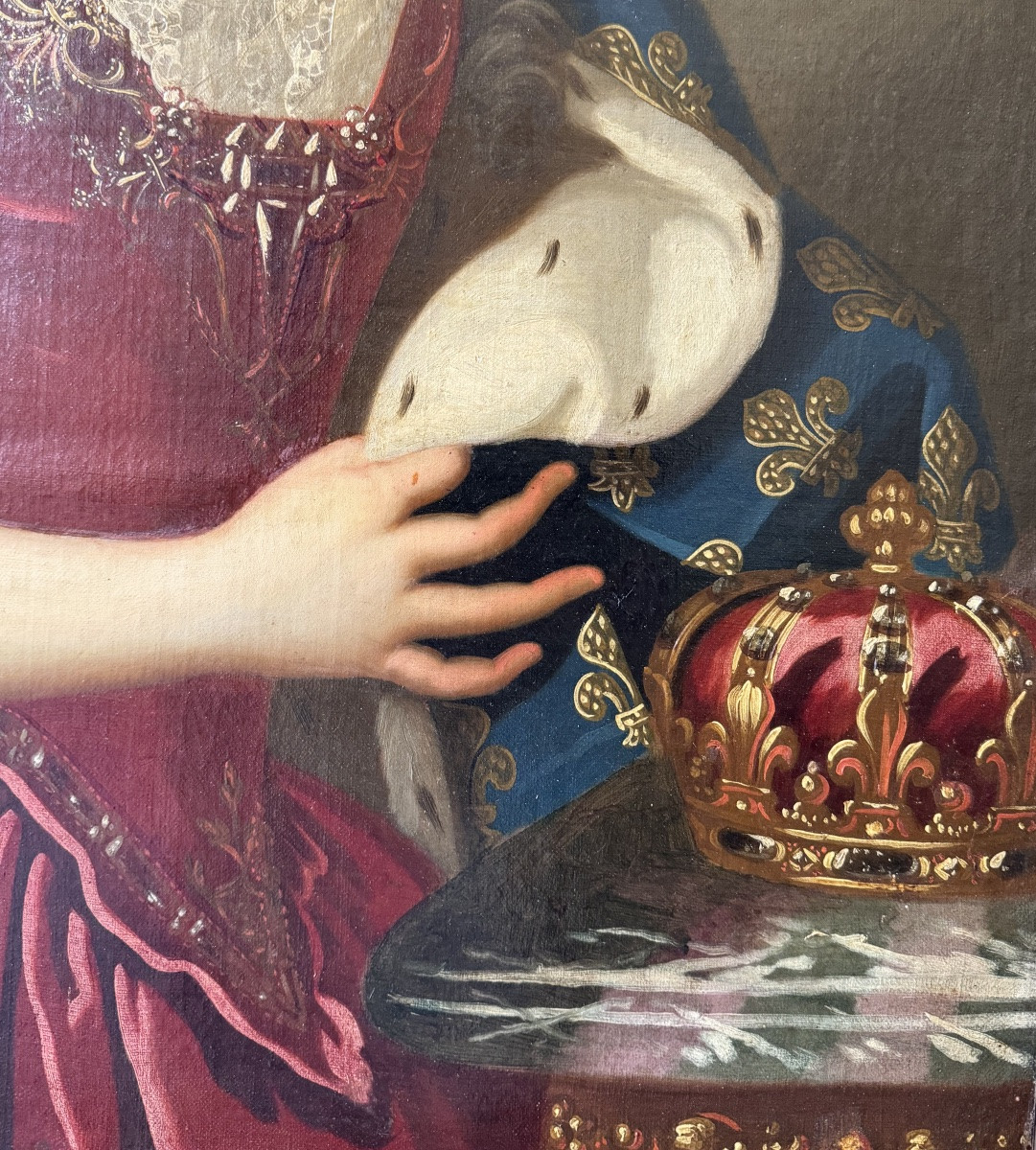
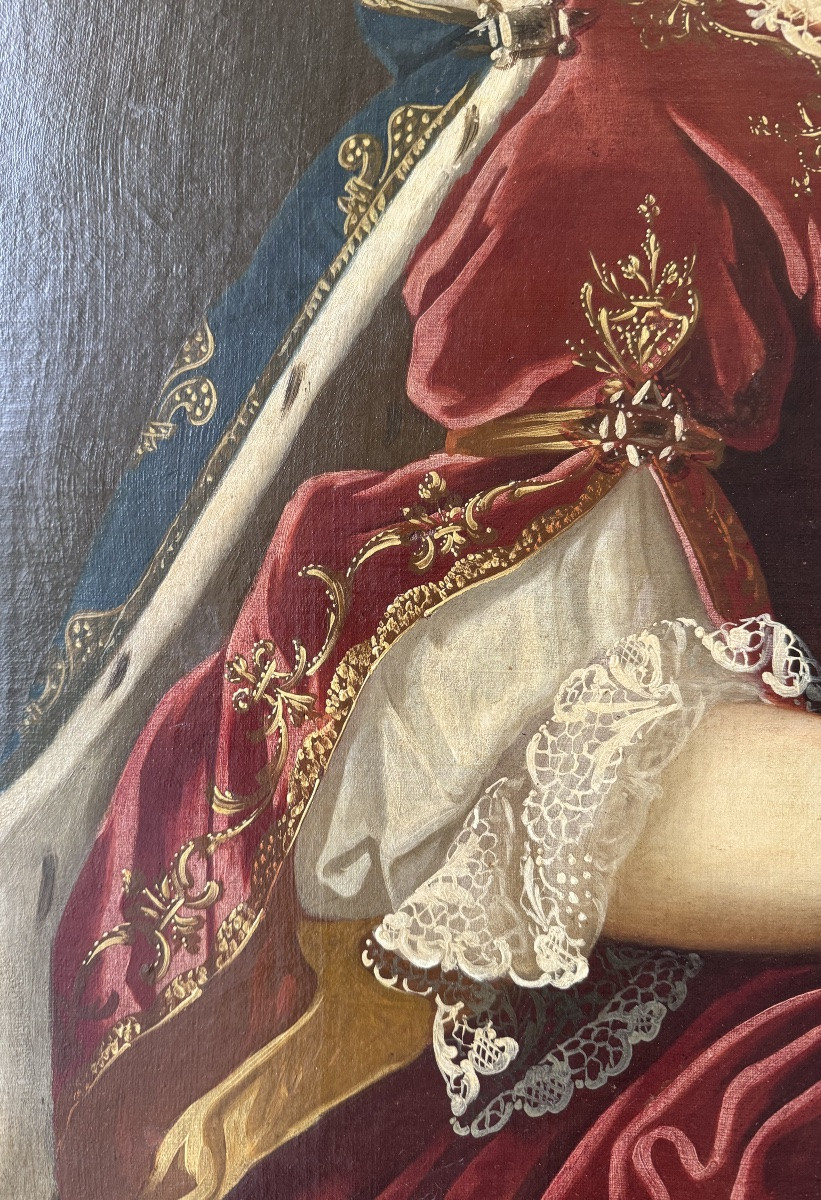
Depicted in majesty, Queen Marie Leszczyńska is painted here according to one of the most famous iconographic models of her very young reign, popularized by Jean-Baptiste van Loo. She is dressed in a garnet velvet dress embroidered with gold, enriched with lace and precious stones, and wears the royal fleur-de-lis mantle lined with ermine. The crown placed on her right underlines her sovereign dignity.
This type of portrait is part of the tradition of official representations of kings and queens, very fashionable in the 18th century. Produced in several copies by the studios of the great portrait painters, these paintings were intended to be exhibited in the salons of aristocratic French and foreign families. They affirmed adherence to monarchical power and reflected the status of their patrons. The dissemination of these portraits actively participated in the staging of royal power in the diplomatic and social spheres of Europe during the Ancien Régime.
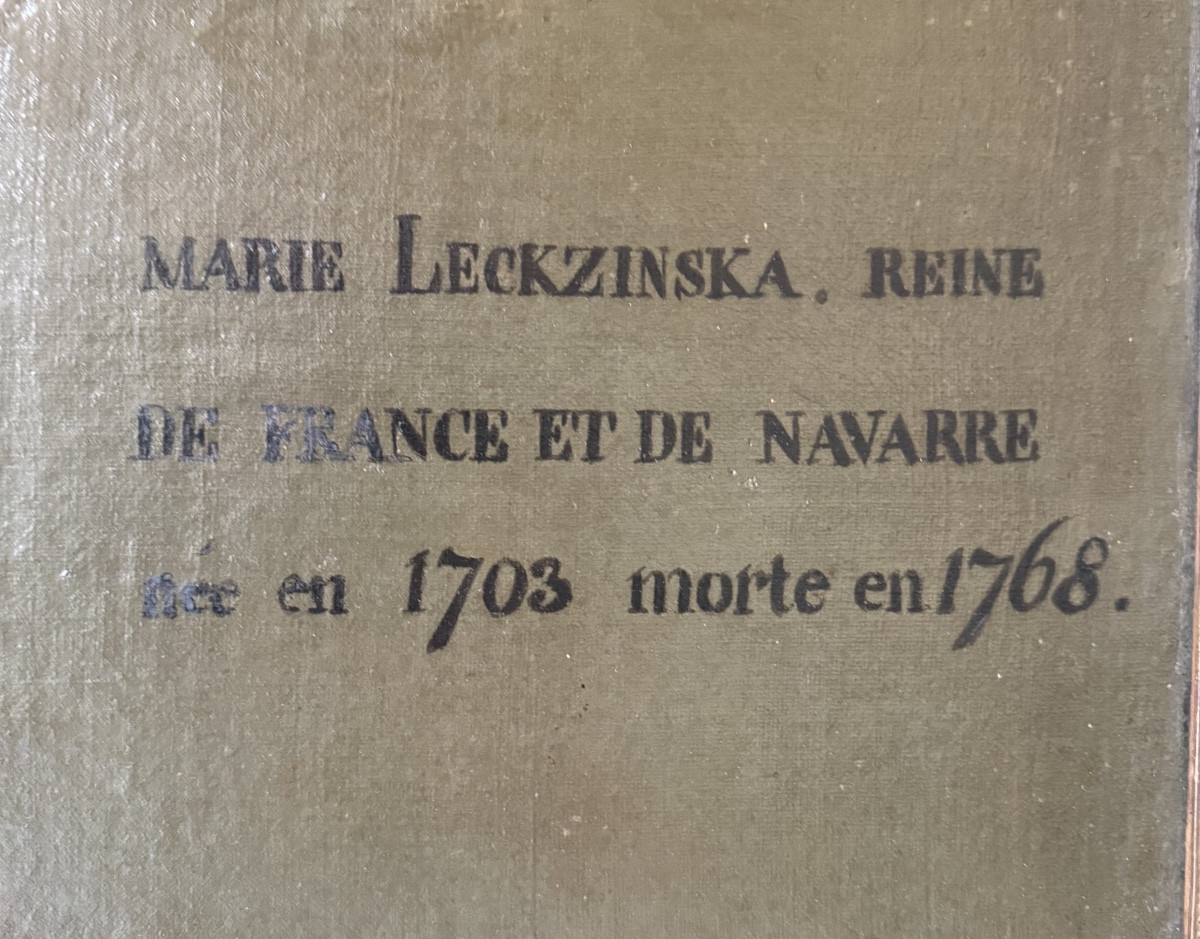
Daughter of the dethroned King of Poland Stanislas Leszczyński, Marie married Louis XV in 1725. She thus became Queen of France at the age of 22. Discreet, cultured, and deeply pious, she occupied an important place at court, while keeping herself away from political intrigue. She remained queen until her death in 1768, becoming the longest-serving queen consort in the history of France.
Jean-Baptiste van Loo, born in Toulon in 1684, is one of the great portrait painters of the 18th century. Trained in Rome, he had a brilliant career in France, Italy, and England. He became official painter to King Louis XV and specialized in ceremonial portraits. His compositions, imbued with grandeur yet a certain naturalism, would serve as models for numerous works created by his students, his workshop, or his followers. The painting presented here most likely belongs to this very fine workshop production, contemporary with the royal wedding, around 1725–1730.
Oil on canvas, circle of Jean-Baptiste van Loo (1684–17
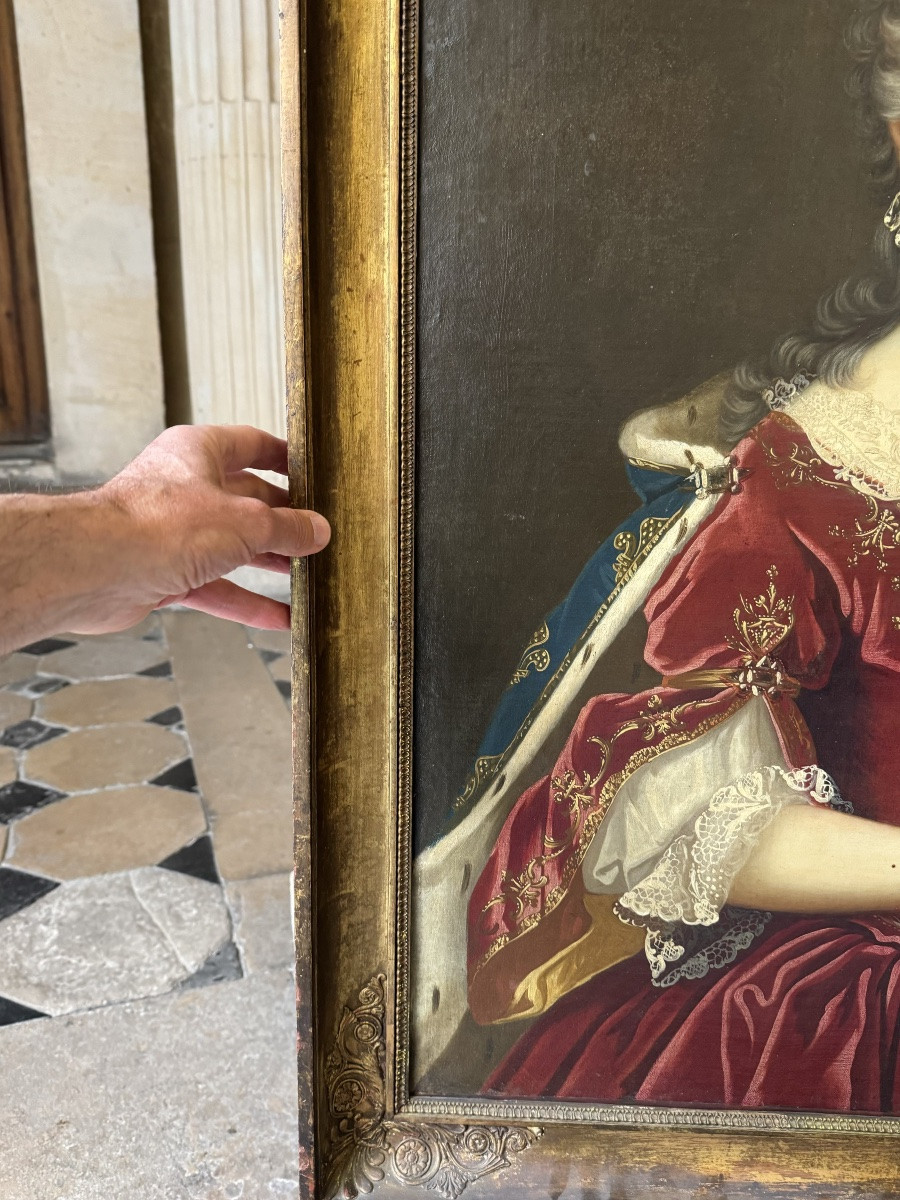
Dimensions with frame 93x77 cmDepicted in majesty, Queen Marie Leszczyńska is painted here according to one of the most famous iconographic models of her very young reign, popularized by Jean-Baptiste van Loo. She is dressed in a garnet velvet dress embroidered with gold, enriched with lace and precious stones, and wears the royal fleur-de-lis mantle lined with ermine. The crown placed on her right underlines her sovereign dignity.
This type of portrait is part of the tradition of official representations of kings and queens, very fashionable in the 18th century. Produced in several copies by the studios of the great portrait painters, these paintings were intended to be exhibited in the salons of aristocratic French and foreign families. They affirmed adherence to monarchical power and reflected the status of their patrons. The dissemination of these portraits actively participated in the staging of royal power in the diplomatic and social spheres of Europe during the Ancien Régime.
Daughter of the dethroned King of Poland Stanislas Leszczyński, Marie married Louis XV in 1725. She thus became Queen of France at the age of 22. Discreet, cultured, and deeply pious, she occupied an important place at court, while keeping herself away from political intrigue. She remained queen until her death in 1768, becoming the longest-serving queen consort in the history of France.
Jean-Baptiste van Loo, born in Toulon in 1684, is one of the great portrait painters of the 18th century. Trained in Rome, he had a brilliant career in France, Italy, and England. He became official painter to King Louis XV and specialized in ceremonial portraits. His compositions, imbued with grandeur yet a certain naturalism, would serve as models for numerous works created by his students, his workshop, or his followers. The painting presented here most likely belongs to this very fine workshop production, contemporary with the royal wedding, around 1725–1730.
Explore similar pieces and discover your ideal find:
Portraits