THIS OBJECT WAS SOLD
Théophile Alexandre Steinlen (1859-1923) "cats" Pencil On Paper Signed With Workshop Stamp
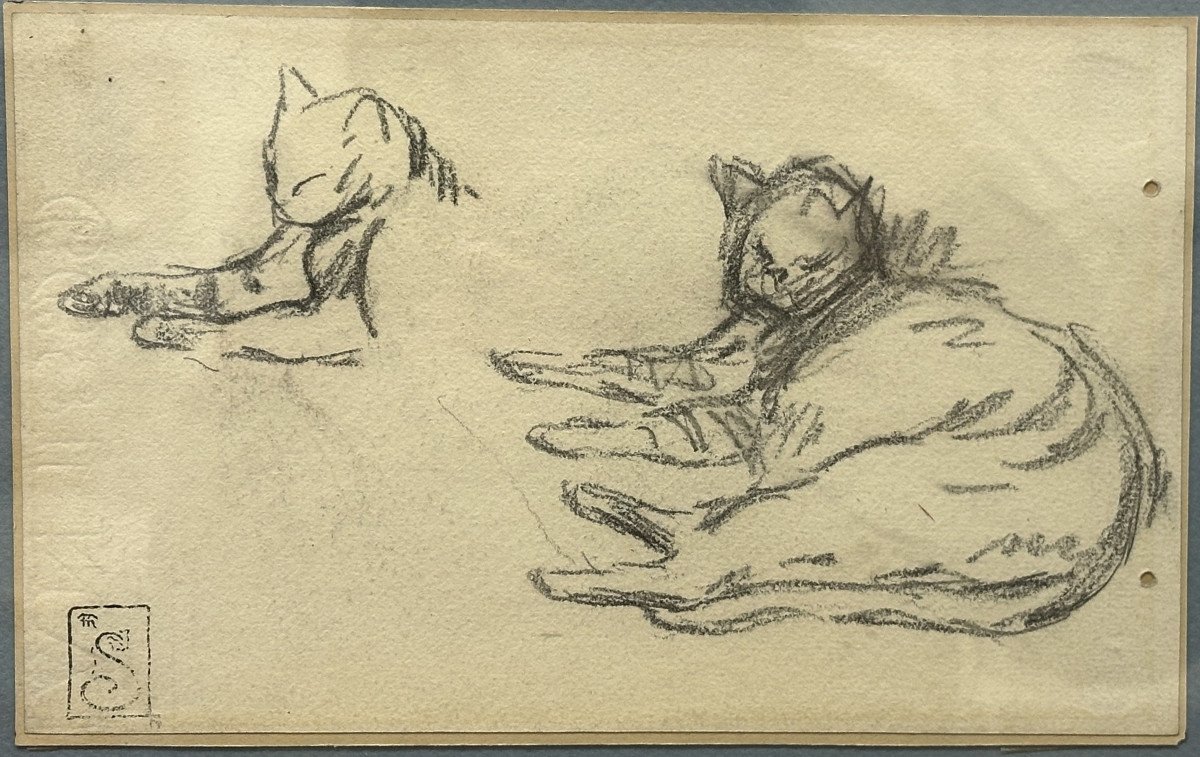
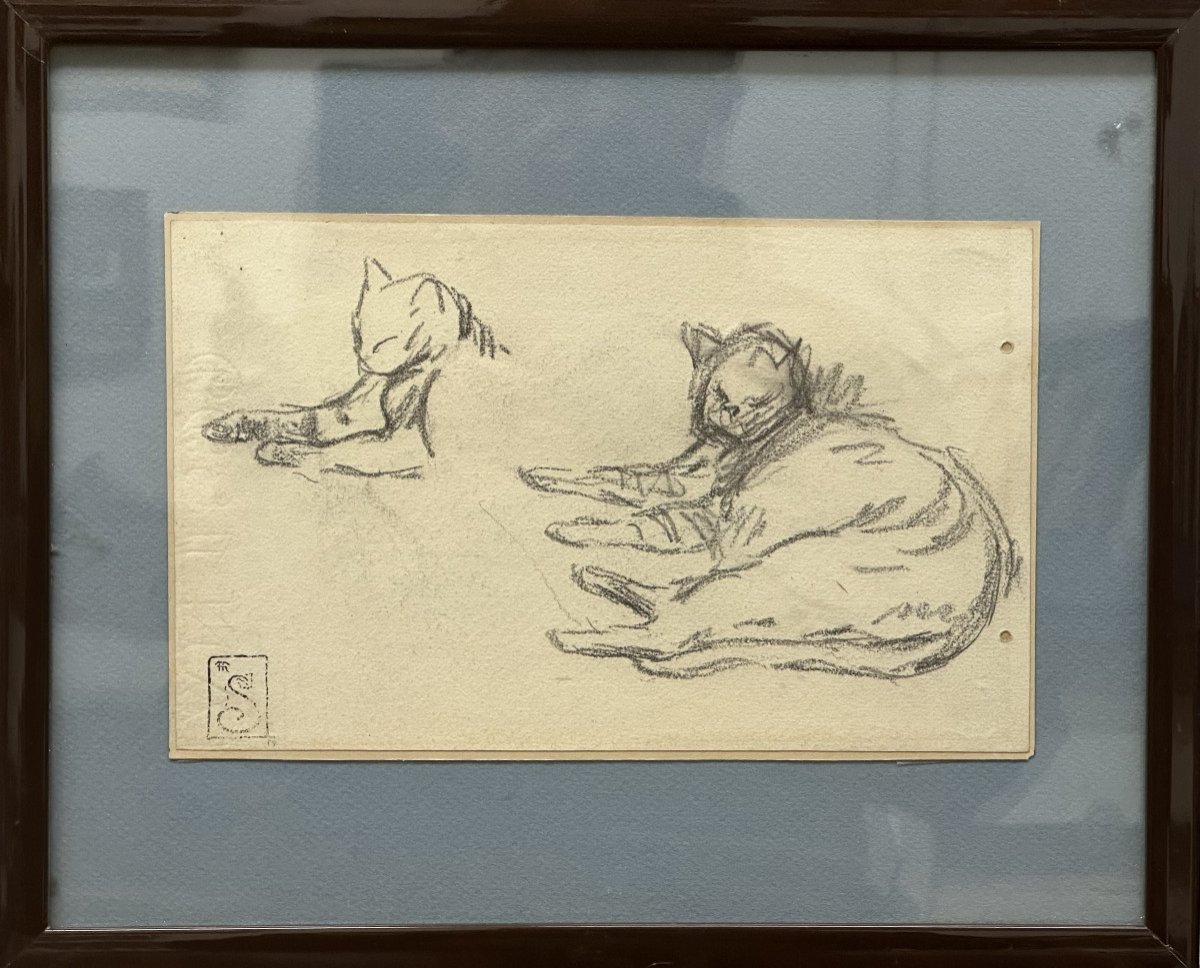


Théophile Alexandre STEINLEN (1859-1923) “Chats” pencil on paper signed with studio stamp
Théophile Alexandre Steinlen, born in Lausanne on November 20, 1859 and died in Paris (18th arrondissement) on December 13, 19231, was a Swiss anarchist artist2,3 , painter, engraver, illustrator, poster artist and sculptor, naturalized French in 1901.
Biography
Youth
Théophile Alexandre Steinlen was the son of Samuel Steinlen, an employee of the Lausanne Post Office, and himself the son of Christian Gottlieb (Théophile) Steinlen (1779-1847), a painter and draughtsman. Originally from Germany, the Steinlen family had been admitted to the Vevey bourgeoisie in 1832. Théophile Alexandre Steinlen studied theology at the University of Lausanne for two years, then turned to art in 1879, training in industrial ornamental design with Schoenhaupt in Mulhouse, before settling in Paris with his wife Émilie in 1881.
An artist from Montmartre
Living on the Butte Montmartre since 1883, Steinlen quickly became acquainted with the artistic personalities who gravitated there. From 1884, he was in contact with Adolphe Willette and Antonio de La Gandara, with whom he frequented the Chat Noir, the cabaret run by Rodolphe Salis, becoming friends with Henri de Toulouse-Lautrec. He also met Aristide Bruant. He also frequented the café-restaurant Au Tambourin at 62, boulevard de Clichy4.
He first exhibited at the Salon des indépendants in 1893, then regularly at the Salon des humoristes.
An outspoken opponent of injustice and sympathetic to the underprivileged, of whom there was no shortage in Montmartre at the time, he depicted scenes from the streets, factories and mines, featuring unfortunates of all kinds, beggars, destitute workers, ragged kids and prostitutes. These characters seem more often crushed by their sad condition than revolted. He saw public space as a place of social conflict, and was the first to infuse it with a cinematic spirit, as in the popular shadow play Black Cat, where shadows illustrate surveillance and the maintenance of public order5. He was also a specialist in cats, which he drew again and again in all their whimsy, whether playful, asleep or angry. He also drew female nudes.
Théophile Alexandre Steinlen, born in Lausanne on November 20, 1859 and died in Paris (18th arrondissement) on December 13, 19231, was a Swiss anarchist artist2,3 , painter, engraver, illustrator, poster artist and sculptor, naturalized French in 1901.
Biography
Youth
Théophile Alexandre Steinlen was the son of Samuel Steinlen, an employee of the Lausanne Post Office, and himself the son of Christian Gottlieb (Théophile) Steinlen (1779-1847), a painter and draughtsman. Originally from Germany, the Steinlen family had been admitted to the Vevey bourgeoisie in 1832. Théophile Alexandre Steinlen studied theology at the University of Lausanne for two years, then turned to art in 1879, training in industrial ornamental design with Schoenhaupt in Mulhouse, before settling in Paris with his wife Émilie in 1881.
An artist from Montmartre
Living on the Butte Montmartre since 1883, Steinlen quickly became acquainted with the artistic personalities who gravitated there. From 1884, he was in contact with Adolphe Willette and Antonio de La Gandara, with whom he frequented the Chat Noir, the cabaret run by Rodolphe Salis, becoming friends with Henri de Toulouse-Lautrec. He also met Aristide Bruant. He also frequented the café-restaurant Au Tambourin at 62, boulevard de Clichy4.
He first exhibited at the Salon des indépendants in 1893, then regularly at the Salon des humoristes.
An outspoken opponent of injustice and sympathetic to the underprivileged, of whom there was no shortage in Montmartre at the time, he depicted scenes from the streets, factories and mines, featuring unfortunates of all kinds, beggars, destitute workers, ragged kids and prostitutes. These characters seem more often crushed by their sad condition than revolted. He saw public space as a place of social conflict, and was the first to infuse it with a cinematic spirit, as in the popular shadow play Black Cat, where shadows illustrate surveillance and the maintenance of public order5. He was also a specialist in cats, which he drew again and again in all their whimsy, whether playful, asleep or angry. He also drew female nudes.
Explore similar pieces and discover your ideal find:
drawings