THIS OBJECT WAS SOLD
Voc Delftware Tobacco Jar With Original Brass Lid: Nagelgeu, 18th Century



Delft
1760 – 1800
Unknown workshop
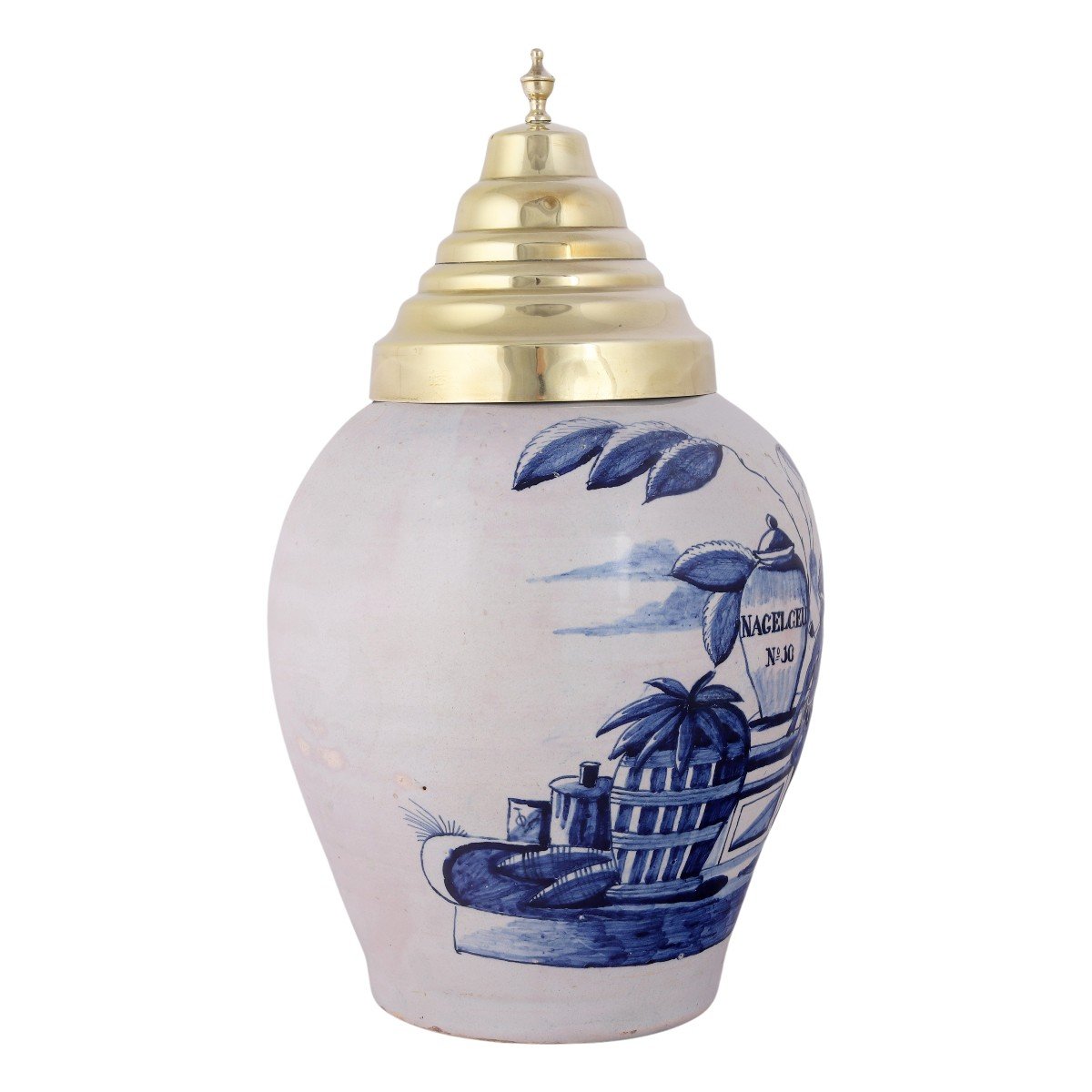
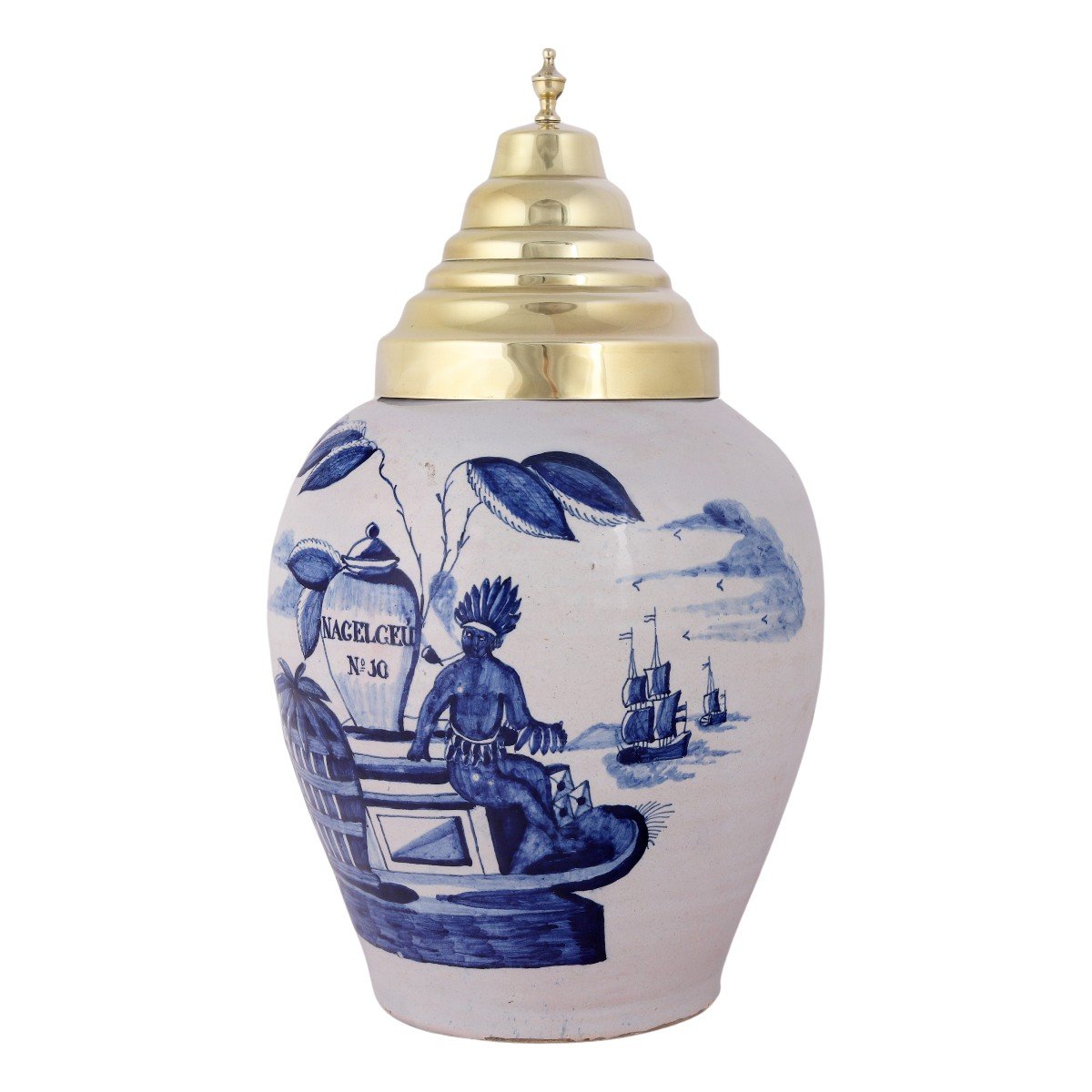
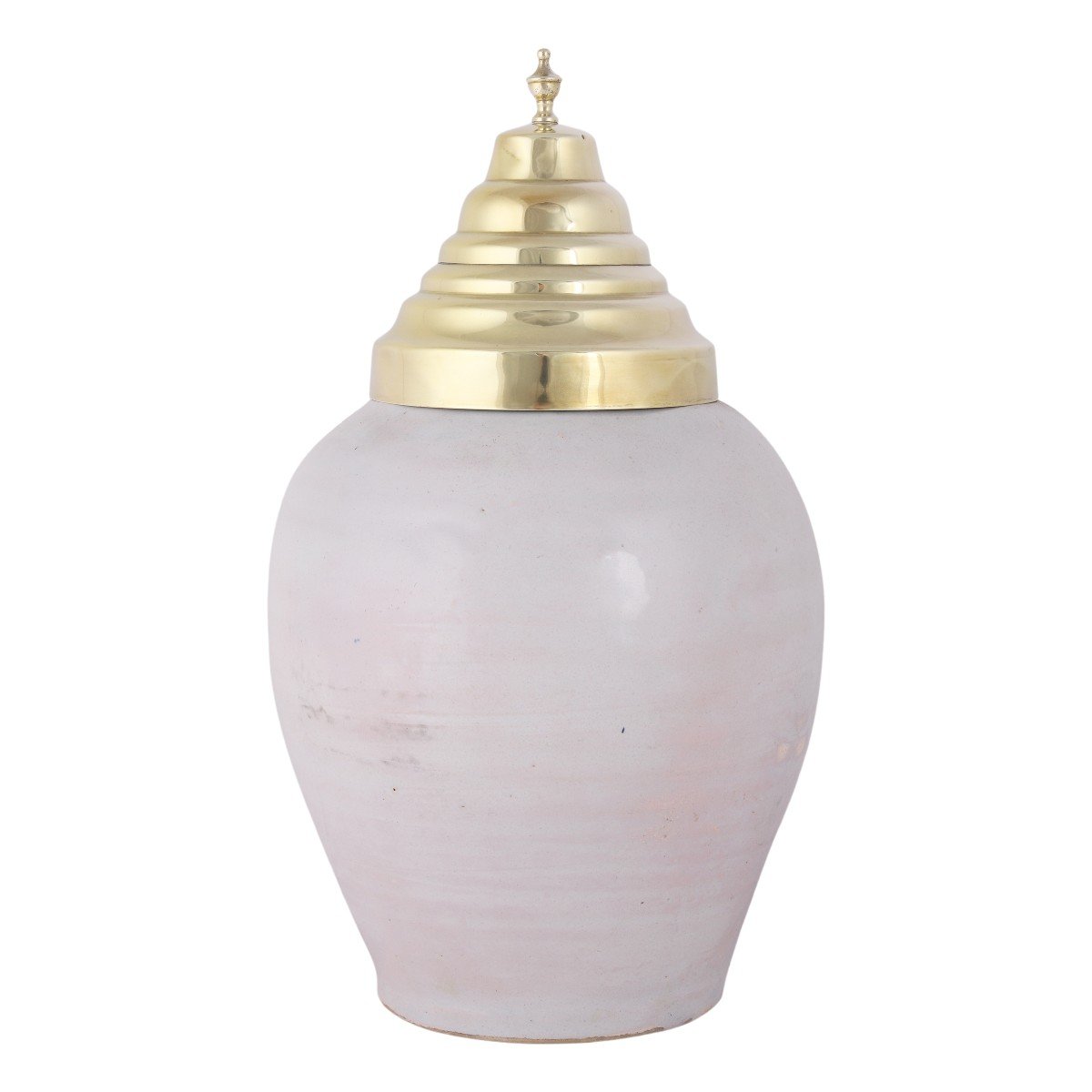
A genuine blue and white tobacco jar for storing tobacco with an original brass lid. The jar is inscribed Nagelgeu (clove) on a tobacco jar on a base. On the left, we see barrels of tobacco and a chest with the VOC monogram. On the right we see a Native American smoking a pipe, with a merchant ship in the distance. The mark refers to a mixture of snuff mixed with cloves. In the 18th century, tobacco became an integral part of social life. First appreciated in the 16th and 17th centuries for its exotic origins as a medicinal product, it later became popular as a stimulant. Tobacco was sold in specialist shops where traders stored it in large Delftware jars. Smaller jars were used for snuff (Rappe), as only small quantities were needed. These jars often bore inscriptions identifying specific blends, such as Kruidnagel (clove), Bergamot, Rozengeur (rose perfume), Tonka (tonka bean), and Violette. They also indicated the region of origin, including places like Havana, Macuba (Cuba), Martiniek (Martinique), Maryland, Puerto Rico (Puerto Rico), Virginia, St. Vincent, St. Omer, Baltimore, Duinkerken (Dunkirk), Eindhoven, etc., as well as larger areas such as the United States and Hollandia (Holland).
In addition to inscriptions, the jars were often decorated with decorative images. A common motif was an elaborate floral cartouche topped with a basket of flowers. Less commonly, the jars depicted Native Americans and Moors, symbolizing tobacco's exotic roots and its connection to slavery and plantations. Even rarer were jars bearing the VOC (Dutch East India Company) logo, an anomaly, as the WIC (West India Company) was responsible for trade with the Americas. The rarest designs included images of buildings, ships or other unique subjects, probably special orders.
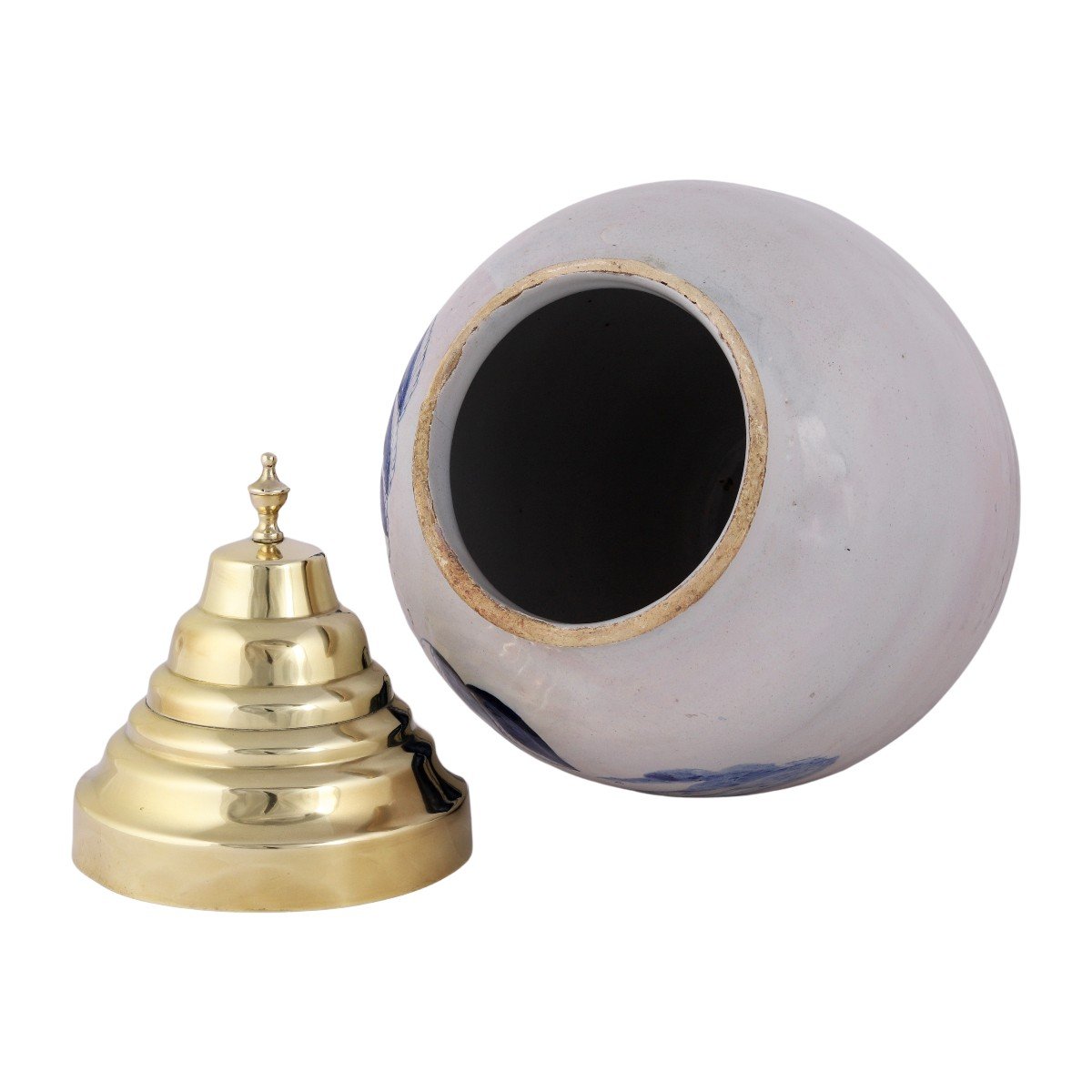
The jar is in good condition but has a few professionally restored breaks. Further with the normal small chips and wear of use, according to age.
1760 – 1800
Unknown workshop
A genuine blue and white tobacco jar for storing tobacco with an original brass lid. The jar is inscribed Nagelgeu (clove) on a tobacco jar on a base. On the left, we see barrels of tobacco and a chest with the VOC monogram. On the right we see a Native American smoking a pipe, with a merchant ship in the distance. The mark refers to a mixture of snuff mixed with cloves. In the 18th century, tobacco became an integral part of social life. First appreciated in the 16th and 17th centuries for its exotic origins as a medicinal product, it later became popular as a stimulant. Tobacco was sold in specialist shops where traders stored it in large Delftware jars. Smaller jars were used for snuff (Rappe), as only small quantities were needed. These jars often bore inscriptions identifying specific blends, such as Kruidnagel (clove), Bergamot, Rozengeur (rose perfume), Tonka (tonka bean), and Violette. They also indicated the region of origin, including places like Havana, Macuba (Cuba), Martiniek (Martinique), Maryland, Puerto Rico (Puerto Rico), Virginia, St. Vincent, St. Omer, Baltimore, Duinkerken (Dunkirk), Eindhoven, etc., as well as larger areas such as the United States and Hollandia (Holland).
In addition to inscriptions, the jars were often decorated with decorative images. A common motif was an elaborate floral cartouche topped with a basket of flowers. Less commonly, the jars depicted Native Americans and Moors, symbolizing tobacco's exotic roots and its connection to slavery and plantations. Even rarer were jars bearing the VOC (Dutch East India Company) logo, an anomaly, as the WIC (West India Company) was responsible for trade with the Americas. The rarest designs included images of buildings, ships or other unique subjects, probably special orders.
The jar is in good condition but has a few professionally restored breaks. Further with the normal small chips and wear of use, according to age.
Explore similar pieces and discover your ideal find:
Faience Vases and Decorative Objects