THIS OBJECT WAS SOLD
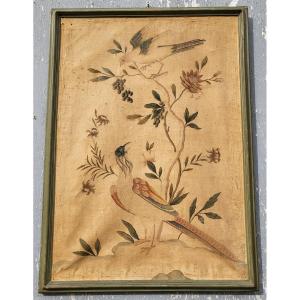
Jean-baptiste Le Prince (1734-1781) Chinoiseries Scene 1751/1754.
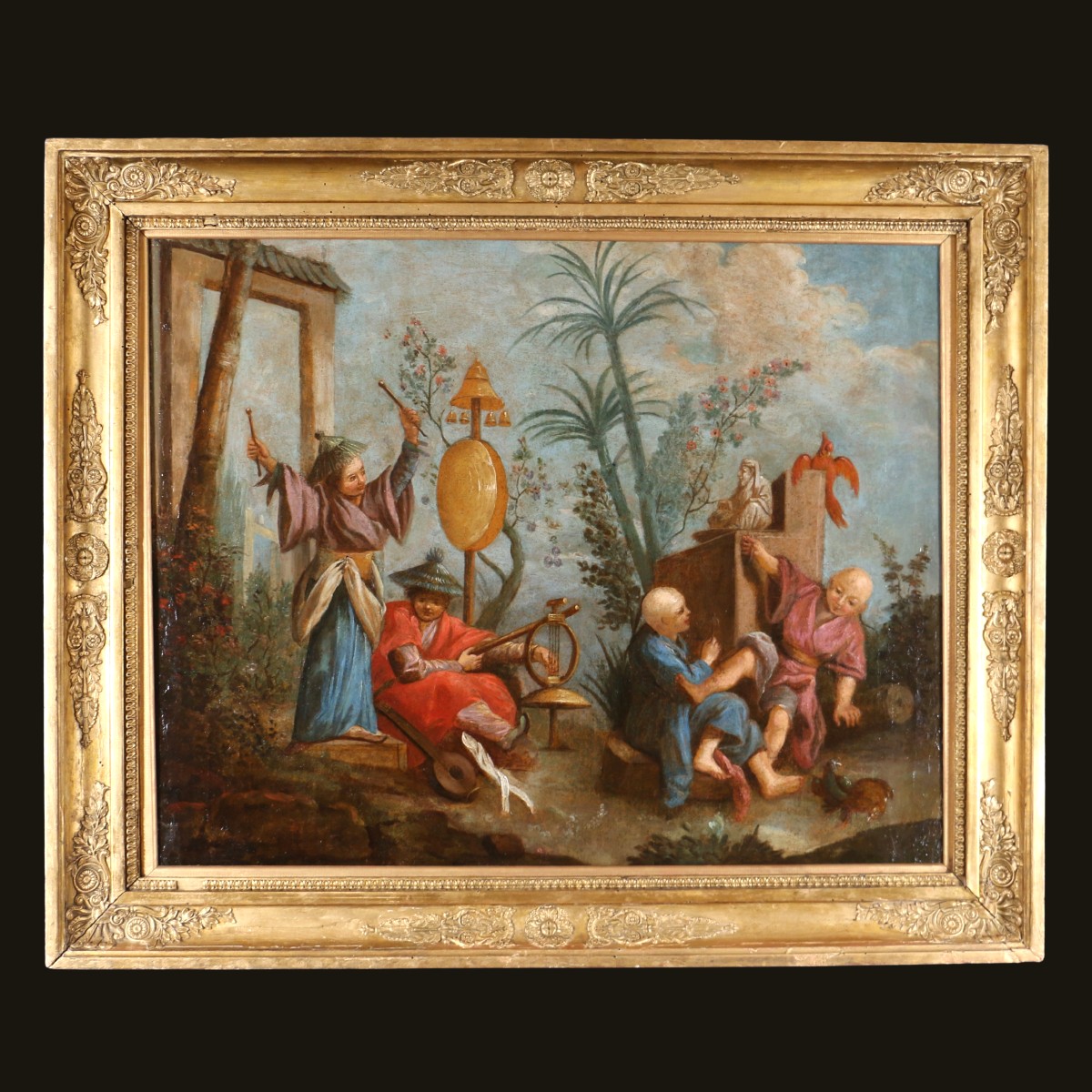
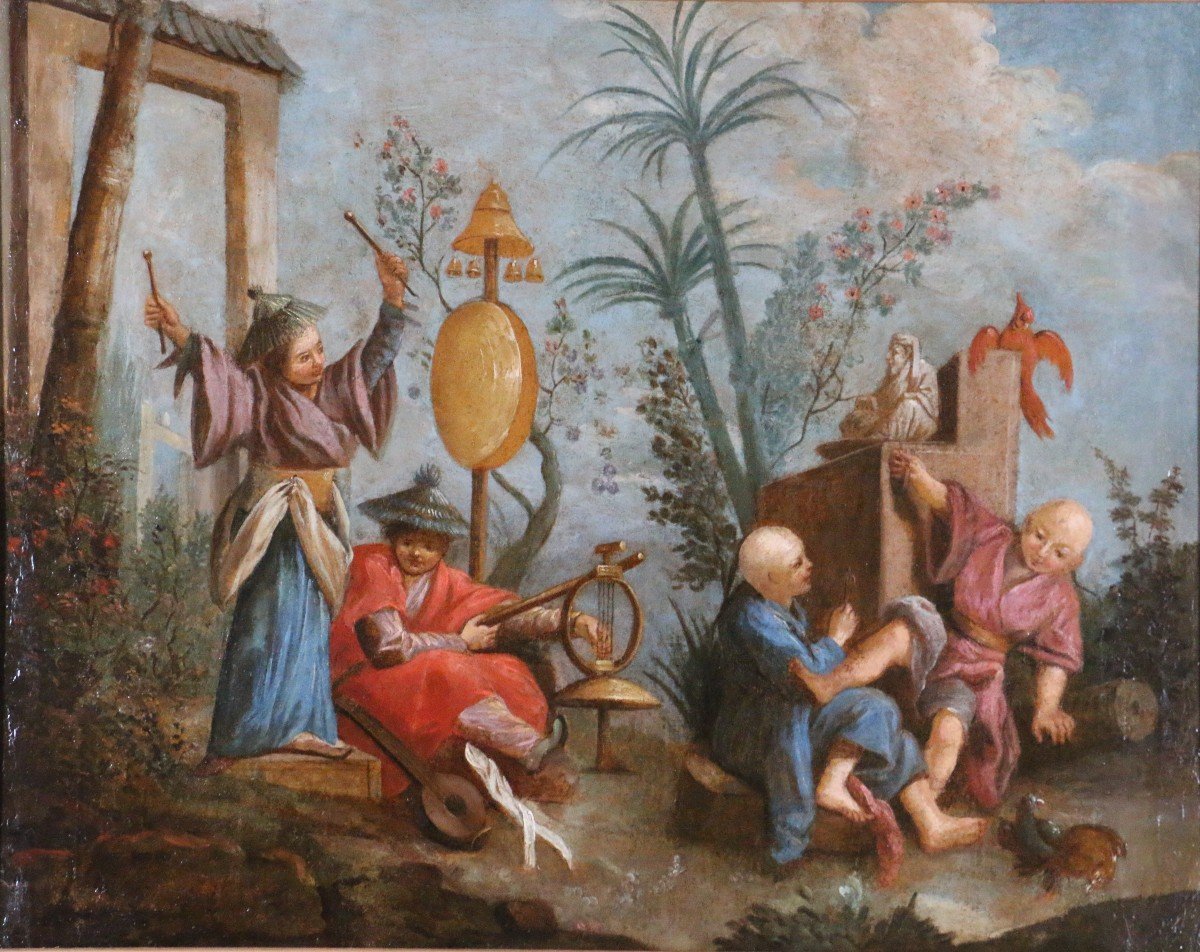


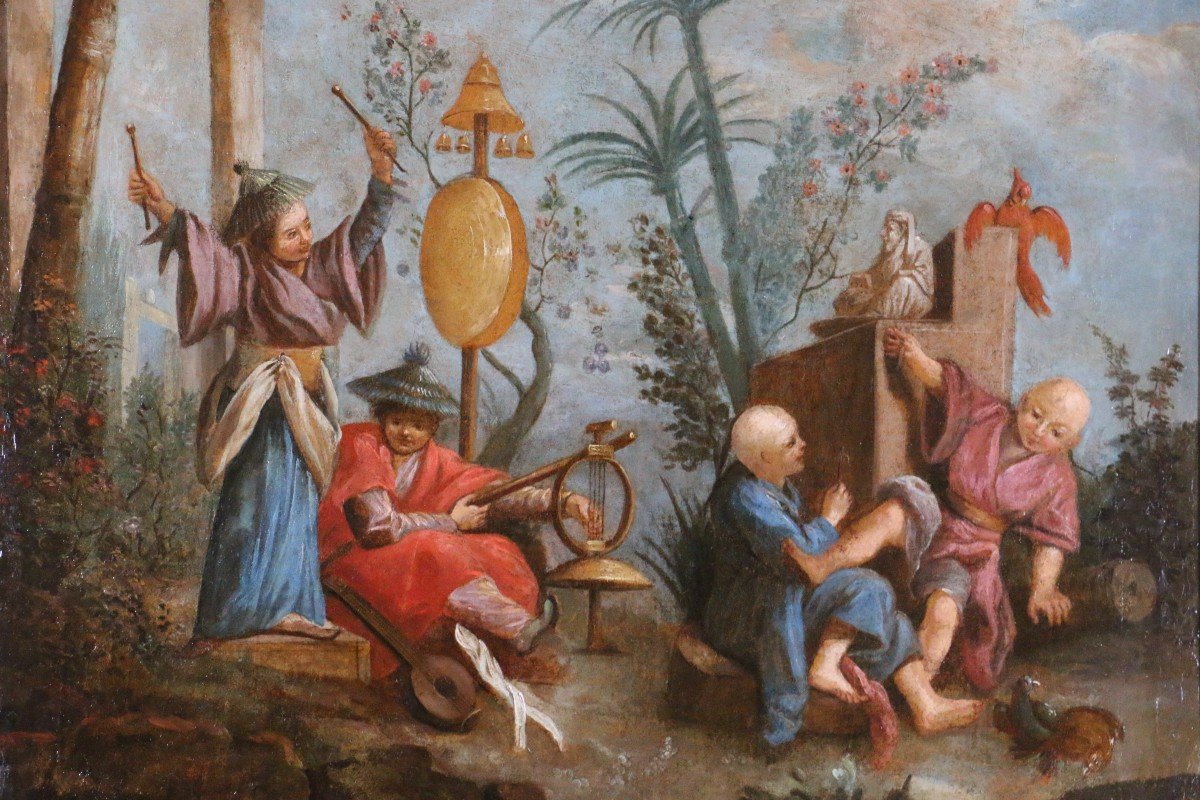
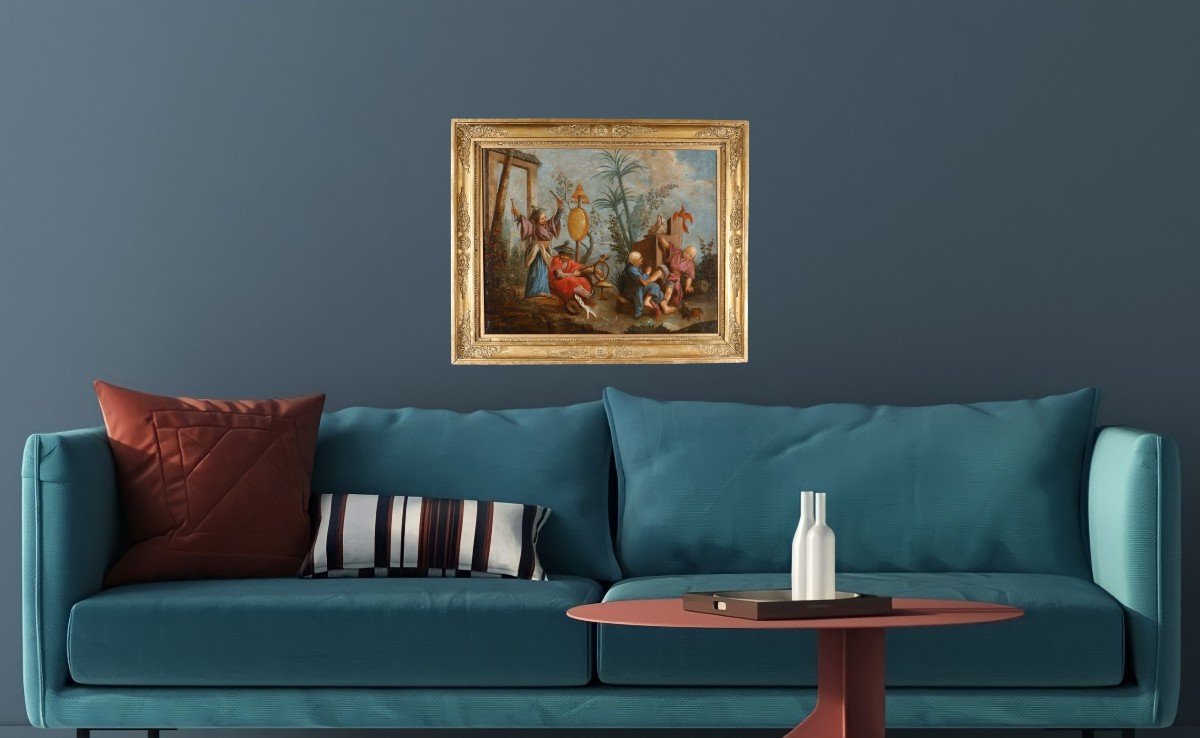
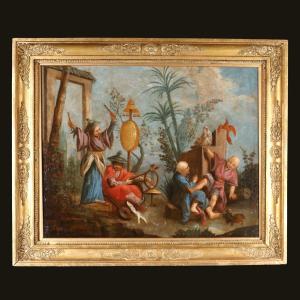


Jean-Baptiste Le Prince (1734-1781) Chinoiserie Scene 1751/1754.
Canvas 85 by 68 cm.
Old frame 105.5 by 87 cm.
This superb painting is part of a series of chinoiserie by the artist that is gradually being rediscovered (2013, auction house van Ham Kunstauktion in Cologne, "Chinoiserie. Oil on canvas. Double-sided. 140 x 102 cm. Frame. Le Prince draws in his Chinoiserie paintings by the love of detailed plants". Sotheby's New York in 2004: "Chinoiserie with a Man Smoking a Pipe"). Our painting is thus the third one found to date.
Jean-Baptiste Le Prince (1734-1781)
Jean-Baptiste Le Prince was born on September 17, 1734 in Metz in the family of a master sculptor and gilder. Around the age of seventeen, he obtained a pension from the Marshal of Belle-Isle, governor of Metz, whom he accompanied to Paris where he took academic courses and became a student of François Boucher. His first Rococo style works were inspired by the work of the master and in particular his chinoiserie.
Among the French artists of the 18th century who went to work abroad, Le Prince occupies an original position.
In 1754 he left for Italy. He returned with drawings of ruins, six of which were engraved by Saint-Non in 1756. He also visited Holland.
In 1758, Jean-Baptiste Le Prince undertook a trip to Russia, where he met up with two of his brothers. As he had not been invited by the Russian court, he undertook a real adventure trip to Siberia and Kamchatka, a territory that was still untouched.
Equipped with letters of recommendation, he introduced himself to the French ambassador, the Marquis de l'Hôpital, who obtained commissions for him from the Russian nobility as well as from Empress Elizabeth. This is how he painted some ceilings in the Winter Palace. He then continued his journey to Moscow, Livonia, Finland and to the far reaches of Siberia.
From this trip he brought back a rich collection of drawings, landscapes, human types and costumes, as well as objects and clothing from the different peoples of Russia. This collection served him throughout his life because when he returned to Paris in 1763, he used his knowledge and invented a new style that could be called "russeries" alongside "turqueries" and other "chinoiseries".
He proposed his "russeries" from his reception piece at the Academy: the Russian Baptism (1765, Louvre), then he published between 1764 and 1774, engravings on life in Russia (etchings: Various Clothing of Muscovite Women, 1763; the Cradle, aquatint, 1769). On this same theme, he composed tapestry cartoons, the Russian Games, for the royal factory of Beauvais (1767-1770); hangings woven under Charron and Menou between 1769 and 1791; 4 pieces of the 7th hanging of the Russian Games, woven before 1778, preserved at the Archbishop's Museum in Aix-en-Provence). Other works include Self-portrait (Tarbes Museum), Guardhouse (1776, Louvre), View of Place Louis-XV in Paris (Besançon Museum) and Russian scenes at the Angers Museum (1770), the Magnin Museum in Dijon, the Rouen Museum, and the Saint-Jean-Cap-Ferrat Museum.
Jean-Baptiste Le Prince died on September 30, 1781 in Saint-Denis-du-Port (today Lagny-sur-Marne in Seine-et-Marne).
Canvas 85 by 68 cm.
Old frame 105.5 by 87 cm.
This superb painting is part of a series of chinoiserie by the artist that is gradually being rediscovered (2013, auction house van Ham Kunstauktion in Cologne, "Chinoiserie. Oil on canvas. Double-sided. 140 x 102 cm. Frame. Le Prince draws in his Chinoiserie paintings by the love of detailed plants". Sotheby's New York in 2004: "Chinoiserie with a Man Smoking a Pipe"). Our painting is thus the third one found to date.
Jean-Baptiste Le Prince (1734-1781)
Jean-Baptiste Le Prince was born on September 17, 1734 in Metz in the family of a master sculptor and gilder. Around the age of seventeen, he obtained a pension from the Marshal of Belle-Isle, governor of Metz, whom he accompanied to Paris where he took academic courses and became a student of François Boucher. His first Rococo style works were inspired by the work of the master and in particular his chinoiserie.
Among the French artists of the 18th century who went to work abroad, Le Prince occupies an original position.
In 1754 he left for Italy. He returned with drawings of ruins, six of which were engraved by Saint-Non in 1756. He also visited Holland.
In 1758, Jean-Baptiste Le Prince undertook a trip to Russia, where he met up with two of his brothers. As he had not been invited by the Russian court, he undertook a real adventure trip to Siberia and Kamchatka, a territory that was still untouched.
Equipped with letters of recommendation, he introduced himself to the French ambassador, the Marquis de l'Hôpital, who obtained commissions for him from the Russian nobility as well as from Empress Elizabeth. This is how he painted some ceilings in the Winter Palace. He then continued his journey to Moscow, Livonia, Finland and to the far reaches of Siberia.
From this trip he brought back a rich collection of drawings, landscapes, human types and costumes, as well as objects and clothing from the different peoples of Russia. This collection served him throughout his life because when he returned to Paris in 1763, he used his knowledge and invented a new style that could be called "russeries" alongside "turqueries" and other "chinoiseries".
He proposed his "russeries" from his reception piece at the Academy: the Russian Baptism (1765, Louvre), then he published between 1764 and 1774, engravings on life in Russia (etchings: Various Clothing of Muscovite Women, 1763; the Cradle, aquatint, 1769). On this same theme, he composed tapestry cartoons, the Russian Games, for the royal factory of Beauvais (1767-1770); hangings woven under Charron and Menou between 1769 and 1791; 4 pieces of the 7th hanging of the Russian Games, woven before 1778, preserved at the Archbishop's Museum in Aix-en-Provence). Other works include Self-portrait (Tarbes Museum), Guardhouse (1776, Louvre), View of Place Louis-XV in Paris (Besançon Museum) and Russian scenes at the Angers Museum (1770), the Magnin Museum in Dijon, the Rouen Museum, and the Saint-Jean-Cap-Ferrat Museum.
Jean-Baptiste Le Prince died on September 30, 1781 in Saint-Denis-du-Port (today Lagny-sur-Marne in Seine-et-Marne).
Explore similar pieces and discover your ideal find:
Other Paintings