THIS OBJECT WAS SOLD
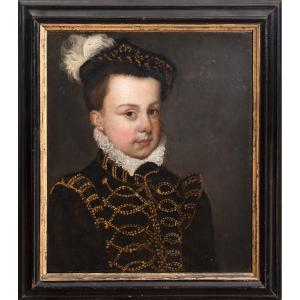
Entourage Of Théodore Géricault (1791–1824) Portrait Of A Young Boy Circa 1830.
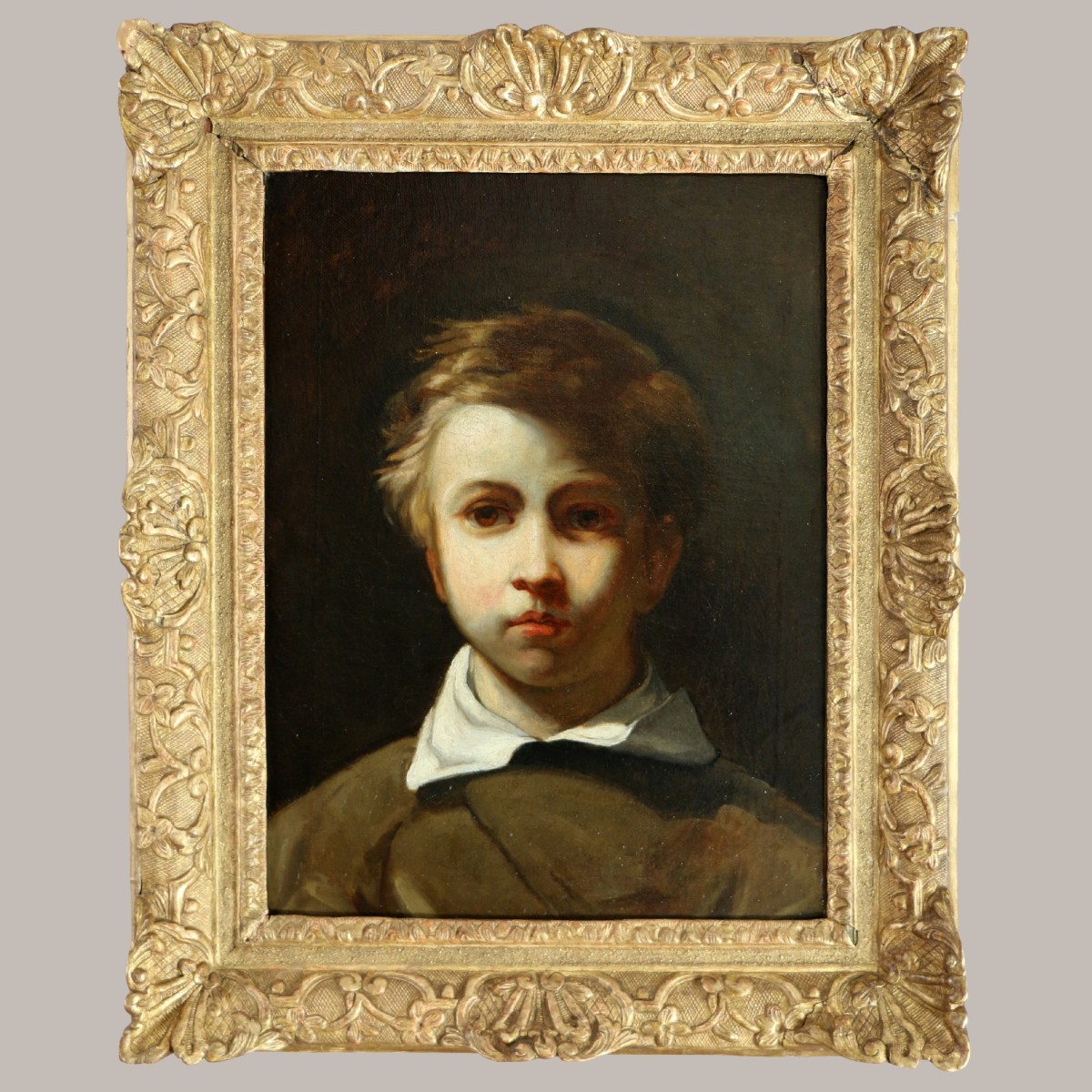
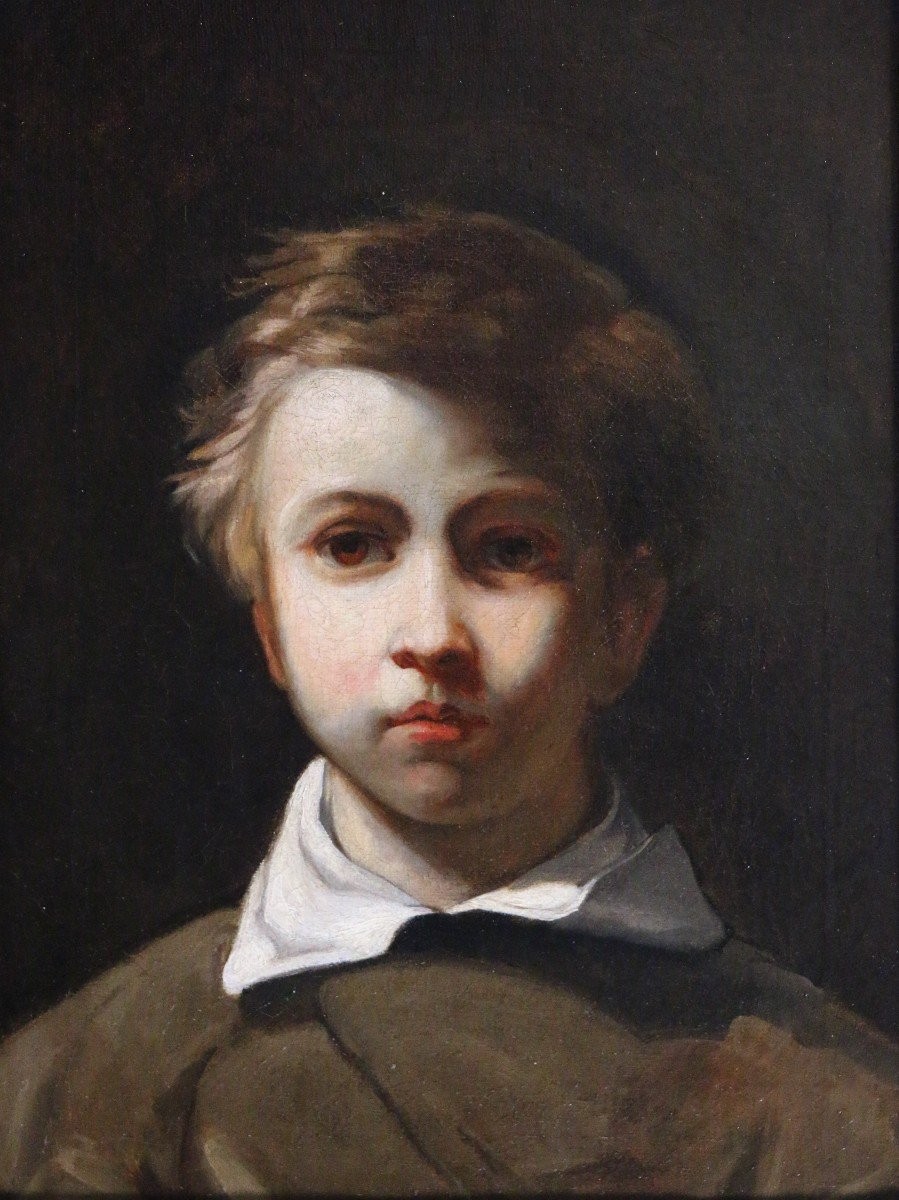


Circle of Théodore Géricault (1791–1824) Portrait of a young boy circa 1830.
Relined canvas measuring 50 x 37 cm.
Old frame measuring 66 x 54 cm.
This very beautiful canvas is strongly inspired by certain portraits painted by Géricault. The studies lead us to a French painter of the Romantic school circa 1830/1840.
Théodore Géricault (1791–1824)
A fiery and tormented personality, Théodore Géricault (1791–1824) is, with Eugène Delacroix, the incarnation of the French Romantic painter. The painter, fascinated by morbid themes, was also a great lover of horses, which he represented in many works. Eugène Delacroix spoke of Géricault thus: "The movement, the soul, the eye of the horse, its coat, the brilliance of its reflections, that is what he rendered like no one else." Théodore Géricault studied in 1810 in the studio of the painter Carle Vernet, a specialist in hunting scenes, and there he met his son, Horace Vernet. He then studied with Pierre-Narcisse Guérin, before enrolling, on February 5, 1811, at the École des Beaux-Arts in Paris. Géricault then practiced assiduously copying at the Louvre Museum. A precocious talent, Géricault quickly gained public and critical recognition for his military subjects. In 1812, aged 21, he received the gold medal at the Salon for his Officer of Horse Hunters of the Imperial Guard Charging, currently in the Louvre (inv. INV 4885). Two years later, he exhibited Cuirassier blessé quittant le feu (Paris, Musée du Louvre, inv. INV 4886) at the Salon. After a year's stay in Italy where he immersed himself in the works of Michelangelo and Raphael, he returned to Paris in 1817. Denouncing literary romanticism, "that sensitivity excited only by winds, storms and moonlight", he increasingly sought inspiration from contemporary events. The Taming of the Bulls (Cambridge, Mass., Fogg Art Museum), inspired by the sacrifice of Mithra (drawing in the Louvre) and probably painted shortly after his return to Paris, is still imbued with the Roman atmosphere. The scandal of the sinking of the Medusa offered him another opportunity at the same time that he did not let pass. The Raft of the Medusa (1819, sketches in Rouen and the Louvre) is the last completed work in Géricault's career where his classical culture finally prevailed, as in The Race of the Barbed Horses, over the "modern" and realistic representation of the scene. Géricault completed The Raft of the Medusa in a studio in the Faubourg du Roule, near the Beaujon hospital, whose frequentation allowed him to execute a number of studies of corpses and limbs of tortured people in striking relief.
Relined canvas measuring 50 x 37 cm.
Old frame measuring 66 x 54 cm.
This very beautiful canvas is strongly inspired by certain portraits painted by Géricault. The studies lead us to a French painter of the Romantic school circa 1830/1840.
Théodore Géricault (1791–1824)
A fiery and tormented personality, Théodore Géricault (1791–1824) is, with Eugène Delacroix, the incarnation of the French Romantic painter. The painter, fascinated by morbid themes, was also a great lover of horses, which he represented in many works. Eugène Delacroix spoke of Géricault thus: "The movement, the soul, the eye of the horse, its coat, the brilliance of its reflections, that is what he rendered like no one else." Théodore Géricault studied in 1810 in the studio of the painter Carle Vernet, a specialist in hunting scenes, and there he met his son, Horace Vernet. He then studied with Pierre-Narcisse Guérin, before enrolling, on February 5, 1811, at the École des Beaux-Arts in Paris. Géricault then practiced assiduously copying at the Louvre Museum. A precocious talent, Géricault quickly gained public and critical recognition for his military subjects. In 1812, aged 21, he received the gold medal at the Salon for his Officer of Horse Hunters of the Imperial Guard Charging, currently in the Louvre (inv. INV 4885). Two years later, he exhibited Cuirassier blessé quittant le feu (Paris, Musée du Louvre, inv. INV 4886) at the Salon. After a year's stay in Italy where he immersed himself in the works of Michelangelo and Raphael, he returned to Paris in 1817. Denouncing literary romanticism, "that sensitivity excited only by winds, storms and moonlight", he increasingly sought inspiration from contemporary events. The Taming of the Bulls (Cambridge, Mass., Fogg Art Museum), inspired by the sacrifice of Mithra (drawing in the Louvre) and probably painted shortly after his return to Paris, is still imbued with the Roman atmosphere. The scandal of the sinking of the Medusa offered him another opportunity at the same time that he did not let pass. The Raft of the Medusa (1819, sketches in Rouen and the Louvre) is the last completed work in Géricault's career where his classical culture finally prevailed, as in The Race of the Barbed Horses, over the "modern" and realistic representation of the scene. Géricault completed The Raft of the Medusa in a studio in the Faubourg du Roule, near the Beaujon hospital, whose frequentation allowed him to execute a number of studies of corpses and limbs of tortured people in striking relief.
Explore similar pieces and discover your ideal find:
Portraits