THIS OBJECT WAS SOLD
Edouard Cazaux - The Birth Of Venus - Earthenware Vase


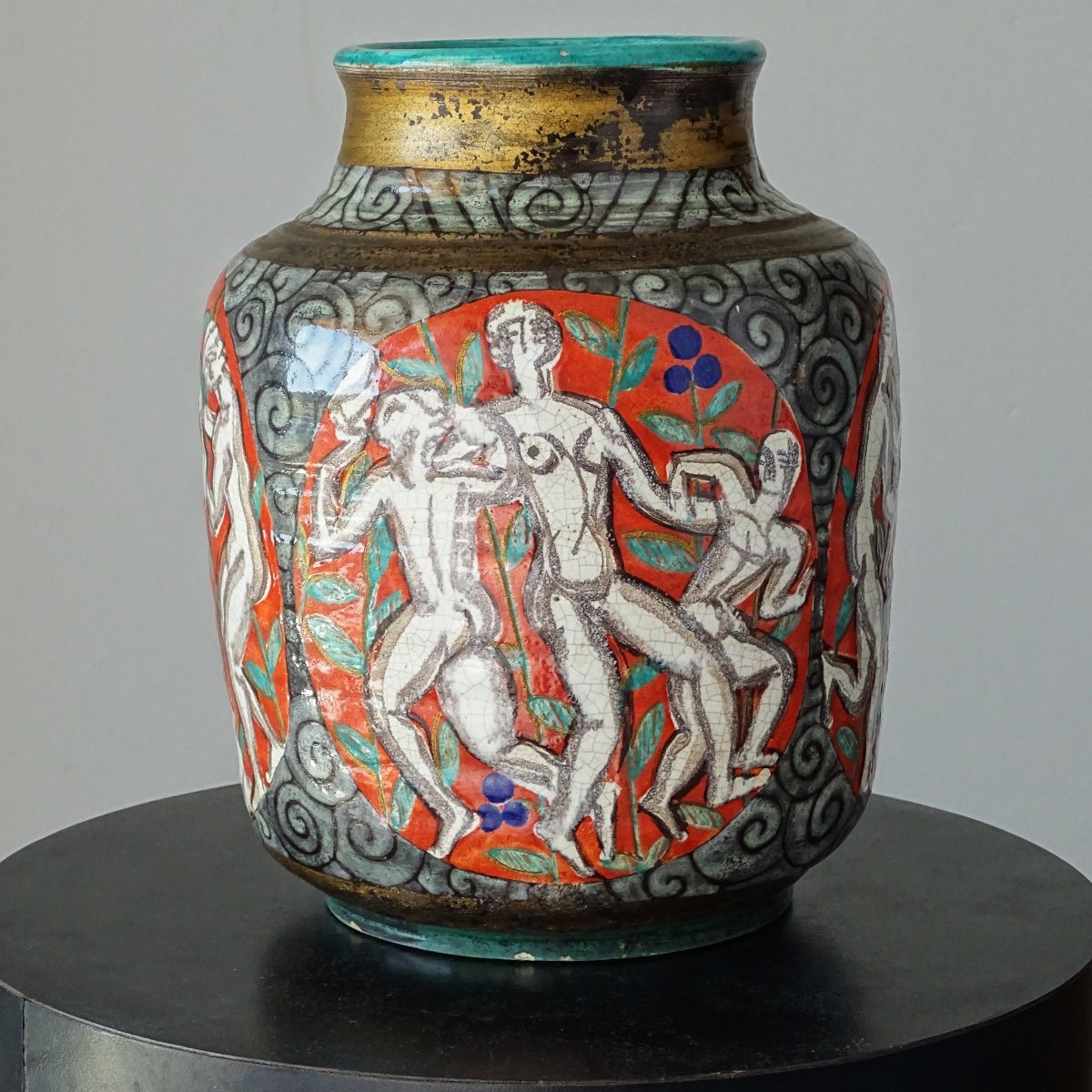
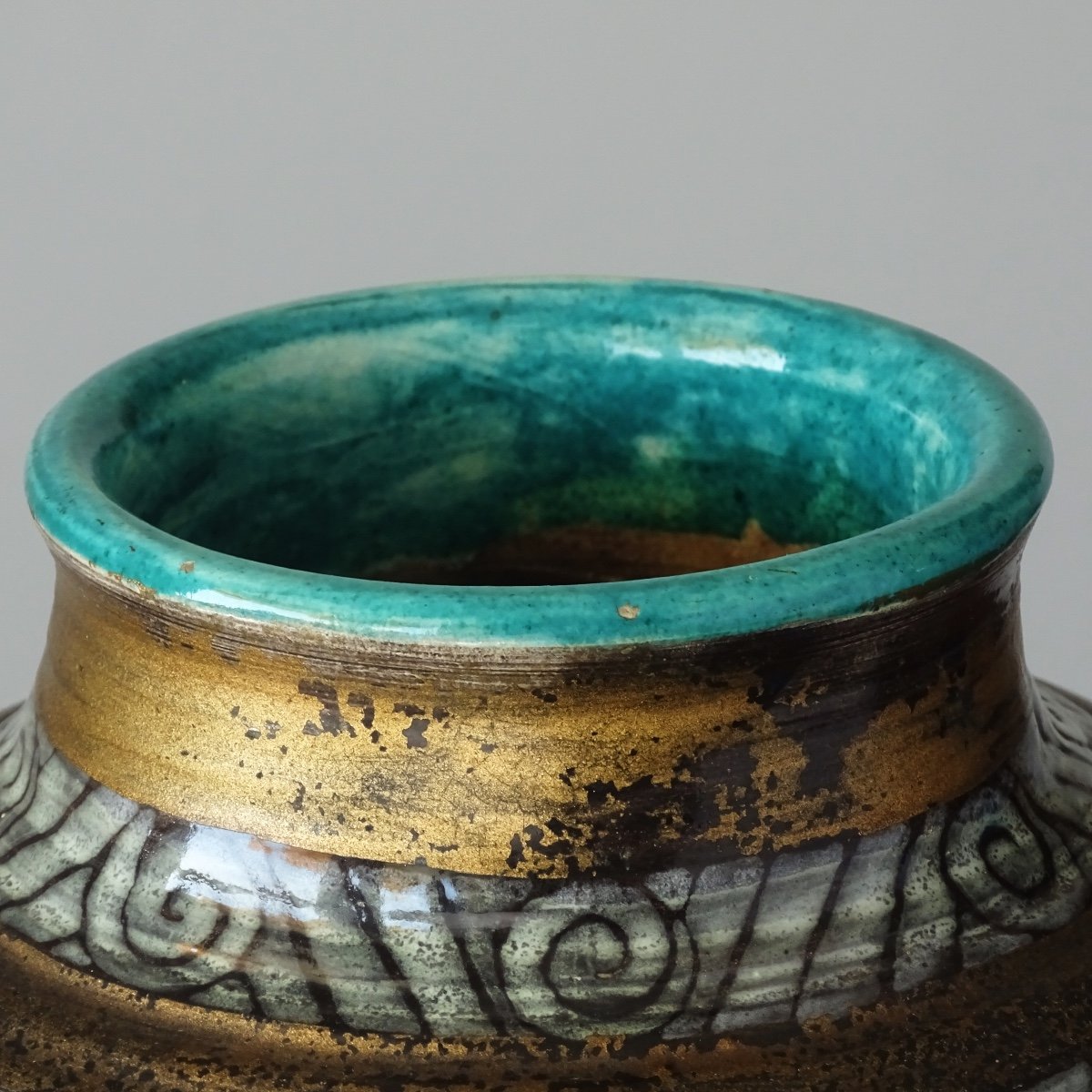



This exceptional vase, created around 1935 by the renowned ceramist Édouard Cazaux, is a remarkable example of the Art Deco movement. This ovoid-shouldered faience vase is decorated with a frieze of figures within polychrome enamel medallions set against a vermilion background. The design is enhanced with anthracite and black spirals, accented with gold highlights, and topped with an elegant green collar.
The four medallions feature three classical scenes: "The Birth of Venus", "The Battle with the Octopus", and "The Games of the Sea", similar to the themes Cazaux used for his famous fountain created in 1935, now displayed at the Musée de la Mer in Biarritz. Unusually, Cazaux's signature is present, a rare feature that adds significant value to this vase.
Designed purely as a work of art, the vase is not glazed on the inside, confirming its decorative purpose. This is a unique, well-documented collector's piece, ideal for Art Deco enthusiasts.
Literature:Yvonne Brunhammer, Armand Amann, Marie-Laure Perrin, and Mireille Cazaux-Charon, Édouard Cazaux, céramiste-sculpteur d'Art Déco, Éditions Monelle Hayot, 1996, pages 121, 124, and 125.
Artist Biography:
Édouard Cazaux (1889-1974) is considered one of the greatest ceramists of his generation. He grew up in his family's pottery workshop, later honing his skills at the École des Beaux-Arts in Sèvres, where he mastered the art of ceramics. Working with prominent artists like Edmond Lachenal, Cazaux distinguished himself as both a sculptor and ceramist.
He began exhibiting his work in Parisian salons as early as 1921, winning numerous awards, including the gold medal at the 1937 World Exhibition. His glass and ceramic creations, including his famous "Grès Norton", have left a lasting mark on art history. Today, his works are showcased in several museums, including the Musée des Arts Décoratifs in Paris.
Literature: Mireille Cazaux-Charon, Yvonne Brunhammer, Armand Amann, Marie-Laure Perrin, Édouard Cazaux, céramiste-sculpteur Art déco, Éditions Monelle Hayot, 1994, pages 121, 124, and 125.
The four medallions feature three classical scenes: "The Birth of Venus", "The Battle with the Octopus", and "The Games of the Sea", similar to the themes Cazaux used for his famous fountain created in 1935, now displayed at the Musée de la Mer in Biarritz. Unusually, Cazaux's signature is present, a rare feature that adds significant value to this vase.
Designed purely as a work of art, the vase is not glazed on the inside, confirming its decorative purpose. This is a unique, well-documented collector's piece, ideal for Art Deco enthusiasts.
Literature:
Édouard Cazaux (1889-1974) is considered one of the greatest ceramists of his generation. He grew up in his family's pottery workshop, later honing his skills at the École des Beaux-Arts in Sèvres, where he mastered the art of ceramics. Working with prominent artists like Edmond Lachenal, Cazaux distinguished himself as both a sculptor and ceramist.
He began exhibiting his work in Parisian salons as early as 1921, winning numerous awards, including the gold medal at the 1937 World Exhibition. His glass and ceramic creations, including his famous "Grès Norton", have left a lasting mark on art history. Today, his works are showcased in several museums, including the Musée des Arts Décoratifs in Paris.
Literature:
Explore similar pieces and discover your ideal find:
other ceramics