THIS OBJECT WAS SOLD
Maternity: 18th Century Earthenware Group, South Of France


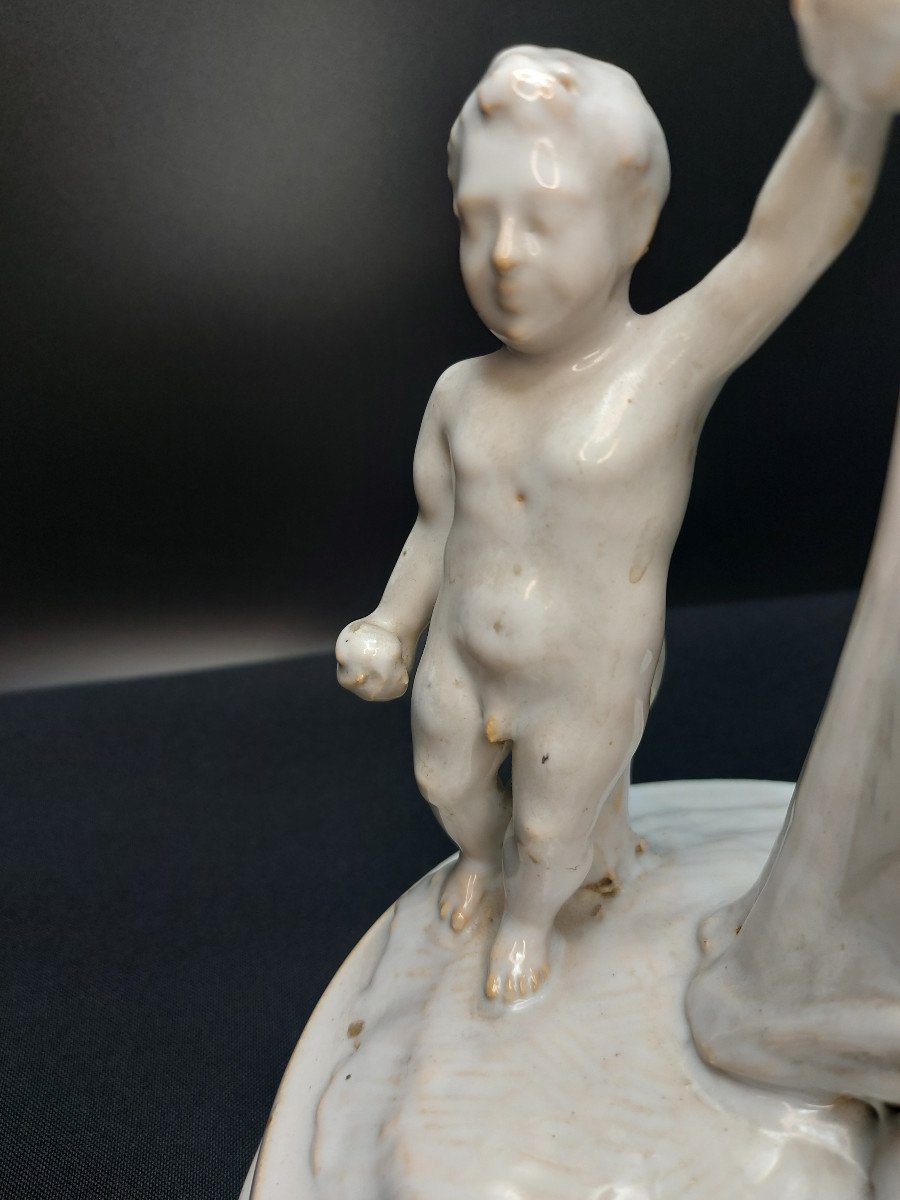


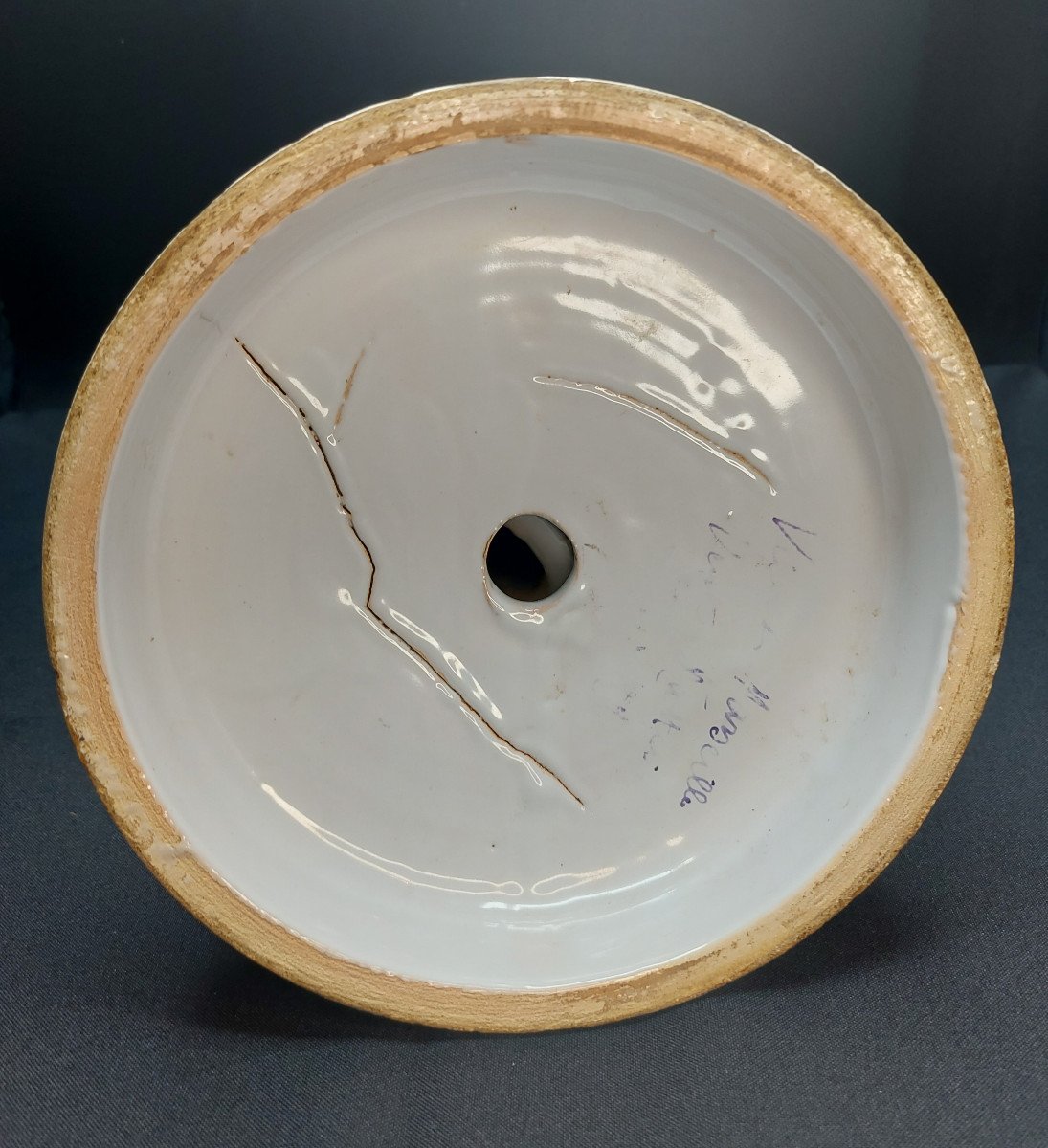


Very rare earthenware group from the south of France, Moustiers or Marseilles, in the guise of Cornelia and her sons. It represents a woman dressed and coiffed in the antique style on a circular mound accompanied by three naked children. A child is sitting on the edge of the terrace, his left arm raised, he is holding a bunch of fruit in his right hand. The second child is holding his mother by the hand and is carrying a fruit in his right hand. The third, younger child, sitting in his mother's arms is holding on to his mother's clothing with his right hand, his left arm is missing. Beautiful white enamel with a very shiny glaze, through which the pink terracotta quite characteristic of the earthenware of Moustiers and its surroundings shows through in places. Firing cracks under the base, small firing defect on the mother's head. I consider this object to be in good condition. The charming scene symbolizes the family and more particularly motherhood through a theme from Roman antiquity: Cornelia and the Gracchi (three surviving sons out of twelve). In Roman society, women take an important place, a recognizable and privileged status as soon as they have children, more particularly from three children, as encouraged by a law aimed at promoting more births; she is then called "matron". Extracts from (thanks Internet) https://odysseum.eduscol.education.fr/les-matrones-romaines The matron is recognizable by her appearance. She wears a long tunic (stola) which covers her body and symbolizes her dignity. When she goes out, she covers herself with a cloak (palla). […]Several cults in Rome are dedicated to matrons since they concern fertility, the protection of childbirth or encourage matronly virtues.[…] There are many other events such as the Matronalia (Matrons' Day on March 1st), the Carmentalia, a festival dedicated to the protection of childbirth (mid-January) or the cult of Modesty, only accessible to women who have only known one marriage (univirae) in a quest for sexual purity. Note: this earthenware group could be a commission: maternity gift, wedding gift, an idea of protection for the family… Delivery: €25 for metropolitan France.
Explore similar pieces and discover your ideal find:
Faience Serveware