THIS OBJECT WAS SOLD
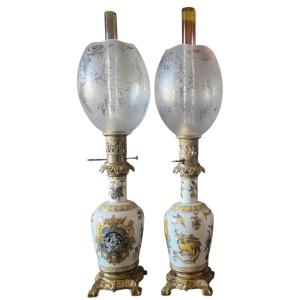
Pair Of Ulysse Besnard Faïence De Blois 1884 Electrified Lamps
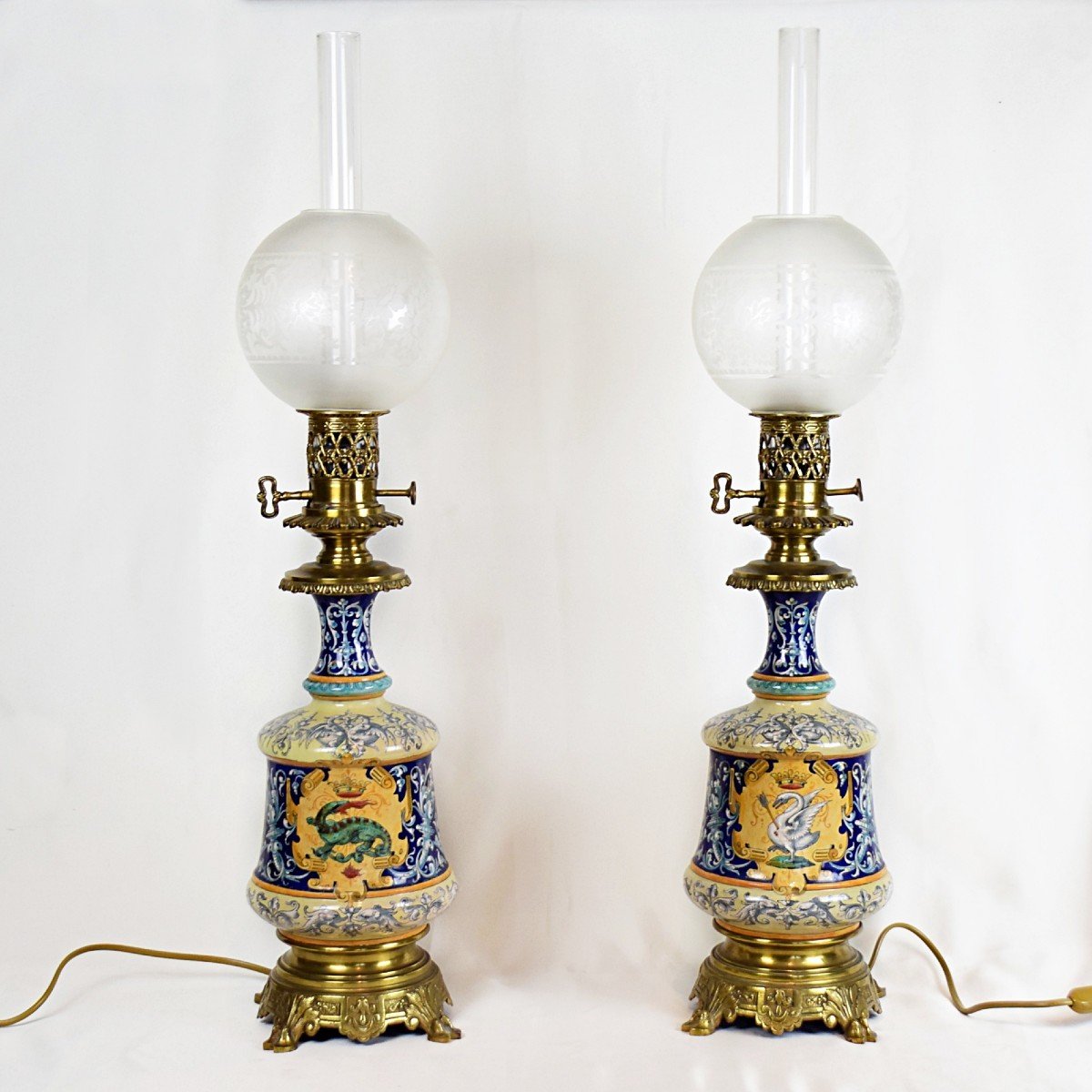


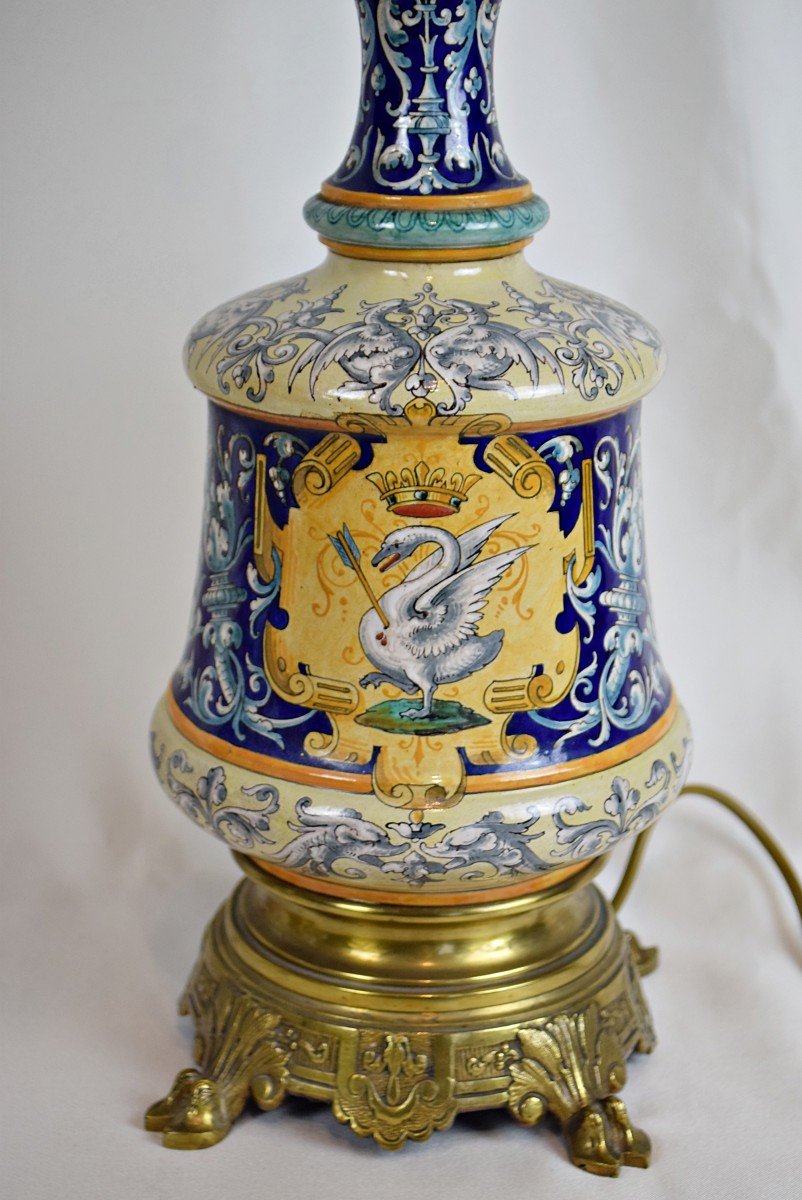
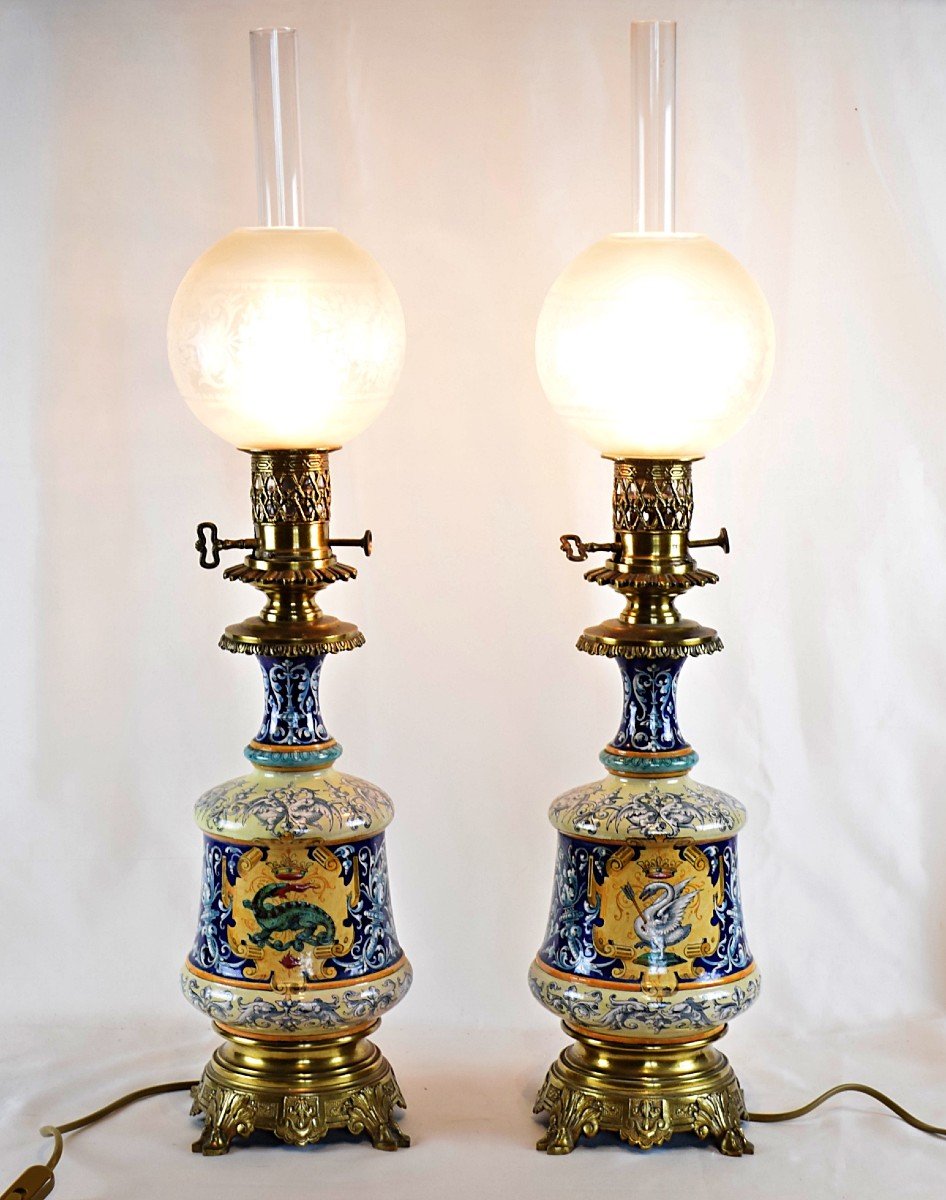

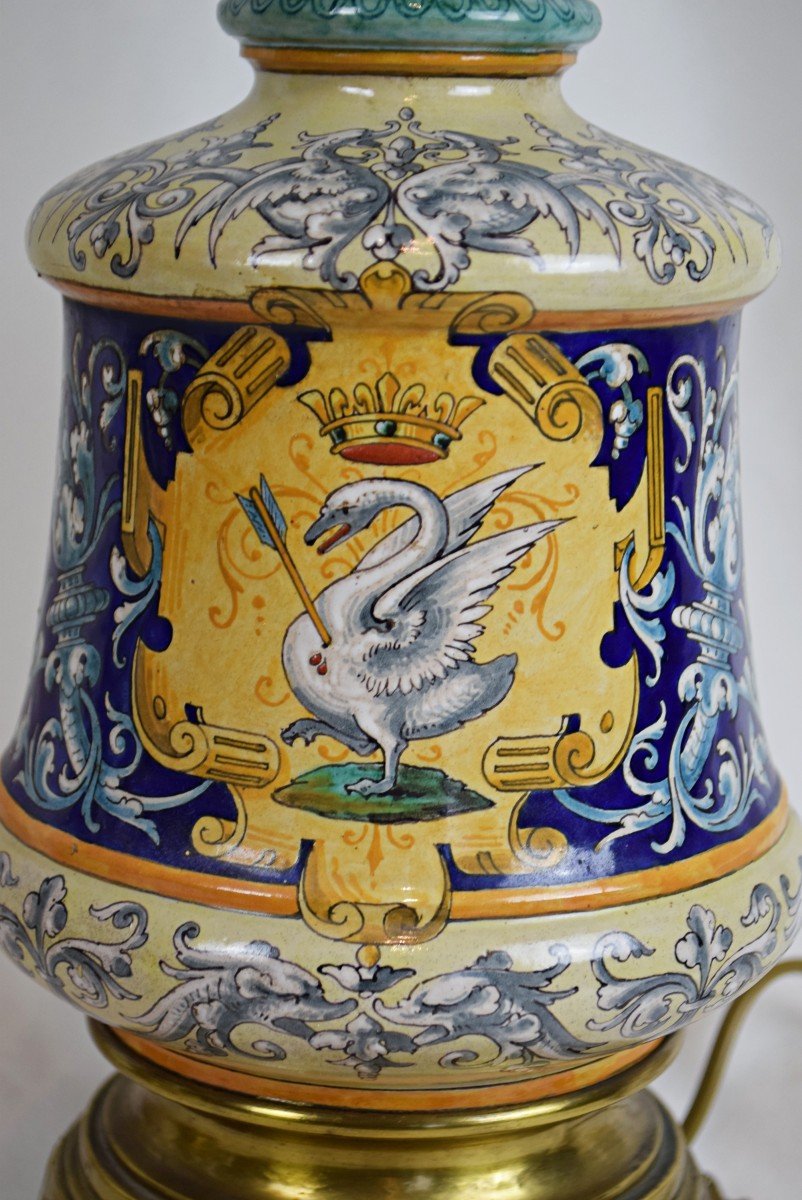


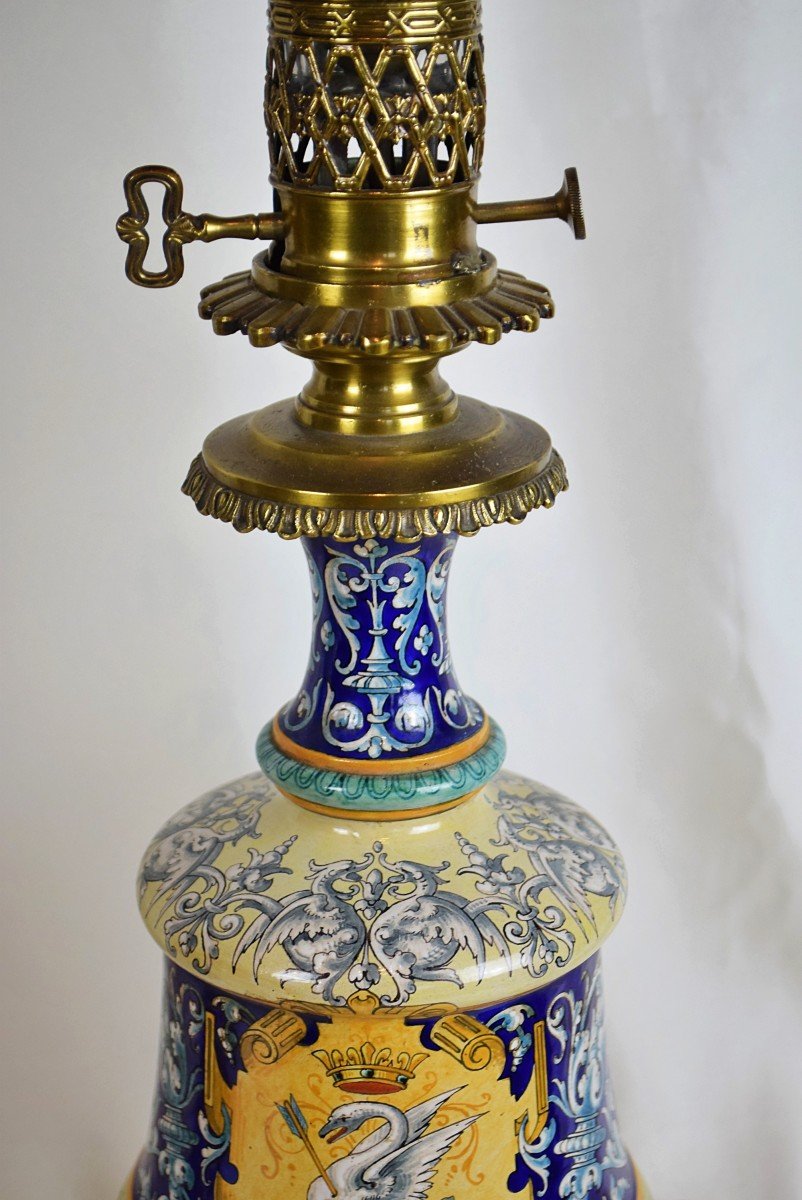
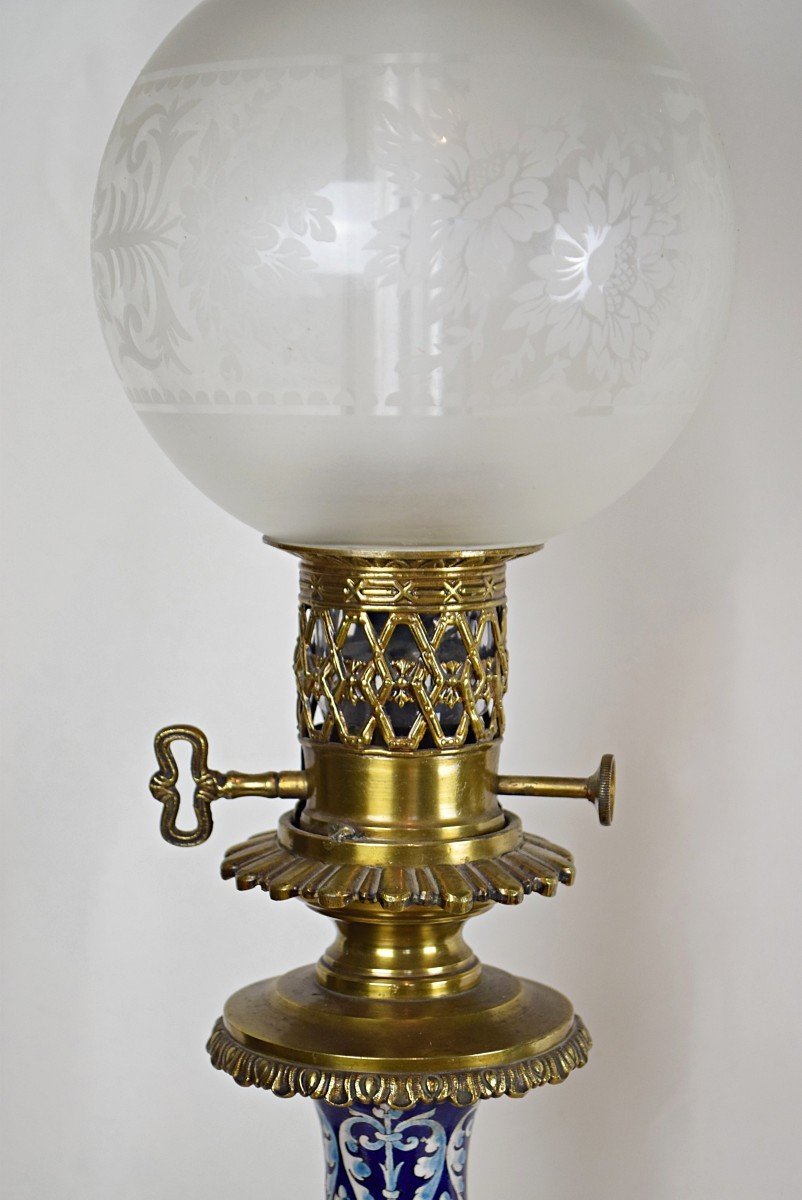

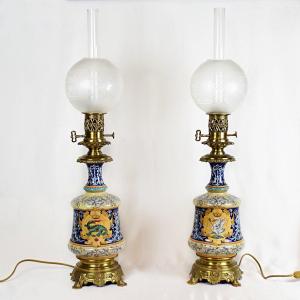


Pair of electrified kerosene lamps in Blois earthenware signed Ulysse Besnard known as Ulysse, with polychrome Renaissance decoration bearing the effigy of François I and Claude de France. In a parchment cartridge, one lamp represents a crowned salamander, emblem of François I, the other lamp represents the swan pierced with an arrow called the “heartbroken” swan, emblem of Claude de France, wife of François I. On the other side of each vase the same decoration of parchment ribbon unrolling a message “To Monsieur Gausserès, Grateful Memory, P. de Rochambeau, November 20, 1884”. The frames are in bronze and gilded brass. These lamps, as well as their glassware, are in very good condition, the globes are in frosted glass with rotating floral decoration. The electrification works perfectly. Total height 70 cm, width 15 cm. The journey of Blois earthenware began with Ulysse Besnard, a gifted painter who turned to ceramics in the early 1860s. His creations, inspired by the shapes and decorations of Italian Renaissance majolica, enjoyed immediate success. Born in Blois on August 24, 1826, Ulysse Besnard left his mark as a painter, ceramist, museum curator and entrepreneur. His life and work are closely linked to the city that saw him grow up. After completing his classical studies at the minor seminary, Ulysse Besnard decided to devote his life to art. He trained in drawing and painting in the studio of the famous painter Victor Chavet in Paris, an experience that laid the foundation for his promising artistic career. In 1857, he created one of his first major works, “Henri III and His Mignons,” a state commission for the Blois Museum, where the painting is still on display today. In 1858, Besnard chose to return to Blois, while continuing to participate in Parisian artistic events. On his return, he took over the management of the city's museum, becoming its first curator. At the same time, he offered free drawing lessons three times a week at the town hall, thanks to the support of the municipality of Eugène Riffault. Ulysse Besnard's workshop in Blois quickly became a meeting place for many artists and intellectuals, including Arthur Trouëssart and Raoul de Saint Vincent. They gathered regularly to paint and benefit from the advice of Master Besnard. The workshop, which had become too cramped, was then moved to an attic on rue du Commerce, above the Benoist-Javary bookstore, giving birth in 1886 to the Society of Friends of the Arts. In 1861, Ulysse Besnard decided to explore another aspect of his artistic expression by launching into decoration on earthenware. The following year he founded his own earthenware factory on Quai des Imberts (currently Quai Ulysse Besnard). Success came quickly and by the end of 1863, he was overwhelmed with orders. In 1865, he already employed four decorators. In the space of six years, from 1862 to 1867, the factory produced nearly 5,000 pieces. It reached eleven thousand pieces in 1876. In 1886, Ulysse Besnard retired and left the management of his factory to his student Émile Balon. He died in 1899.
Explore similar pieces and discover your ideal find:
Oil lamps