THIS OBJECT WAS SOLD
Bézoard Ring In Silver – Auvergne 16th 17th Century – Extremely Rare Object


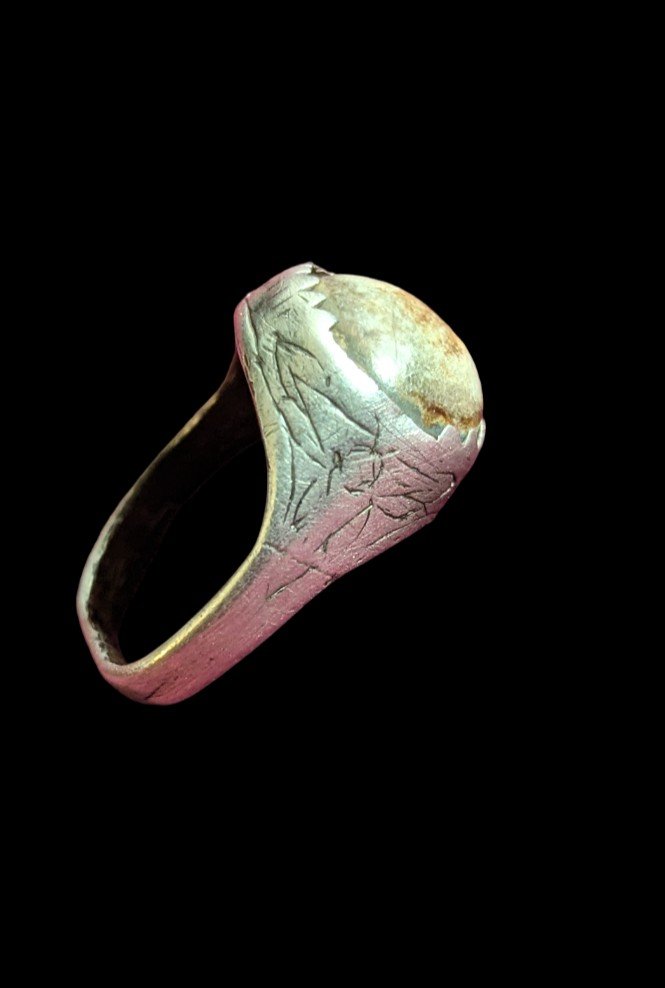
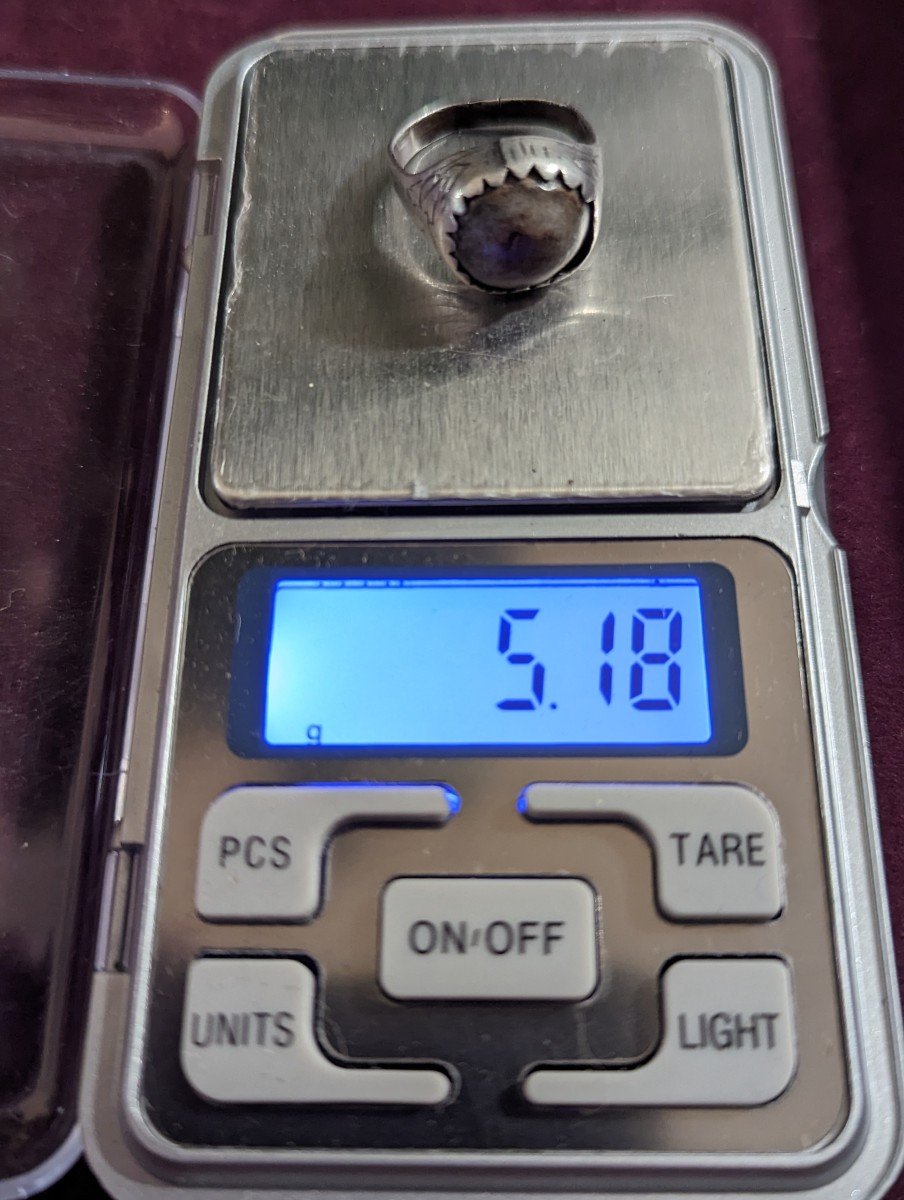
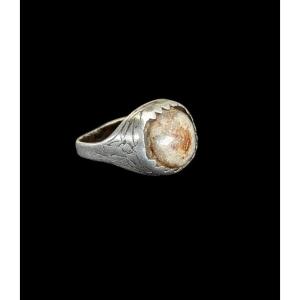


We present to you this extremely rare silver bezoar ring. The bezoar is set in a round wolf-toothed bezel. The gray and brownish stone on top has the resemblance of an eye. On the sides of the ring, engravings difficult to interpret. No visible hallmarks. Silver tested. The ring weighs 5.18g and measures 19mm around the finger. This is a real old bezoar ring and not a late assembly! Auvergne, probably 16th or 17th century. Extremely rare item on the market. History of the bezoar and bezoar rings The bezoar is a mineral concretion which forms in the digestive tract of certain ruminants. It is supposed to treat bites and stings from venomous animals and, by extension, poisonings. It was applied directly to wounds to extract the venom. In Europe, from the end of the 12th to the 18th century, the bezoar stone was therefore considered a precious object to the point of being worn as a pendant, a ring, or displayed, decorated with gold as a collector's item in the cabinets of curiosities. Bezoars are also described as embedded in objects of religious heritage. This is particularly the case for reliquary objects from the 12th to the 14th century such as those from the Trier treasure (Gospel cover) and masterpieces of Limousin goldsmithing, all described by archaeologists and historiographers, Léon Palustre and Xavier Barbier de Montault (1886 a and b). Ernest Rupin (1890). In 1886, the journalist Edmond Lainé wrote in the columns of the newspaper Le Dixie siècle, on the occasion of the International Exhibition of Industrial Sciences and Arts of 1886 in Paris where the most beautiful shrines and reliquaries of the work of Limoges were presented : “The reader is aware that the bezoar is the stony concretion which forms in the pocket of animals and which is a source of food. Bezoars were used as amulets for healing eye diseases. The most sought after were those of the monkey and the toad. Even today, the peasant of Auvergne uses the bezoar as an amulet, and more commonly the agate. » Precious object that princely families and scholars collected. Encased in a silver setting, the bezoar has become “the ring of the Auvergne sorcerer”. Seen from the front, the bezoar looks like an eye. A few rare examples of these Auvergne wizards' rings are kept at the Maison de la Ronade in Salers.
Explore similar pieces and discover your ideal find:
rings