THIS OBJECT WAS SOLD
Neolithic, Circa -5000 Bc, Lithophone In Carved & Polished Ryolite, Sahara / Ténéré




Archeology / Curiosity
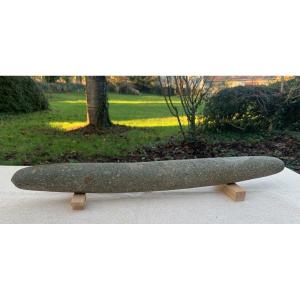
Exceptional and extremely rare stone caved and polished lithophone from Neolithic period,
Origin Ténéré or Nigerian Sahara desert,
collected in the 1970's (family tradition)
This curious tube is quite simply the origin of the first musical instruments created by human, in Neolithic period.
This lithophone was cut in order to transmit a more or less high-pitched sound when its surface is delicately tapped.
Supported on 2 thin supports, its user delicately struck the center of the cylinder using a mediator (stone or wood?).
tube in order to produce a more or less high-pitched crystalline sound, particularly depending on the contact part chosen (a bit like a xylophone)
This precious tube is made of rhyolite, a blue-green stone containing numerous small natural inclusions white to light pink color, speckling its surface.
Dating between -8000 and -3000 BC
"Experiencing the powerful feeling of holding a real and authentic polished stone tool made by a prehistoric man, who himself had it in his hands almost 10,000 years ago, then lost and buried under the desert dunes for so many years, is moving and simply... confusing!”
The magic is even more in type of item, linked to curiosity and pleasure of senses - music, which definitively differentiates Human from other species on Earth.
Dimensions 63cm length * approximately 7cm diameter (at the widest)
Weight approximately 5kg
Perfect condition (No fel and no breakage)
Context
The Sahara and the Ténéré provided many of these objects from Neolithic. During this period, the Sahara was not the immense desert that we know today. Greenish meadow areas rich in flora and fauna covered it. Neolithic civilizations had settled there and prospered, developing agriculture and hunting. But around 5000 BC, climate change, made the area arid and gradually forced civilizations to completely leave what would become the Sahara desert, and reach the coasts. This phenomenon of desertification was quite long and increased over several thousand years. This is why many tools from agriculture, hunting and even spirituality are found in the desert.
Exceptional and extremely rare stone caved and polished lithophone from Neolithic period,
Origin Ténéré or Nigerian Sahara desert,
collected in the 1970's (family tradition)
This curious tube is quite simply the origin of the first musical instruments created by human, in Neolithic period.
This lithophone was cut in order to transmit a more or less high-pitched sound when its surface is delicately tapped.
Supported on 2 thin supports, its user delicately struck the center of the cylinder using a mediator (stone or wood?).
tube in order to produce a more or less high-pitched crystalline sound, particularly depending on the contact part chosen (a bit like a xylophone)
This precious tube is made of rhyolite, a blue-green stone containing numerous small natural inclusions white to light pink color, speckling its surface.
Dating between -8000 and -3000 BC
"Experiencing the powerful feeling of holding a real and authentic polished stone tool made by a prehistoric man, who himself had it in his hands almost 10,000 years ago, then lost and buried under the desert dunes for so many years, is moving and simply... confusing!”
The magic is even more in type of item, linked to curiosity and pleasure of senses - music, which definitively differentiates Human from other species on Earth.
Dimensions 63cm length * approximately 7cm diameter (at the widest)
Weight approximately 5kg
Perfect condition (No fel and no breakage)
Context
The Sahara and the Ténéré provided many of these objects from Neolithic. During this period, the Sahara was not the immense desert that we know today. Greenish meadow areas rich in flora and fauna covered it. Neolithic civilizations had settled there and prospered, developing agriculture and hunting. But around 5000 BC, climate change, made the area arid and gradually forced civilizations to completely leave what would become the Sahara desert, and reach the coasts. This phenomenon of desertification was quite long and increased over several thousand years. This is why many tools from agriculture, hunting and even spirituality are found in the desert.
Explore similar pieces and discover your ideal find:
archeology