
Horseman Called Putchu Guinadji - Kotoko Culture, Central Africa - 19th Century
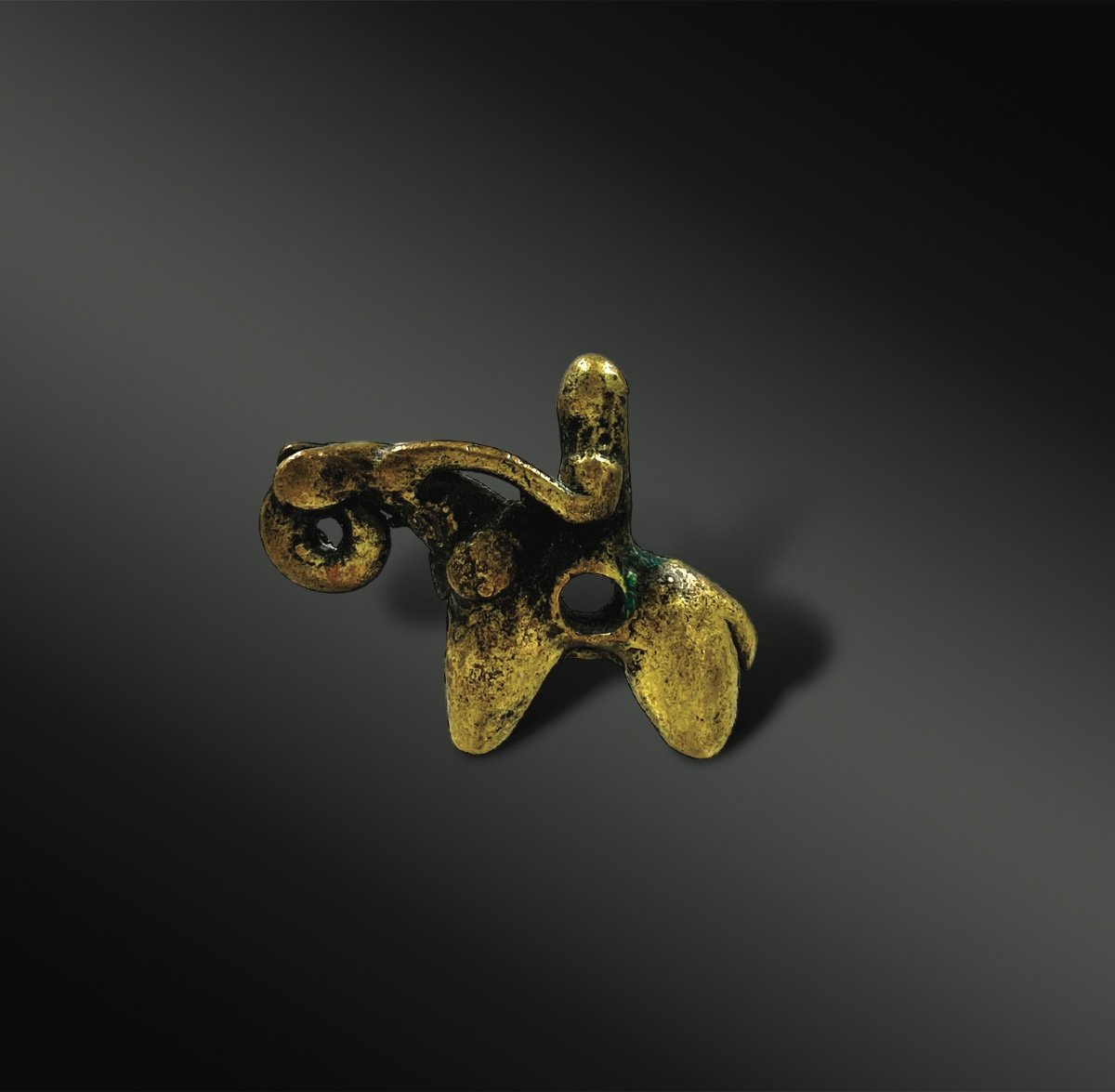
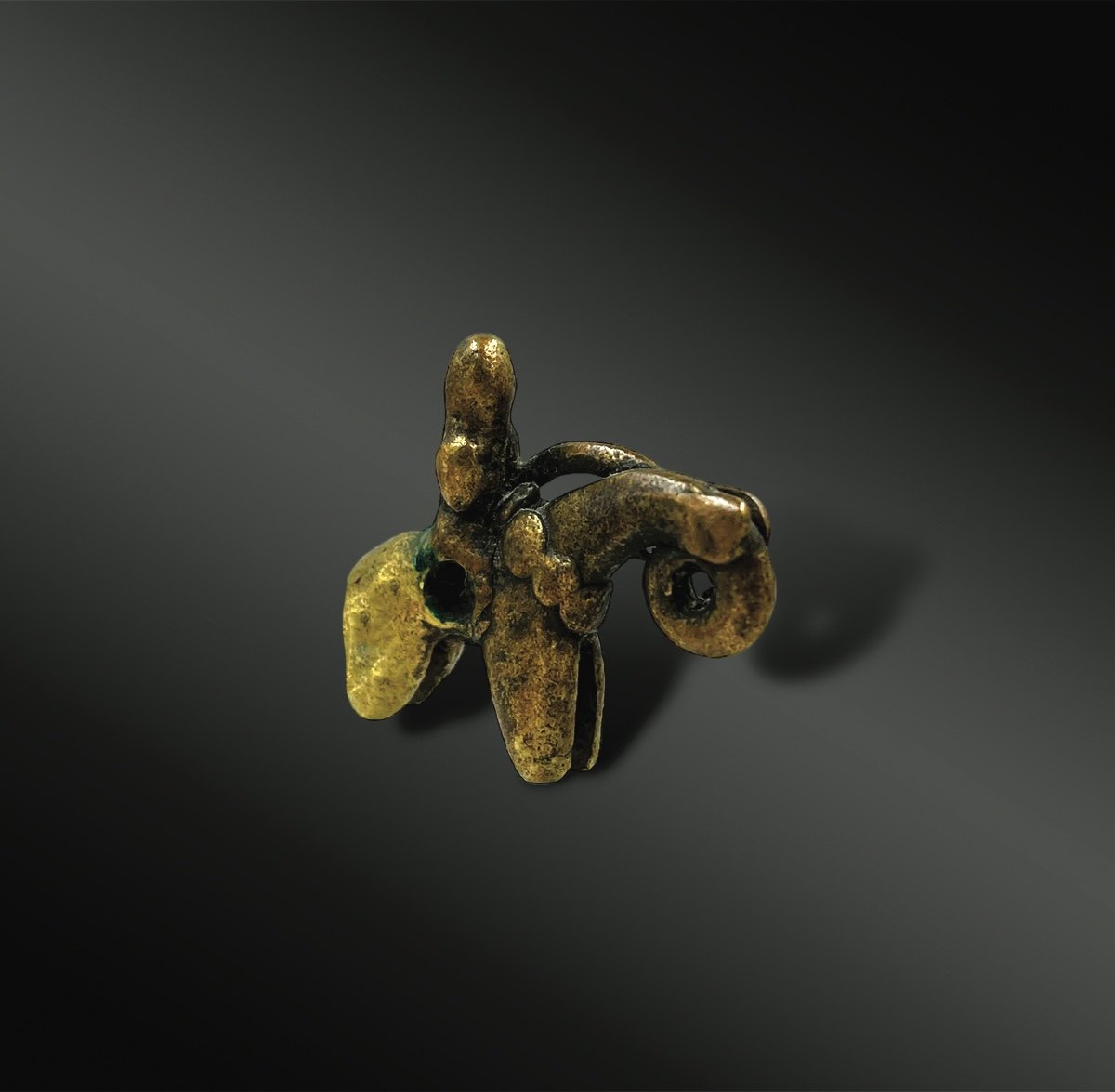
TALISMAN representing a RIDER. Kotoko culture, Central Africa, 19th century Brass; H.: 3.6; W.: 4.5 cm
This horseman, also known as the Kotoko Horseman, refers to a magical force in the Sao culture. The horse represents the unwell, while the man on the mount, who usually has no distinct features, refers to the evil spirit.
The Putchu guinadji, literally translated as "horses of madness", had the ability to ward off madness or insanity from the individual who wore this figurine as an amulet. Its small size meant that it could be carried everywhere by its owner, sometimes for several years.
It is said that the Sao are the ancestors of the Kotoko.
No.3 in the "Bronzes, monumental miniatures" exhibition-sale.
This horseman, also known as the Kotoko Horseman, refers to a magical force in the Sao culture. The horse represents the unwell, while the man on the mount, who usually has no distinct features, refers to the evil spirit.
The Putchu guinadji, literally translated as "horses of madness", had the ability to ward off madness or insanity from the individual who wore this figurine as an amulet. Its small size meant that it could be carried everywhere by its owner, sometimes for several years.
It is said that the Sao are the ancestors of the Kotoko.
No.3 in the "Bronzes, monumental miniatures" exhibition-sale.
160 €
Period: 19th century
Style: Tribal Art
Condition: Excellent condition
Material: Other
Reference (ID): 1220875
Availability: In stock
Print