THIS OBJECT WAS SOLD
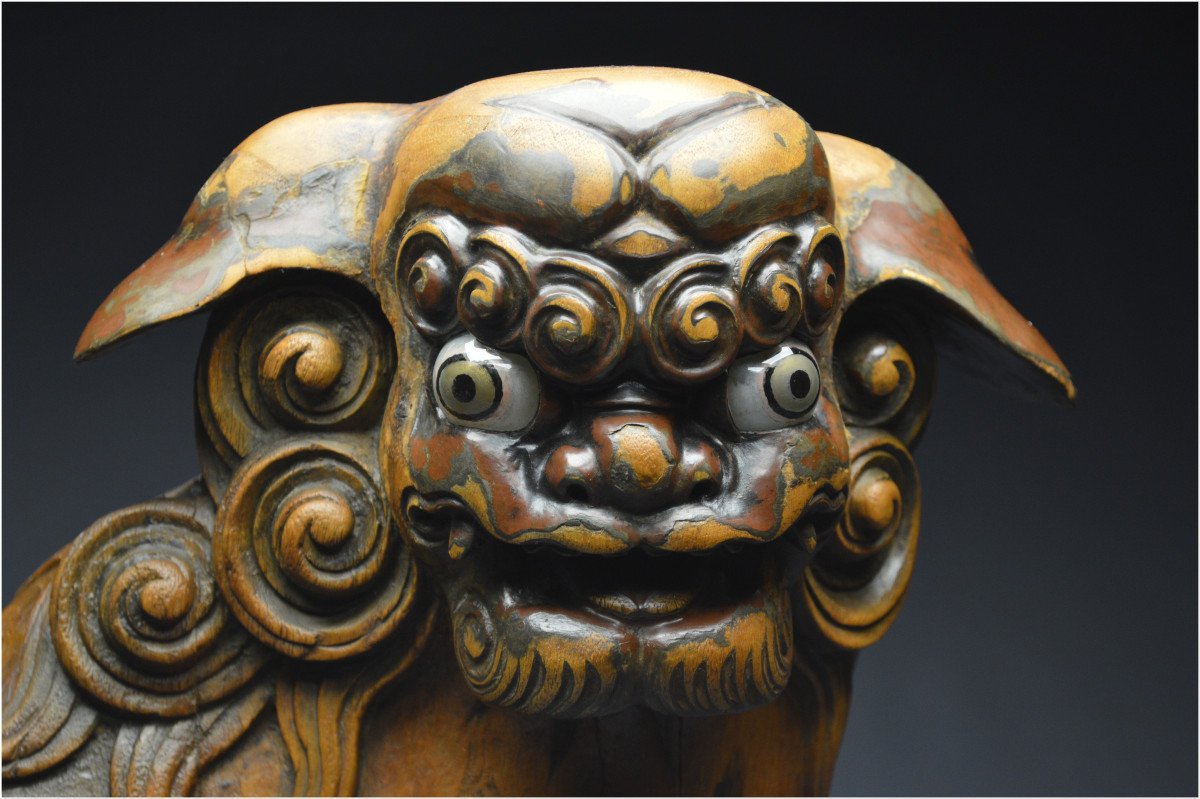
Japan, Edo Period (1603 - 1867), Massive Wooden Guardian Lion With Old Traces Of Lacquer





Japan
Edo period (1603 – 1867) / 19th century
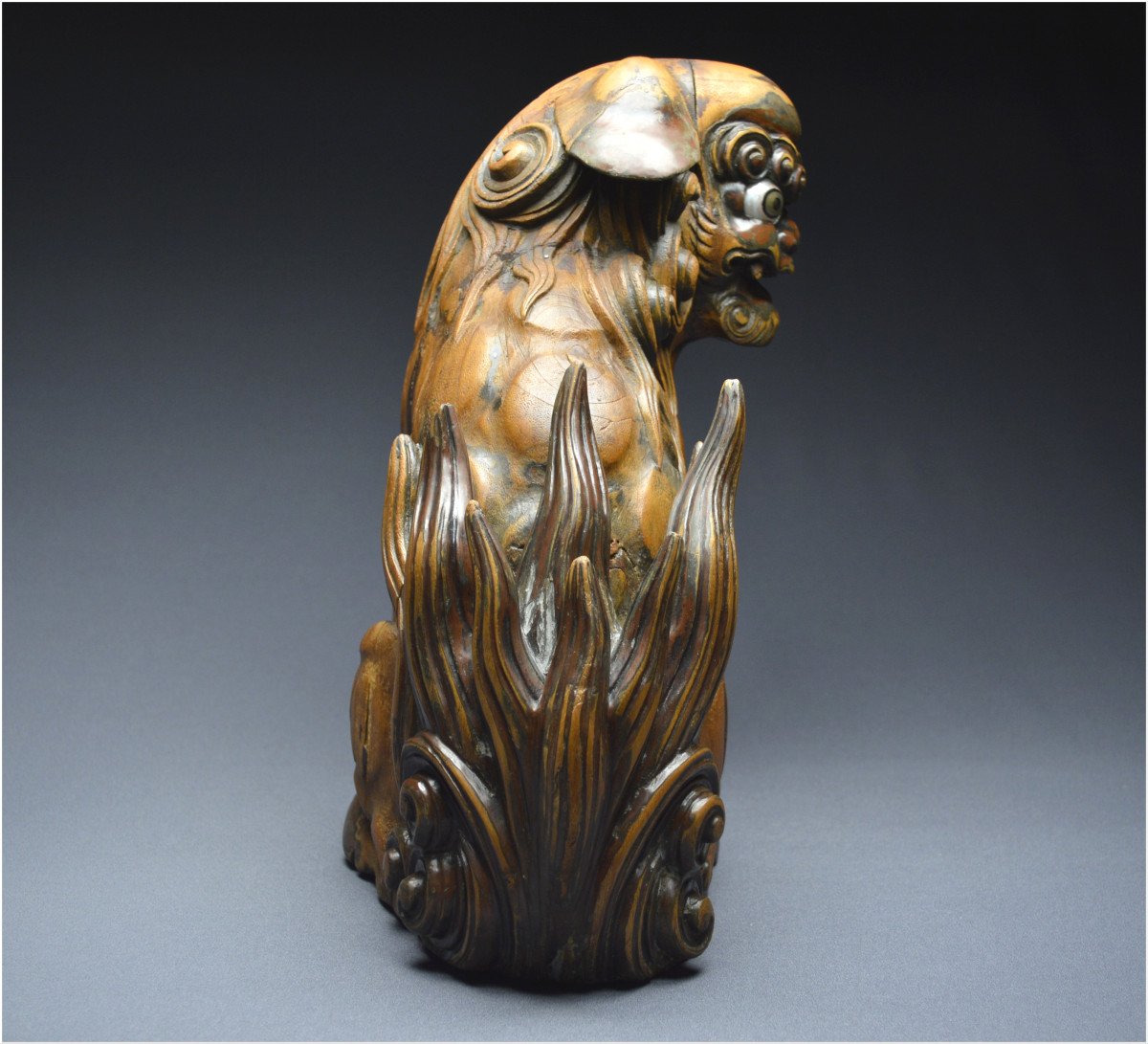
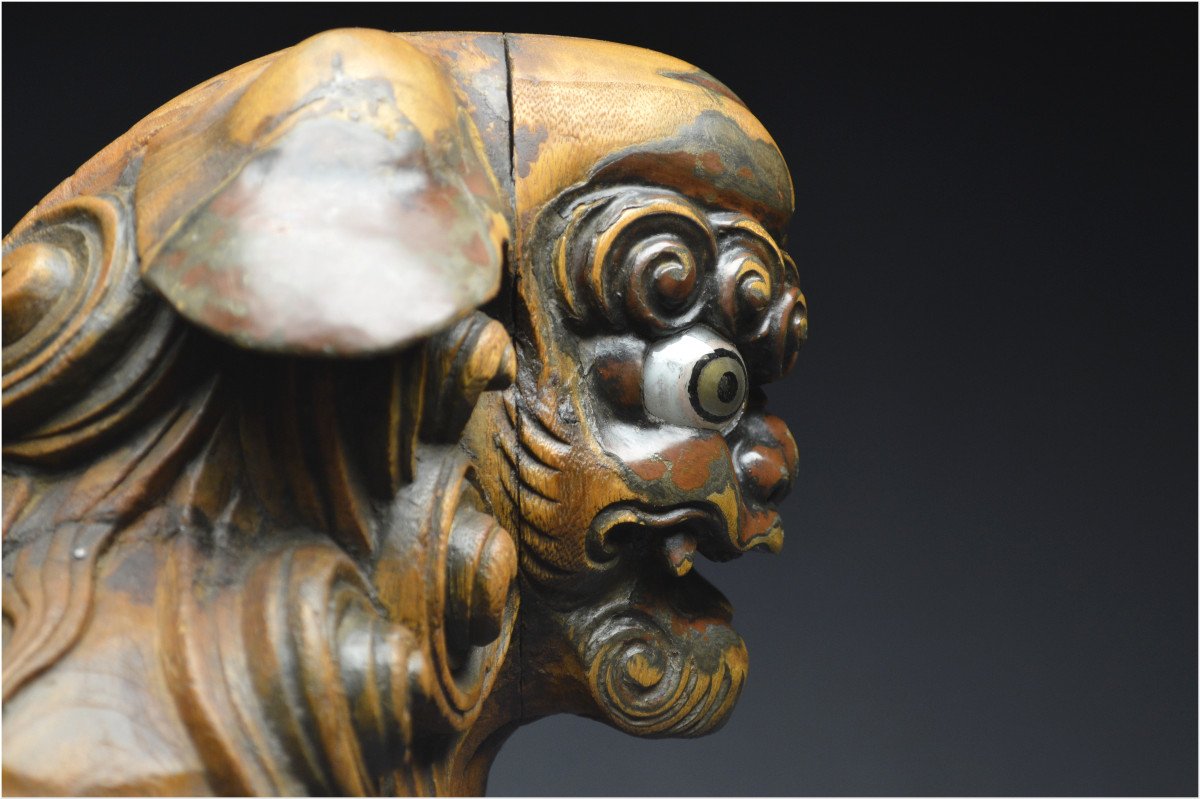
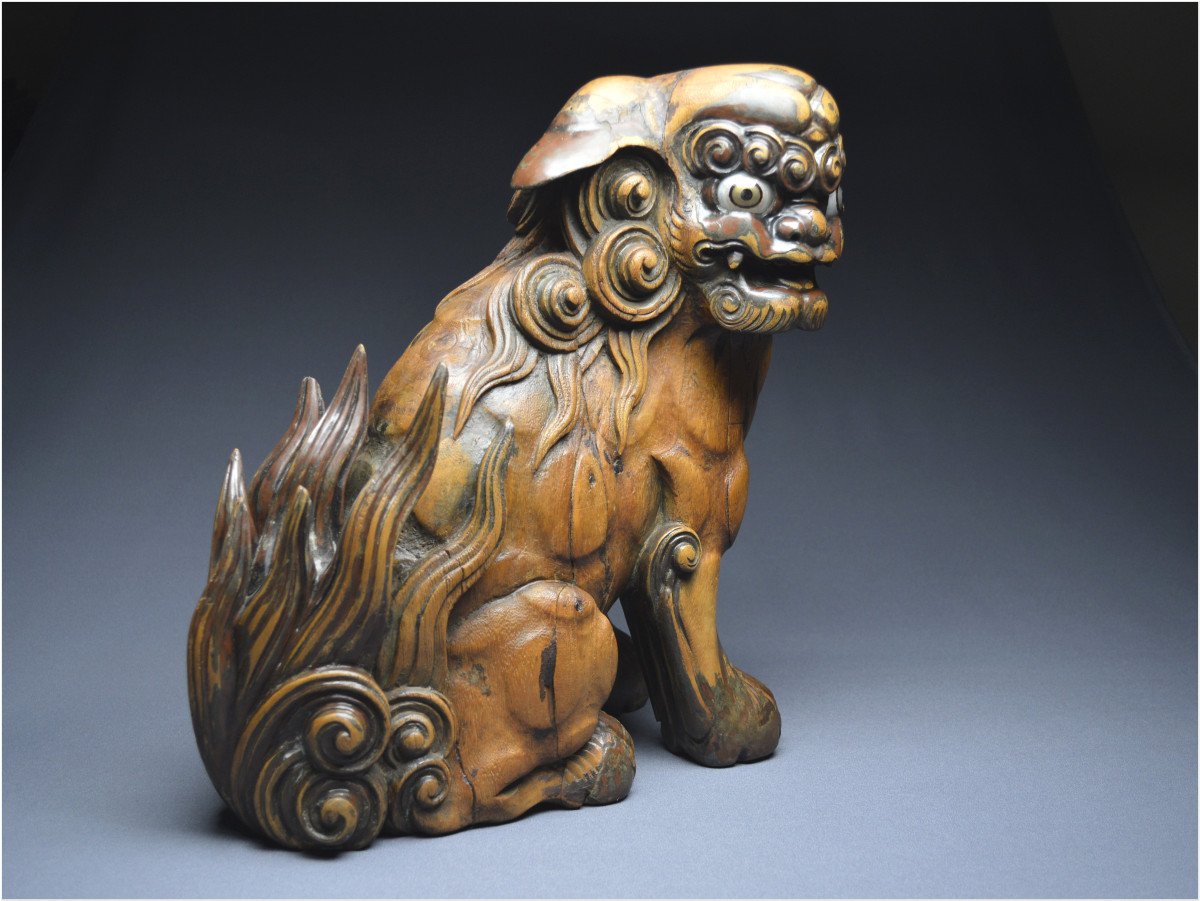
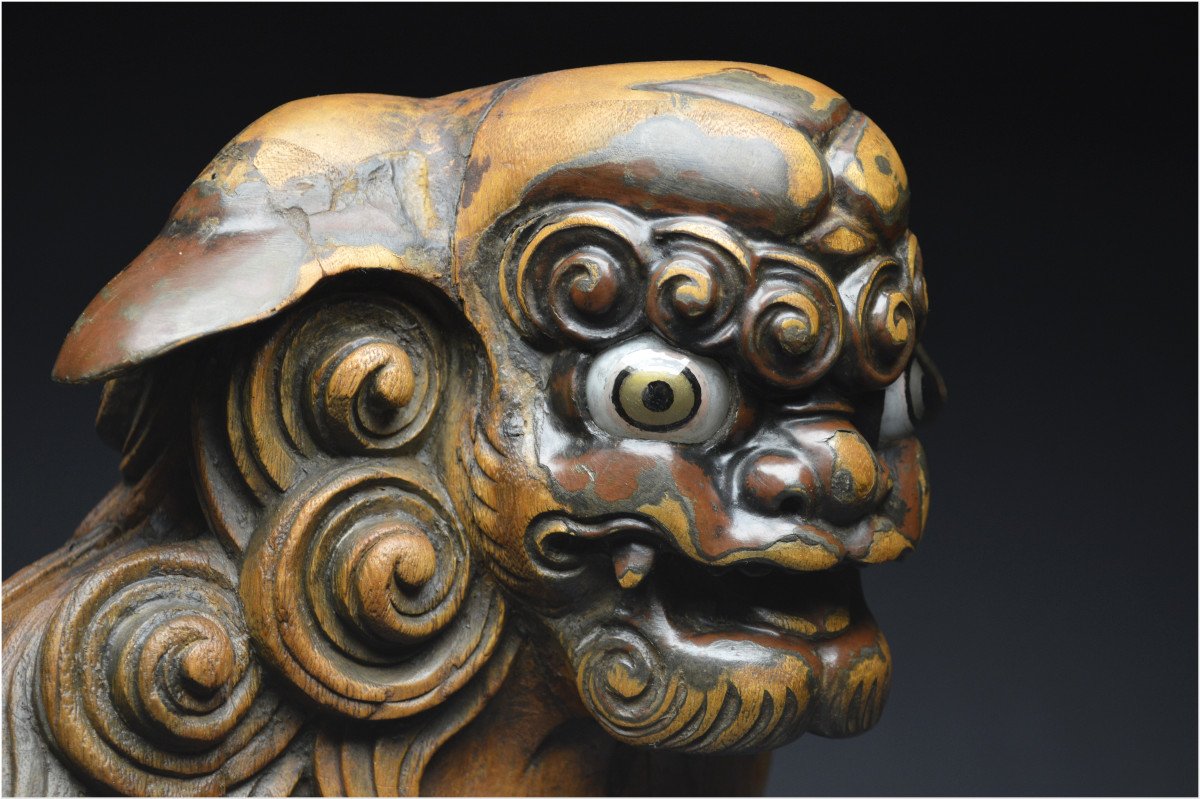
Guardian lion represented seated, head turned to the right, it has a massive body with powerful chest and legs, thus expressing great strength. The mane and tail are treated in large swirling wisps and feature tufts of hair in large, undulating locks. The expressively rendered head features piercing eyes, swirling tufts of hair and a opened mouth (a gyō), traditionally interpreted as evoking the first letter of the alphabet from Sanskrit (a) and which can, by analogy, refer to the western alpha.
Called komainu in Japan and placed in pairs at the entrance to Shinto shrines and Buddhist temples, guardian lions are the protectors of the faith and chase away evil spirits.
The traditional technique used here for the shaping of the statue is called Yosegi-Zukuri and consists of cutting different pieces designed separately before manufacturing (here about fifteen) then assembling them using spikes.
Wood, glass, old traces of lacquer
Small accidents, cracks and wear from use to be related to the age of the piece
38.7 x 41.5 cm
Private collection
Edo period (1603 – 1867) / 19th century
Guardian lion represented seated, head turned to the right, it has a massive body with powerful chest and legs, thus expressing great strength. The mane and tail are treated in large swirling wisps and feature tufts of hair in large, undulating locks. The expressively rendered head features piercing eyes, swirling tufts of hair and a opened mouth (a gyō), traditionally interpreted as evoking the first letter of the alphabet from Sanskrit (a) and which can, by analogy, refer to the western alpha.
Called komainu in Japan and placed in pairs at the entrance to Shinto shrines and Buddhist temples, guardian lions are the protectors of the faith and chase away evil spirits.
The traditional technique used here for the shaping of the statue is called Yosegi-Zukuri and consists of cutting different pieces designed separately before manufacturing (here about fifteen) then assembling them using spikes.
Wood, glass, old traces of lacquer
Small accidents, cracks and wear from use to be related to the age of the piece
38.7 x 41.5 cm
Private collection
Explore similar pieces and discover your ideal find:
Wood Sculptures