THIS OBJECT WAS SOLD
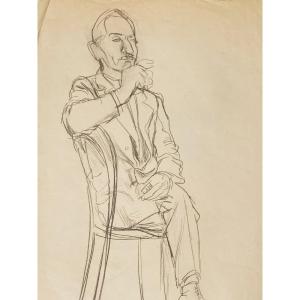
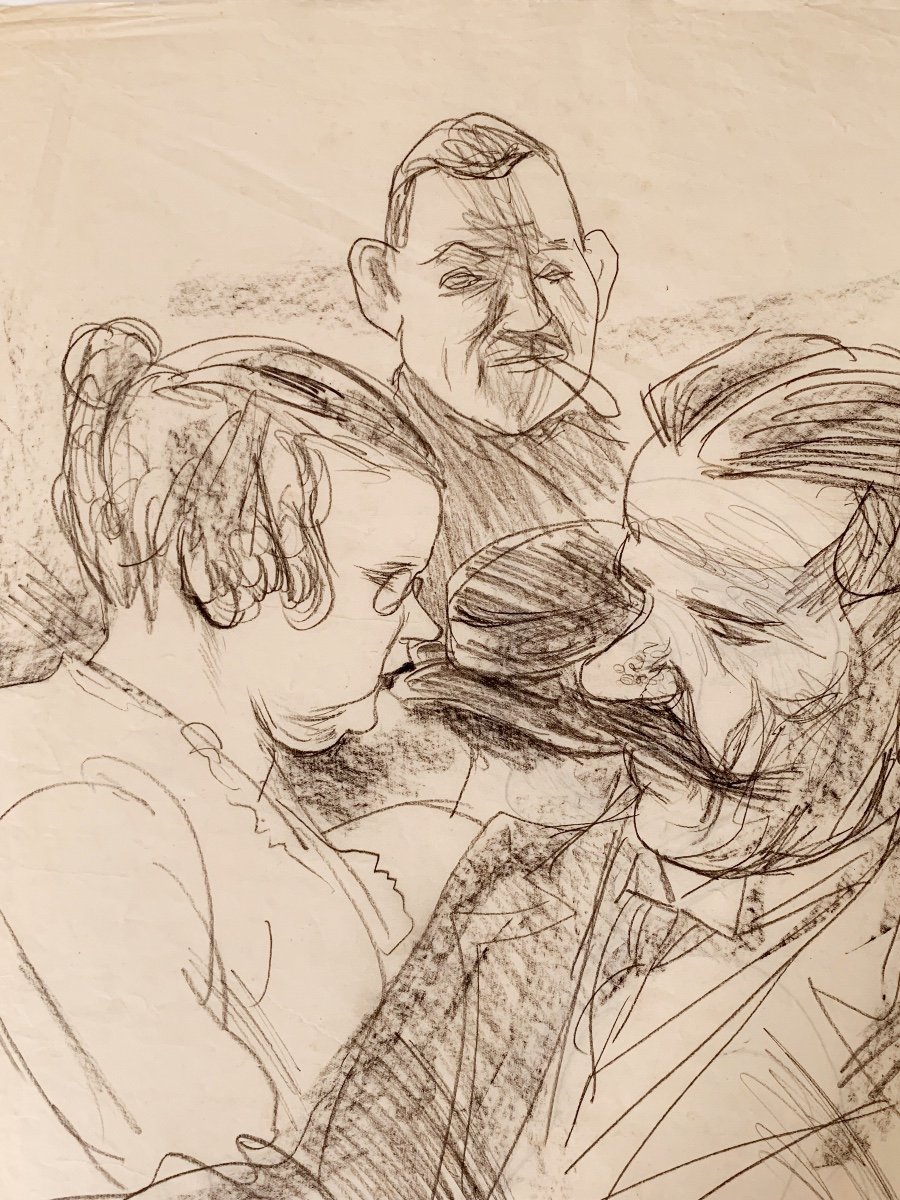
Rudolf Schlichter (1890-1955), Characters, Black Stone On Paper





Rudolf Schlichter (1890-1955)
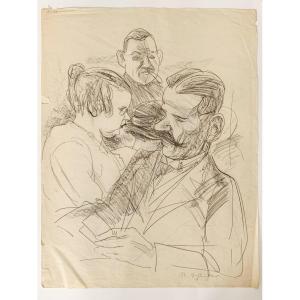
Characters
Black stone on paper
Signed “R. Schlichter” lower right
Sketch of a man on the back
59 x 47 cm
Small gaps on the edges, traces of folds, tiny stains
German artist figure of the New Objectivity, Rudolf Schlichter was born in Calw in 1890. He received his first artistic training at the School of Arts and Crafts in Stuttgart then at the Academy of Fine Arts in Karlsruhe where he became friends with Georg Scholz and Karl Hubbuch. In rebellion against the principles of the Academy, he moved to Berlin in 1919 where he joined the Expressionists of the Novembergruppe and the Berlin Dadaists, artists politically committed against the Weimar Republic.
In the 1920s, he moved towards an increasingly marked realism and took part in the historic exhibition Neue sachlichkeit (New objectivity) organized in 1925 at the Kunsthalle in Mannheim by Gustav Friedrich Hartlaub. The latter brought together a heterogeneous group of around thirty artists, including Otto Dix and Max Beckmann. This event inaugurates a new sensibility which gradually breaks with the hallucinatory expressionism of the pre-war period, which is succeeded by an art of coldly objective observation in which the role of color proves to be more subject to that of drawing, which aims to be more analytical.
Rudolf Schlichter becomes one of the main actors of Verism, the most radical current of New Objectivity in which George Grosz and Otto Dix also take part. These assert themselves through the negation of “classical” art by endeavoring to show in a raw and cynical way the chaos generated by their era after the First World War.
Rudolf Schlichter parodies the failings of bourgeois society. He leads a life of debauchery and paints without filter the reality of the spectacle which is offered to him and this sometimes until the caricature in order to offend his contemporaries.
Characters
Black stone on paper
Signed “R. Schlichter” lower right
Sketch of a man on the back
59 x 47 cm
Small gaps on the edges, traces of folds, tiny stains
German artist figure of the New Objectivity, Rudolf Schlichter was born in Calw in 1890. He received his first artistic training at the School of Arts and Crafts in Stuttgart then at the Academy of Fine Arts in Karlsruhe where he became friends with Georg Scholz and Karl Hubbuch. In rebellion against the principles of the Academy, he moved to Berlin in 1919 where he joined the Expressionists of the Novembergruppe and the Berlin Dadaists, artists politically committed against the Weimar Republic.
In the 1920s, he moved towards an increasingly marked realism and took part in the historic exhibition Neue sachlichkeit (New objectivity) organized in 1925 at the Kunsthalle in Mannheim by Gustav Friedrich Hartlaub. The latter brought together a heterogeneous group of around thirty artists, including Otto Dix and Max Beckmann. This event inaugurates a new sensibility which gradually breaks with the hallucinatory expressionism of the pre-war period, which is succeeded by an art of coldly objective observation in which the role of color proves to be more subject to that of drawing, which aims to be more analytical.
Rudolf Schlichter becomes one of the main actors of Verism, the most radical current of New Objectivity in which George Grosz and Otto Dix also take part. These assert themselves through the negation of “classical” art by endeavoring to show in a raw and cynical way the chaos generated by their era after the First World War.
Rudolf Schlichter parodies the failings of bourgeois society. He leads a life of debauchery and paints without filter the reality of the spectacle which is offered to him and this sometimes until the caricature in order to offend his contemporaries.
Explore similar pieces and discover your ideal find:
drawings