THIS OBJECT WAS SOLD
Sevres. Pair Of Biscuits Mounted And Bronze, Napoleon III Period

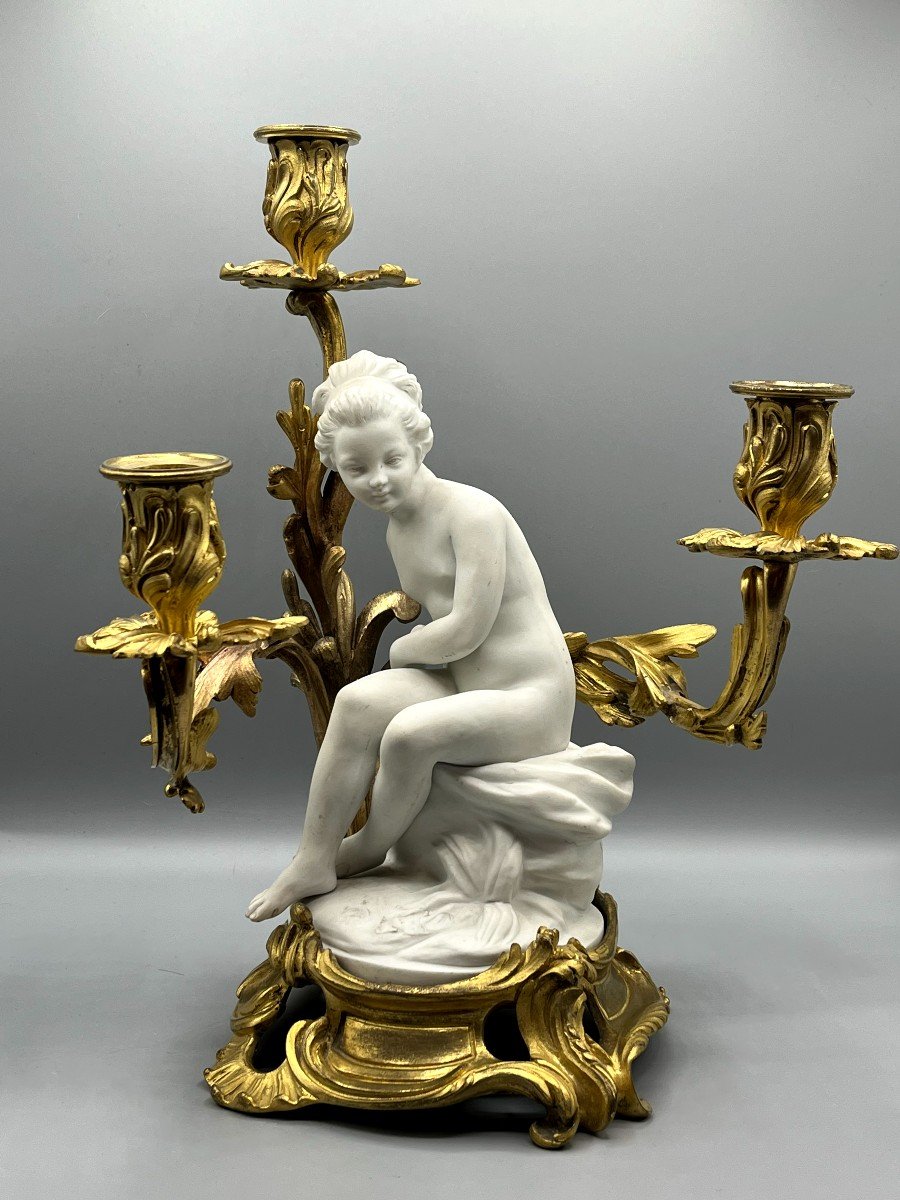

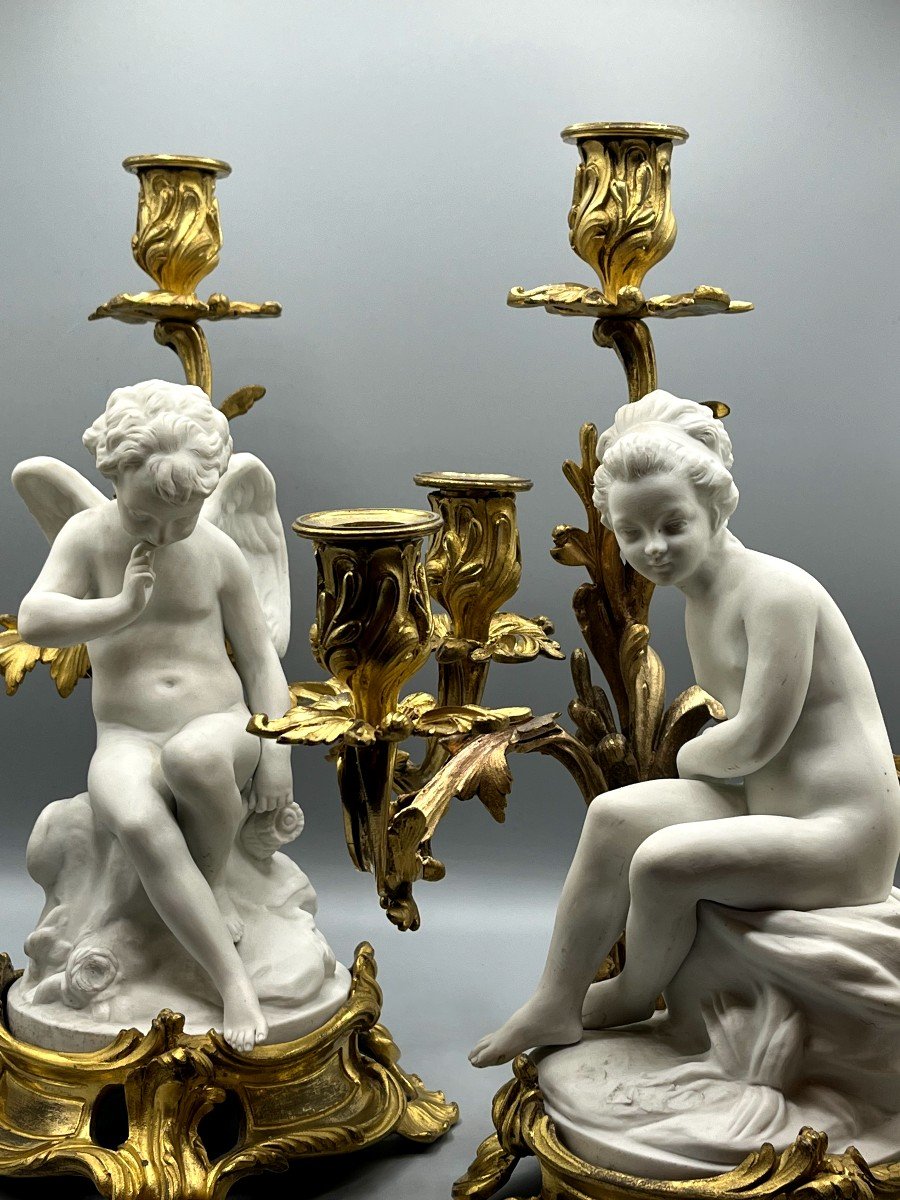

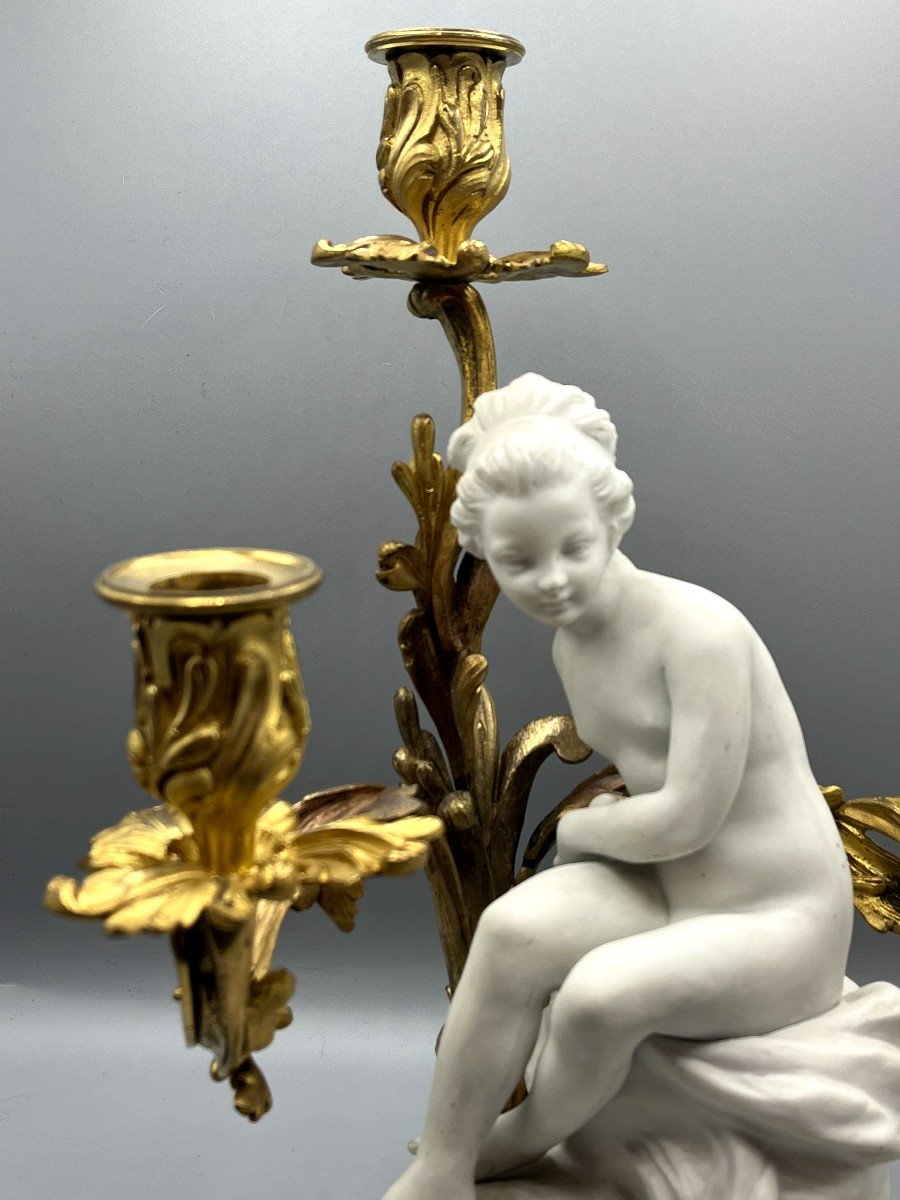


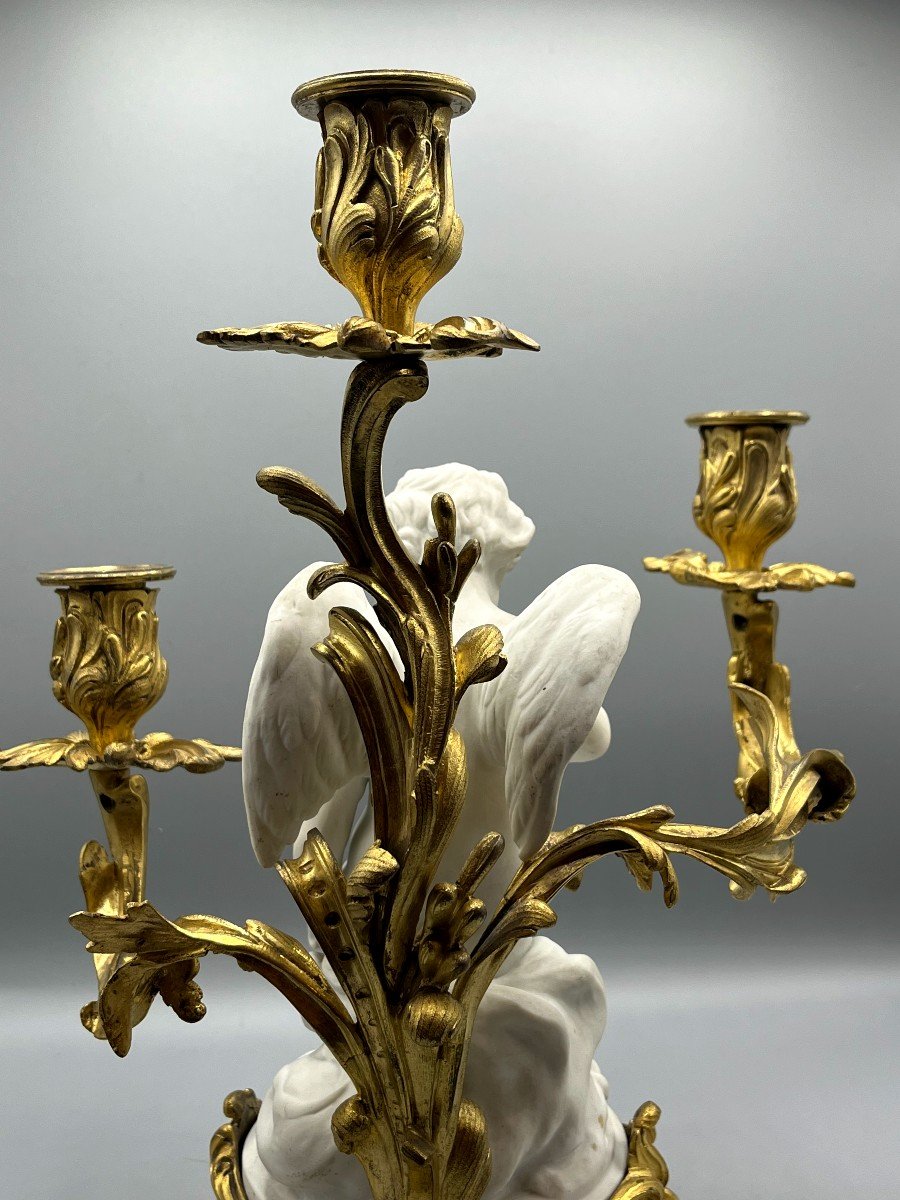
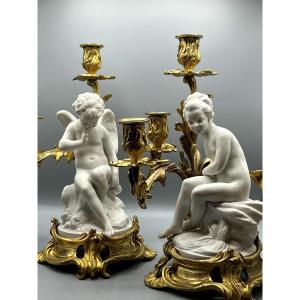


Pair of subjects in Sèvres porcelain biscuit representing "Menacing Cupid" and "Psyche", after FALCONET.
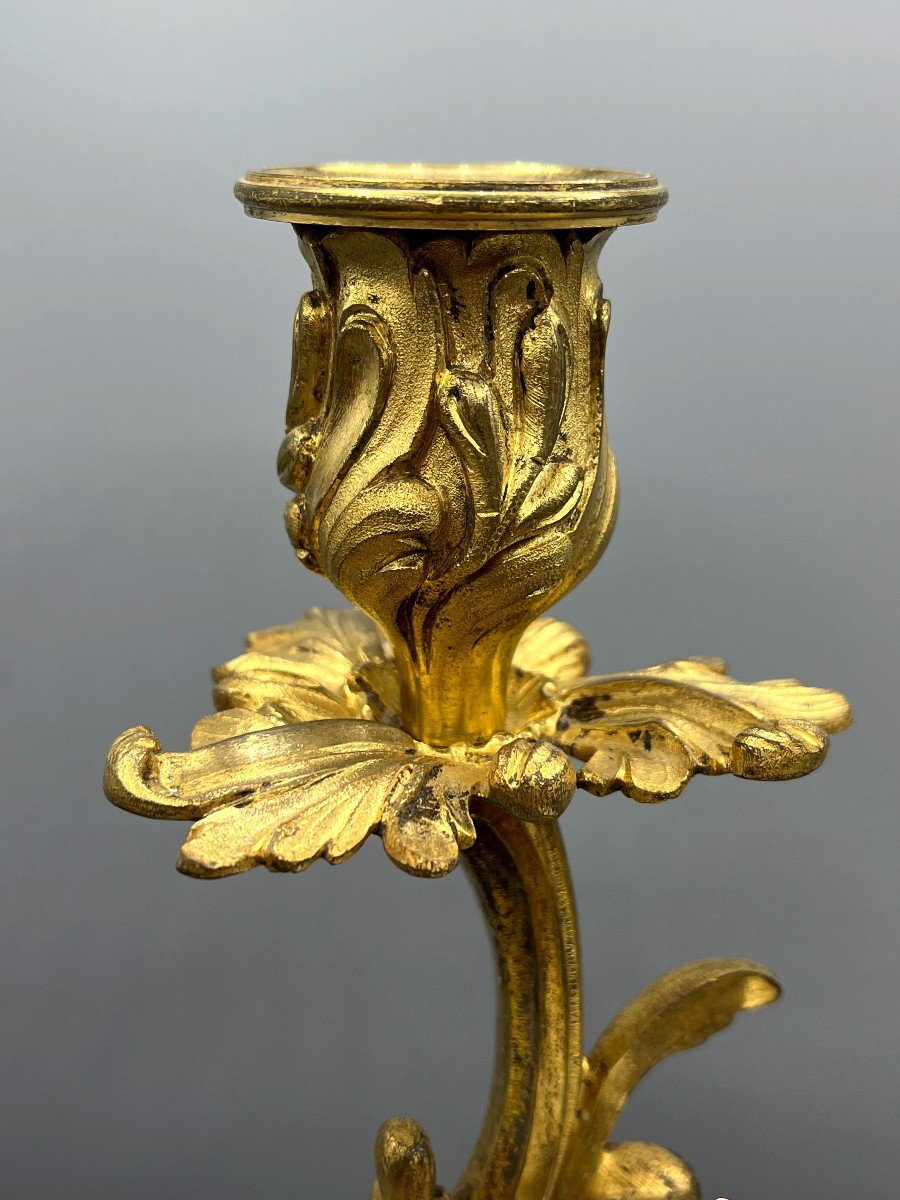
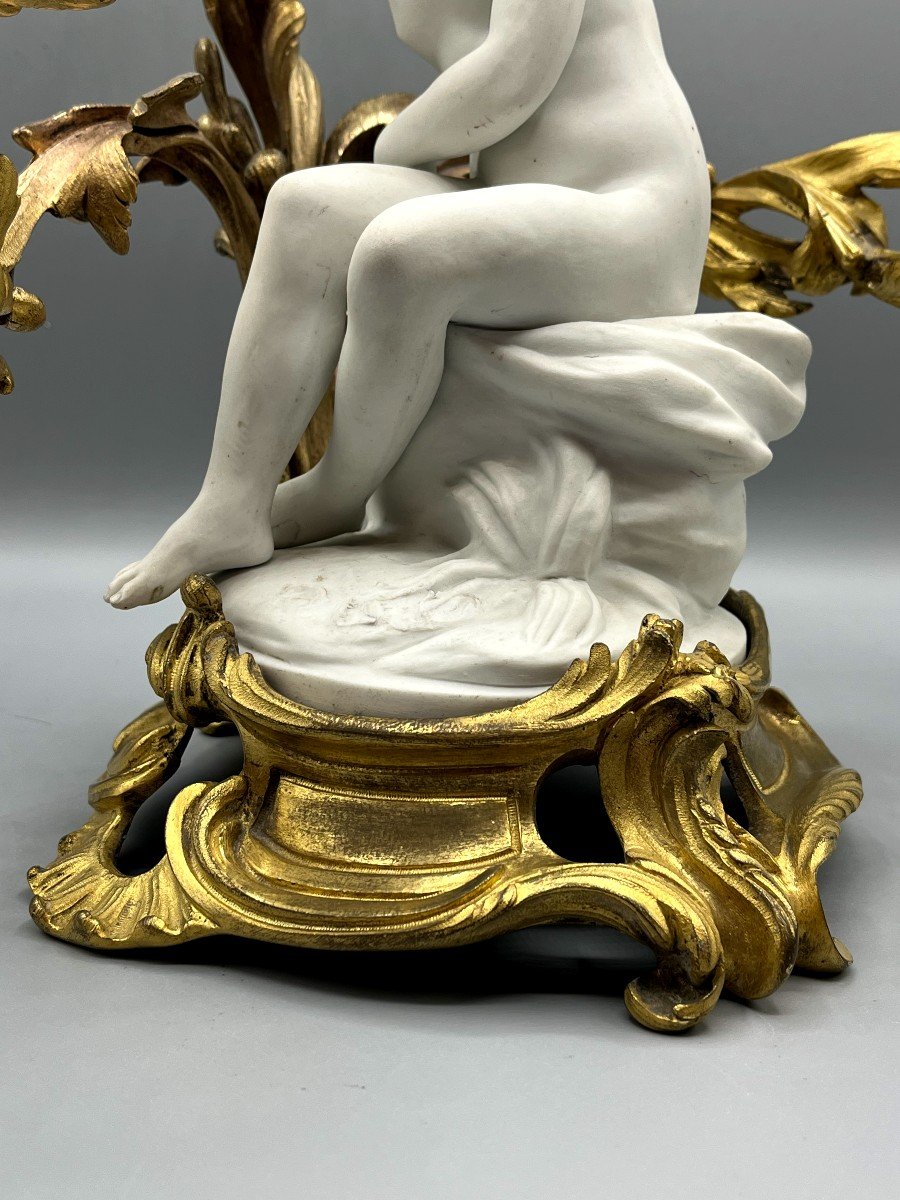
Rich original gilt bronze frame with three branches, chiseled decoration of foliage and stylized foliage.
Napoleon III period
From the 1750s, the Manufacture de SEVRES produced sculptures (figures and groups) intended to decorate tables. For taste of symmetry in the ornament of rich apartments, the figures are created in pairs and the groups in threes. These biscuit figures were offered as diplomatic gifts by Kings Louis XV and Louis XVI to show the world the refinement of decorative arts and French taste and to prove the superiority of Sèvres know-how.
The porcelain biscuit, which marks the identity of Sèvres, was adopted in 1752. Cooked only once at its highest temperature, around 1380°, the white porcelain takes on an appearance close to marble. In the 18th century, the sculpture workshop was run by chief artists who came once a week to make their clay models in biscuit, such as Étienne-Maurice Falconet (1716-1791) or Louis Simon Boizot (1743 -1809), that they offer models or innovative designs, such as the representations of children by the painter François Boucher (1703-1770) whose cookies were very successful. (source: Manufacture de Sèvres)
Rich original gilt bronze frame with three branches, chiseled decoration of foliage and stylized foliage.
Napoleon III period
From the 1750s, the Manufacture de SEVRES produced sculptures (figures and groups) intended to decorate tables. For taste of symmetry in the ornament of rich apartments, the figures are created in pairs and the groups in threes. These biscuit figures were offered as diplomatic gifts by Kings Louis XV and Louis XVI to show the world the refinement of decorative arts and French taste and to prove the superiority of Sèvres know-how.
The porcelain biscuit, which marks the identity of Sèvres, was adopted in 1752. Cooked only once at its highest temperature, around 1380°, the white porcelain takes on an appearance close to marble. In the 18th century, the sculpture workshop was run by chief artists who came once a week to make their clay models in biscuit, such as Étienne-Maurice Falconet (1716-1791) or Louis Simon Boizot (1743 -1809), that they offer models or innovative designs, such as the representations of children by the painter François Boucher (1703-1770) whose cookies were very successful. (source: Manufacture de Sèvres)
Explore similar pieces and discover your ideal find:
Porcelain Figurines, Biscuit Porcelain