THIS OBJECT WAS SOLD
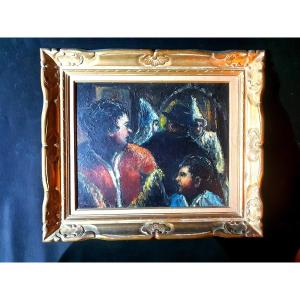
Emilio Grau Sala (1911-1975) Woman And Child
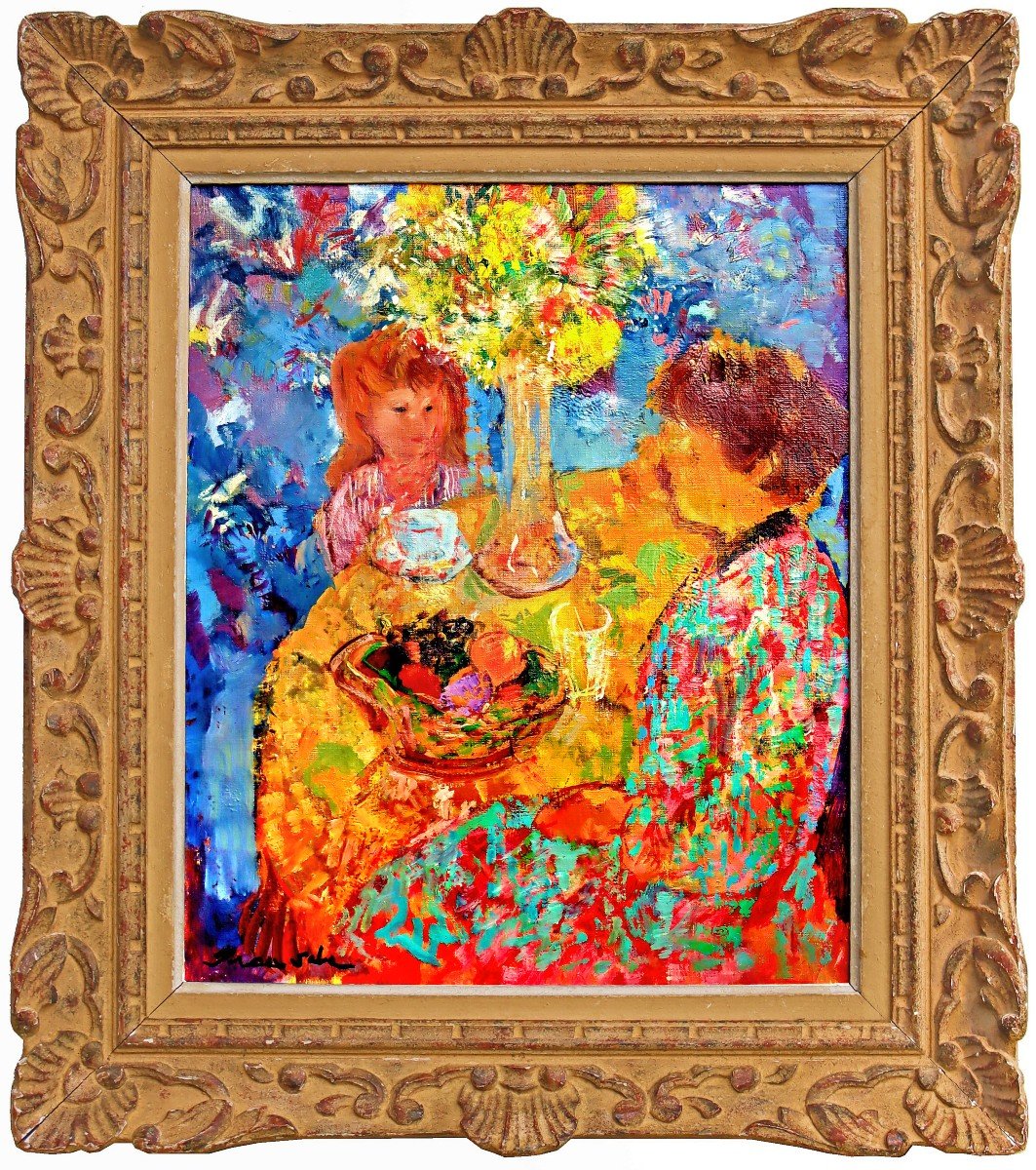
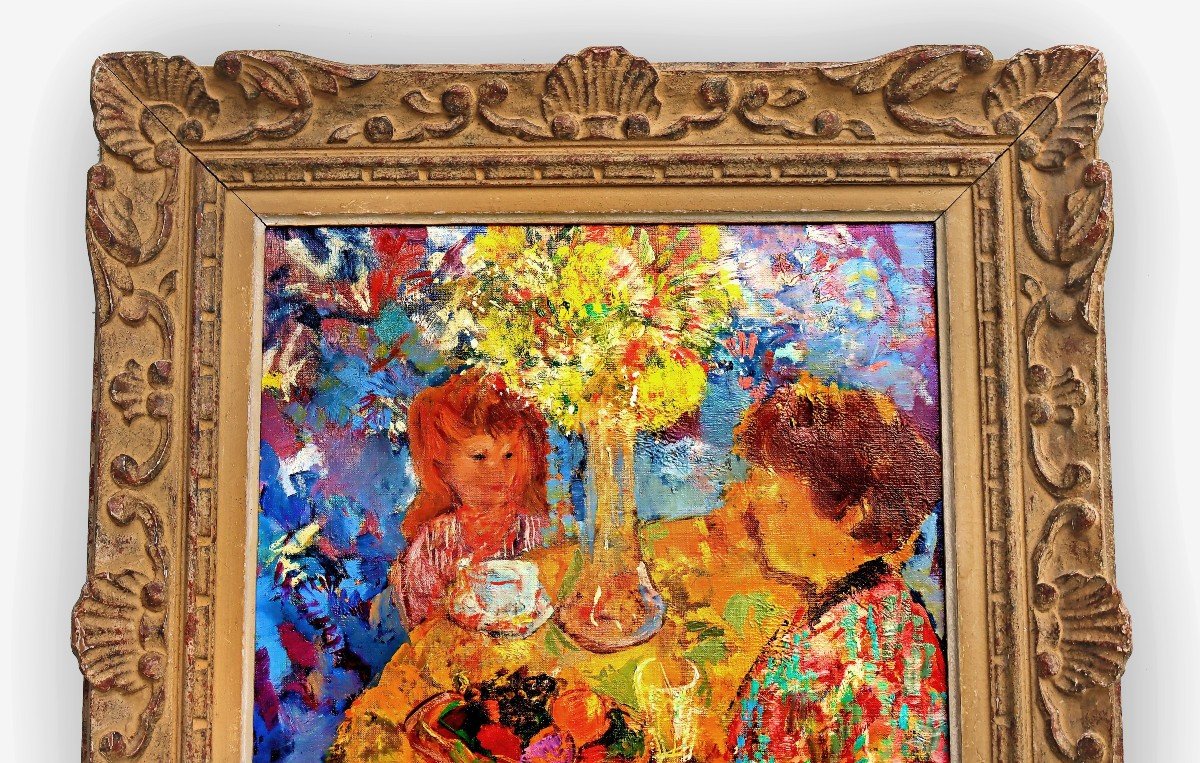
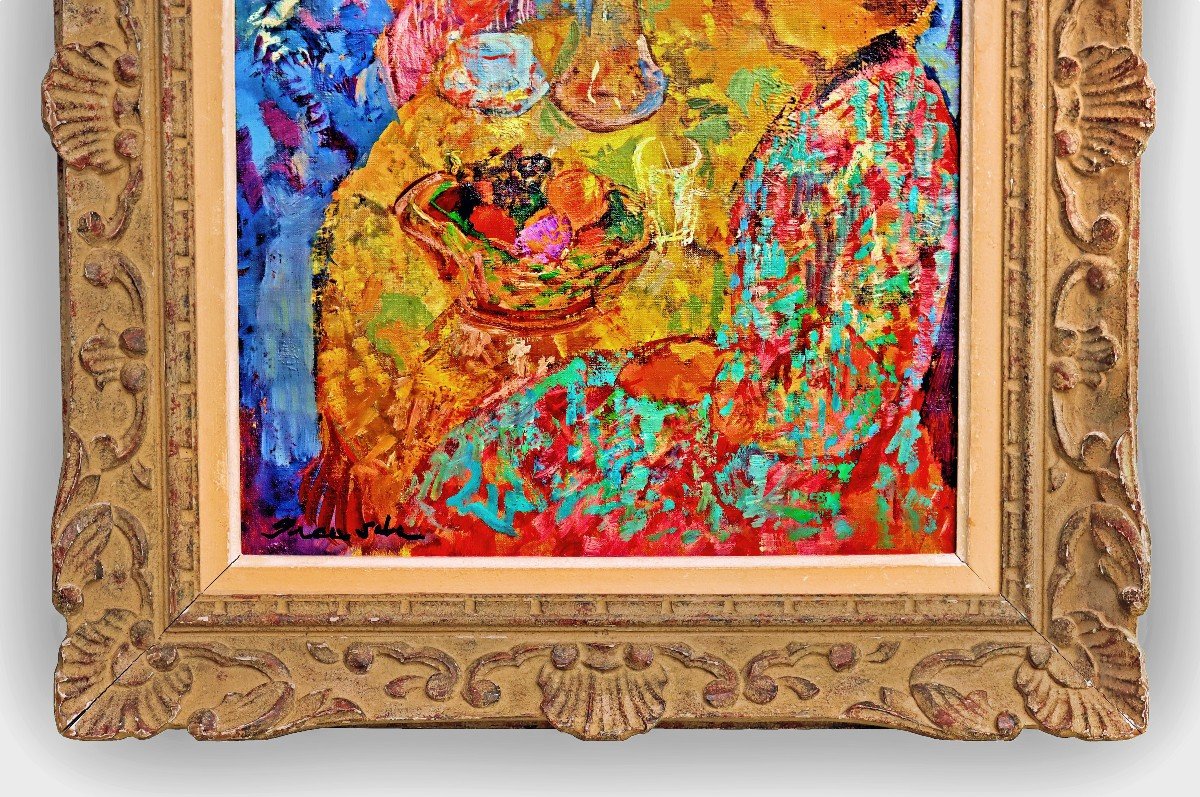
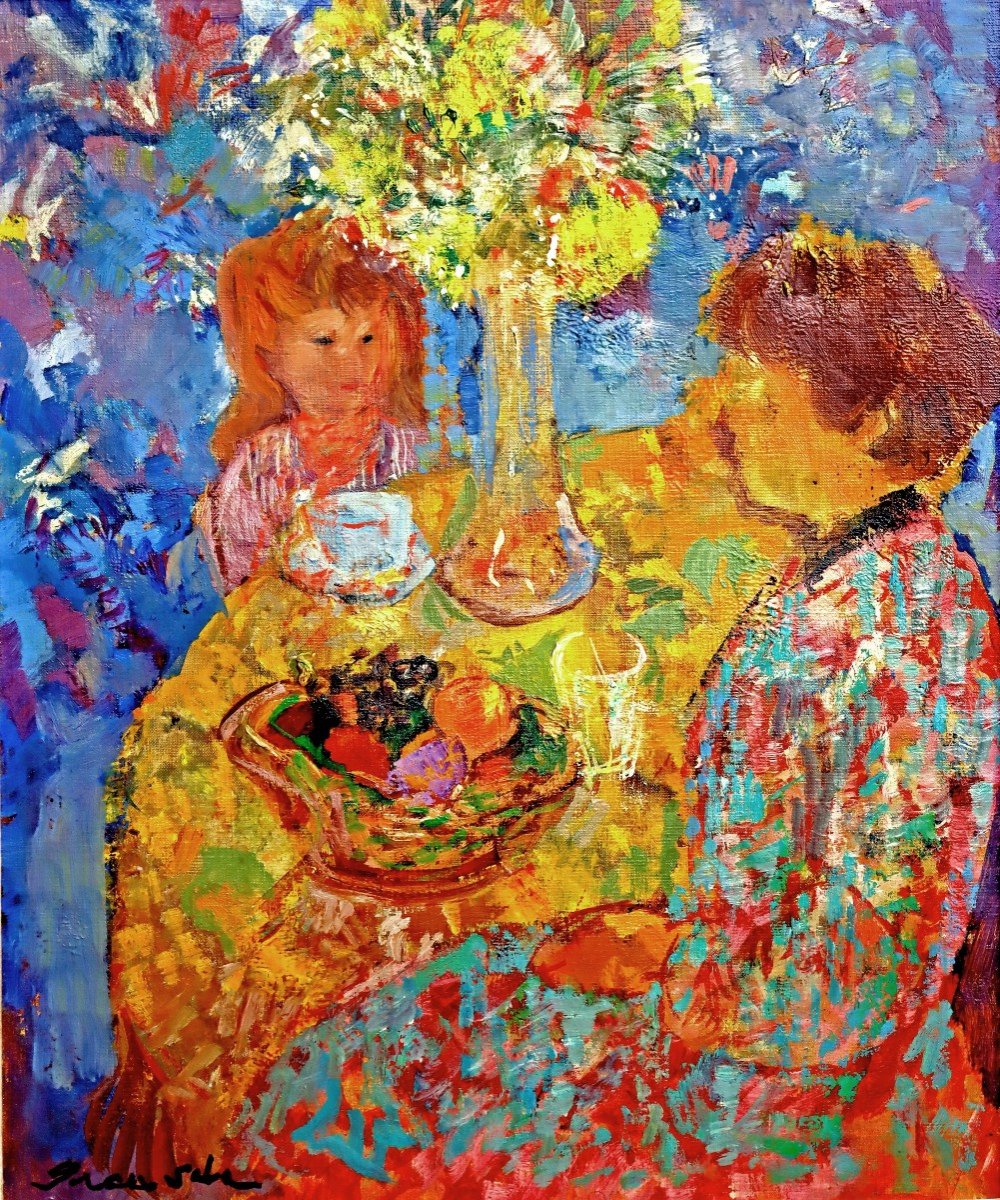
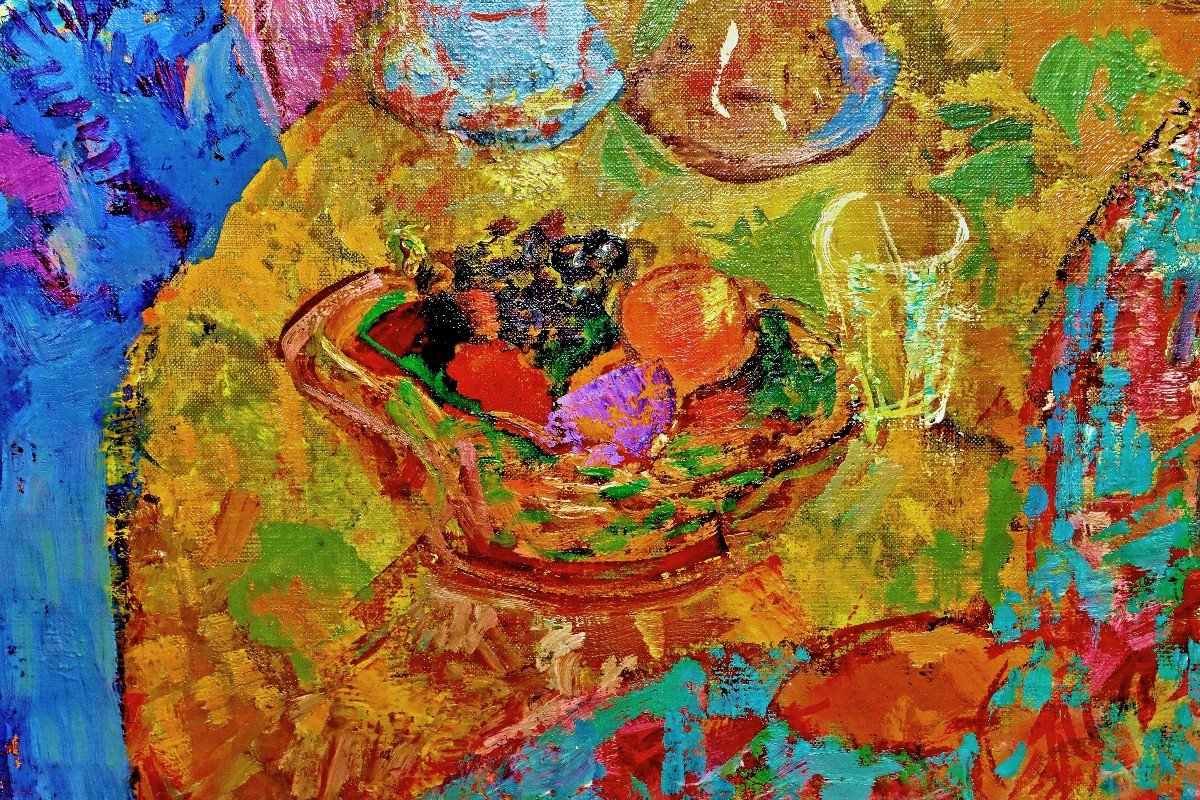
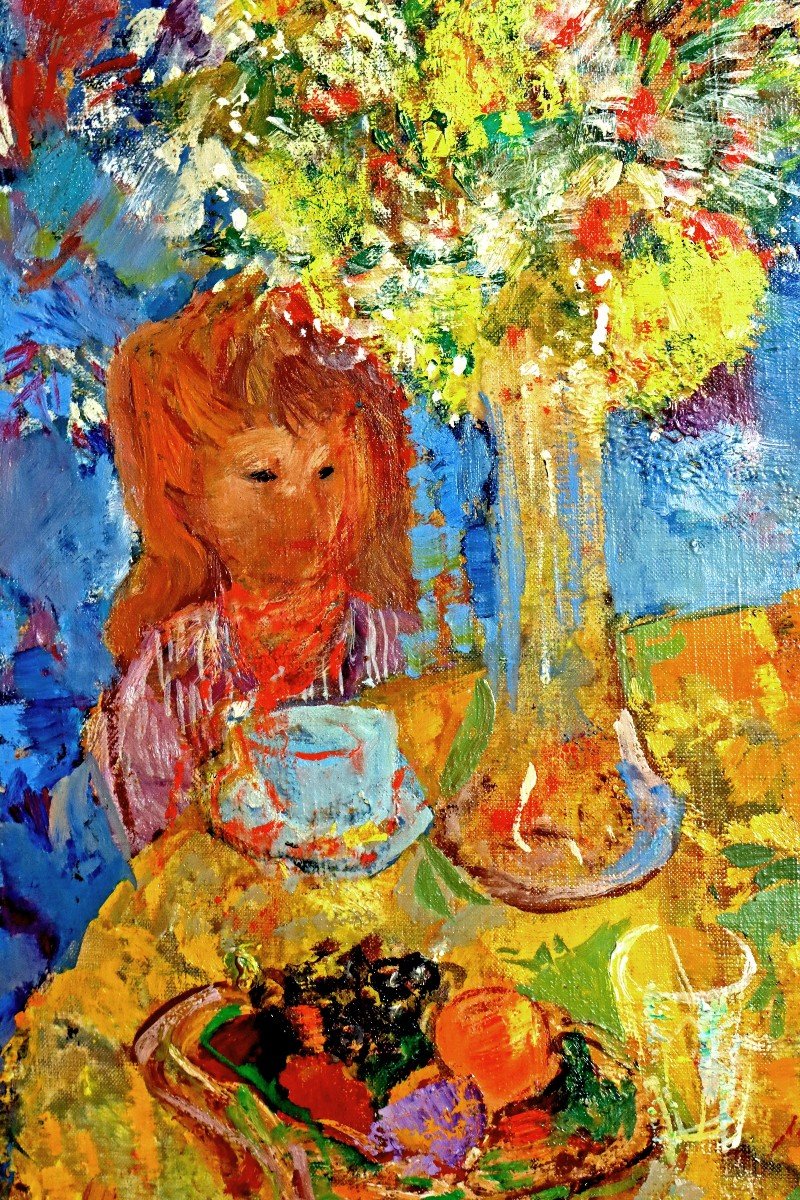
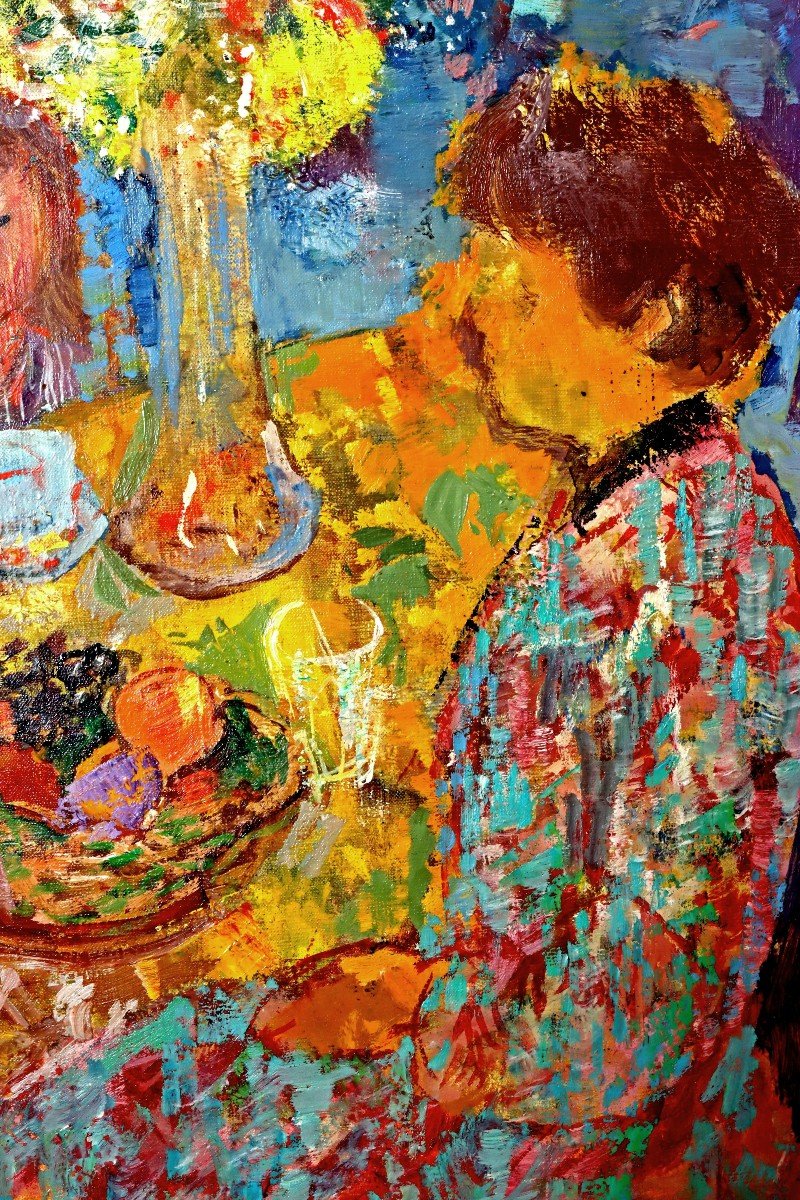
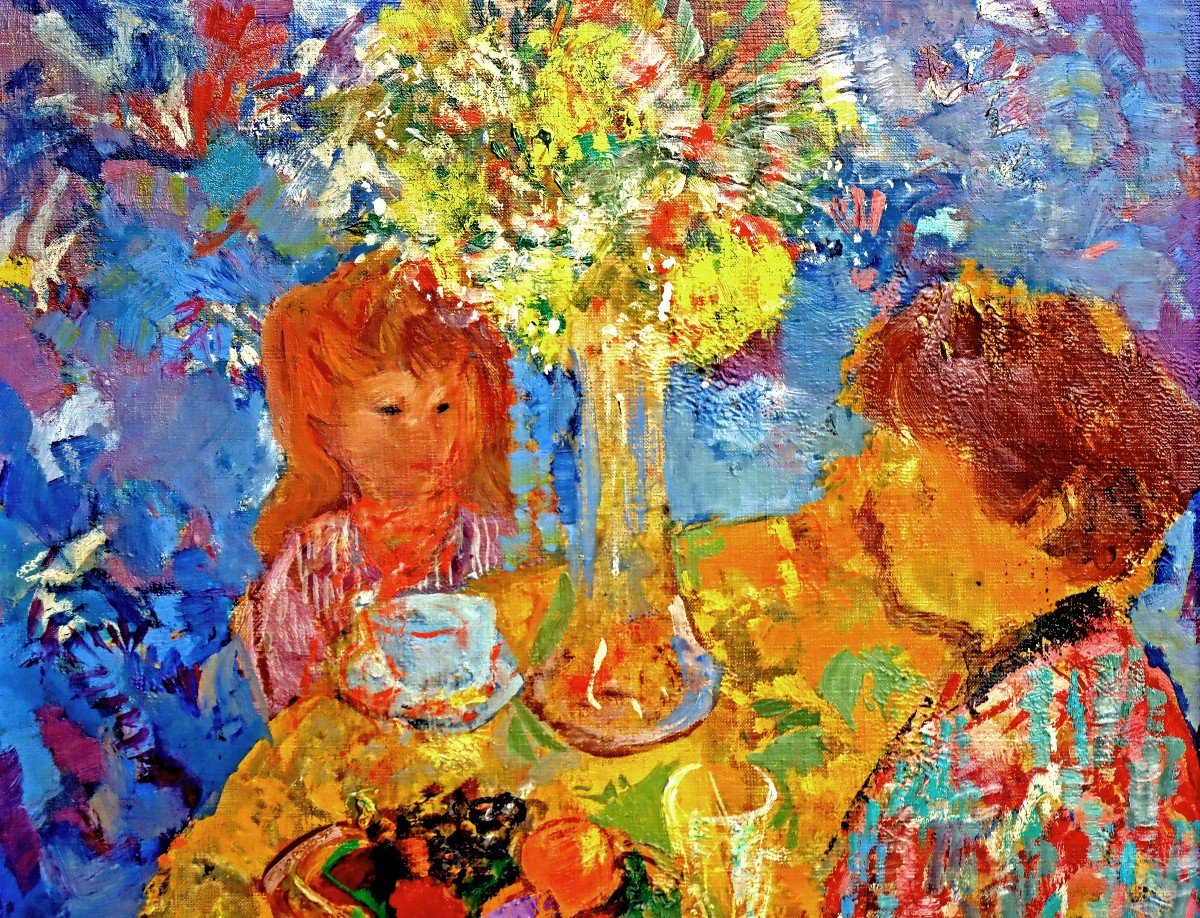
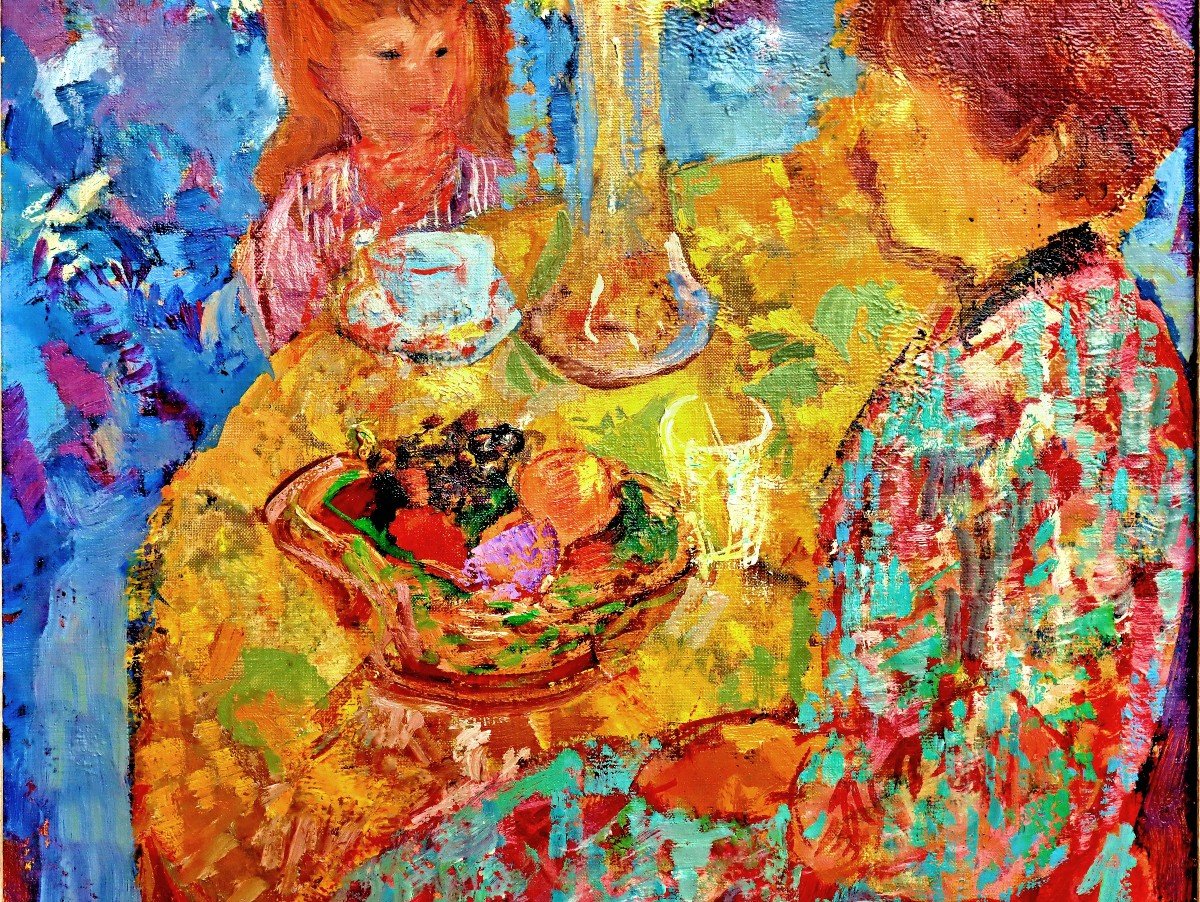
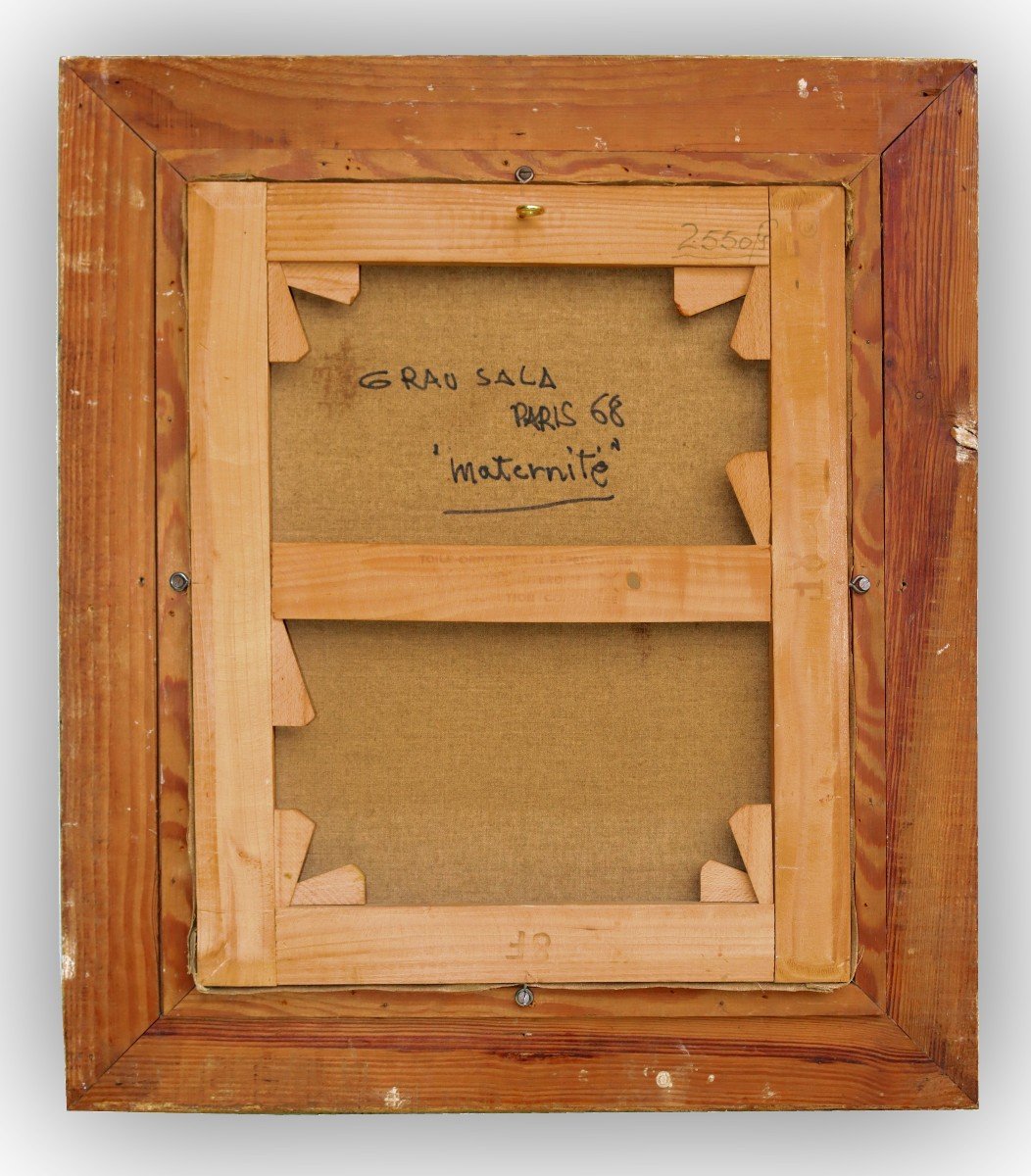
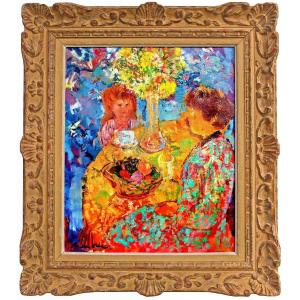


Post-Impressionist Painting XXth Painting oil on canvas signed lower left GRAU SALA (Emilio Grau Sala 1911-1975) note on the reverse: dated, titled, located and countersigned GRAU SALA Paris 68 "Maternity". Beautiful colorist figuration derived from Impressionism and Fauvism featuring a woman and her child gathered around a table decorated with a vase decorated with a large bouquet of flowers and a basket of fruit, the whole s inscribed on a background teeming with colors like a mosaic. Work presented in a beautiful Montmartre frame in patinated carved wood. Good general condition, dimensions: 62 cm X 54 cm / At sight: 46 cm X 38 cm.
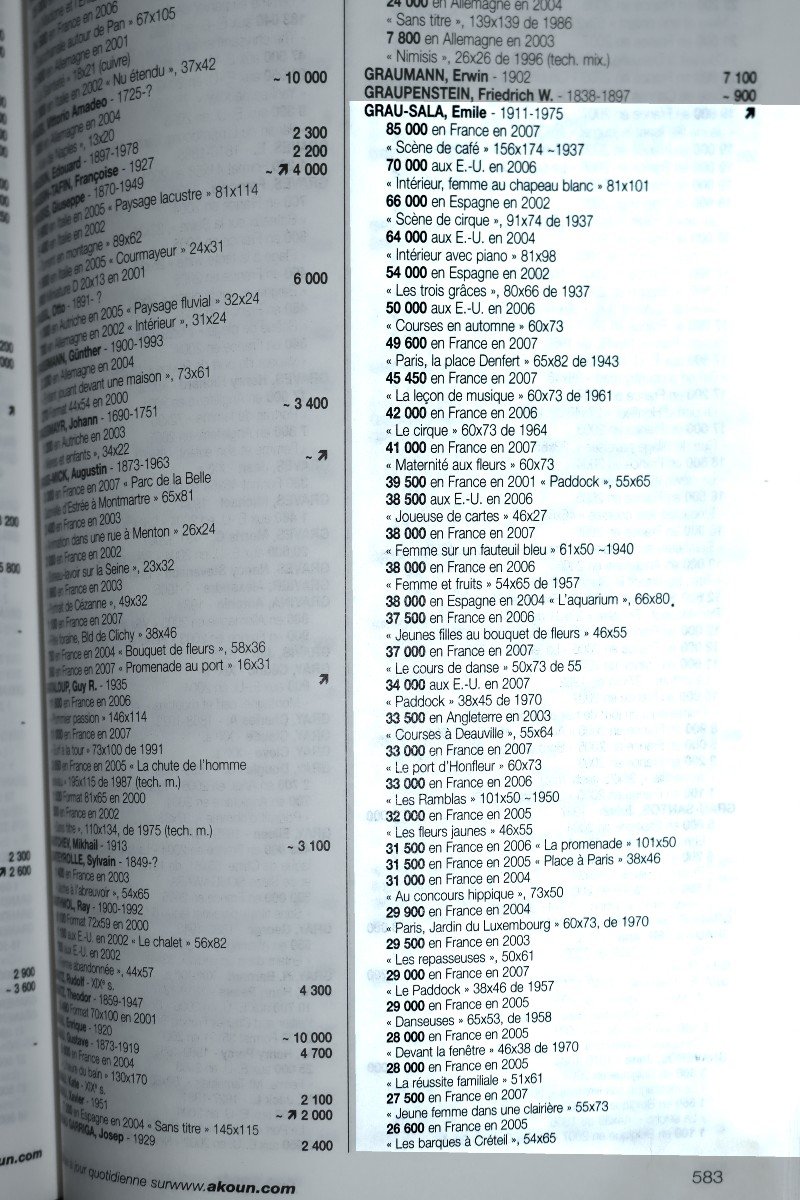
Born in Barcelona in June 1911, Emilio Grau Sala is a painter, engraver and illustrator of Spanish origin. He made his debut at the School of Fine Arts in Barcelona and very quickly emigrated to France. In fact, he quickly made himself known in Paris as a successor to the spirit and values of Impressionism, directly linked to Bonnard and Vuillard. The success of his style led Grau Sala to also devote himself to graphic work and scenography. The grace and finesse of his characters, the liveliness of the colors and the elegant atmosphere of the environments he depicts earned him great success and recognition throughout the world. He has organized several personal exhibitions, mainly in Barcelona and Paris, but also in cities such as New York, Toulouse, London and Los Angeles. Emilio then travels a lot, to New York, London or Buenos Aires, in order to make himself known and present his works to the world. It was not until 1936 that the artist decided to settle permanently in France. It was also in 1936 that Emilio married the painter Ángeles Santos Torroella in Paris. A year later, in 1937, Emilio Grau Sala won an important distinction at the International Exhibition of the Carnegie Foundation in Pittsburgh. Combining French and Spanish influences with his work, Emilio Grau Sala would gradually create his own style, inspired by both cultures and imbued with different impressionist currents. He will be particularly sensitive to the paintings of Raoul Dufy and Pierre Bonnard, both French painters. Emilio's works thus combine the Parisian bohemian style with typically Spanish charm. A remarkable colorist, the Spanish artist depicts in his illustrations hard lines and plays of shadow and light that give his paintings a spontaneous style and a lyrical allure. Its colorful decorations, teeming with details, reflect the naturalness and liveliness of its youth. The personal and recognizable aesthetic of Emilio Grau Sala, as well as his light and playful themes, were very popular with the public of the interwar period. Thanks to his work and his numerous exhibitions, his paintings and illustrations will benefit quickly gaining an international reputation. Emilio Grau Sala will thus illustrate numerous works including Madame Bovary by Gustave Flaubert, Bel-Ami by Guy de Maupassant, Les Fleurs du Mal by Baudelaire and In Search of Lost Time by Marcel Proust. Died in Paris in June 1975, Emilio Grau Sala marked his time. Most of his works now belong to public collections including that of the Museum of Modern Art in Paris, or museums in Barcelona, Buenos Aires, La Rochelle or Honfleur.
Born in Barcelona in June 1911, Emilio Grau Sala is a painter, engraver and illustrator of Spanish origin. He made his debut at the School of Fine Arts in Barcelona and very quickly emigrated to France. In fact, he quickly made himself known in Paris as a successor to the spirit and values of Impressionism, directly linked to Bonnard and Vuillard. The success of his style led Grau Sala to also devote himself to graphic work and scenography. The grace and finesse of his characters, the liveliness of the colors and the elegant atmosphere of the environments he depicts earned him great success and recognition throughout the world. He has organized several personal exhibitions, mainly in Barcelona and Paris, but also in cities such as New York, Toulouse, London and Los Angeles. Emilio then travels a lot, to New York, London or Buenos Aires, in order to make himself known and present his works to the world. It was not until 1936 that the artist decided to settle permanently in France. It was also in 1936 that Emilio married the painter Ángeles Santos Torroella in Paris. A year later, in 1937, Emilio Grau Sala won an important distinction at the International Exhibition of the Carnegie Foundation in Pittsburgh. Combining French and Spanish influences with his work, Emilio Grau Sala would gradually create his own style, inspired by both cultures and imbued with different impressionist currents. He will be particularly sensitive to the paintings of Raoul Dufy and Pierre Bonnard, both French painters. Emilio's works thus combine the Parisian bohemian style with typically Spanish charm. A remarkable colorist, the Spanish artist depicts in his illustrations hard lines and plays of shadow and light that give his paintings a spontaneous style and a lyrical allure. Its colorful decorations, teeming with details, reflect the naturalness and liveliness of its youth. The personal and recognizable aesthetic of Emilio Grau Sala, as well as his light and playful themes, were very popular with the public of the interwar period. Thanks to his work and his numerous exhibitions, his paintings and illustrations will benefit quickly gaining an international reputation. Emilio Grau Sala will thus illustrate numerous works including Madame Bovary by Gustave Flaubert, Bel-Ami by Guy de Maupassant, Les Fleurs du Mal by Baudelaire and In Search of Lost Time by Marcel Proust. Died in Paris in June 1975, Emilio Grau Sala marked his time. Most of his works now belong to public collections including that of the Museum of Modern Art in Paris, or museums in Barcelona, Buenos Aires, La Rochelle or Honfleur.
Explore similar pieces and discover your ideal find:
abstract paintings