THIS OBJECT WAS SOLD
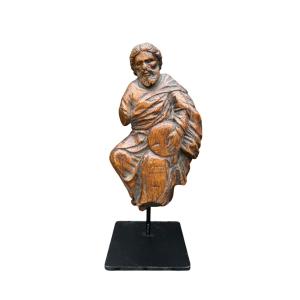
Sleeping Soldier From A Resurrection Scene - Alabaster - Nottingham - 15th Century
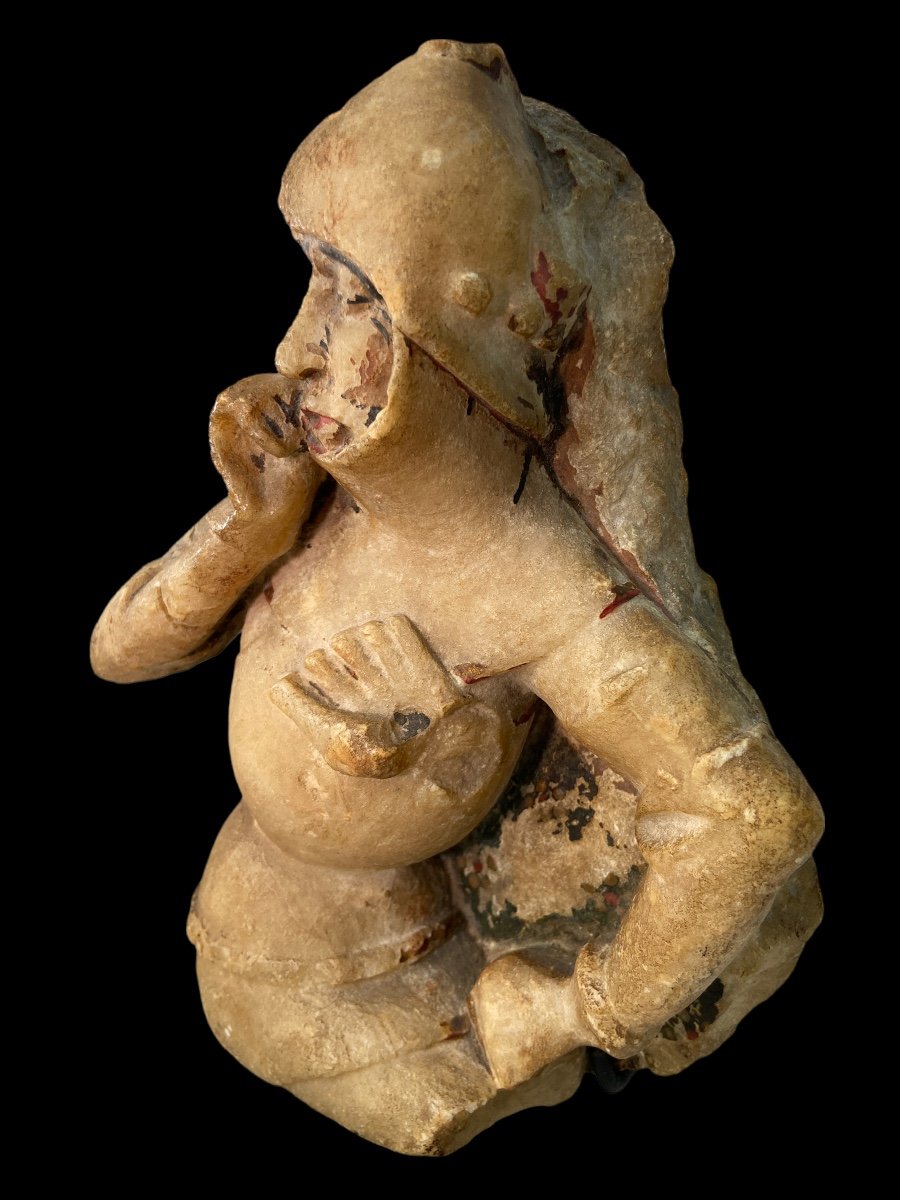

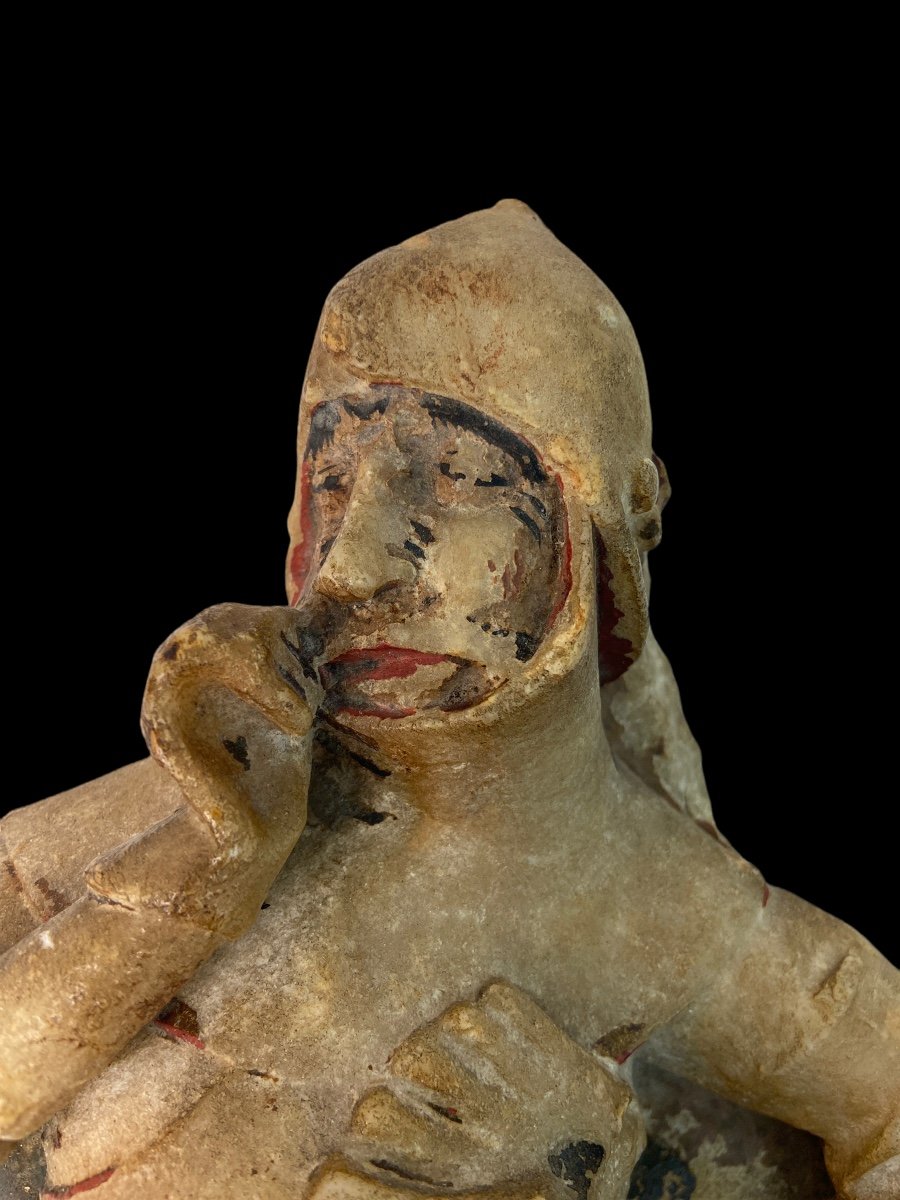
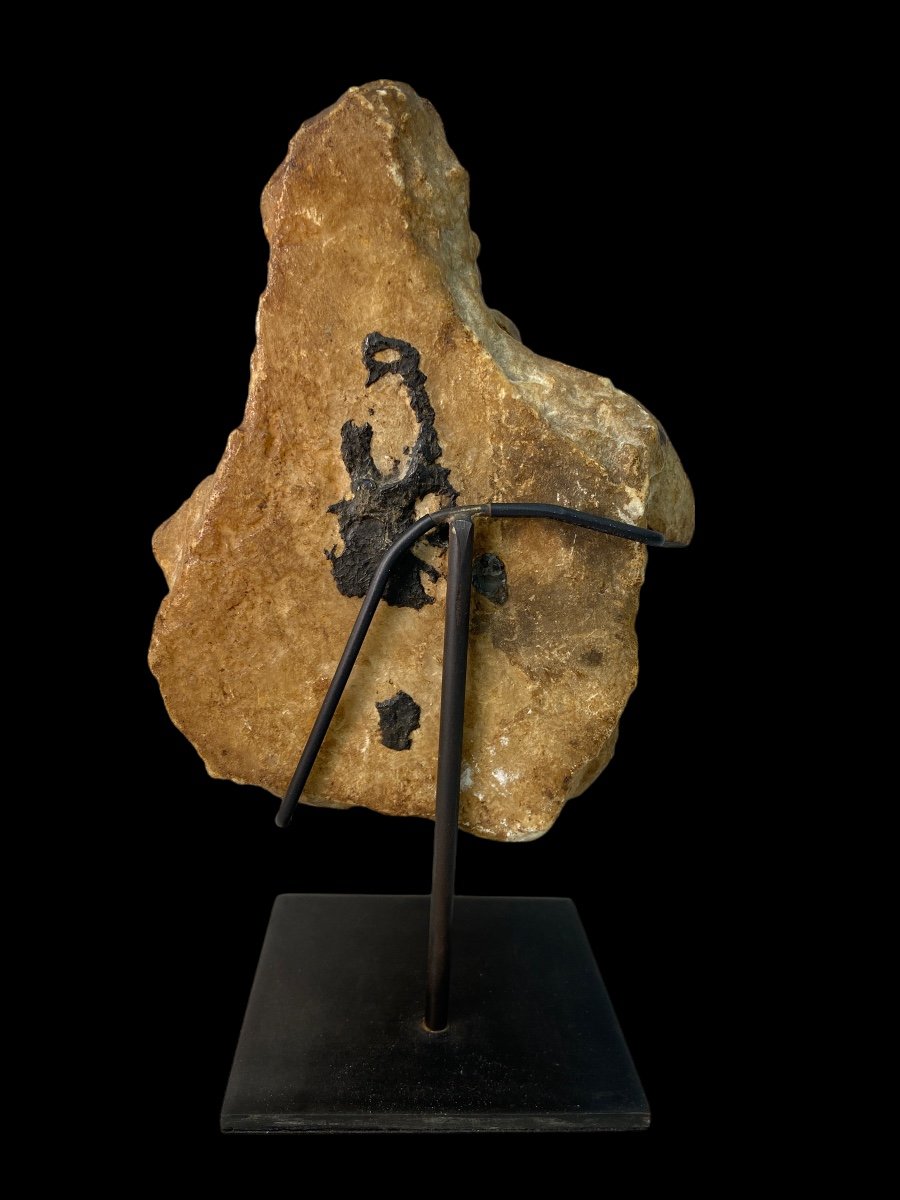
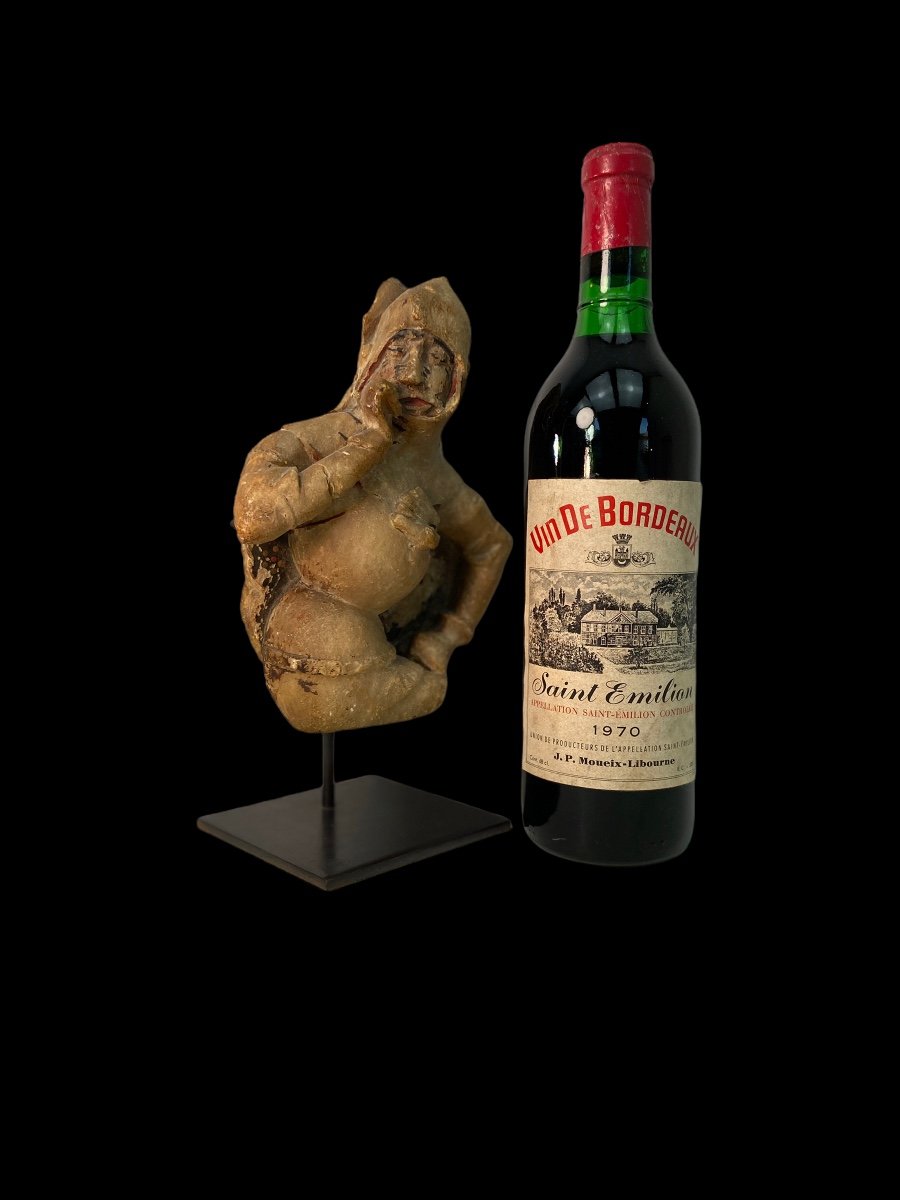


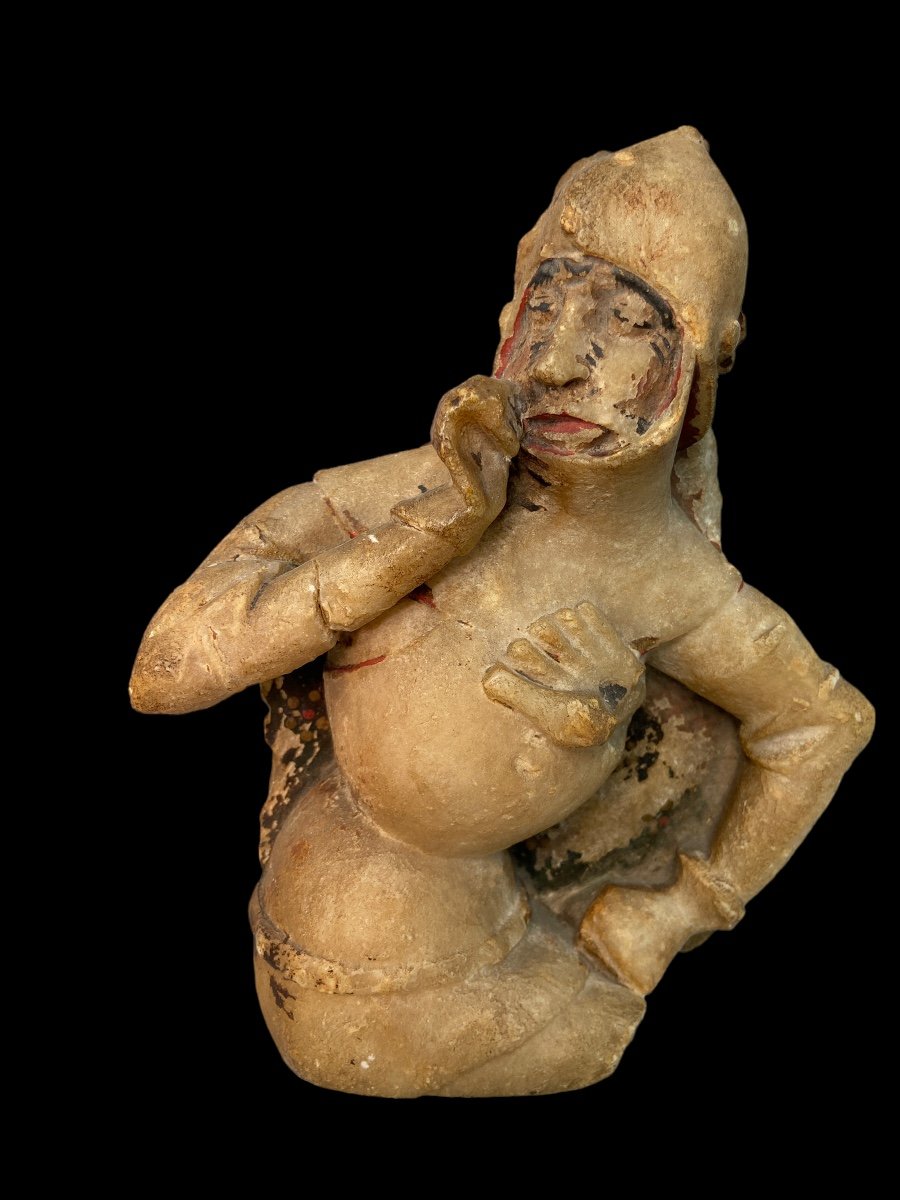
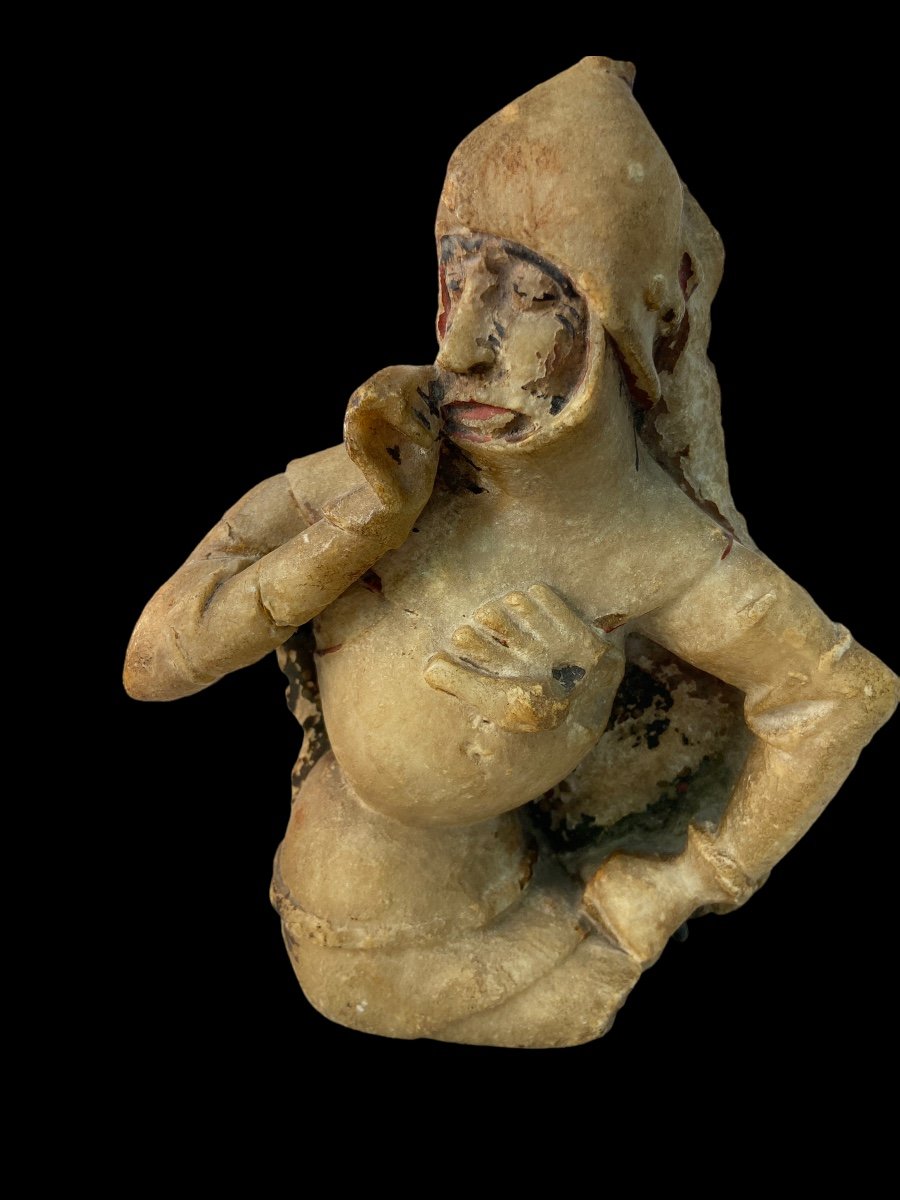
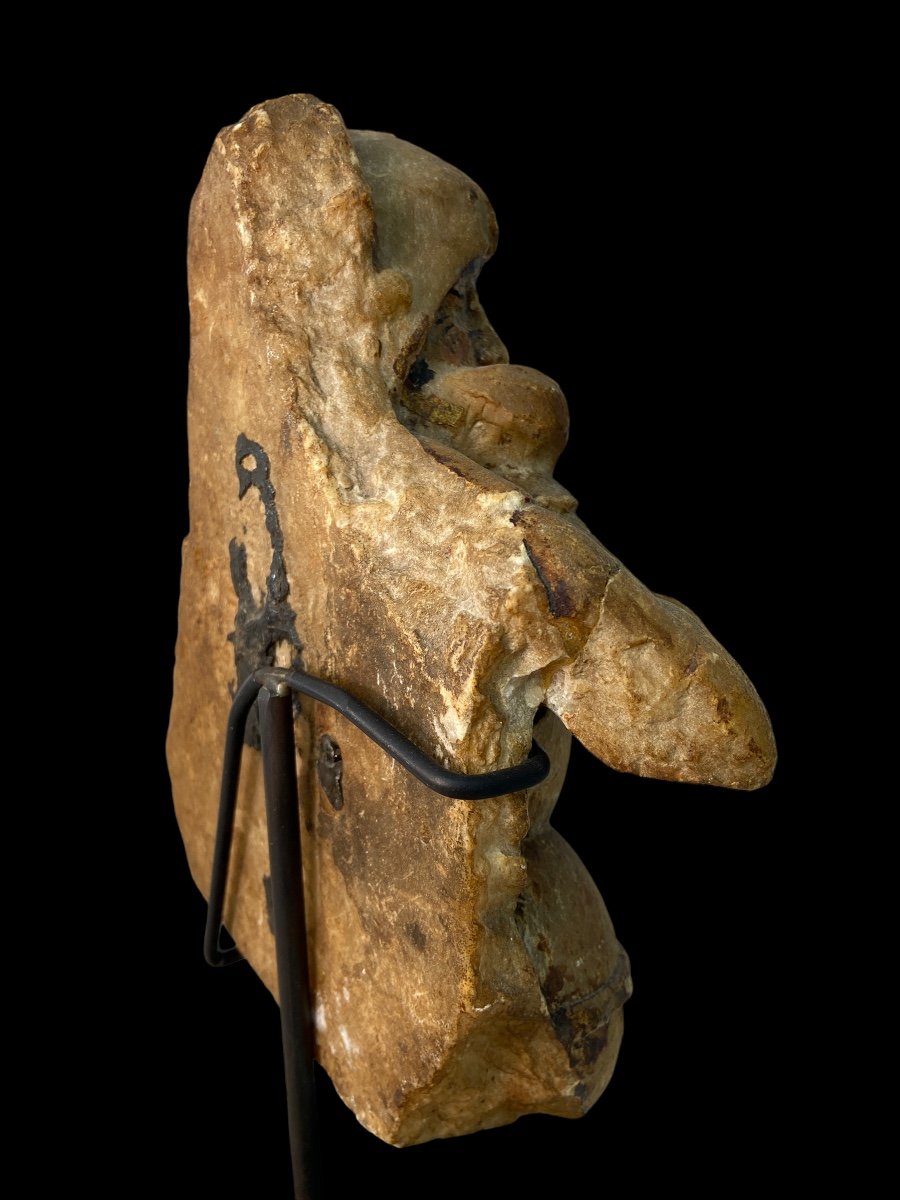
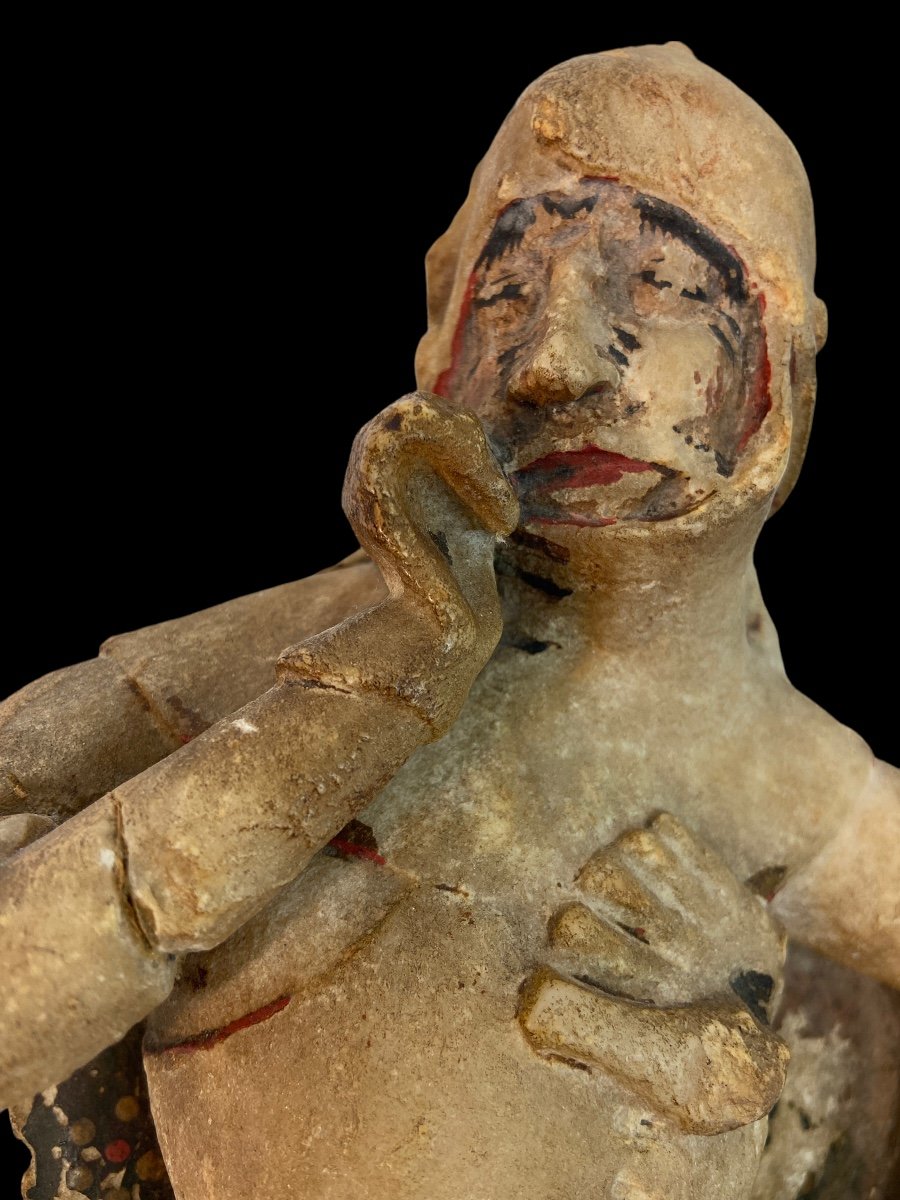


Sleeping soldier from a Resurrection scene - Alabaster - Nottingham - 15th century
With remnants of original polychromy, mounted on an iron stand (included).
With restorations.
Many of the alabaster workshops were based in the Chellason Hill area of Derbyshire and the Tetbury area of Staffordshire, where alabaster was quarried from 1160 onwards. The alabaster excavated became famous for its characteristically creamy and milky texture, which made it easier to carve and to paint than other materials. It became popular in the use of tomb carving, although unsuitable for any outdoor works, and was transported by water and road across England to various sculpture centres and even internationally as far north as Iceland and as far south as Spain. It was particularly favoured in Nottingham, which became the major centre of alabaster production in Europe.
Resurrection panels were a popular theme, perhaps in part due to their link with the well known mystery plays that were performed to celebrate Easter.
RELATED LITERATURE
F. Cheetham, Alabaster Images of Medieval England, Woodbridge, 2003, pp. 134-141, figs. 73-83
English Medieval Alabasters, F. Cheetham, Oxford, 1984, no.174.
Musees royaux d'Art et d'Histoire, Exposition de Sculptures anglaises et malinoises d'Albatre, Gh. Derveaux-Van Ussel, Bruxelles, 1967.
Masterpieces of Medieval Art, James Robinson, The British Museum Press, 2008, page 154-155.
Provencance:
Collection B. Puisieux - Paris
Collection P. Dehert - Brussels
With remnants of original polychromy, mounted on an iron stand (included).
With restorations.
Many of the alabaster workshops were based in the Chellason Hill area of Derbyshire and the Tetbury area of Staffordshire, where alabaster was quarried from 1160 onwards. The alabaster excavated became famous for its characteristically creamy and milky texture, which made it easier to carve and to paint than other materials. It became popular in the use of tomb carving, although unsuitable for any outdoor works, and was transported by water and road across England to various sculpture centres and even internationally as far north as Iceland and as far south as Spain. It was particularly favoured in Nottingham, which became the major centre of alabaster production in Europe.
Resurrection panels were a popular theme, perhaps in part due to their link with the well known mystery plays that were performed to celebrate Easter.
RELATED LITERATURE
F. Cheetham, Alabaster Images of Medieval England, Woodbridge, 2003, pp. 134-141, figs. 73-83
English Medieval Alabasters, F. Cheetham, Oxford, 1984, no.174.
Musees royaux d'Art et d'Histoire, Exposition de Sculptures anglaises et malinoises d'Albatre, Gh. Derveaux-Van Ussel, Bruxelles, 1967.
Masterpieces of Medieval Art, James Robinson, The British Museum Press, 2008, page 154-155.
Provencance:
Collection B. Puisieux - Paris
Collection P. Dehert - Brussels
Explore similar pieces and discover your ideal find:
Christian Art