THIS OBJECT WAS SOLD
Buddha With Lions, Schist, Gandhara, 1st-5th Century Ad
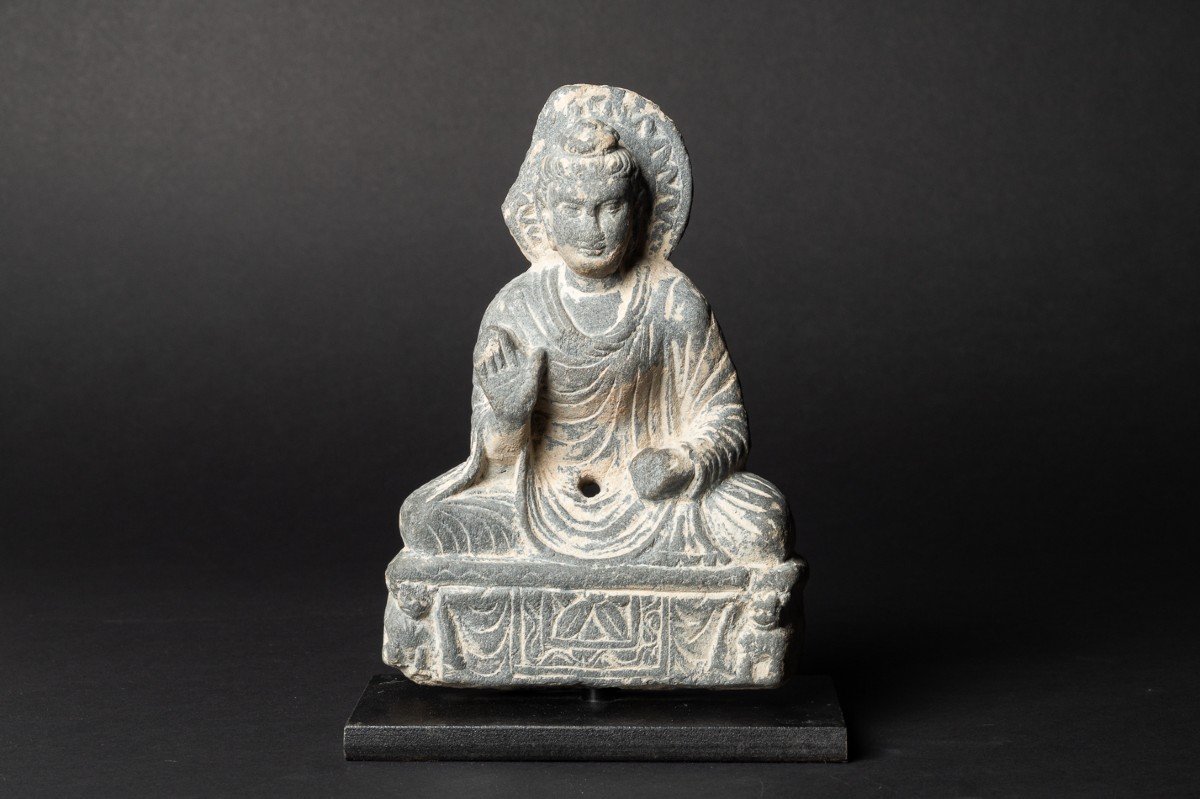
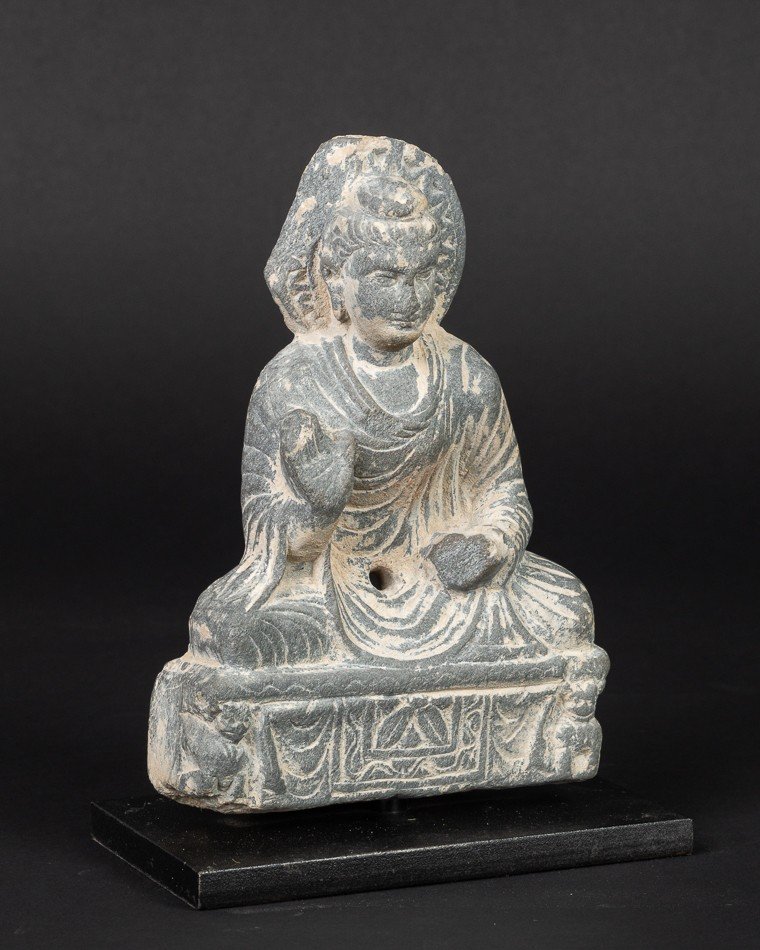

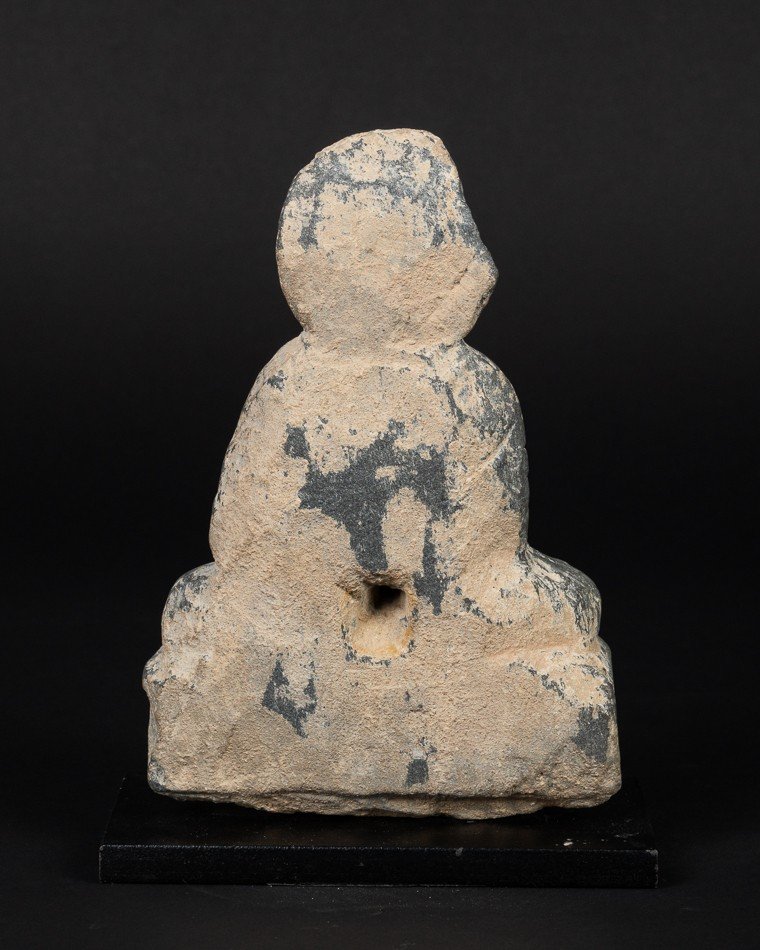
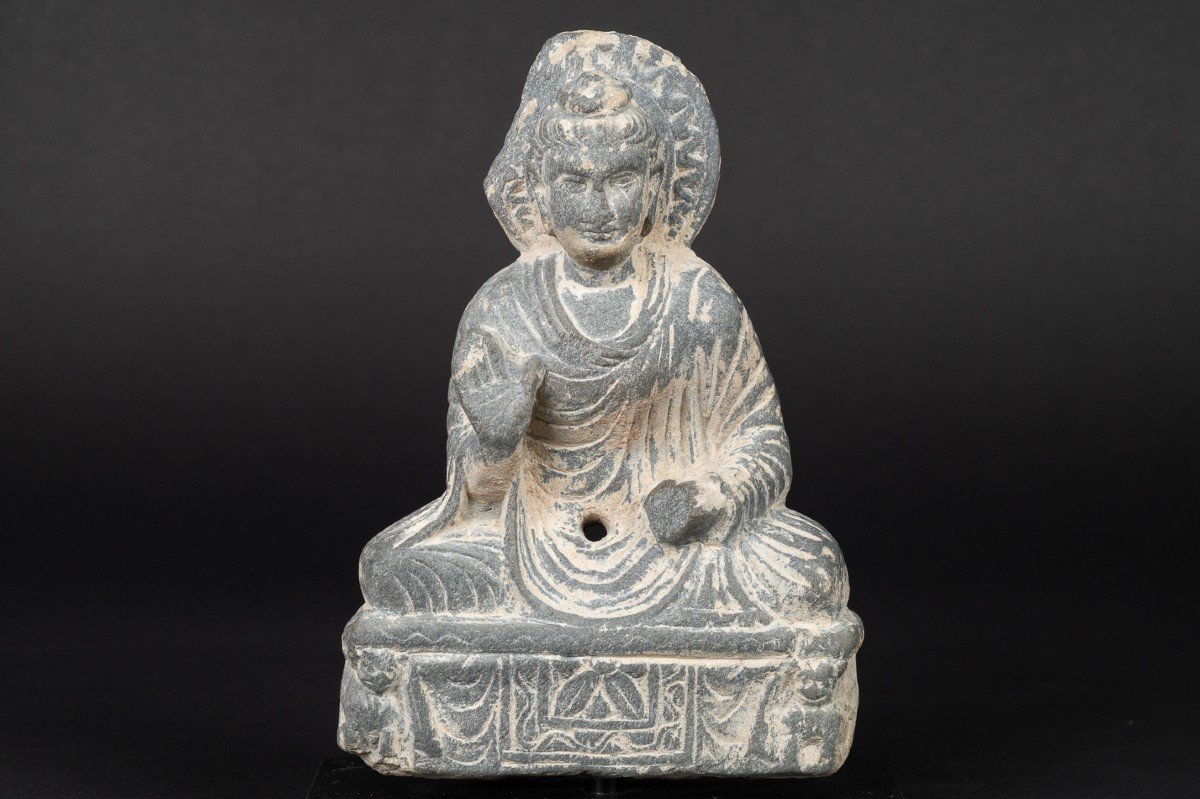
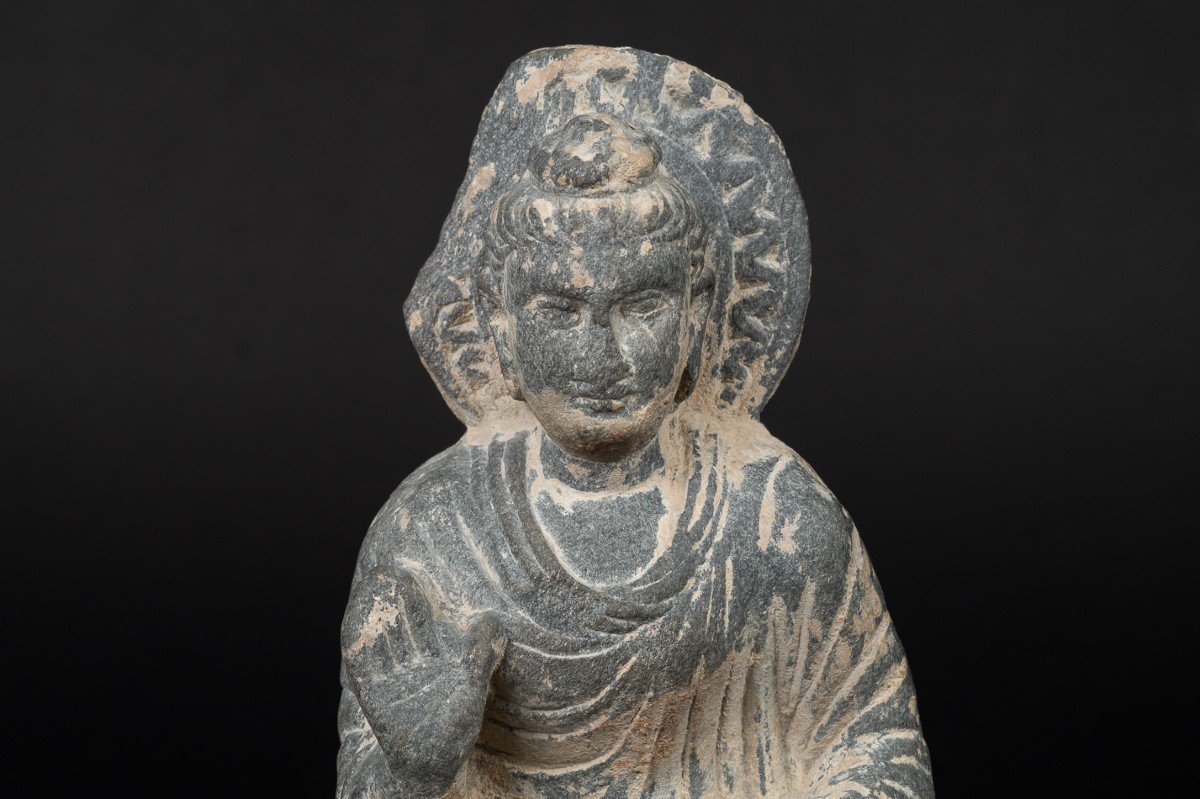
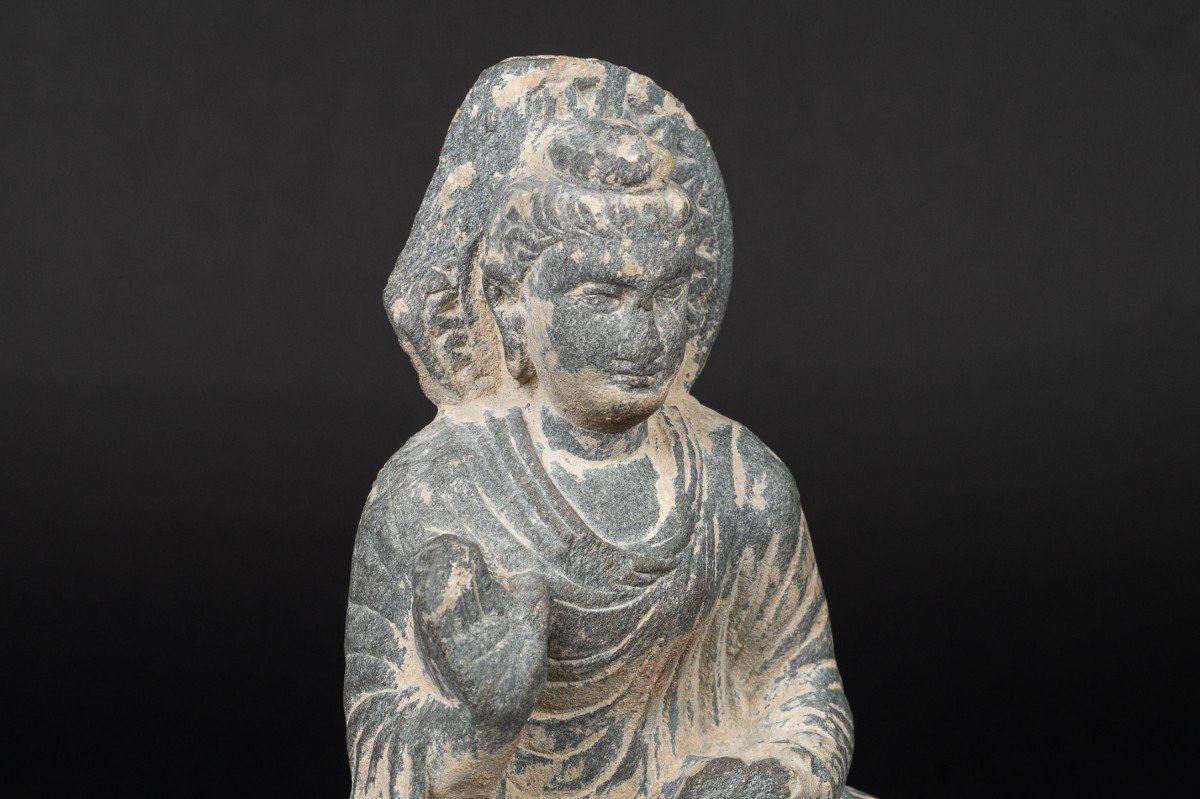
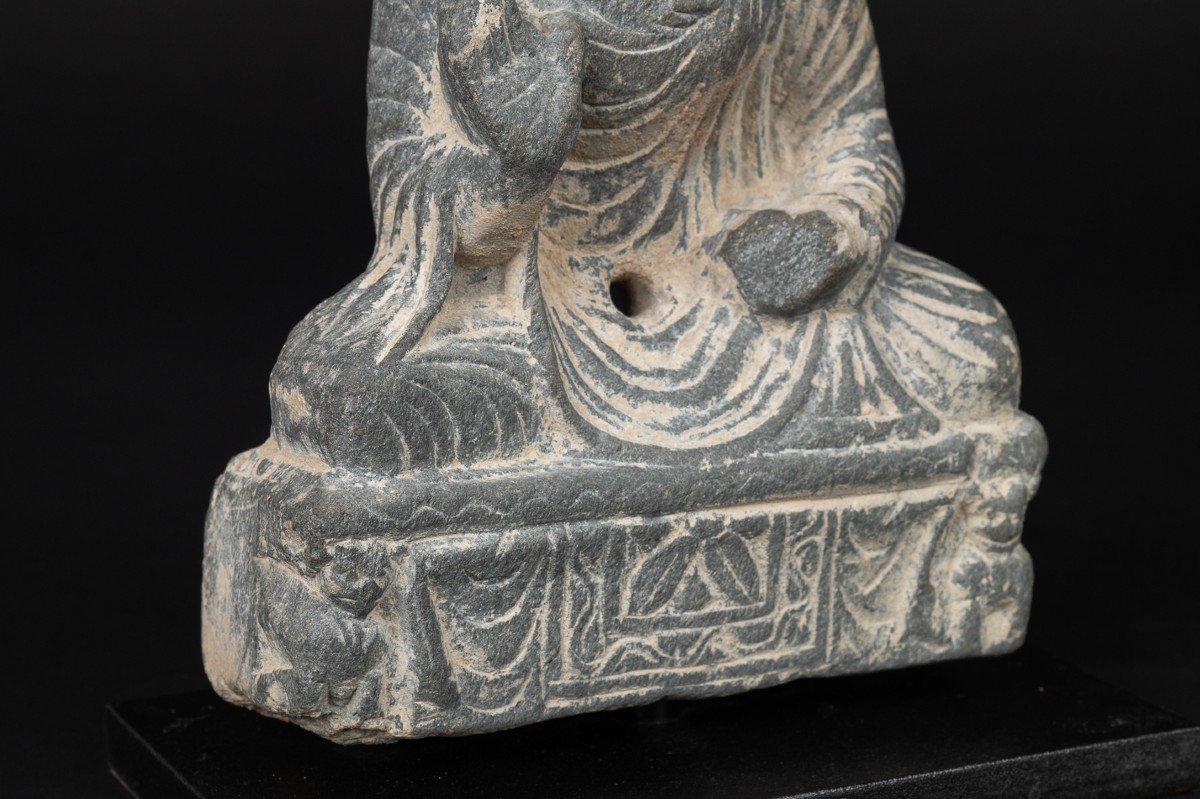
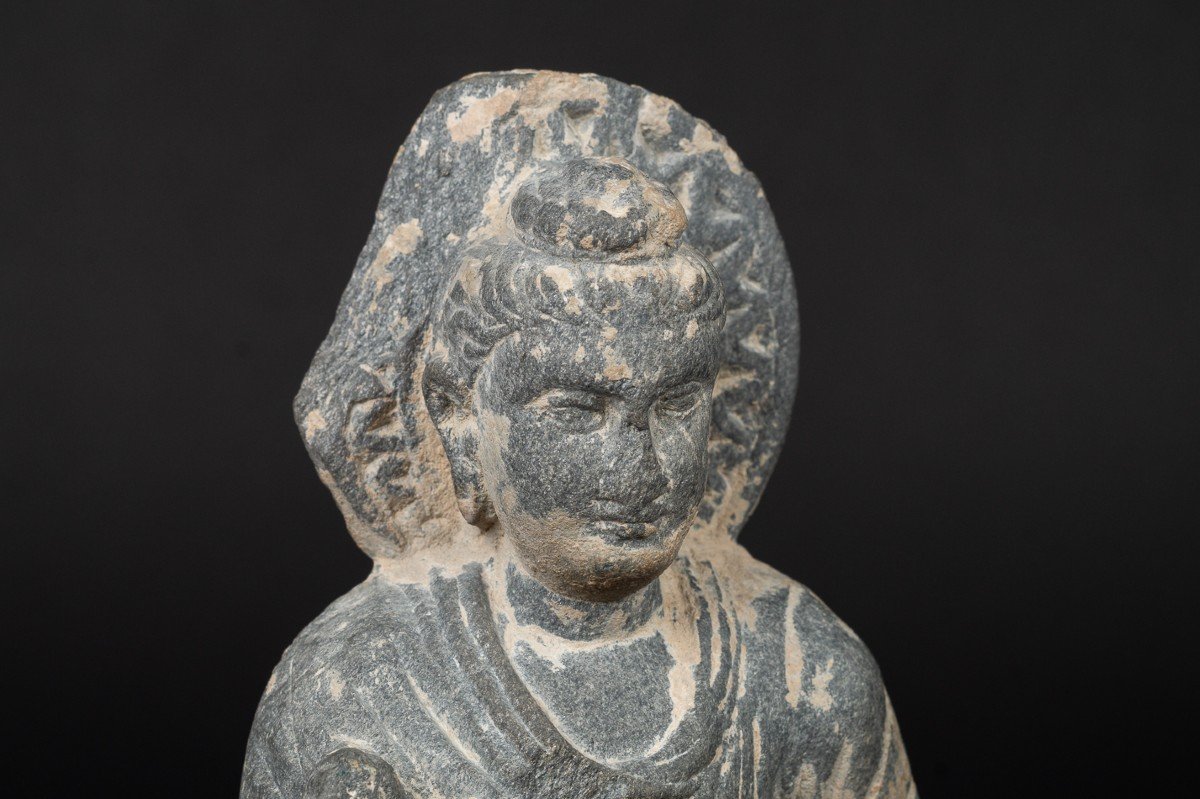
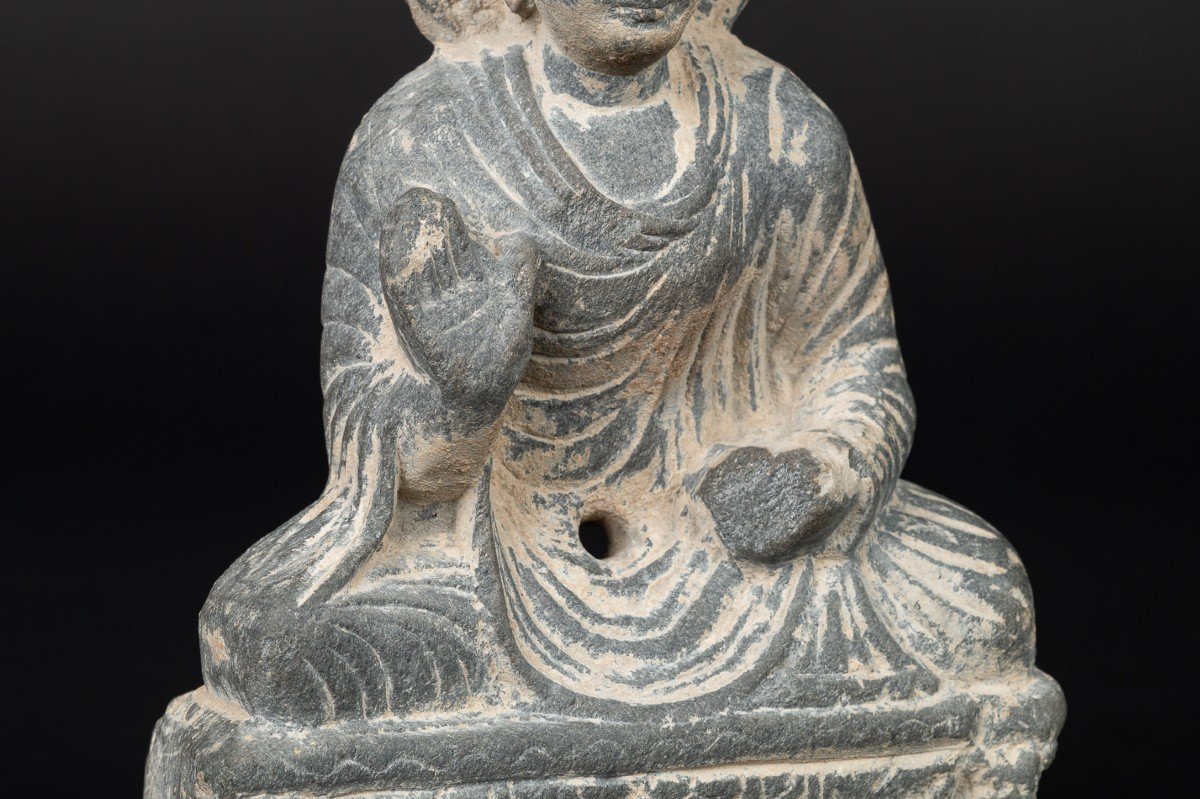
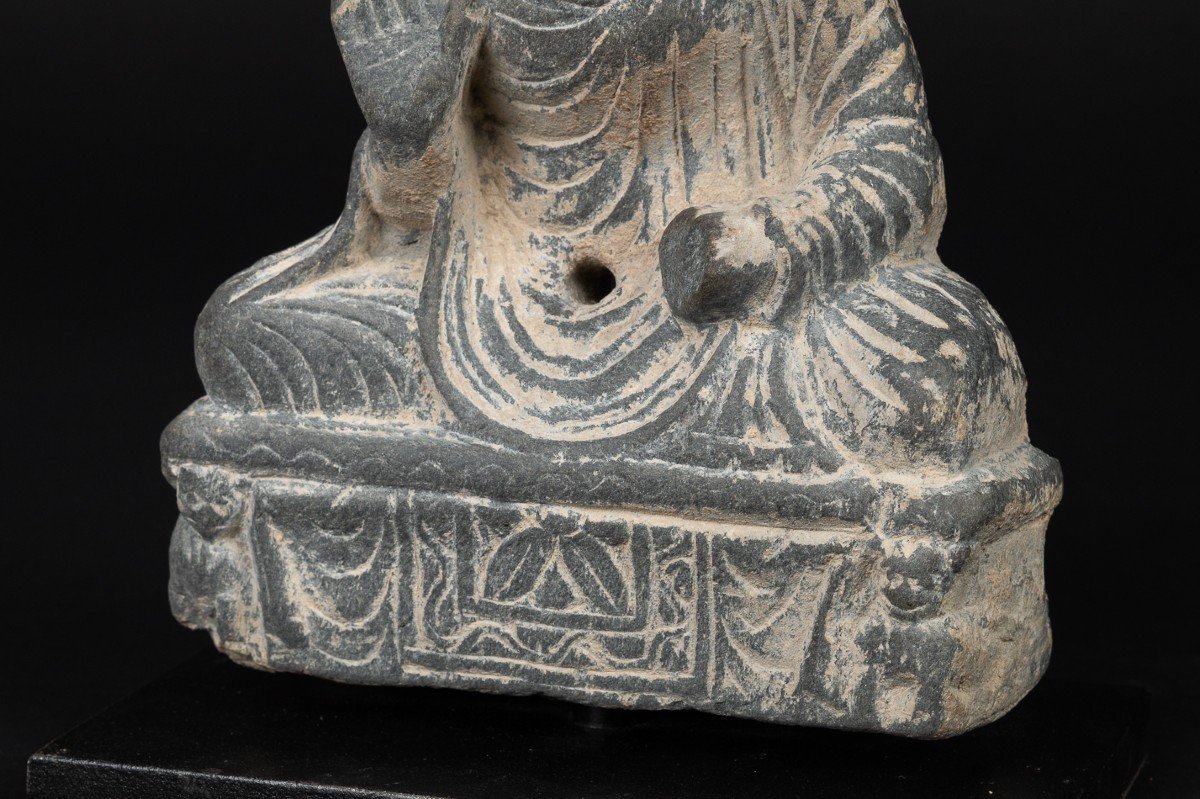



Gandhara (region of present-day Pakistan and Afghanistan), 1st-5th century AD Height 17.5 cm, (height with base 19 cm), width 12 cm, depth 4.5 cm. Base 14x8 cm. Condition shown in photos. The stone sculpture (schist) depicts Buddha Sakyamuni, founder of Buddhism, seated in the lotus position. The Buddha has a traditional hairstyle, from the oldest Indian representations, and his head is surrounded by a halo with a sculpted frieze. A long monk's robe, modest but whimsically sculpted, covers the body and strongly references Greek sculptural compositions. The Buddha's right hand performs the Abhaja-mudra gesture (literally "gesture of absence of fear" in Sanskrit) - in Hindu and Buddhist iconography, the so-called "absence of fear" mudra (a-bhaja) symbolizes the (a-bhaja) symbolizing a gesture of attention. Below the Buddha is a central flower (perhaps the prototype of the Flower of Life symbol), and on the sides representations of lions. Lions accompanied the Buddha from the first iconographic representations, later they often appeared in the art of many countries of the Far East, and their large-scale sculptures guarded, for example, the entrance to temples. Later they were often called Buddhist lions or Foo dogs (Buddha dogs). The art of the ancient region of Gandhara is often referred to as Greco-Buddhist art, as the people of Gandhara drew heavily on Greek art, and the oldest known representations of the Buddha in this region, dating from the 1st century AD, are often compared to Greek statues of Apollo. From the 4th century BC or the time of the conquests of Alexander the Great, Greek colonists established cities in the region, which resulted in an intense cultural and material exchange between the inhabitants. of the region and the Greek and Roman world, which lasted several centuries. Free delivery in EU. ! I send parcels by insured courier (DPD or DHL). All items are packaged very carefully. Information: https://www.metmuseum.org/toah/hd/gand/hd_gand.htm https://pl.wikipedia.org/wiki/Gandhara auction results: https://www.sothebys.com/ en/auctions/ecatalogue/2017/saturday-at-sothebys-n09666/lot.1183.html https://www.sothebys.com/en/auctions/ecatalogue/2015/indian-himalayan-southeast-asian-art-n09319 /lot.1066.html?locale=en Translated with www.DeepL.com/Translator (free version)
Explore similar pieces and discover your ideal find:
Marble & Stone Sculptures