THIS OBJECT WAS SOLD
Portrait Of A Young Officer In Uniform C.1805; Circle Of Sir William Beechey Ra (1753-1839)
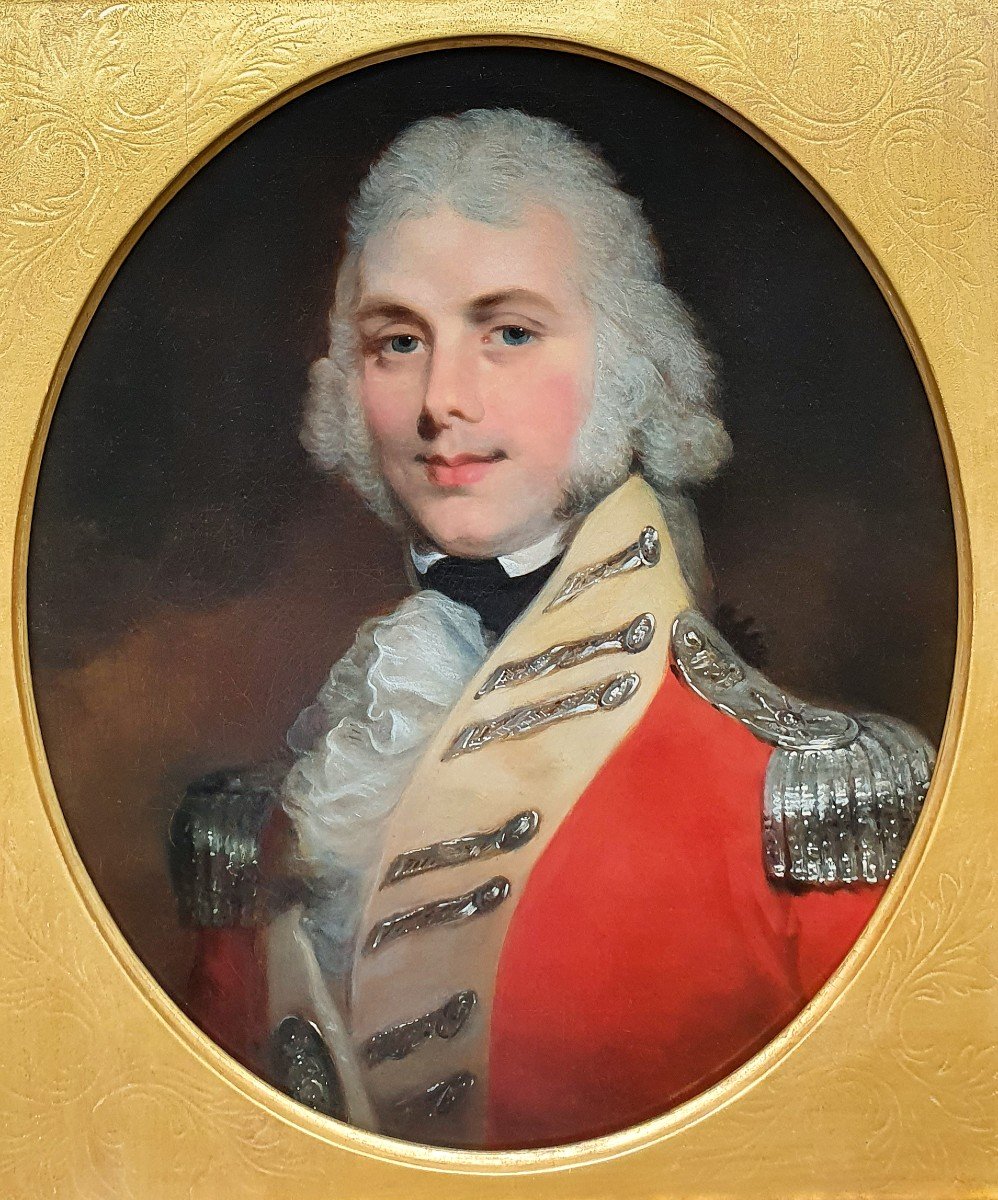
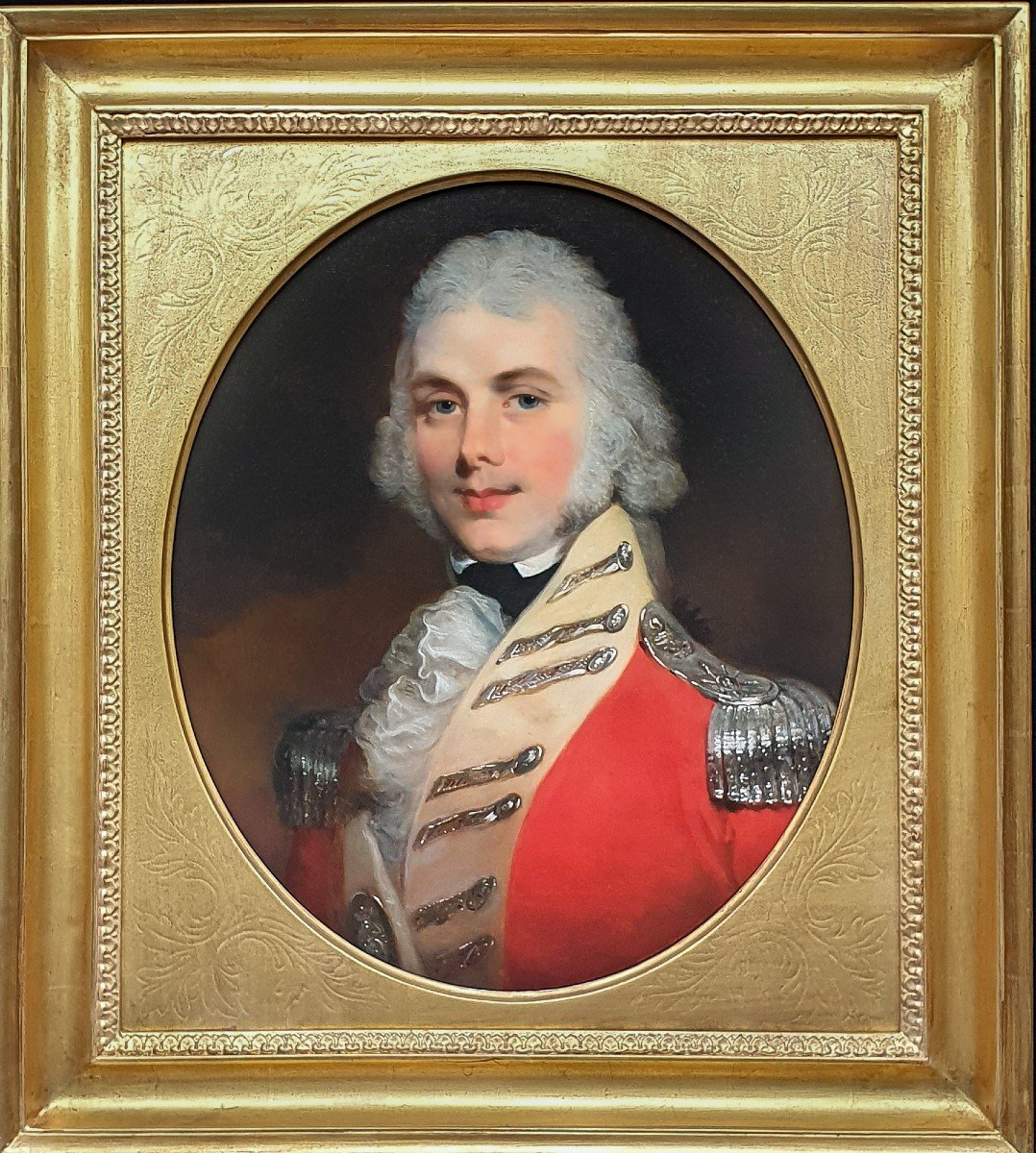
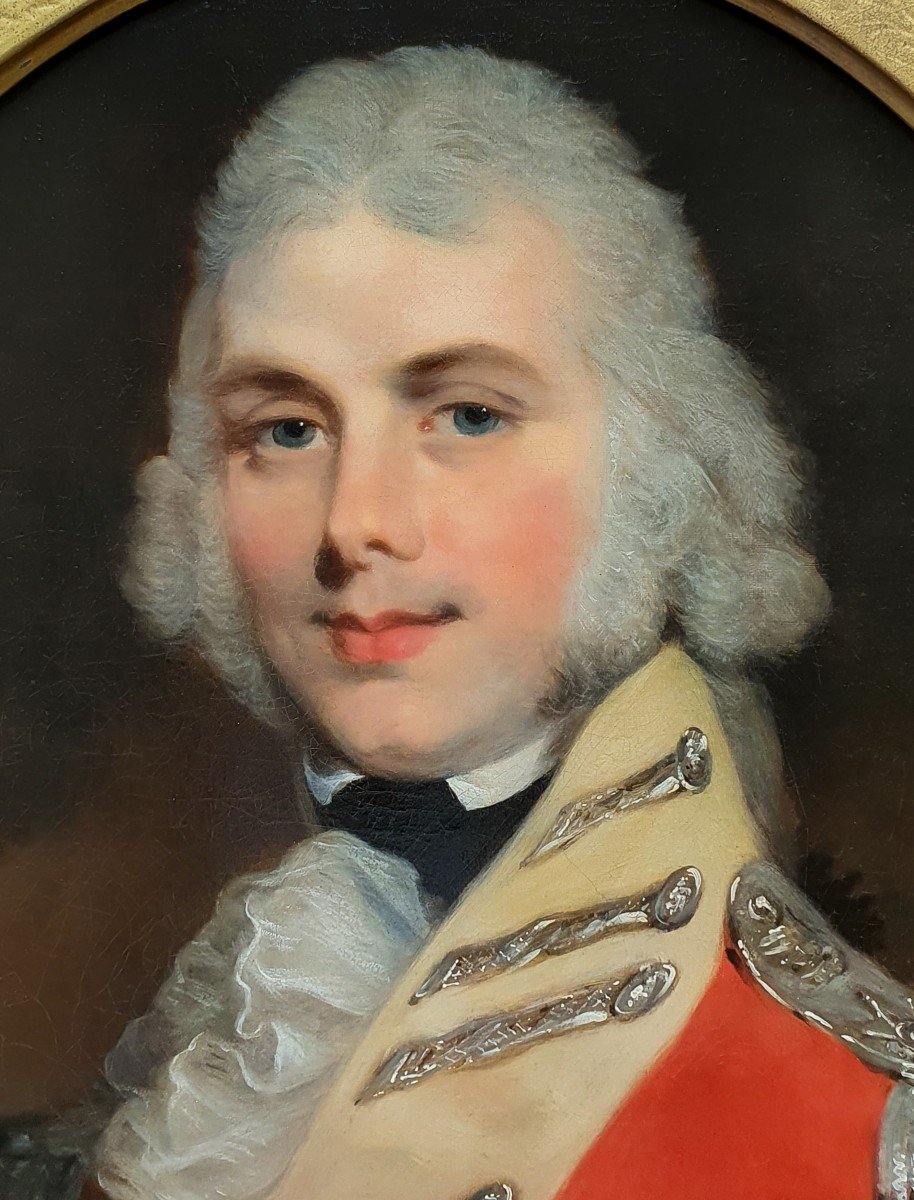
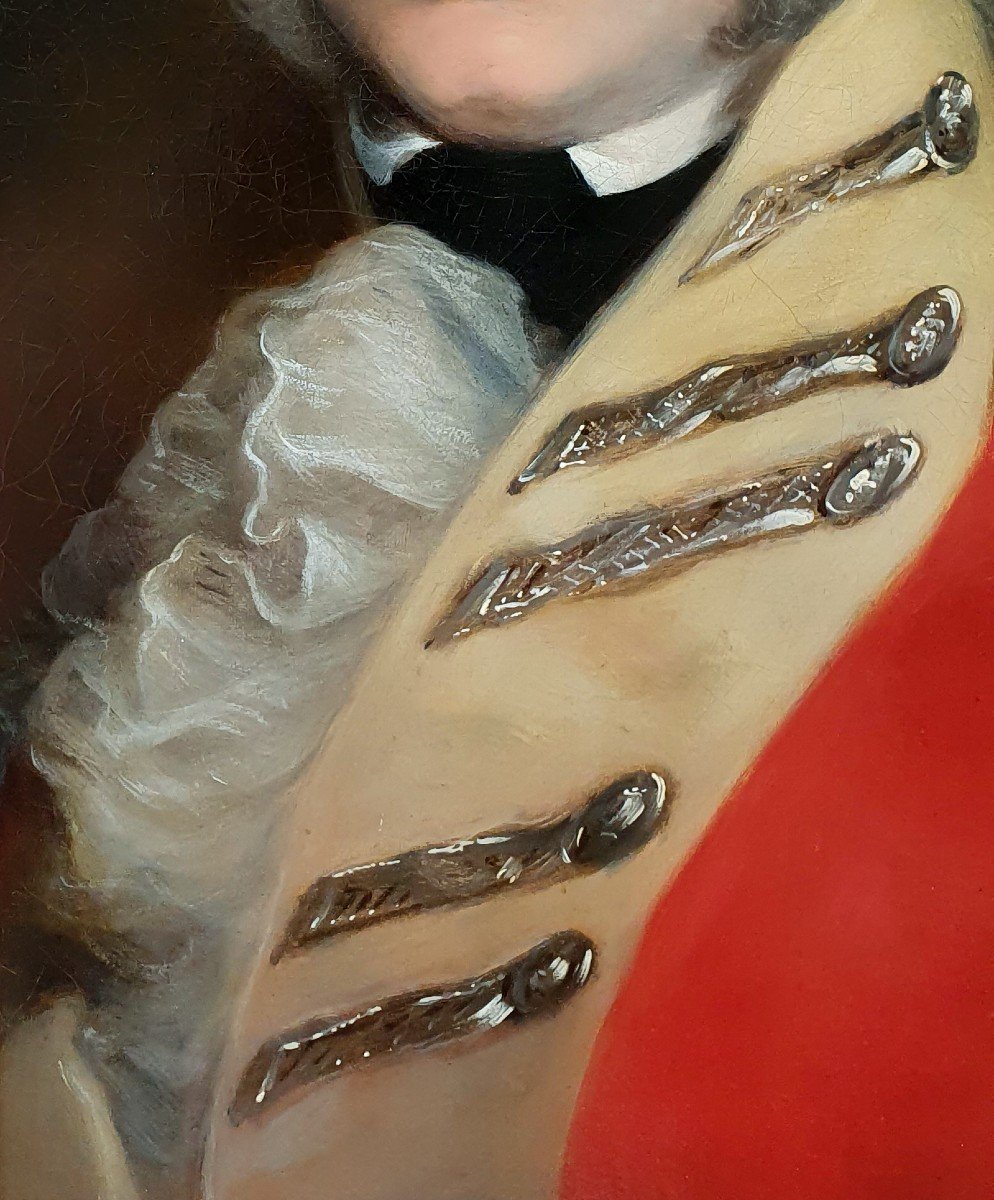
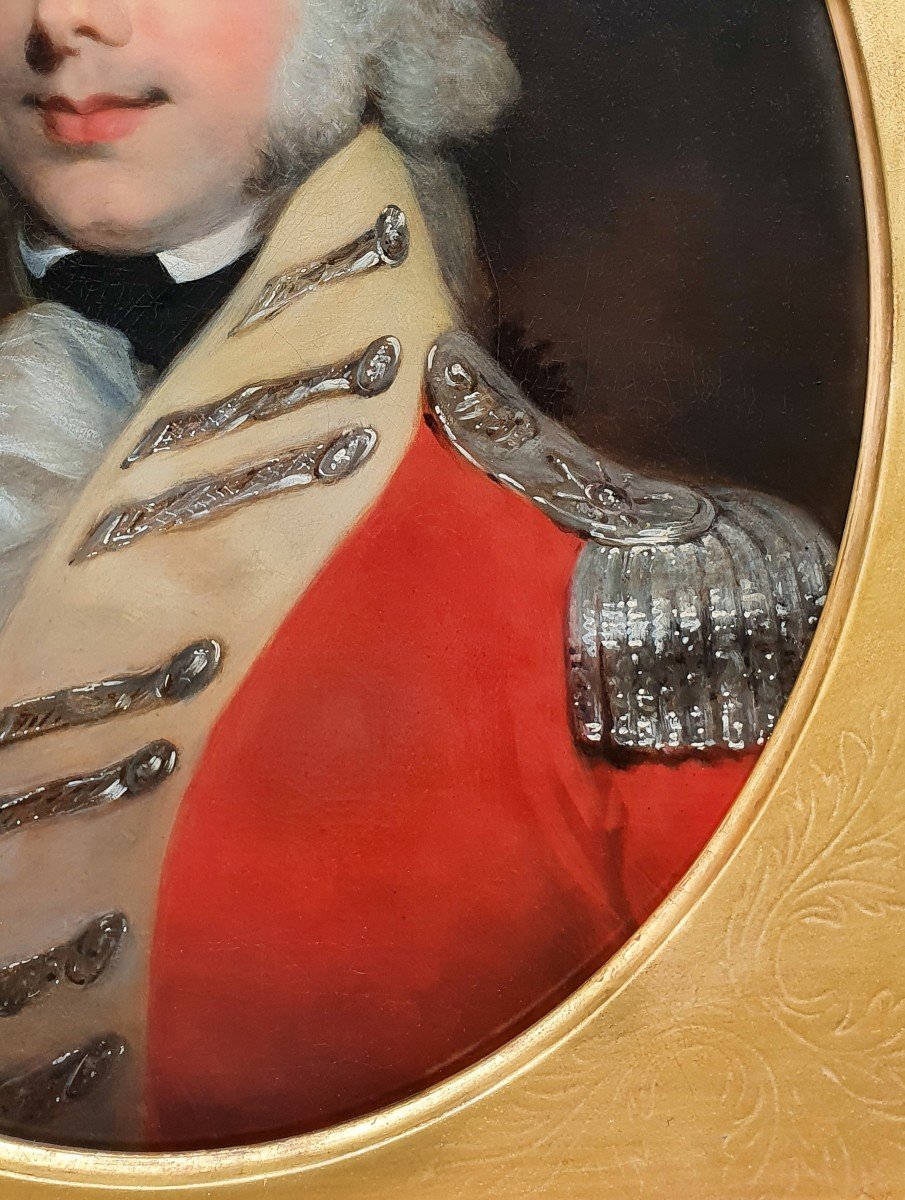
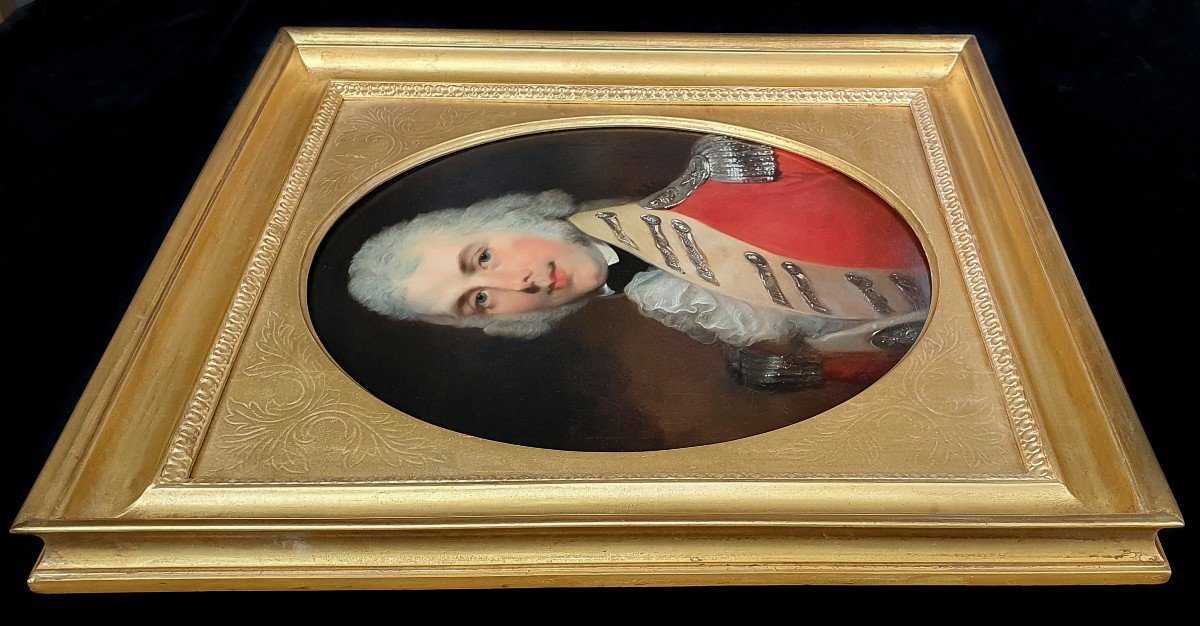


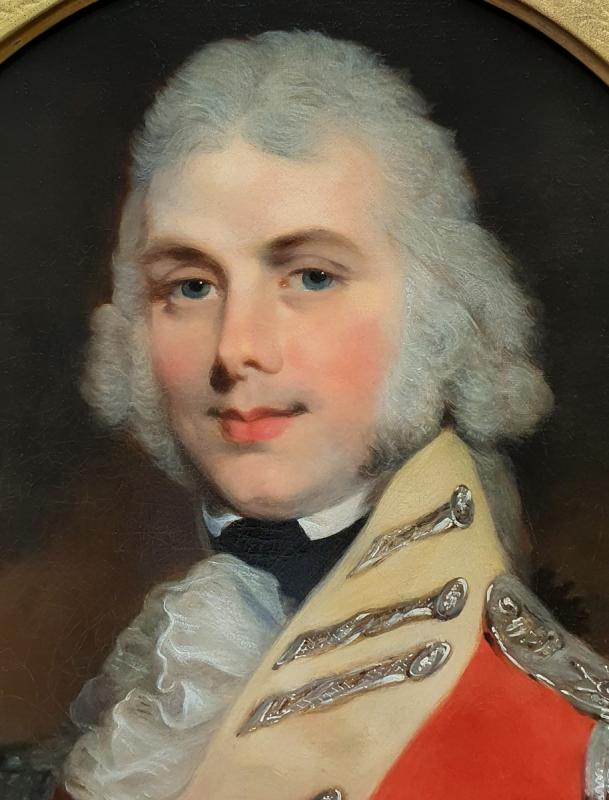


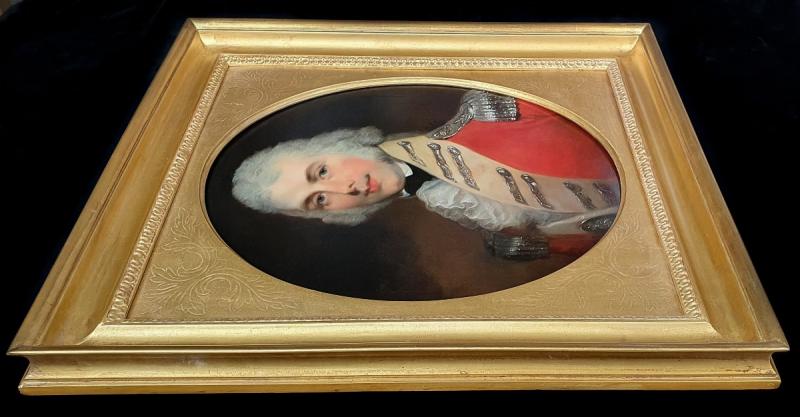

This exquisite portrait bears testimony to the artist’s ability to convey not just a likeness but something of the character of the sitter – self-assured, but there is also a sense of warmth. The red scarlet cloth and the silver detail against the dark background are an apparently effortless harmonisation of tones, and they create a striking image.
The dashing young officer wears an elaborate scarlet coat with a high standing collar dark mustard lapels worn over a white linen shirt with a sheer frill down the front - popular in the late 18th century. He also wears a sash and badge over his right shoulder and fringed silver epaulettes, denoting his rank, which is thought to be Captain.
During this period, younger men of fashion began to wear their hair in short curls, often with long sideburns. In our portrait, rather than a wig, the sitter wears his own hair, long, powdered and, brushed back from the forehead and tied at the nape of the neck (clubbed) with a black ribbon, which became fashionable by c.1795. However, a hair powder tax in 1795 effectively ended the fashion for wigs and powder but older men, military officers, and those in conservative professions such as lawyers, judges, physicians, and servants retained their wigs and powder. This portrait can be dated between 1795 and 1808 when the army stopped using the queue.
Held in a good quality gilded antique frame.
Sir William Beechey was a successful portrait painter with unparalleled royal patronage. His intended legal career was cut short by a chance meeting with students of the Royal Academy Schools and in 1772 Beechey entered the schools himself. He first exhibited at the Royal Academy in 1776. After five years in Norwich, he moved back to London in 1787 where he stepped into the vacuum left by Gainsborough’s death and Reynolds’ retirement. He gained a reputation for straight-forward, unpretentious and careful portraiture and in 1793 he was appointed painter to Queen Charlotte. Not long afterwards he was made a member of the Royal Academy – on King George’s request, it was rumoured – but he fell from royal favour in 1806. He continued to exhibit at the Academy until the year before his death.
An old label on the reverse from John Mathieson & Co, 20 Frederick Street, Edinburgh EH2 2JS (John Mathieson & Co. operated in the early 1930’s and continued to at least the 1940’s).
Provenance: Private collection in the south of England for at least three generations
Measurements: Height 71cm, Width 64cm, Depth 8cm framed (Height 28”, Width 25”, Depth 3” framed
The dashing young officer wears an elaborate scarlet coat with a high standing collar dark mustard lapels worn over a white linen shirt with a sheer frill down the front - popular in the late 18th century. He also wears a sash and badge over his right shoulder and fringed silver epaulettes, denoting his rank, which is thought to be Captain.
During this period, younger men of fashion began to wear their hair in short curls, often with long sideburns. In our portrait, rather than a wig, the sitter wears his own hair, long, powdered and, brushed back from the forehead and tied at the nape of the neck (clubbed) with a black ribbon, which became fashionable by c.1795. However, a hair powder tax in 1795 effectively ended the fashion for wigs and powder but older men, military officers, and those in conservative professions such as lawyers, judges, physicians, and servants retained their wigs and powder. This portrait can be dated between 1795 and 1808 when the army stopped using the queue.
Held in a good quality gilded antique frame.
Sir William Beechey was a successful portrait painter with unparalleled royal patronage. His intended legal career was cut short by a chance meeting with students of the Royal Academy Schools and in 1772 Beechey entered the schools himself. He first exhibited at the Royal Academy in 1776. After five years in Norwich, he moved back to London in 1787 where he stepped into the vacuum left by Gainsborough’s death and Reynolds’ retirement. He gained a reputation for straight-forward, unpretentious and careful portraiture and in 1793 he was appointed painter to Queen Charlotte. Not long afterwards he was made a member of the Royal Academy – on King George’s request, it was rumoured – but he fell from royal favour in 1806. He continued to exhibit at the Academy until the year before his death.
An old label on the reverse from John Mathieson & Co, 20 Frederick Street, Edinburgh EH2 2JS (John Mathieson & Co. operated in the early 1930’s and continued to at least the 1940’s).
Provenance: Private collection in the south of England for at least three generations
Measurements: Height 71cm, Width 64cm, Depth 8cm framed (Height 28”, Width 25”, Depth 3” framed
Explore similar pieces and discover your ideal find:
Portraits