THIS OBJECT WAS SOLD
Portrait Of An Officer, Circa 1660 - Circle Of Adriaen Hanneman

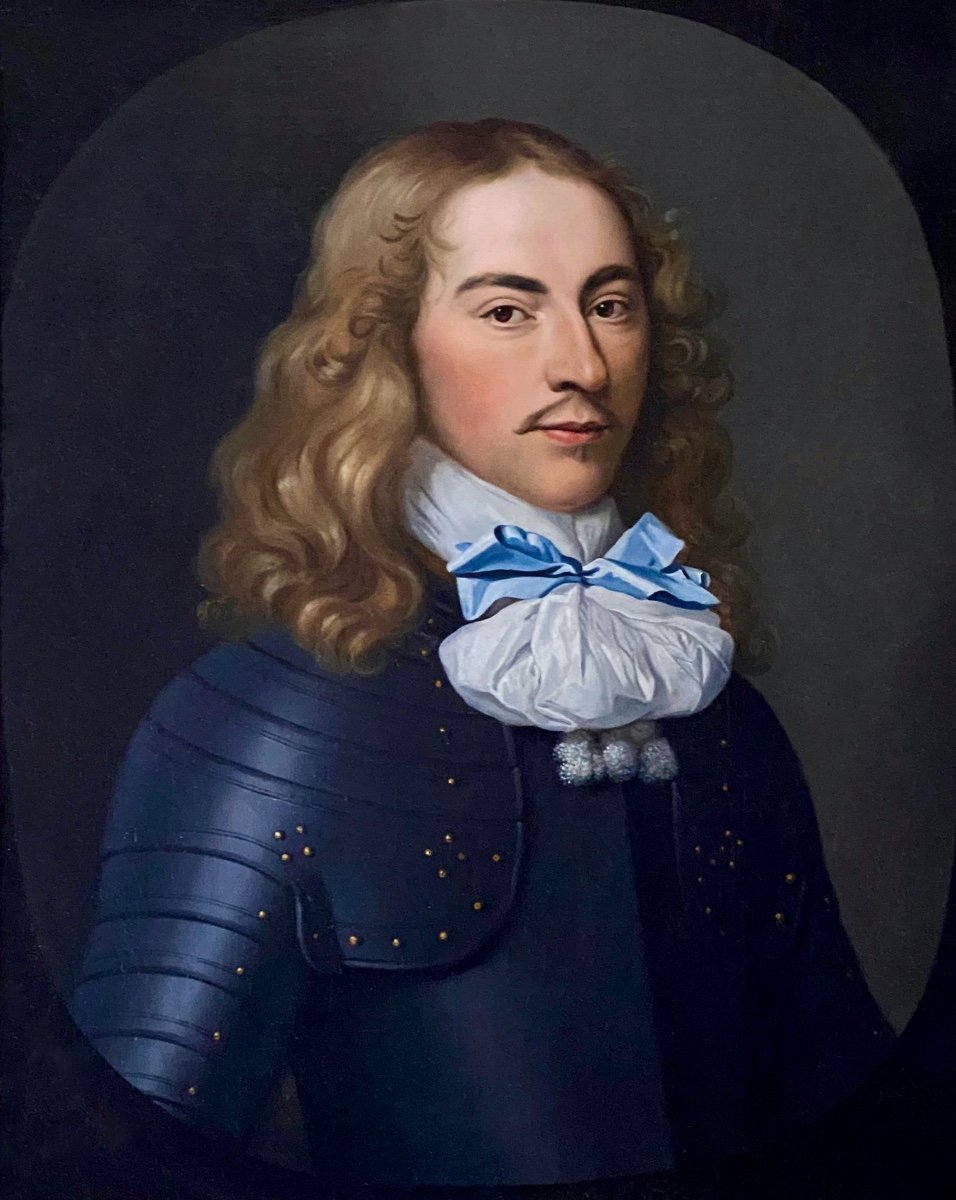
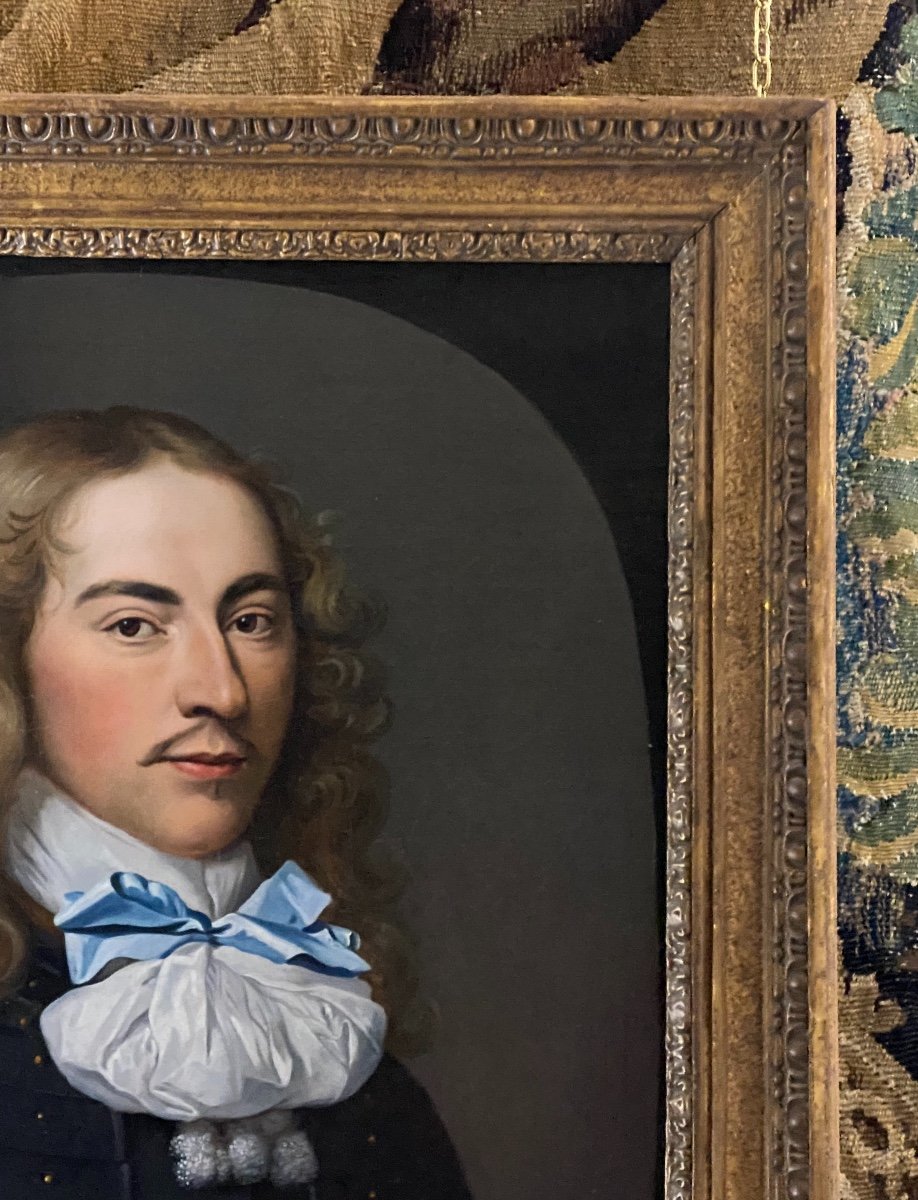


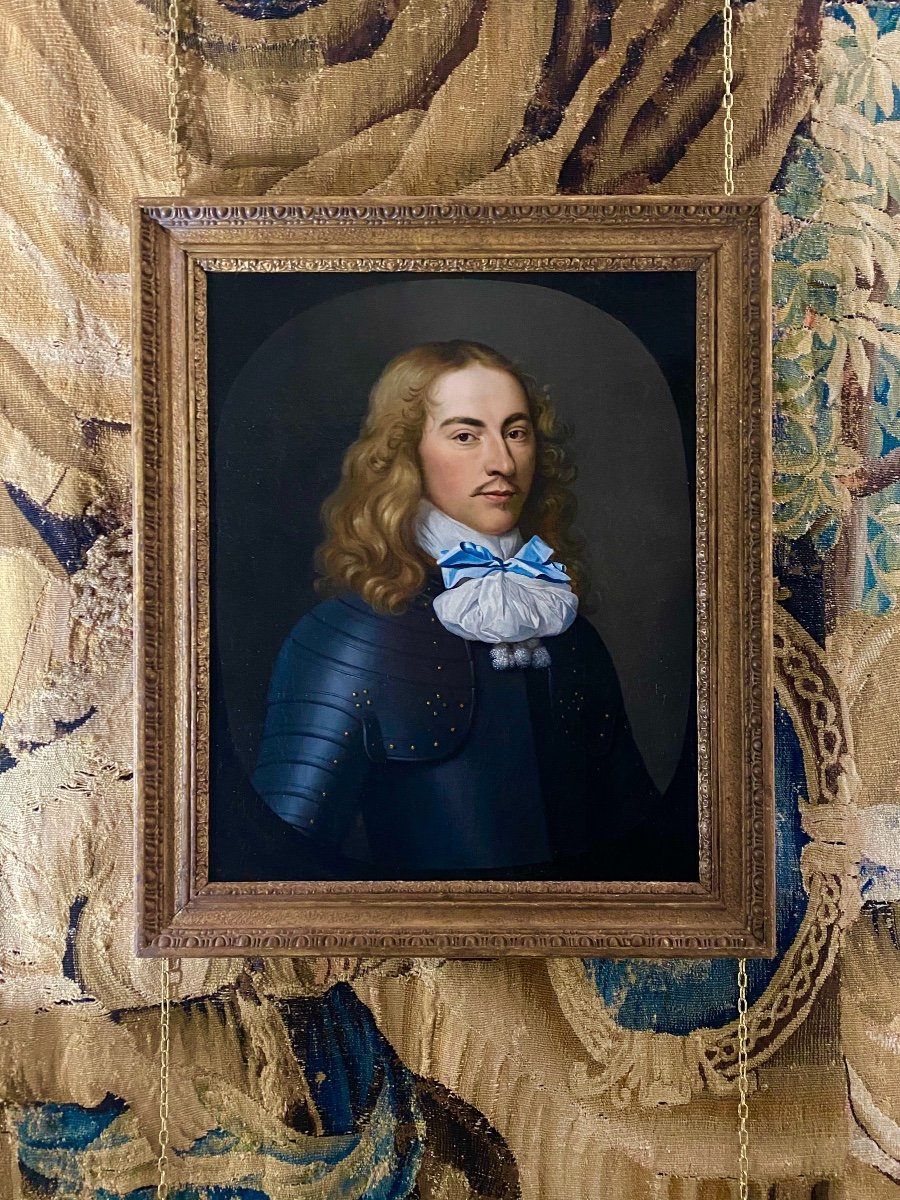


A beautiful, rare and highly decorative 17th century portrait of a handsome, long haired officer wearing an elaborate military robe, by an artist in the circle of Adriaen Hanneman (circa 1603-1671) Adriaen Hanneman (circa 1603-1671). Hanneman was a talented Dutch painter who almost imitated Van Dyck's late style in the mid-17th century in Britain. His works follow the general trend towards a muffled classicism initiated in portraiture from the 1650s. This change in fashion resulted in softer brushwork and softer modulating skin tones, which was already evident in the paintings. latest work by Van Dyck. This tradition was developed by figures like Hanneman, who may have worked as an assistant in Van Dyck's studio at Blackfriars. In terms of composition, one could argue that it was artist Michiel Jansz.van Miereveldt (died 1641) who made this armored format in a simulated oval popular in the 1630s. The curious tension between wanting to appear "traditional" and very modern is a theme we will come back to. Although the painting bears an “A H” inscription, the authorship of this work remains elusive. It is possible, judging by the face and the particularly solid modeling, that the portrait is of French or continental origin. The blue ribbon on the white tie also supports this notion, but cannot be taken as conclusive evidence. Focusing on babysitter fashion also provides clues as to who this gentleman may have been. Although the armor became less and less relevant on the battlefield, its continued appearance in portraits is proof that this "mode" was still popular among customers. The associations that the armor evoked from a chivalrous past remained attractive to military guards until the 17th century. The style of armor that this gentleman wears evokes a French or Dutch origin. Its blackened appearance was obtained by heat treatment or may have been painted black to reduce expense. Decorative brass rivets were a popular feature of 17th century armor. The French examples in particular seemed to have favored the decorative rivets arranged in ornate rosettes which would adorn the epaulettes. The sitter also sports a silk tie neatly tied at the neck with a decorative blue ribbon. Ties are more often associated with the exuberant European fashions that appeared around 1660. It is for this reason that we date this portrait to the second half of the 17th century. As surprising as it may sound, ties are said to originate from military uniform and fashion. Its appearance here, in an openly militarist portrait, is therefore quite relevant. The slightly mythologized history of this tie piece, and how it entered European fashion, was summarized here in H Blanc's 1828 publication The Art of Tying the Cravat of London: In 1660 a Regiment of Croats Arrived in France: - part of their singular costume aroused the greatest admiration and was immediately and generally imitated; it was a choker, made (for private soldiers) of common lace, and muslin or silk for officers; the ends were arranged in a rosette or adorned with a button or a tuft which hung gracefully on the chest. This new arrangement… was first described as Croatian, since corrupt at Cravat. The ties of officers and ranks were extremely thin, and the ends were embroidered or trimmed with wide lace; those of the lower classes were then made of fabric or cotton… Recent conservation has revealed the true coloring of this vibrant piece. The textures of the strong, cold blackened weave contrast with the model's flaming hair. It is perhaps not surprising to admire the great attention paid to the gentleman's flowing locks. The variety of earthy shadows, from browns to light blondes greatly contributes to the portrait's three-dimensionality and adds a lot to its decorative appeal. This beautiful work is ready to be hung and enjoyed in a beautiful old 18th century "Palladian" frame. Higher resolution images on request. Worldwide shipping available. Provenance: Private collection Belgium. Canvas: 29.5 "x 24" / 75cm x 61cm. Frame: 34.5 "x 29" / 87.5cm x74cm.
Explore similar pieces and discover your ideal find:
Portraits