THIS OBJECT WAS SOLD
Cousineau Harp
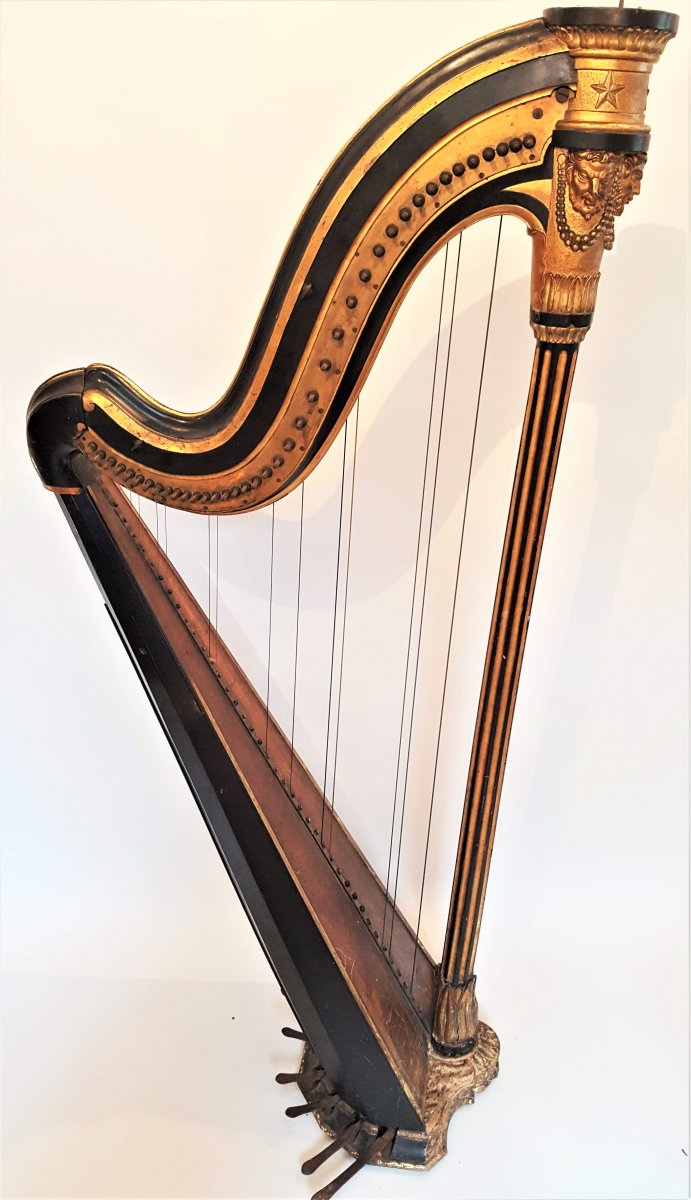
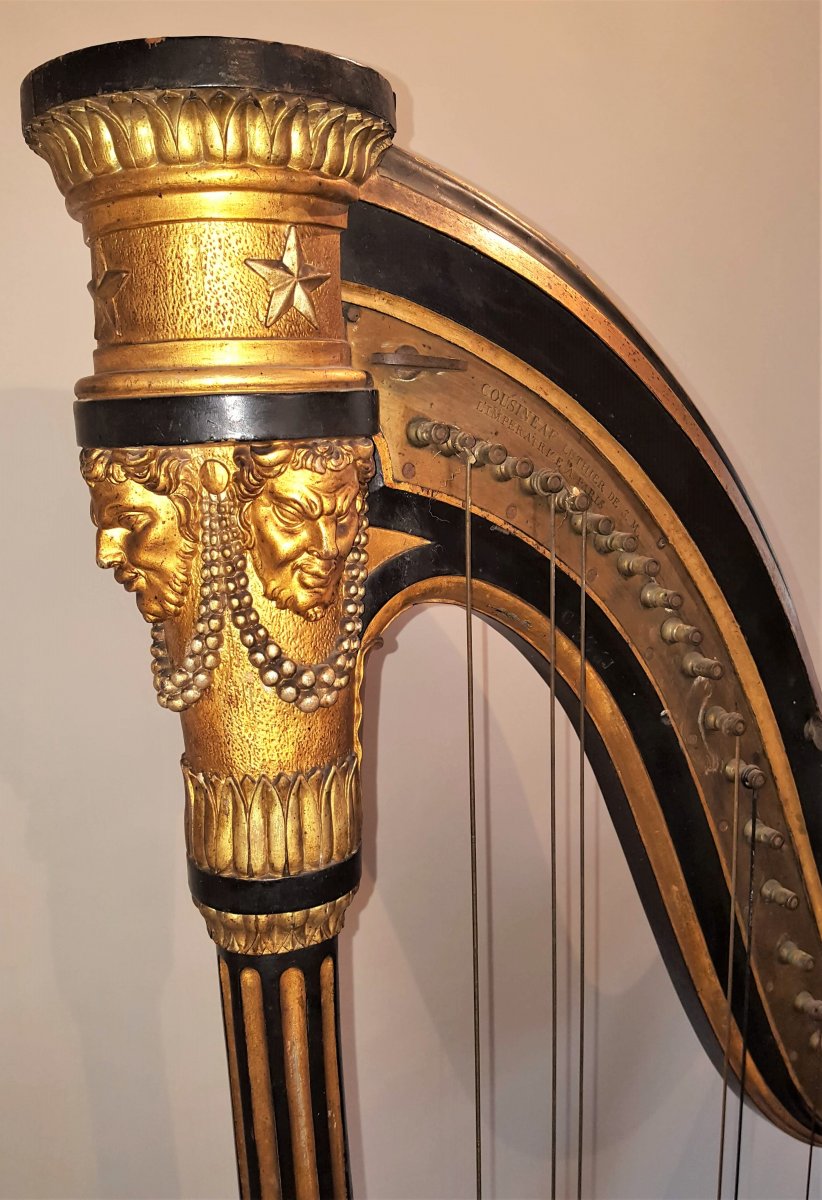
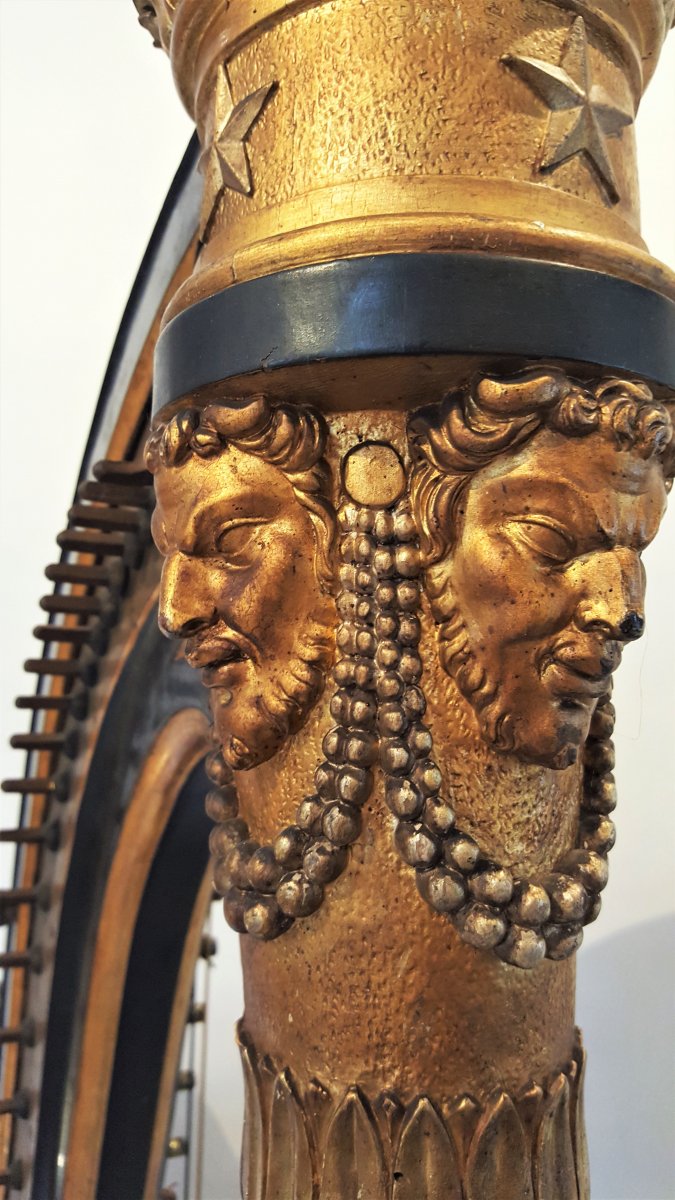
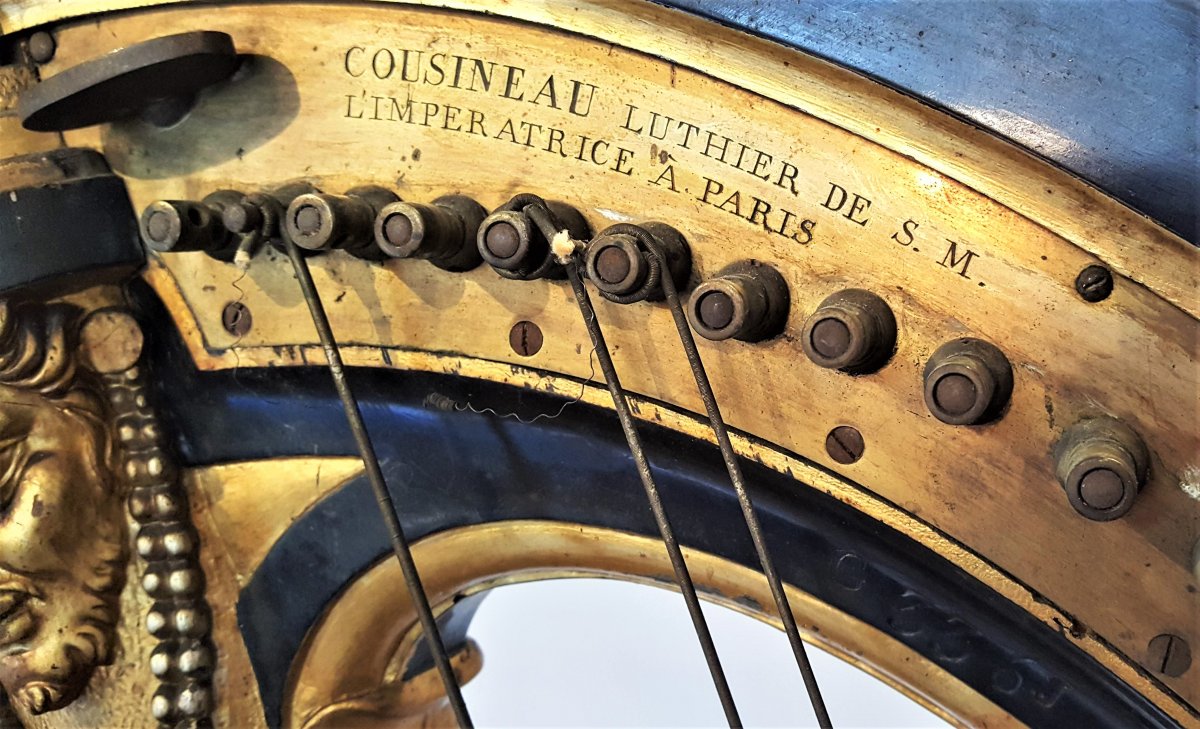

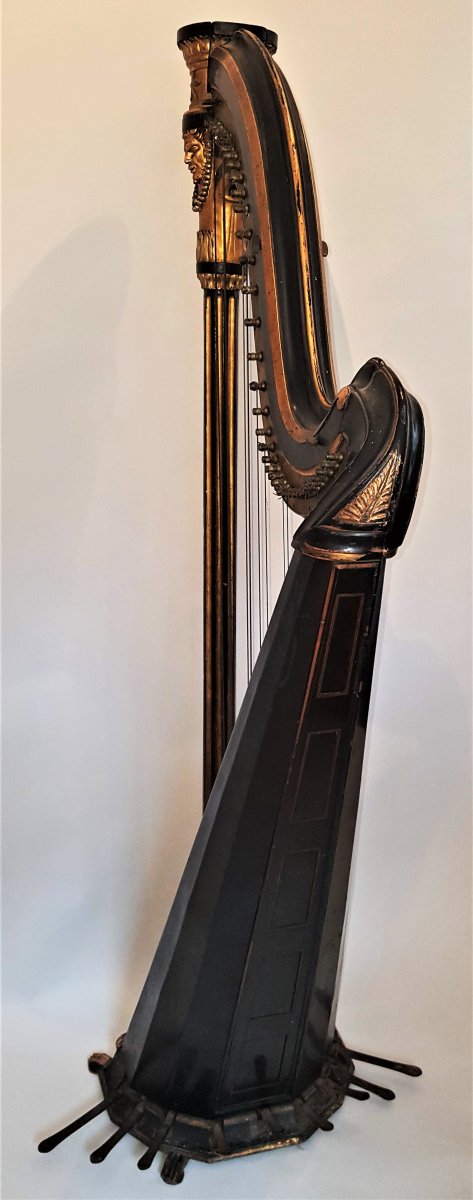
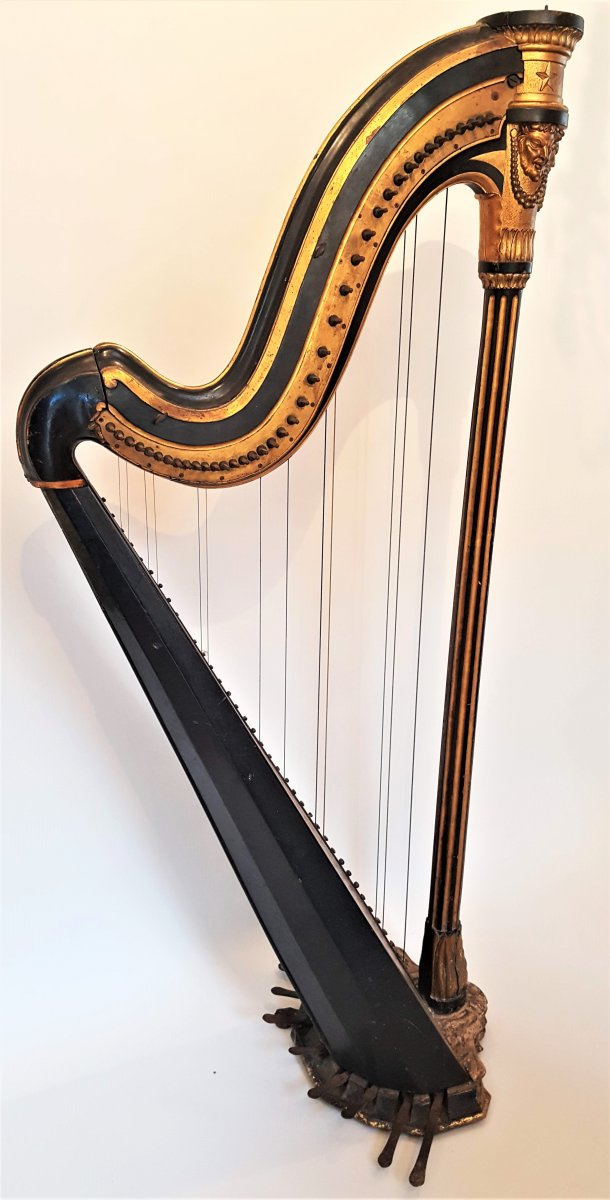
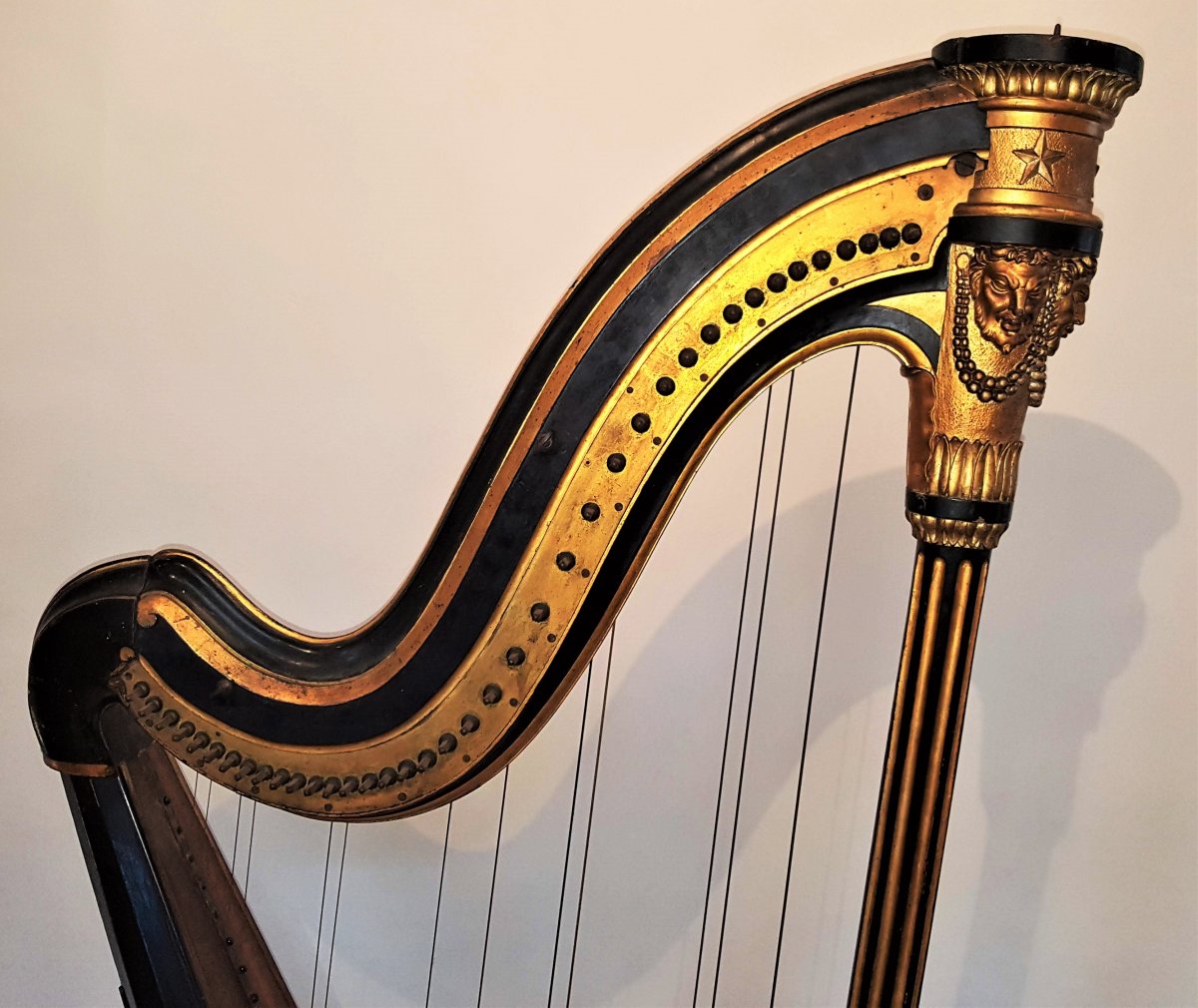

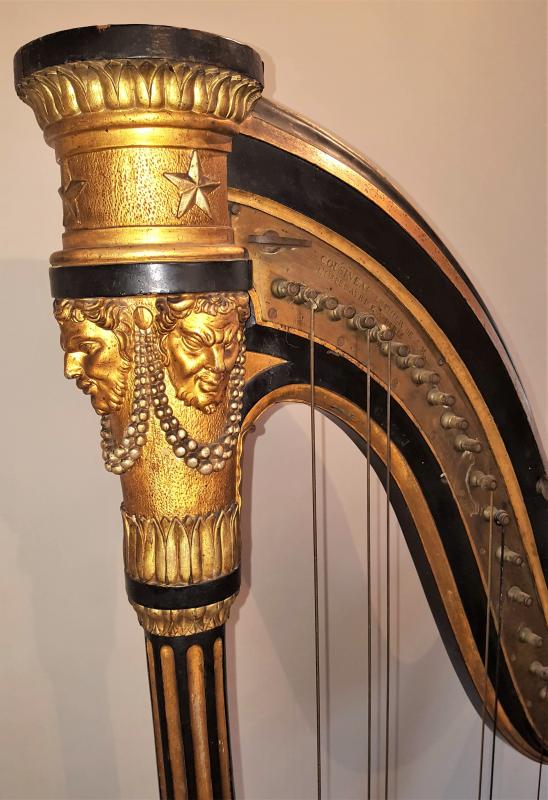

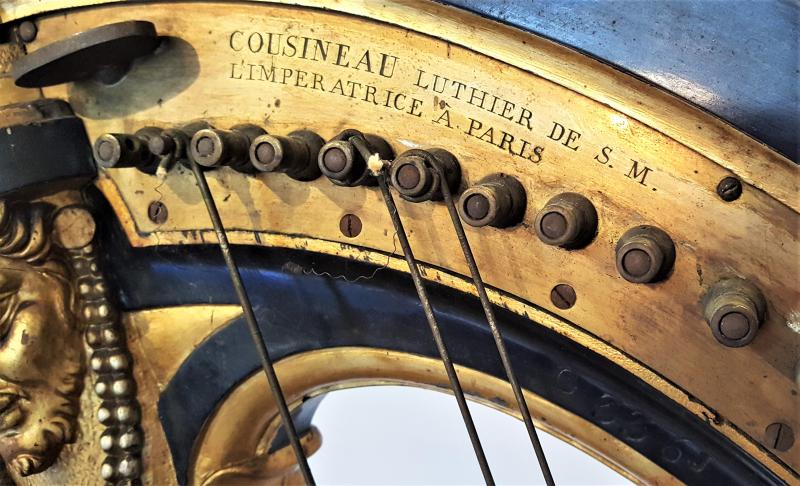

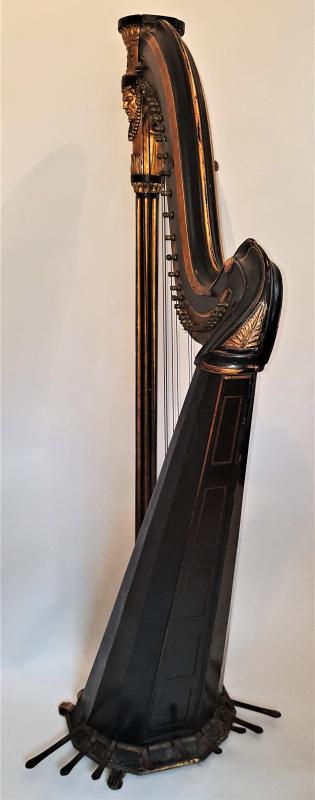
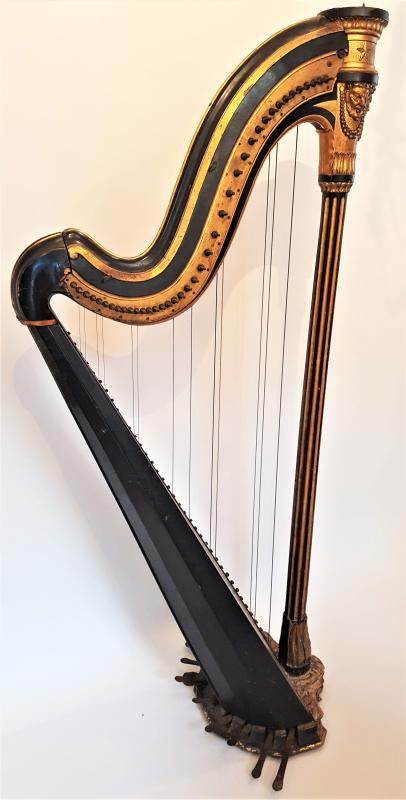
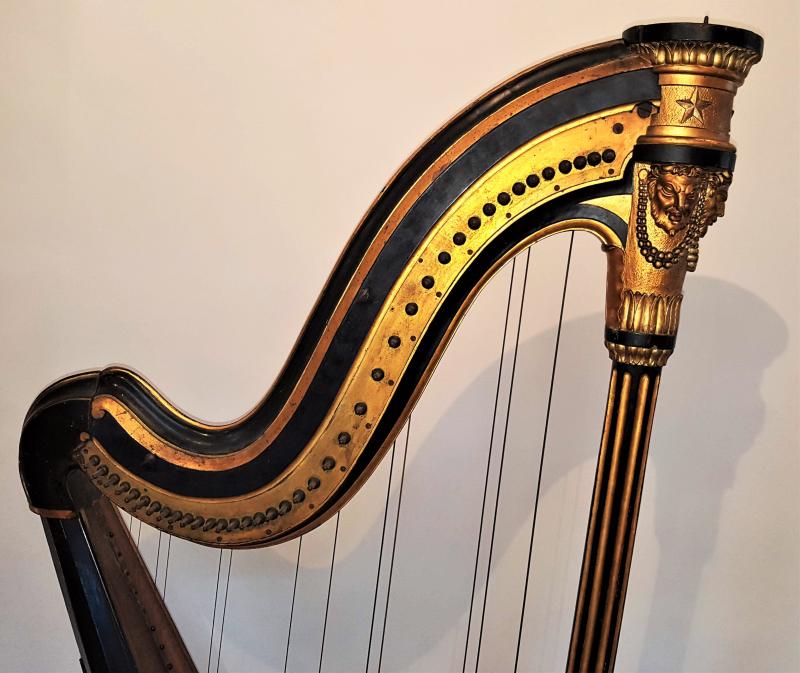
With his invention of the harp with rotating tuning pins in 1799, Cousineau did away with all mechanism on the neck of the instrument; there are neither hooks, nor crutches, nor forks.
The principle of the rotating tuning pins is simple: the pins around which the strings are wound are linked to the pedals by rods. When one depresses a pedal on one of Cousineau’s harps with rotating tuning pins, the corresponding strings roll around their pins just enough to sharpen the pitch of the strings by a semitone. In the second edition of the harp method written by Cousineau, the harp with rotating tuning pins replaced that with fourteen pedals (another Cousineau invention) as the most advanced model of the time.
The principle of the rotating tuning pins is simple: the pins around which the strings are wound are linked to the pedals by rods. When one depresses a pedal on one of Cousineau’s harps with rotating tuning pins, the corresponding strings roll around their pins just enough to sharpen the pitch of the strings by a semitone. In the second edition of the harp method written by Cousineau, the harp with rotating tuning pins replaced that with fourteen pedals (another Cousineau invention) as the most advanced model of the time.
Explore similar pieces and discover your ideal find:
musical instruments