THIS OBJECT WAS SOLD
A Louis XIV Mirror, Early 18th Century Circa 1700-1715




Mirror Louis XIV, early eighteenth centurycirca 1700-1715
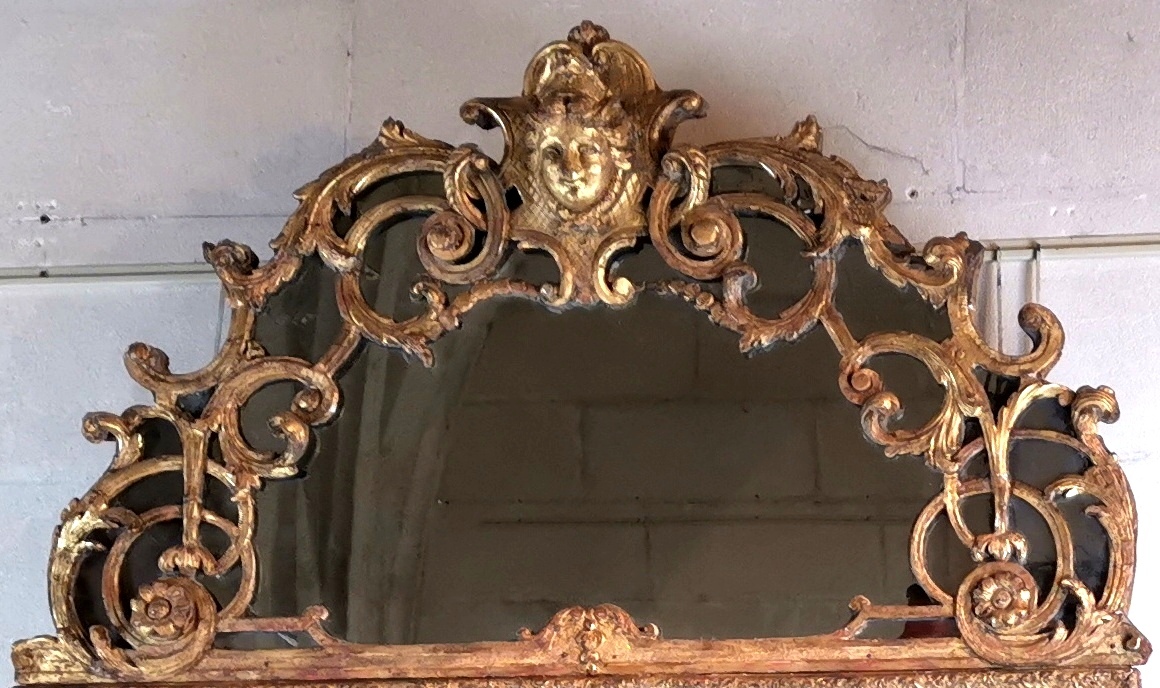
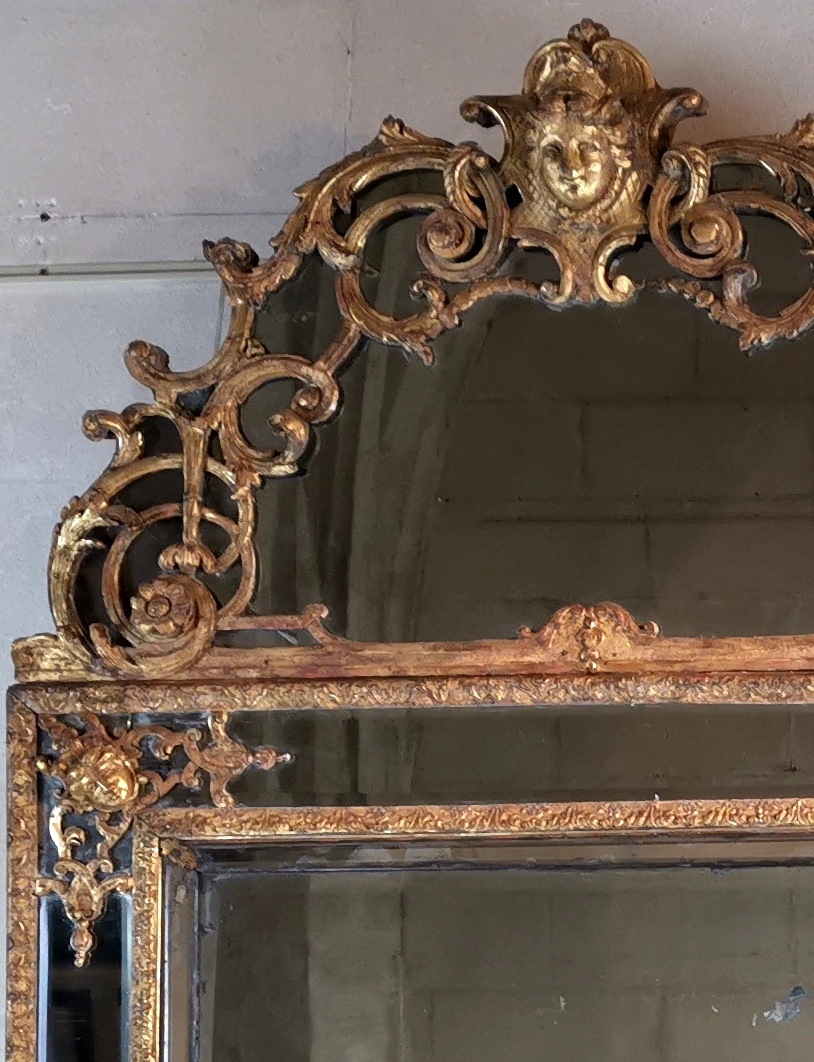
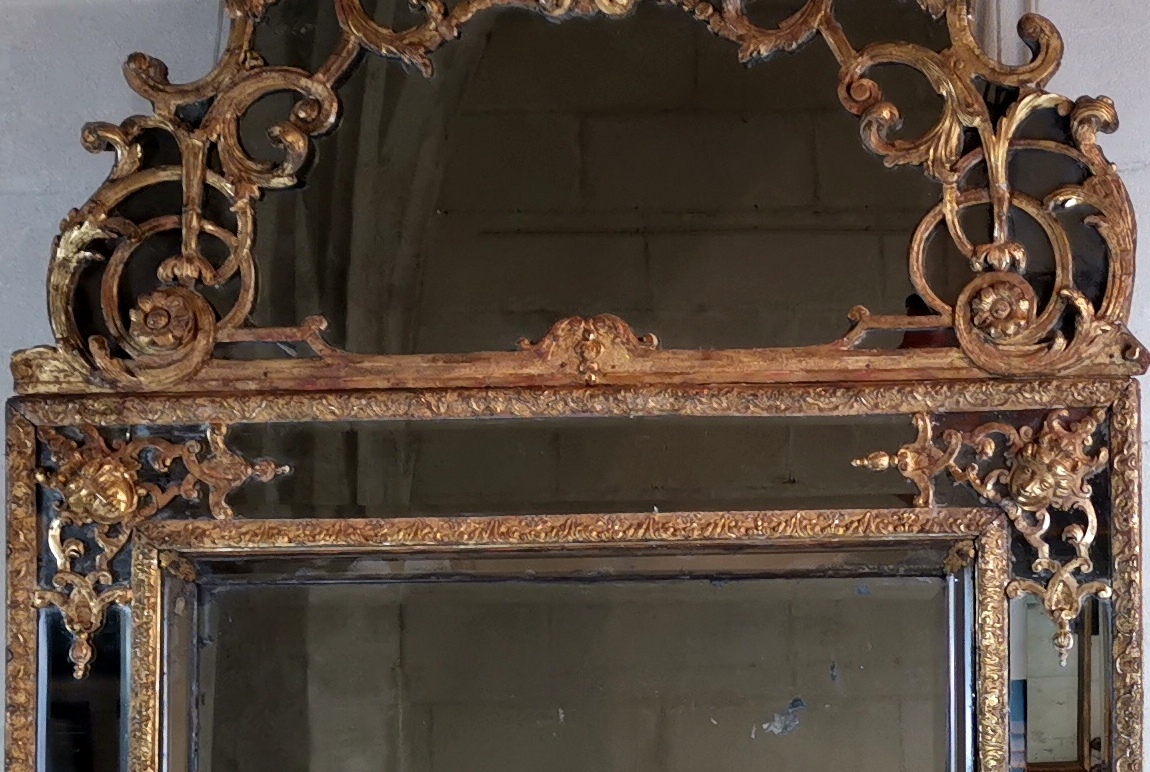
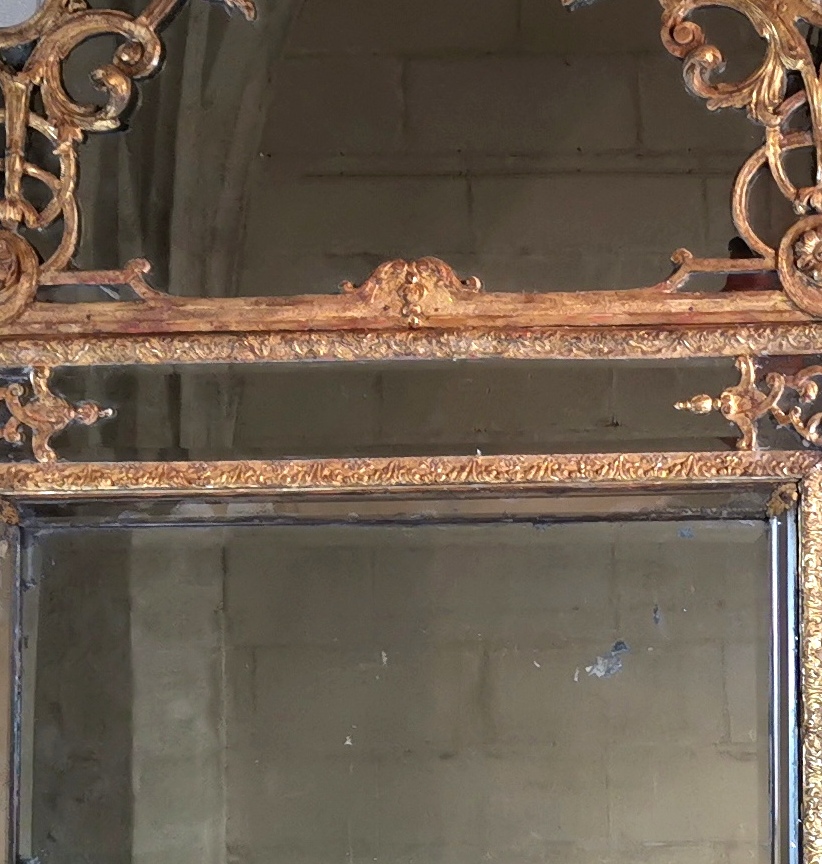
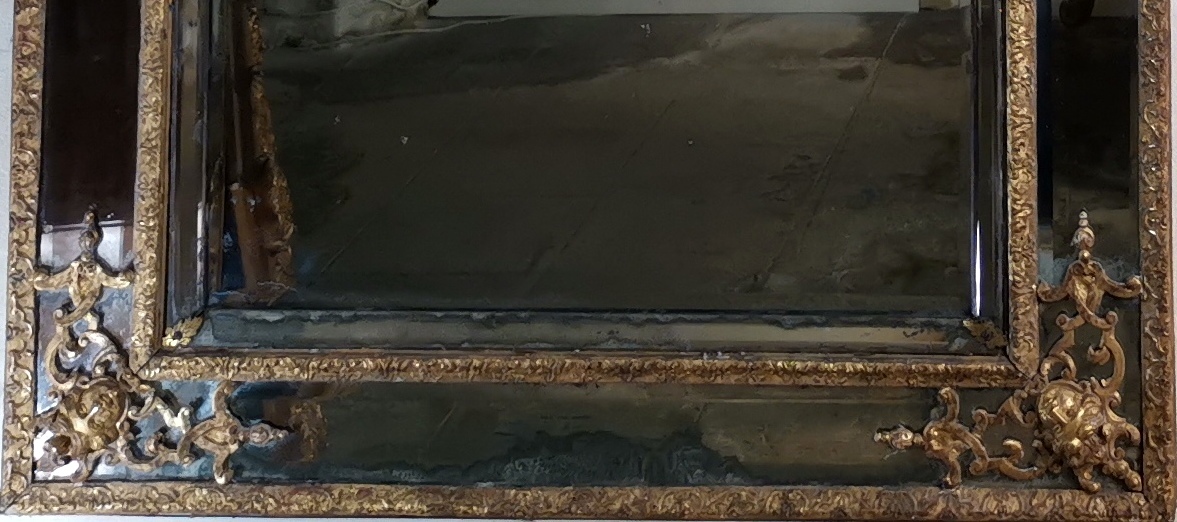
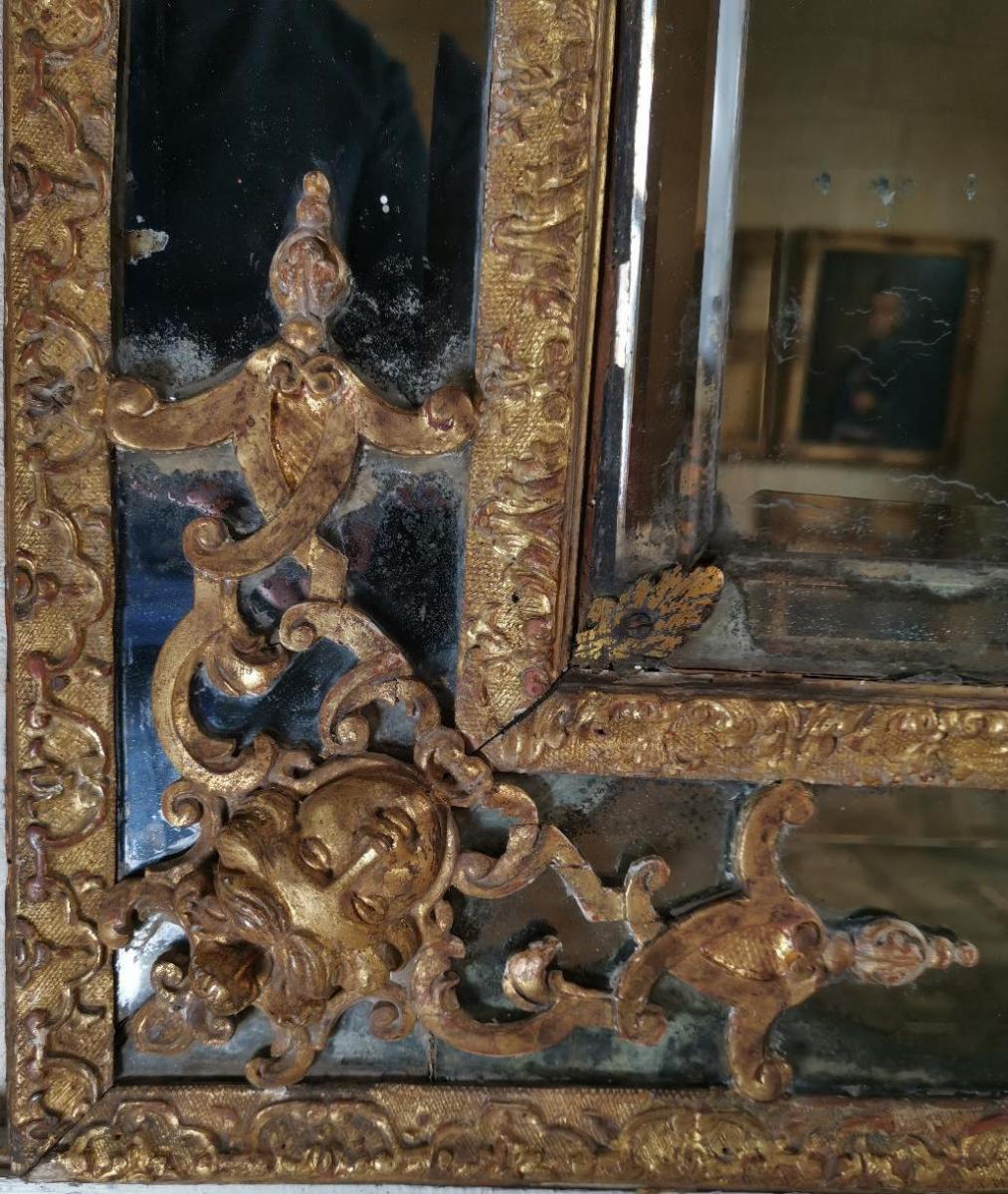
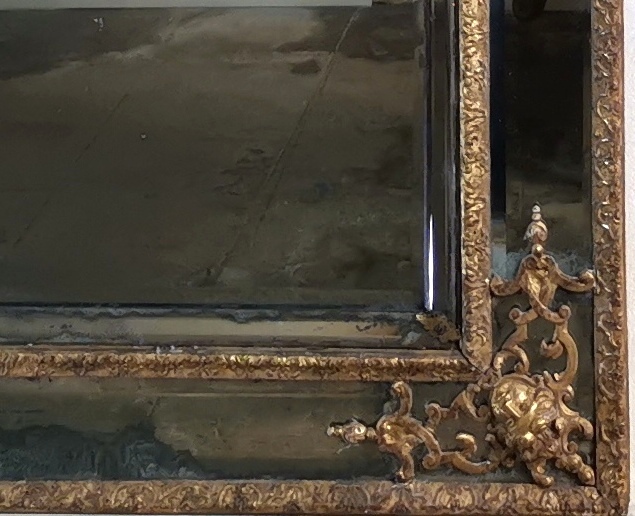
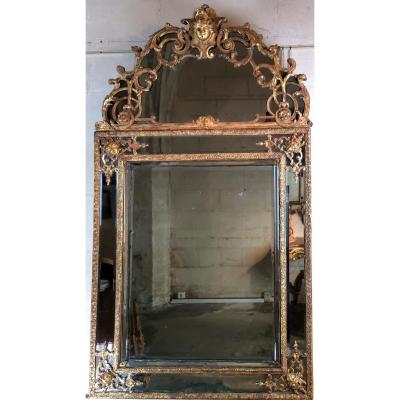
Elegant mirror in carved and gilded wood, burnished and amati; it is rectangular in principal surmounted by a pyramidal pediment. A female mask, still very much influenced by the great century, adorns the ridge of the pediment partly median; it is delimited by windings of acanthus foliage placed on a capital of oves and gadroons, themselves reassembled by vegetable windings. The main part consists of peripheral clusters filleted with ice, framing the central ice. Each of them is enshrined in a frame bordered with double chopsticks à la Bérain. At the four corners of the bead a spandrel, from which emerge diagonally towards the center of the female masks arising foliage scrolls, oval friezes and openwork coils. All ice creams Central and reserve consist of flat glass plates lined with tin and lead immersed in a bath of mercury in order to dissolve there. Tin associated with lead then giving this hot and luminous side to the mirror called "mercury". Peripherally each ice cream is cut obliquely to form an acute angle bevel in order to optimize the rendering. The way all these ornaments are treated contributes as much as their choice to the wealth effect of this mirror. The sculpture is full of vigor, the windings are of a sure balance, full of strength. We find in this decoration all the beautiful classical ornaments, where symmetry and balance are cardinal virtues, dear to this early eighteenth century circa 1700-1715.
Dimensions:
H 178.5cm L 101.5cm. / L. 39.96 inch H. 70.28 inch
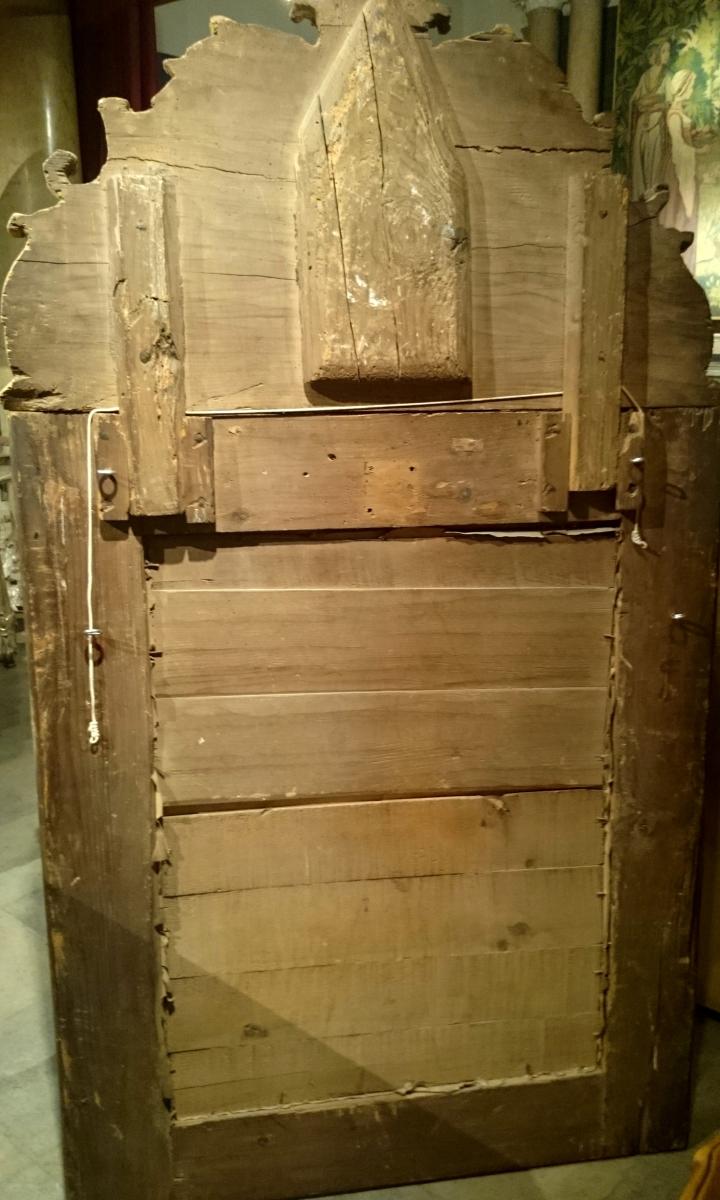
observations; excellent condition, totally original without any restorations except the cleaning of golden woods. It should be noted that the mirrors with triple-faceted ice sticks bevelled in the Venetian way, used at the beginning of the development of royal sites such as the Palace of Versailles are extremely rare especially in original condition.
Elegant mirror in carved and gilded wood, burnished and amati; it is rectangular in principal surmounted by a pyramidal pediment. A female mask, still very much influenced by the great century, adorns the ridge of the pediment partly median; it is delimited by windings of acanthus foliage placed on a capital of oves and gadroons, themselves reassembled by vegetable windings. The main part consists of peripheral clusters filleted with ice, framing the central ice. Each of them is enshrined in a frame bordered with double chopsticks à la Bérain. At the four corners of the bead a spandrel, from which emerge diagonally towards the center of the female masks arising foliage scrolls, oval friezes and openwork coils. All ice creams Central and reserve consist of flat glass plates lined with tin and lead immersed in a bath of mercury in order to dissolve there. Tin associated with lead then giving this hot and luminous side to the mirror called "mercury". Peripherally each ice cream is cut obliquely to form an acute angle bevel in order to optimize the rendering. The way all these ornaments are treated contributes as much as their choice to the wealth effect of this mirror. The sculpture is full of vigor, the windings are of a sure balance, full of strength. We find in this decoration all the beautiful classical ornaments, where symmetry and balance are cardinal virtues, dear to this early eighteenth century circa 1700-1715.
Dimensions:
H 178.5cm L 101.5cm. / L. 39.96 inch H. 70.28 inch
observations; excellent condition, totally original without any restorations except the cleaning of golden woods. It should be noted that the mirrors with triple-faceted ice sticks bevelled in the Venetian way, used at the beginning of the development of royal sites such as the Palace of Versailles are extremely rare especially in original condition.
Explore similar pieces and discover your ideal find:
Other mirrors