THIS OBJECT WAS SOLD
Portrait Of A Lady C.1695; Attributed To Thomas Murray (1663-1734)
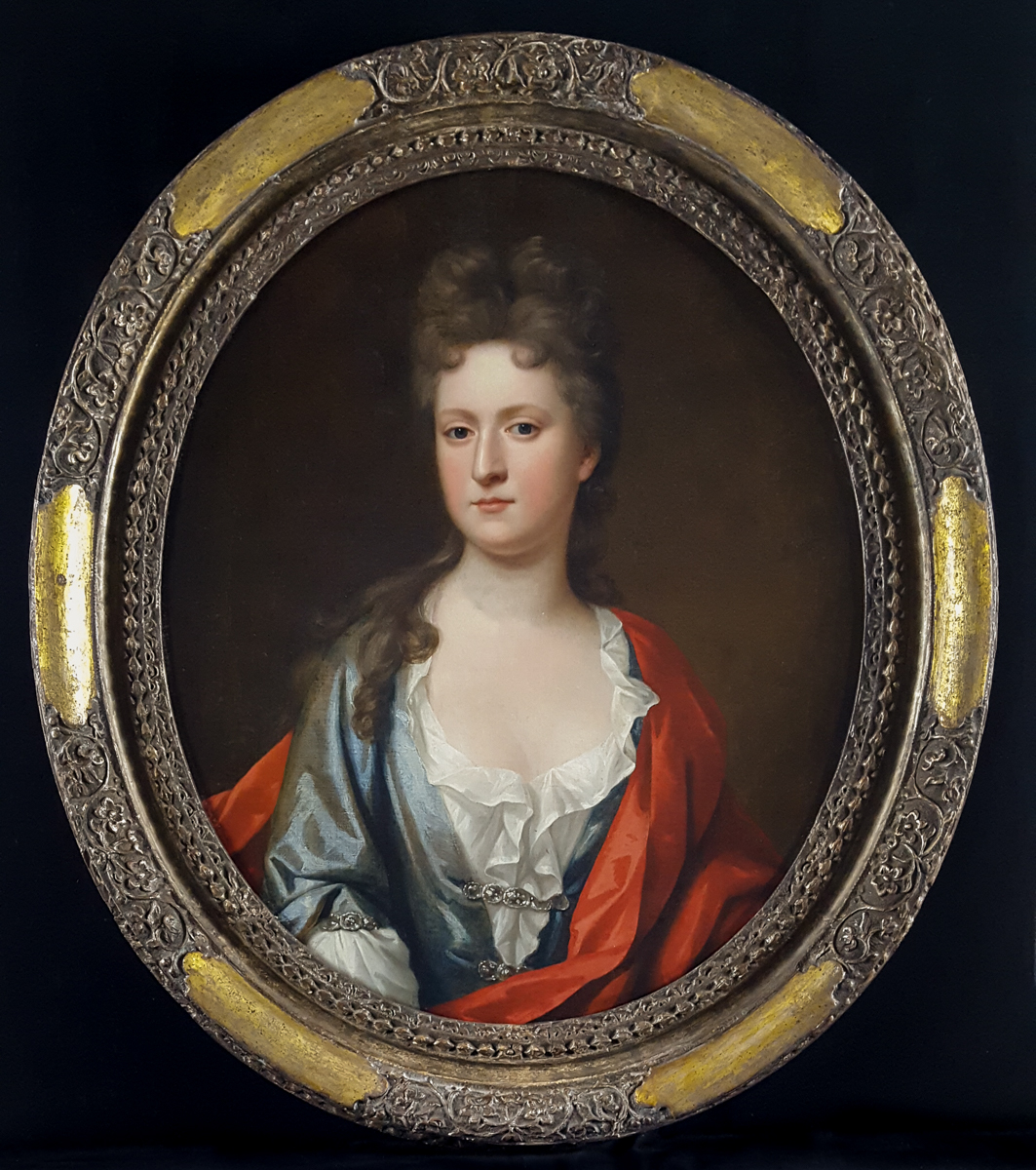
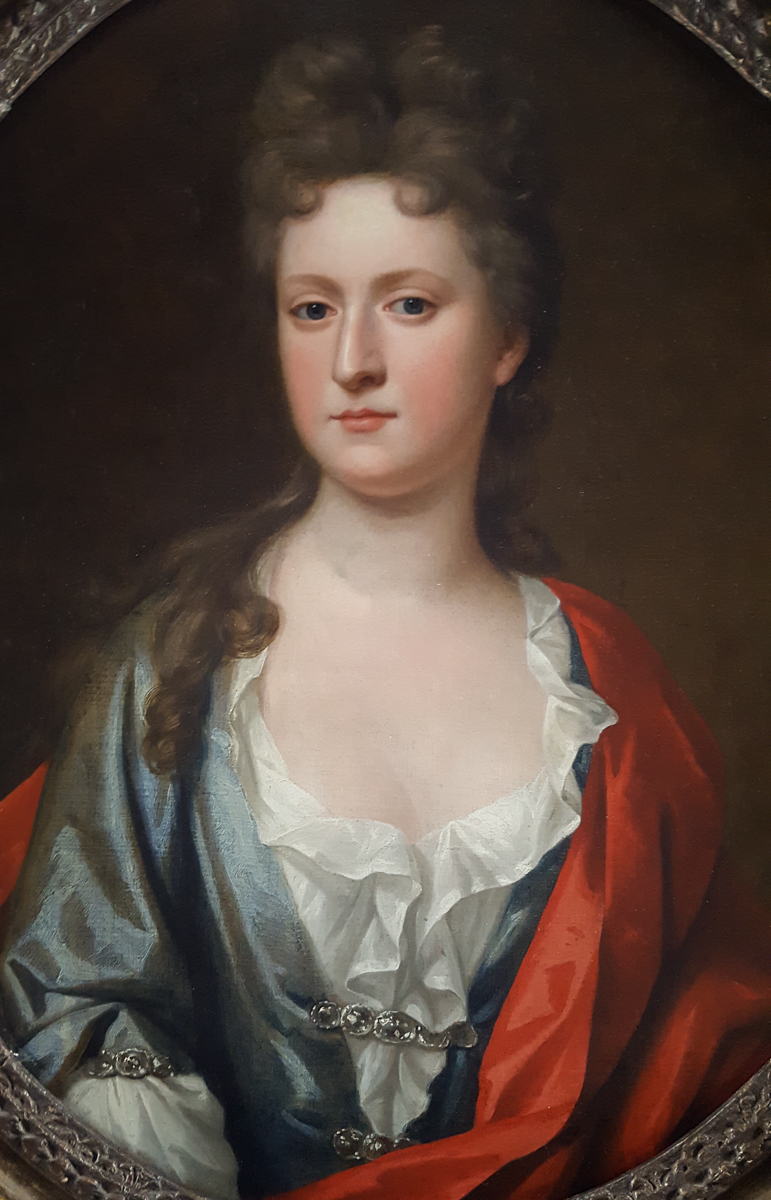
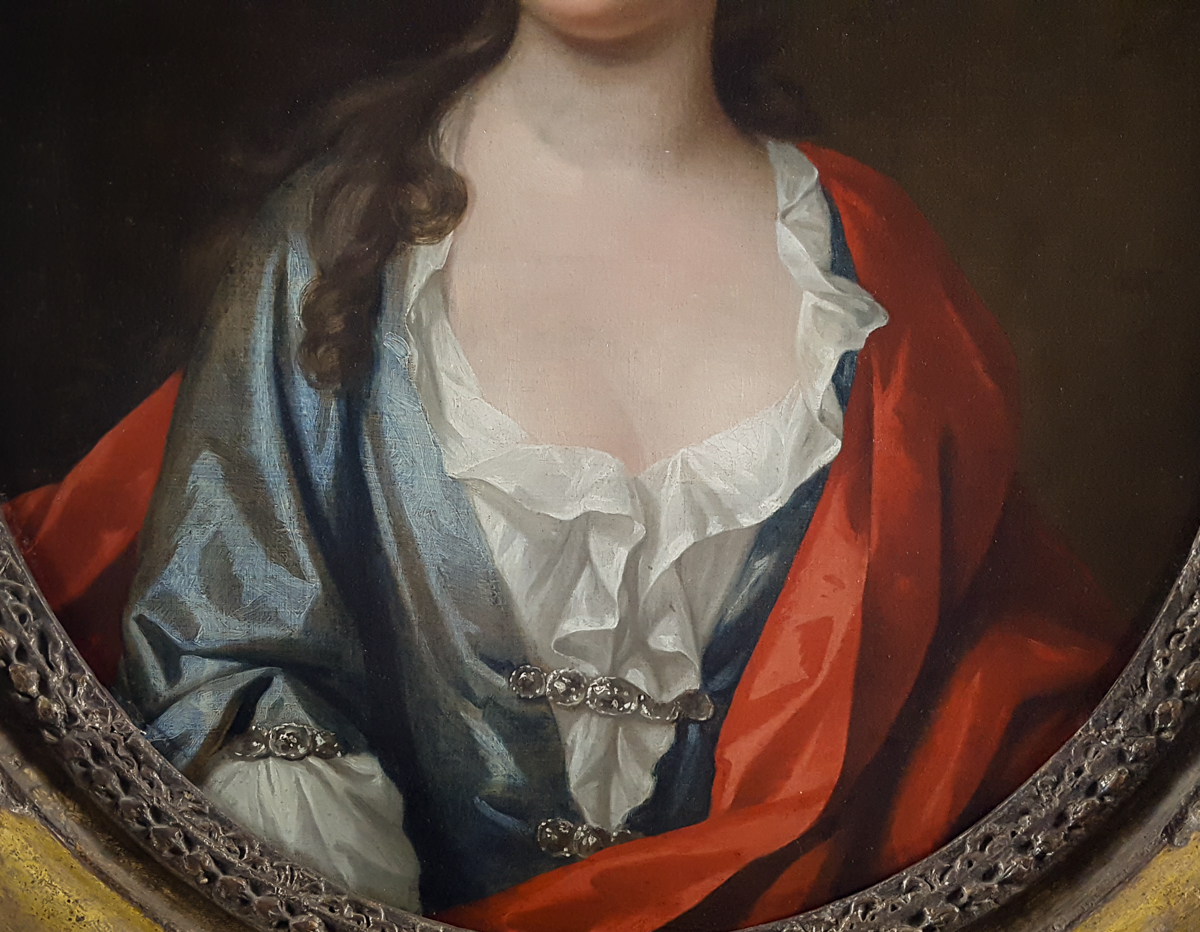

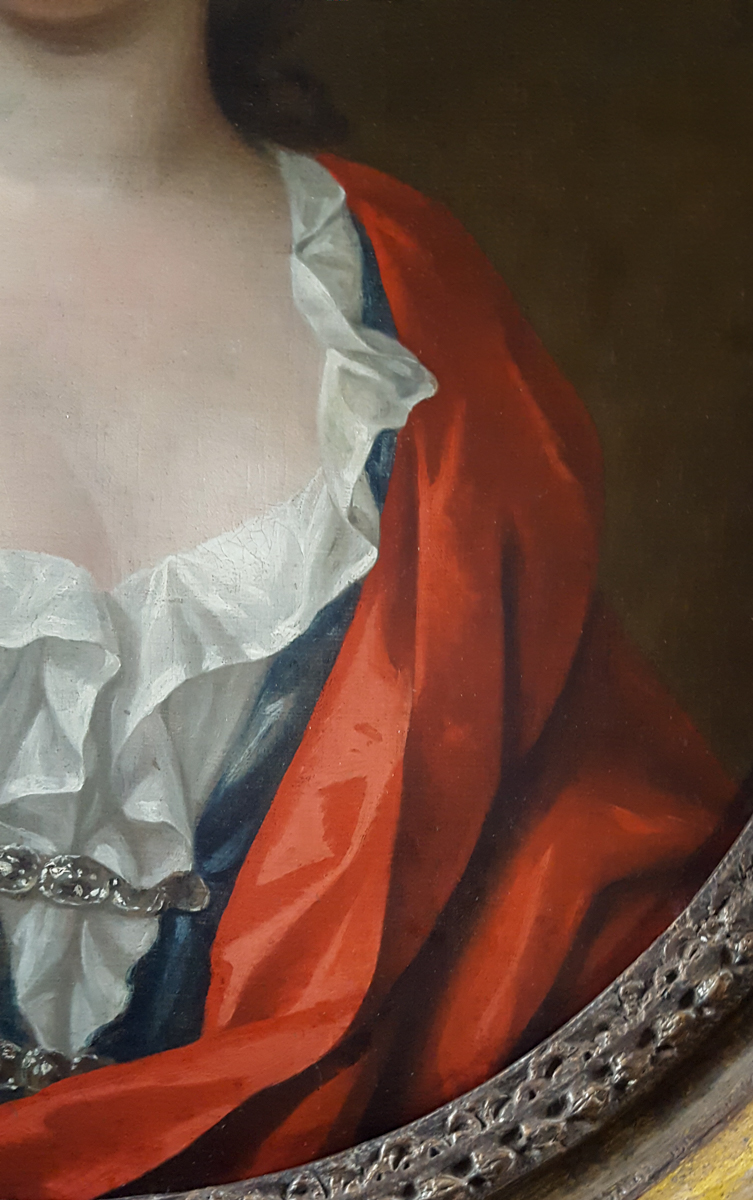

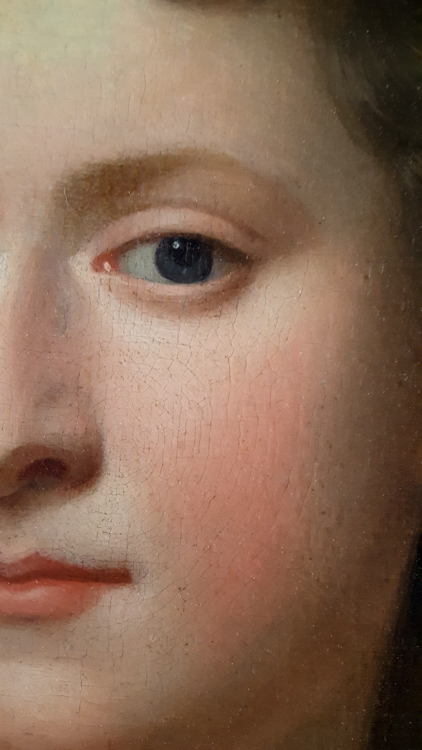

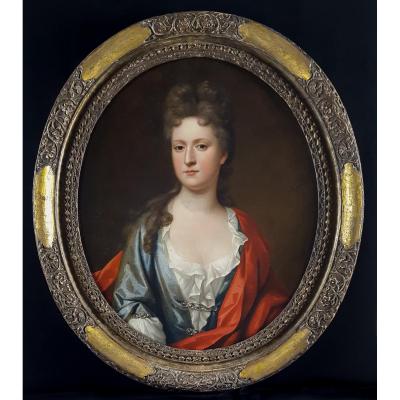
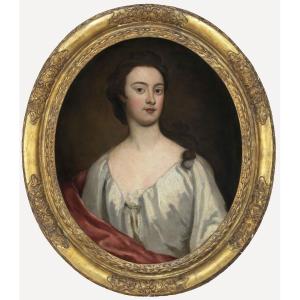
A fine c.1695 portrait of a lady wearing a blue silk dress over a white frilled chemise and completed with a crimson mantle. The work is attributed to one of the most successful and talented artist during the period, Scottish artist Thomas Murray (1663-1734). It is not surprising that Murray painted the portraits of King William III, Queen Mary, and Queen Ann as well as a number of other high-ranking people as his finesse and virtuoso treatment is abundant. The influence of Sir Godfrey Kneller is expected considering the importance of Kneller, and even though the formula employed for head and shoulders portraits of woman during the period is similar, Murray’s work is distinguishable by a refined and elegant manner and a smooth overall feel. Other known examples of Murray’s work are strikingly similar in the handling, the modelling, and identical use of the three drapery colours.
A fine and eloquent example of British portraiture.
Thomas Murray (1663-1734) was of Scottish origins. He was a pupil and assistant of John Riley and establishing a profitable career. It was accounted that Murray “was remarkable for his personal beauty, it is said, and for the elegance of his manner.” Murray enjoyed a successful practice and was very successful financially. He died in 1734, leaving no children, and bequeathed his money to a nephew with instructions that his monument, with a bust, should be erected in Westminster Abbey, provided that it did not cost too much; his nephew decided it was and retained the money.
Presented in a fine quality 17th century carved gilt frame.
Provenance: Collection of an English Nobleman who bequeathed it to a member of household staff.
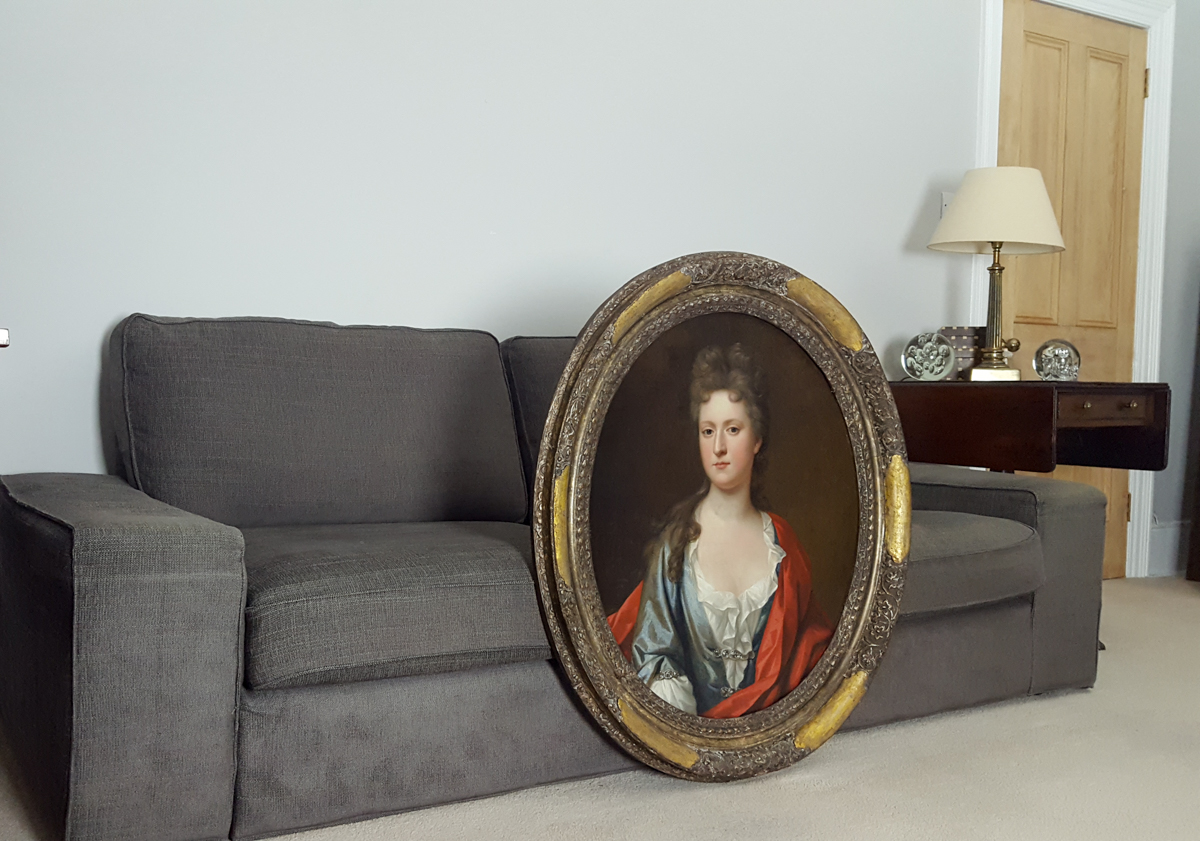
Measurements: Height 95cm, Width 83cm framed (Height 37.5”, Width 32.5” framed)
Explore similar pieces and discover your ideal find:
Portraits