




19th-century Openwork Brass Crescent-shaped Mosque Palace Pendant Lamp With Animal Motifs
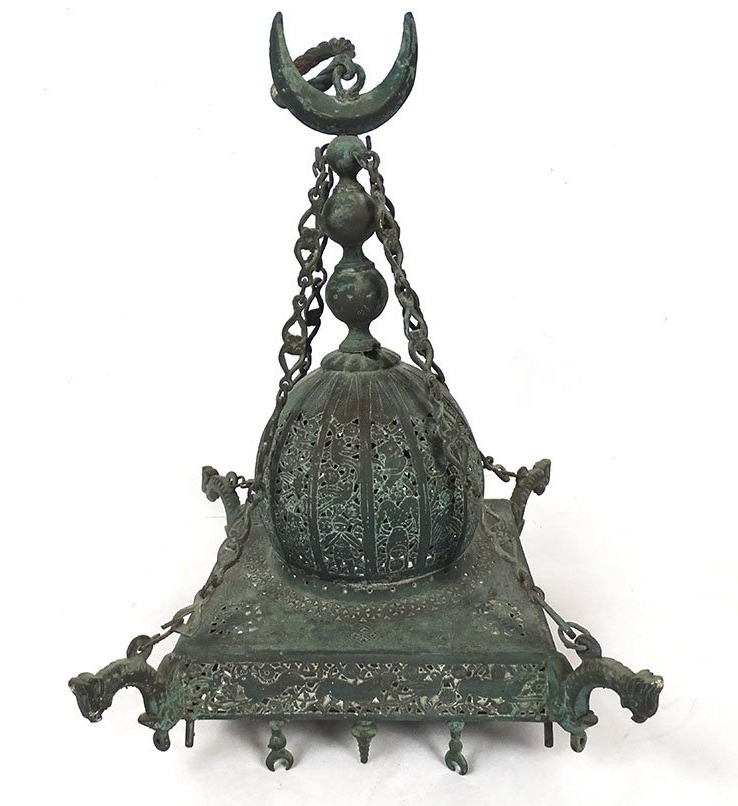
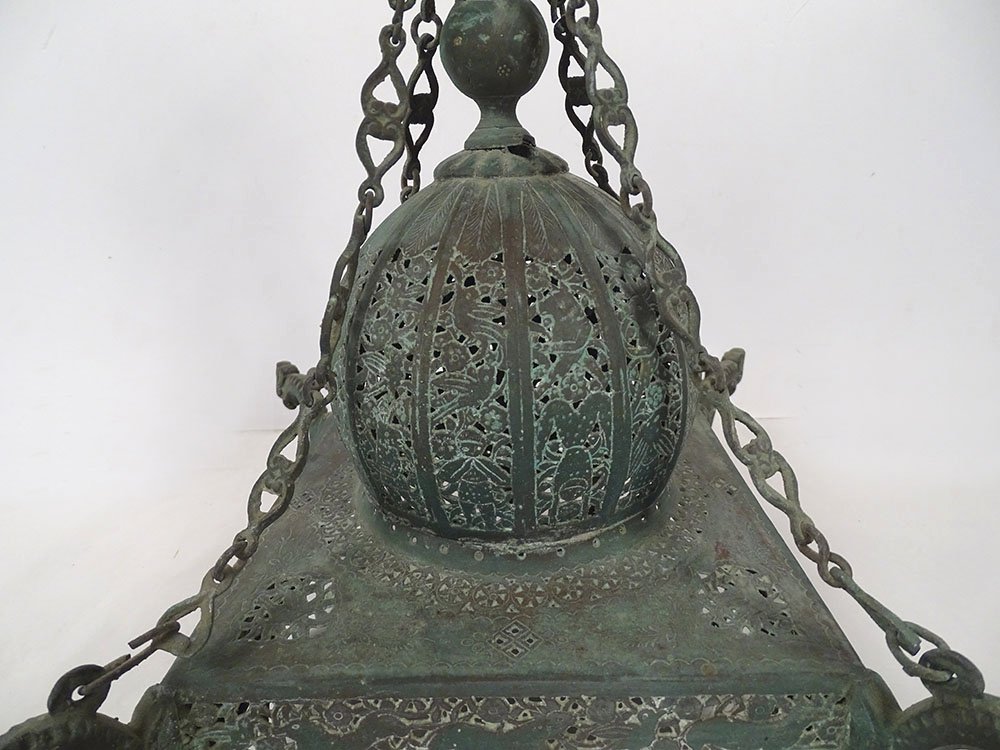
A mosque lamp—or, more likely, one from a palace or reception hall—made of chiseled and openwork brass, inspired by Fatimid (Egyptian) or Seljuk (Persian) art, dating from the 19th century. This lamp is designed as a pendant fixture suspended by chains at the top.
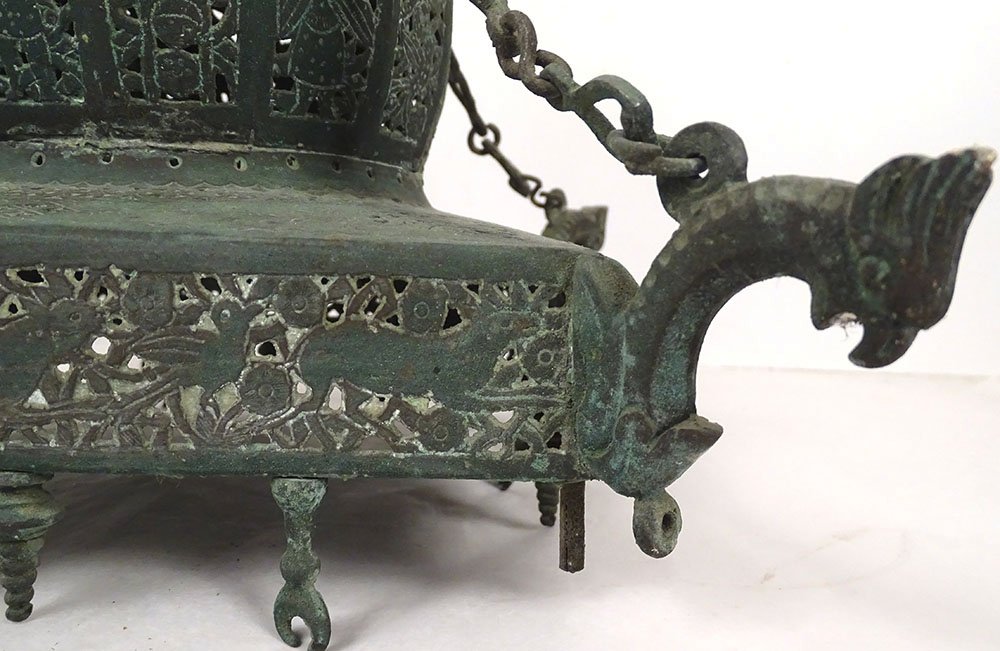
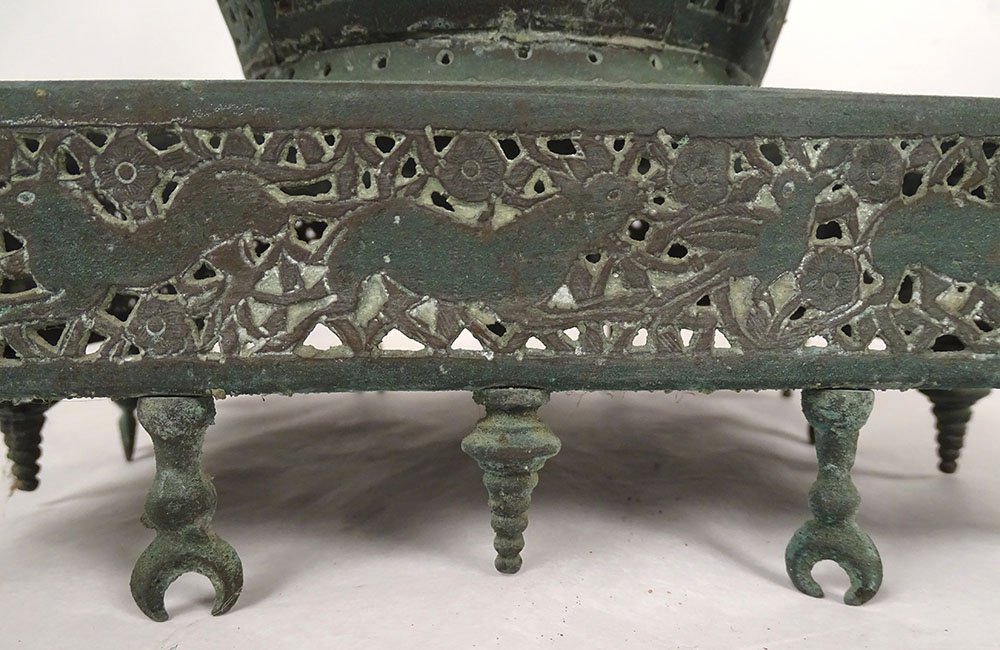
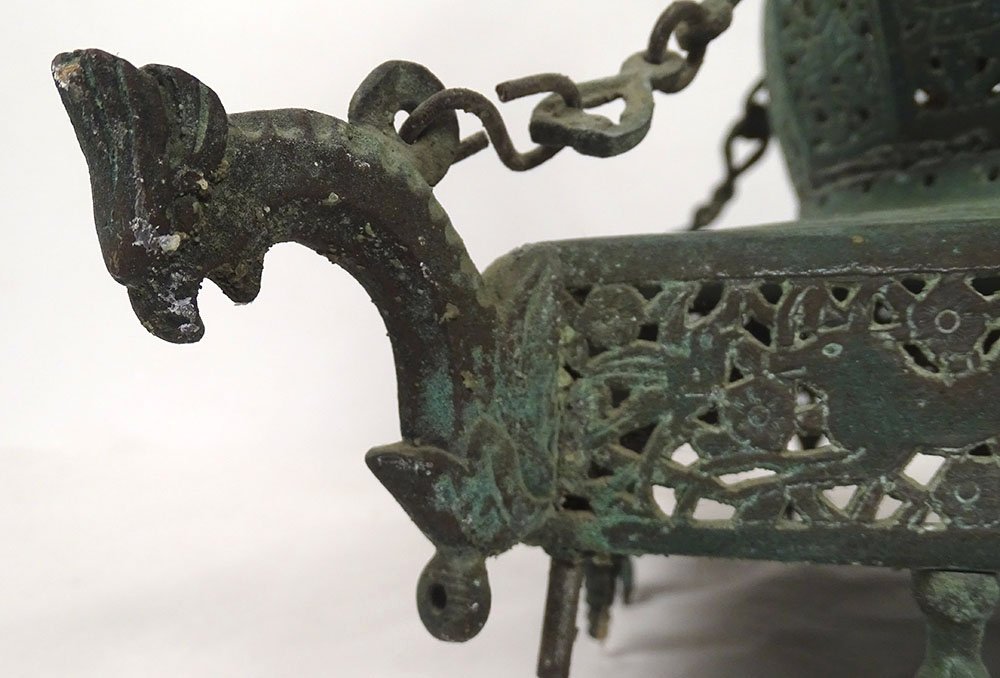
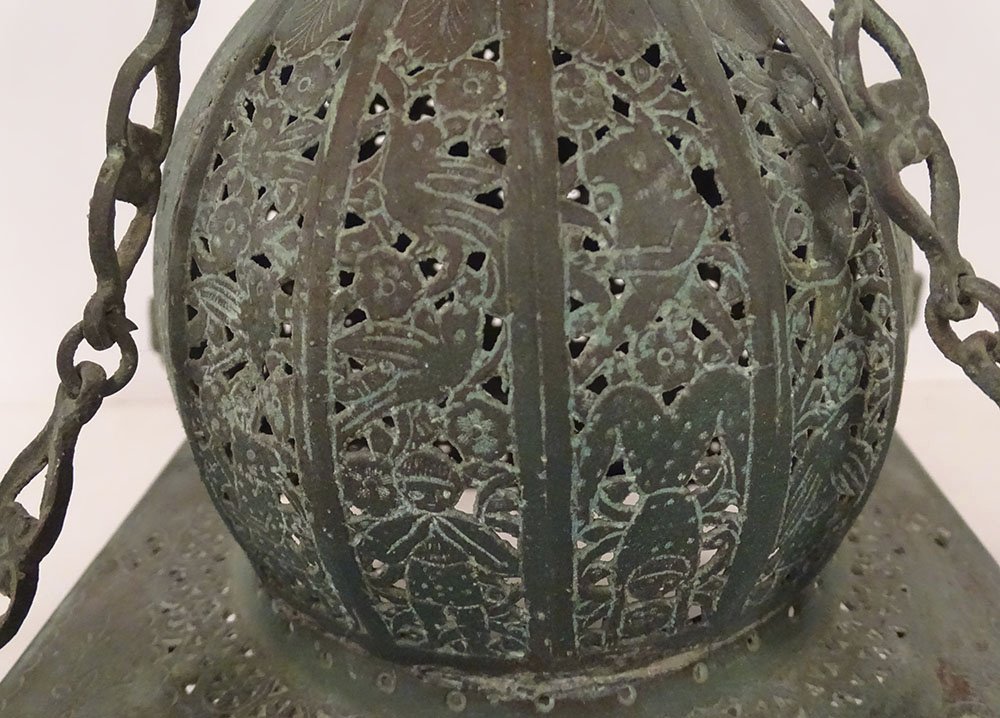
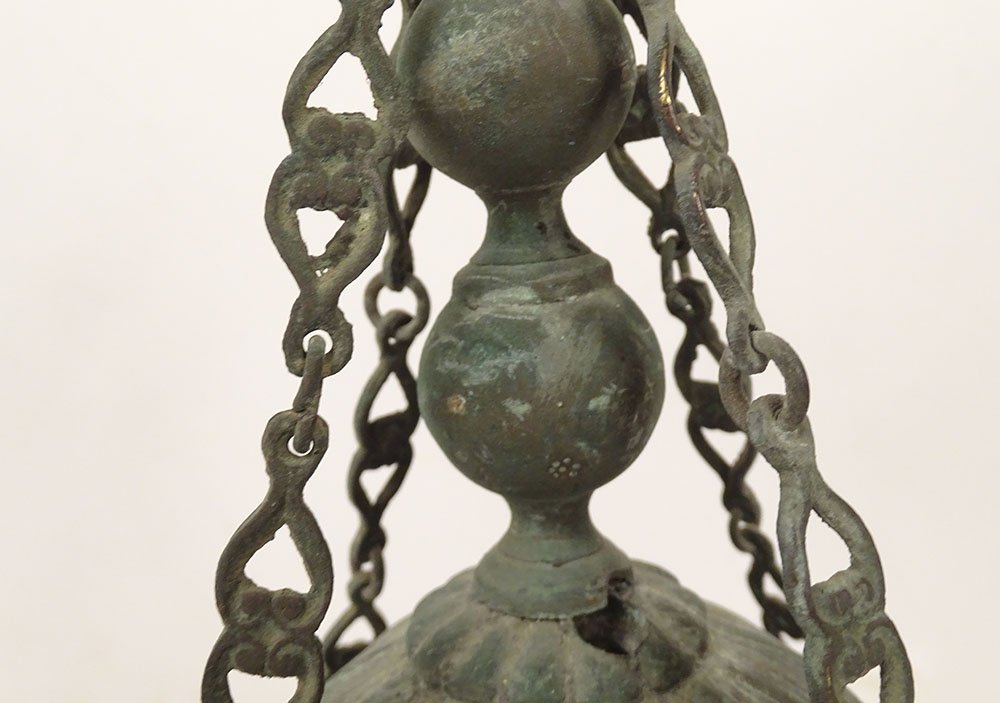
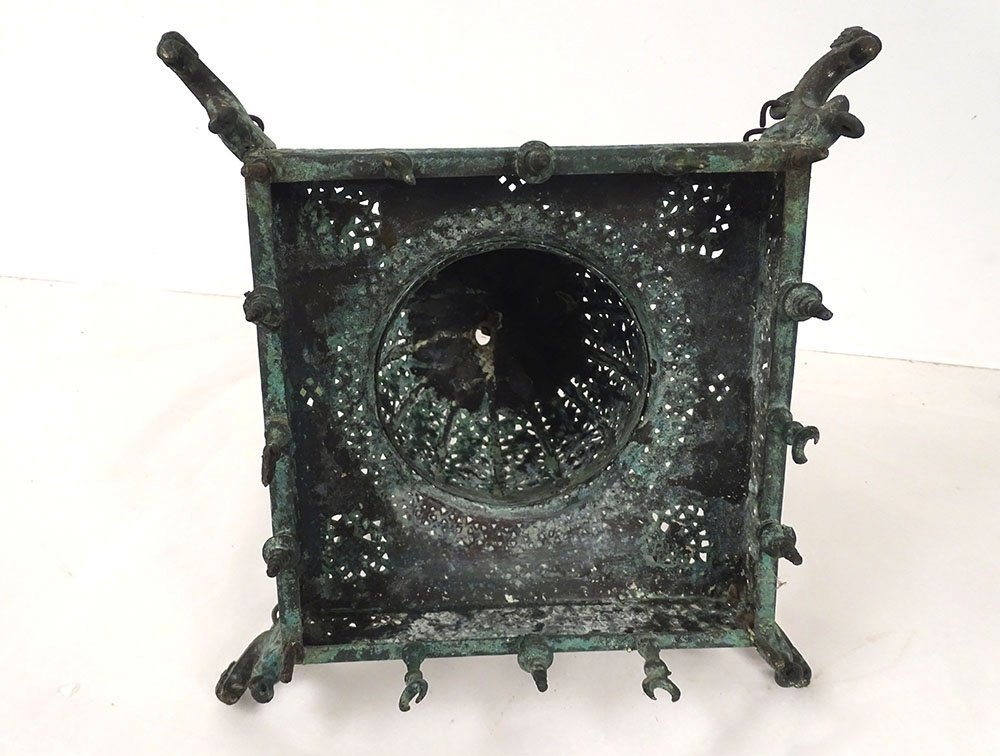
The body consists of a square section engraved with numerous animals along the border; in each corner, fantastical animals (dragon heads) protrude and were likely intended to support small suspended lanterns. Above this is a spherical section, resembling a dome, decorated with foliage and interlacing patterns as well as figures, animals, and fantastical creatures. The whole is surmounted by a stem punctuated by stacked spheres and topped with a crescent moon, facing upward.
This lamp resembles mosque lamps in its structure, featuring the crescent moon (a major visual symbol of Islamic art) and an openwork design that highlights the light through a play of shadows (light being one of the most sacred symbols in Islam).
Nevertheless, the iconographic repertoire of lamps intended for mosques consists solely of stylized, floral, and geometric motifs (no human figures: aniconism). The presence here of human or animal figures therefore suggests that this lamp was intended for secular use (a palace, reception pavilion, or wealthy private residence).
Thus, Islamic art objects depicting court scenes, hunting scenes, musicians, or figures are typical of the 19th-century fascination with the Orient and the taste for the “Mamluk/Persian Revival.” Here, the artisan has adopted the architectural form of a mosque light fixture (dome, chains, crescent), but has incorporated a secular decor inspired by Persian or Fatimid styles (figures, dragons, animals)—which would have been unthinkable in a medieval place of worship. This eclecticism is the hallmark of the 19th-century spirit, of which this lamp is a direct testament.
This lamp is in good overall condition, in its original state. Please note: dirt, traces of oxidation, a few minor chips, and signs of wear from age; please examine the photos carefully.
Dimensions- Dimensions: approx. 20 cm x 20 cm
- Height: approx. 35 cm with crescent
Reference: 320 80
All photos are available at:
www.antiques-delaval.com
Period: 19th century
Style: Orientalism
Condition: En l'etat
Length: dimensions env. 20 cm x 20 cm
Height: env. 35 cm avec croissant
Reference (ID): 1851895
Availability: In stock