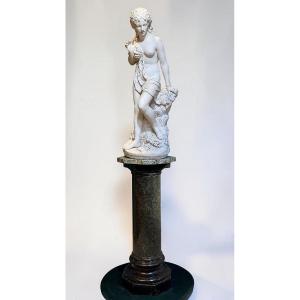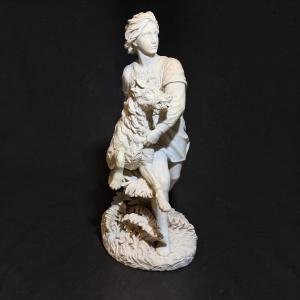

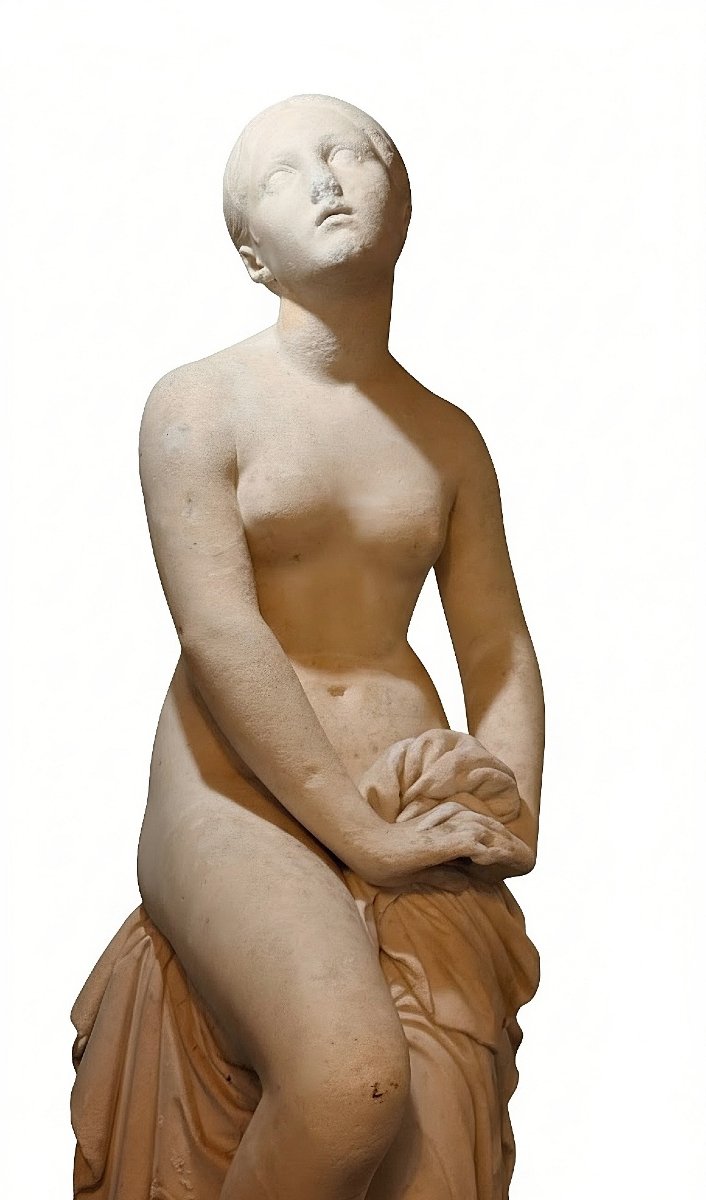
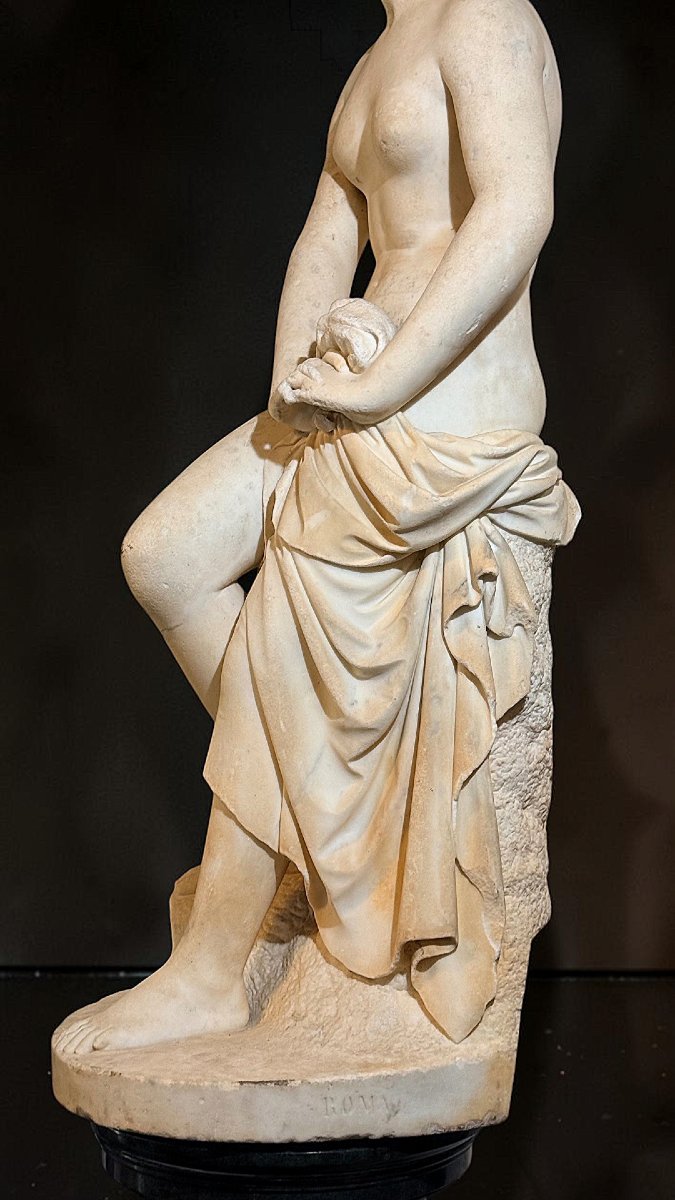



Carrara Marble Statue Depicting "trust In God," Closely Associated With Lorenzo Bartolini (1777), Rome
Artist: Lorenzo Bartolini (1777-1850) Probablement
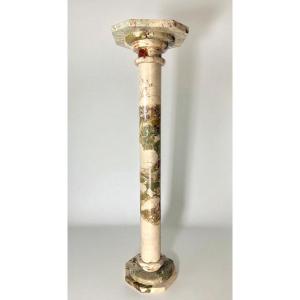
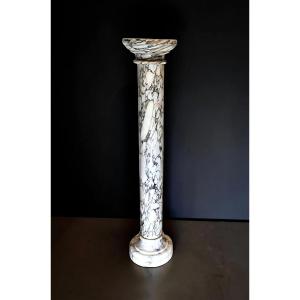
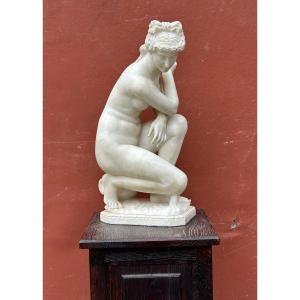
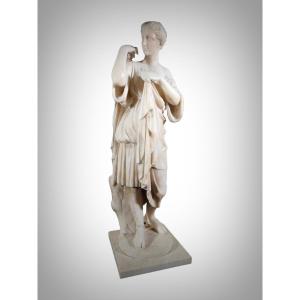
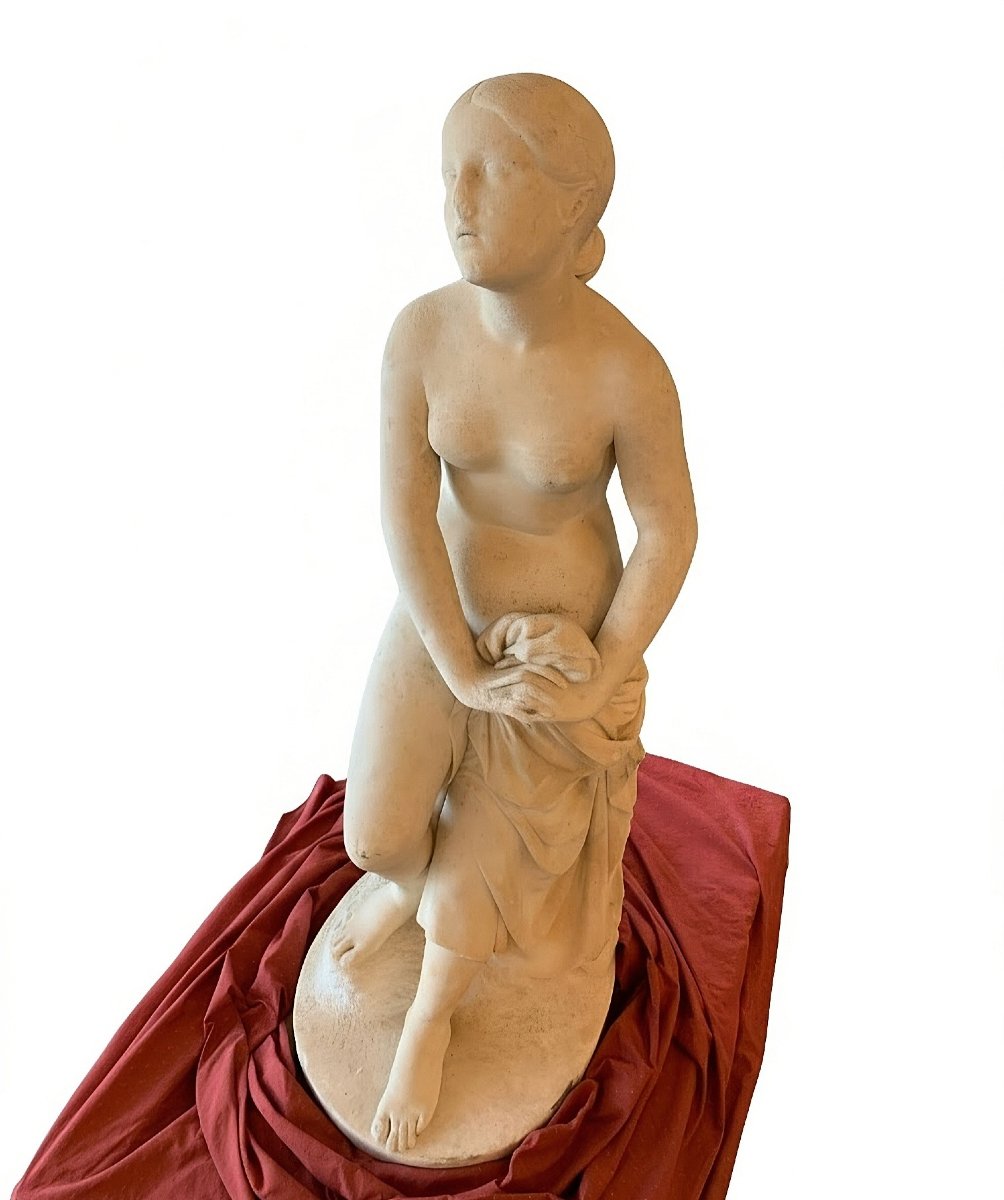
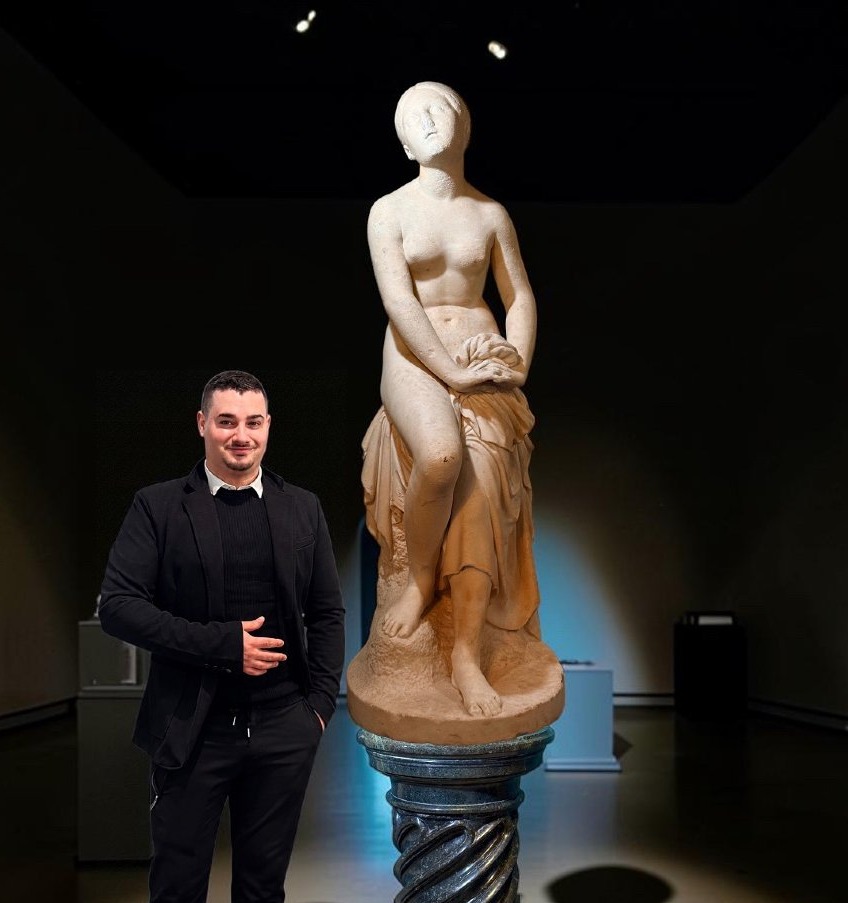
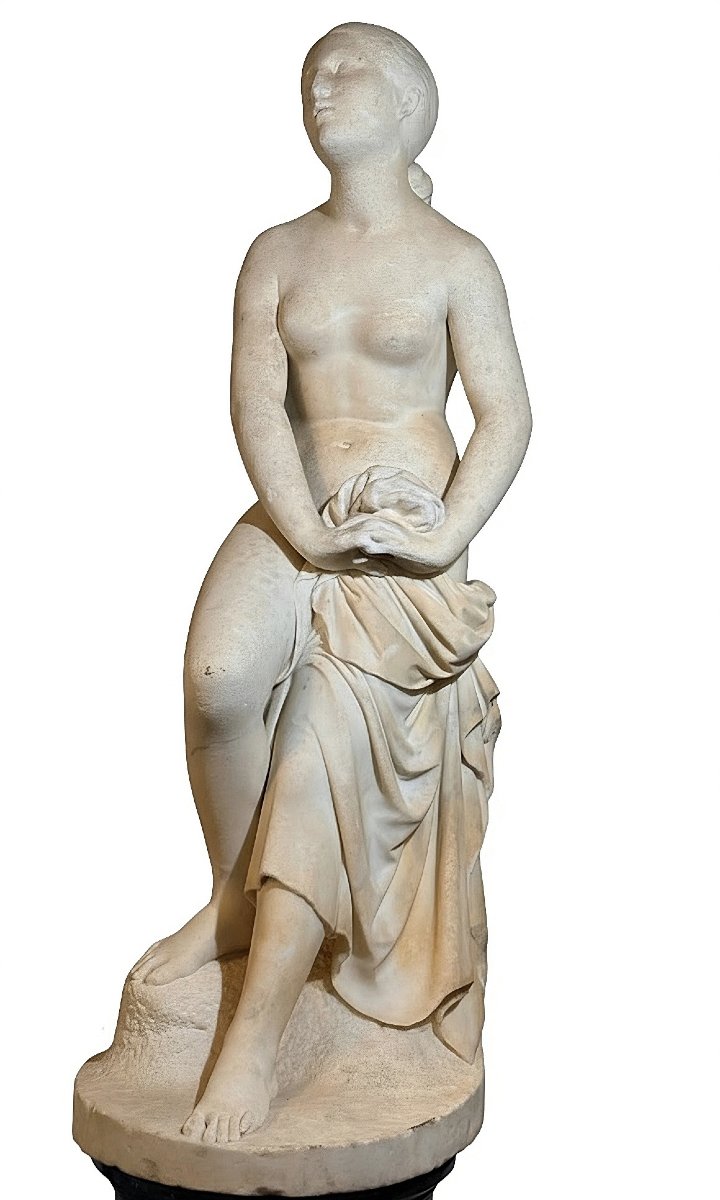
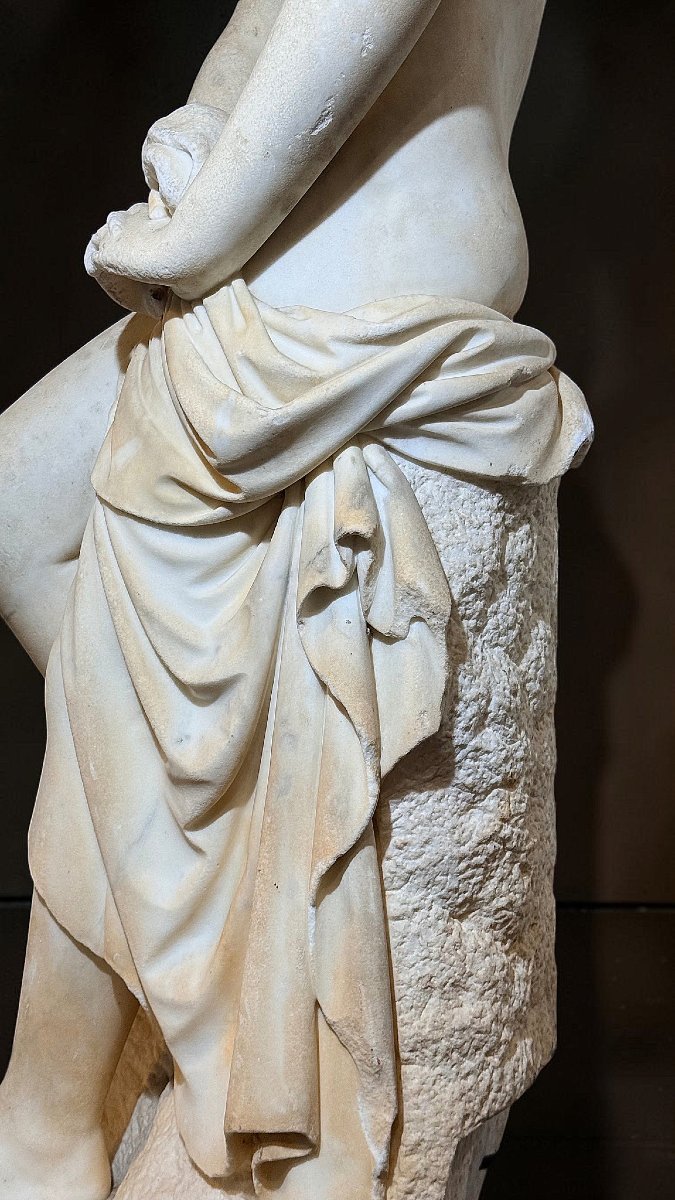
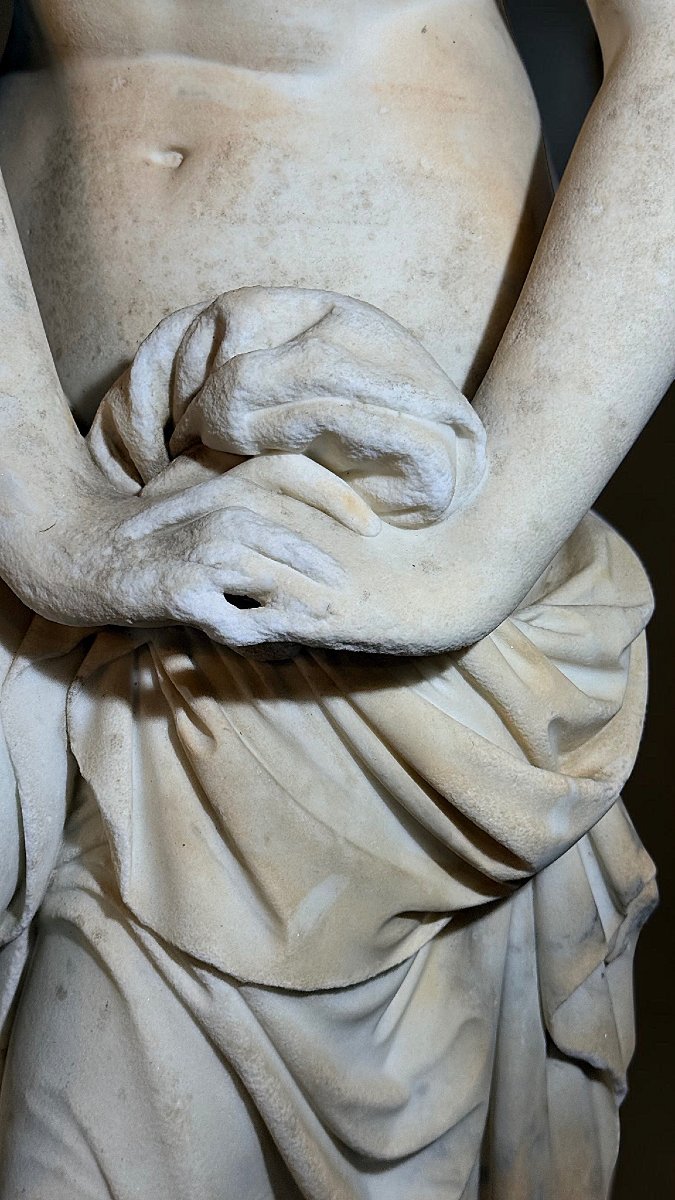
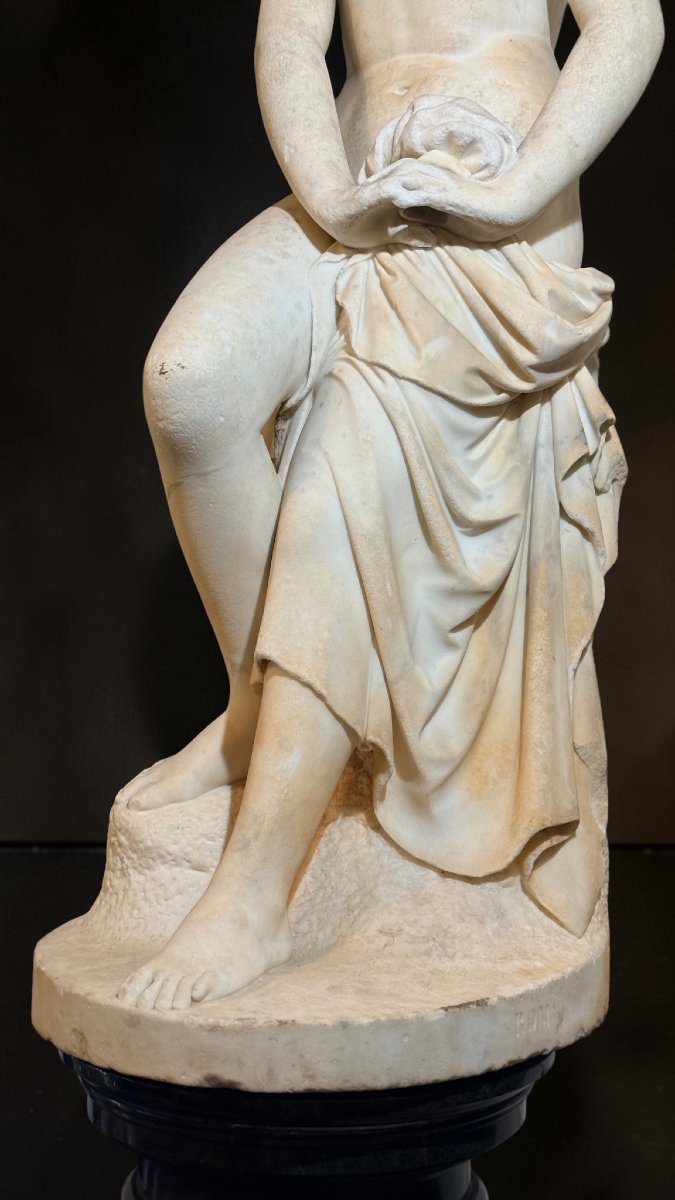
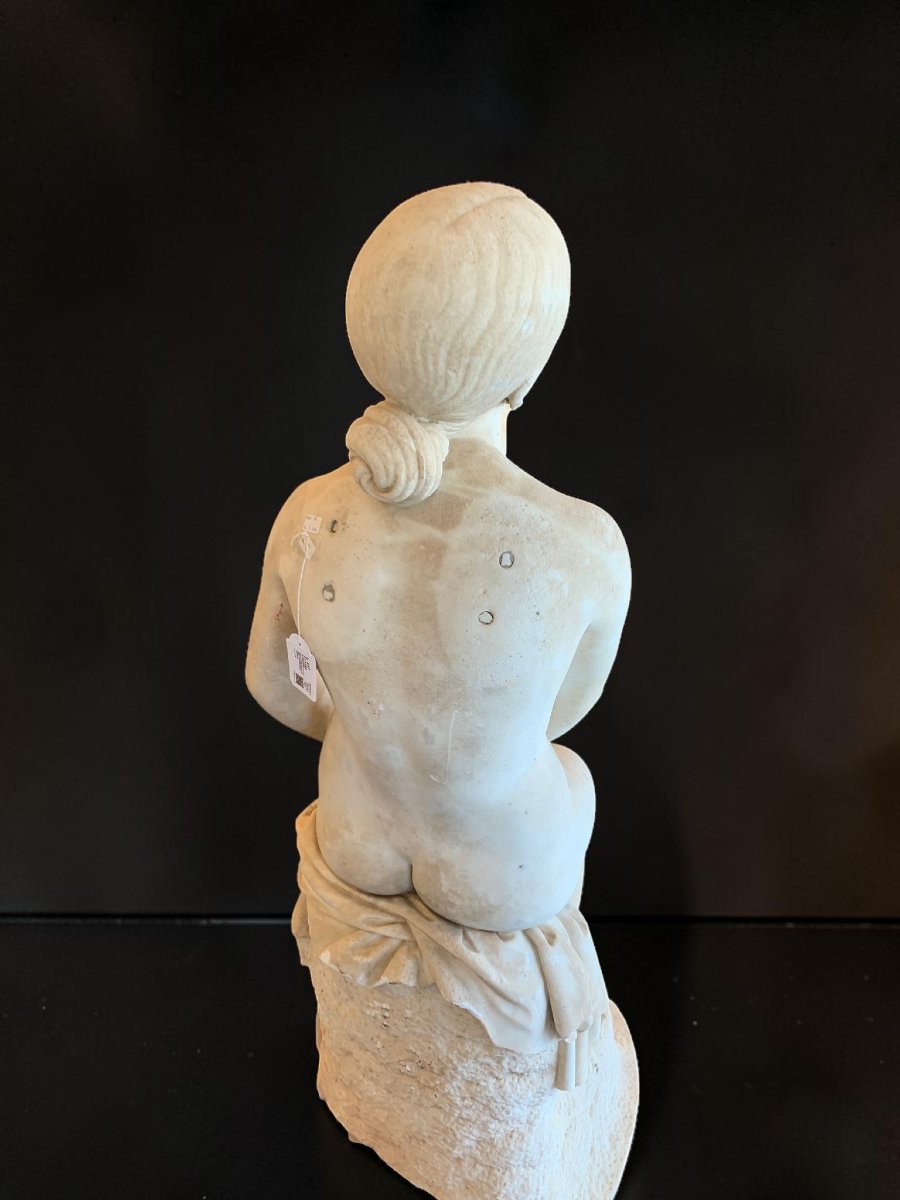
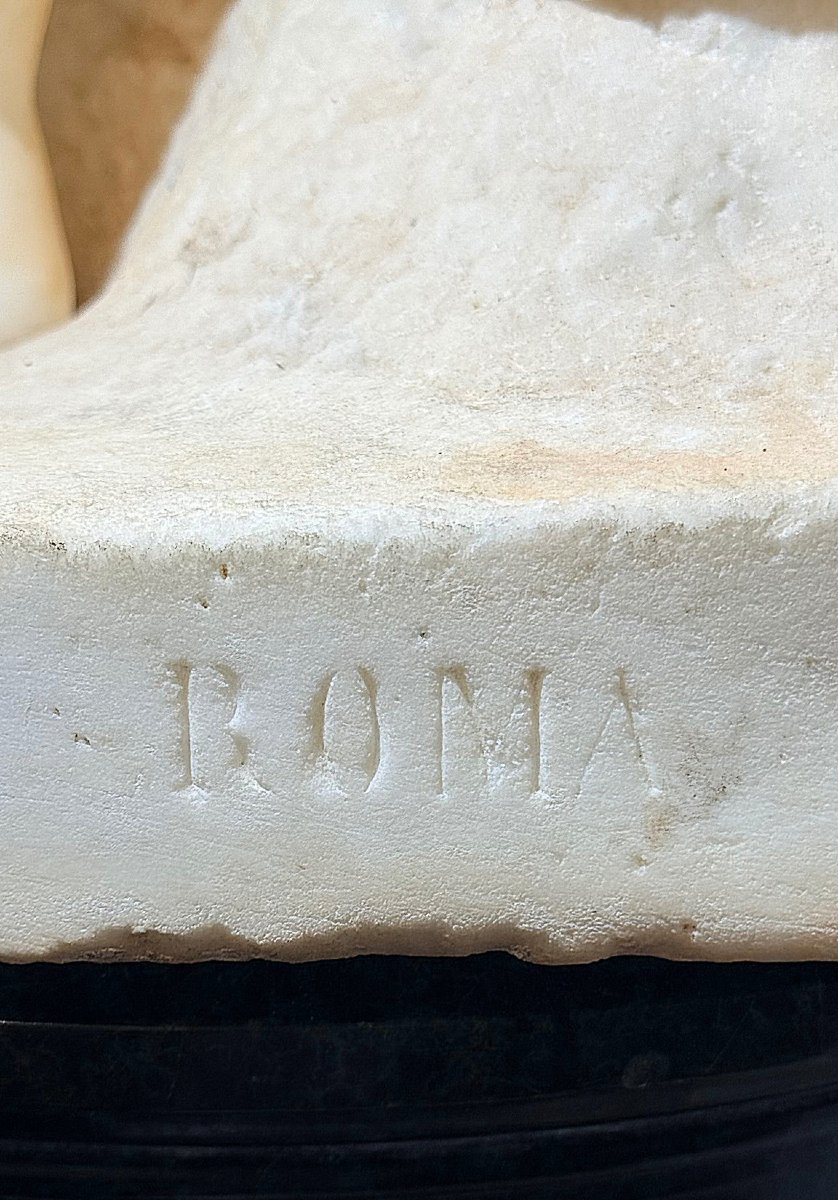
A statue depicting a variation on “Trust in God,” most likely by Lorenzo Bartolini (1777–1850) based on its technique and period, entirely hand-carved from white Carrara marble. Description: The work depicts a striking young female figure, captured in a moment of intimate and subdued introspection. The young woman is depicted partially kneeling, with her right leg raised and her left foot firmly planted on the oval base. Her upper body, bare, conveys a delicate grace and a composed neoclassical purity. With her hands clasped in her lap, she holds a thick, soft drapery that wraps around her hips and flows downward, creating an elegant contrast of light and shadow between the smoothness of her skin and the folds of the fabric. Her face, with its linear and idealized features, is turned slightly to the left, and her gaze is directed upward, imbuing the figure with a sense of spirituality, hope, or gentle submission to the divine will. Her hair is simply gathered at the nape of her neck, leaving her slender neck exposed. The work displays a close and evident formal and conceptual affinity with Lorenzo Bartolini’s famous “Confidence in God” (1835), a milestone of 19th-century Purism. • Biography of Lorenzo Bartolini (1777–1850). Born in Savignano di Prato in 1777, Lorenzo Bartolini initially trained at the Academy of Fine Arts in Florence. The true turning point in his career came in 1799, when he moved to Paris. In the French capital, he studied painting and sculpture, joining the studio of the renowned painter Jacques-Louis David. Thanks to his extraordinary talent for bringing marble to life, Bartolini gained the patronage of Napoleon Bonaparte and his sister Elisa Baciocchi. At the request of the Bonapartes, he was appointed director of the sculpture school at the Academy of Carrara in 1807, becoming the official portraitist of the imperial family. With the fall of Napoleon (1815), the sculptor settled permanently in Florence, where he opened a studio frequented by nobles, intellectuals, and international travelers from all over Europe (particularly English and Russian visitors), drawn by the extraordinary facial features and vitality of his portrait busts. In 1839, he was appointed professor of scuklpture at the Academy of Fine Arts in Florence. He was a revolutionary and unconventional teacher: he urged his students not to blindly copy ancient statues or the rigid canons of Antonio Canova, but to draw inspiration directly from nature. His famous anecdote about bringing a hunchbacked model into the classroom demonstrates that even the imperfections of reality contain a form of truth and artistic beauty. Bartolini became the leading exponent of Purism in sculpture. His style combined the grace of the typical Tuscan Renaissance form (inspired by Donatello and Verrocchio) with a delicate, psychological rendering of the human form, free from academic coldness. Lorenzo Bartolini died in Florence in 1850 and was buried in the Basilica of Santa Croce, a temple of Italian glory, leaving a legacy that would pave the way for modern sculpture at the end of the 19th century. • Statue Dimensions: 140 cm tall • 50 cm • 50 cm (on a 250 cm-high column). Condition: EXCELLENT (in beautiful original condition) • Packaging will be handled directly by Cenzi ArtGallery on a fully wood-lined EPAL wooden pallet, using professional and specialized materials inside! Shipping will be fast and trackable • CENZI ArtGallery provides an invoice and appraisal certificate for all the works of art you have decided to purchase.
30 000 €
Period: 18th century
Style: Rome and Antic Greece
Condition: Good condition
Material: Marble
Length: 50
Width: 50
Height: 140
Reference (ID): 1831612
Availability: In stock
Print