
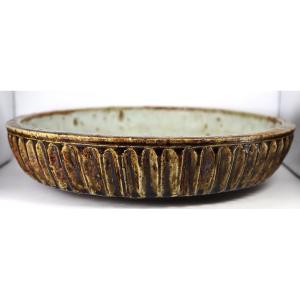


Jean And Jacqueline Lerat (1913–1992) (1920–2009) Large Glazed Stoneware Bowl, 1952
Artist: Jean Et Jacqueline Lerat (1913-1992) (1920-2009)
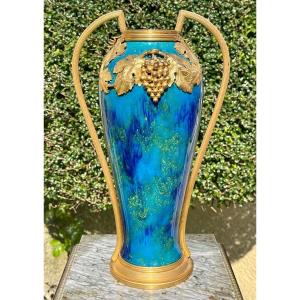
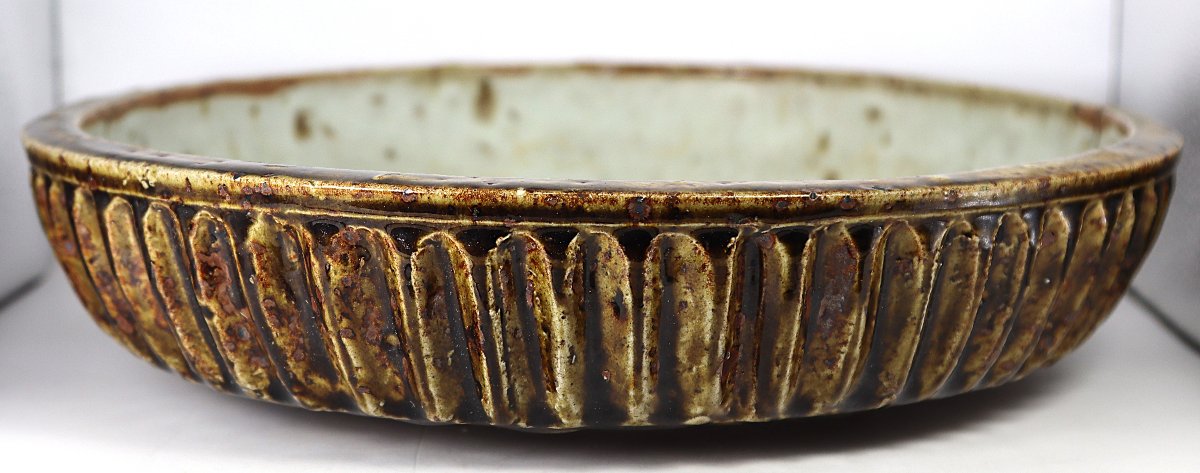
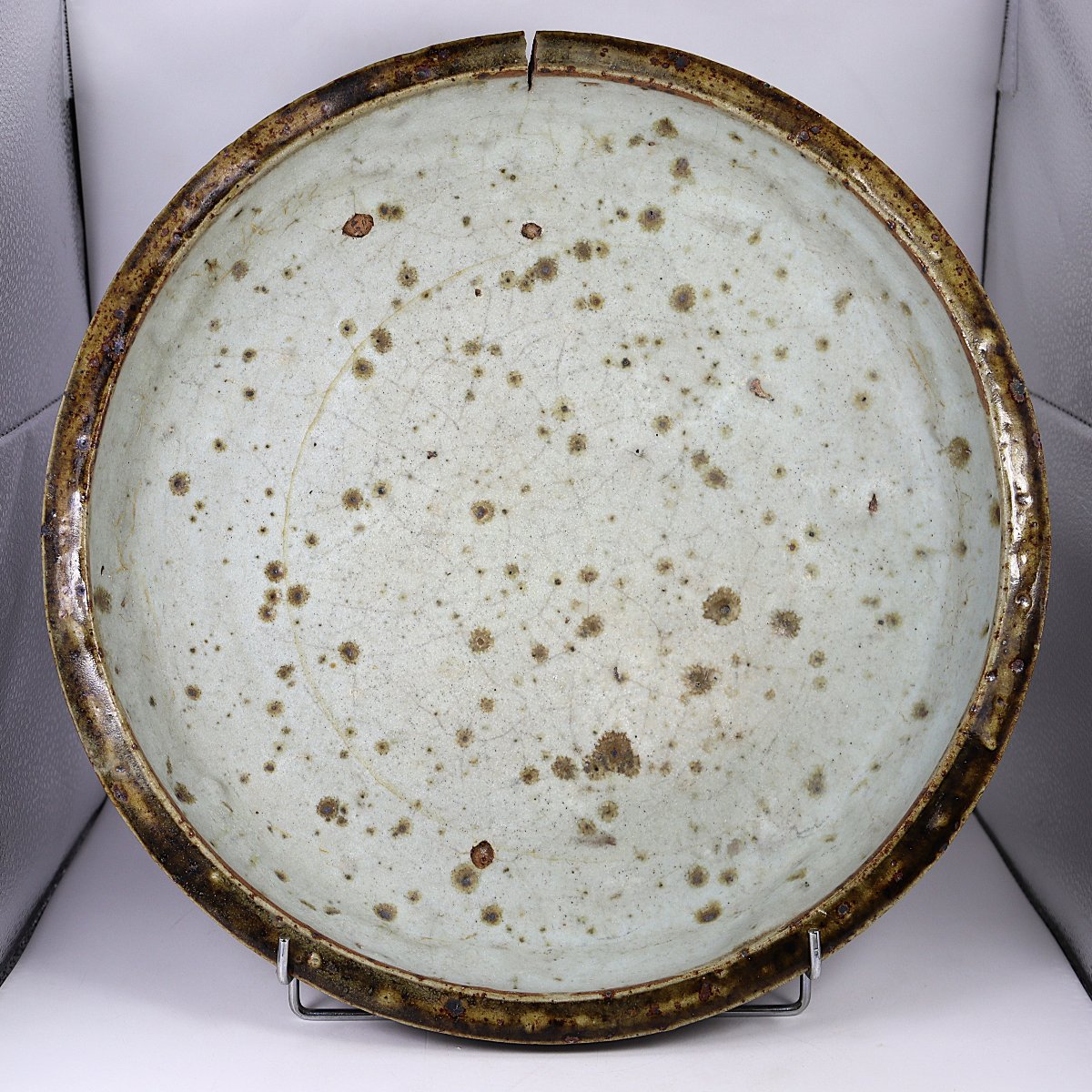
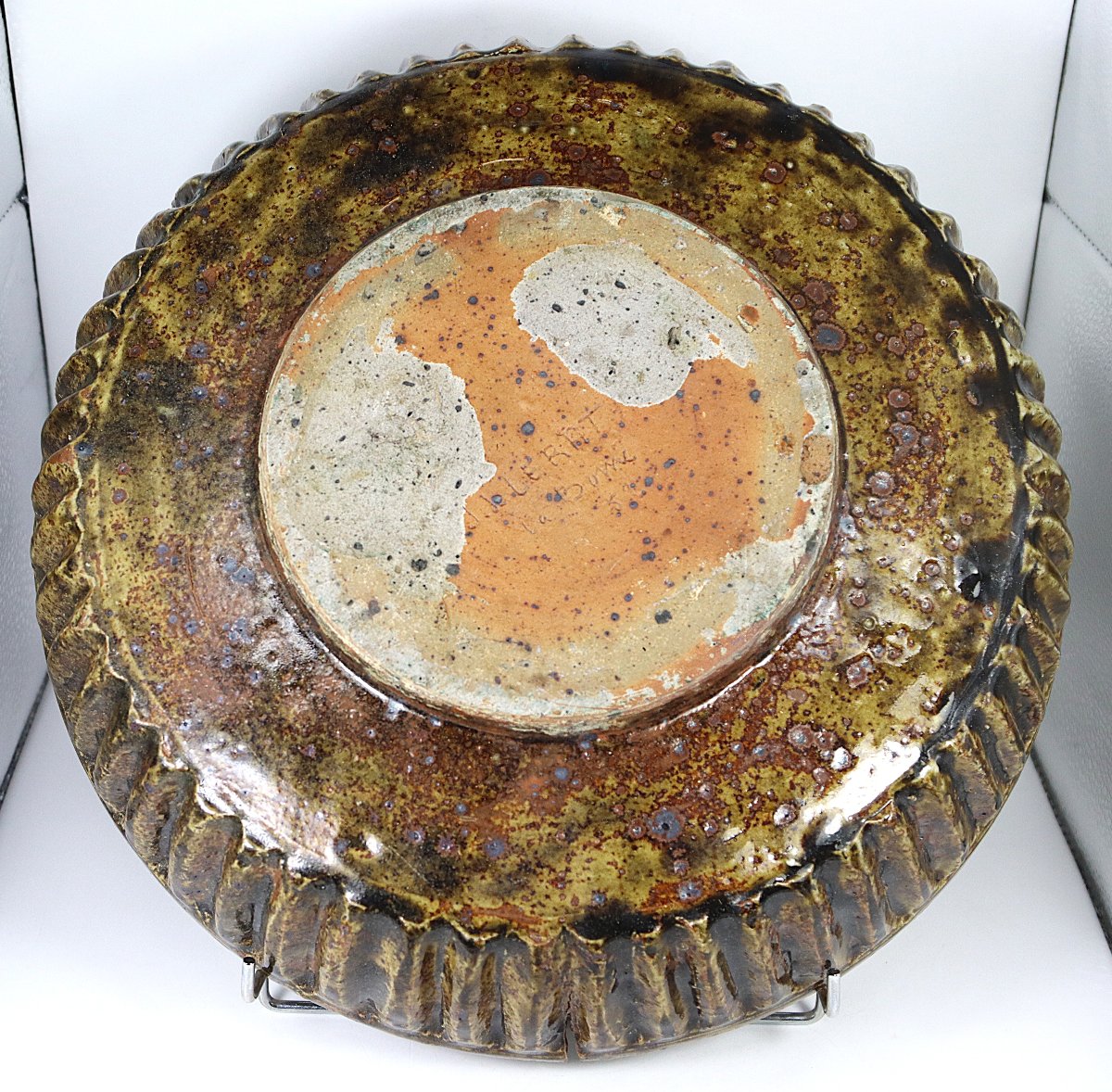
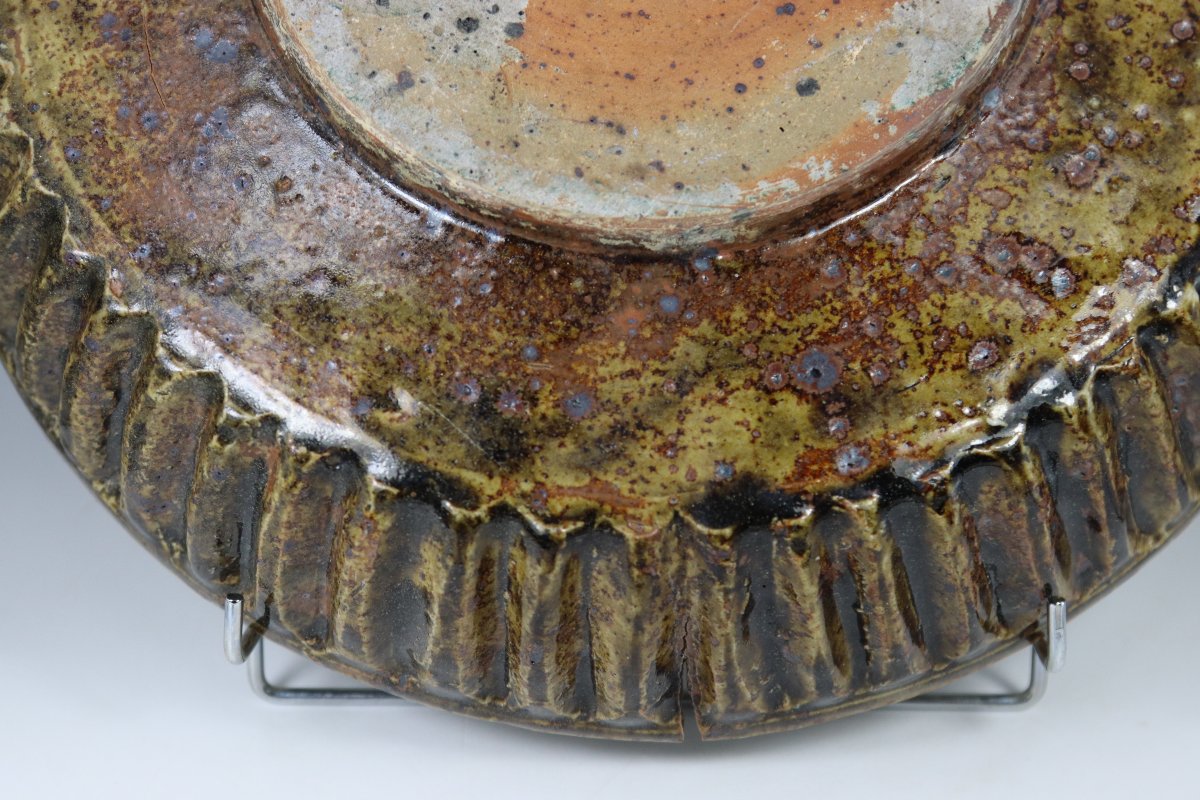
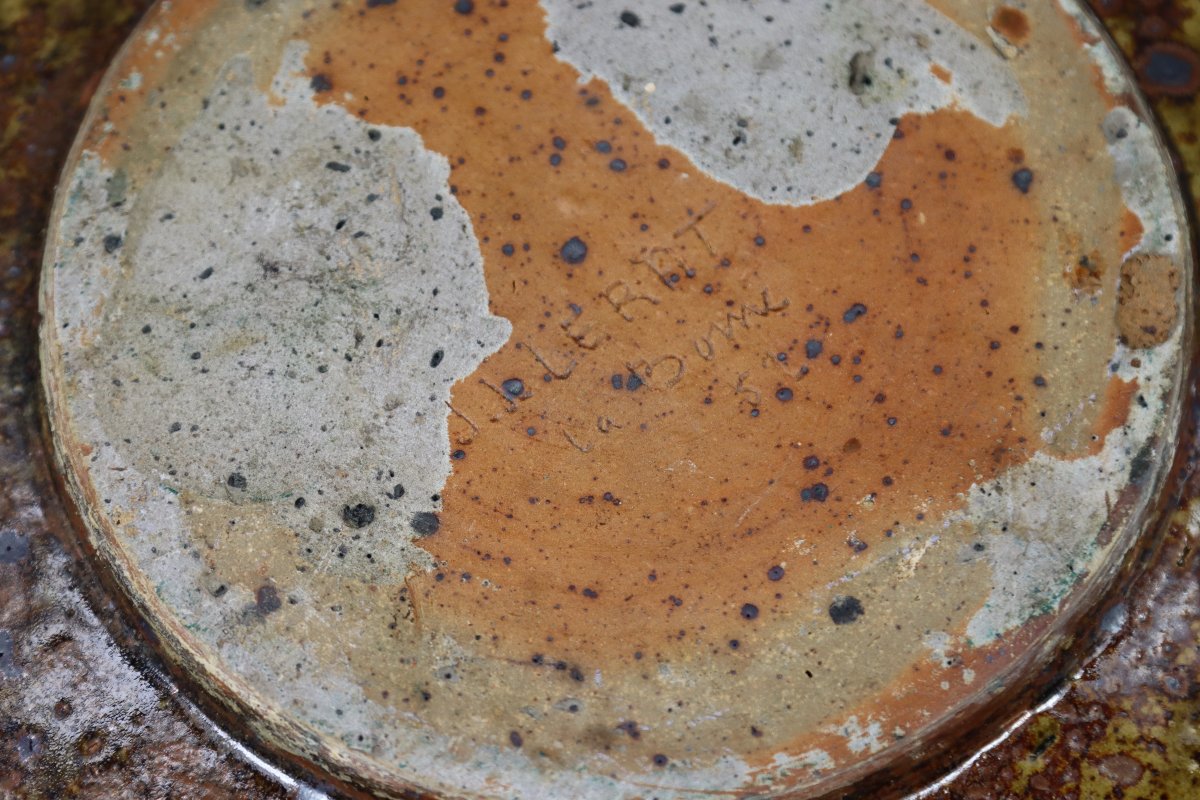
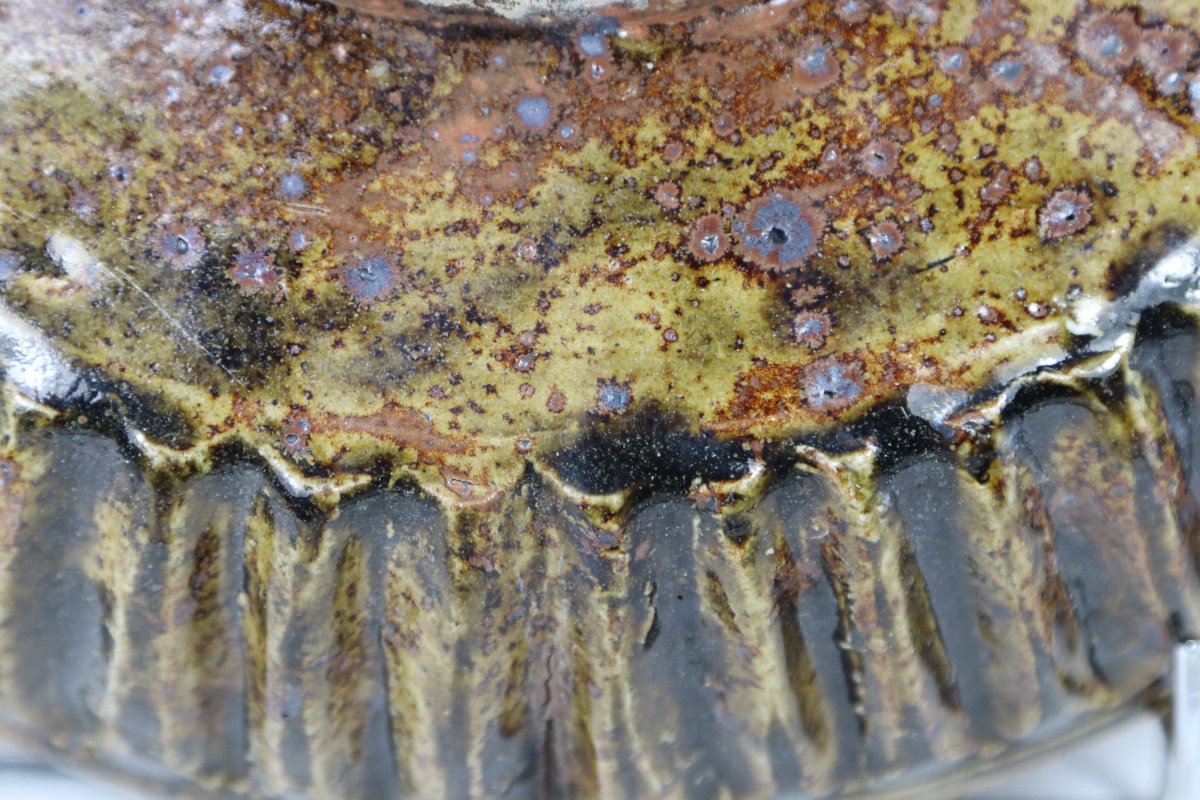
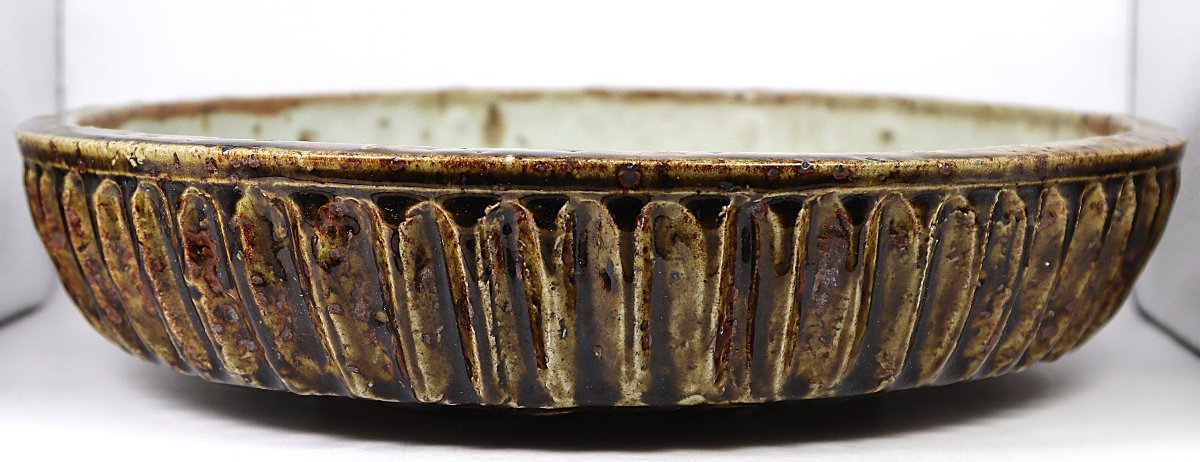
Large shallow dish made of pyrite-glazed stoneware, thick stoneware with ribbed decoration, signed on the bottom J-J LERAT.
20th century, 1952
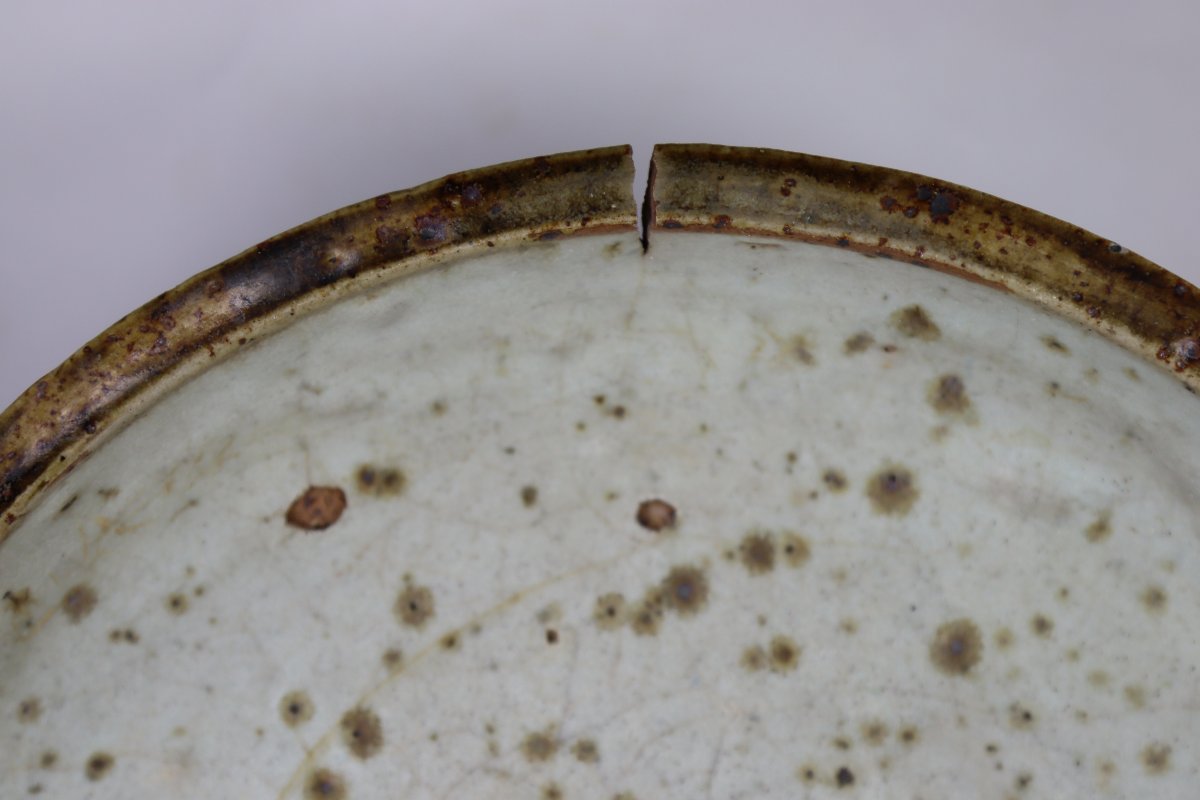
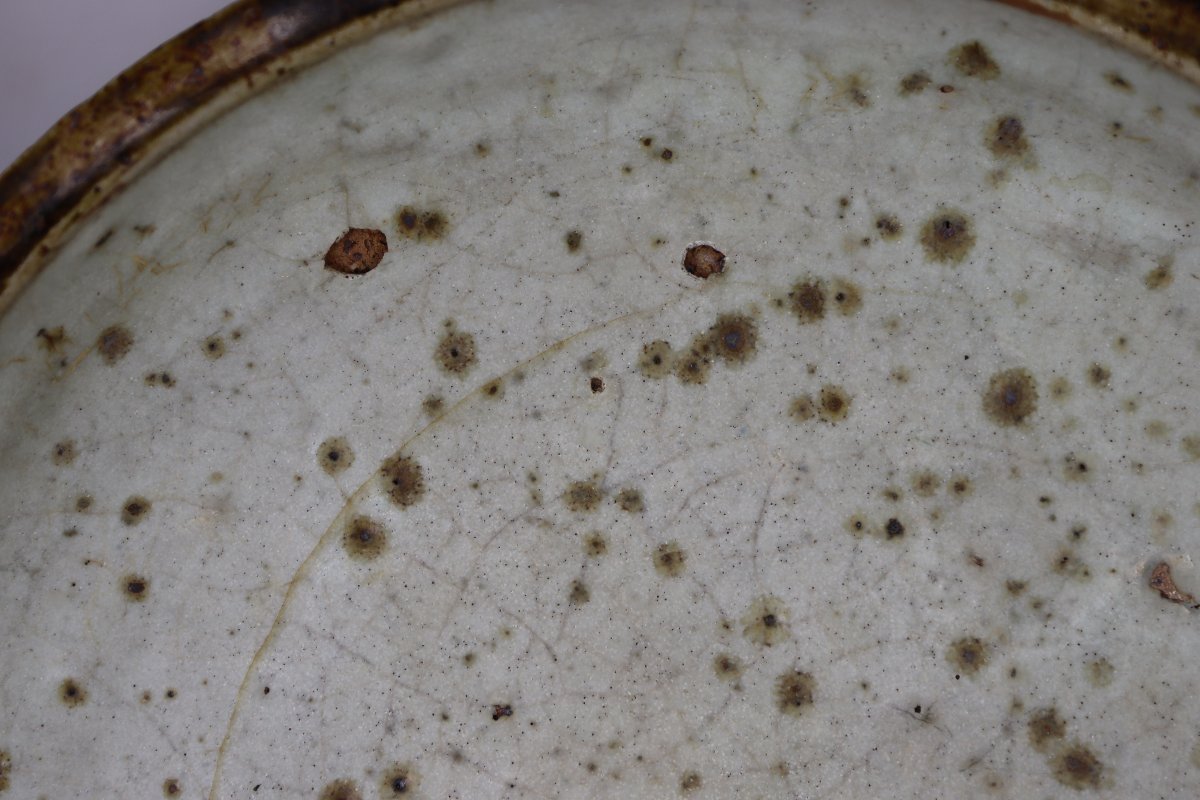
(firing crack and firing bubbles)
Jean Lerat (1913–1992) & Jacqueline Lerat (1920–2009)
Jean Lerat (1913–1992) and Jacqueline Lerat, née Bouvet (1920–2009), his wife, were two French ceramic artists.
Biographies
Jean and Jacqueline Lerat settled as potters in La Borne in 1943, at a time when the town’s ceramic tradition was in sharp decline. They chose an artistic style that utilized stoneware and wood-firing. In doing so, they carried on the tradition of potters who had been based in this village since the 16th century: figurative ceramics popularized by Marie Talbot.
Their early work consisted of functional pieces: bottles, tobacco jars, vases, and religious figurines. Their works were in the spirit of Paul Beyer, who also worked in La Borne, and whose kiln they used after his death.
Starting in 1955, their style broke with tradition. They took a new step forward in their Bourges studio, where they began experimenting with sculpture and developed a more secular body of work.
At that time, they were part of the Nouvelle Modernité movement.
20th century, 1952
(firing crack and firing bubbles)
Jean Lerat (1913–1992) & Jacqueline Lerat (1920–2009)
Jean Lerat (1913–1992) and Jacqueline Lerat, née Bouvet (1920–2009), his wife, were two French ceramic artists.
Biographies
Jean and Jacqueline Lerat settled as potters in La Borne in 1943, at a time when the town’s ceramic tradition was in sharp decline. They chose an artistic style that utilized stoneware and wood-firing. In doing so, they carried on the tradition of potters who had been based in this village since the 16th century: figurative ceramics popularized by Marie Talbot.
Their early work consisted of functional pieces: bottles, tobacco jars, vases, and religious figurines. Their works were in the spirit of Paul Beyer, who also worked in La Borne, and whose kiln they used after his death.
Starting in 1955, their style broke with tradition. They took a new step forward in their Bourges studio, where they began experimenting with sculpture and developed a more secular body of work.
At that time, they were part of the Nouvelle Modernité movement.
1 250 €
Period: 20th century
Style: Other Style
Condition: Good condition
Material: Sandstone
Diameter: 34
Height: 8
Reference (ID): 1829124
Availability: In stock
Print