

18th-century Pastoral / Attributed To Jean-louis De Marne (1752–1829) / Study After Nicolaes Berchem
Artist: Jean-louis De Marne (1752-1829)
Crossing the Ford Near the Old Bridge (Study after Nicolaes Berchem)
Attributed to Jean-Louis de MARNE (1752–1829)
Late 18th century / Directoire period
Oil on canvas
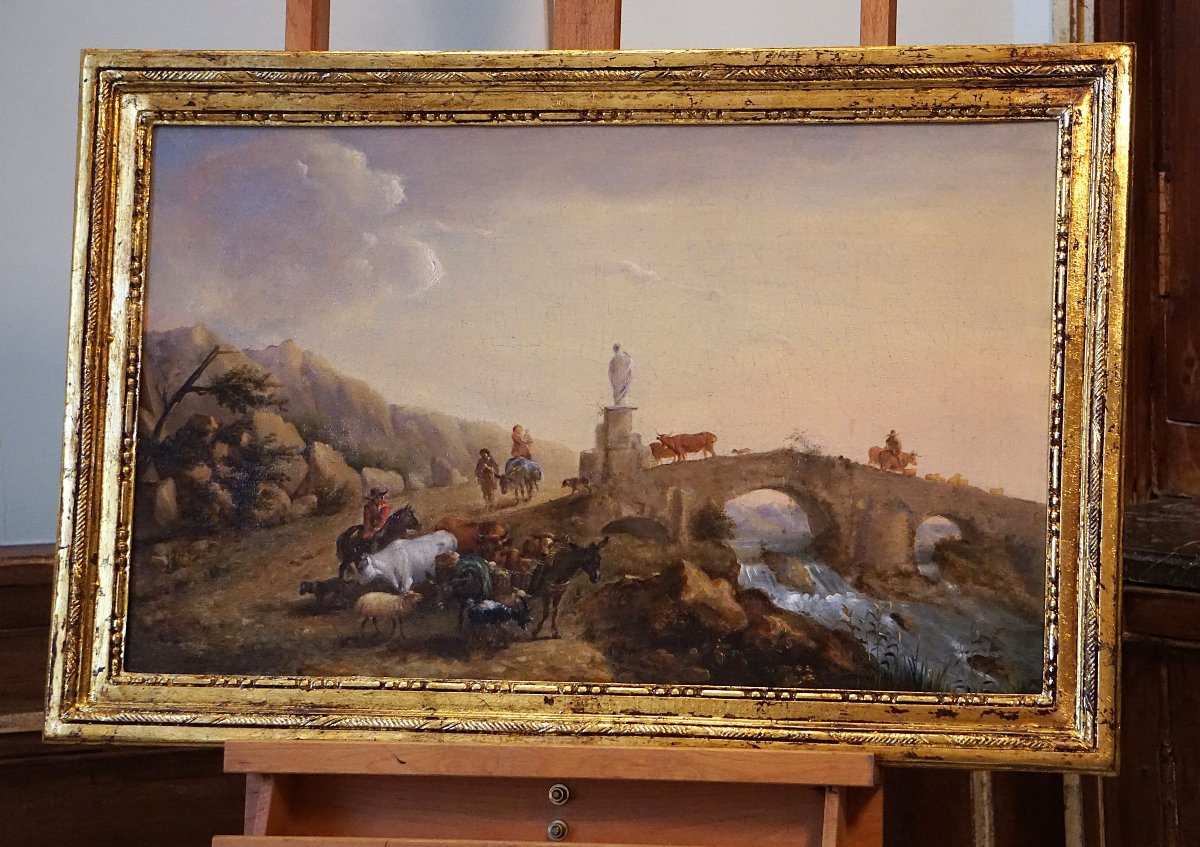
Dimensions without frame: 43 x 69 cm
Dimensions with frame: 51 x 78 cm
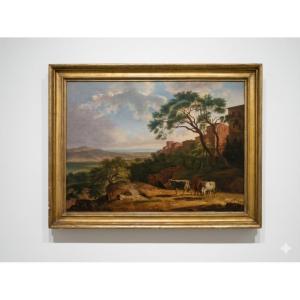
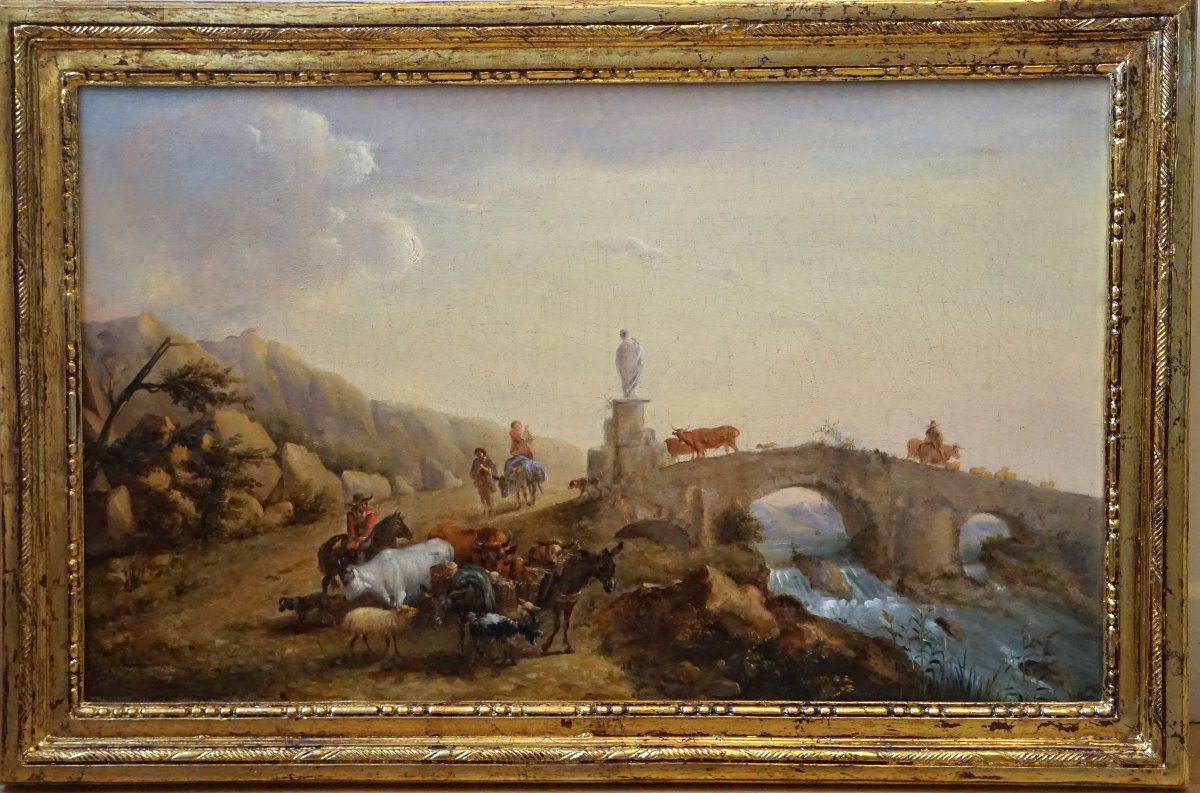
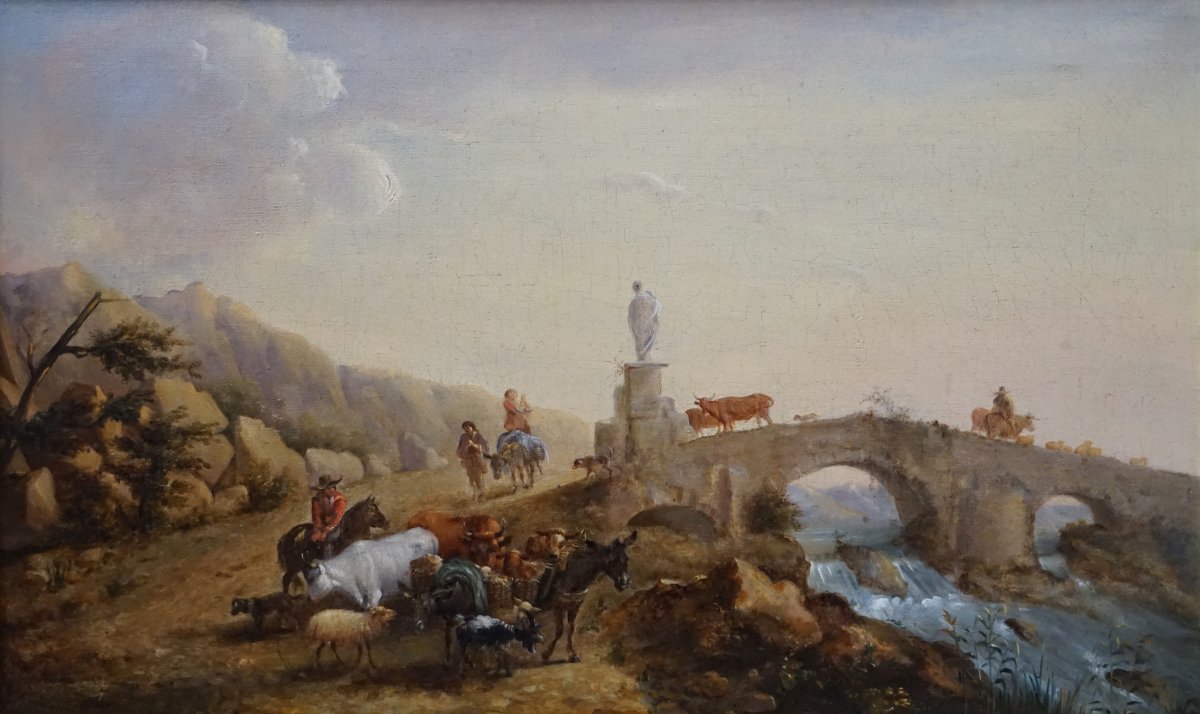
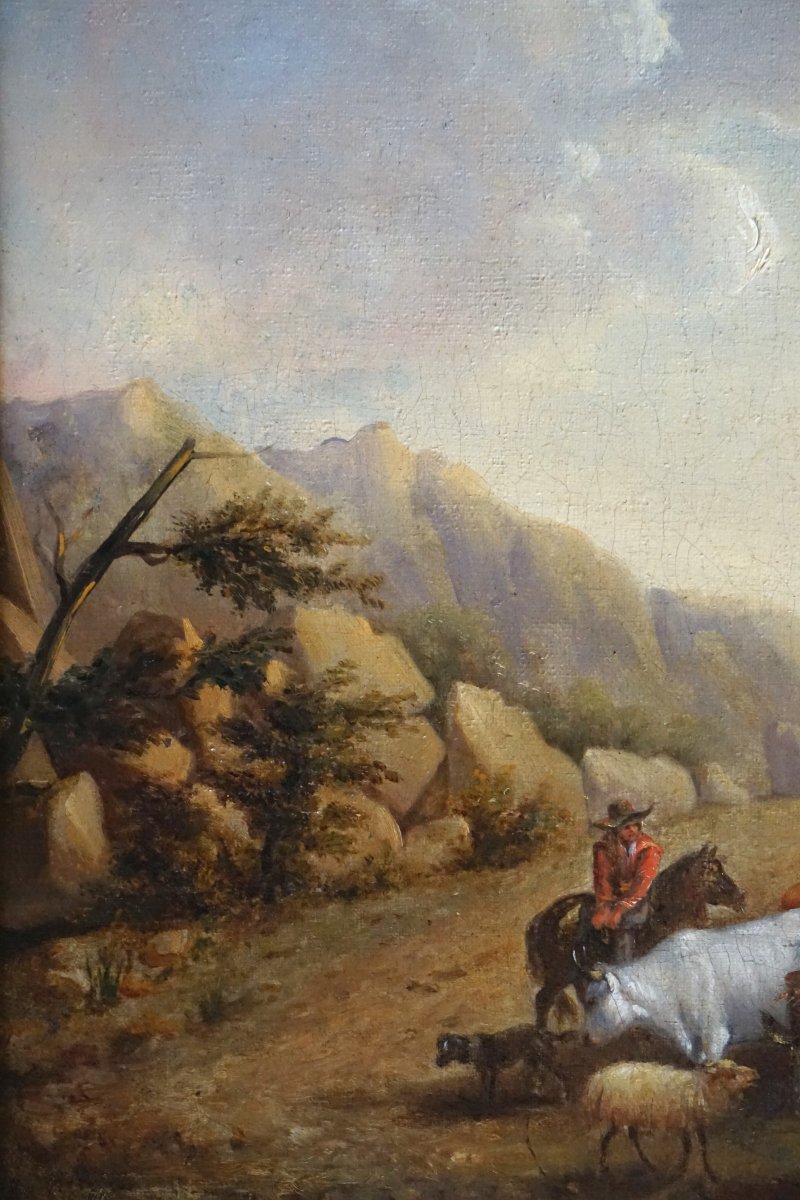
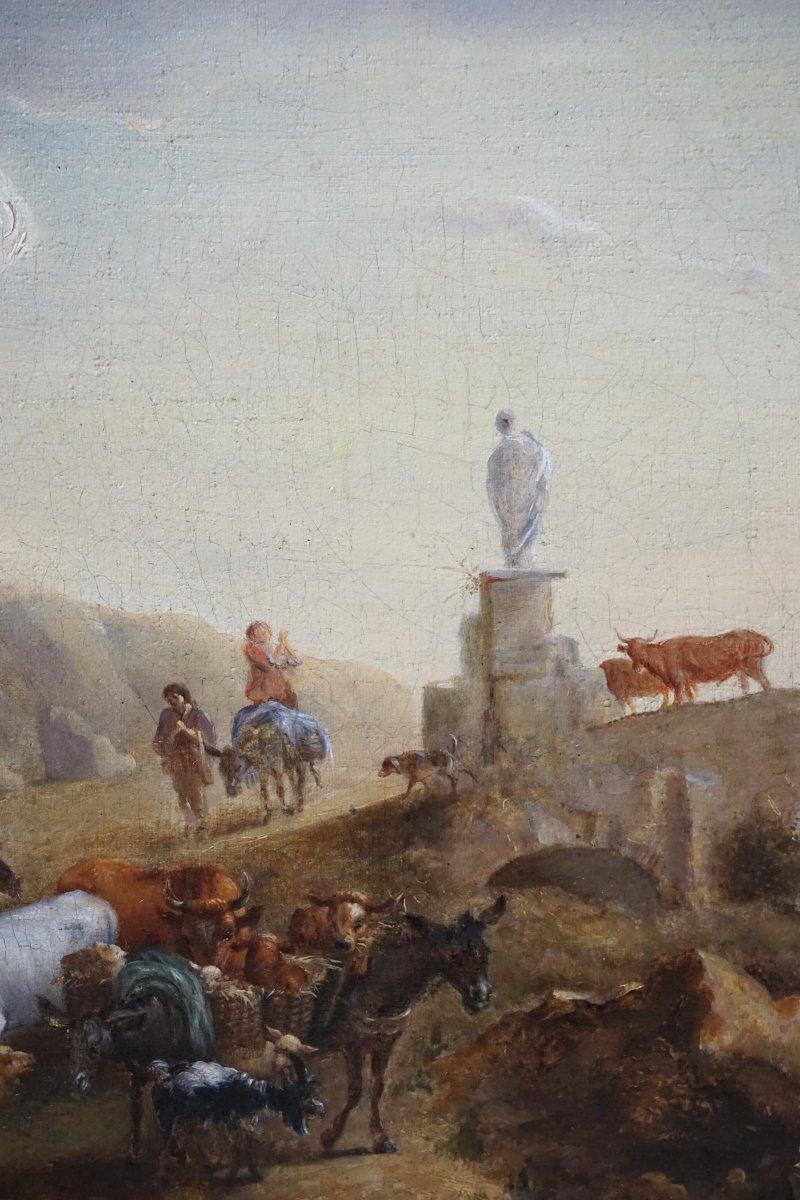
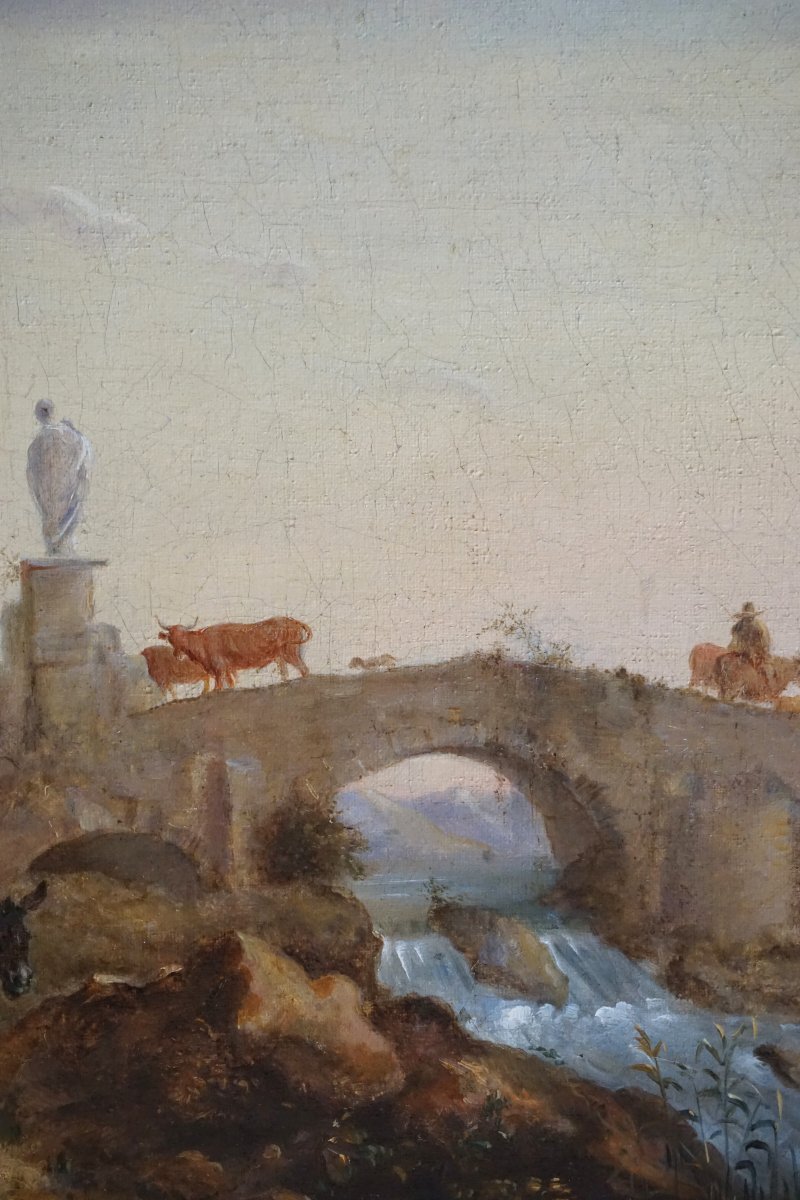
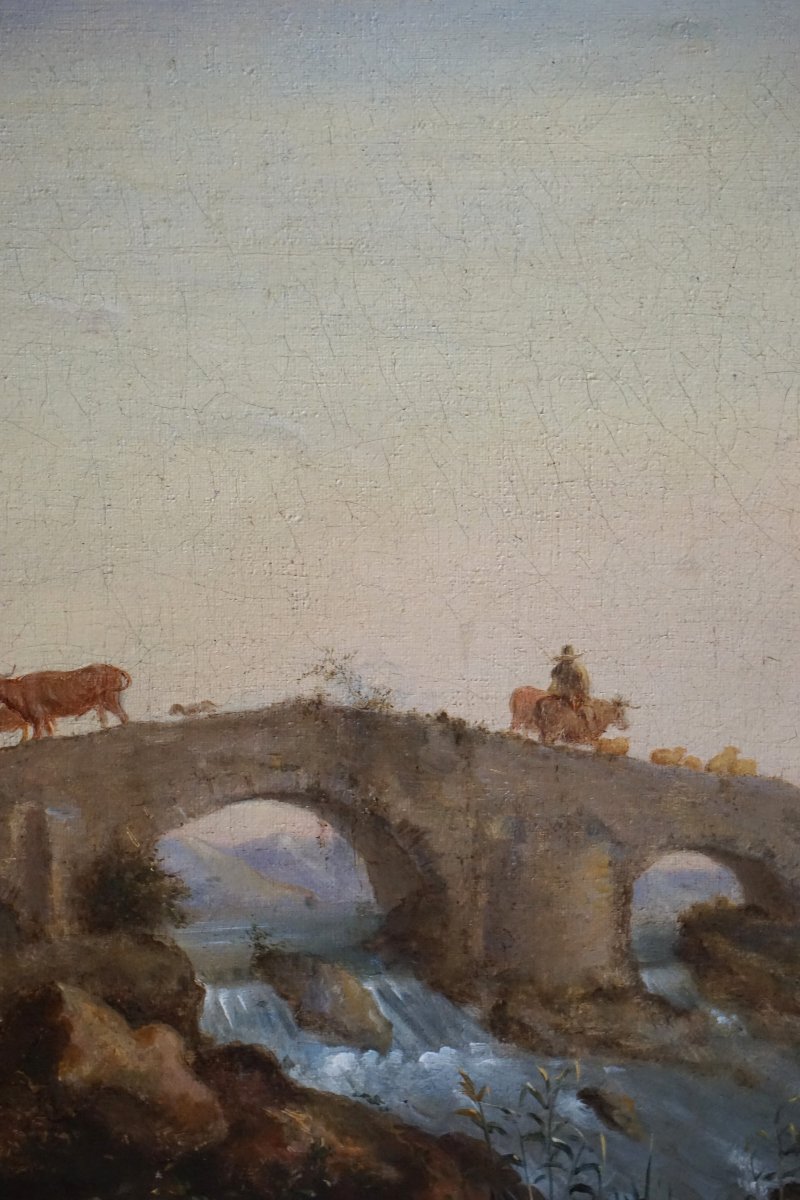
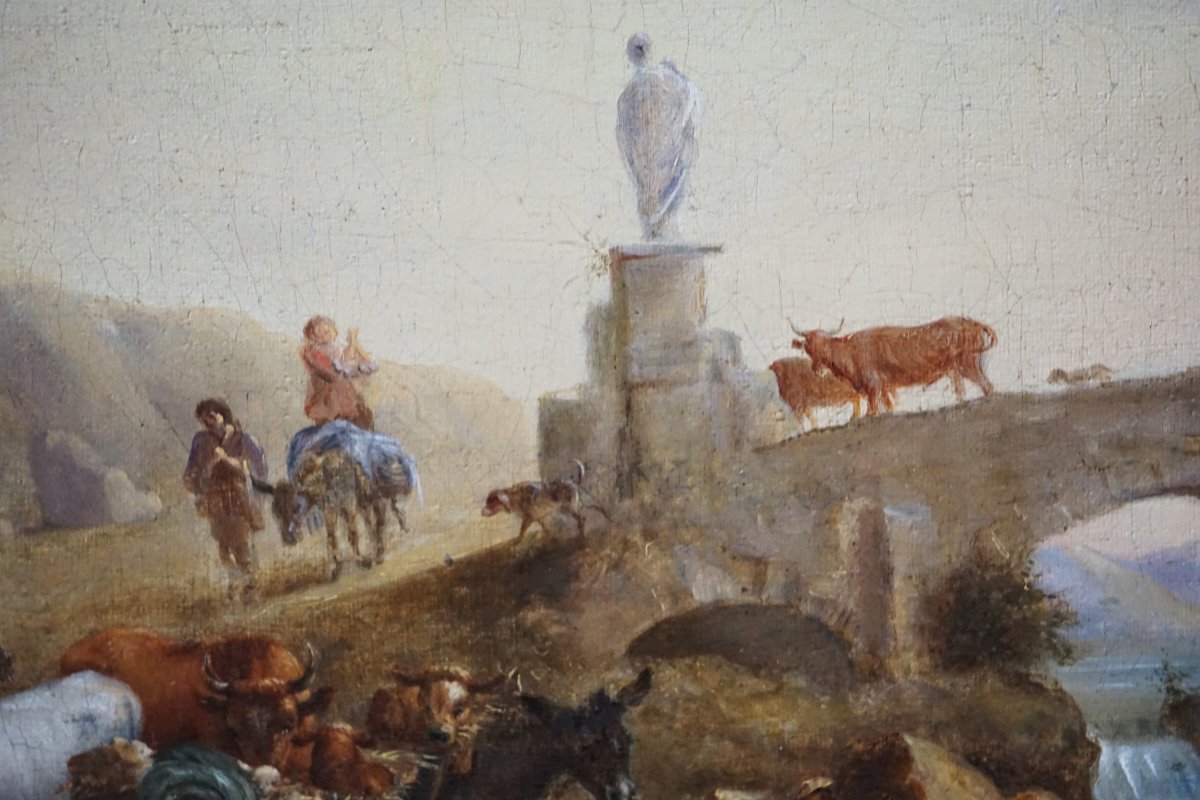
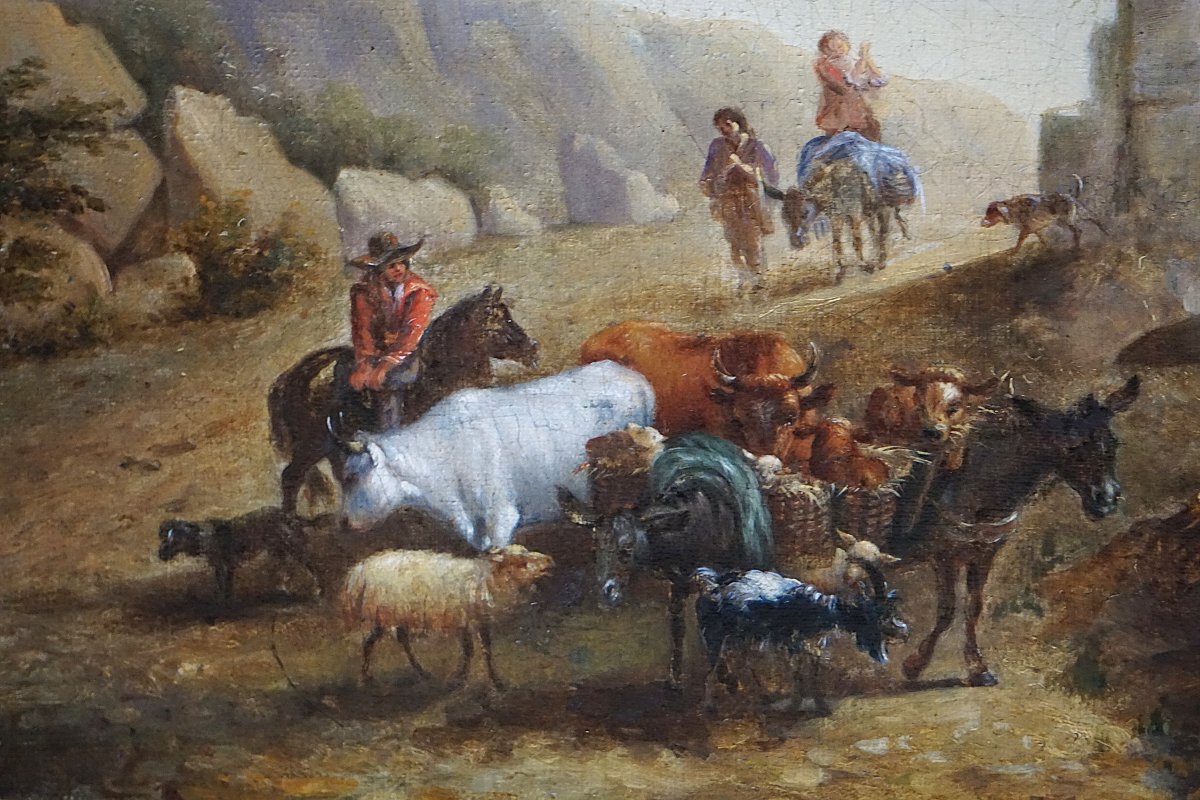
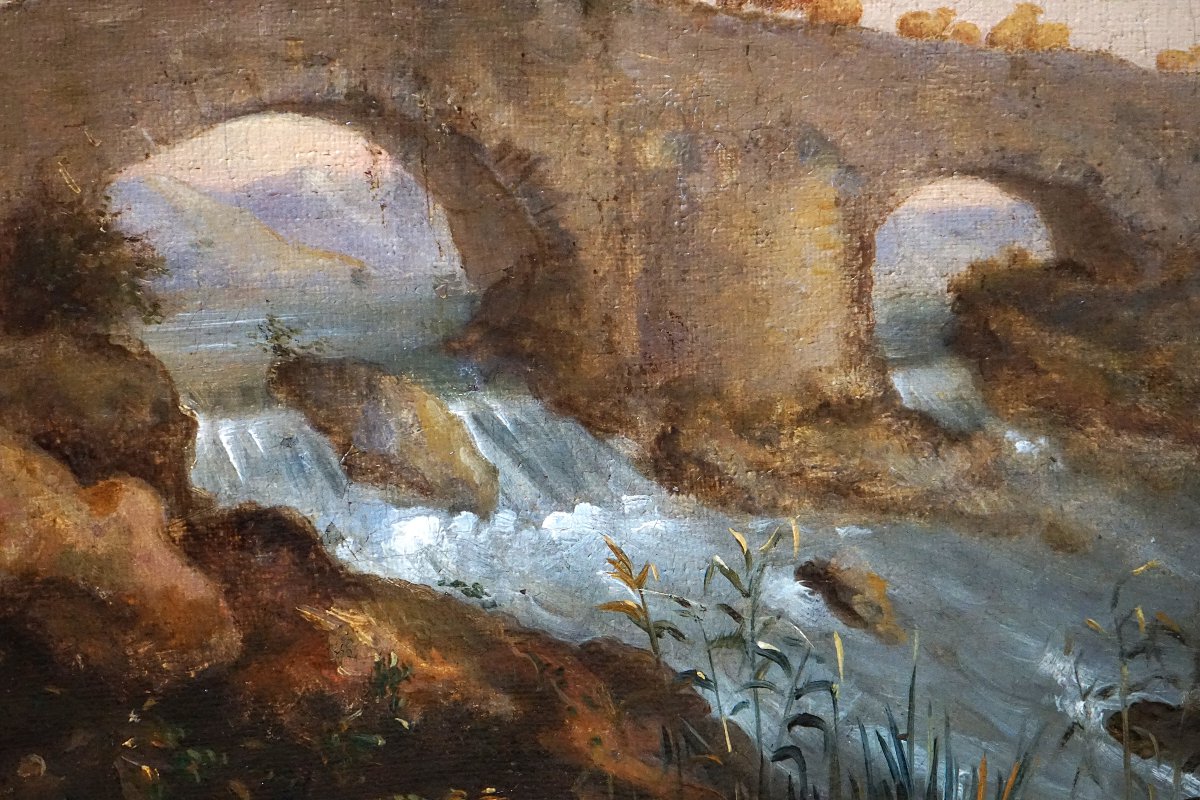
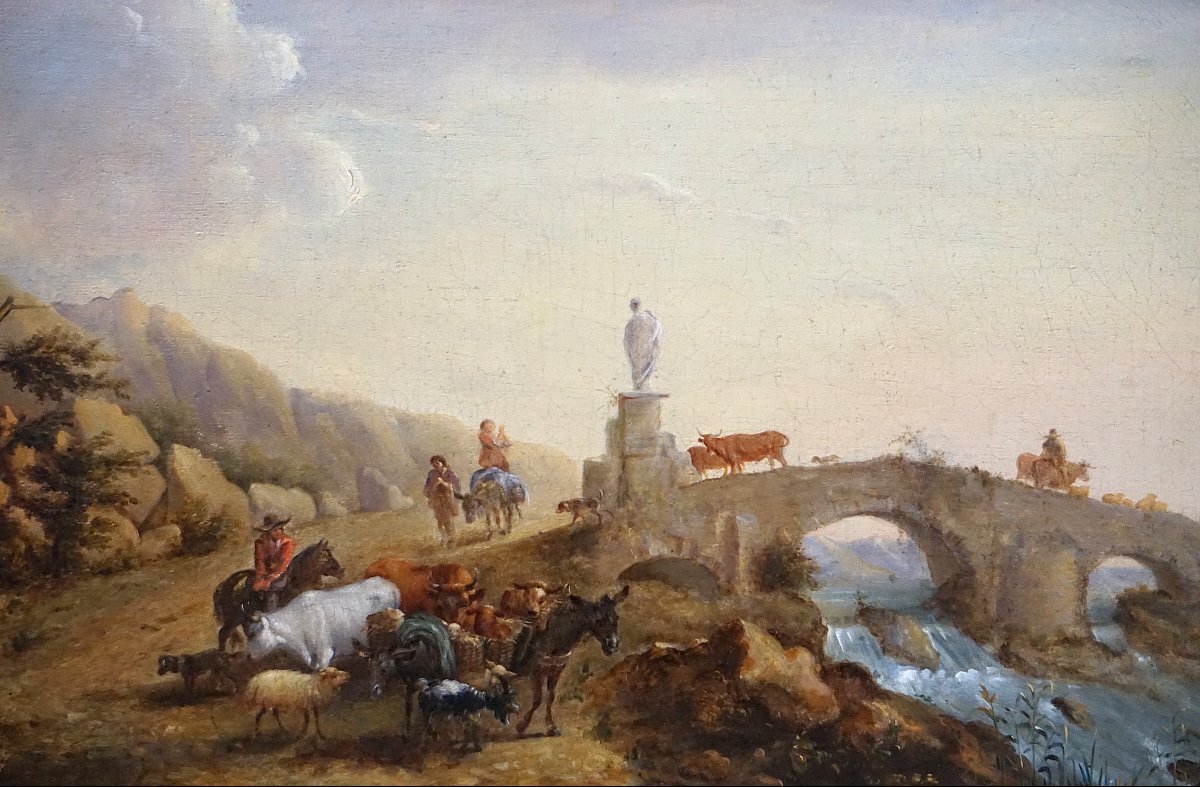
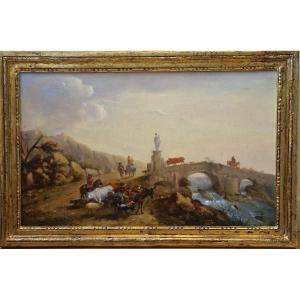
This pastoral landscape depicts an imposing double-arched stone bridge topped by an antique statue, spanning a waterfall on the right. In the foreground on the left, a lively group of shepherds, horsemen, and washerwomen has stopped by the water’s edge. A herd of sheep, goats, and cows—including a very finely painted white animal in the center—brings great vitality to the scene. The background consists of a mountainous horizon bathed in soft, misty light. Historical context:
This is believed to be a study based on the Dutch painting by Nicolaes Berchem (1620–1683), “Italian Landscape with a Small Bridge” (1656), housed at the Hermitage Museum. The work presented here is most likely a workshop piece or an early work by Jean-Louis de Marne. A great admirer of the masters of the Dutch Golden Age, he practiced here by reproducing this famous composition.
The high quality of the details and the rendering of the animals confirm the hand of a talented professional painter.
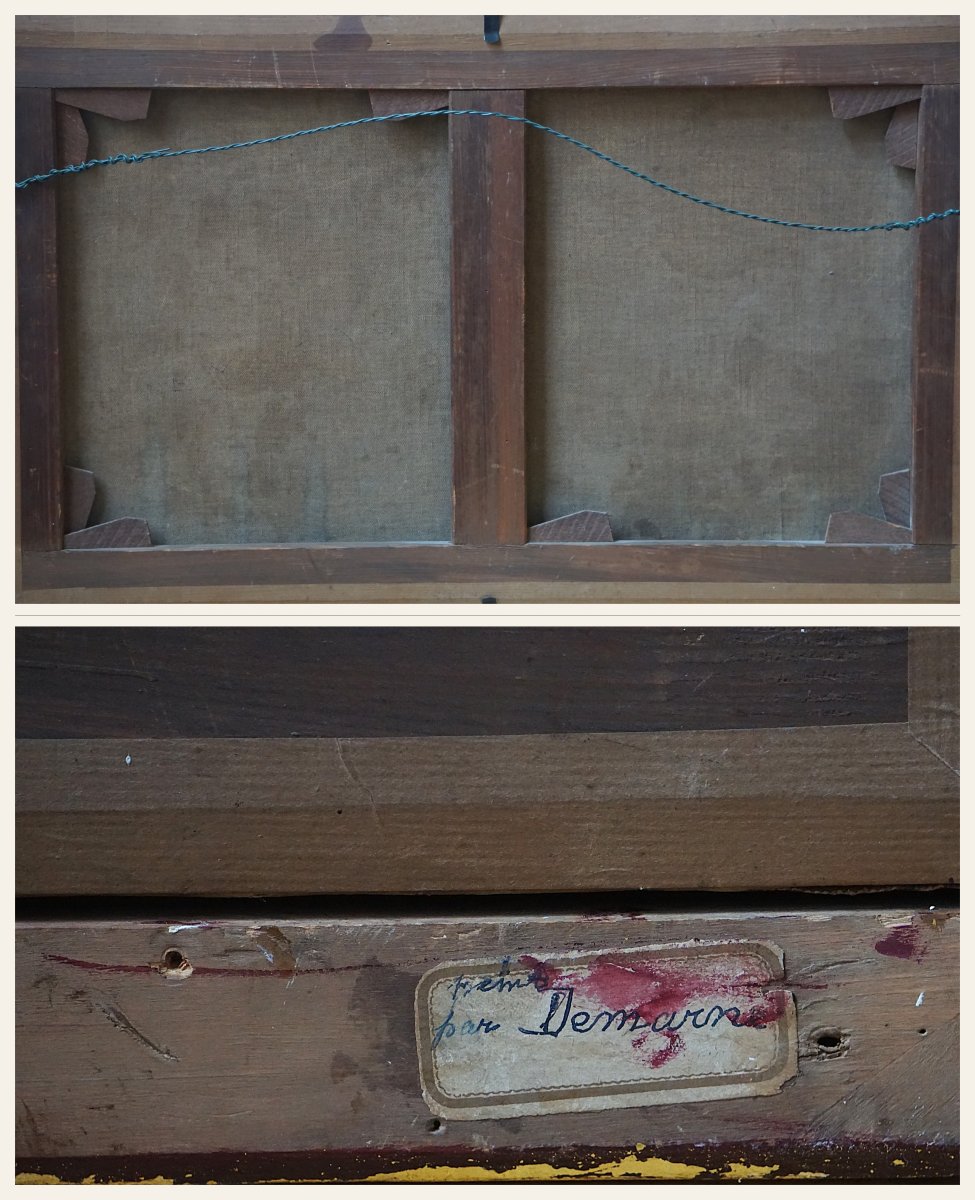
The painting was previously re-stretched onto high-quality canvas and was mounted on a new stretcher, most likely toward the end of the 19th century. On that occasion, a handwritten label from the period bearing the inscription “Painted by Demarne” was carefully preserved and reattached. The painting is in very good overall condition.
Jean-Louis de MARNE (Brussels 1752 – Paris 1829), also spelled Demarne, was a major painter and engraver of the French school at the turn of the 19th century. Born into a family of artists originally from Liège, he moved to Paris at the age of 12 to train in the studio of the history painter Gabriel Briard.
Quickly turning his back on academic classicism, he developed a passion for the Dutch Golden Age and became the leading figure of the “Neo-Dutch” movement during the Revolution and the Empire. Nicknamed the “French Paulus Potter” for his virtuosity in painting livestock, he excelled at lively pastoral landscapes, market scenes, and fords, all bathed in a soft, pre-Romantic light.
Admitted to the Royal Academy of Painting in 1783, he exhibited regularly at the Paris Salon from 1789 to 1827. Awarded a gold medal in 1806 and honored with the Legion of Honor in 1828, his works were acquired by the greatest collectors of his time (including Empress Josephine).
His paintings are now housed in the world’s most prestigious institutions, notably the Louvre, the Palace of Versailles, the Hermitage Museum, as well as in numerous regional museums (Dijon, Grenoble, Lyon).
Attributed to Jean-Louis de MARNE (1752–1829)
Late 18th century / Directoire period
Oil on canvas
Dimensions without frame: 43 x 69 cm
Dimensions with frame: 51 x 78 cm
This pastoral landscape depicts an imposing double-arched stone bridge topped by an antique statue, spanning a waterfall on the right. In the foreground on the left, a lively group of shepherds, horsemen, and washerwomen has stopped by the water’s edge. A herd of sheep, goats, and cows—including a very finely painted white animal in the center—brings great vitality to the scene. The background consists of a mountainous horizon bathed in soft, misty light. Historical context:
This is believed to be a study based on the Dutch painting by Nicolaes Berchem (1620–1683), “Italian Landscape with a Small Bridge” (1656), housed at the Hermitage Museum. The work presented here is most likely a workshop piece or an early work by Jean-Louis de Marne. A great admirer of the masters of the Dutch Golden Age, he practiced here by reproducing this famous composition.
The high quality of the details and the rendering of the animals confirm the hand of a talented professional painter.
The painting was previously re-stretched onto high-quality canvas and was mounted on a new stretcher, most likely toward the end of the 19th century. On that occasion, a handwritten label from the period bearing the inscription “Painted by Demarne” was carefully preserved and reattached. The painting is in very good overall condition.
Jean-Louis de MARNE (Brussels 1752 – Paris 1829), also spelled Demarne, was a major painter and engraver of the French school at the turn of the 19th century. Born into a family of artists originally from Liège, he moved to Paris at the age of 12 to train in the studio of the history painter Gabriel Briard.
Quickly turning his back on academic classicism, he developed a passion for the Dutch Golden Age and became the leading figure of the “Neo-Dutch” movement during the Revolution and the Empire. Nicknamed the “French Paulus Potter” for his virtuosity in painting livestock, he excelled at lively pastoral landscapes, market scenes, and fords, all bathed in a soft, pre-Romantic light.
Admitted to the Royal Academy of Painting in 1783, he exhibited regularly at the Paris Salon from 1789 to 1827. Awarded a gold medal in 1806 and honored with the Legion of Honor in 1828, his works were acquired by the greatest collectors of his time (including Empress Josephine).
His paintings are now housed in the world’s most prestigious institutions, notably the Louvre, the Palace of Versailles, the Hermitage Museum, as well as in numerous regional museums (Dijon, Grenoble, Lyon).
1 800 €
Period: 18th century
Style: Louis 16th, Directory
Condition: Excellent condition
Material: Oil painting
Reference (ID): 1824192
Availability: In stock
Print