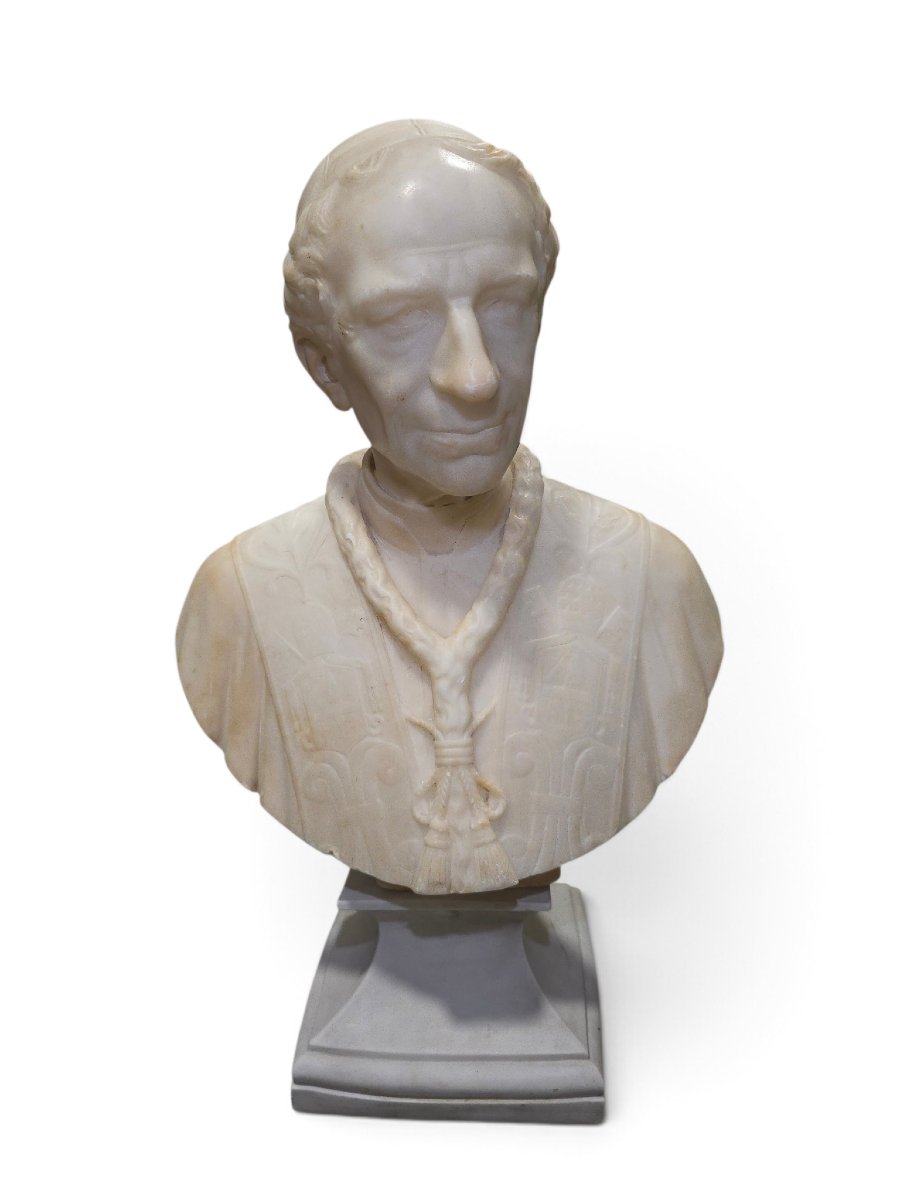
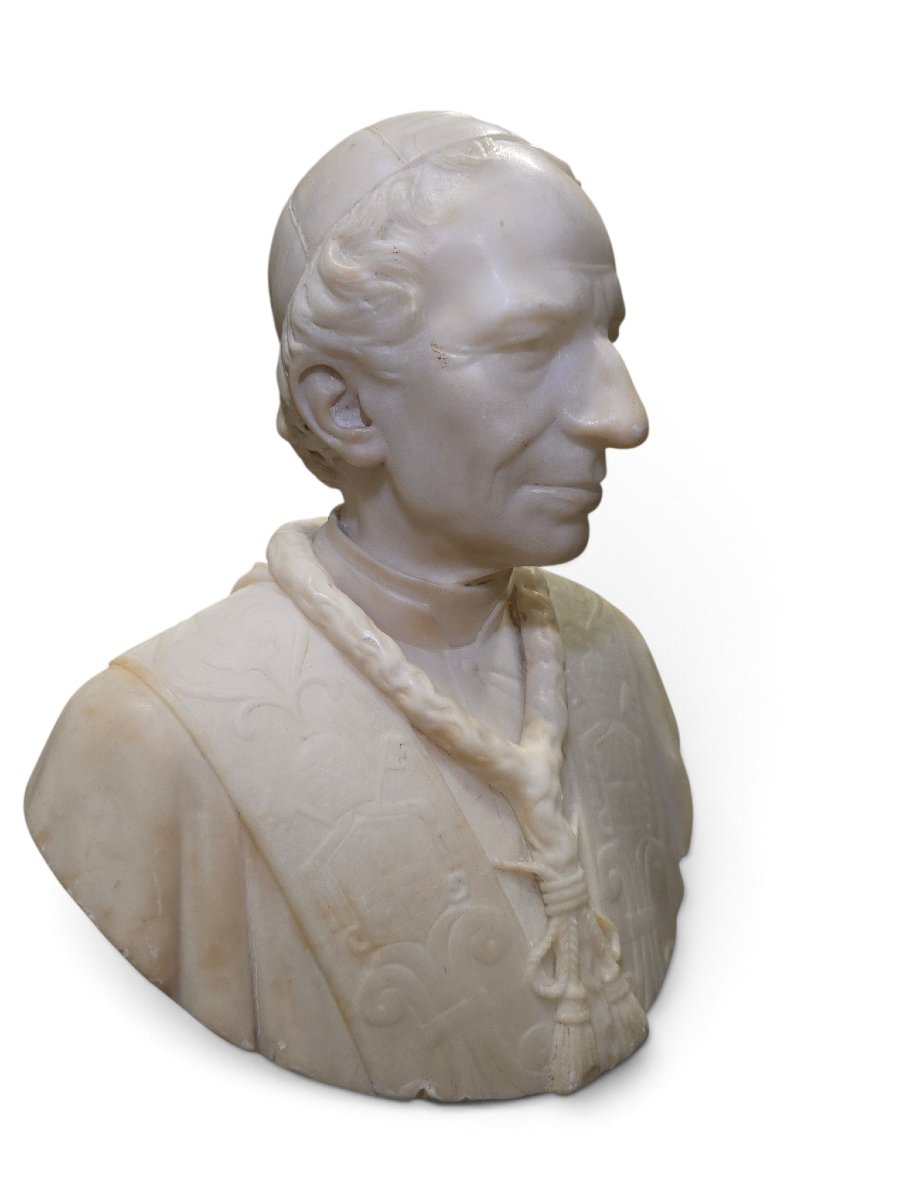
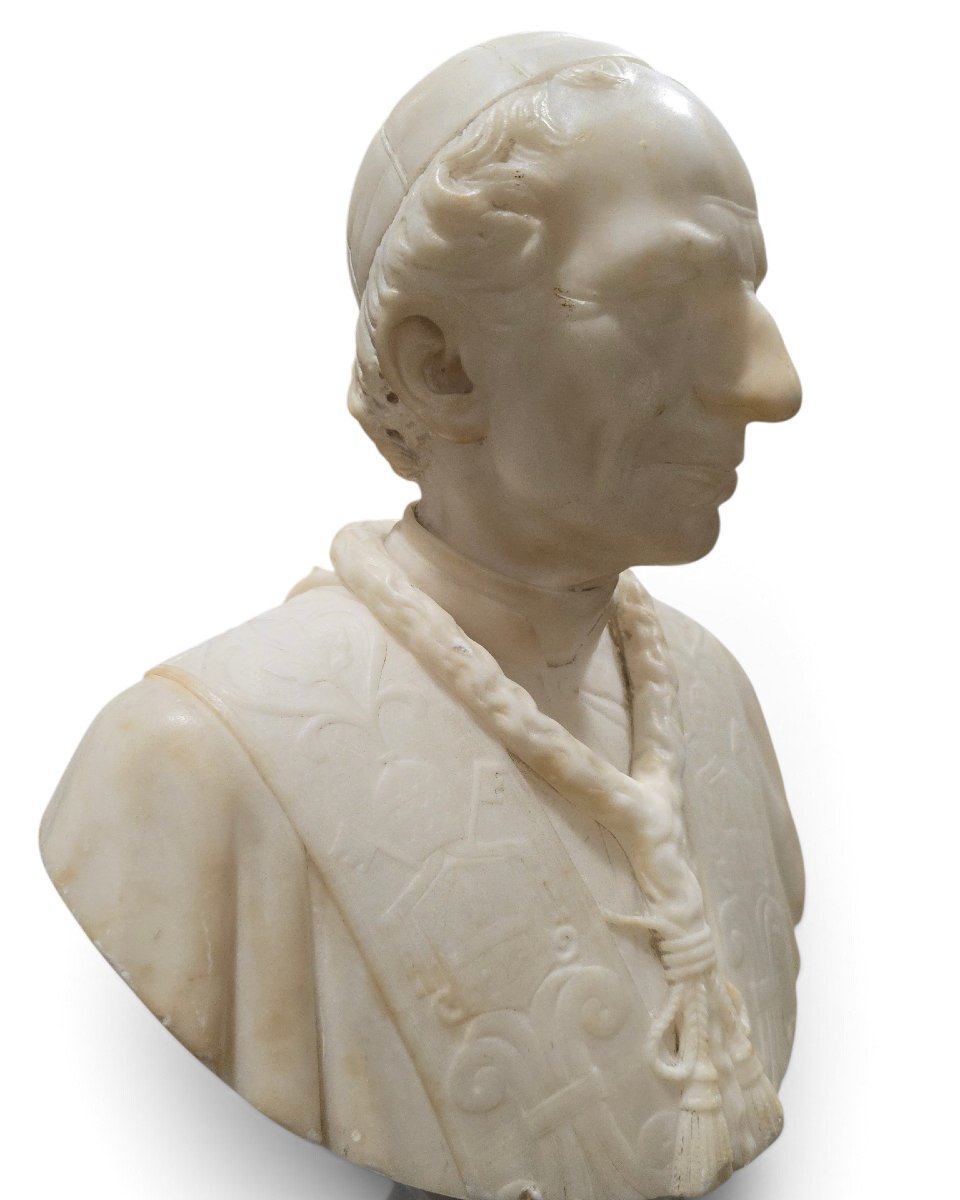
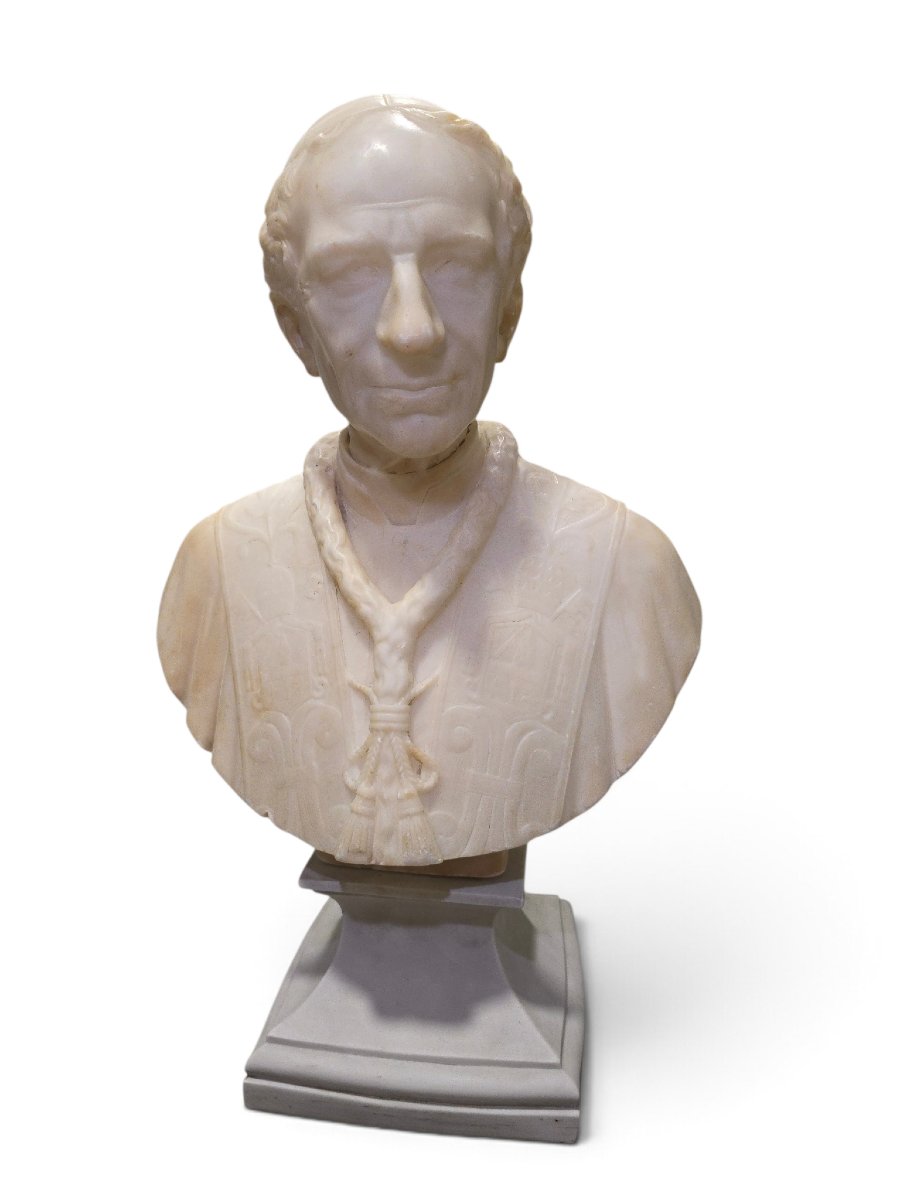
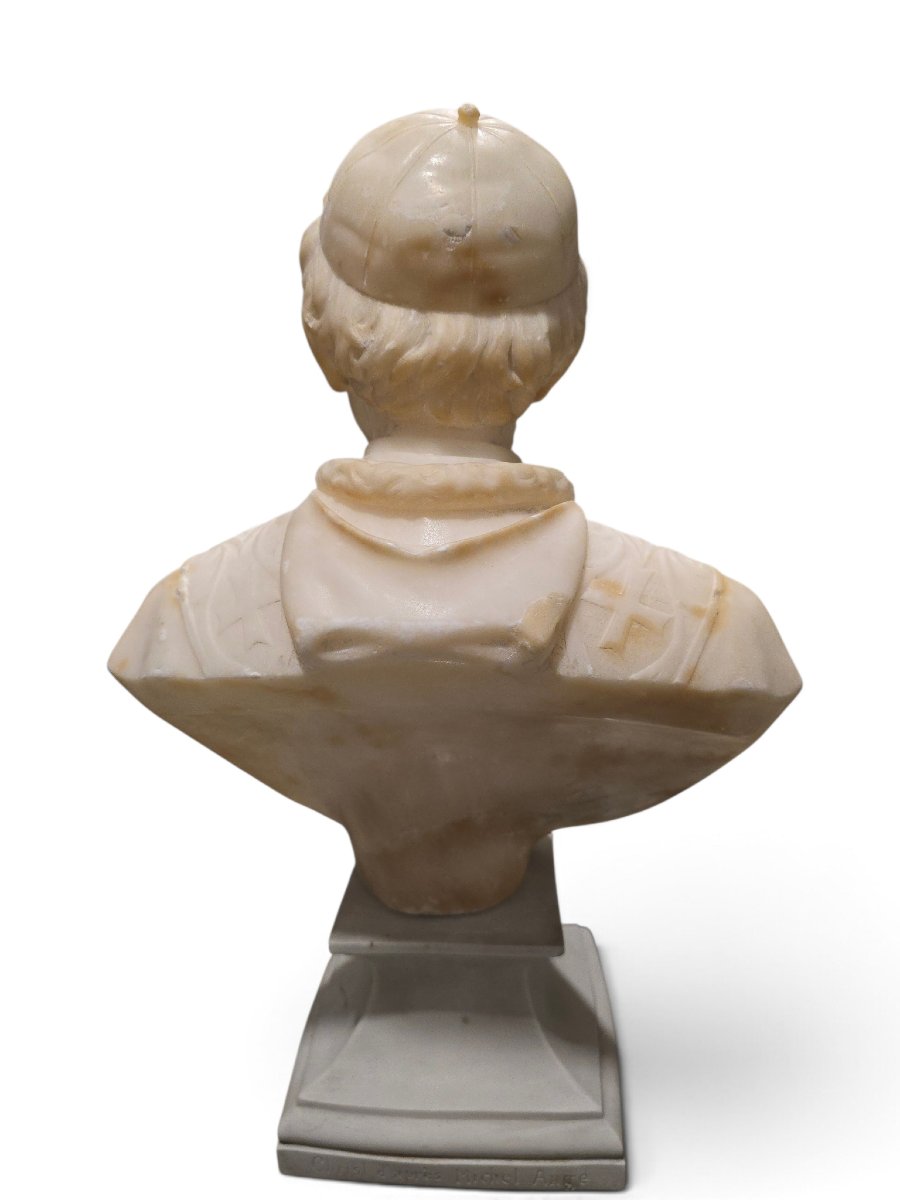
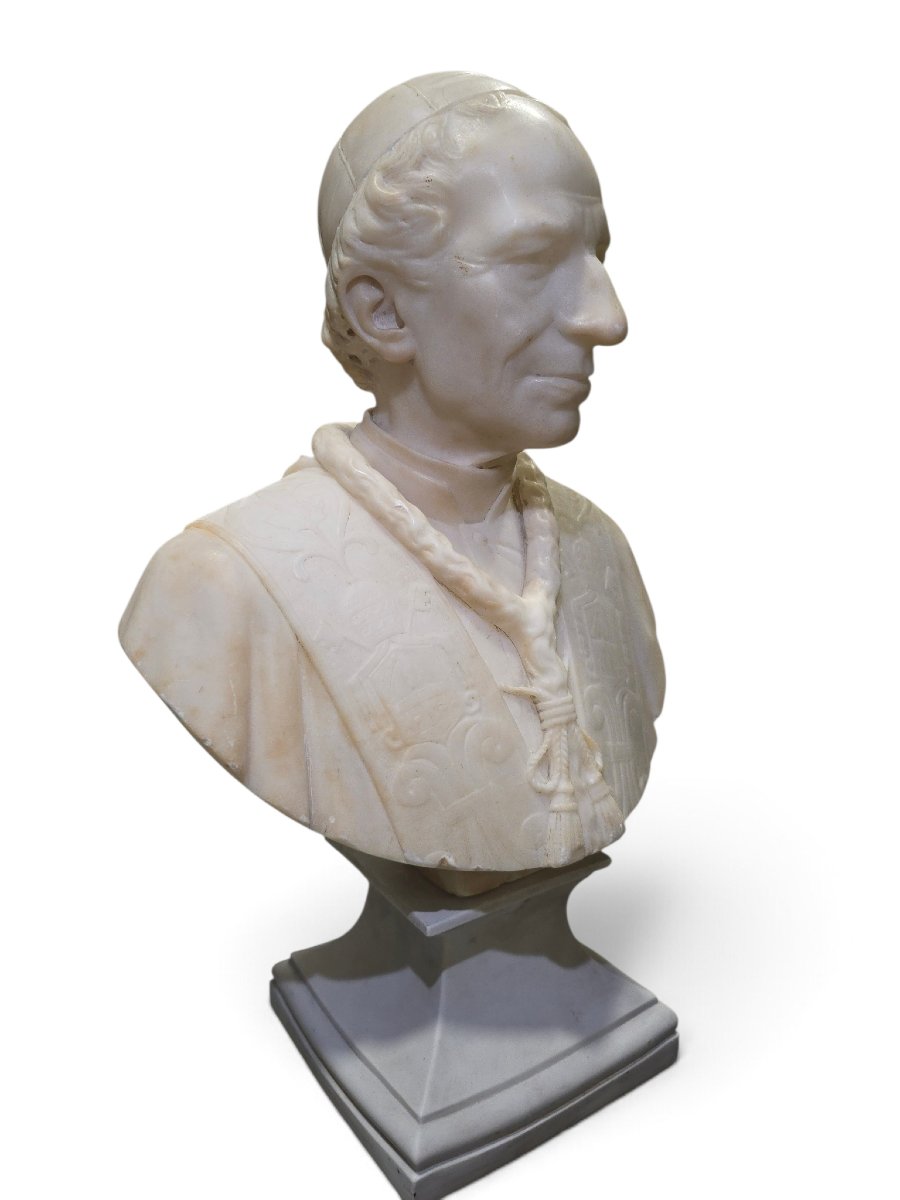


Alabaster Bust Of Pope Leo XIII (19th Century) On A Porcelain Pedestal From A Later Period
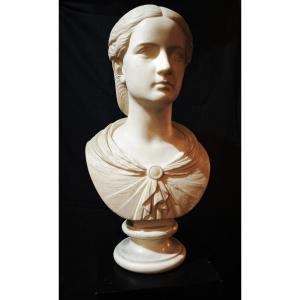
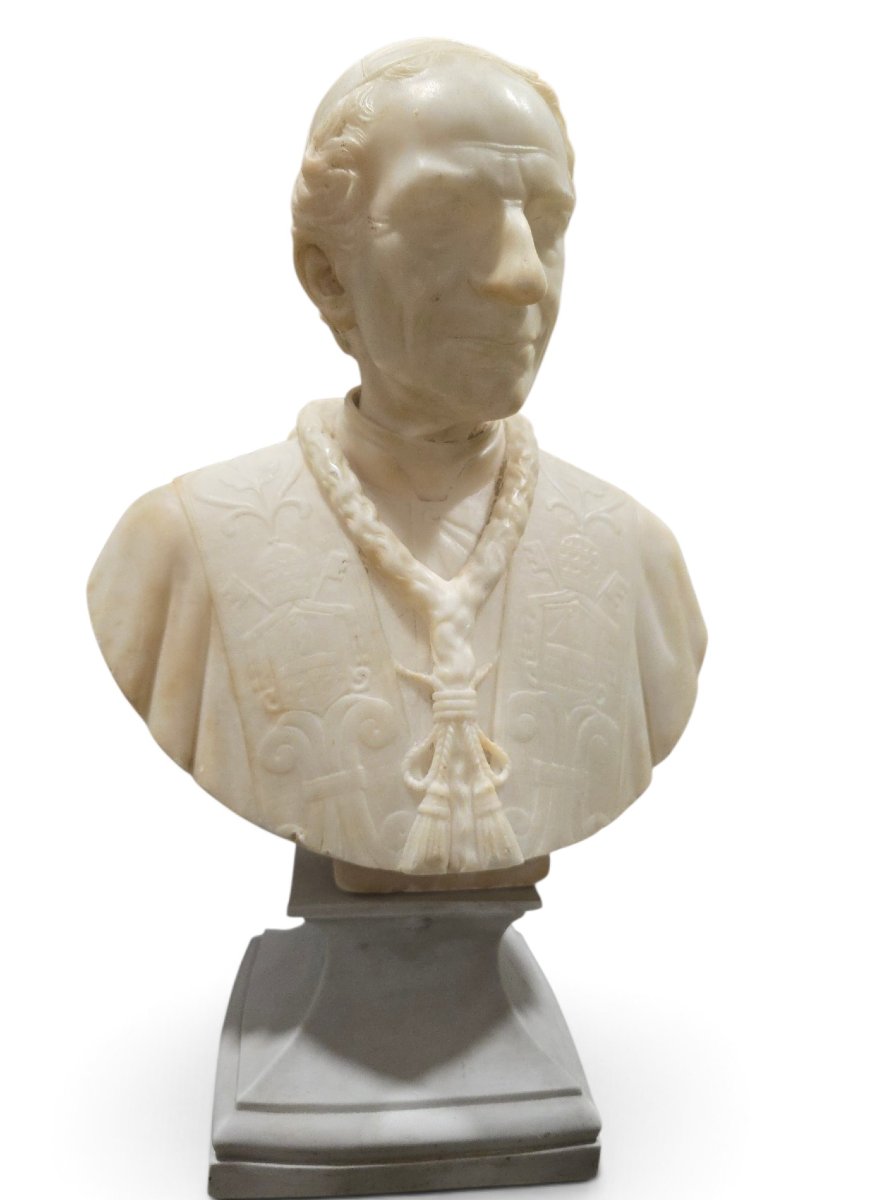
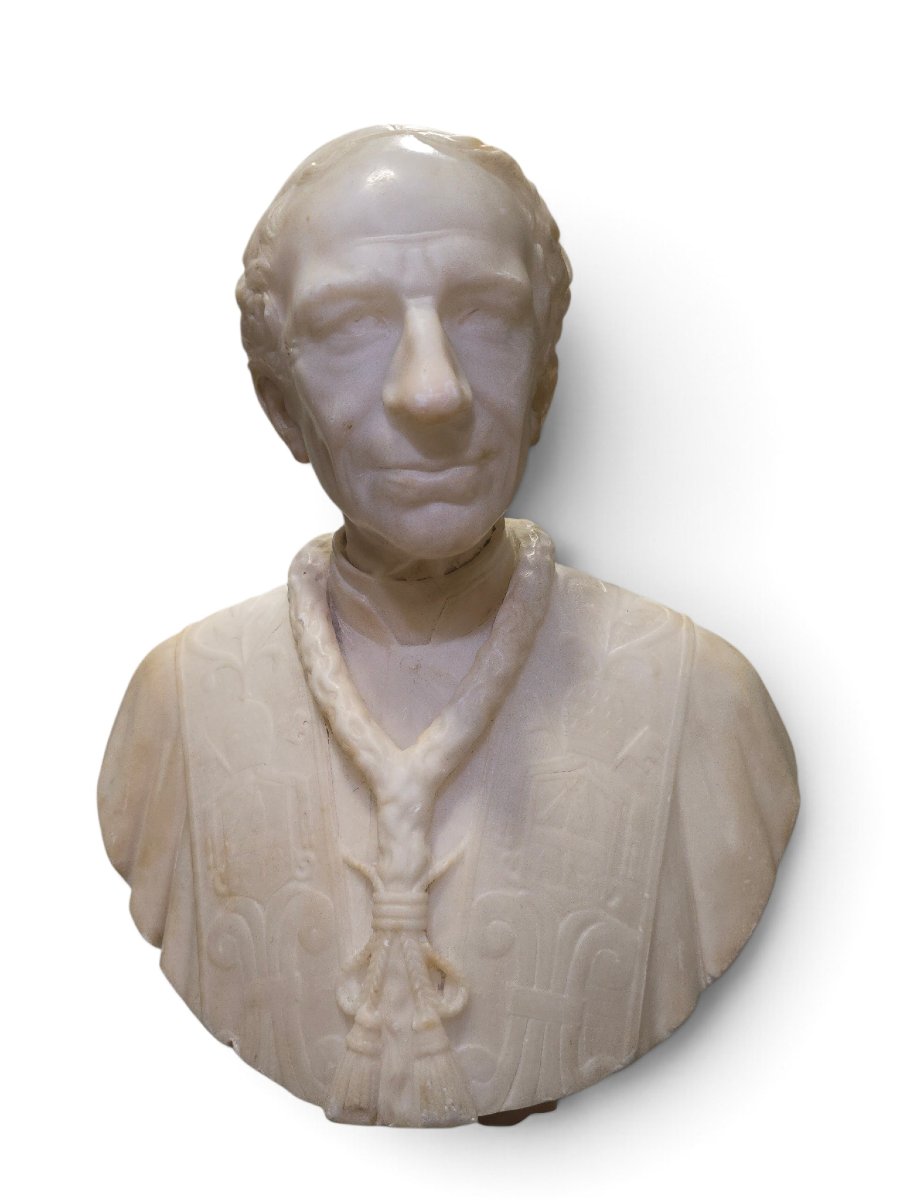
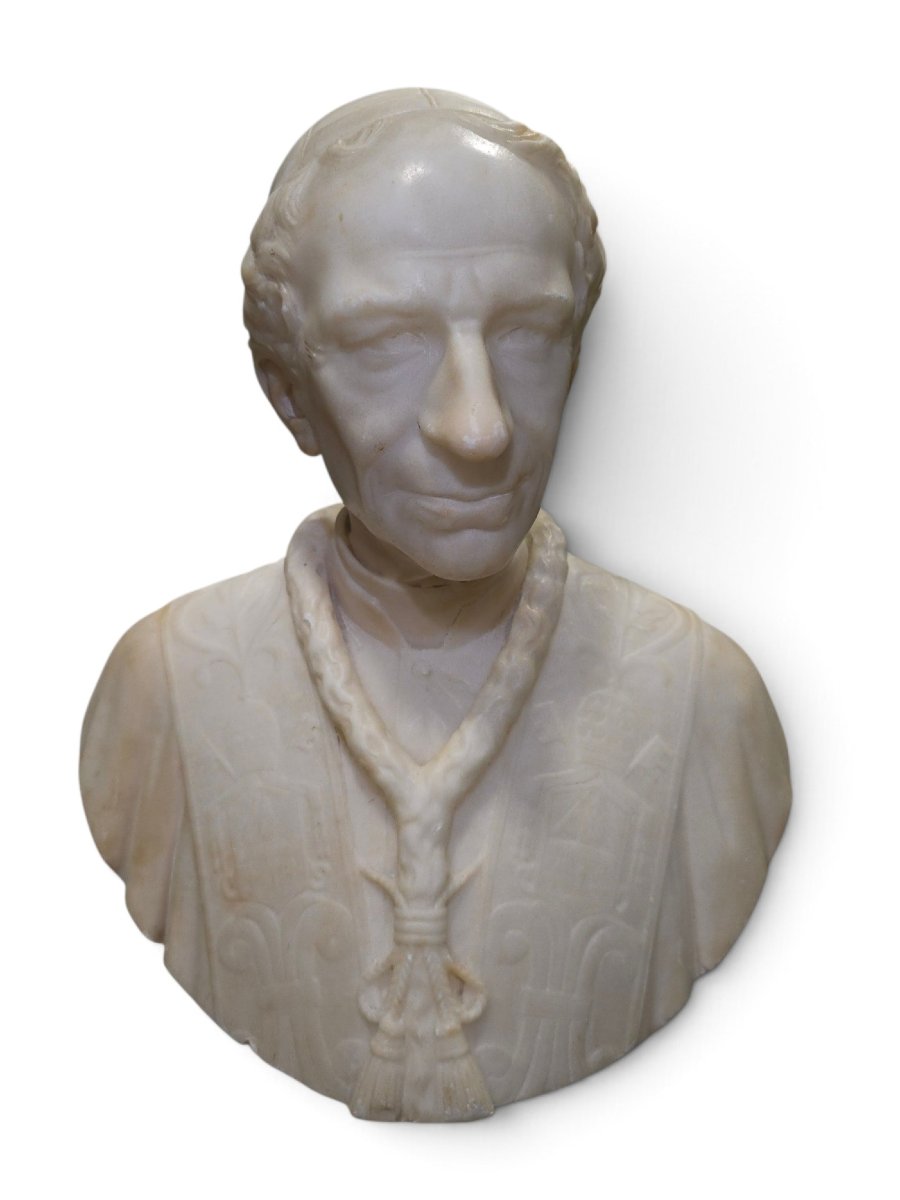
An imposing 19th-century carved alabaster bust depicting Pope Leo XIII (1810–1903), one of the most influential popes of the late 19th century.
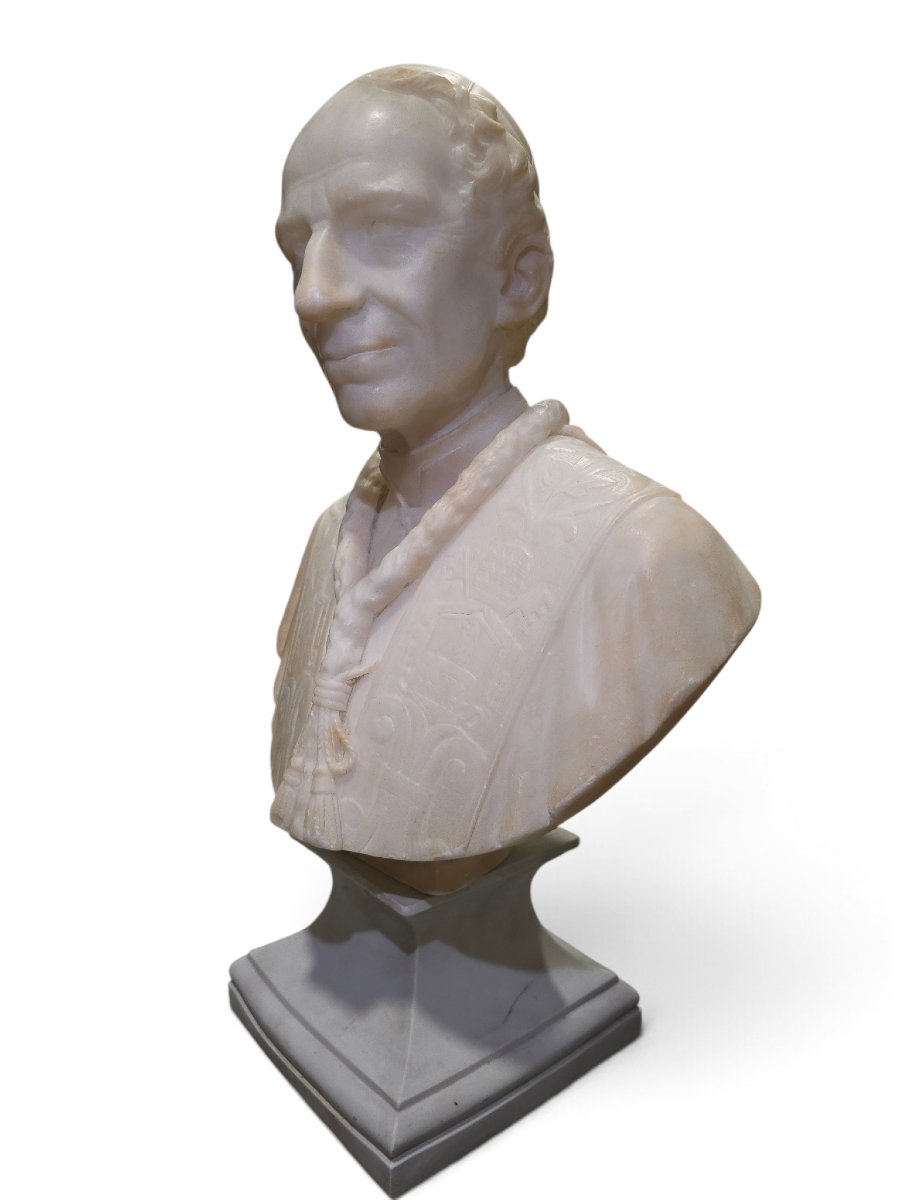
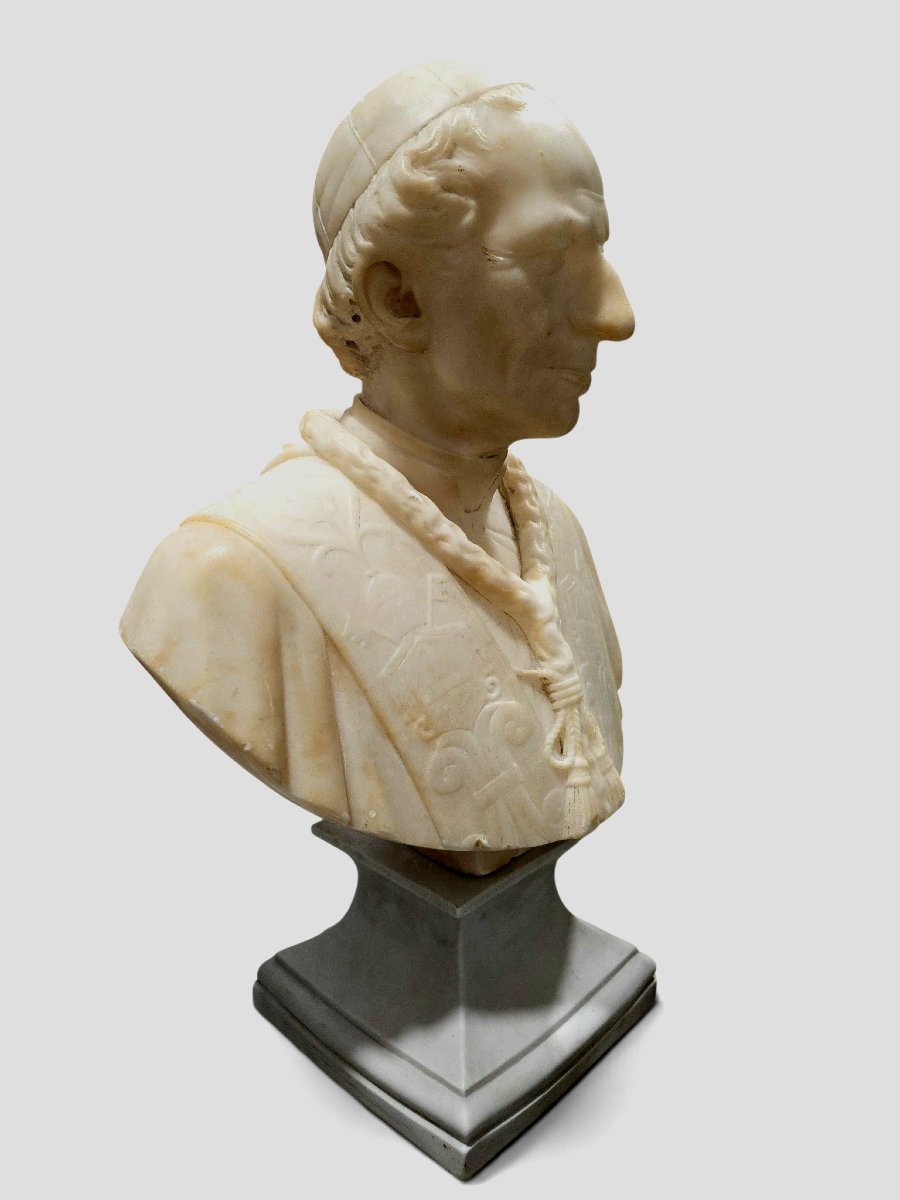
The pope is depicted in ceremonial ecclesiastical vestments, with the dignified and solemn expression characteristic of official papal portraits of that era. The sculptor carefully modeled the facial features and clothing, making use of the alabaster’s soft translucency and warm tones to give the work a refined and realistic appearance.
Born Vincenzo Gioacchino Pecci, Leo XIII was elected pope in 1878 and held the papal office until his death in 1903. His long pontificate coincided with a period of profound political, social, and cultural transformations in Europe; his portraits are therefore both important historical documents and objects of devotion or decoration.
The bust rests on a later-period porcelain pedestal, providing an elegant display and added height, while visually distinguishing itself from the original 19th-century sculpture.
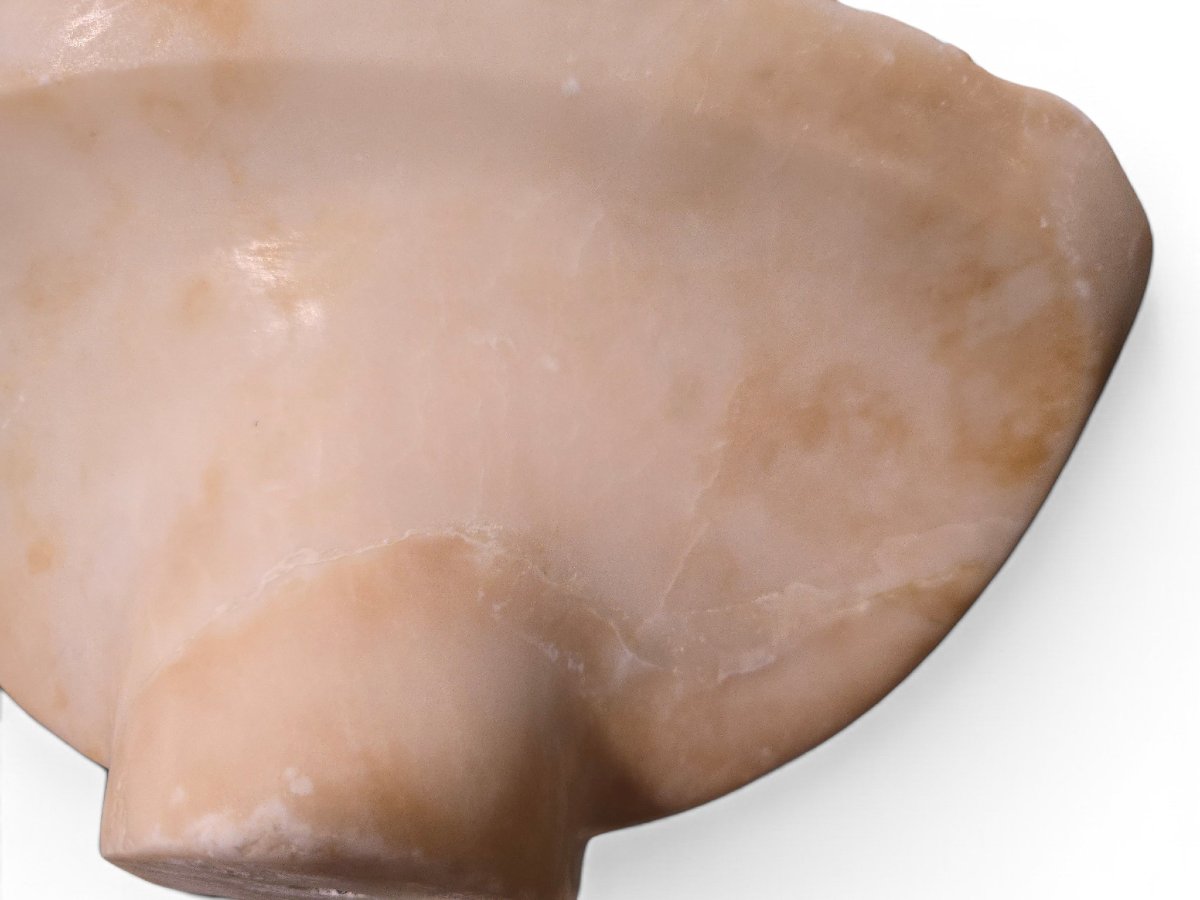
The alabaster has a few small chips and signs of age, consistent with the fragility of the material and the sculpture’s considerable age. These imperfections are part of its history and are visible in the photographs.
An imposing and highly decorative piece of 19th-century ecclesiastical sculpture, particularly appealing to collectors of Vatican memorabilia, religious art, sculpted portraits, and historic European decorative arts.
Subject:
Pope Leo XIII (1810–1903)
Period:
19th century
Material:
Carved alabaster
Pedestal:
Porcelain pedestal from a later period
Bust dimensions:
Height: 48 cm (18.9 in)
Width: 30 cm (11.8 in)
Depth: 20 cm (7.9 in)
Dimensions of the pedestal:
Height: 16 cm (6.3 in)
Width: 16 cm (6.3 in)
Depth: 10 cm (3.9 in)
Condition:
Good overall condition for an antique piece. The alabaster has small chips, cracks, and signs of wear consistent with its age and the delicate nature of the material. The porcelain pedestal is a later addition and is not an integral part of the original bust. Please examine the photographs carefully for a detailed assessment of the work’s condition.
Keywords:
Pope Leo XIII, alabaster bust, papal bust, Vatican, Catholic art, ecclesiastical sculpture, religious sculpture, 19th-century sculpture, Italian alabaster, Florin Antiques.
The pope is depicted in ceremonial ecclesiastical vestments, with the dignified and solemn expression characteristic of official papal portraits of that era. The sculptor carefully modeled the facial features and clothing, making use of the alabaster’s soft translucency and warm tones to give the work a refined and realistic appearance.
Born Vincenzo Gioacchino Pecci, Leo XIII was elected pope in 1878 and held the papal office until his death in 1903. His long pontificate coincided with a period of profound political, social, and cultural transformations in Europe; his portraits are therefore both important historical documents and objects of devotion or decoration.
The bust rests on a later-period porcelain pedestal, providing an elegant display and added height, while visually distinguishing itself from the original 19th-century sculpture.
The alabaster has a few small chips and signs of age, consistent with the fragility of the material and the sculpture’s considerable age. These imperfections are part of its history and are visible in the photographs.
An imposing and highly decorative piece of 19th-century ecclesiastical sculpture, particularly appealing to collectors of Vatican memorabilia, religious art, sculpted portraits, and historic European decorative arts.
Subject:
Pope Leo XIII (1810–1903)
Period:
19th century
Material:
Carved alabaster
Pedestal:
Porcelain pedestal from a later period
Bust dimensions:
Height: 48 cm (18.9 in)
Width: 30 cm (11.8 in)
Depth: 20 cm (7.9 in)
Dimensions of the pedestal:
Height: 16 cm (6.3 in)
Width: 16 cm (6.3 in)
Depth: 10 cm (3.9 in)
Condition:
Good overall condition for an antique piece. The alabaster has small chips, cracks, and signs of wear consistent with its age and the delicate nature of the material. The porcelain pedestal is a later addition and is not an integral part of the original bust. Please examine the photographs carefully for a detailed assessment of the work’s condition.
Keywords:
Pope Leo XIII, alabaster bust, papal bust, Vatican, Catholic art, ecclesiastical sculpture, religious sculpture, 19th-century sculpture, Italian alabaster, Florin Antiques.
2 000 €
Period: 19th century
Style: Napoleon 3rd
Condition: Good condition
Material: Alabaster
Reference (ID): 1824179
Availability: In stock
Print