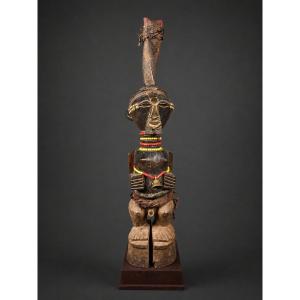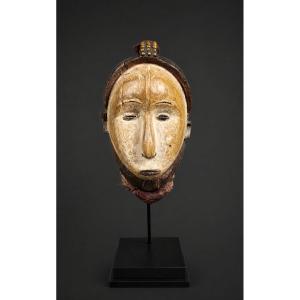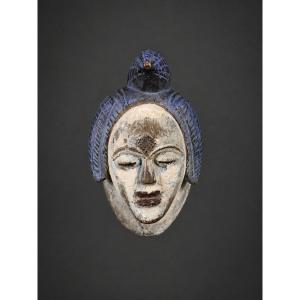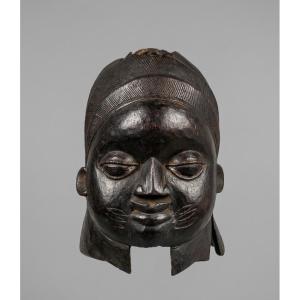


Chokwe Luchazi Kalulu Mask
Origin: Democratic Republic of the Congo
Tribe Name: Chokwe
Material: Wood, fabric
Dimensions: H 40 cm, W 32
Shipping Method: Colissimo/DHL within 24–48 business hours.
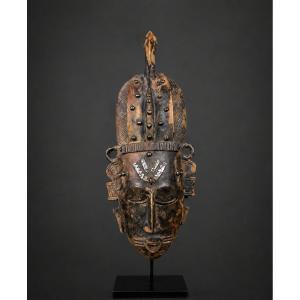
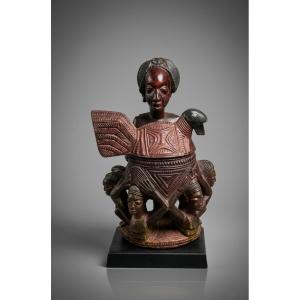
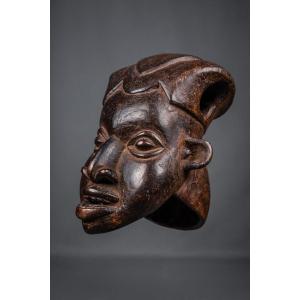
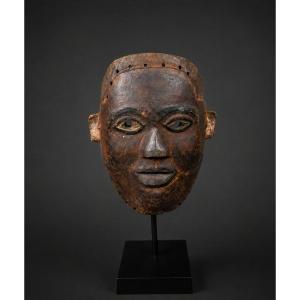
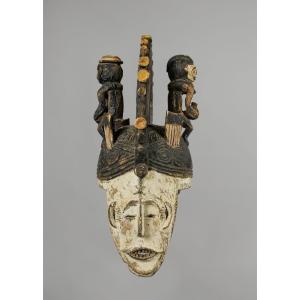
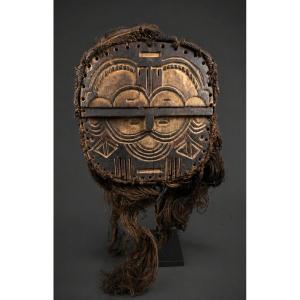
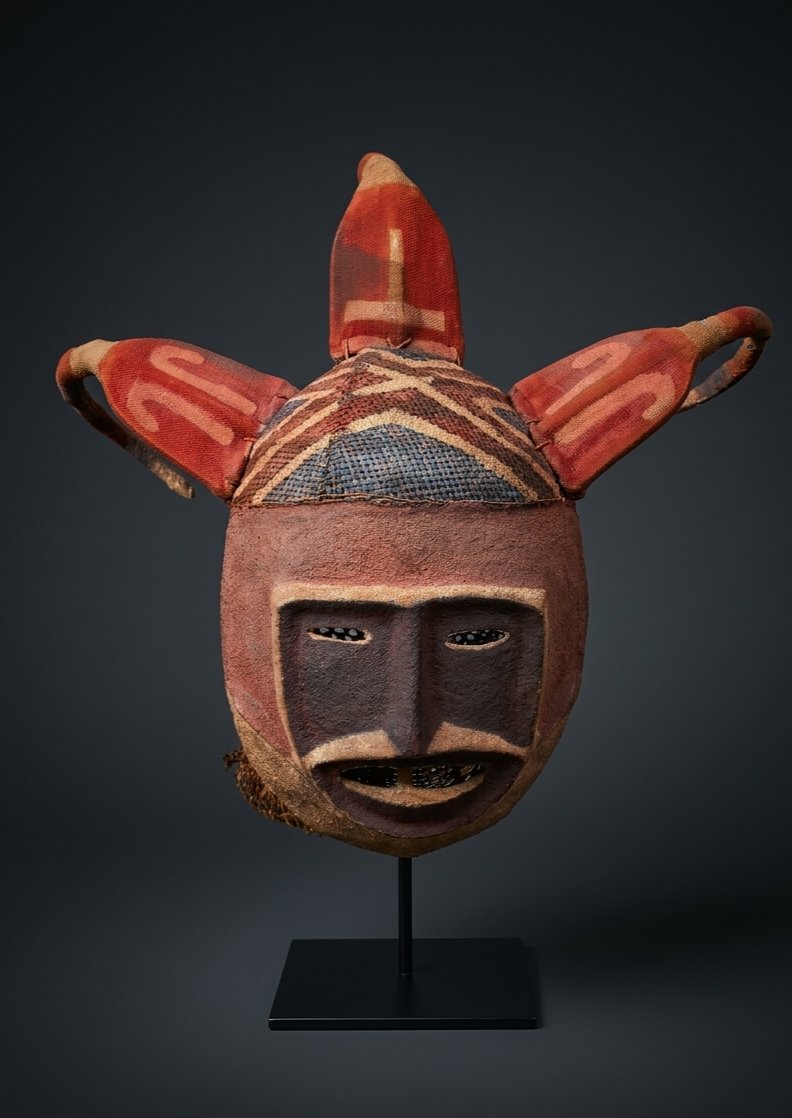
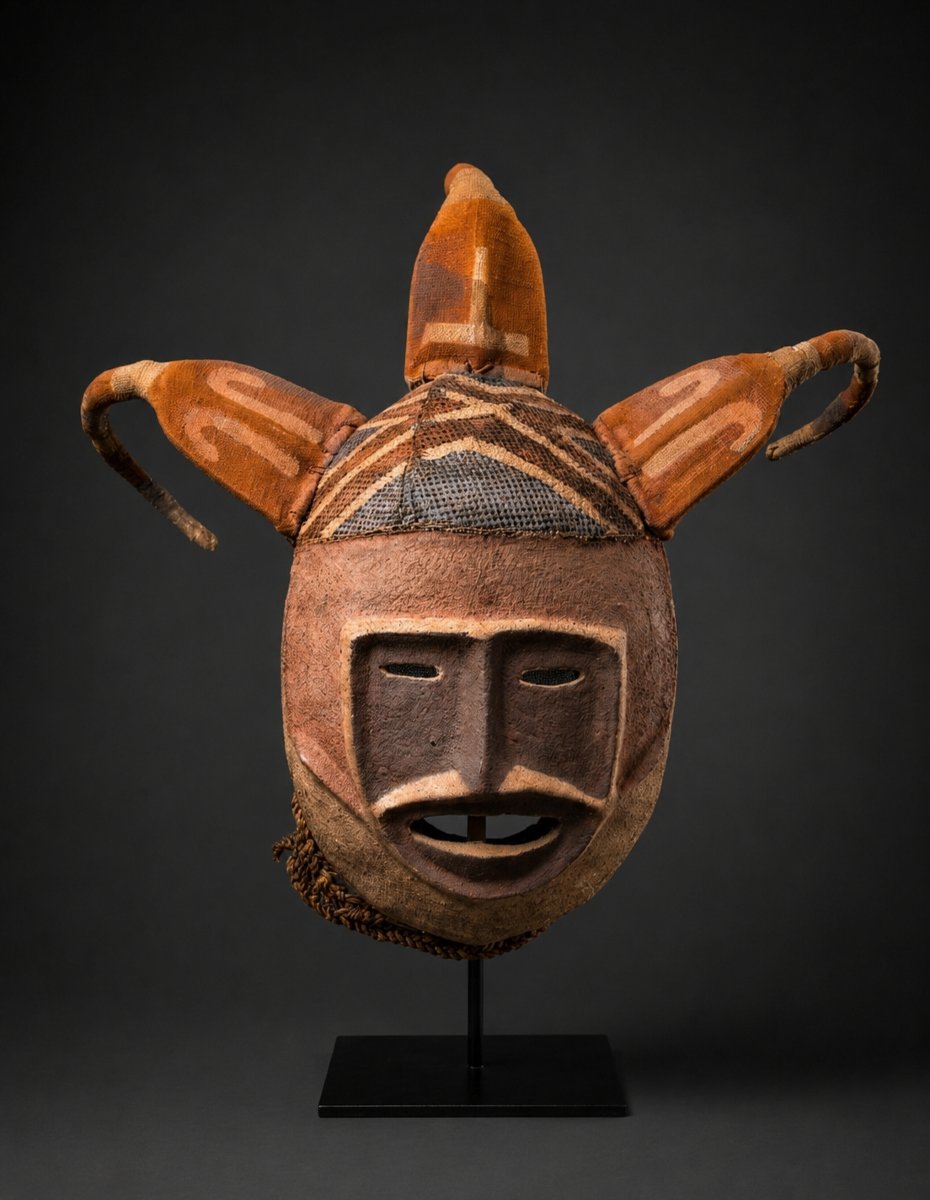
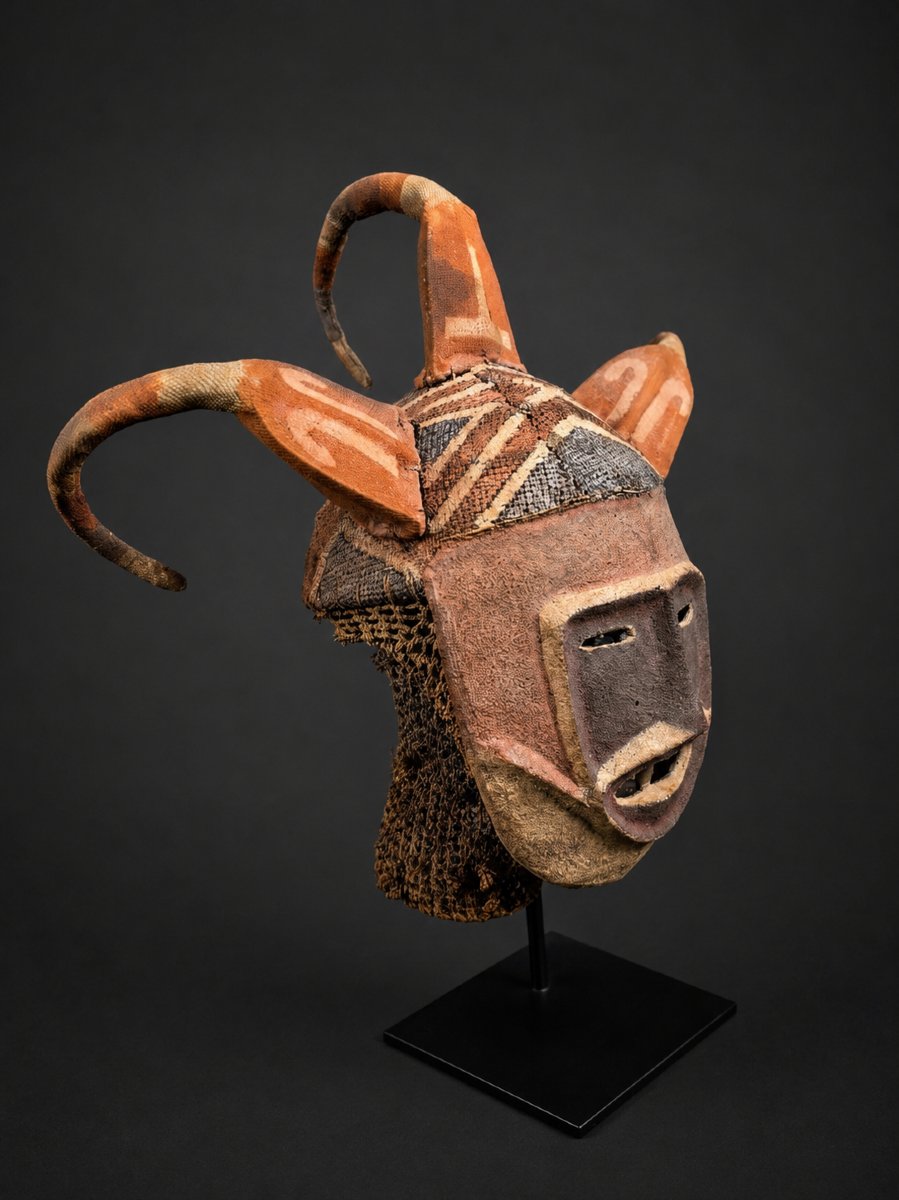
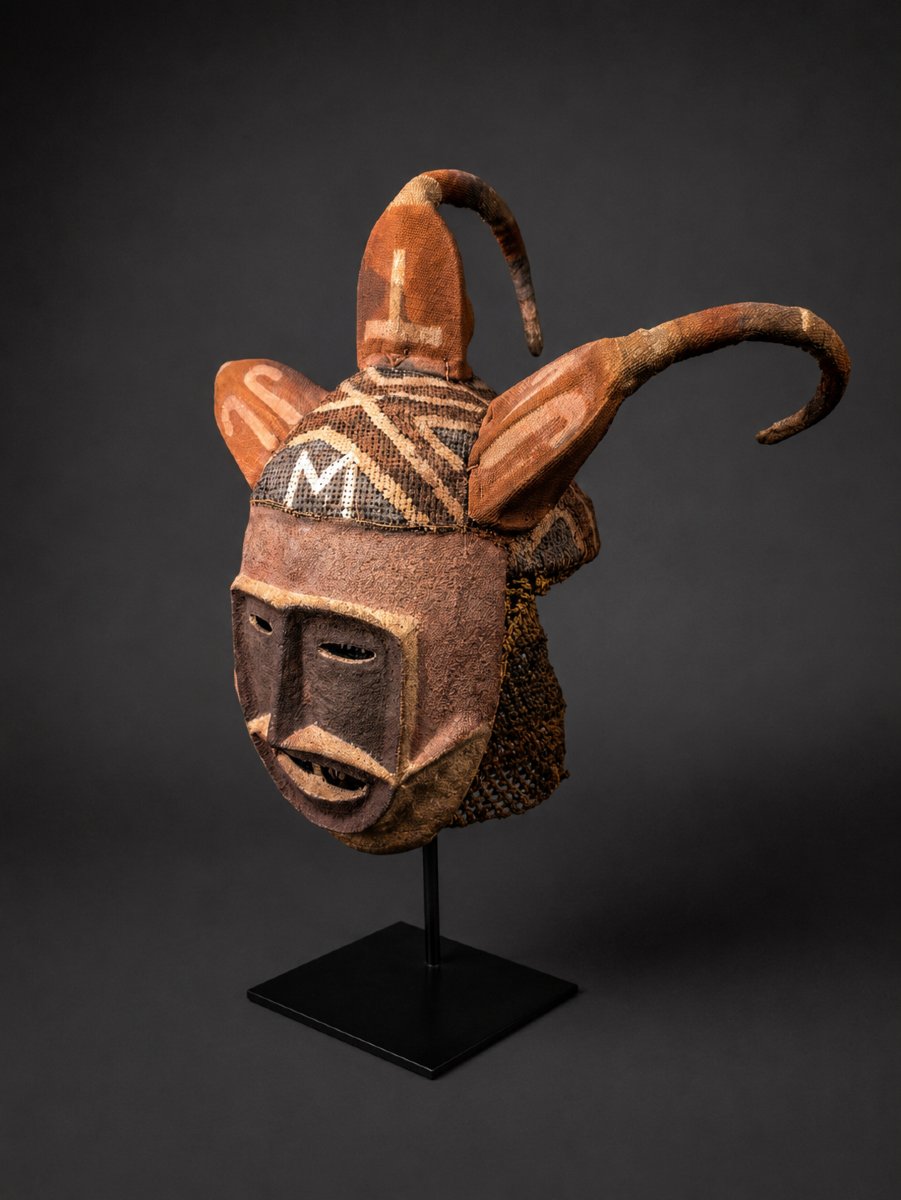
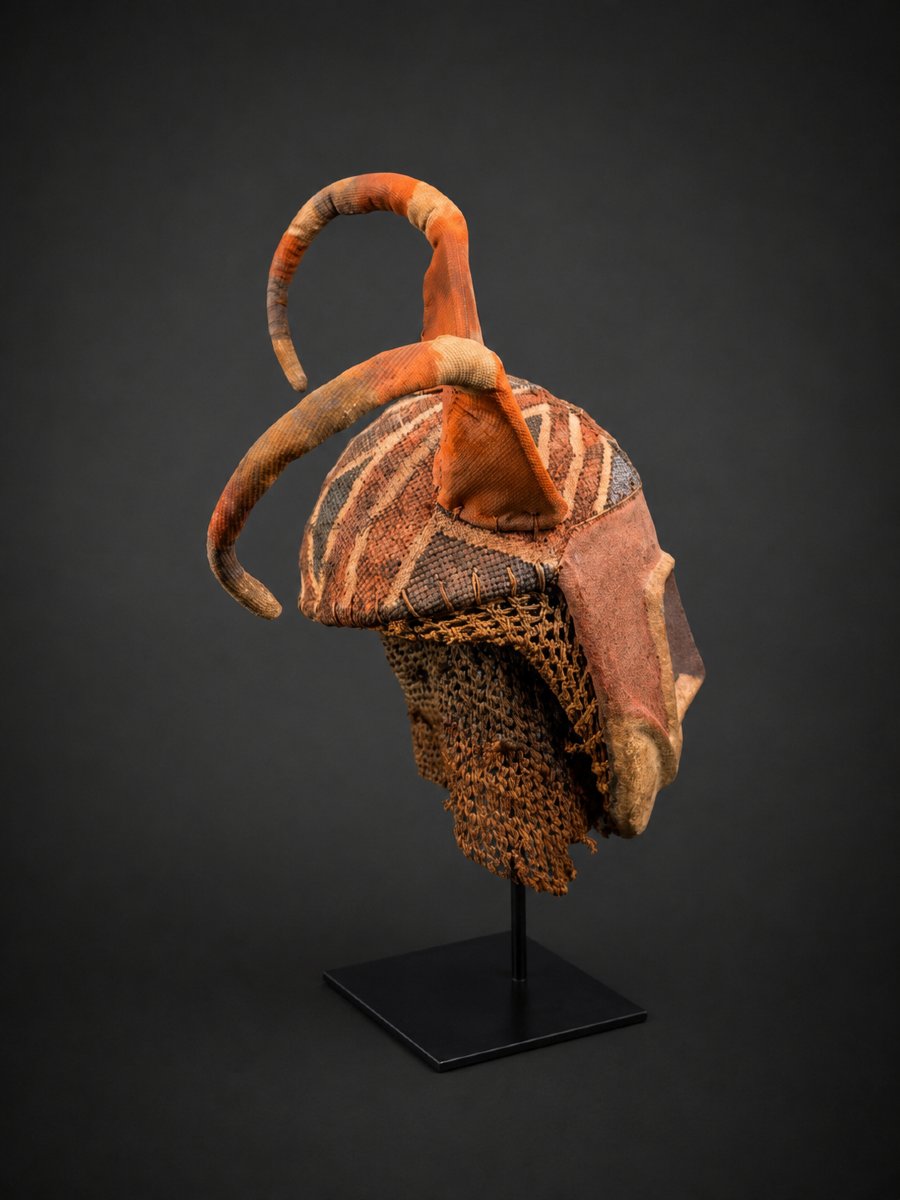
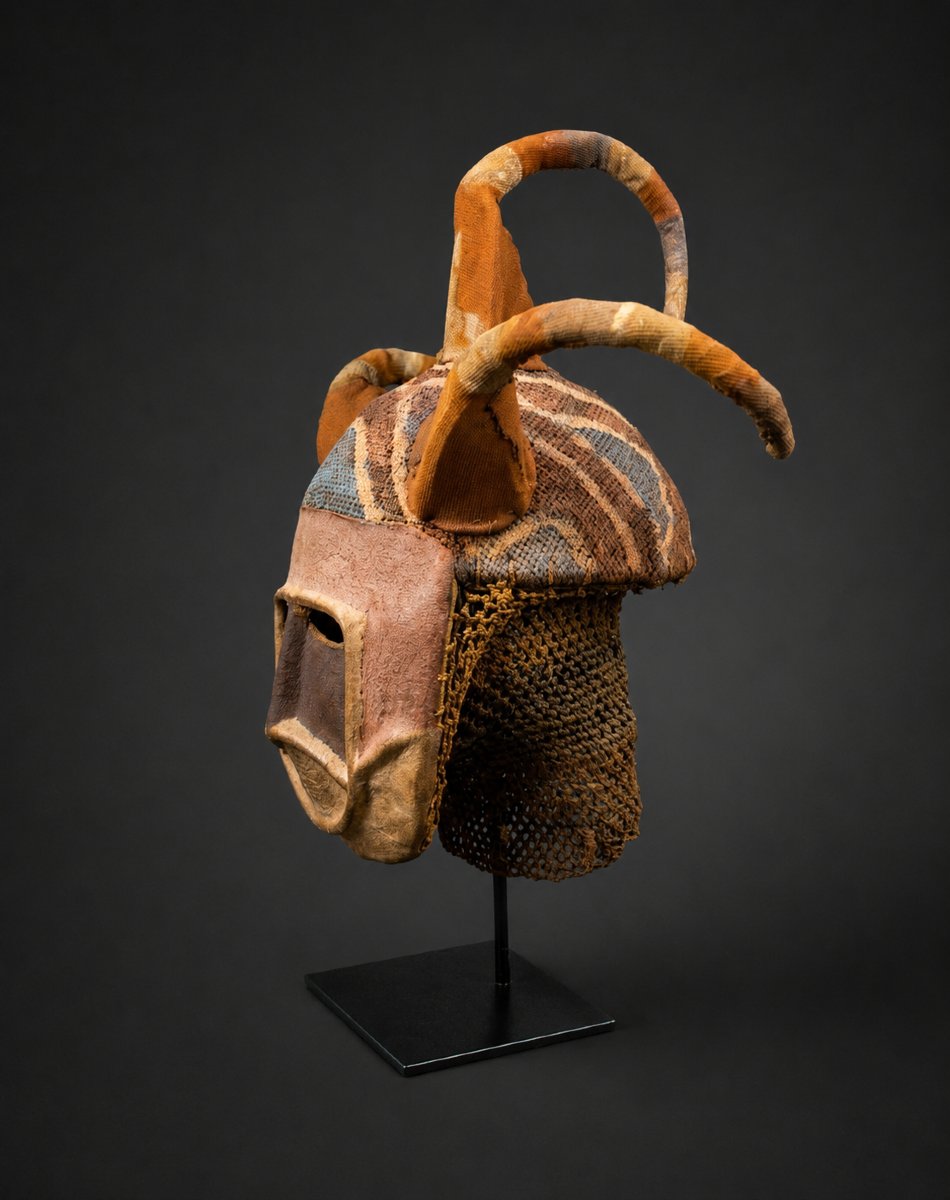
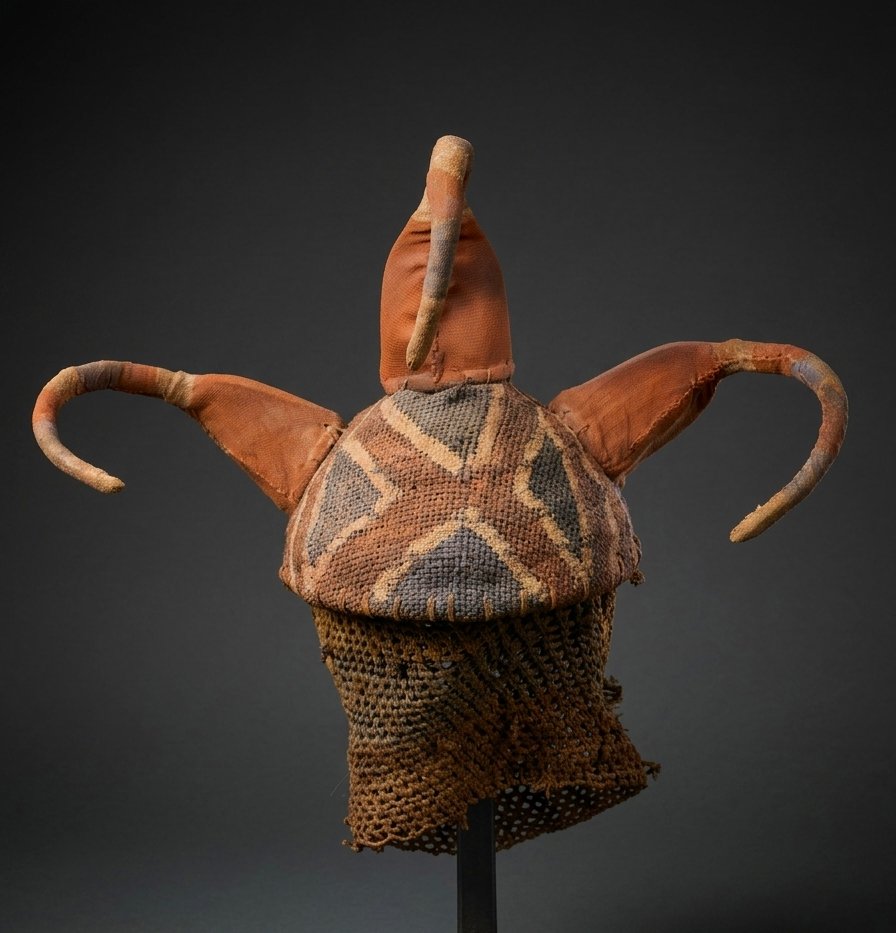
This Chokwe mask (originating from Central Africa, primarily Angola and the Democratic Republic of the Congo) is distinguished by its richly detailed iconography and structure.Visual Description and MorphologyThe face (the facial mask):Crafted from or covered with a textured material (resin or beaten bark coated with pigments), the face features brown and ochre tones.The features are framed by a rectangular, protruding border around the eyes and nose—a stylistic trait characteristic of certain masks from the Chokwé culture.The eyes are oblong in shape, open to allow the wearer to see, and the slightly parted mouth reveals a row of stylized teeth.The headdress and top ornaments:The top of the mask is crowned by a complex textile structure richly decorated with woven geometric patterns (crosshatching, contrasting stripes).It features a central vertical protrusion shaped like a horn or crest, as well as two lateral horns curved backward and tapering at their tips.The back and sides of the mask extend into a large hood or collar made of woven plant fibers (rust-brown mesh), designed to completely conceal the dancer’s head and neck during rituals.Cultural ContextMasks in the Chokwé tradition (such as the Mwana Pwo or Cikungu masks) play a central role in initiation ceremonies, fertility rituals, and celebrations related to traditional authority. The presence of the woven netting and horns reinforces the theatrical and spiritual dimension of these objects, which are worn during traditional dances.
Formerly in the collection of Galerie Figares, Spain
Tribe Name: Chokwe
Material: Wood, fabric
Dimensions: H 40 cm, W 32
Shipping Method: Colissimo/DHL within 24–48 business hours.
This Chokwe mask (originating from Central Africa, primarily Angola and the Democratic Republic of the Congo) is distinguished by its richly detailed iconography and structure.Visual Description and MorphologyThe face (the facial mask):Crafted from or covered with a textured material (resin or beaten bark coated with pigments), the face features brown and ochre tones.The features are framed by a rectangular, protruding border around the eyes and nose—a stylistic trait characteristic of certain masks from the Chokwé culture.The eyes are oblong in shape, open to allow the wearer to see, and the slightly parted mouth reveals a row of stylized teeth.The headdress and top ornaments:The top of the mask is crowned by a complex textile structure richly decorated with woven geometric patterns (crosshatching, contrasting stripes).It features a central vertical protrusion shaped like a horn or crest, as well as two lateral horns curved backward and tapering at their tips.The back and sides of the mask extend into a large hood or collar made of woven plant fibers (rust-brown mesh), designed to completely conceal the dancer’s head and neck during rituals.Cultural ContextMasks in the Chokwé tradition (such as the Mwana Pwo or Cikungu masks) play a central role in initiation ceremonies, fertility rituals, and celebrations related to traditional authority. The presence of the woven netting and horns reinforces the theatrical and spiritual dimension of these objects, which are worn during traditional dances.
Formerly in the collection of Galerie Figares, Spain
2 000 €
Period: 20th century
Style: Tribal Art
Condition: Excellent condition
Material: Painted wood
Length: 40 cm
Width: 32 cm
Height: 40 cm
Reference (ID): 1807738
Availability: In stock
Print