THIS OBJECT WAS SOLD
18-karat Gold Cross Of Normandy From Rouen, First Empire Period (1809–1819). Gross Weight: 5 Grs
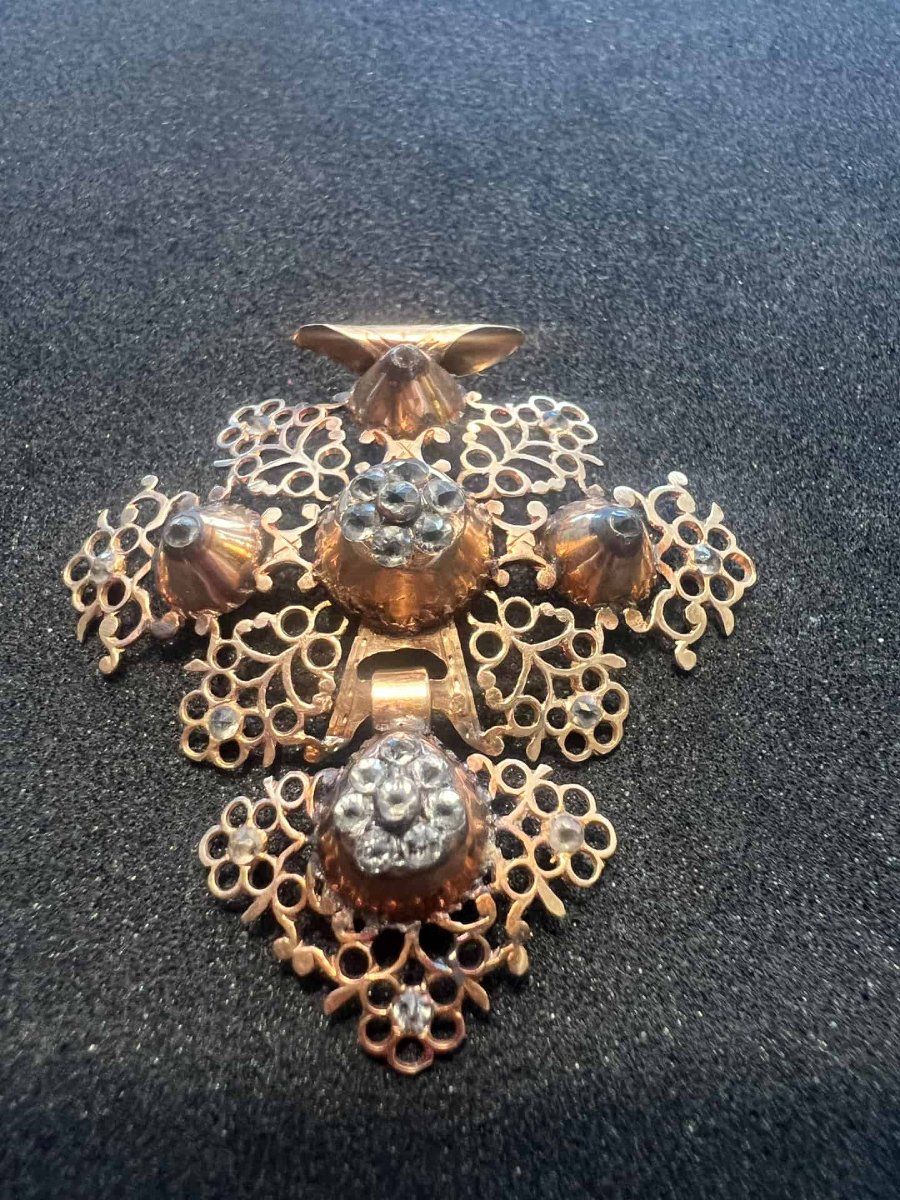
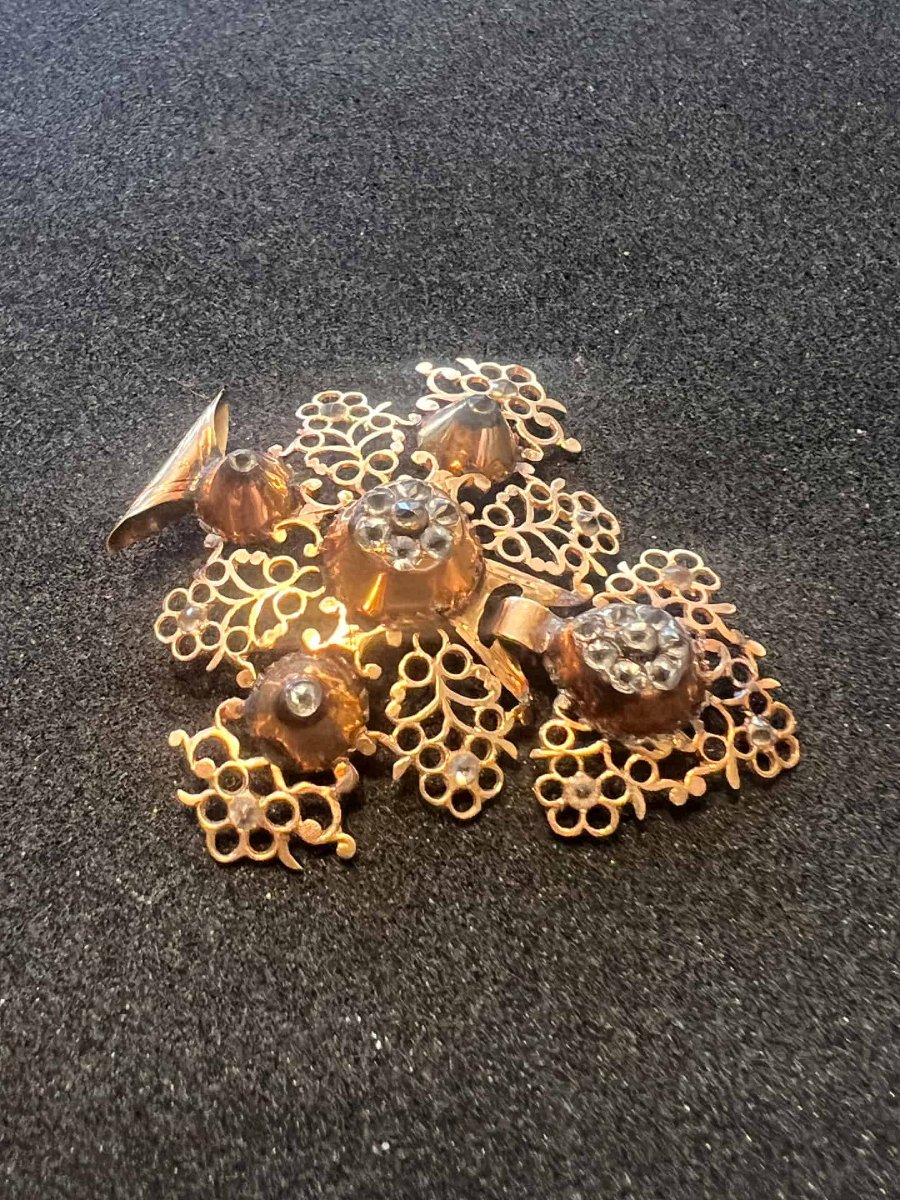
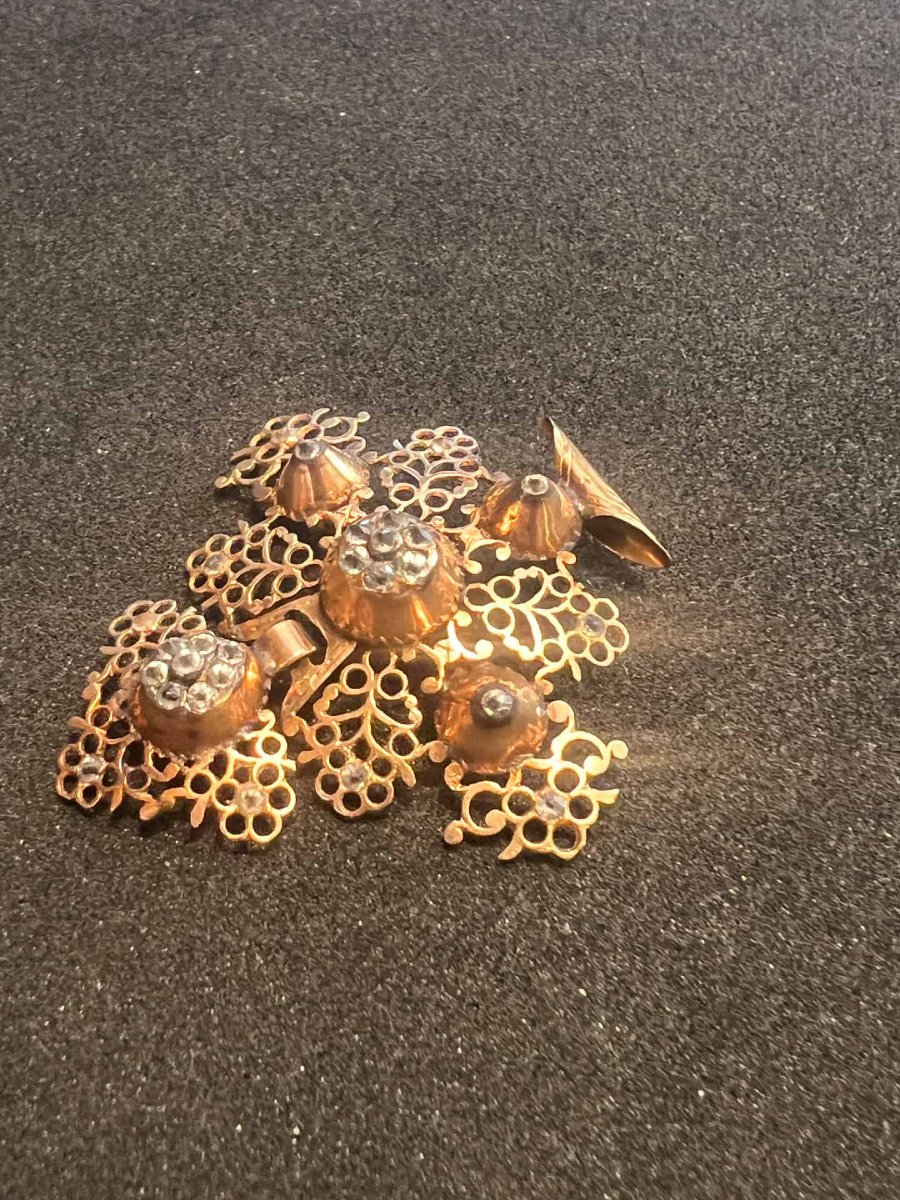
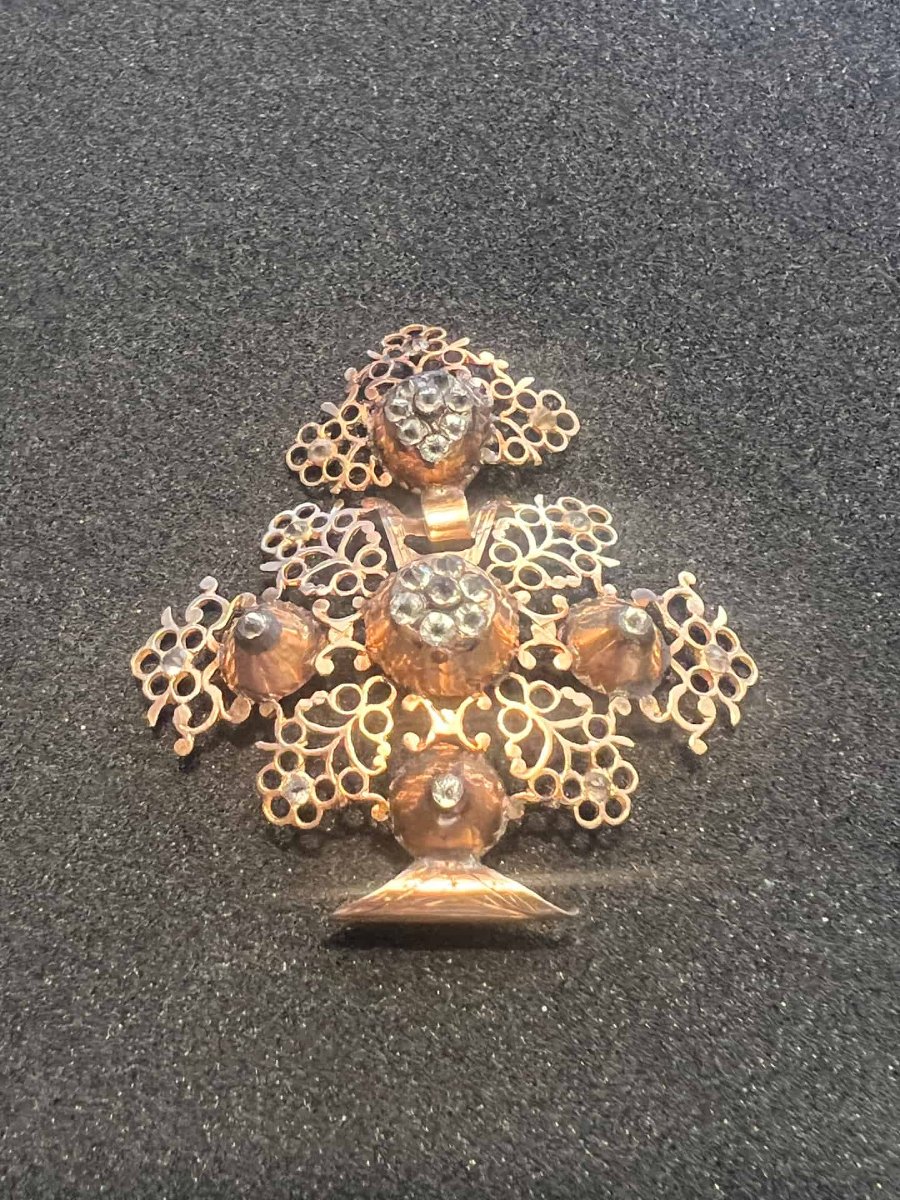
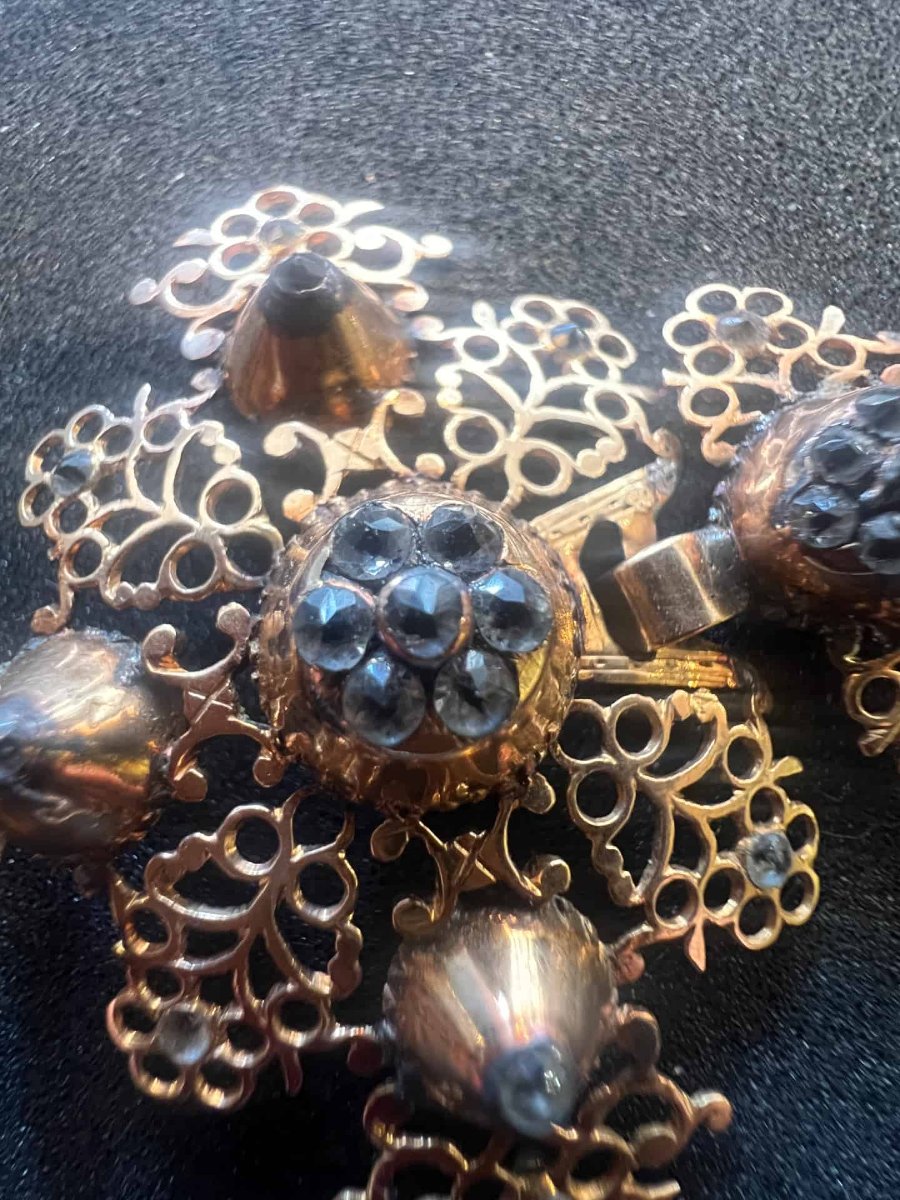
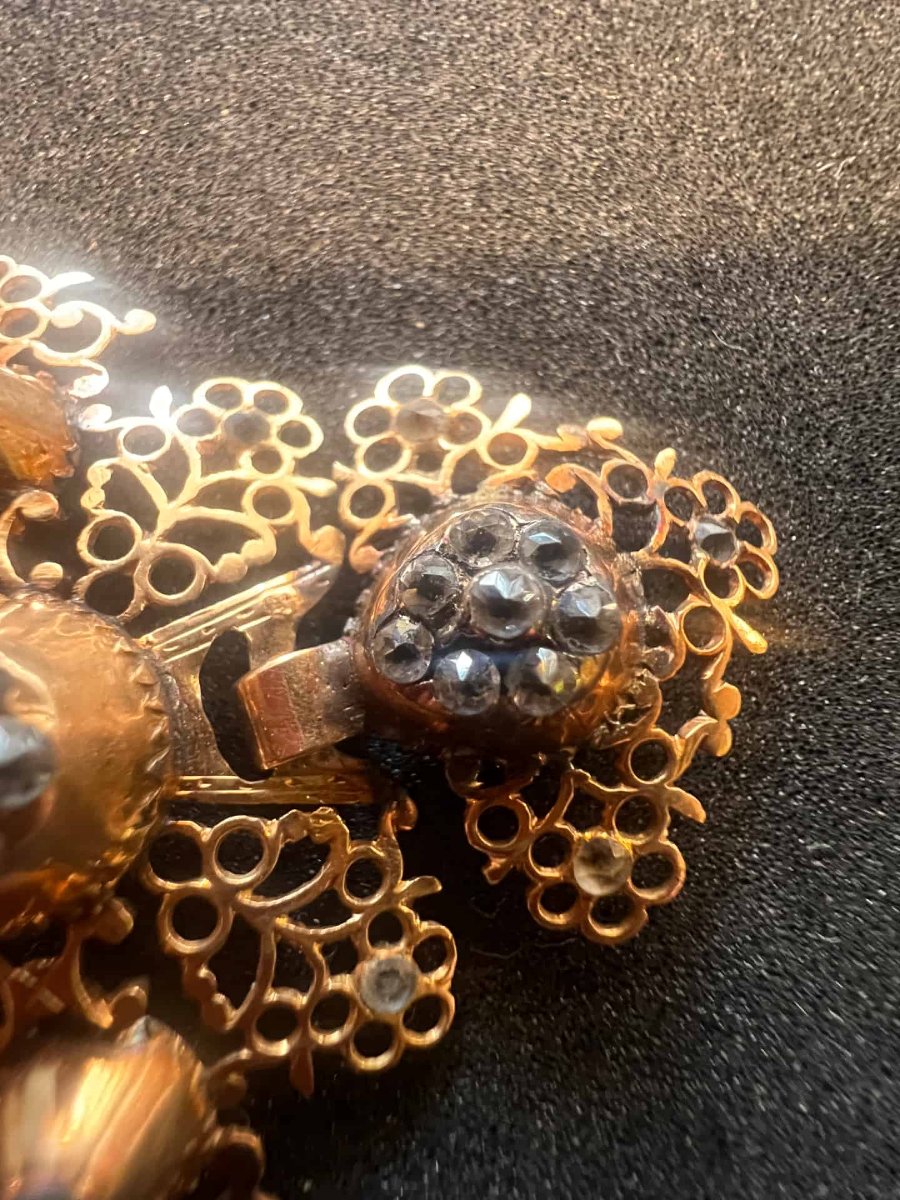
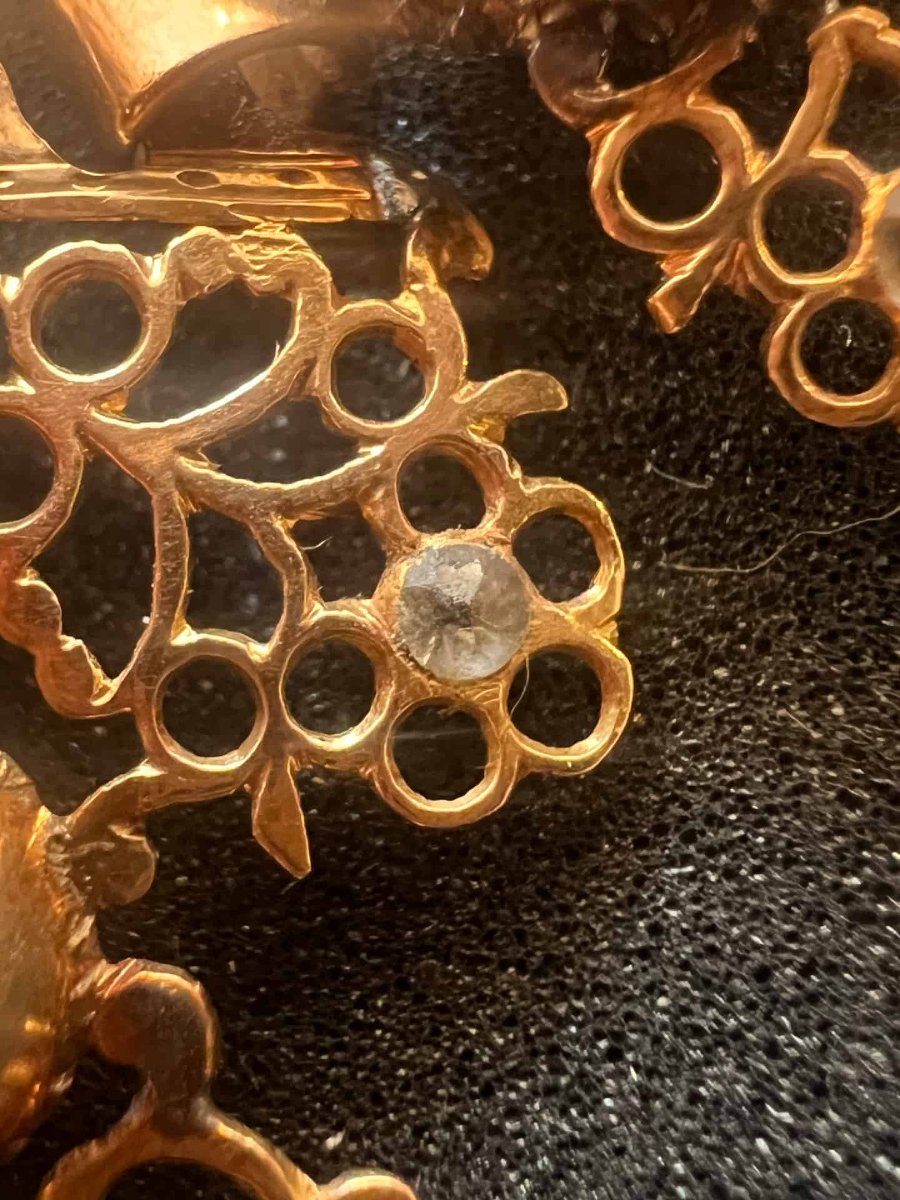
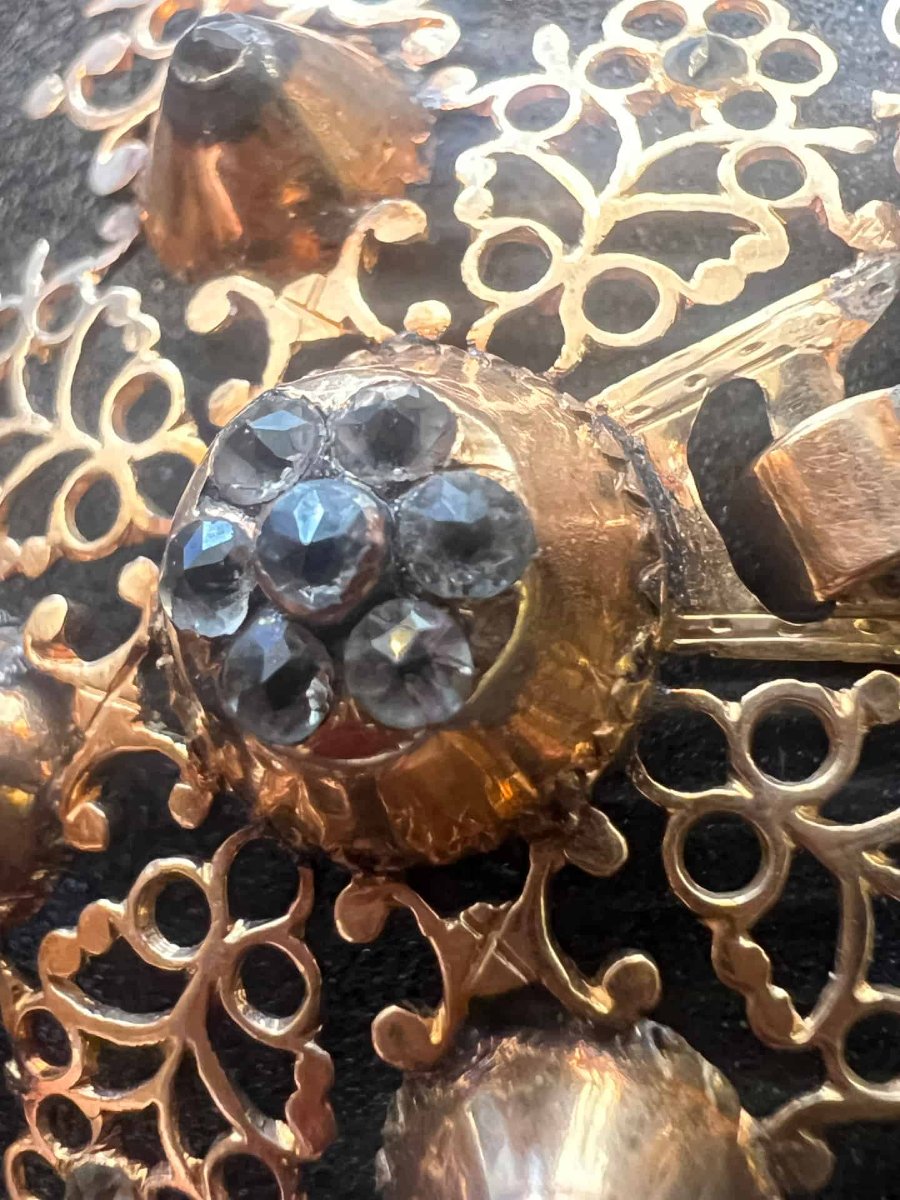

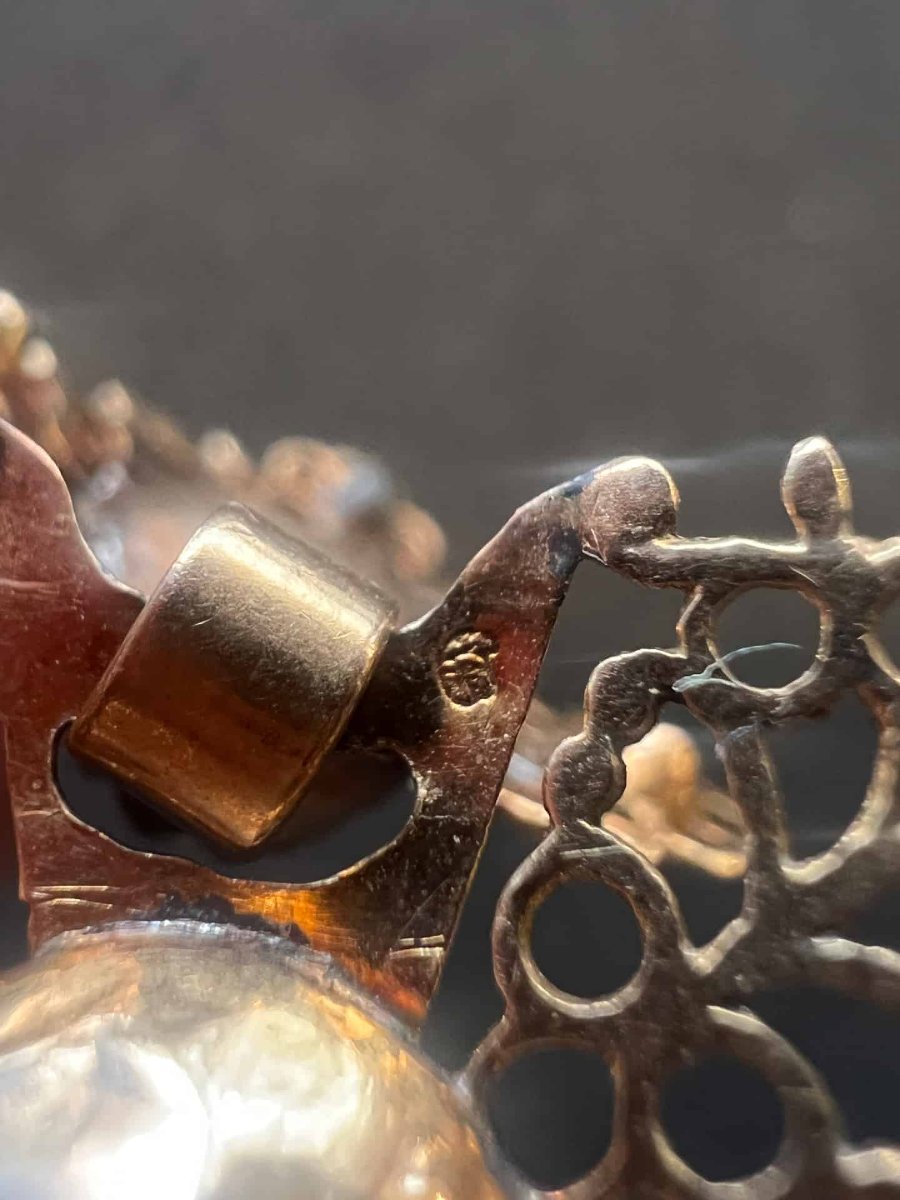
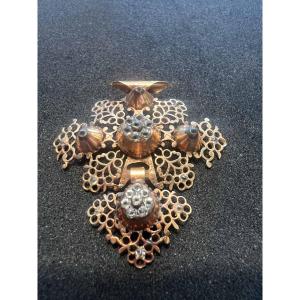


18-karat gold Rouen Cross, First Empire period (1809–1819).
Elegant and deeply rooted in the Norman jewelry-making tradition, this remarkable Rouen Cross—also known as the Norman Cross—is a precious testament to the region’s goldsmithing craftsmanship of the early 19th century.
Crafted in 18-karat gold, it stands out for the finesse of its workmanship and the richness of its openwork decoration, characteristic of the most sought-after Norman pieces.
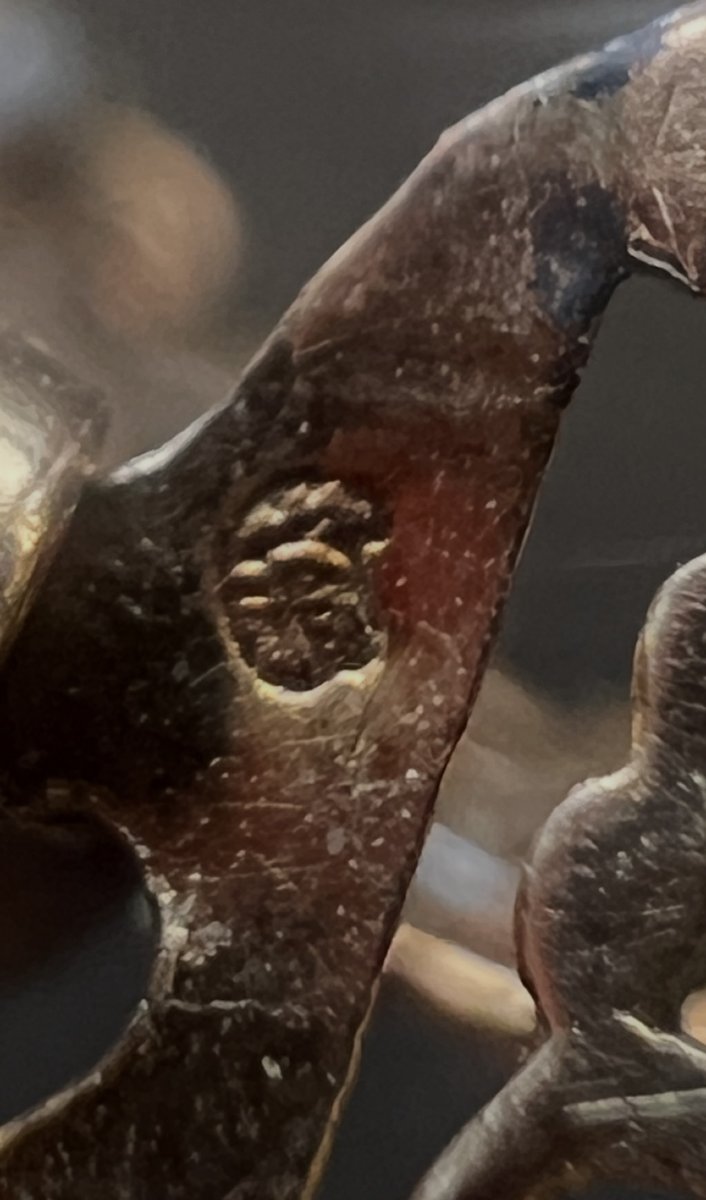
The hallmarks visible on the two elements that make up the cross confirm its authenticity and age.
Notably, it bears the hallmark of a rooster’s head facing left, used to certify 18-karat gold between 1809 and 1819—that is, during the final years of the First Empire and the early years of the Restoration.
This hallmark serves as a valuable identifying feature for enthusiasts and collectors of antique jewelry.
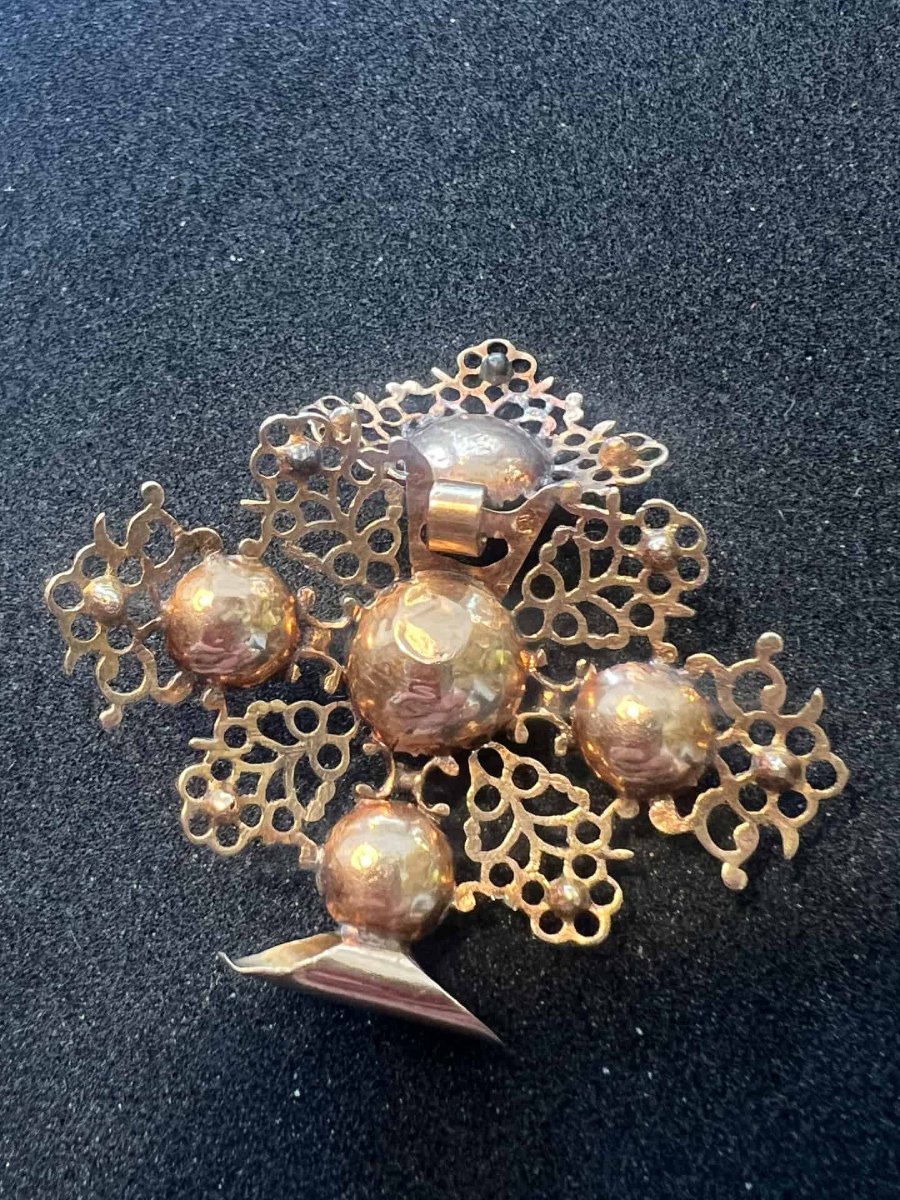
The cross is composed of two distinct parts.
The upper part is connected to a movable lower element by a wide coiled ring, a mechanism that allows for slight movement, which delicately animates the piece when worn.
This articulation lends elegance and suppleness to the piece as a whole while highlighting the quality of its craftsmanship.
The design consists of a remarkable network of openwork foliage and finely crafted arabesques.
The scalloped curves form a light and refined golden lace that allows light to pass through and lends the piece a great visual delicacy.
This openwork structure, typical of ancient Norman crosses, showcases the craftsmanship of the jewelers in the Rouen region.
Five cones in relief are set against this ornamental latticework.
The largest naturally occupies the center of the cross, where the arms meet.
The other four are harmoniously distributed around it, creating a particularly successful decorative balance.
The central cone and the one on the movable section are each adorned with a rosette composed of small faceted Rhine stones.
These stones, highly prized in the 19th century for their diamond-like brilliance, subtly capture the light and add an extra touch of refinement.
Small rhinestones also punctuate certain elements of the openwork design, enhancing the sparkling effect of this creation.
The piece as a whole presents a beautiful harmony between the warmth of the gold and the luminous reflections of the stones.
This cross has spanned more than two centuries while retaining its original charm and character.
It is currently in excellent overall condition.
The details remain clearly visible, and the quality of the engraving is still perfectly appreciable.
Serving as a devotional piece, a traditional ornament, and a collector’s item, this Rouen Cross will appeal to enthusiasts of regional jewelry, collectors of Norman gold and silverwork, and lovers of antique jewelry.
Thanks to its authenticity, cultural provenance, and the quality of its craftsmanship, it is a particularly attractive piece on the market for historic French jewelry.
Dimensions: 4.4 x 4.2 cm.
Weight: 5 grams.
You can follow me on Instagram by clicking this link: https://www.instagram.com/patrick.boussougant/
Back to the store: Online sales of antique objects and furniture, secure purchasing (abnantiquitesdenormandie.com)
PLEASE NOTE! For home deliveries handled by our carriers, feel free to request a quote!Explore similar pieces and discover your ideal find:
other jewelry