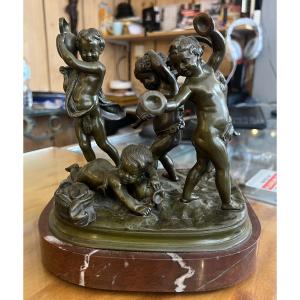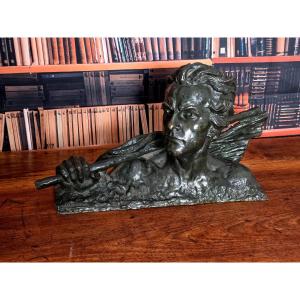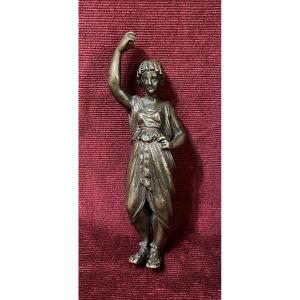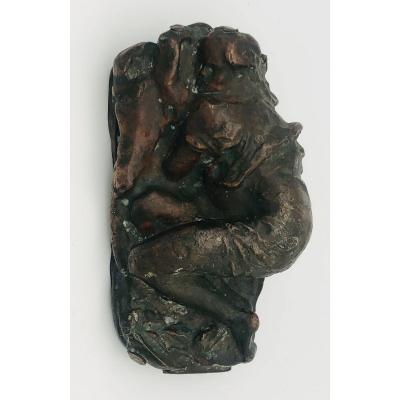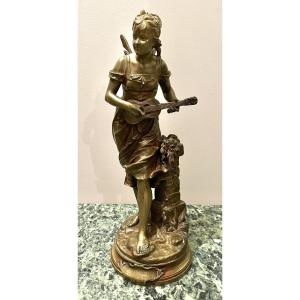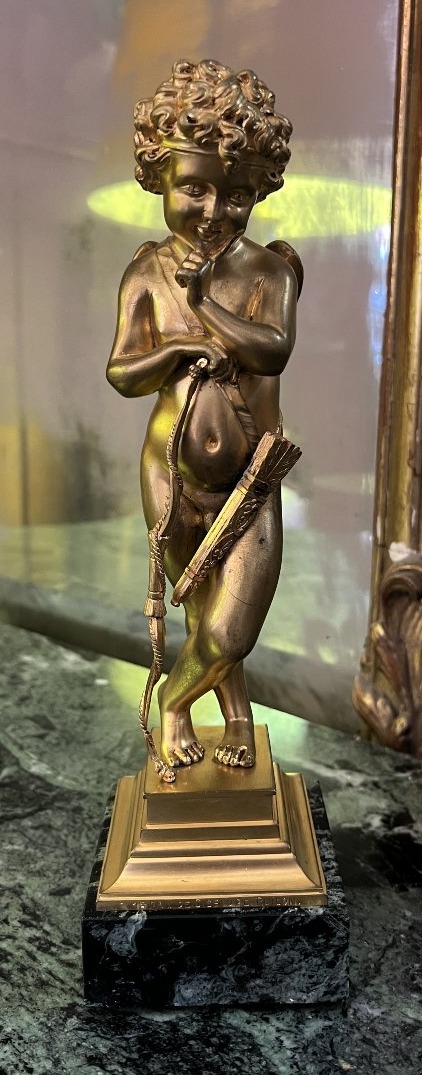
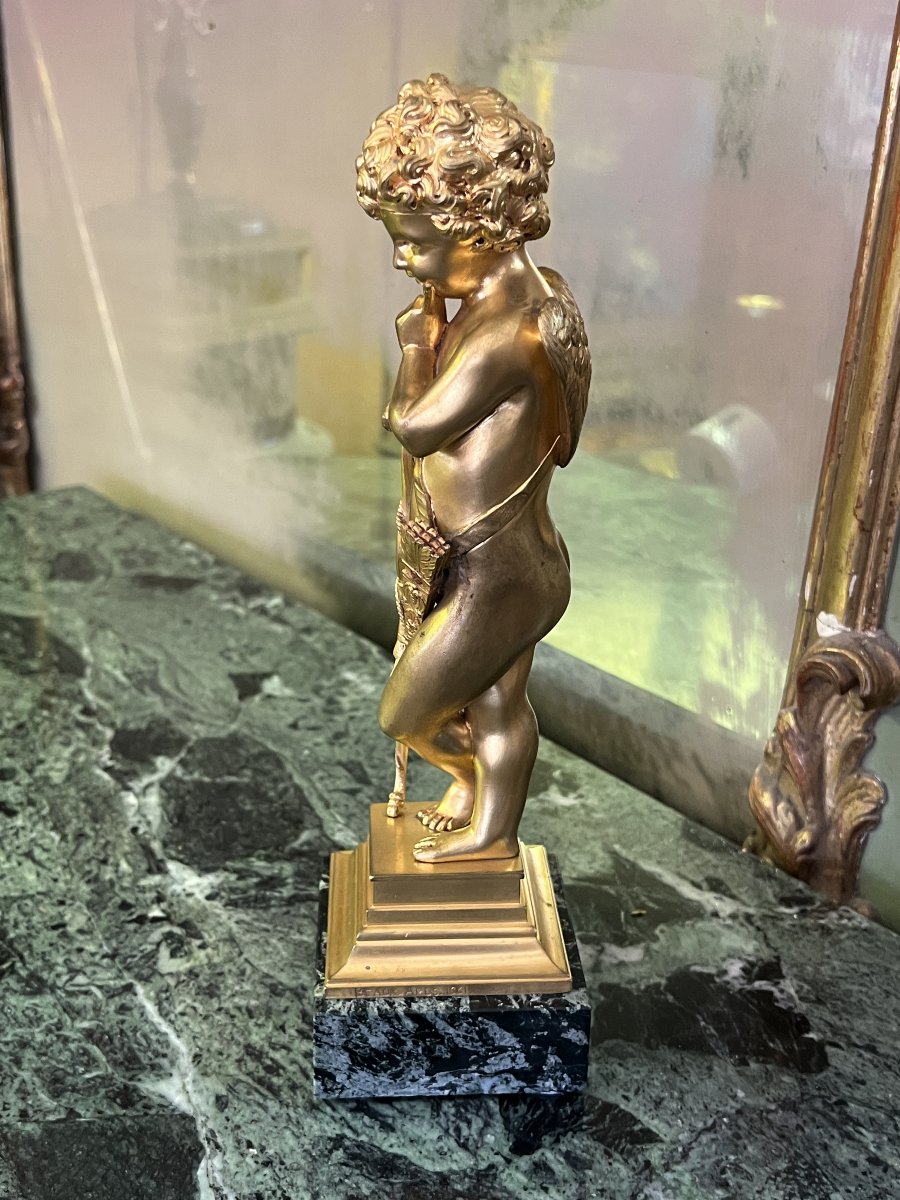


Alfred Louis Habert (1824–1893), *cupid In Contemplation*, 1861, Bronze With A Gold Patina
Alfred Louis Habert (1824–1893)
Meditating Cupid, 1861
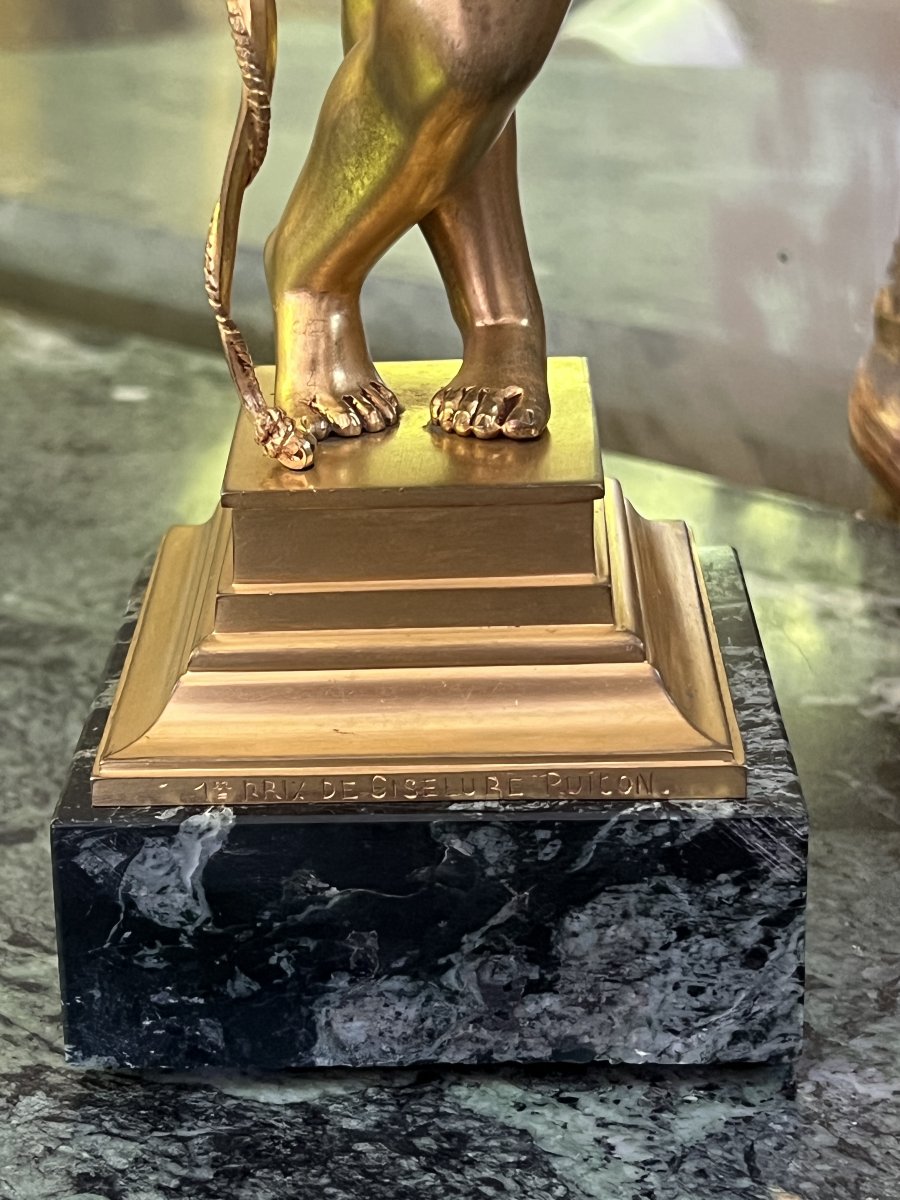
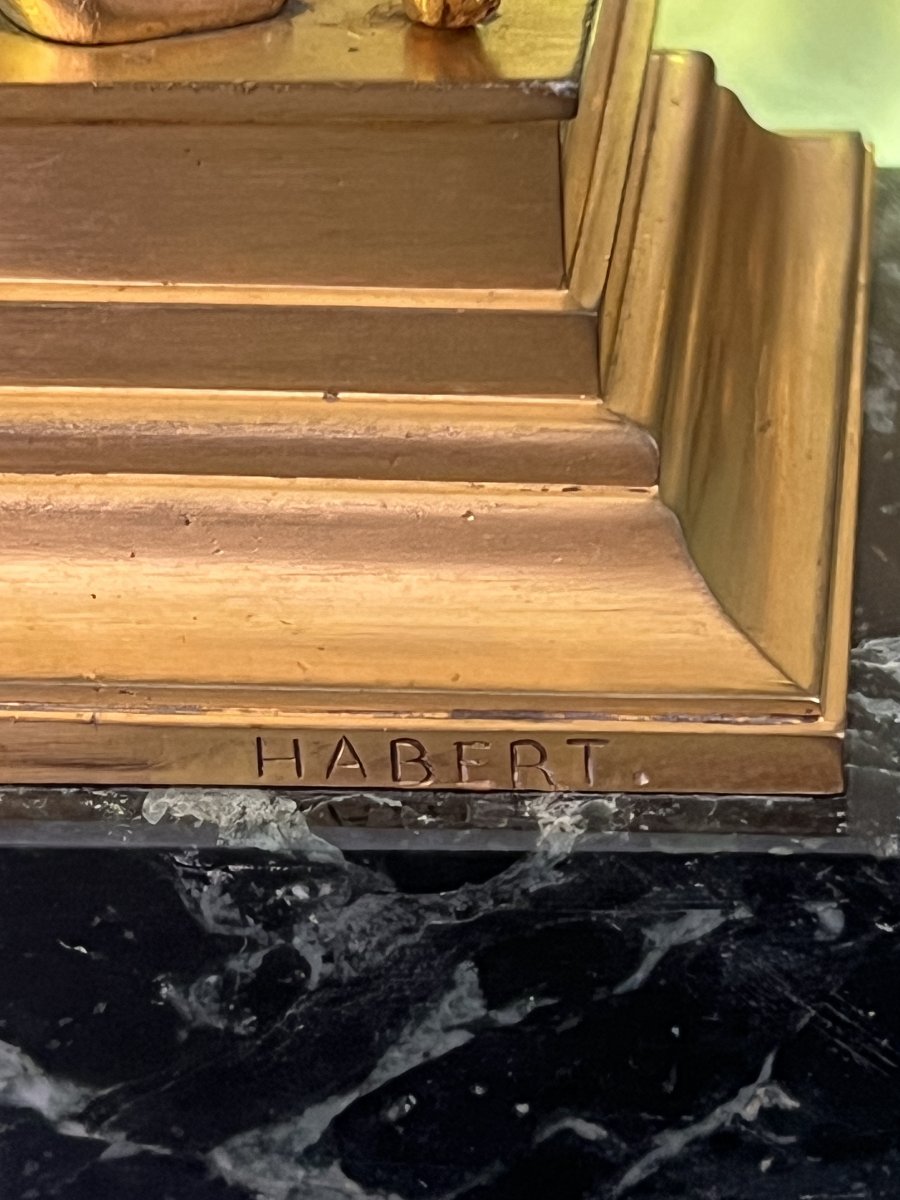
Bronze with a golden patina, signed and dated “Habert 1861,” inscription: “Beaux-Arts, 1st Prize in Metal Engraving, Ruiton”
Height: 28 cm
This elegant bronze sculpture with a gold patina, created in 1861 by Alfred Louis Habert, is a remarkable example of French academic art from the second half of the 19th century. Signed and dated by the artist, it also bears the inscription “Beaux-Arts, 1st Prize in Metal Engraving, Ruiton,” a notation that highlights the artist’s technical virtuosity and recalls the distinction he received for his excellence in the art of metal engraving. More than just an honorary designation, this inscription affirms the exceptional mastery of a sculptor capable of combining precision in metalwork with great artistic sensitivity.
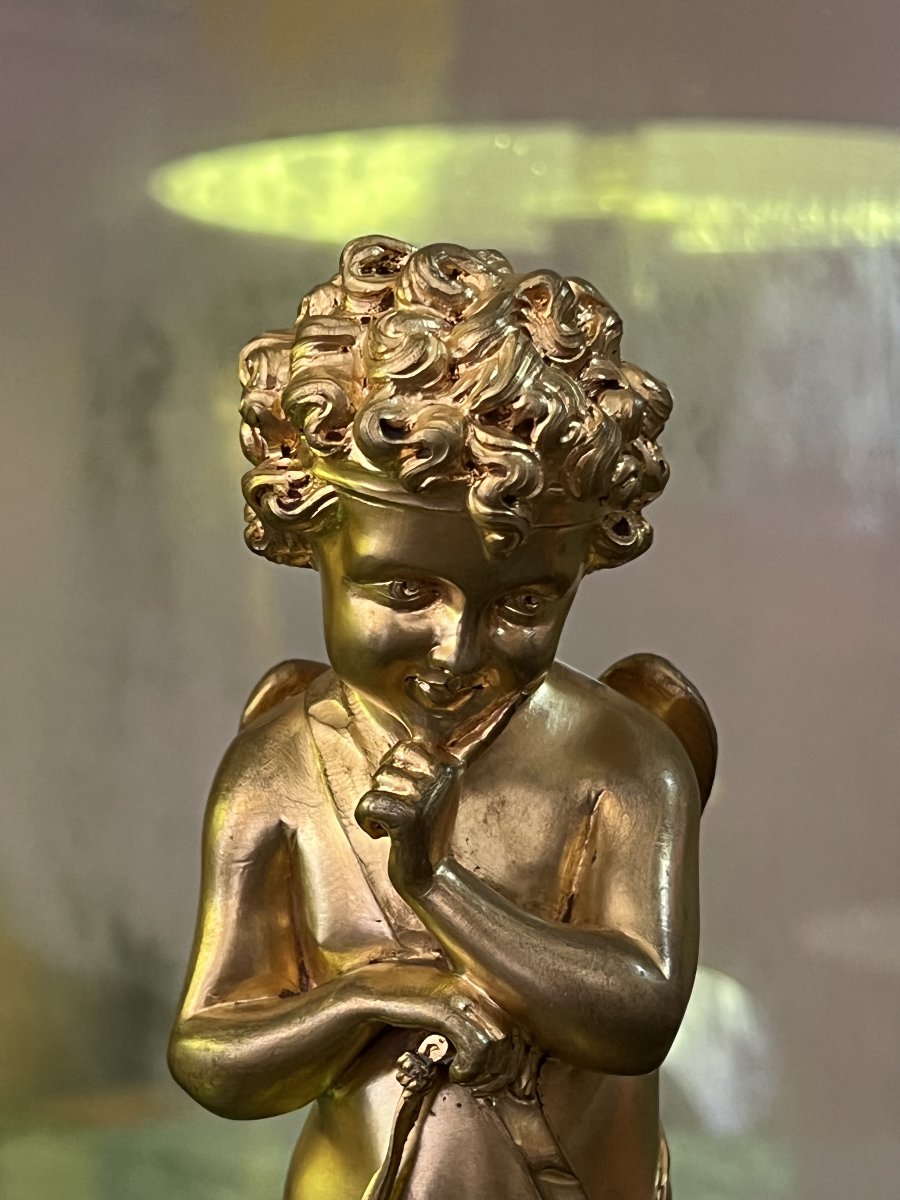
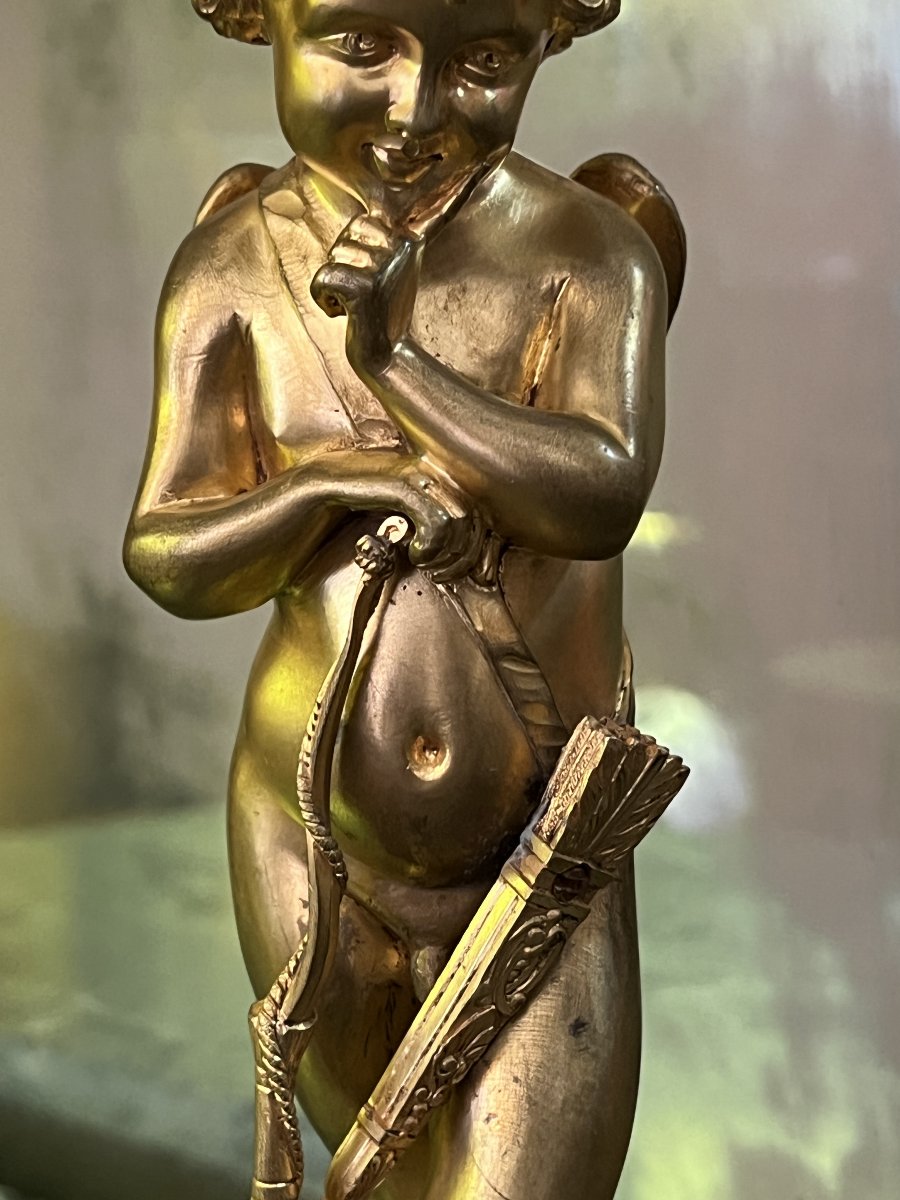
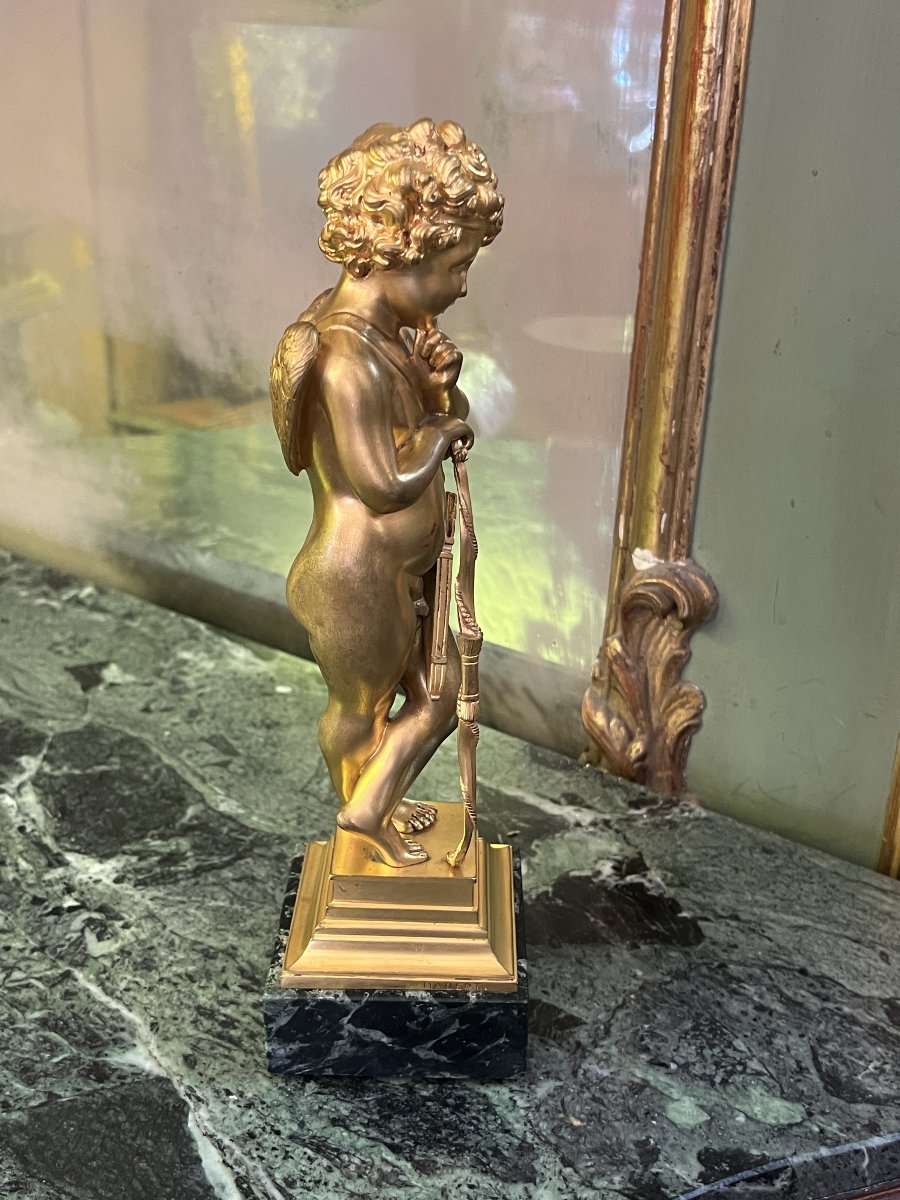
The work depicts Cupid, the Roman god of love, in a particularly original interpretation. Far from the traditional image of the mischievous young god shooting his arrows, Habert chooses to portray him in a meditative and introspective pose. Standing, with his weight subtly distributed in a slight contrapposto derived from ancient statuary, Cupid clasps his hands in front of him while his gaze is lost in silent reflection. This suspension of movement lends the composition a rare psychological dimension, inviting the viewer to contemplate a moment of calm rather than a scene of action.
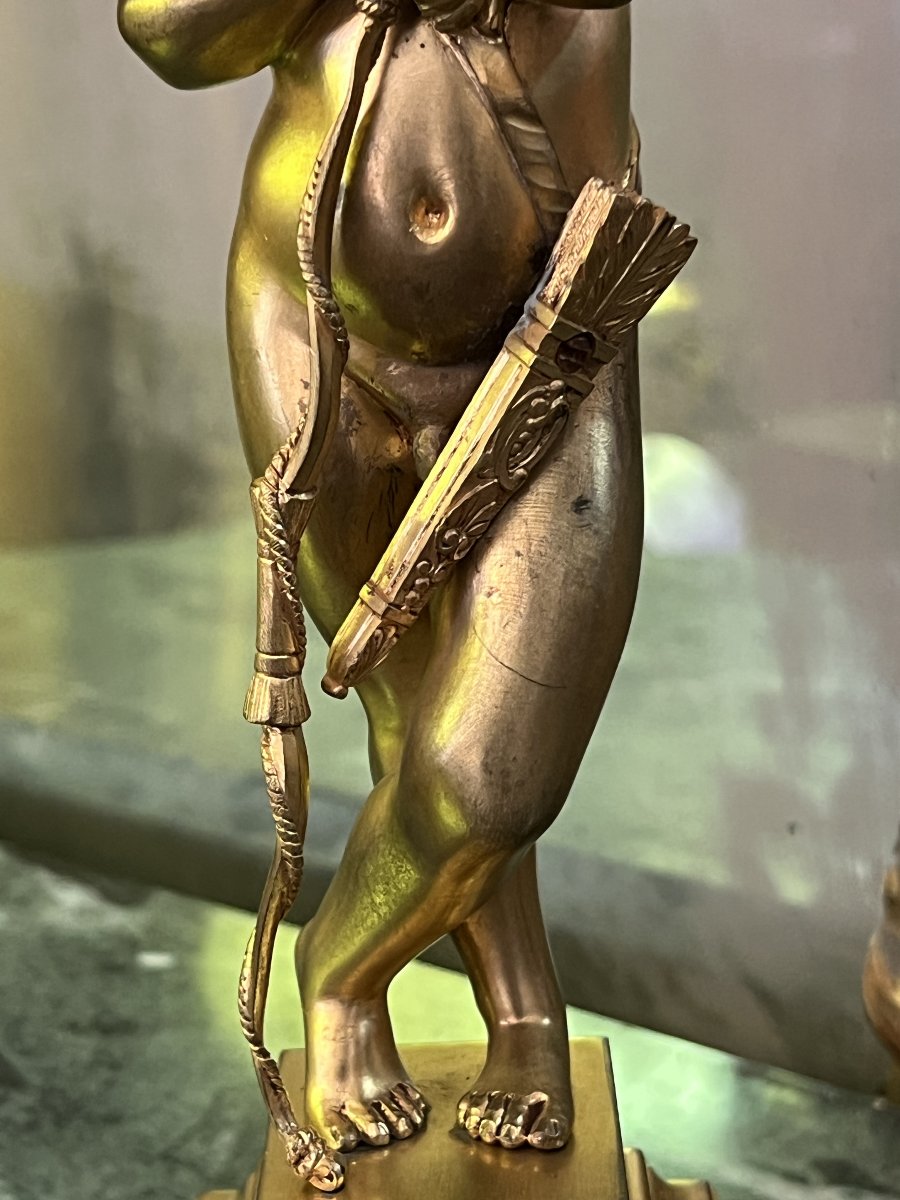
The influence of ancient sculpture is evident in the figure’s harmonious proportions, the idealized treatment of the anatomy, and the restraint of the composition. Habert thus follows in the tradition of fine arts education, where the study of classical models remains the foundation of artistic creation. However, this fidelity to academic canons is accompanied by a careful observation of natural form, which gives the figure a lively presence and an expression marked by gentleness.
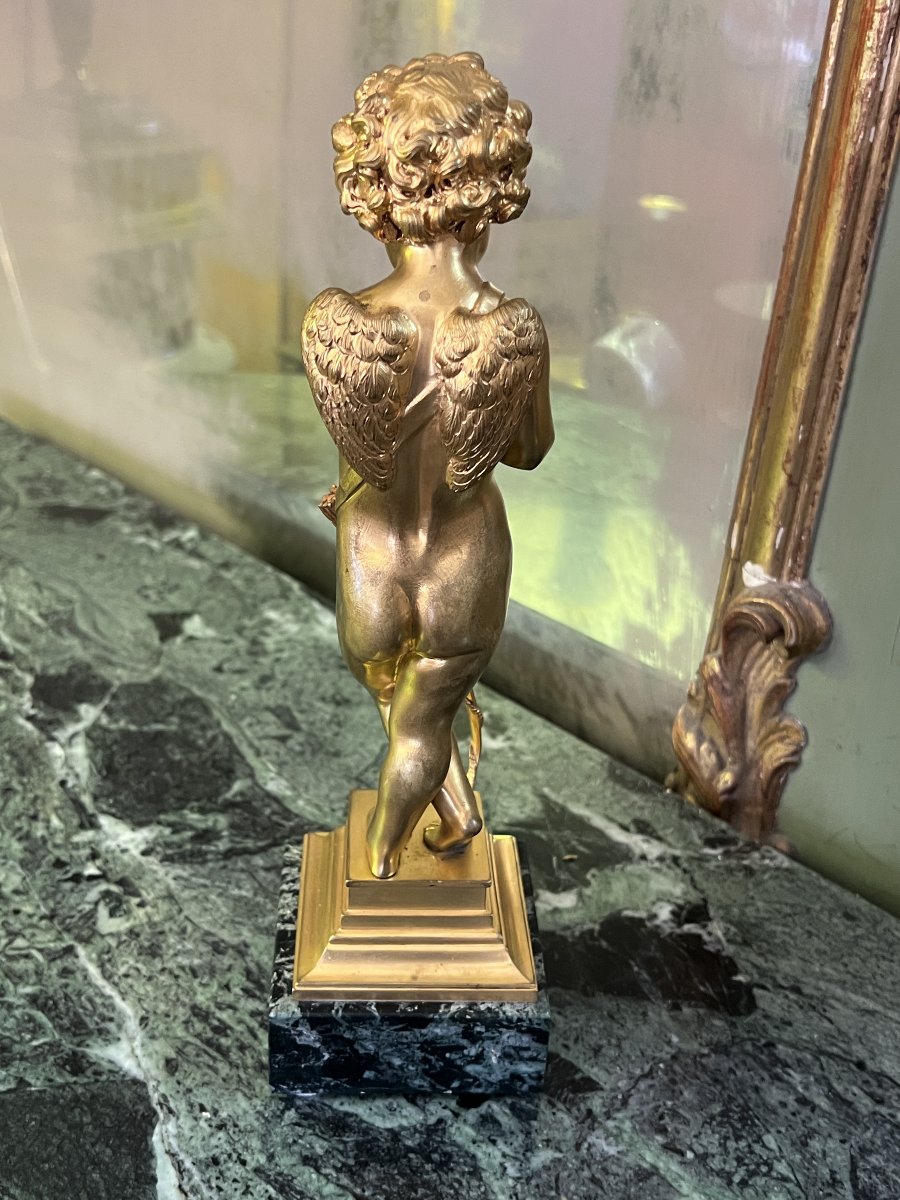
The quality of the carving is one of this sculpture’s main attractions. Every detail is executed with remarkable precision: the abundant curls of the hair display a delicately animated relief, the facial features are exceptionally refined, while the youthful musculature is rendered with restraint and elegance. The hands, which are particularly well-crafted, demonstrate the sculptor’s technical mastery. This meticulous attention to detail attests to remarkable skill in bronze finishing, a discipline that requires a perfect understanding of tools and surface effects.
The golden patina further enhances the work’s sculptural qualities. It subtly captures the light, revealing the nuances of the modeling and accentuating the contrasts between the polished surfaces and the more deeply chiseled areas. The warm luster of the bronze harmonizes beautifully with the black marble base, whose simplicity highlights Cupid’s slender silhouette. This contrast in materials contributes to the aesthetic balance of the piece as a whole and underscores the precious nature of this cabinet sculpture.
Created at a time when the taste for mythological subjects remained particularly strong, this work perfectly illustrates the enduring presence of the classical ideal in 19th-century French sculpture. Habert does not merely seek to depict a figure from mythology; he also conveys a state of mind, endowing his Cupid with a contemplative depth that breathes new life into a theme widely explored by artists since the Renaissance.
Thanks to its aesthetic qualities, the finesse of its execution, and its excellent state of preservation, this Meditating Cupid occupies a significant place in the oeuvre of Alfred Louis Habert. It brilliantly illustrates the convergence of academic rigor, virtuosity in chiseling, and decorative refinement that characterize the finest French bronzes of this period. This sculpture thus stands as a valuable testament to the craftsmanship of 19th-century French workshops and the excellence of the academic sculptural tradition.
Period: 19th century
Style: Other Style
Condition: Good condition
Material: Bronze
Height: 28 cm
Reference (ID): 1790903
Availability: In stock