THIS OBJECT WAS SOLD

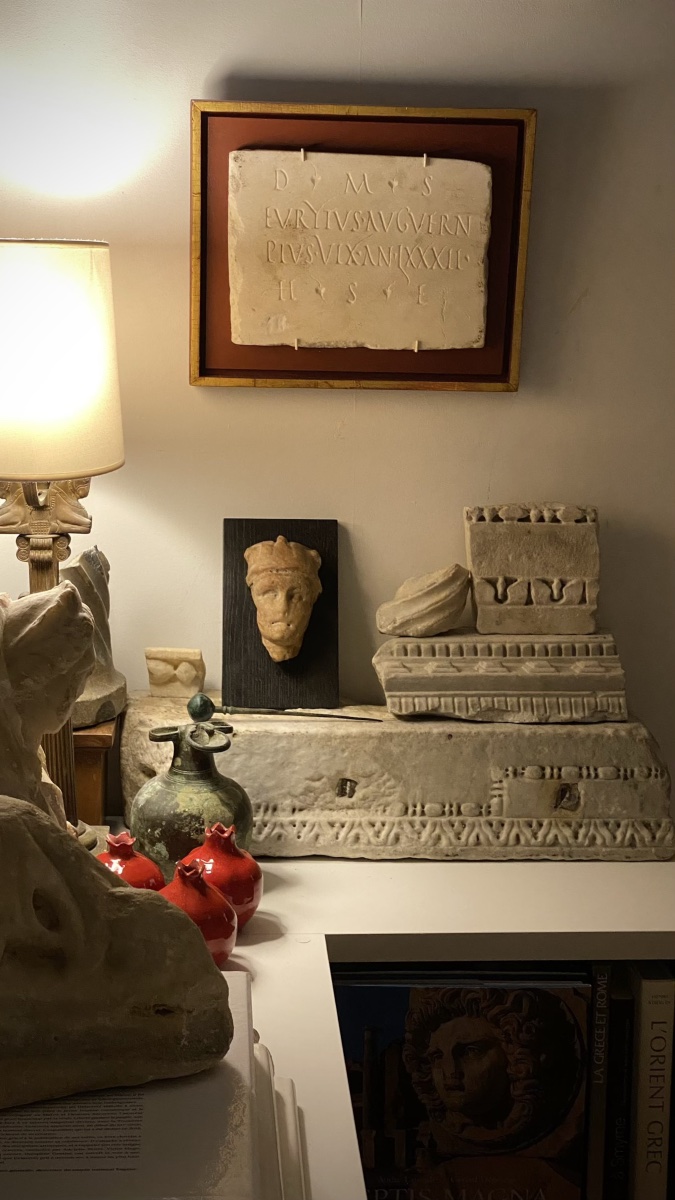
Large Fragment Of An Ancient Marble Architrave Carved With A Roman Frieze From The 2nd Century
Sold
Large Fragment Of An Ancient Marble Architrave Carved With A Roman Frieze From The 2nd Century
Sold
Large Fragment Of An Ancient Marble Architrave Carved With A Roman Frieze From The 2nd Century-photo-2
Sold
Large Fragment Of An Ancient Marble Architrave Carved With A Roman Frieze From The 2nd Century-photo-3
Sold
Large Fragment Of An Ancient Marble Architrave Carved With A Roman Frieze From The 2nd Century-photo-4
Sold
Large Fragment Of An Ancient Marble Architrave Carved With A Roman Frieze From The 2nd Century-photo-1
Sold
Large Fragment Of An Ancient Marble Architrave Carved With A Roman Frieze From The 2nd Century-photo-2
Sold
Large Fragment Of An Ancient Marble Architrave Carved With A Roman Frieze From The 2nd Century-photo-3
Sold
Large Fragment Of An Ancient Marble Architrave Carved With A Roman Frieze From The 2nd Century-photo-4
Sold
Large Fragment Of An Ancient Marble Architrave Carved With A Roman Frieze From The 2nd Century-photo-5
Sold
Large Fragment Of An Ancient Marble Architrave Carved With A Roman Frieze From The 2nd Century-photo-6
Sold
Large Fragment Of An Ancient Marble Architrave Carved With A Roman Frieze From The 2nd Century-photo-7
More pictures

Fragment of a carved marble lintel
Roman art, circa 2nd–3rd century A.D.

White marble.
60 × 16 × 14 cm.

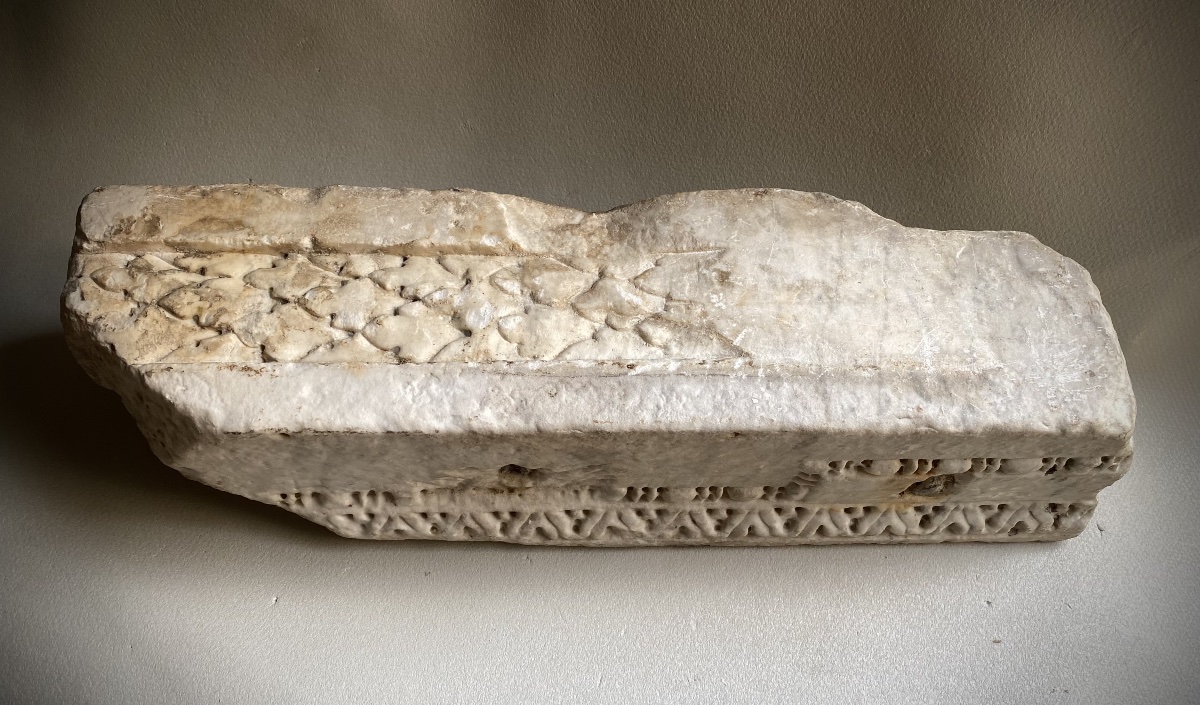
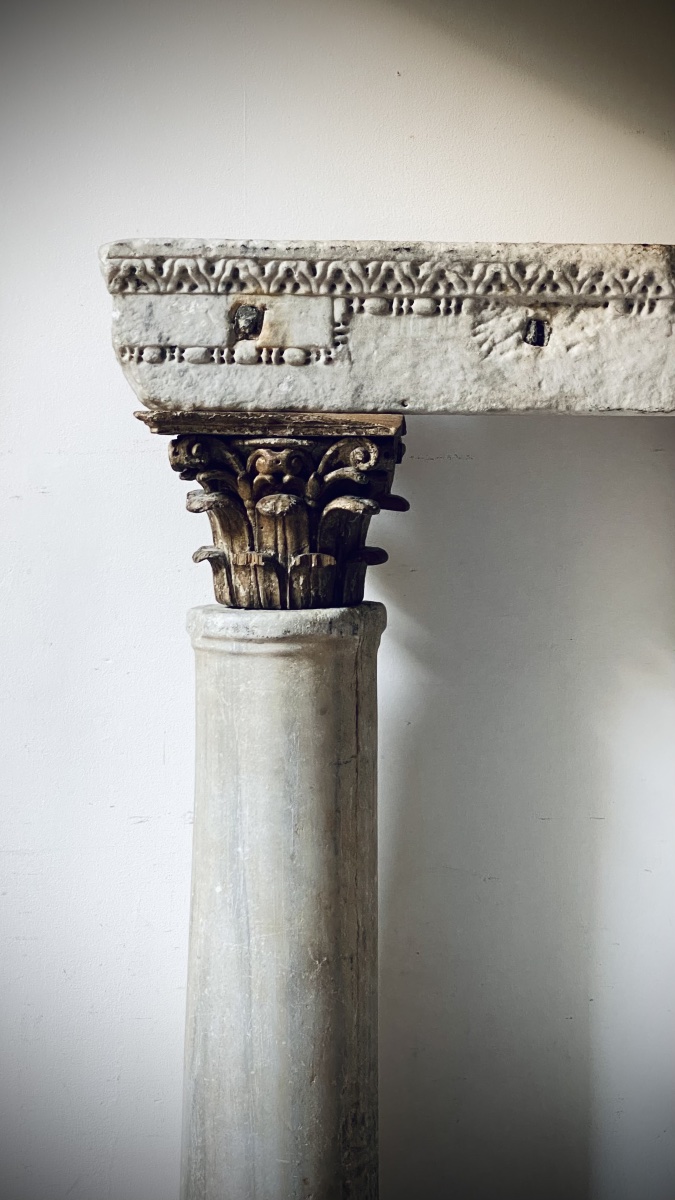
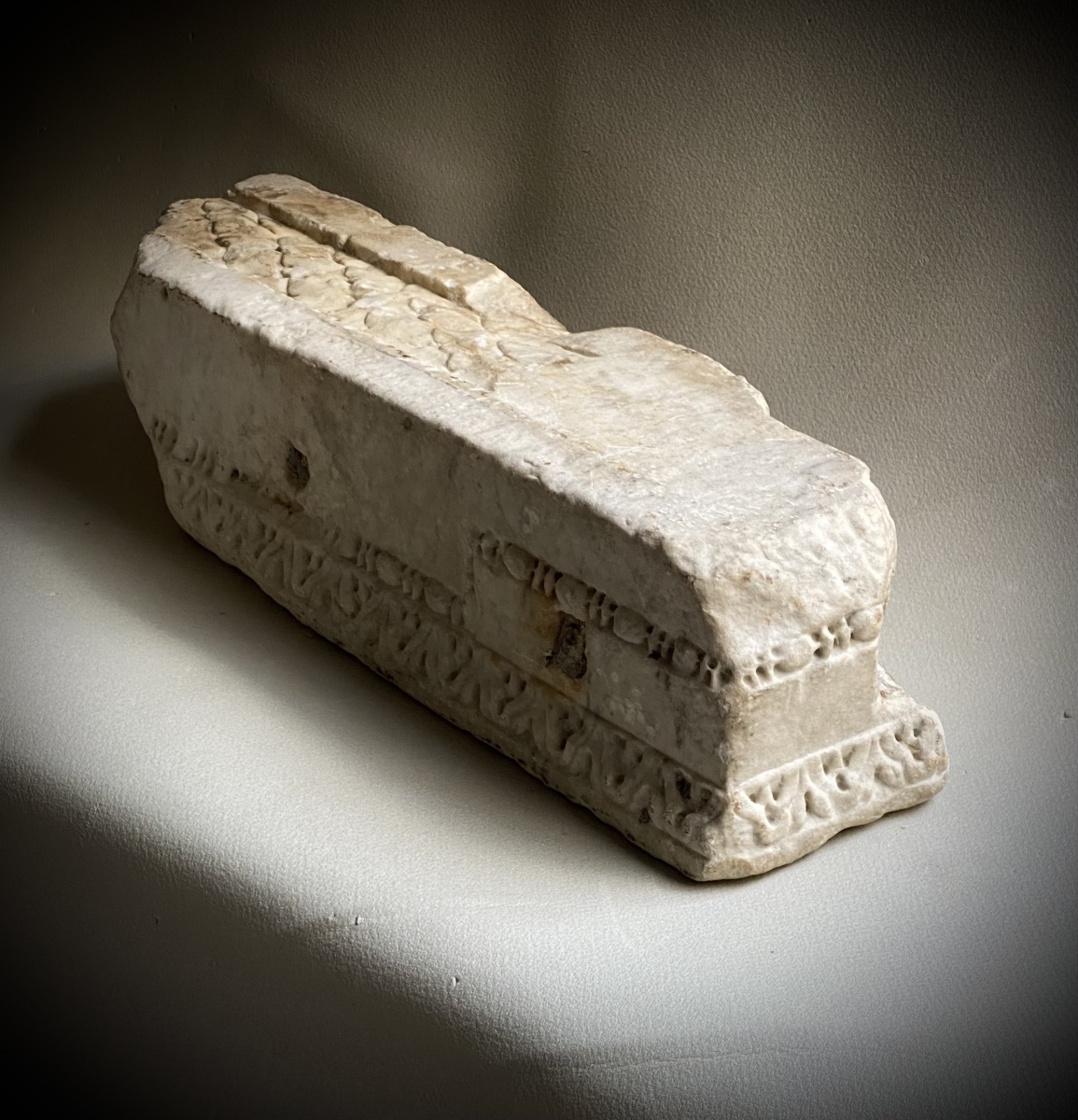
An elegant fragment of an architectural marble lintel, likely from a public or religious building in the classical tradition.

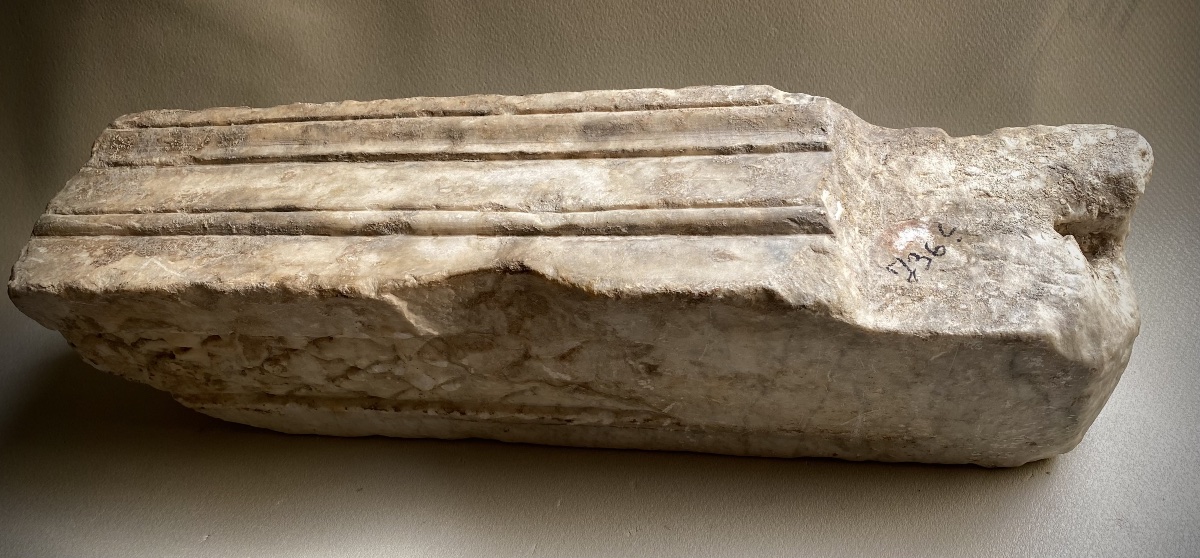
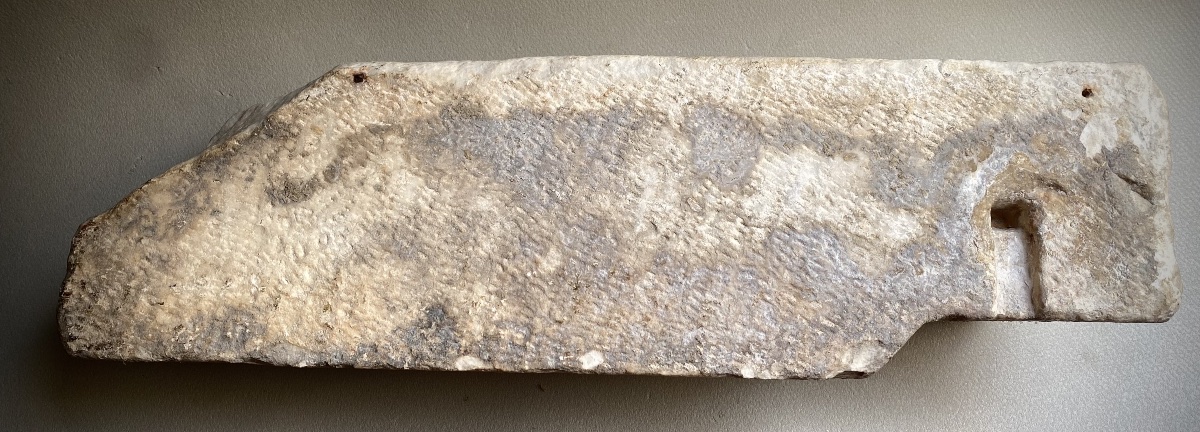
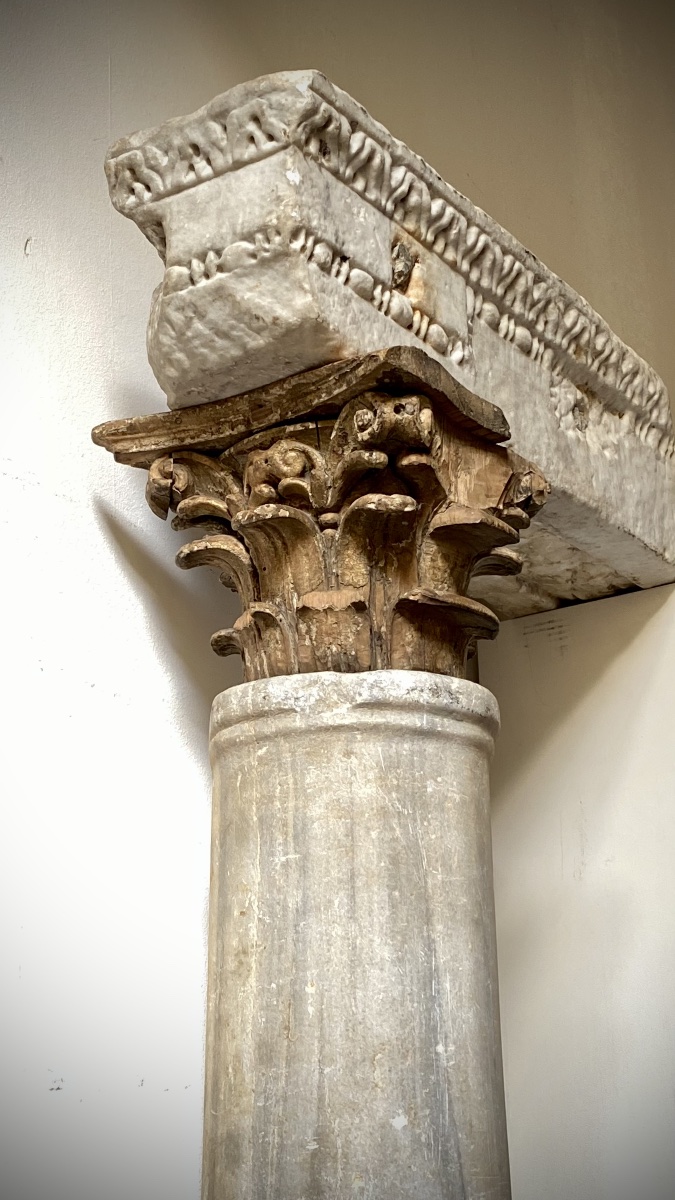
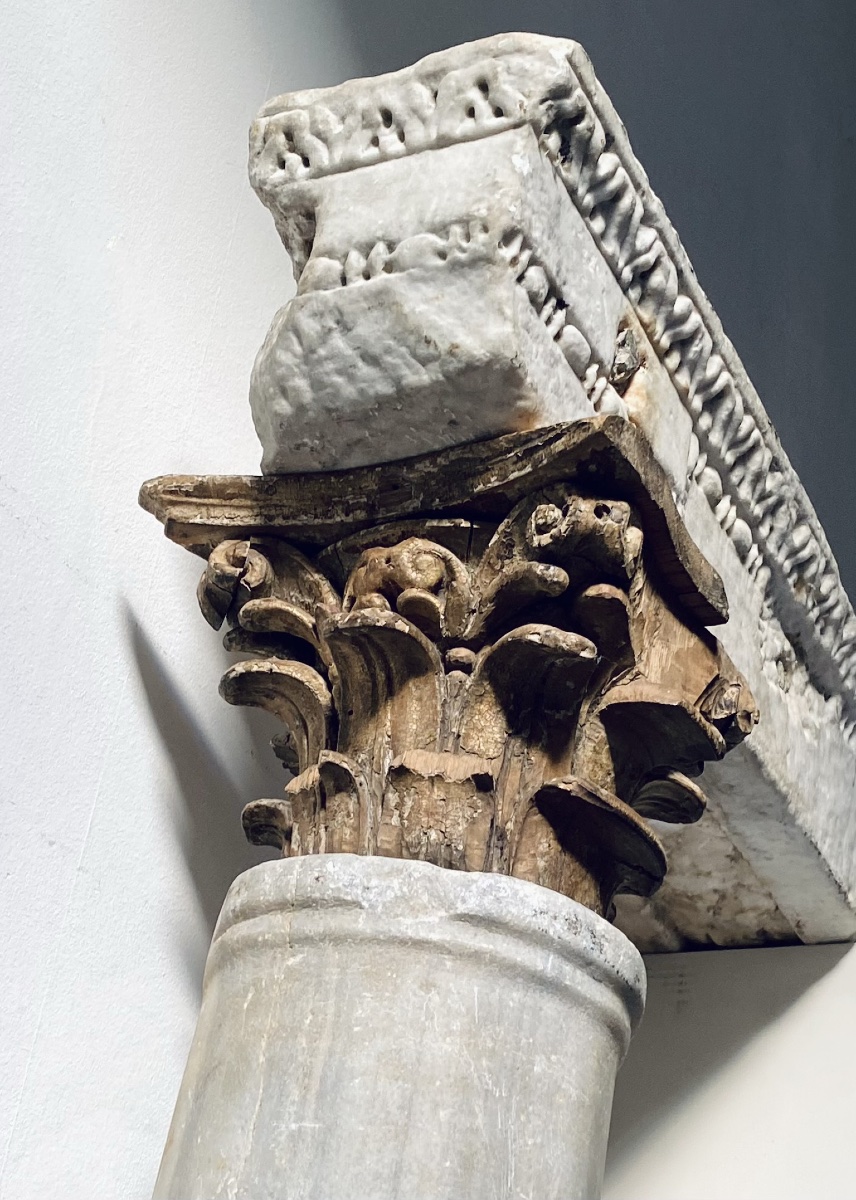
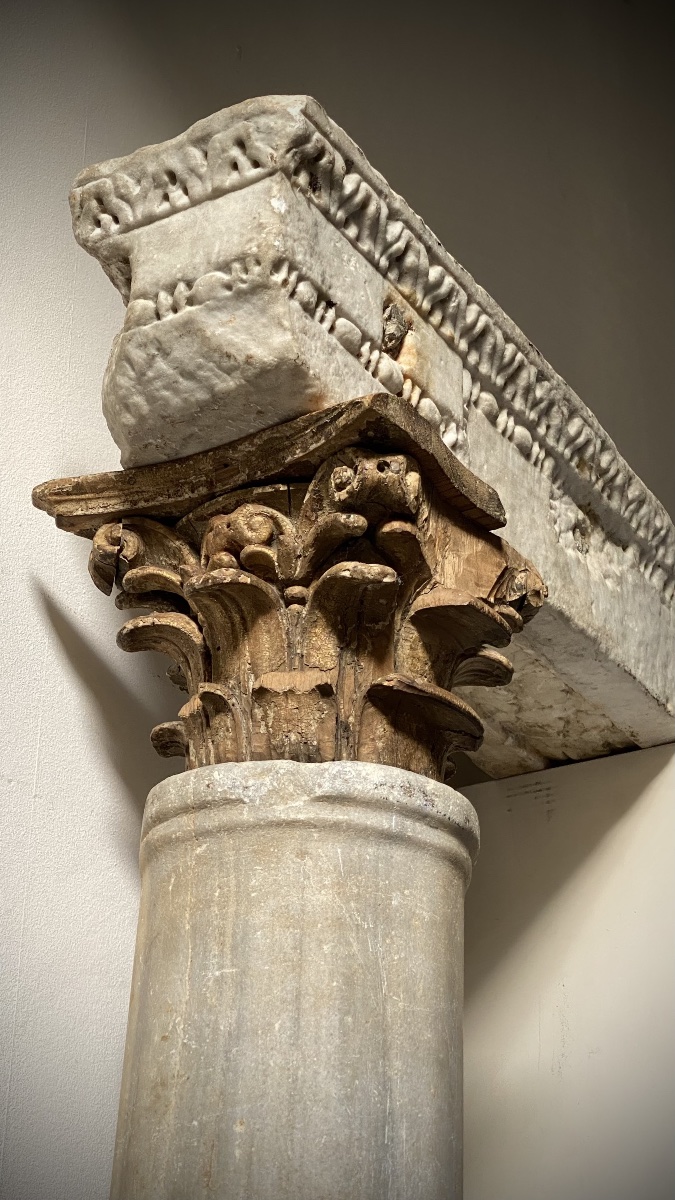
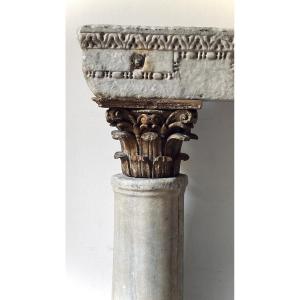
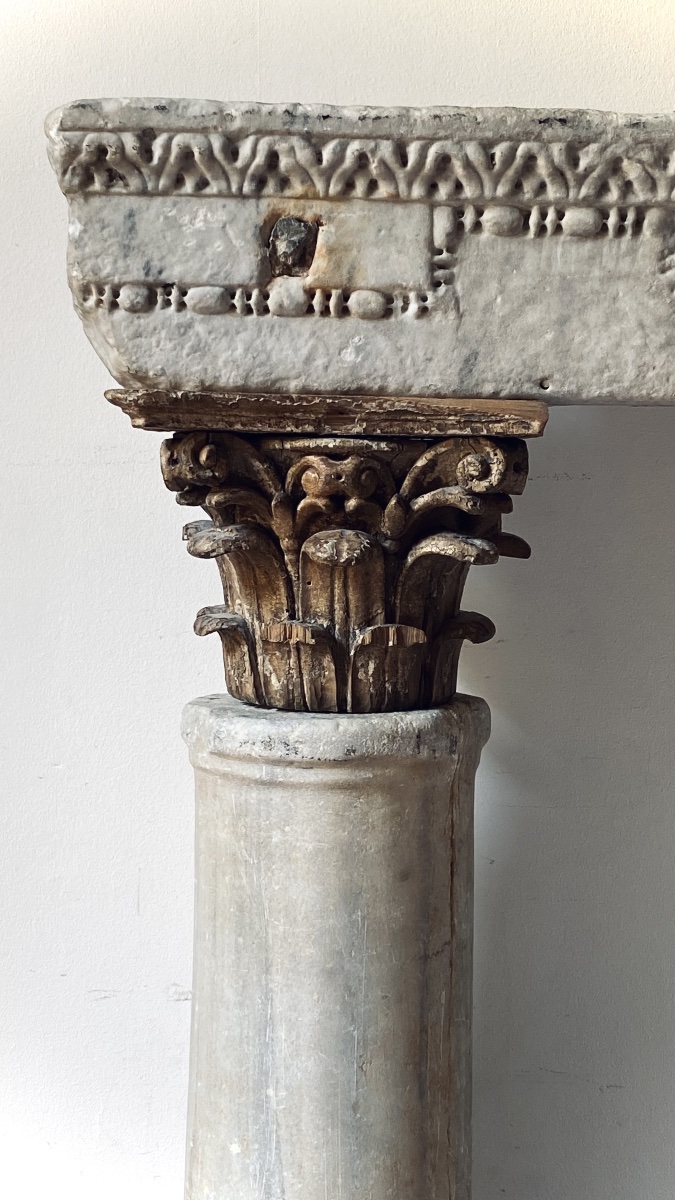
The main face is adorned with moldings consisting of a frieze of heart-and-saddle motifs, accented by a row of pearls and scrolls, motifs emblematic of the ornamental vocabulary of Roman architecture, inherited from Hellenistic models. The intrados is entirely carved with a pattern of interlocking leaves, executed with great regularity, revealing the care taken with the visible parts of this architectural element.

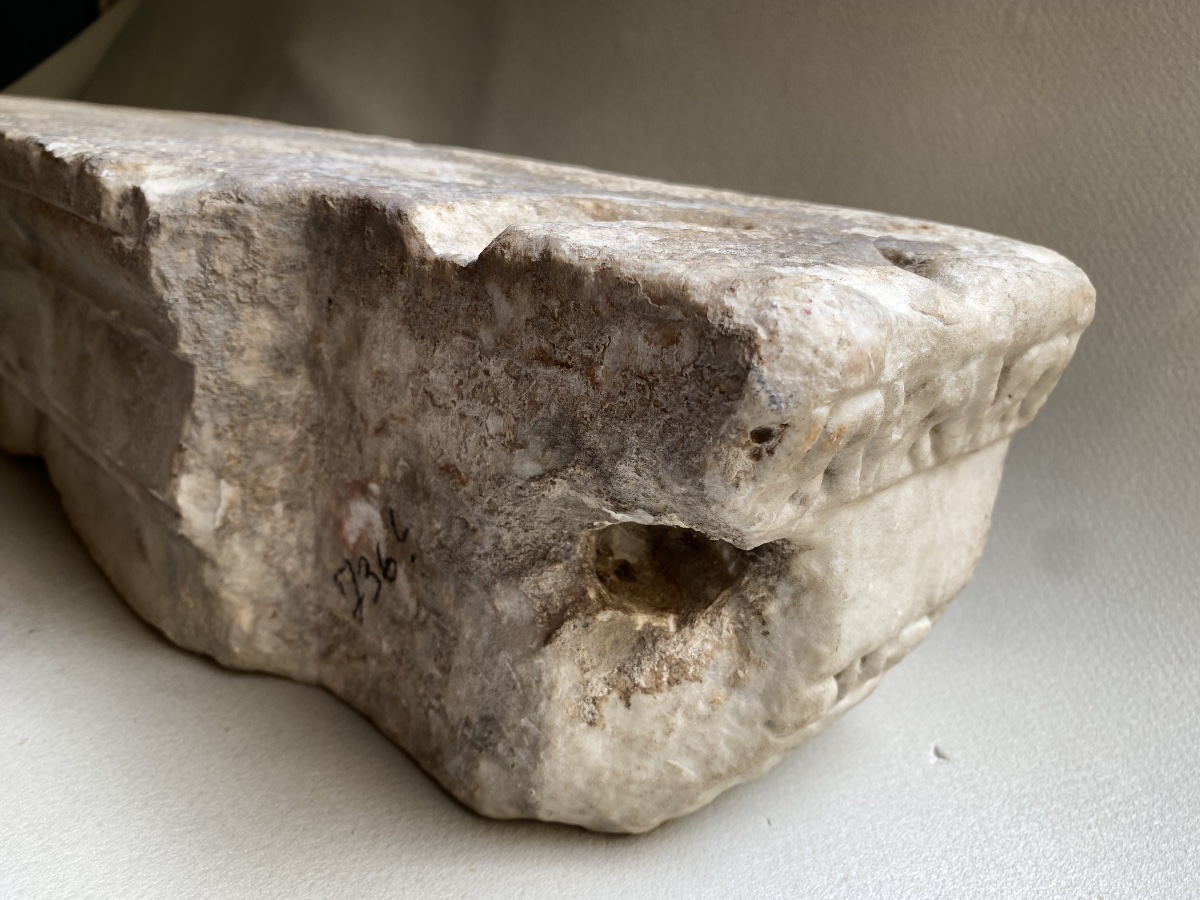
The quality of the carving, the balance of the proportions, and the finesse of the moldings attest to a workshop that had perfectly mastered the decorative canons of Roman monumental architecture. Traces of wear and small gaps in no way detract from the interpretation of the decoration, whose reliefs remain particularly expressive.

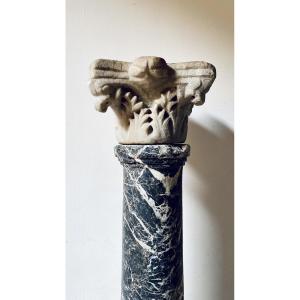
Based on its cross-section and decorative treatment, this fragment most likely belonged to a lintel resting on a free-standing, non-engaged column (see reconstruction) intended to provide rhythm to a facade.
The two visible mortises on the face suggest the attachment of a bronze element, of which the lead seal remains.

Beautiful archaeological patina. Remarkable state of preservation given its age.

Explore similar pieces and discover your ideal find:

archeology
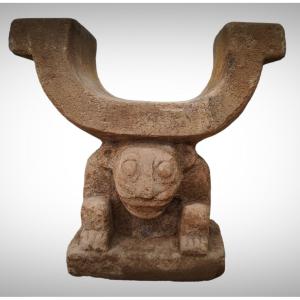
Manteña Chair Of Power Cachique Of Prehispanic Ecuador
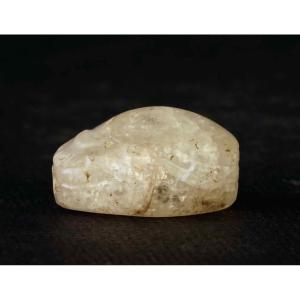
Egyptian Rock Crystal Scarab - Ancient Egypt
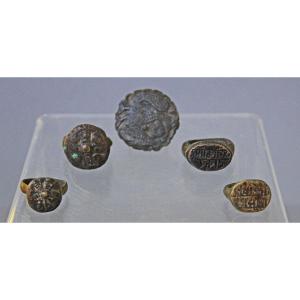
Collection Of Five Medieval Islamic Middle Eastern Brass & Bronze Signet Rings
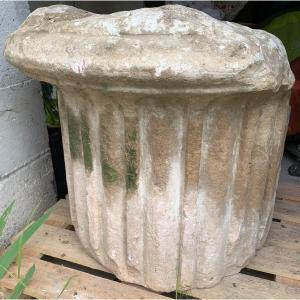
1st Cty Ad Gallo-roman Stone Cvd Column Barrel Site Argentomagus (indre), Found & Reported 1909
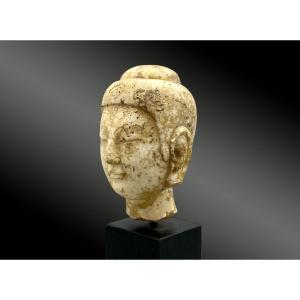
Sui Dynasty, Late 6th – Early 7th Century
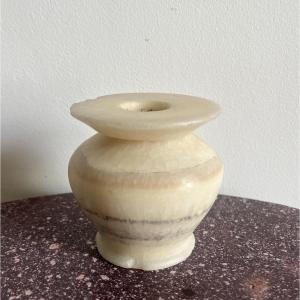
Khol Vase - 18th Dynasty, New Kingdom (1550-1307 Bc)

14 Rue Beauregard
Paris 75002, France

06 30 55 85 75

Follow the dealer

CONTACT

SIGN UP TO OUR NEWSLETTER

facebook
instagram

Ars Longa
Khol Vase - 18th Dynasty, New Kingdom (1550-1307 Bc)
1761910-main-6a0af401c1dad.jpg

06 30 55 85 75


*We will send you a confirmation email from info@proantic.com .
Please check your messages, including the spam folder.