THIS OBJECT WAS SOLD
Antique Reliquary Containing Relics Of The Fathers, Doctors, And Saints Of The Church
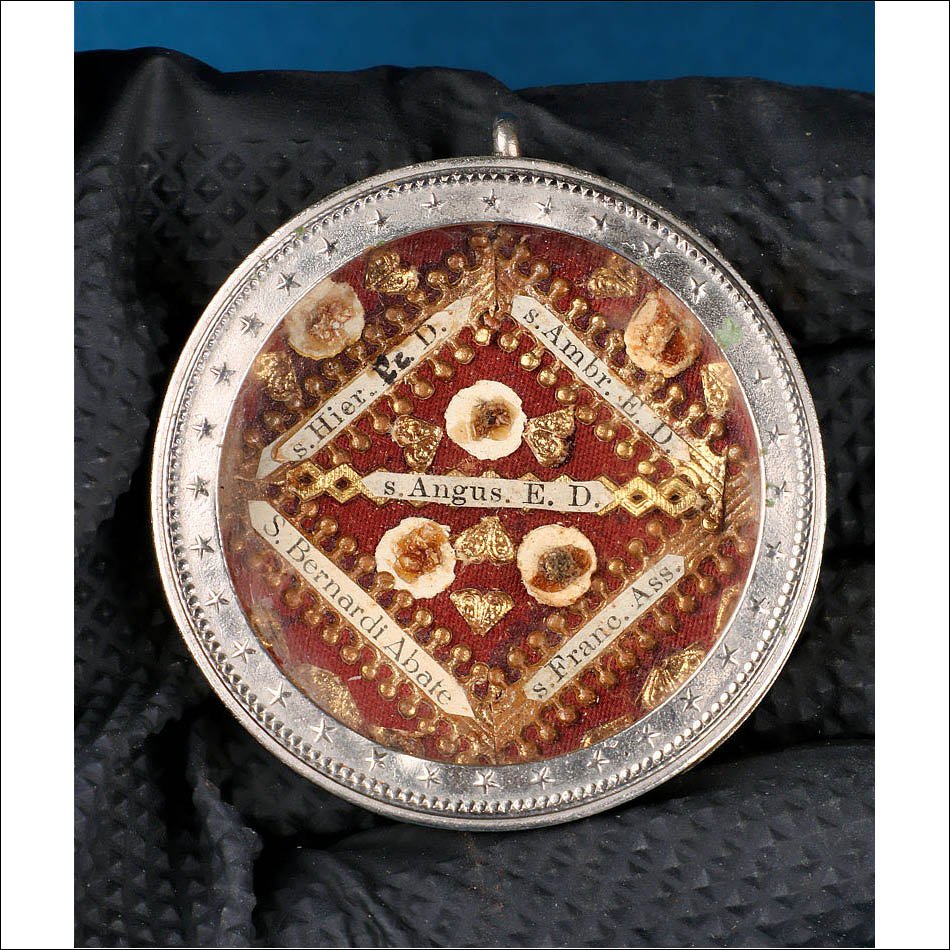
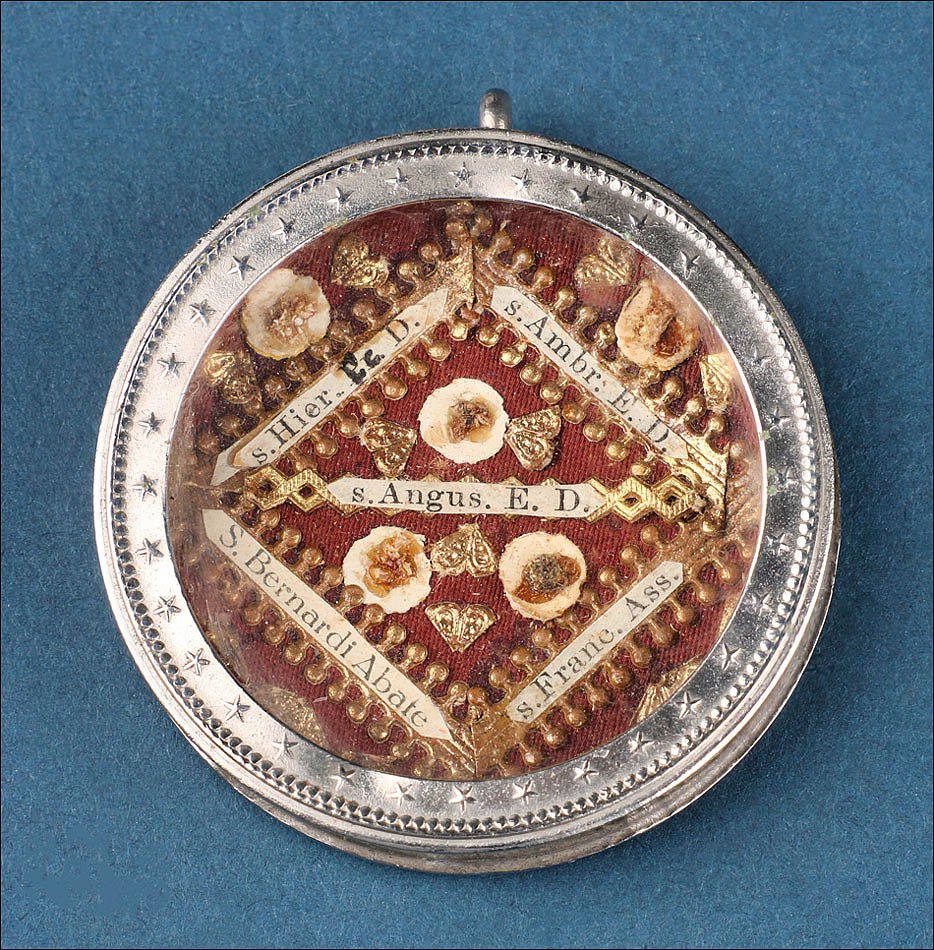


Important antique devotional reliquary, circular in shape, with a silver-plated metal case and a valuable group of relics of great saints of the Christian tradition. The main importance of this piece lies not so much in the container itself, but in the relics preserved inside, identified by old labels and dedicated to fundamental figures of spirituality, theology, monastic life and evangelical poverty.
The reliquary contains relics of Saint Jerome, Saint Ambrose, Saint Augustine, Saint Bernard and Saint Francis of Assisi. It is a selection of great religious strength, bringing together in a single piece several of the great names in the history of the Church: Fathers, Doctors, bishops, monks and saints of deep popular devotion.
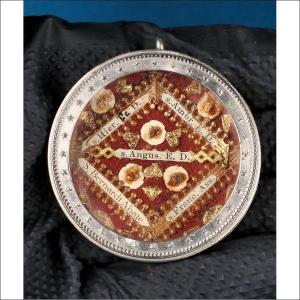
The reliquary contains the following relics, identified by their labels:
• S. Hier. D.: Saint Jerome, Doctor of the Church. Father and Doctor of the Church, born around the year 347 and died in 420. He is one of the fundamental figures of early Christianity, famous for his translation of the Bible into Latin, known as the Vulgate. His life was marked by study, penance, defence of the faith and a profound dedication to the Holy Scriptures.
• S. Ambr. E. D.: Saint Ambrose, Bishop and Doctor of the Church. Bishop of Milan, born around the year 340 and died in 397. He was one of the great figures of the Latin Church, spiritual teacher of Saint Augustine and a firm defender of the spiritual authority of the Church. His doctrinal and pastoral importance made him one of the great Fathers of the West.
• S. Angus. E. D.: Saint Augustine, Bishop and Doctor of the Church. The label corresponds to Saint Augustine, Bishop of Hippo and Doctor of the Church, born in 354 and died in 430. He is one of the greatest theologians of Christianity and an essential figure in Western thought. Author of fundamental works such as Confessions and The City of God, he represents the intellectual, spiritual and doctrinal depth of the early Church.
• S. Bernardi Abbatis: Saint Bernard Abbot, Saint Bernard of Clairvaux, Cistercian abbot, born in 1090 and died in 1153. He was one of the great spiritual voices of the Middle Ages, a monastic reformer, preacher and Doctor of the Church. His figure is deeply linked to contemplative life, devotion to Christ and the Virgin Mary, and the spiritual renewal of medieval monasticism.
• S. Franc. Ass.: Saint Francis of Assisi, founder of the Franciscan Order, born around 1181 or 1182 and died in 1226. He is one of the most universal and beloved saints of Christianity, a model of evangelical poverty, humility, love of creation and radical following of Christ. His presence in the reliquary adds a deeply devotional and popular dimension to the whole.
The presence of these saints together gives the reliquary a special spiritual coherence. Saint Jerome, Saint Ambrose and Saint Augustine represent some of the great doctrinal pillars of the Latin Church. Saint Bernard brings the strength of medieval monastic spirituality, while Saint Francis of Assisi adds the dimension of evangelical poverty, humility and radical love for Christ.
This is not simply a gathering of relics, but a group with great religious meaning: Holy Scripture, theology, episcopal life, monastic life, preaching, penance and evangelical poverty are all represented in a single reliquary. In a small format, the piece concentrates a very rich devotional memory, linked to some of the most important names of the ancient and medieval Church.
The interior is arranged on a red textile background, with a symmetrical and carefully composed design. The relics are presented in small circular thecas, accompanied by their corresponding labels and surrounded by gilded ornamental elements. The whole has a particularly attractive visual presence, with a clear, orderly and deeply devotional arrangement.
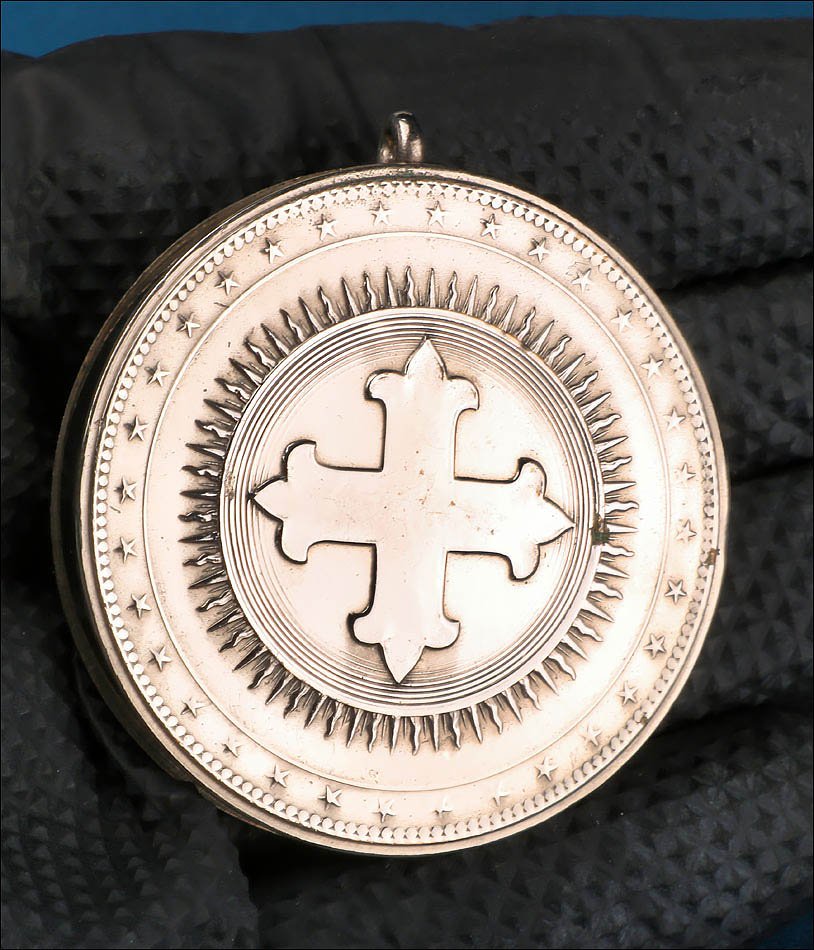
The case is circular, made of silver-plated metal, with an upper suspension ring. The front features a border decorated with stars, while the reverse shows a central cross in relief surrounded by rays, a sober and symbolic decoration that reinforces the religious character of the piece.
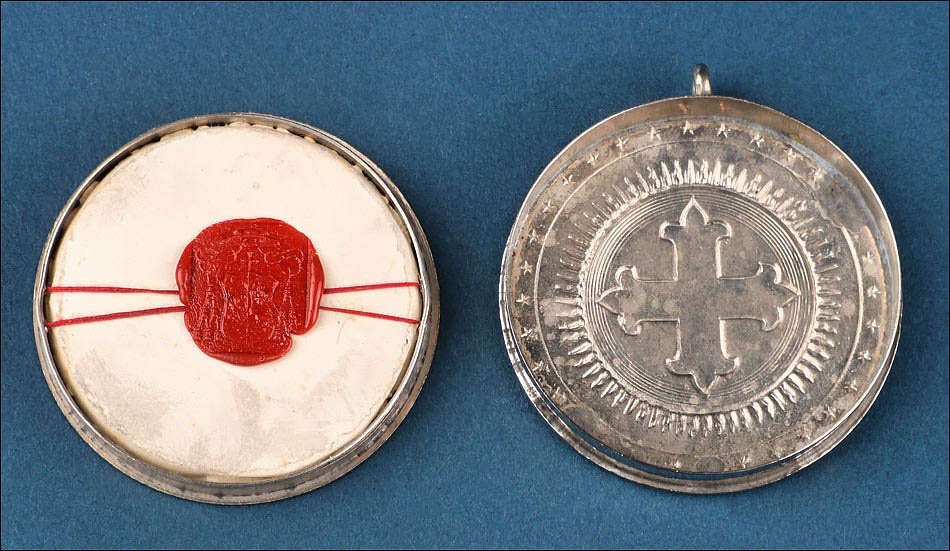
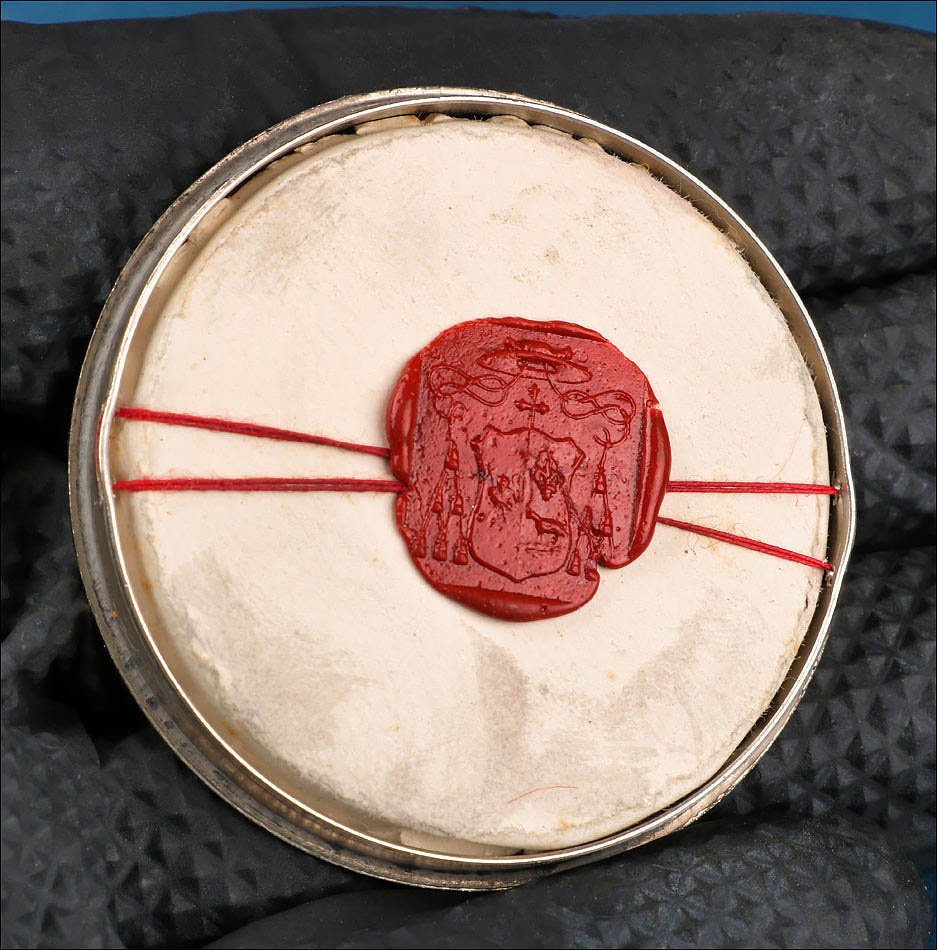
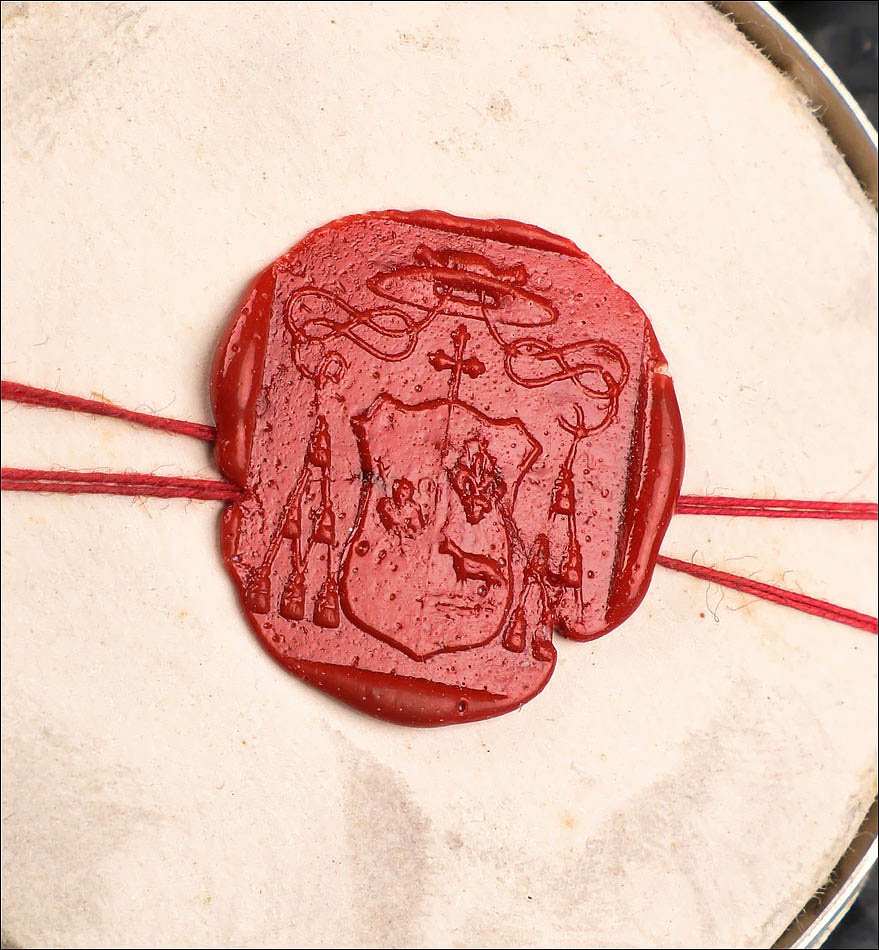
On the inner reverse, it preserves the ecclesiastical wax seal with its red threads, a very important element in this type of reliquary, as it attests to the traditional closing of the piece and reinforces the devotional integrity of the whole. The presence of the wax seal and threads adds extra value, especially for collectors of antique reliquaries.
An especially ideal piece for collectors of antique reliquaries and sacred art, as it brings together in a small format a group of relics of extraordinary spiritual significance. The combined presence of Fathers, Doctors and great saints of the Church gives it a devotional strength far greater than that of an ordinary reliquary. It is not a piece that stands out for material ostentation, but for something far more important: the religious value of the relics it preserves, the coherence of the whole and the emotion of having gathered in a single object figures essential to the history of Christianity. An antique reliquary, authentically pious and highly attractive for a serious collection of religious antiques.
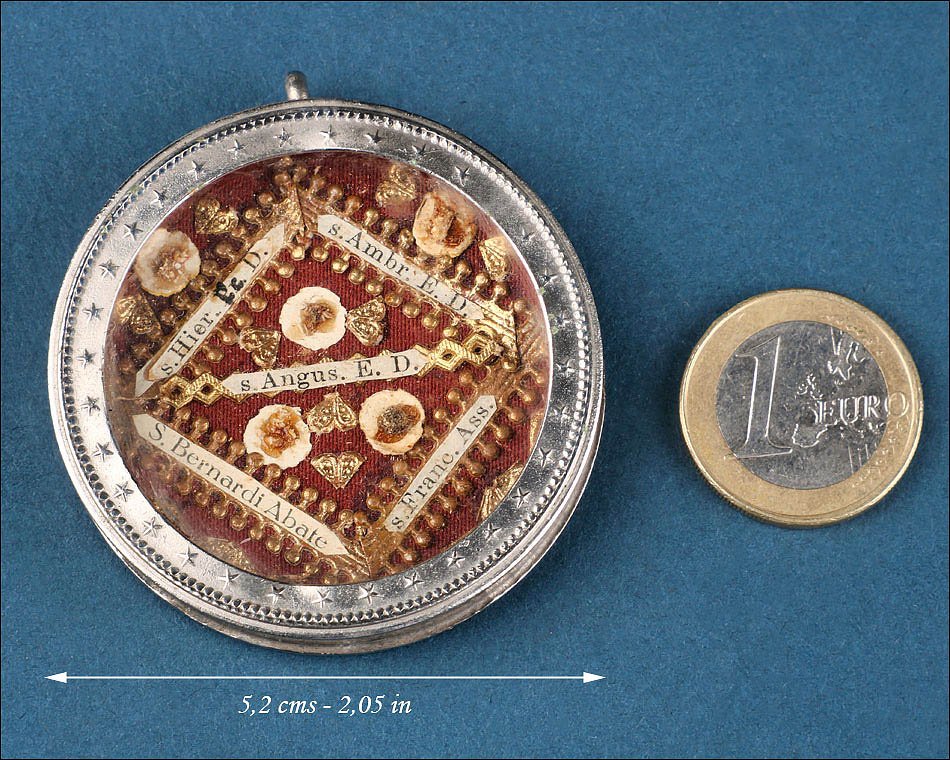
Measurements: 5.2 cm diameter (2.05 in).
The reliquary contains relics of Saint Jerome, Saint Ambrose, Saint Augustine, Saint Bernard and Saint Francis of Assisi. It is a selection of great religious strength, bringing together in a single piece several of the great names in the history of the Church: Fathers, Doctors, bishops, monks and saints of deep popular devotion.
The reliquary contains the following relics, identified by their labels:
• S. Hier. D.: Saint Jerome, Doctor of the Church. Father and Doctor of the Church, born around the year 347 and died in 420. He is one of the fundamental figures of early Christianity, famous for his translation of the Bible into Latin, known as the Vulgate. His life was marked by study, penance, defence of the faith and a profound dedication to the Holy Scriptures.
• S. Ambr. E. D.: Saint Ambrose, Bishop and Doctor of the Church. Bishop of Milan, born around the year 340 and died in 397. He was one of the great figures of the Latin Church, spiritual teacher of Saint Augustine and a firm defender of the spiritual authority of the Church. His doctrinal and pastoral importance made him one of the great Fathers of the West.
• S. Angus. E. D.: Saint Augustine, Bishop and Doctor of the Church. The label corresponds to Saint Augustine, Bishop of Hippo and Doctor of the Church, born in 354 and died in 430. He is one of the greatest theologians of Christianity and an essential figure in Western thought. Author of fundamental works such as Confessions and The City of God, he represents the intellectual, spiritual and doctrinal depth of the early Church.
• S. Bernardi Abbatis: Saint Bernard Abbot, Saint Bernard of Clairvaux, Cistercian abbot, born in 1090 and died in 1153. He was one of the great spiritual voices of the Middle Ages, a monastic reformer, preacher and Doctor of the Church. His figure is deeply linked to contemplative life, devotion to Christ and the Virgin Mary, and the spiritual renewal of medieval monasticism.
• S. Franc. Ass.: Saint Francis of Assisi, founder of the Franciscan Order, born around 1181 or 1182 and died in 1226. He is one of the most universal and beloved saints of Christianity, a model of evangelical poverty, humility, love of creation and radical following of Christ. His presence in the reliquary adds a deeply devotional and popular dimension to the whole.
The presence of these saints together gives the reliquary a special spiritual coherence. Saint Jerome, Saint Ambrose and Saint Augustine represent some of the great doctrinal pillars of the Latin Church. Saint Bernard brings the strength of medieval monastic spirituality, while Saint Francis of Assisi adds the dimension of evangelical poverty, humility and radical love for Christ.
This is not simply a gathering of relics, but a group with great religious meaning: Holy Scripture, theology, episcopal life, monastic life, preaching, penance and evangelical poverty are all represented in a single reliquary. In a small format, the piece concentrates a very rich devotional memory, linked to some of the most important names of the ancient and medieval Church.
The interior is arranged on a red textile background, with a symmetrical and carefully composed design. The relics are presented in small circular thecas, accompanied by their corresponding labels and surrounded by gilded ornamental elements. The whole has a particularly attractive visual presence, with a clear, orderly and deeply devotional arrangement.
The case is circular, made of silver-plated metal, with an upper suspension ring. The front features a border decorated with stars, while the reverse shows a central cross in relief surrounded by rays, a sober and symbolic decoration that reinforces the religious character of the piece.
On the inner reverse, it preserves the ecclesiastical wax seal with its red threads, a very important element in this type of reliquary, as it attests to the traditional closing of the piece and reinforces the devotional integrity of the whole. The presence of the wax seal and threads adds extra value, especially for collectors of antique reliquaries.
An especially ideal piece for collectors of antique reliquaries and sacred art, as it brings together in a small format a group of relics of extraordinary spiritual significance. The combined presence of Fathers, Doctors and great saints of the Church gives it a devotional strength far greater than that of an ordinary reliquary. It is not a piece that stands out for material ostentation, but for something far more important: the religious value of the relics it preserves, the coherence of the whole and the emotion of having gathered in a single object figures essential to the history of Christianity. An antique reliquary, authentically pious and highly attractive for a serious collection of religious antiques.
Measurements: 5.2 cm diameter (2.05 in).
Explore similar pieces and discover your ideal find:
Christian Art