THIS OBJECT WAS SOLD
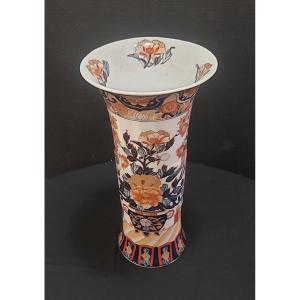
Vase With Phoenixes, Yamamoto, Arita - Imari, Japan, Meiji Period (1868-1912).
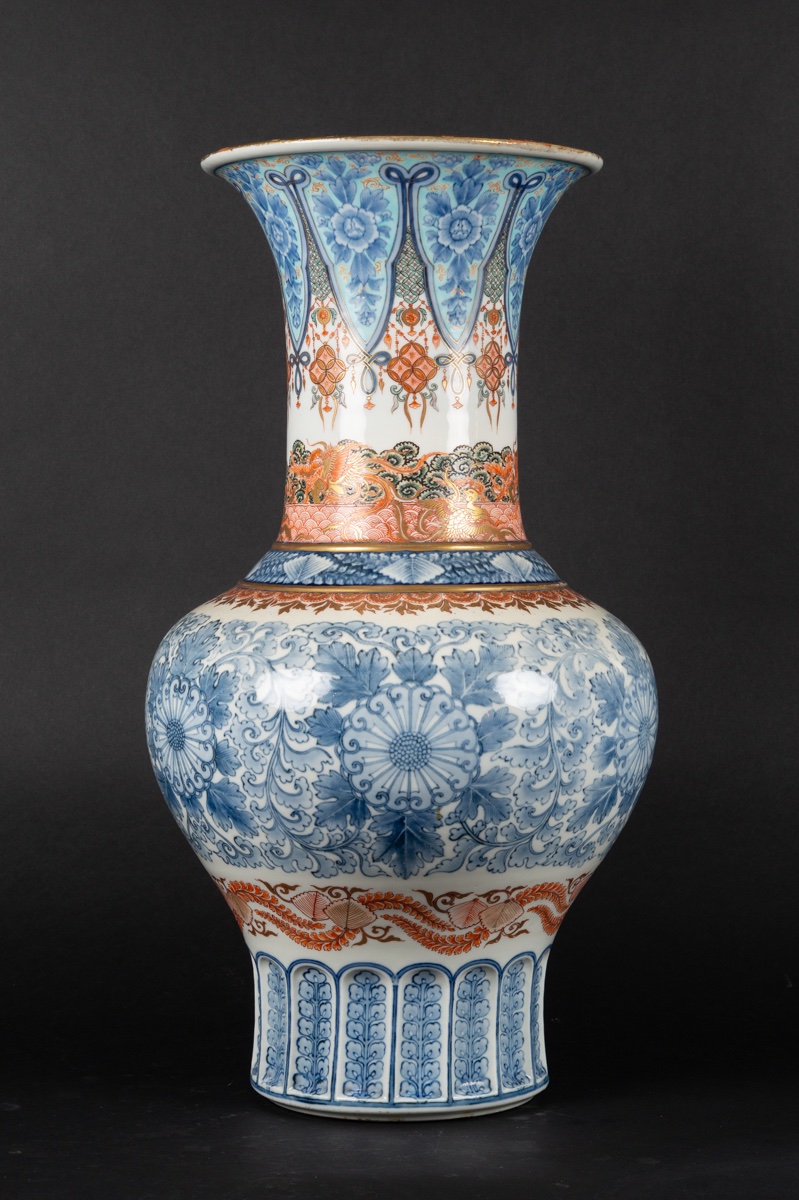
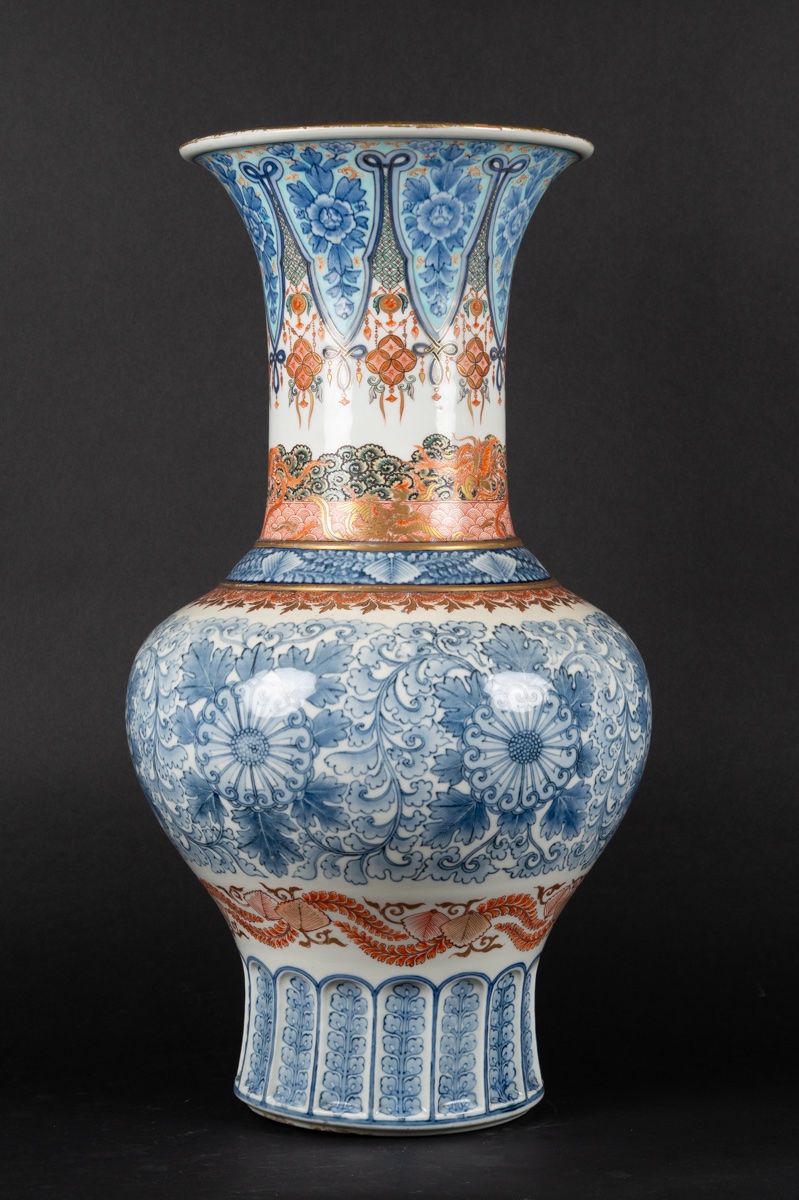
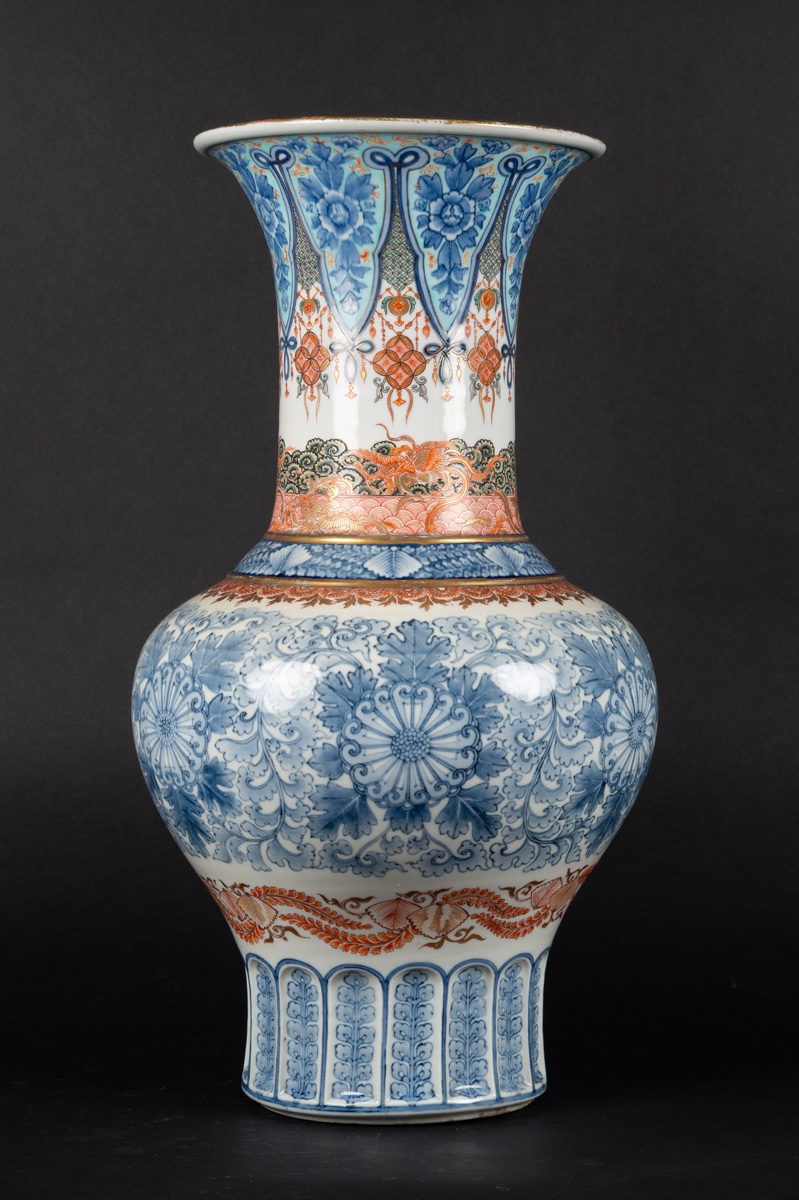
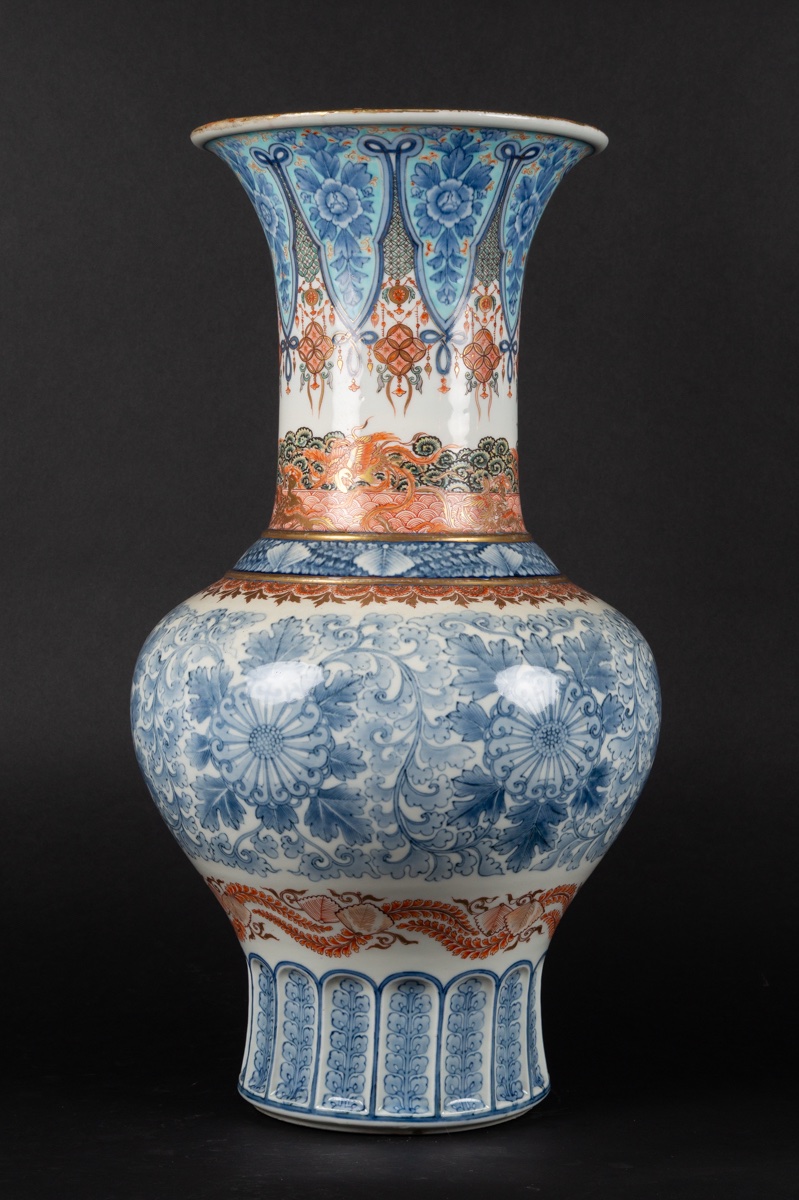
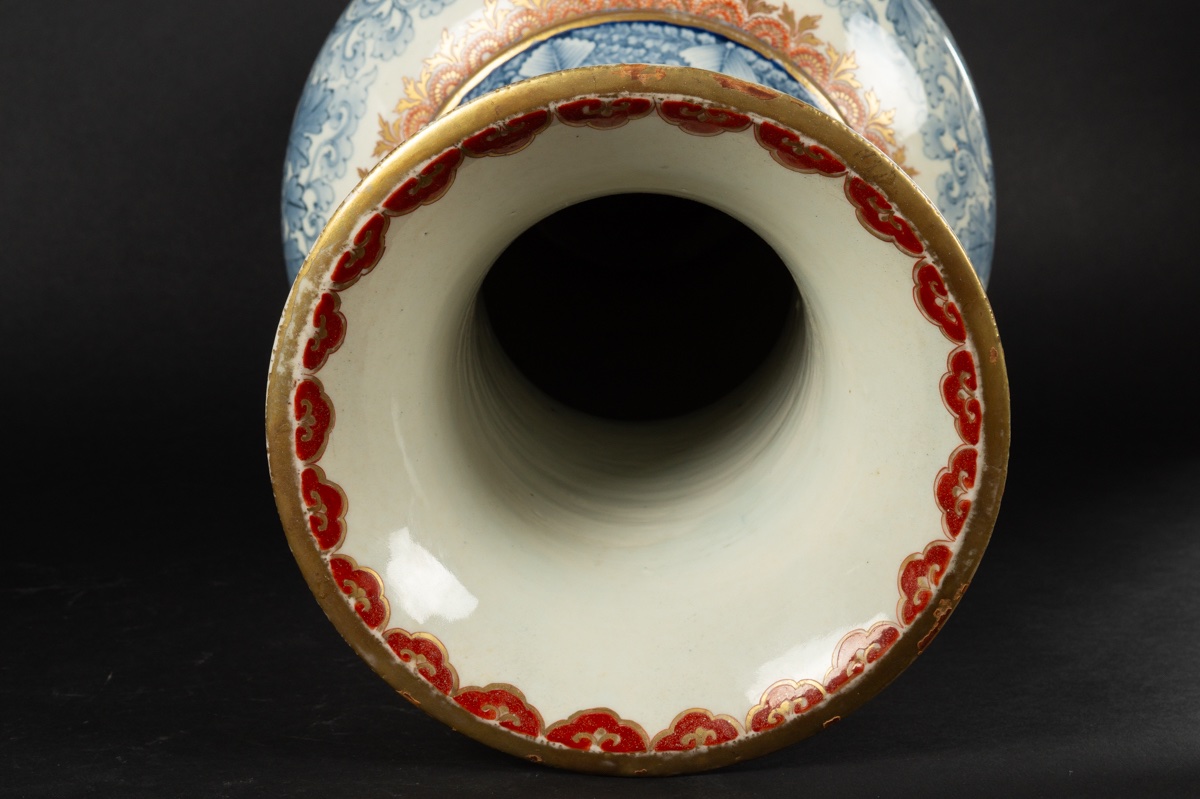
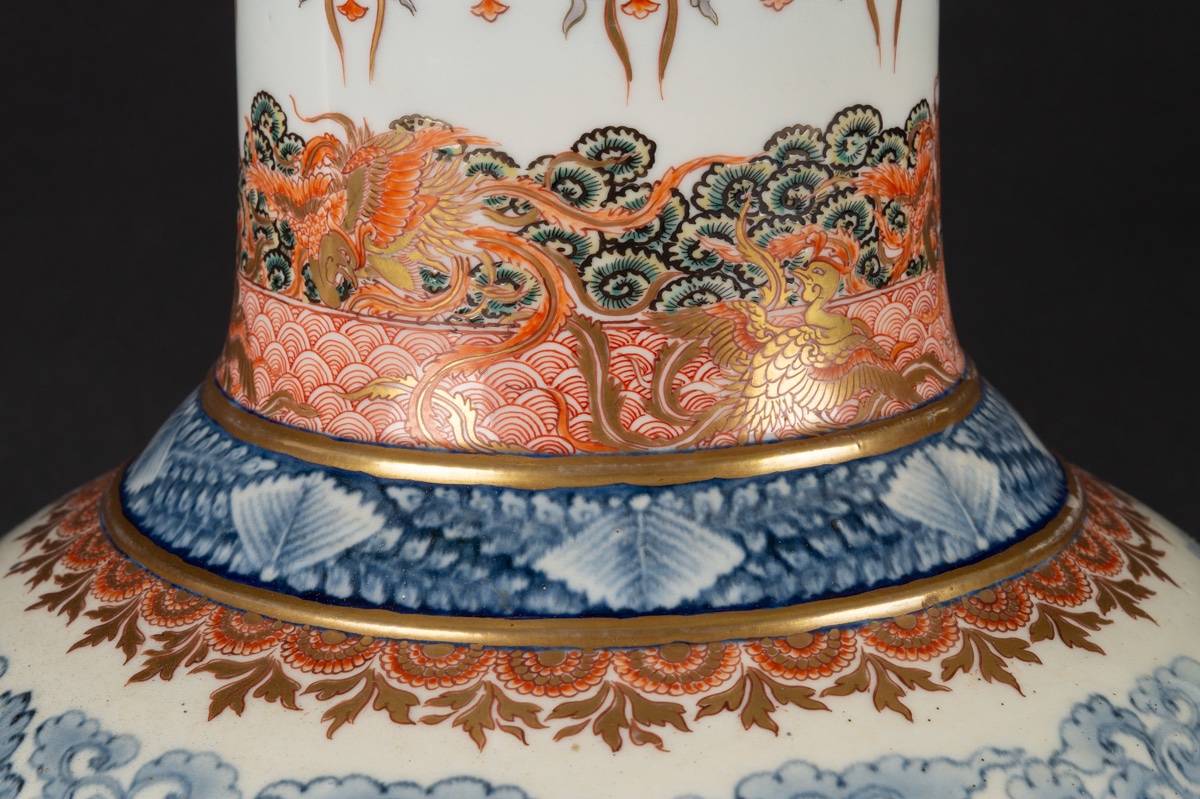
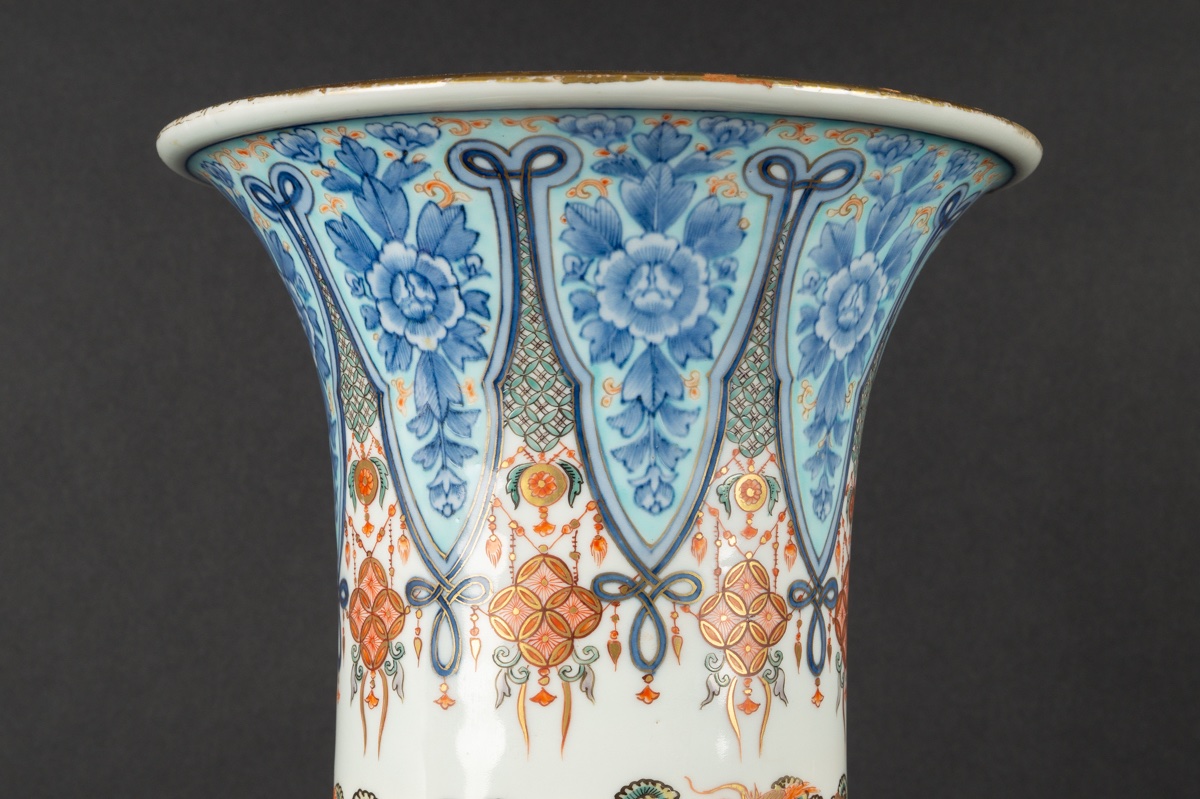
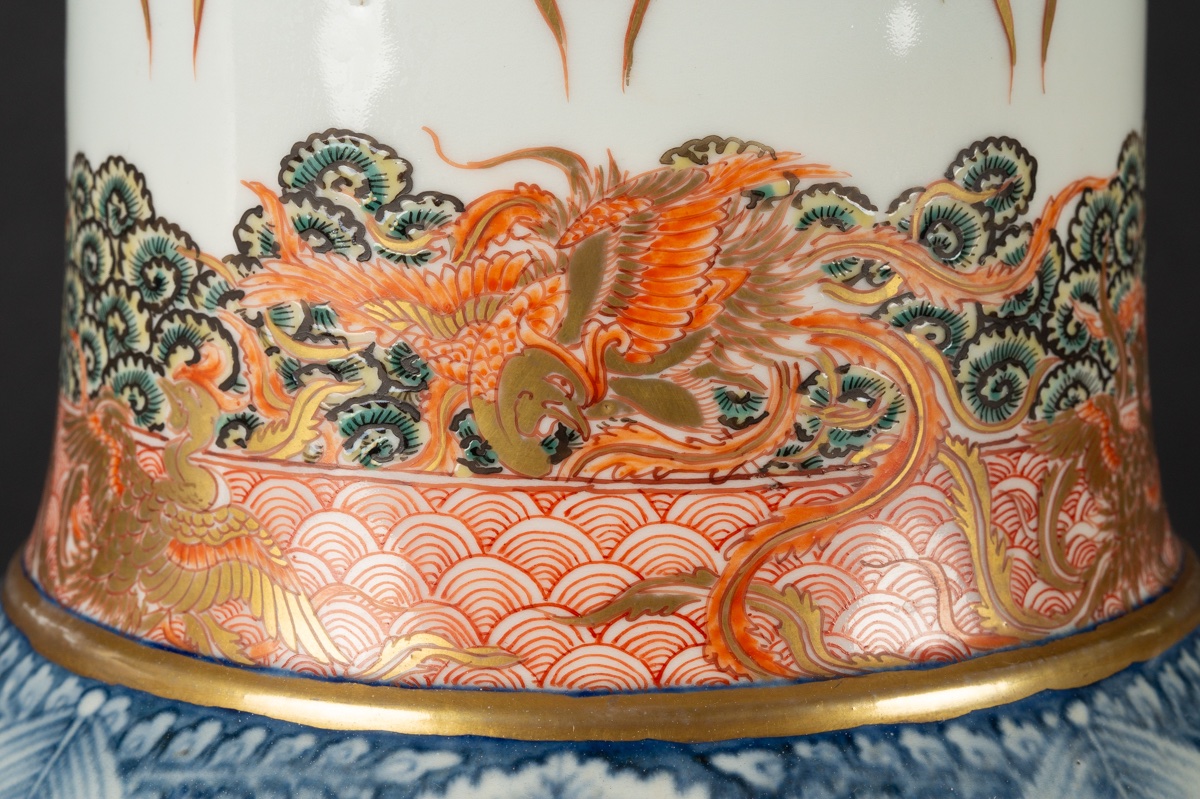
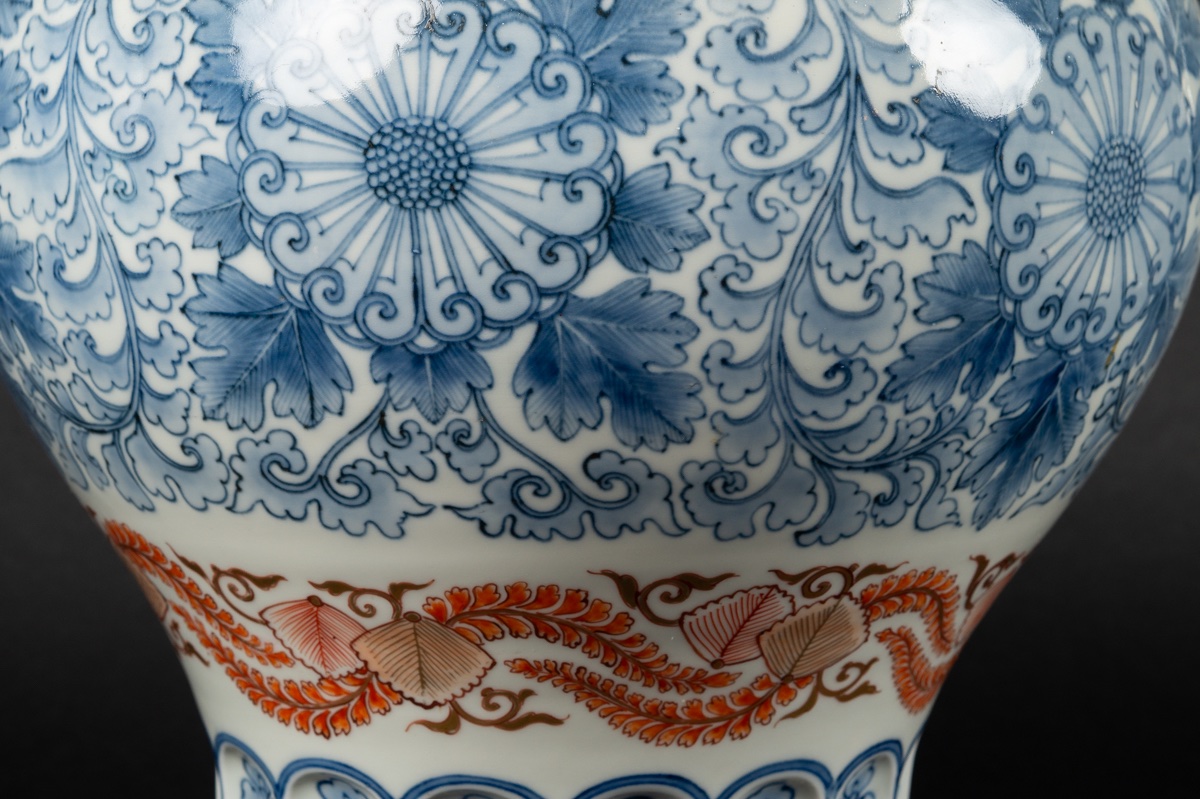
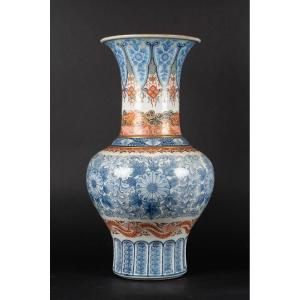


Porcelain vase with hand-painted decoration. It features a monumental shape (55 cm high) with a widely flared neck, a slender neck, a domed body and a clearly distinct, decorated foot.
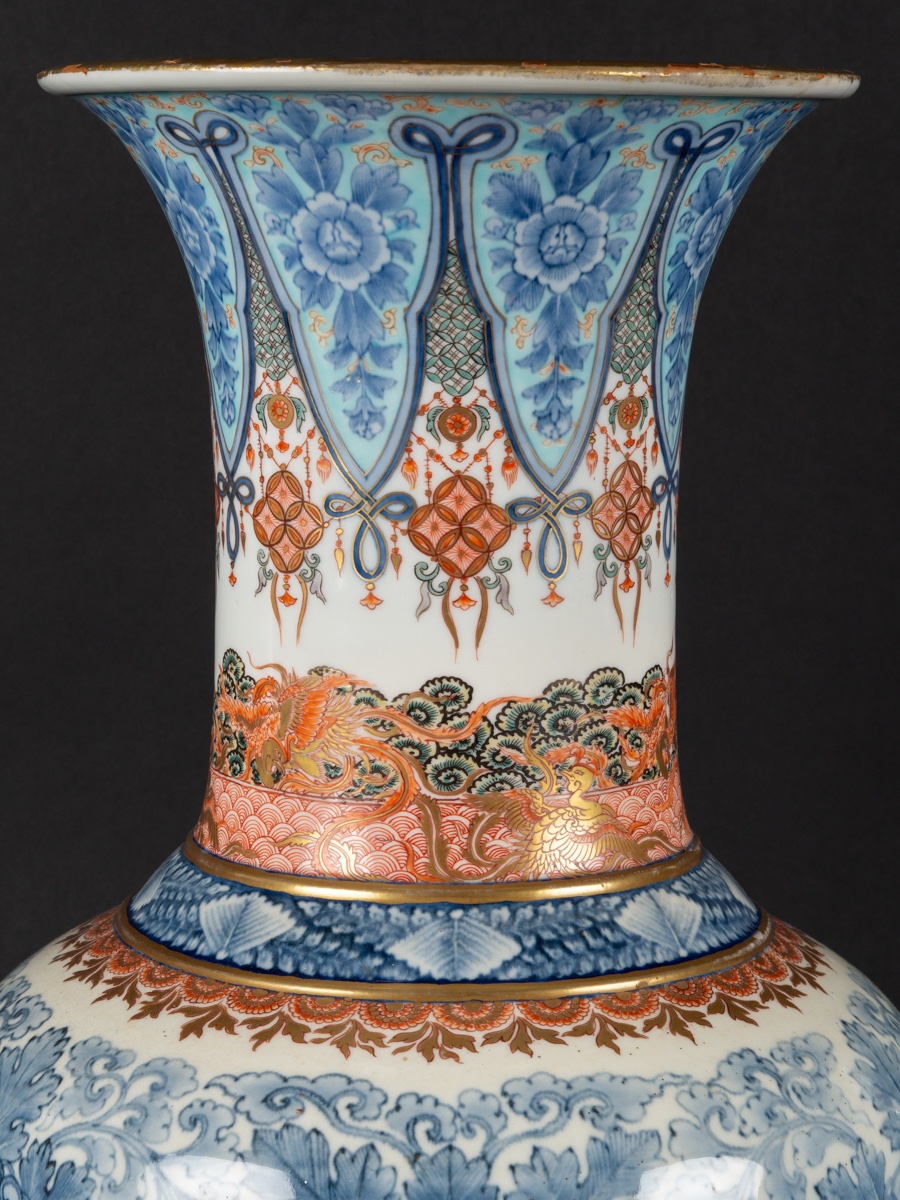
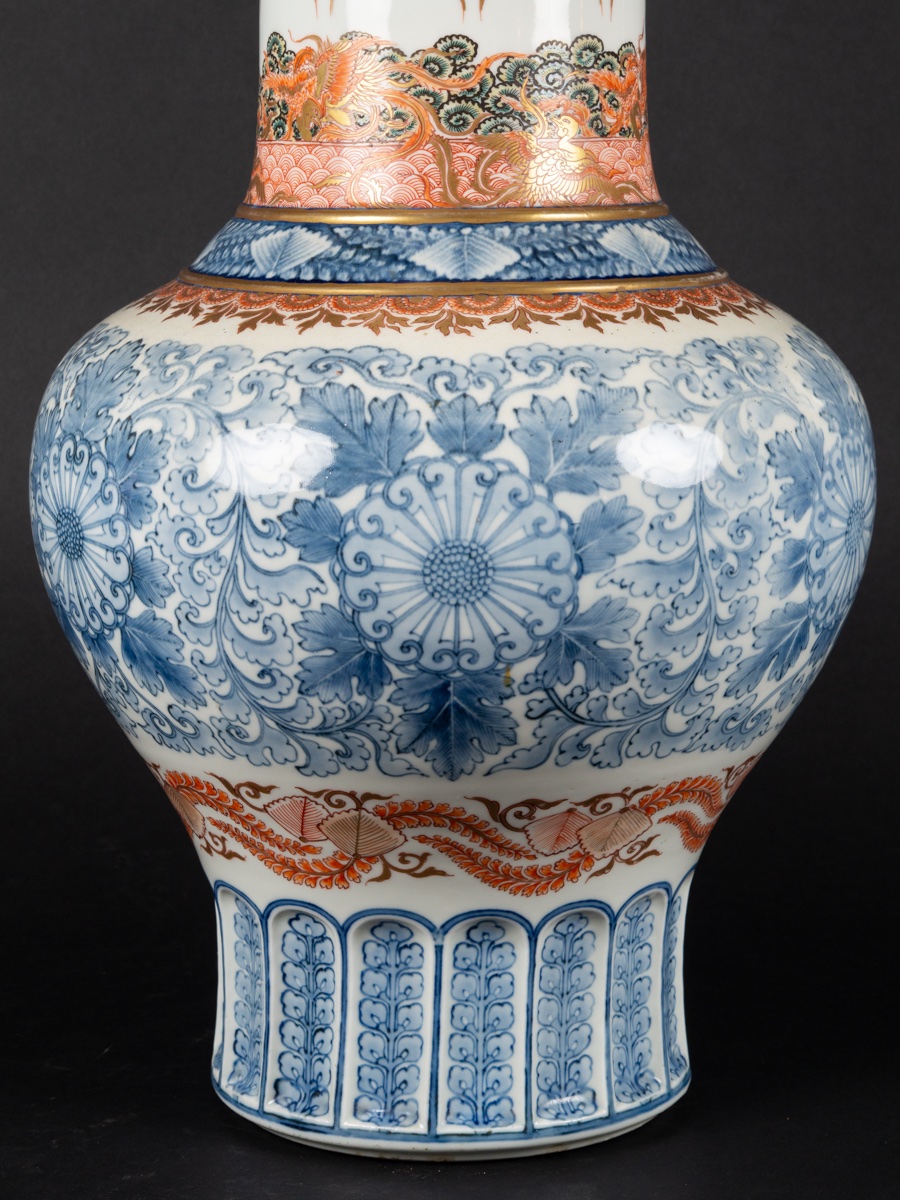
The technique used is that of porcelain painted under cobalt glaze (blue parts) and over glaze with colored enamels and rich gilding (the so-called "Kinrande" style). On the neck of the vase, the Japanese artist has depicted mythological Hō-ō birds (Japanese phoenixes) flying amidst old pine trees (matsu) and a traditional Japanese wave motif (seigaiha). In Japanese culture, the phoenix and pine are powerful symbols of immortality, rebirth, prosperity and longevity. The body of the vase is dominated by a dense, dynamic vegetal motif called Karakusa (intertwined vines), into which large, geometrically stylized chrysanthemums (Kiku) are integrated. In Japan, the chrysanthemum is the symbol of the sun, autumn and the emblem of the imperial family.
Arita - Imari, Japan, Meiji era (1868-1912).
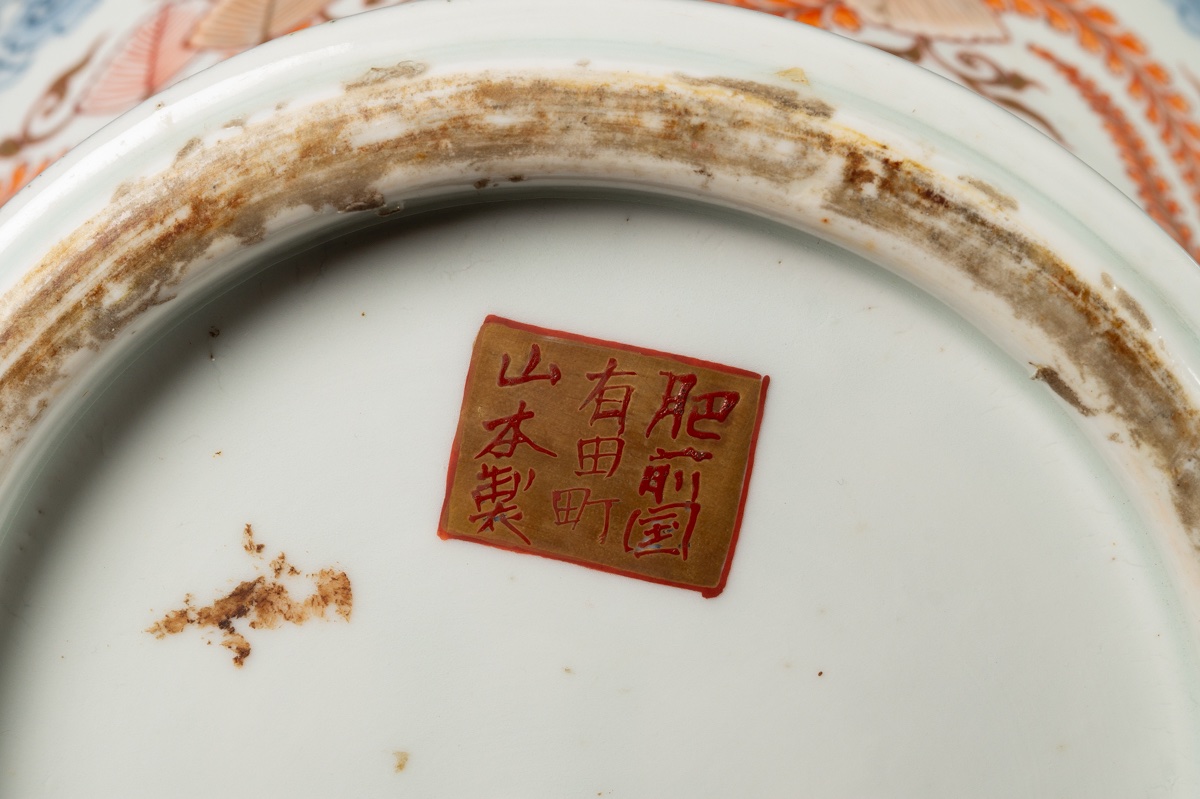
Signature:
肥前国 (Hizen no Kuni) - Province of Hizen
有田町 (Arita-chō) - City of Arita
山本製 (Yamamoto sei) - Made in the Yamamoto workshop.
Height 55 cm, diameter 30 cm.
Very good condition, slight traces of gilding wear.
Delivery to be agreed.
The technique used is that of porcelain painted under cobalt glaze (blue parts) and over glaze with colored enamels and rich gilding (the so-called "Kinrande" style). On the neck of the vase, the Japanese artist has depicted mythological Hō-ō birds (Japanese phoenixes) flying amidst old pine trees (matsu) and a traditional Japanese wave motif (seigaiha). In Japanese culture, the phoenix and pine are powerful symbols of immortality, rebirth, prosperity and longevity. The body of the vase is dominated by a dense, dynamic vegetal motif called Karakusa (intertwined vines), into which large, geometrically stylized chrysanthemums (Kiku) are integrated. In Japan, the chrysanthemum is the symbol of the sun, autumn and the emblem of the imperial family.
Arita - Imari, Japan, Meiji era (1868-1912).
Signature:
肥前国 (Hizen no Kuni) - Province of Hizen
有田町 (Arita-chō) - City of Arita
山本製 (Yamamoto sei) - Made in the Yamamoto workshop.
Height 55 cm, diameter 30 cm.
Very good condition, slight traces of gilding wear.
Delivery to be agreed.
Explore similar pieces and discover your ideal find:
Porcelain Serveware