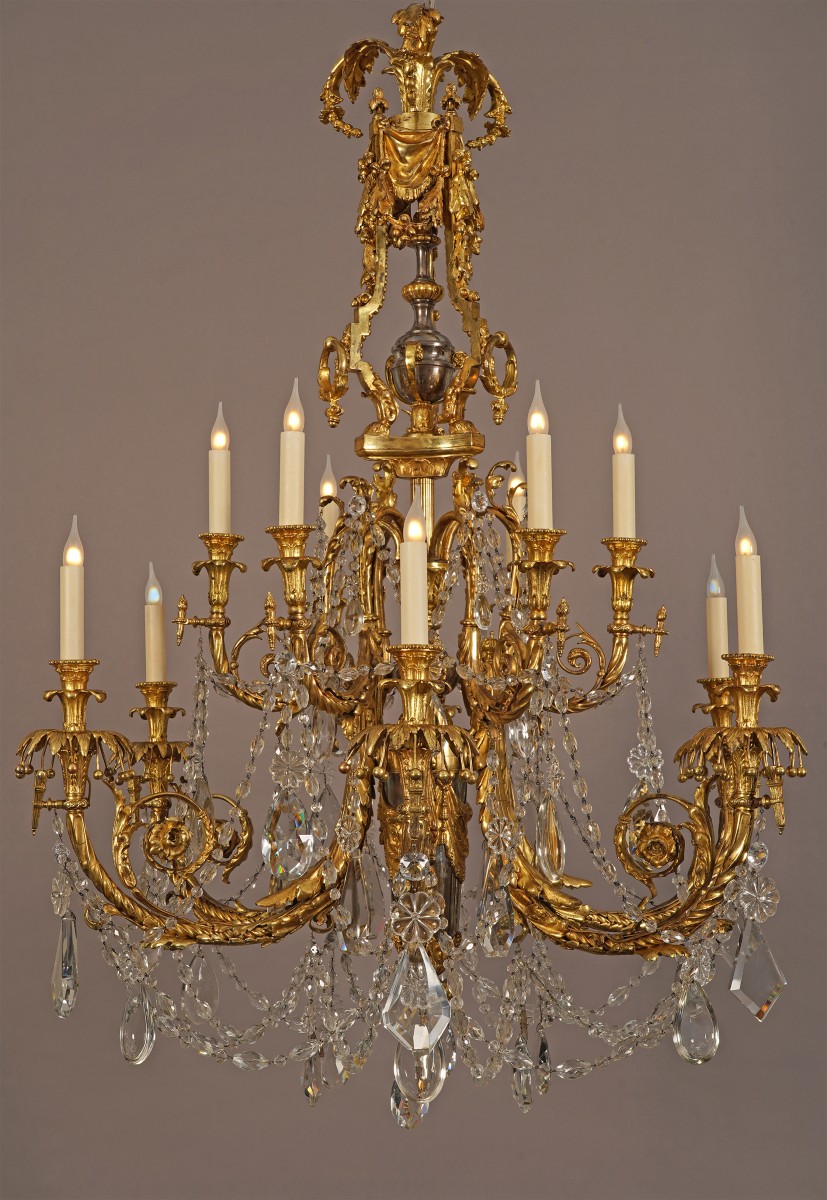
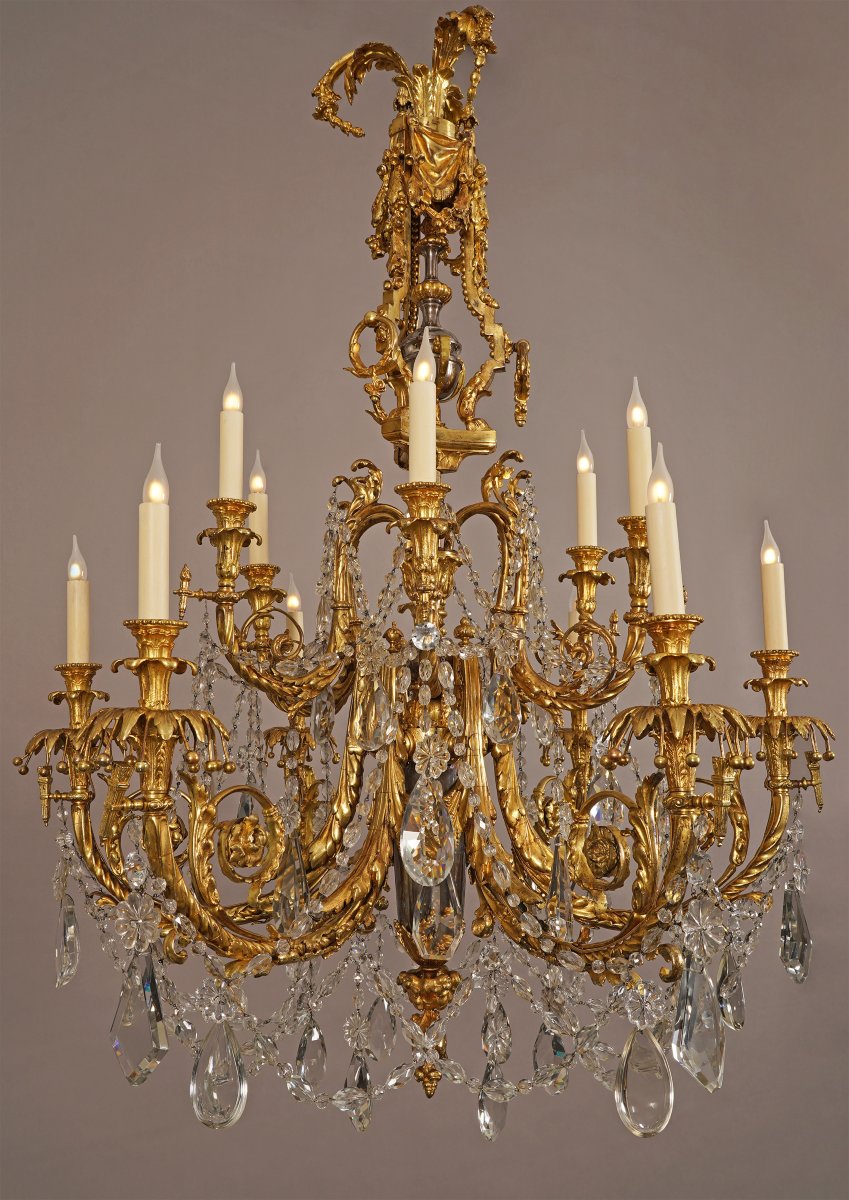
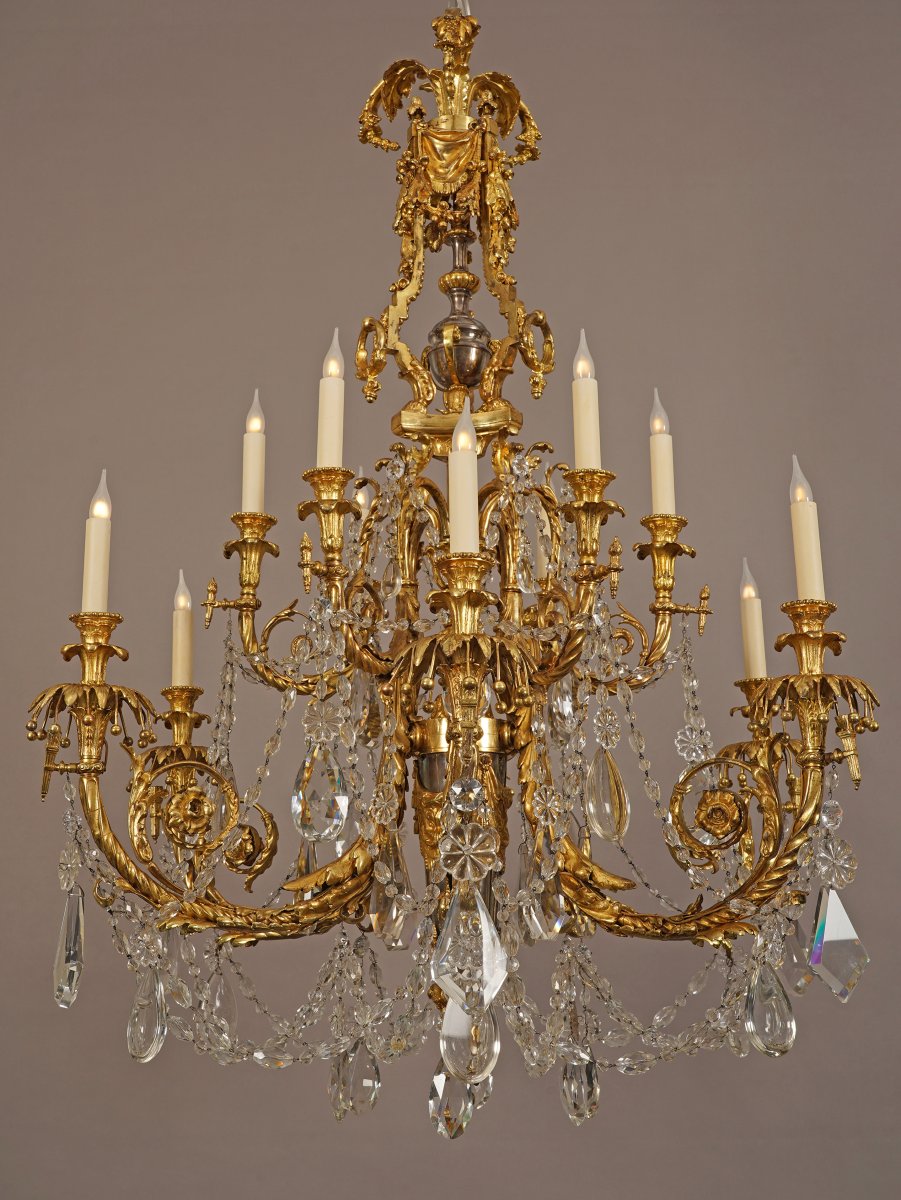
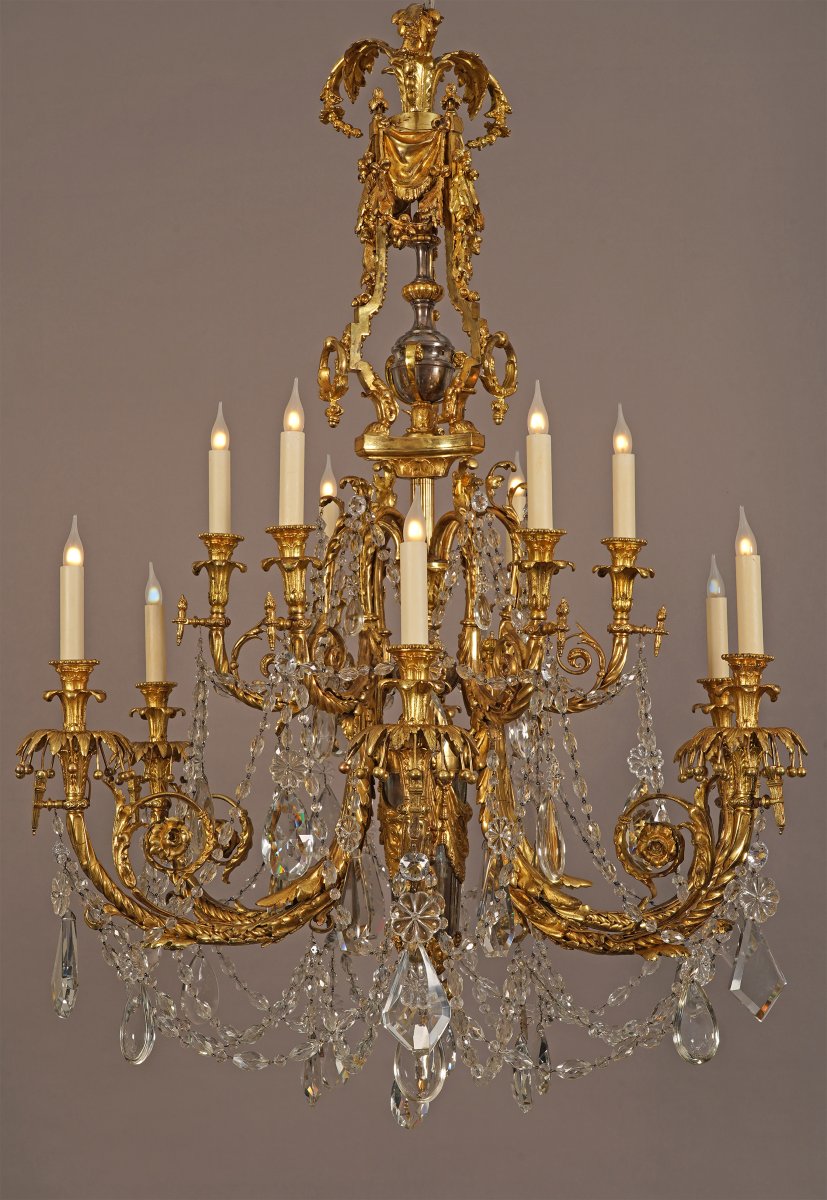
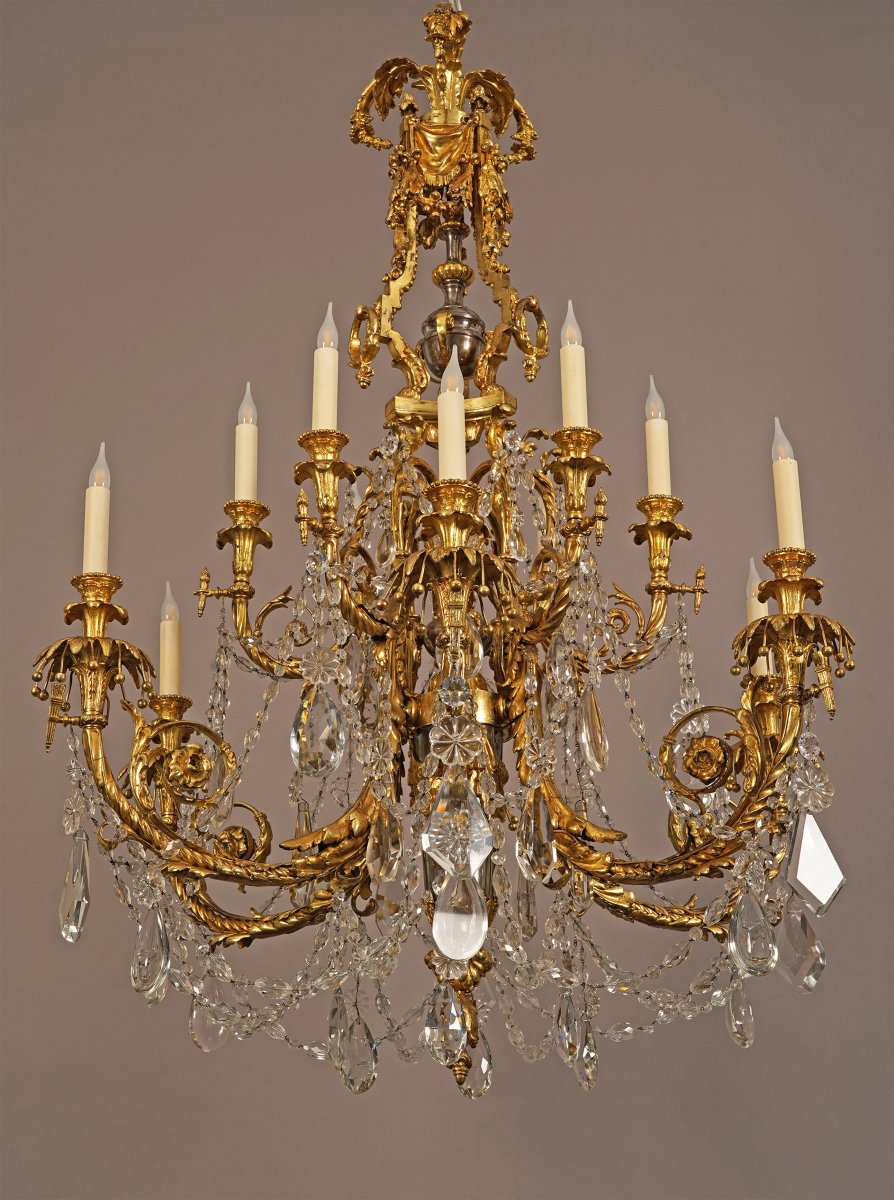
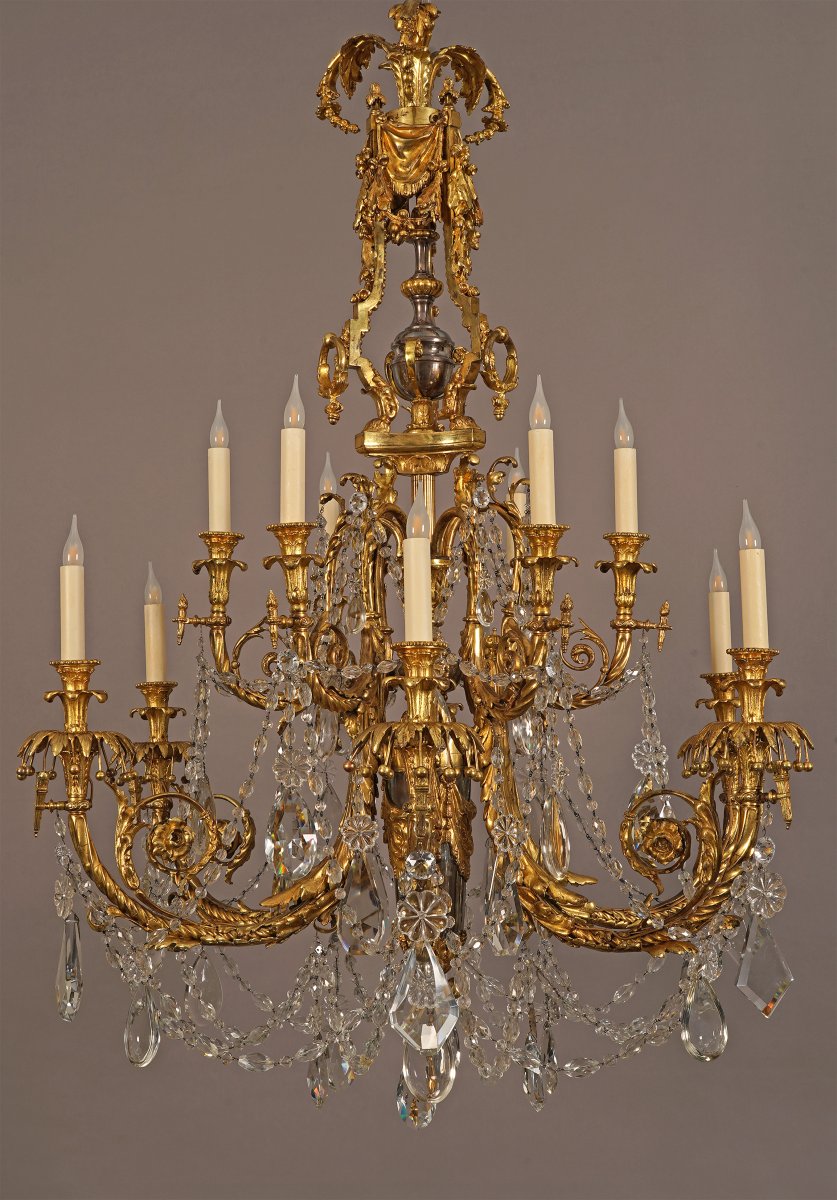


Lacarriere, Delatour Et Cie, "acanthus" Chandelier, France, Circa 1870
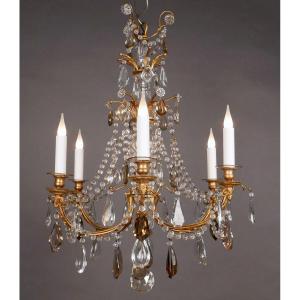
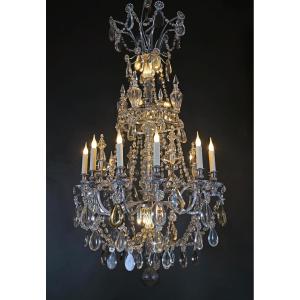
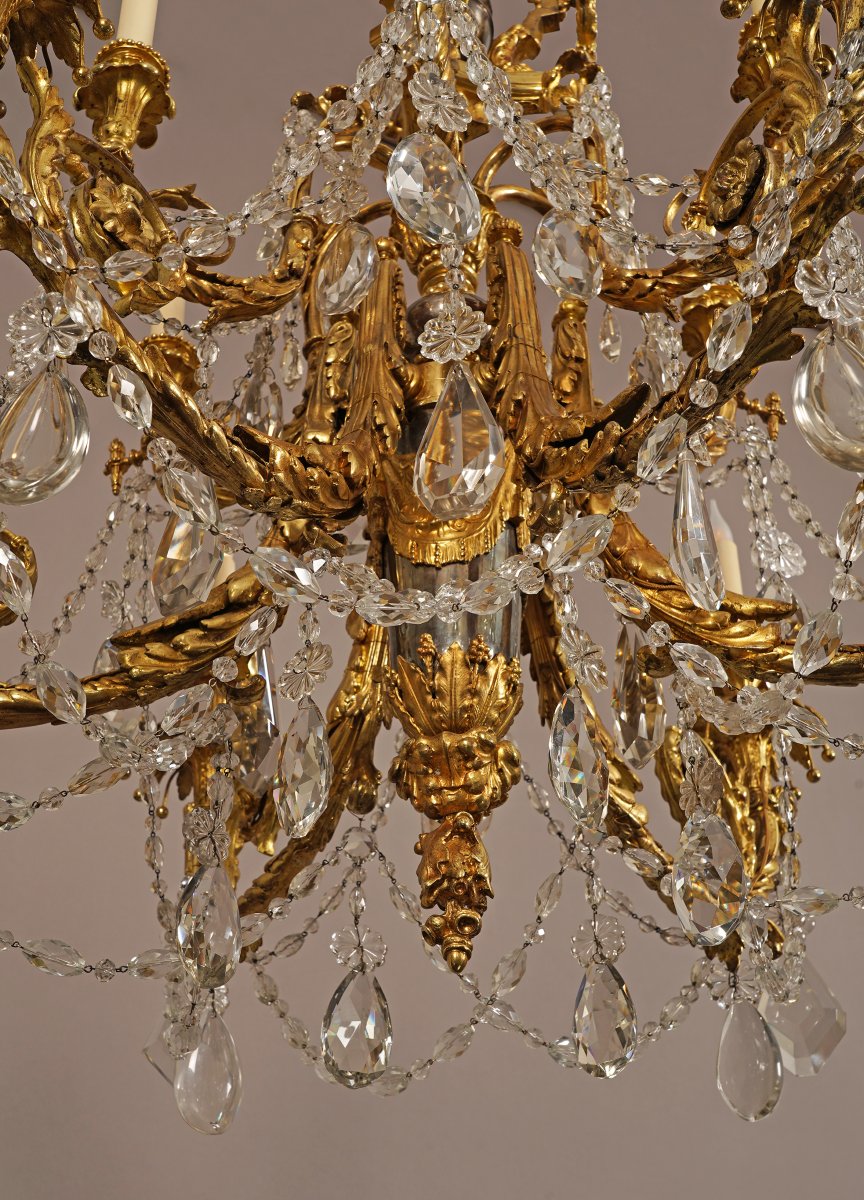
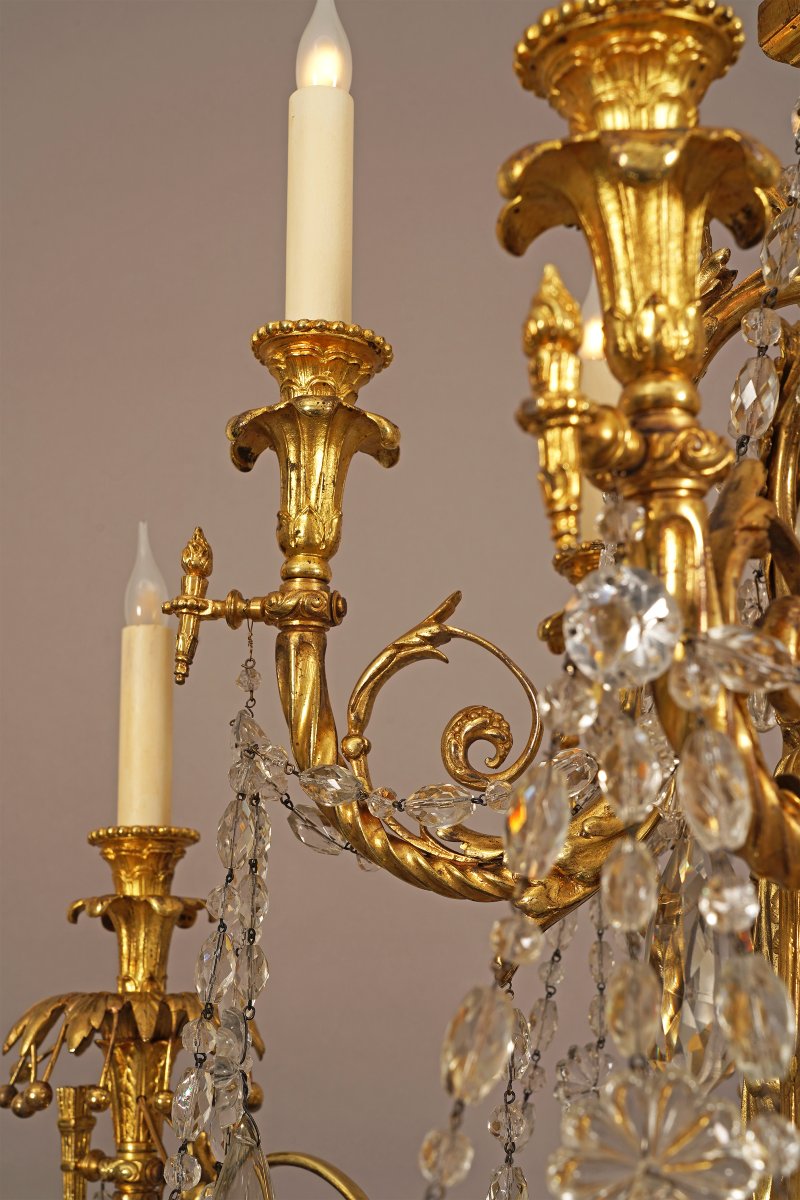
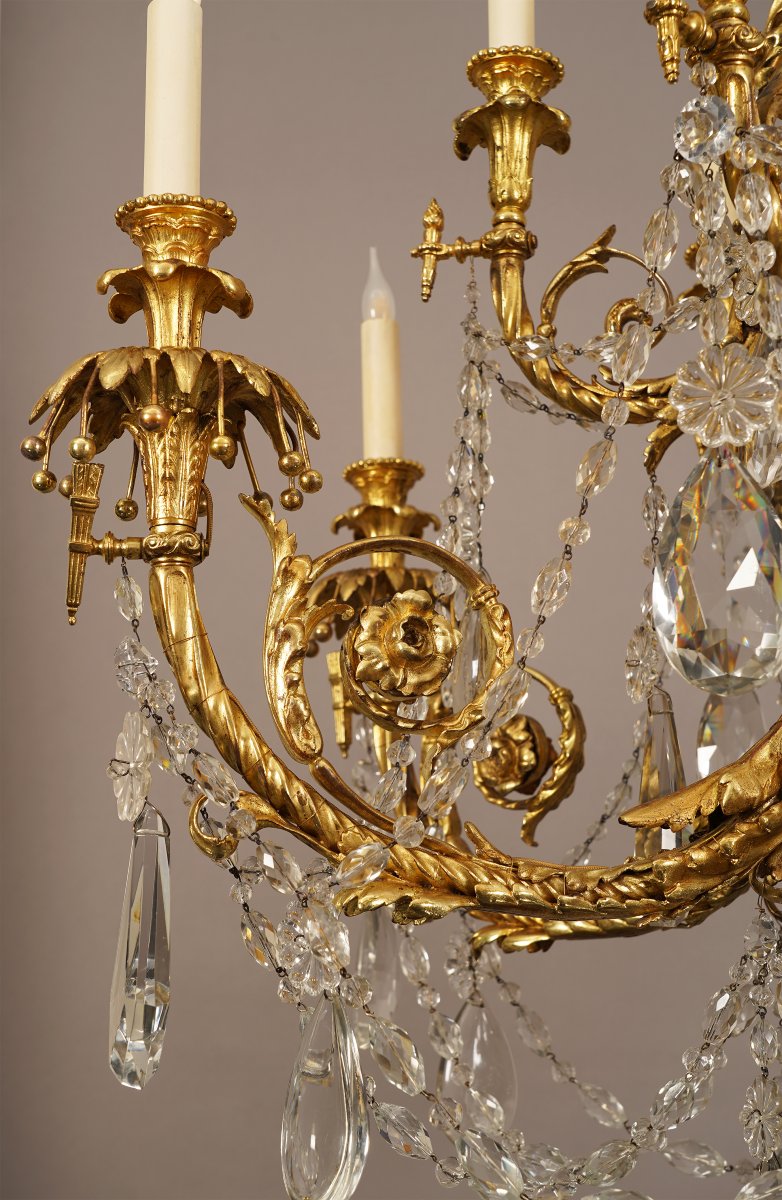
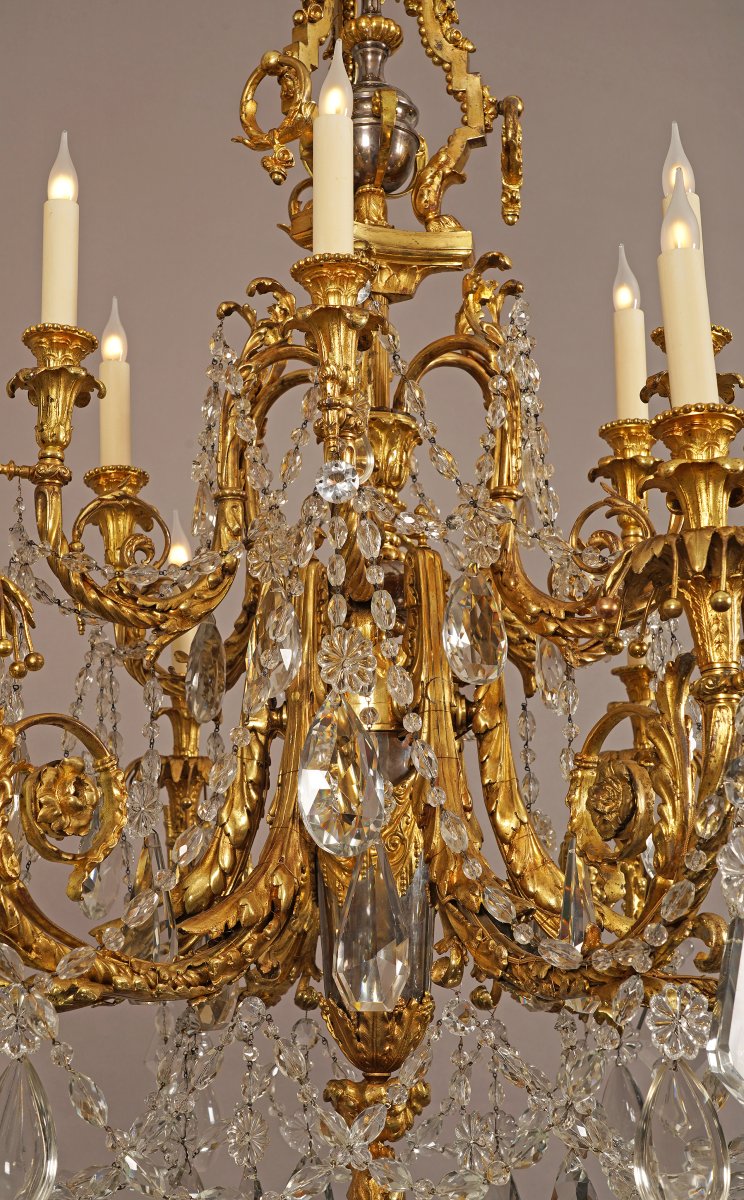
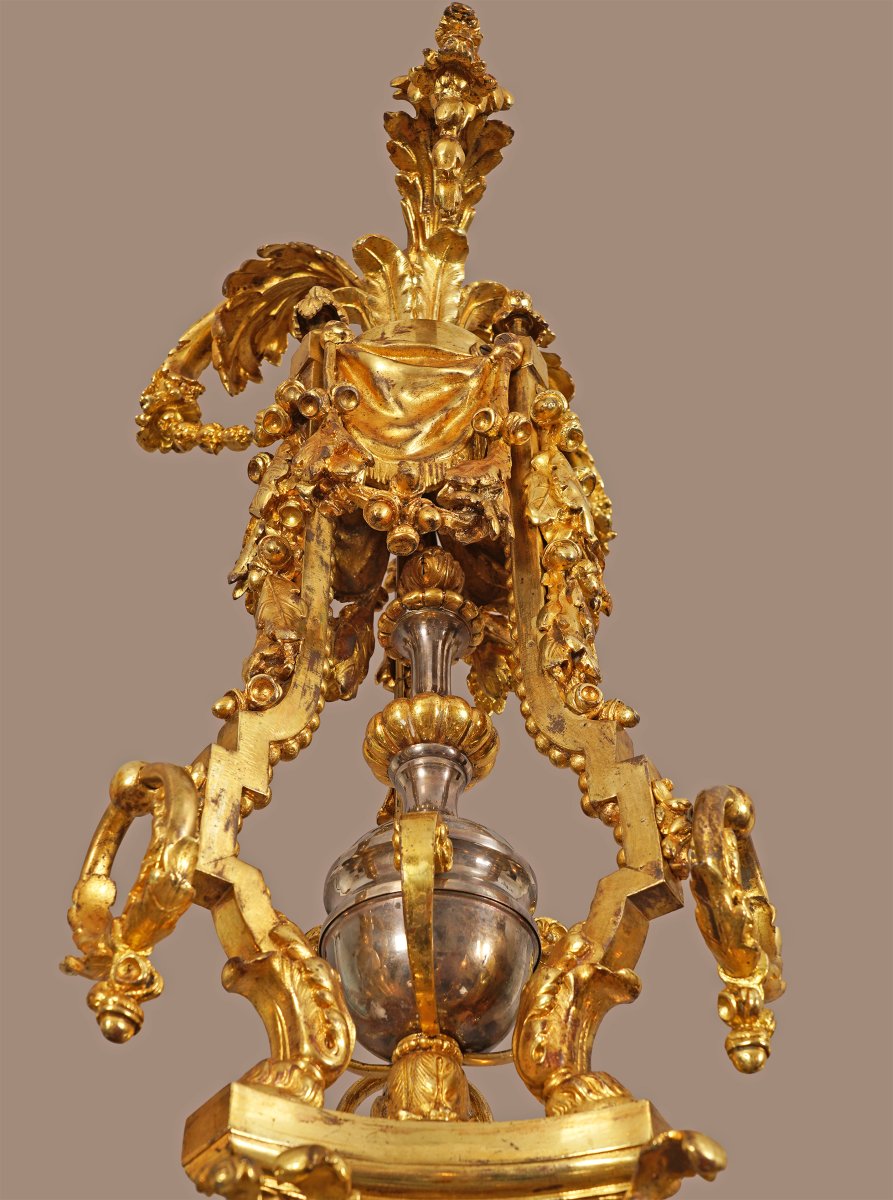
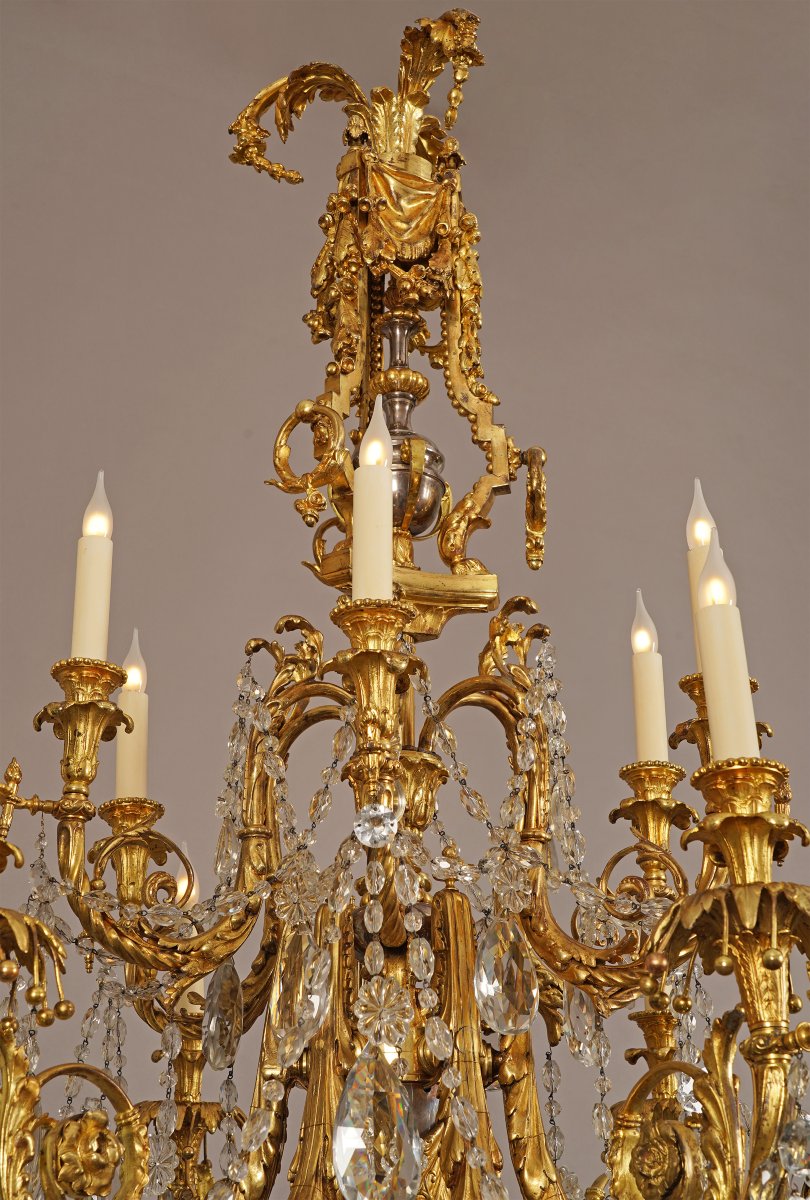
Exceptional Louis XVI-inspired twelve-light chandelier in "canon de fusil" patinated and gilded bronze attr. to Lacarriere, Delatour et Cie, richly adorned with rosettes, garlands, pearls, prisms, and cut faceted crystal pendants. The central shaft, composed of a basin draped with engraved interlacing motifs and ending in a finial decorated with foliage and tassels, is surmounted by a fluted column crowned with an urn. It supports two tiers of six twisted light-arms with double scrolls, highlighted with acanthus leaves, featuring palm leaves with hanging seed motifs, and embellished with quivers and torches. The upper section of the chandelier is formed by finely chased lambrequins suspended between three architecturally designed supports lavishly decorated with cascading acanthus leaves and tassels. The top flares into a plume of swirling acanthus leaves.
Biography :
Lacarrière established a factory in 1825 at 3 bis, rue Sainte-Elisabeth. He specialized and excelled in the application of bronze in lighting fixtures. He received an honorable mention in 1834, a bronze medal in 1839, and a silver medal in 1844 for a large candelabra with a triangular base, prefiguring the one presented at the Universal Exhibition in London in 1862. He also participated in the design of the chandelier for the Queen’s Theatre in London. From 1851 to 1870, he changed his company name several times. Lacarrière, Delatour et Cie (active in 1870) cast and chiseled the majority of the lampposts, candelabras and chandeliers of the Paris Opera, including that of the hall, designed by Charles Garnier, the architect of the Opera, and modeled by Corboz. At the Universal Exhibition of 1878, the catalog wrote that “their exhibition demonstrates great skill and very pure taste in lighting bronzes intended for private homes.” In 1900, the company named Lacarrière et Cie supplied the fourteen monumental candelabras of the Pont Alexandre III, in Paris; a true tour de force at the time, since the largest of these pieces weighed 667 kg, for a height of 4.50 m and a diameter of 4.70 m.
Biography :
Lacarrière established a factory in 1825 at 3 bis, rue Sainte-Elisabeth. He specialized and excelled in the application of bronze in lighting fixtures. He received an honorable mention in 1834, a bronze medal in 1839, and a silver medal in 1844 for a large candelabra with a triangular base, prefiguring the one presented at the Universal Exhibition in London in 1862. He also participated in the design of the chandelier for the Queen’s Theatre in London. From 1851 to 1870, he changed his company name several times. Lacarrière, Delatour et Cie (active in 1870) cast and chiseled the majority of the lampposts, candelabras and chandeliers of the Paris Opera, including that of the hall, designed by Charles Garnier, the architect of the Opera, and modeled by Corboz. At the Universal Exhibition of 1878, the catalog wrote that “their exhibition demonstrates great skill and very pure taste in lighting bronzes intended for private homes.” In 1900, the company named Lacarrière et Cie supplied the fourteen monumental candelabras of the Pont Alexandre III, in Paris; a true tour de force at the time, since the largest of these pieces weighed 667 kg, for a height of 4.50 m and a diameter of 4.70 m.
62 000 €
Period: 19th century
Style: Napoleon 3rd
Condition: Good condition
Material: Bronze
Diameter: 100
Height: 130
Reference (ID): 1766709
Availability: In stock
Print