

Pair Of Chairs Stamped G.jacob
Artist: Georges Jacob
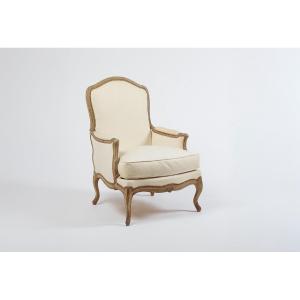
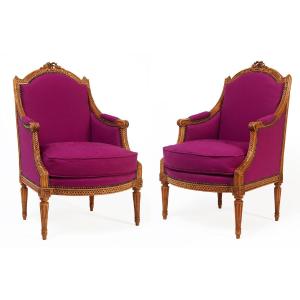
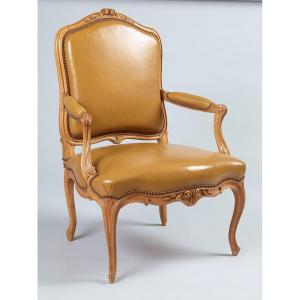
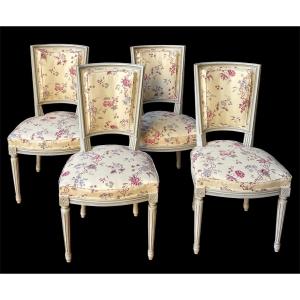
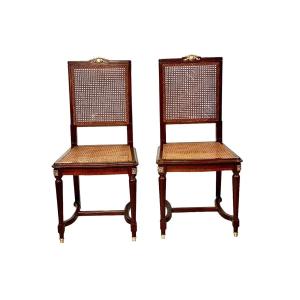
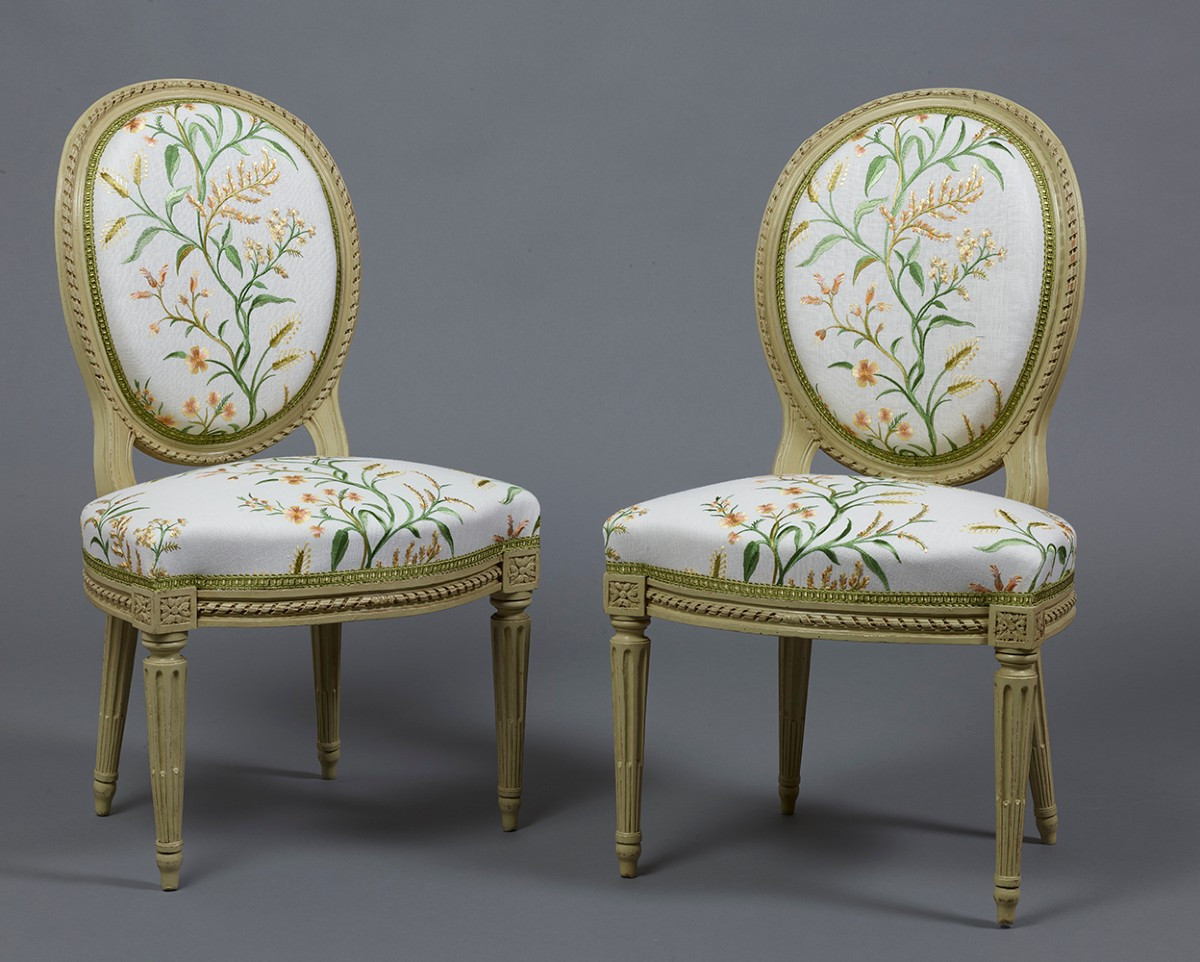
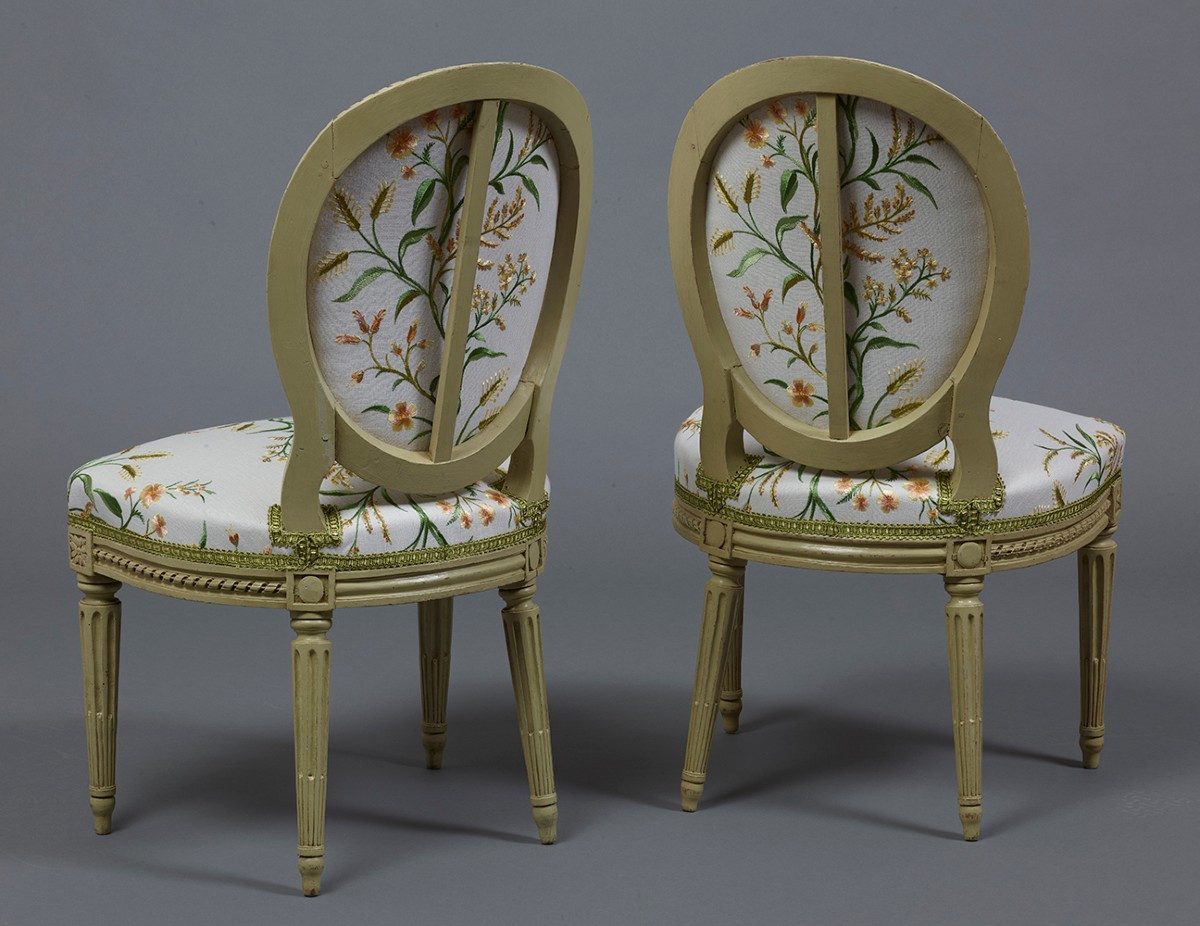
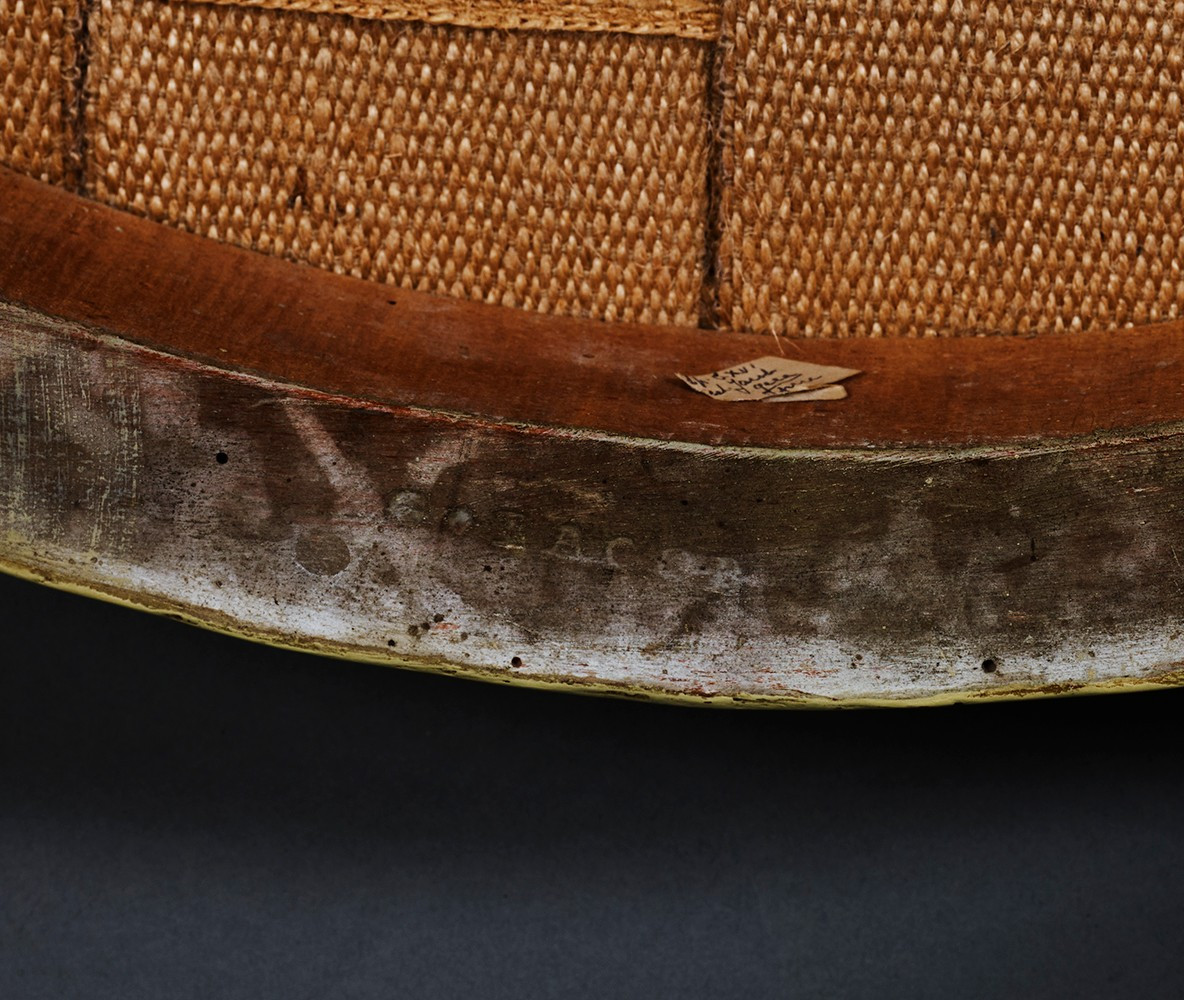
Pair of grey-green lacquered wood chairs molded and carved with ribbons, resting on four fluted and filleted legs, stamped G. Jacob (reçu maitre en 1765) of the L.XVI period.
Recovered upholstery
Soleil Amarante fabric by Pierre Frey
Georges Jacob, reçu Maitre in September 1765, was the most famous 18th-century cabinetmaker, covering all styles from the L.XV to the Consulate.
In 1767, he founded his own workshop after working for L. Delanois, from whom he acquired mastery of new styles.
His high quality of execution propelled him into the upper echelons of the Royal Family: the King and Queen, as well as the Comte de Provence (Brother of the King), the Comte d'Artois (Brother of the King), the Prince de Condé, the Duc de Penthièvre...were his major clients!
The number, quality, diversity and innovations made Georges Jacob a true precursor.
But it was under the L.XVI style that G. Jacob's art really came into its own: he invented a new style, a new style, a new style. It is more in the arrangement and decoration of the legs and armrests of the armchairs that we come across formulas that were imagined by Georges Jacob.
Many of his chairs rest on tapered legs with rudé flutes.
These legs are connected to the belt by a thimble or case, decorated with a rosette.
This element was used for the 1st time by Jacob or his master Delanois.
Versailles, Trianon, Fontainebleau, Saint Cloud, Rambouillet abound with his seats.
Thanks to his friendship with painter Louis David, Jacob made it through the turmoil of the Revolution unscathed, and continued to produce seats and furniture with his sons in the early 19th century.
He would remain the greatest French seat master of the 18th century and the precursor of the Empire seat.
Recovered upholstery
Soleil Amarante fabric by Pierre Frey
Georges Jacob, reçu Maitre in September 1765, was the most famous 18th-century cabinetmaker, covering all styles from the L.XV to the Consulate.
In 1767, he founded his own workshop after working for L. Delanois, from whom he acquired mastery of new styles.
His high quality of execution propelled him into the upper echelons of the Royal Family: the King and Queen, as well as the Comte de Provence (Brother of the King), the Comte d'Artois (Brother of the King), the Prince de Condé, the Duc de Penthièvre...were his major clients!
The number, quality, diversity and innovations made Georges Jacob a true precursor.
But it was under the L.XVI style that G. Jacob's art really came into its own: he invented a new style, a new style, a new style. It is more in the arrangement and decoration of the legs and armrests of the armchairs that we come across formulas that were imagined by Georges Jacob.
Many of his chairs rest on tapered legs with rudé flutes.
These legs are connected to the belt by a thimble or case, decorated with a rosette.
This element was used for the 1st time by Jacob or his master Delanois.
Versailles, Trianon, Fontainebleau, Saint Cloud, Rambouillet abound with his seats.
Thanks to his friendship with painter Louis David, Jacob made it through the turmoil of the Revolution unscathed, and continued to produce seats and furniture with his sons in the early 19th century.
He would remain the greatest French seat master of the 18th century and the precursor of the Empire seat.
4 800 €
Period: 18th century
Style: Louis 16th, Directory
Condition: Perfect condition
Material: Painted wood
Width: 54 cm
Height: 91,5 cm
Depth: 46 cm
Reference (ID): 1765311
Availability: In stock
Print