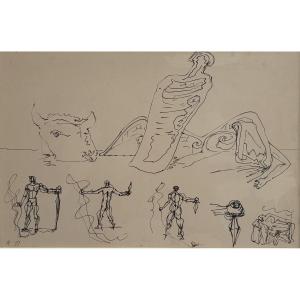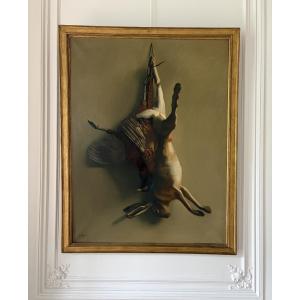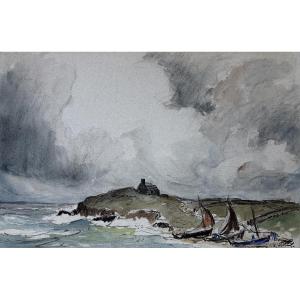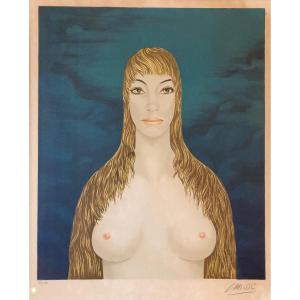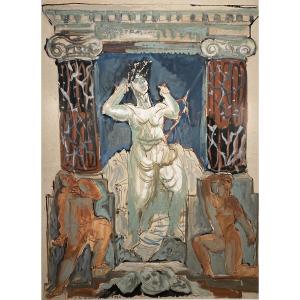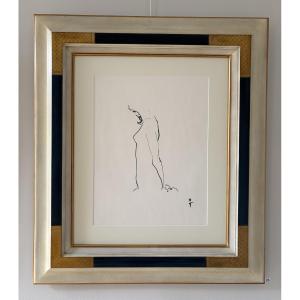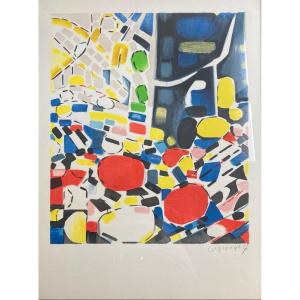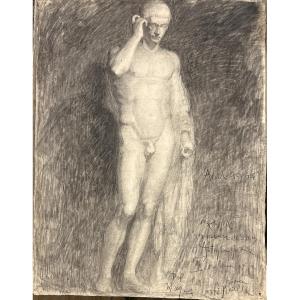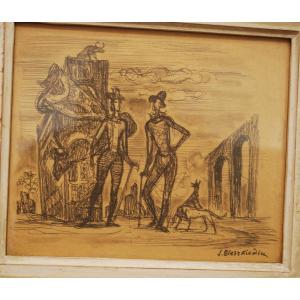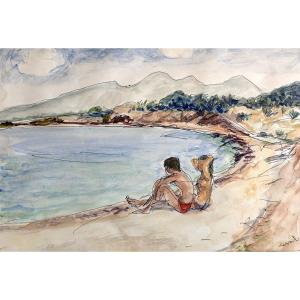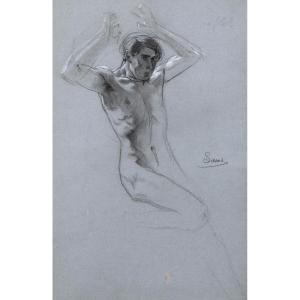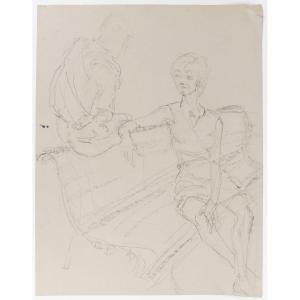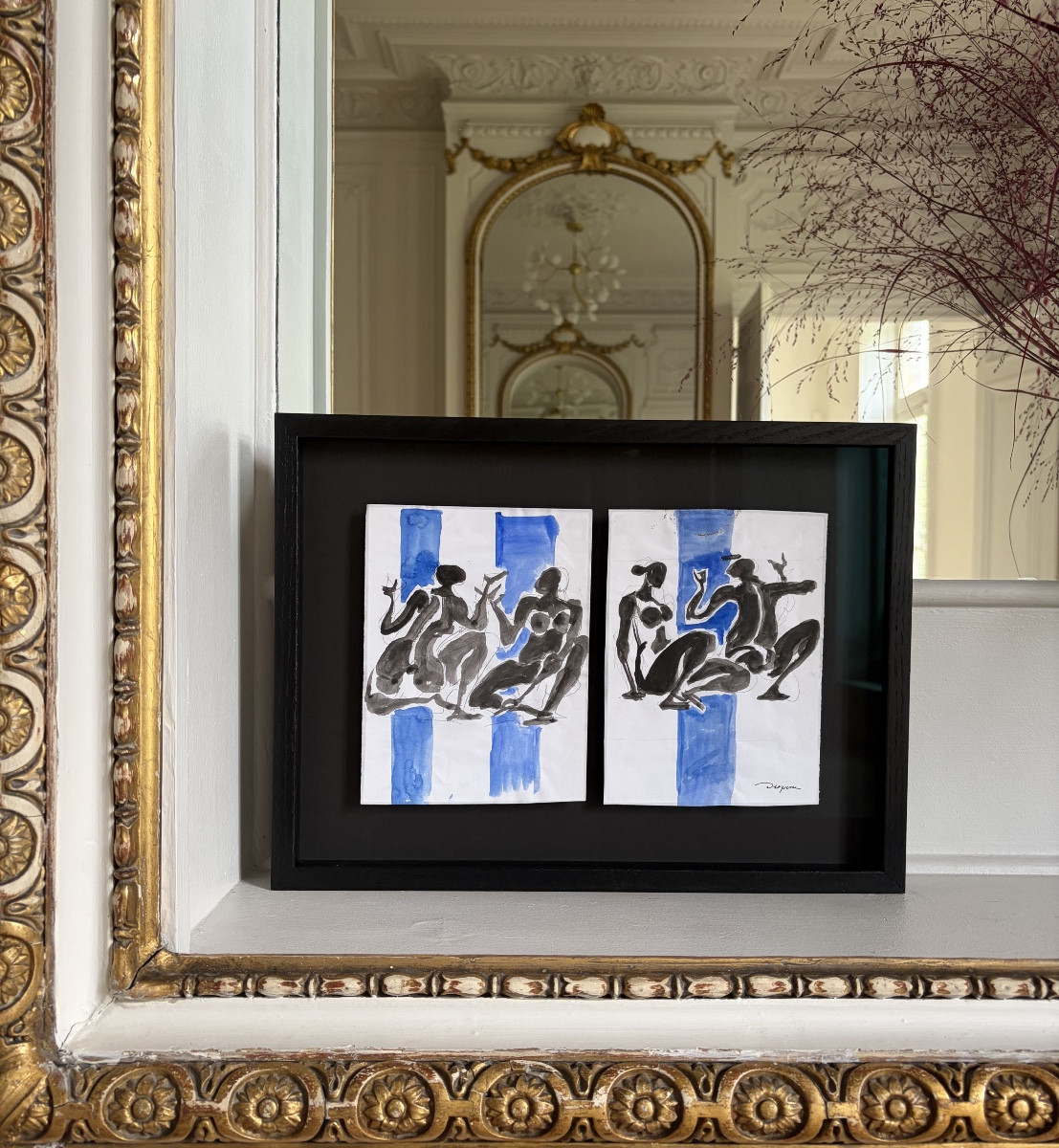
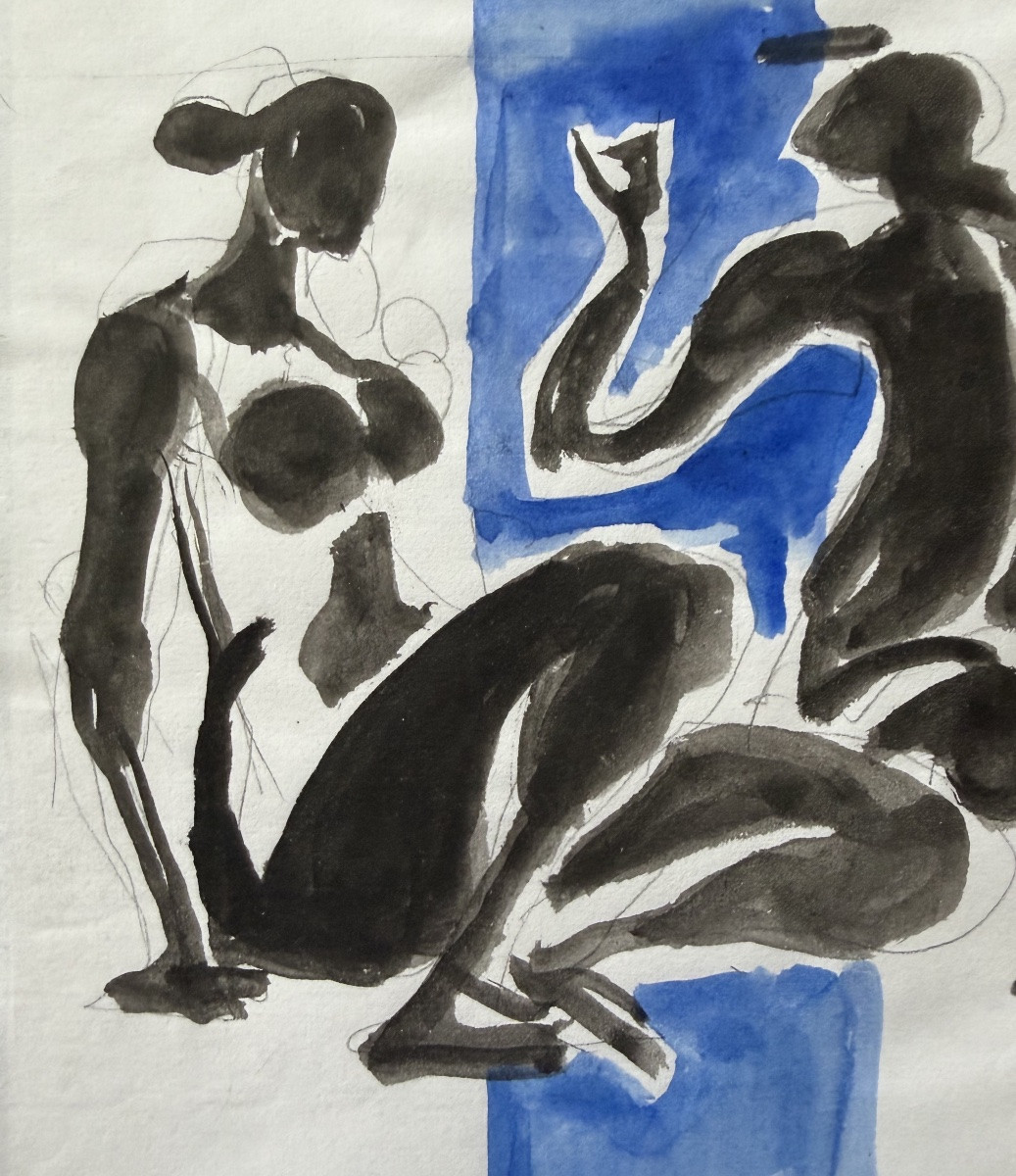
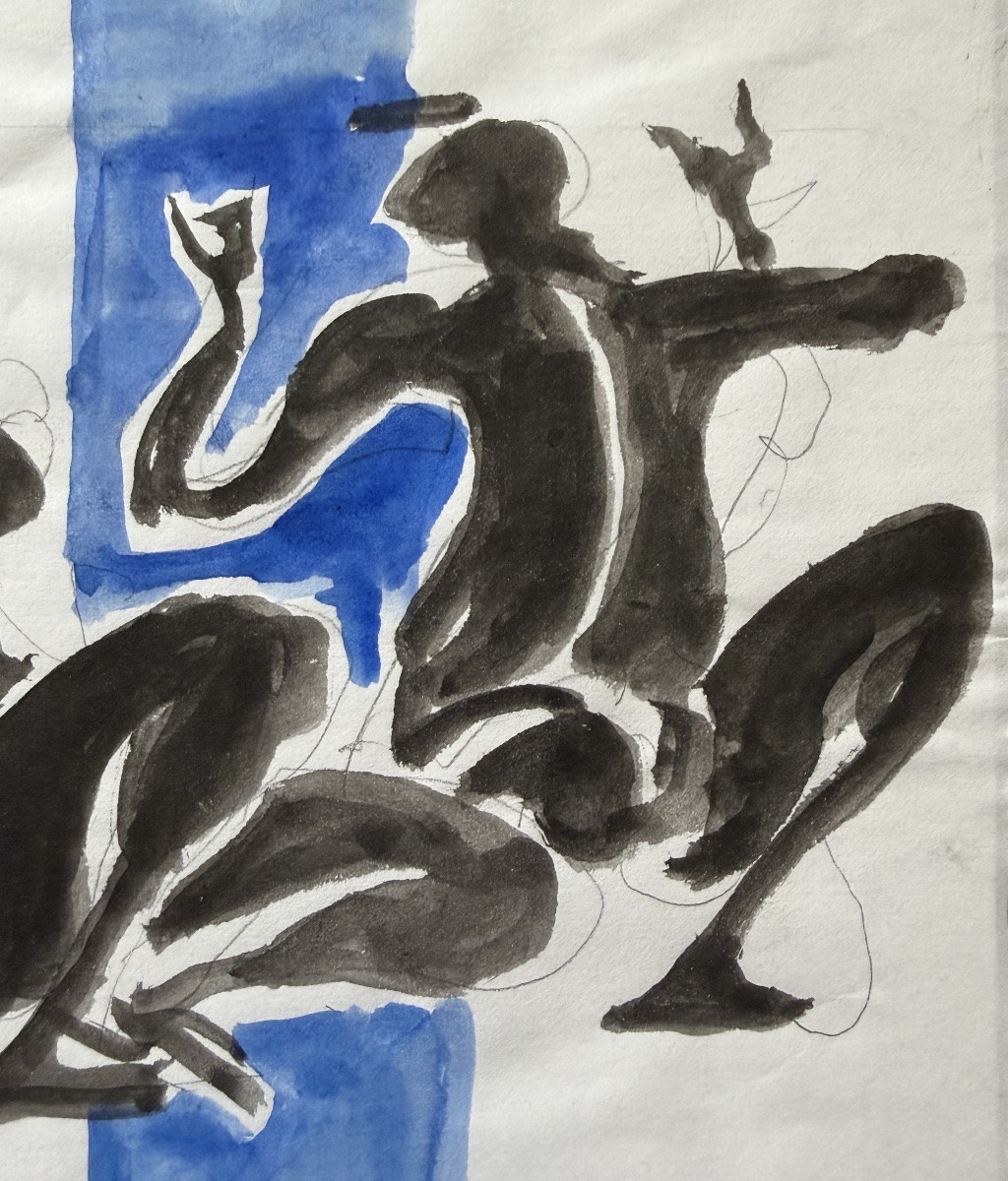
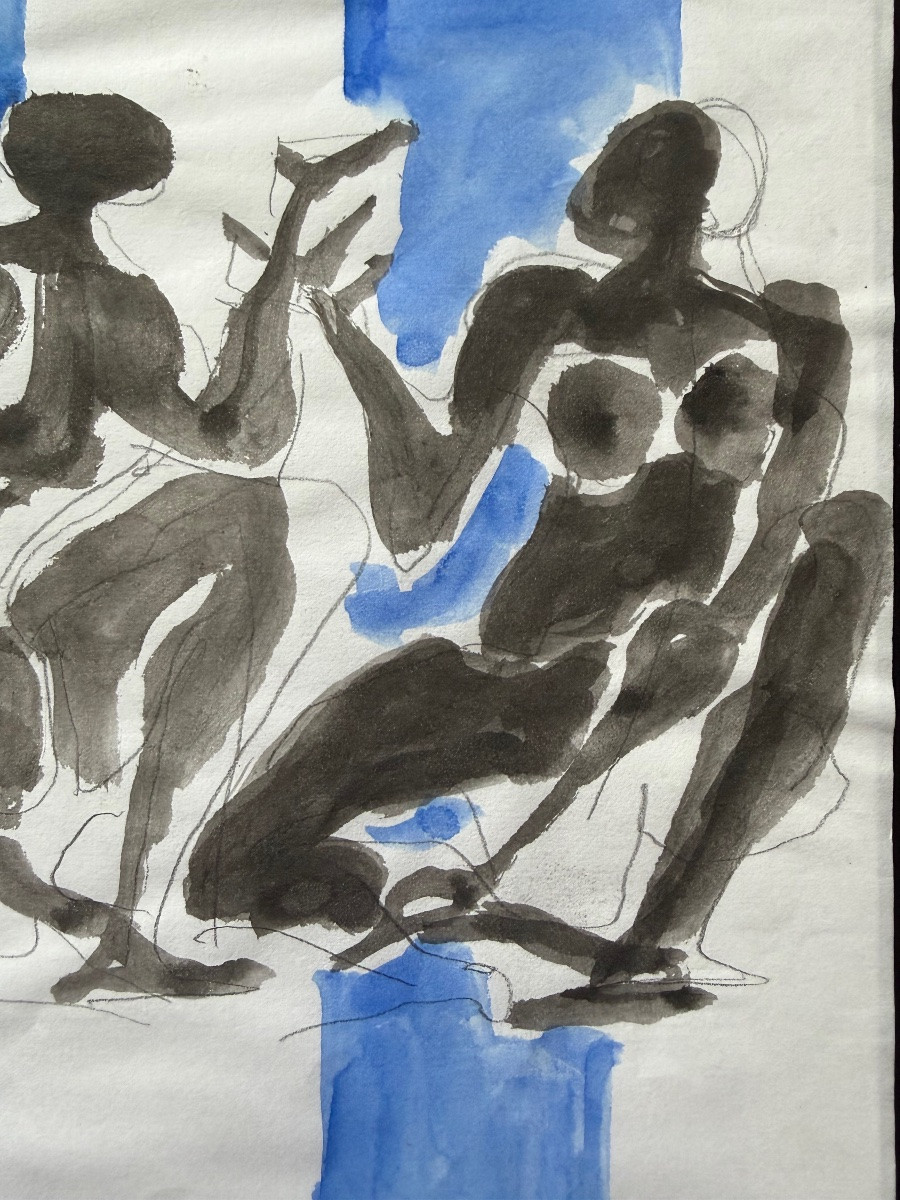
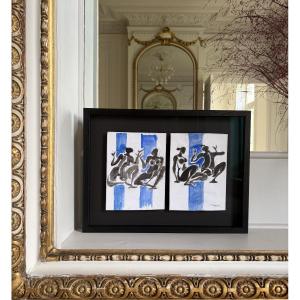


Despierre, Bathers, Circa 1970, Wash And Watercolor
Jacques Despierre (1912-1995)
Baigneurs, circa 1970
Lavish and watercolor on two sheets of paper
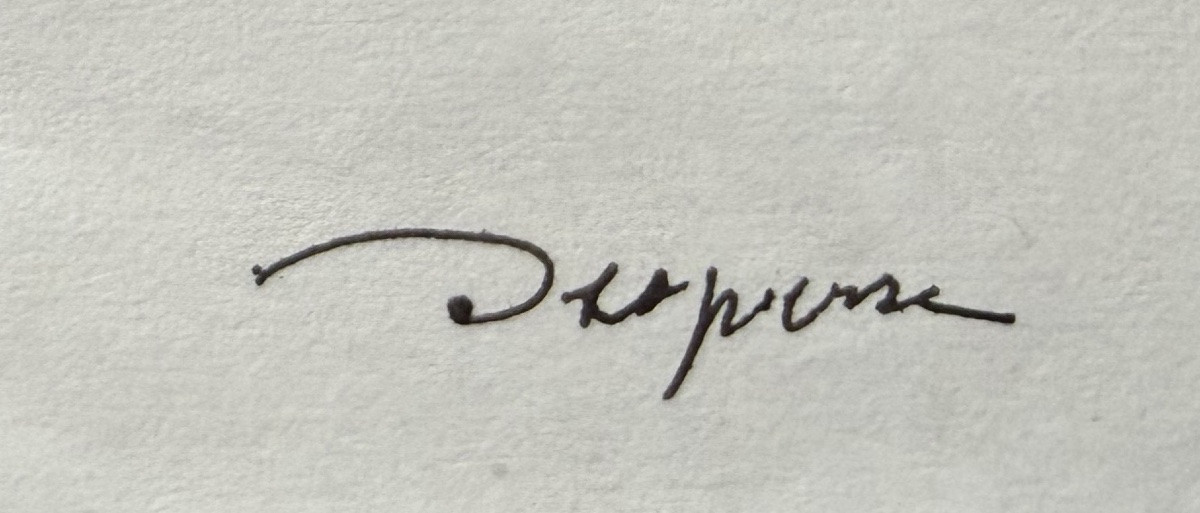
Signed lower right
19.5 x 14.5 cm each sheet
Provenance: artist's studio
Jacques Despierre (1912-1995)
Son of painter Edmond Ceria, Jacques Despierre was introduced to painting at an early age. He began studying at the Académie Colarossi, then at the Académie Scandinave, where he followed the teachings of Charles Dufresne, who professed the need for structured architecture in the organization of the painting. Despierre entered Lucien Simon's studio at the Beaux-Arts in 1929. At the Louvre, he admired Chardin, Corot and Delacroix. At his father's request, Despierre also took up engraving, illustrating his first book in 1930.
His friendships with Gruber, Tailleux, Tal Coat, Lasne, Brayer, Humblot and Rohner were synonymous with emulation. In the galleries, Despierre discovered Picasso, Bonnard and Matisse, then met and admired Jacques Villon, Charles Despiau and Marcel Gromaire. Thanks to the architect Jean-Charles Moreux, he discovered that "the surface is both a concrete and an abstract phenomenon", a subject he explored in greater depth when reading Mattila Ghycka.
His first exhibition took place at Jeanne Castel in 1938, the year he won the Prix Paul Guillaume. During and after the war, he produced a number of decorative artworks: painted furniture and tapestries for Jacques Adnet, frescoes for the Faculty of Pharmacy in Paris, and then for the liners La Marseillaise and Ile de France in particular.
Despierre exhibited regularly at the Galerie Charpentier, the Galerie de l'Elysée, then at René Drouet and Marcel Guiot. Critics rave: Waldemar Georges, George Besson, Pierre Cabanne and Jean Bouret praise his work. In 1969, Despierre was elected a member of the Académie des Beaux-Arts, and the following year, the Galerie de Paris devoted a show to his Loire views, Greek gardens and bathers. Seven years later, the Wildenstein Gallery exhibited a series of views of Greece and paintings of horses. Tributes were paid to him in 1973 at the Monnaie de Paris and then at Saint-Etienne. Present at numerous Salons, Despierre was a founding member of the Salon de Mai, to which he gave his name.
In the manner of Renaissance artists, Despierre liked to tackle all techniques: he produced murals and mosaics, illustrated books, designed cartoons for carpets and tapestries for the Mobilier National and vase decorations for Sèvres, created stained-glass windows for Notre-Dame de Liesse and 80 medals for the Monnaie de Paris. Appreciated by young people and a natural teacher, Despierre succeeded Gromaire as head of the mural art workshop at the Ecole des Arts Décoratifs, where he introduced the teaching of fresco and mosaic.
His works are notably conserved at the Centre Pompidou, the Musée d'art moderne de Paris, the Musée des Beaux-arts d'Orléans, the Musée de Grenoble, the Mobilier National at the Virginia Museum of Fine Arts and the Victoria & Albert Museum.
Period: 20th century
Style: Modern Art
Condition: Good condition
Material: Paper
Reference (ID): 1760037
Availability: In stock