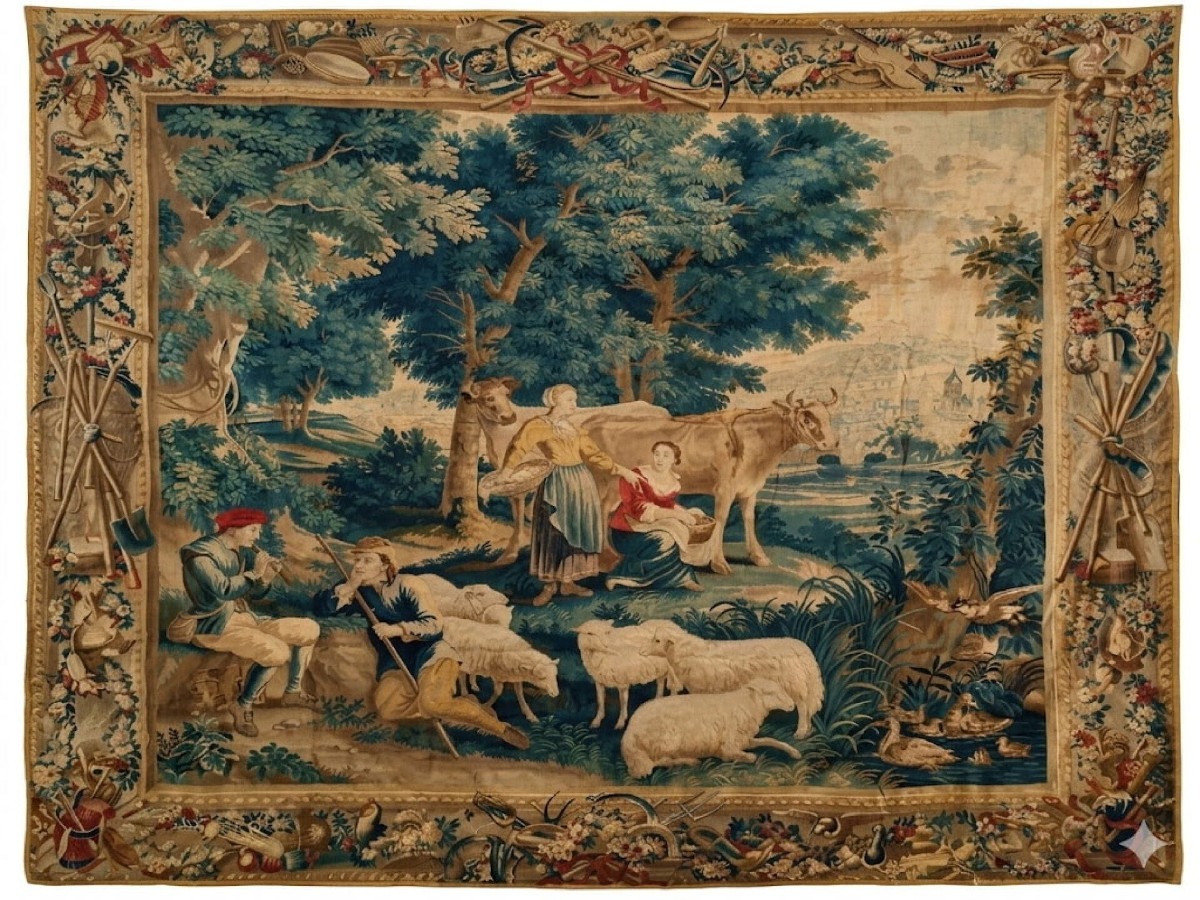




Large, Fine Tapestry Depicting A Pastoral Scene After David Teniers
Artist: Guillaume Werniers
The subject:
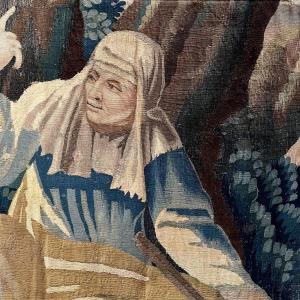
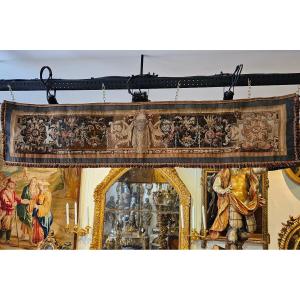
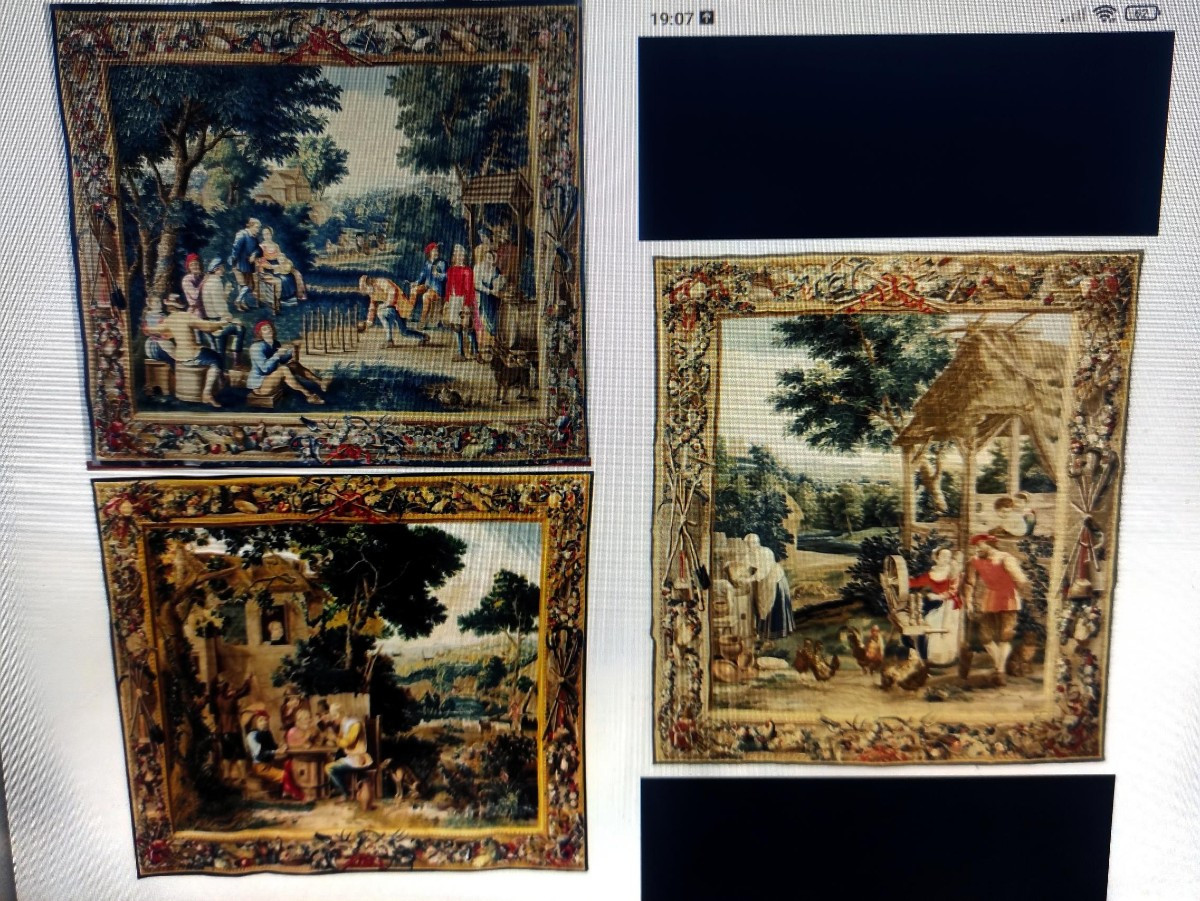
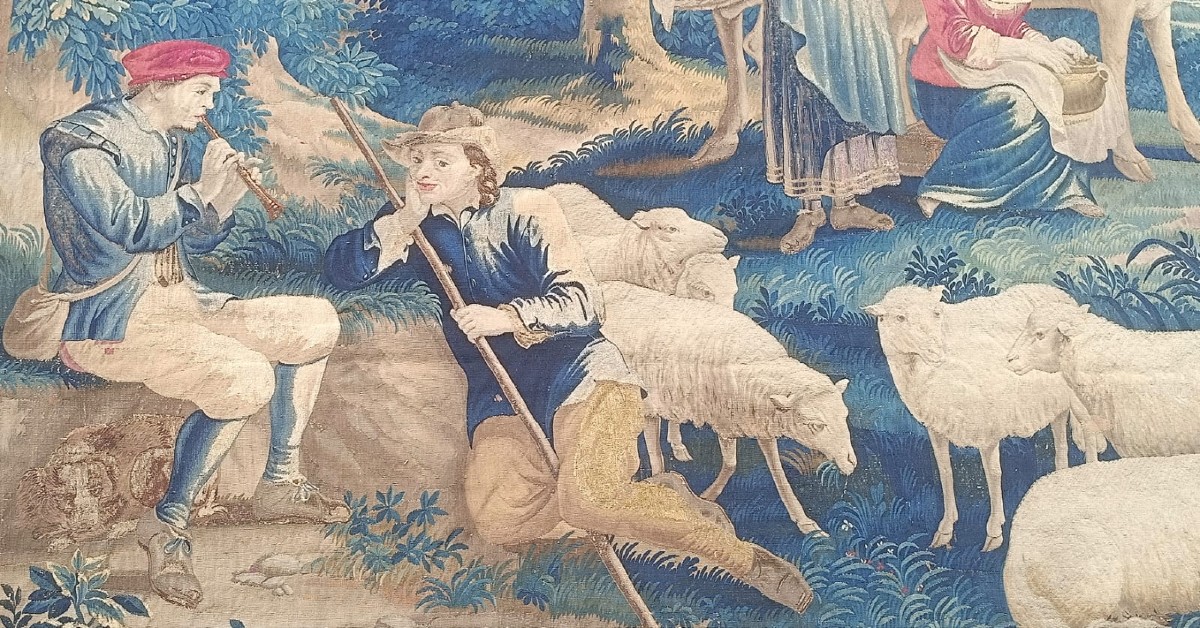
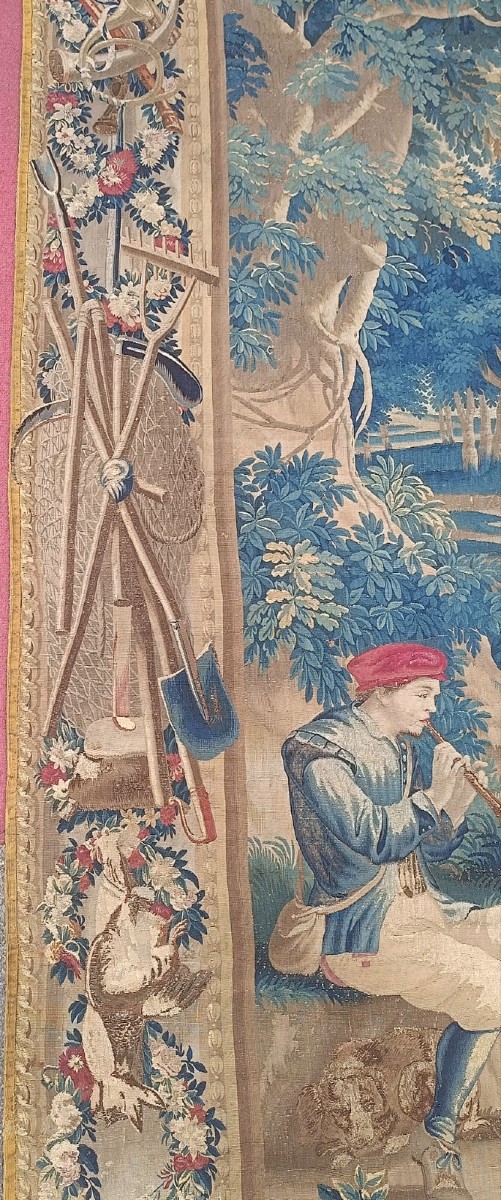
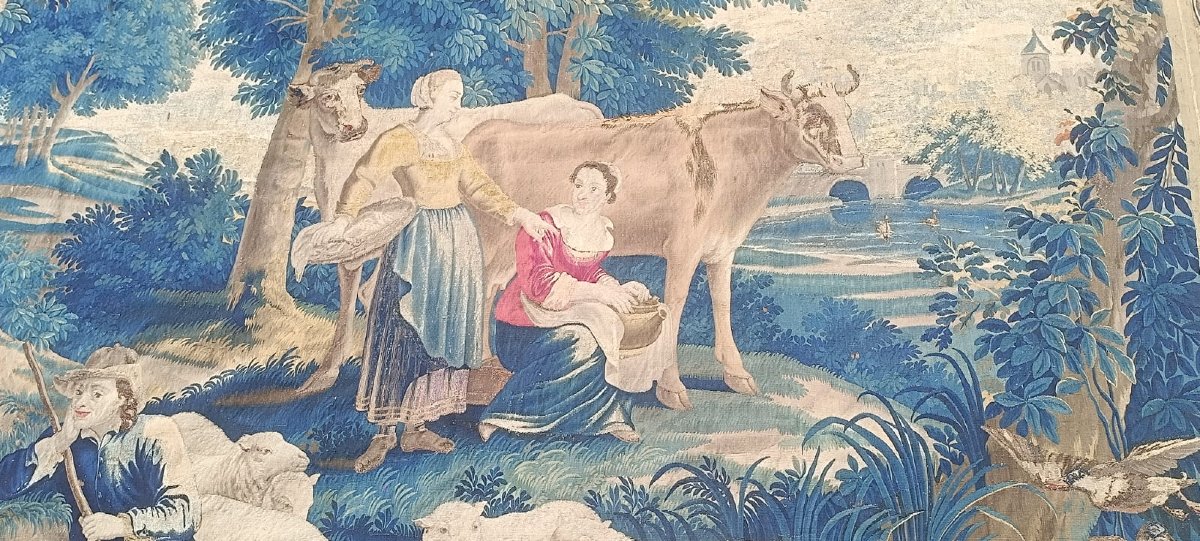
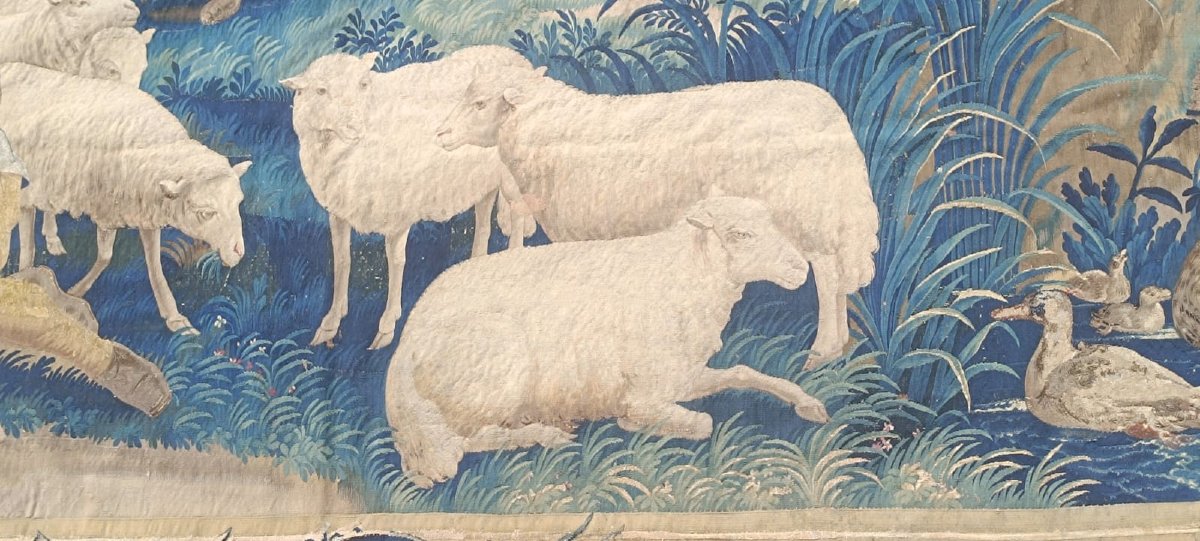
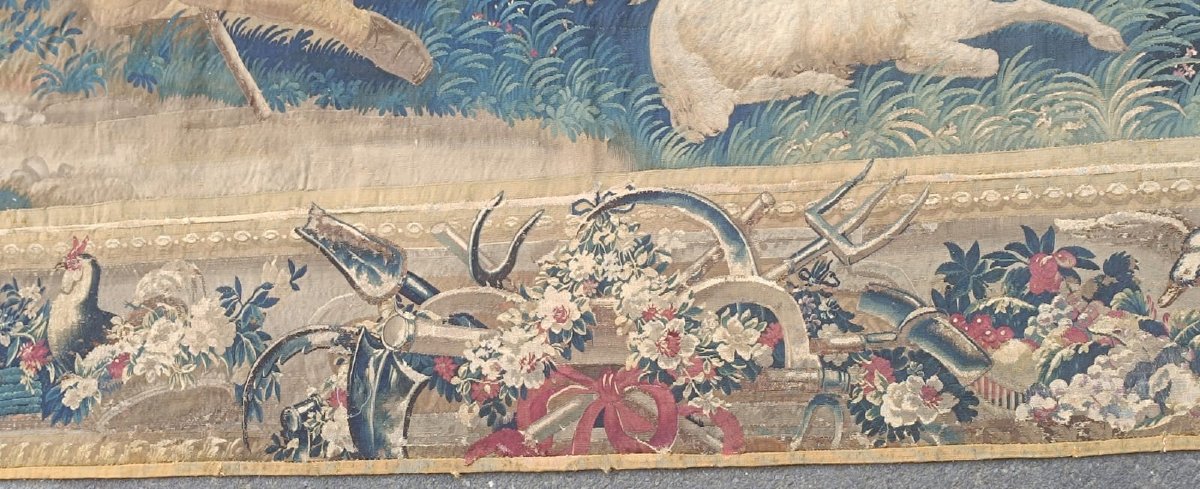
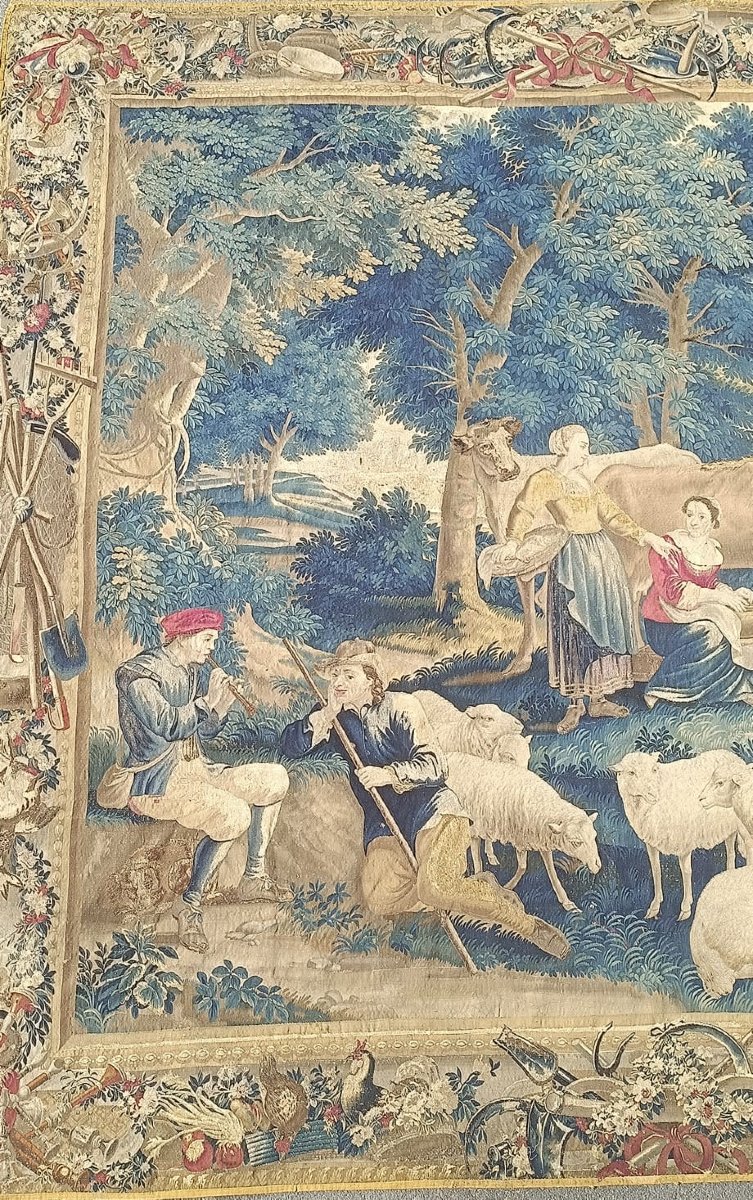
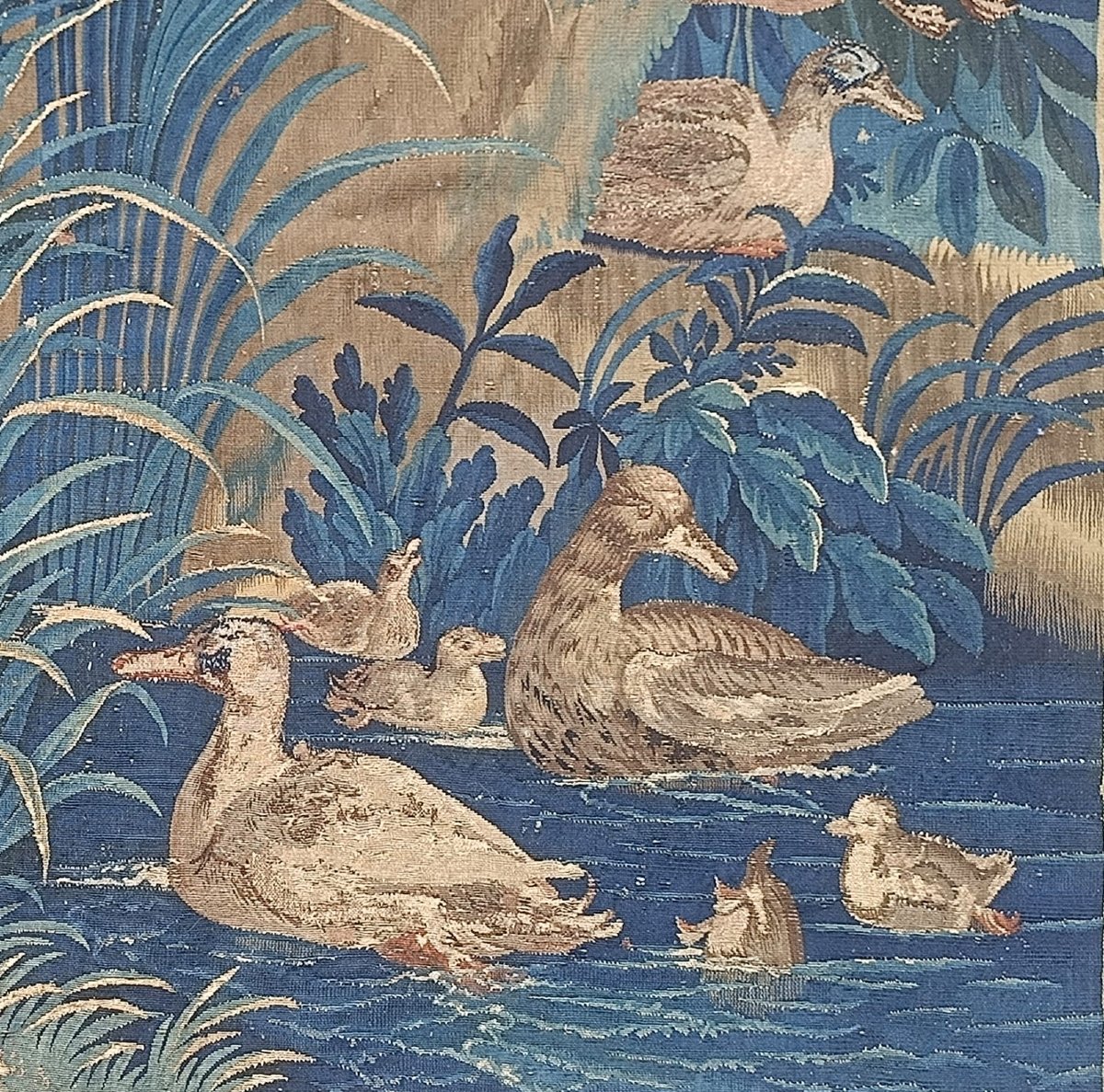
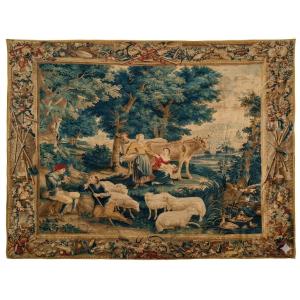
- Pastoral scene:Teniers' scenes from Werniers form a complete set of eight tapestries. Each depicts a different theme: the village fete, a card game, harvesting the garden and fields, the shepherd, the spinner, bowling, the pastoral scene and a tapestry with an unknown title.The scene depicts shepherds in a rural landscape, with two shepherds and their sheep in the foreground, two women and their cows in the background, and a village church steeple in the background.Four different border designs are known. The one on our tapestry continues the theme of rural life, with intertwined flowers and vegetables, ducks and chickens, farming tools and musical instruments.The quality and precision of the landscape depictions, and the perfect integration of the figures into the composition, make this a masterpiece of the Flemish tapestry tradition. After all, Lille was part of Flanders and only came under French rule in 1667.
Dimensions: 340x366 cm
Price: €25,000
History:
Inspired by the iconography of Flemish artists David Teniers II (1610-1690) and his son David III (1638-1685), this widespread genre of wall tapestries took the name "Teniers tapestries". This genre depicted nature scenes with peasants at work and going about their business.
The weaverIn the mid-17th century, French tapestry makers began to challenge the long-standing dominance of the Flemish industry. After its conquest by Louis XIV in 1667, the city of Lille became an important center of tapestry production in France.Many weavers emigrated from Flanders. Guillaume Werniers (or Warniers) was born in Brussels and arrived in Lille in 1700. He inherited the workshop from his father-in-law, Jean de Melter, and worked there until his death in 1738.Werniers signed numerous tapestries and proposed two series of designs to Teniers: one composed of finely-worked scenes, surrounded by elegant borders adorned with agricultural implements, like our pastoral scene; the other, of much coarser weave and pattern, was generally framed by a simple frame of monochrome acanthus leaves.When Werniers died in 1738, his widow and second wife, Catherine Guys, took over the business. By this time, Guillaume Werniers' workshop numbered over twenty looms. His widow maintained this level of activity. The enterprising widow Werniers ran the workshop for forty years after her husband's death.
Bibliography:
- Pastoral scene:Teniers' scenes from Werniers form a complete set of eight tapestries. Each depicts a different theme: the village fete, a card game, harvesting the garden and fields, the shepherd, the spinner, bowling, the pastoral scene and a tapestry with an unknown title.The scene depicts shepherds in a rural landscape, with two shepherds and their sheep in the foreground, two women and their cows in the background, and a village church steeple in the background.Four different border designs are known. The one on our tapestry continues the theme of rural life, with intertwined flowers and vegetables, ducks and chickens, farming tools and musical instruments.The quality and precision of the landscape depictions, and the perfect integration of the figures into the composition, make this a masterpiece of the Flemish tapestry tradition. After all, Lille was part of Flanders and only came under French rule in 1667.
Dimensions: 340x366 cm
Price: €25,000
History:
Inspired by the iconography of Flemish artists David Teniers II (1610-1690) and his son David III (1638-1685), this widespread genre of wall tapestries took the name "Teniers tapestries". This genre depicted nature scenes with peasants at work and going about their business.
The weaverIn the mid-17th century, French tapestry makers began to challenge the long-standing dominance of the Flemish industry. After its conquest by Louis XIV in 1667, the city of Lille became an important center of tapestry production in France.Many weavers emigrated from Flanders. Guillaume Werniers (or Warniers) was born in Brussels and arrived in Lille in 1700. He inherited the workshop from his father-in-law, Jean de Melter, and worked there until his death in 1738.Werniers signed numerous tapestries and proposed two series of designs to Teniers: one composed of finely-worked scenes, surrounded by elegant borders adorned with agricultural implements, like our pastoral scene; the other, of much coarser weave and pattern, was generally framed by a simple frame of monochrome acanthus leaves.When Werniers died in 1738, his widow and second wife, Catherine Guys, took over the business. By this time, Guillaume Werniers' workshop numbered over twenty looms. His widow maintained this level of activity. The enterprising widow Werniers ran the workshop for forty years after her husband's death.
Bibliography:
Thomas P. Campbell, Tapestry in the Baroque Threads of Splendor, 2007, s. 458
Delmarcel; Guy. Flemish Tapestry. New York: Harry N. Abrahams Inc, 2000.
Nello Forti Grazzini. Il Patrimonio artistico del Quuirinal, 1994
Nicole de Reyniès, ''II. The French Tapestries'', The Toms Collection Tapestries, 2010
25 000 €
Period: 18th century
Style: Louis 14th, Regency
Condition: Excellent condition
Material: Wool
Length: 366
Height: 340
Reference (ID): 1749242
Availability: In stock
Print