



Follower Of Antonio Allegri, Known As Correggio, Prayer In The Garden
Follower of Antonio Allegri, known as Correggio (Correggio, August 1489 – March 5, 1534)
Prayer in the garden
Oil on copper, cm 23.7 x 17.4
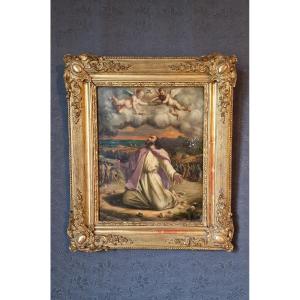
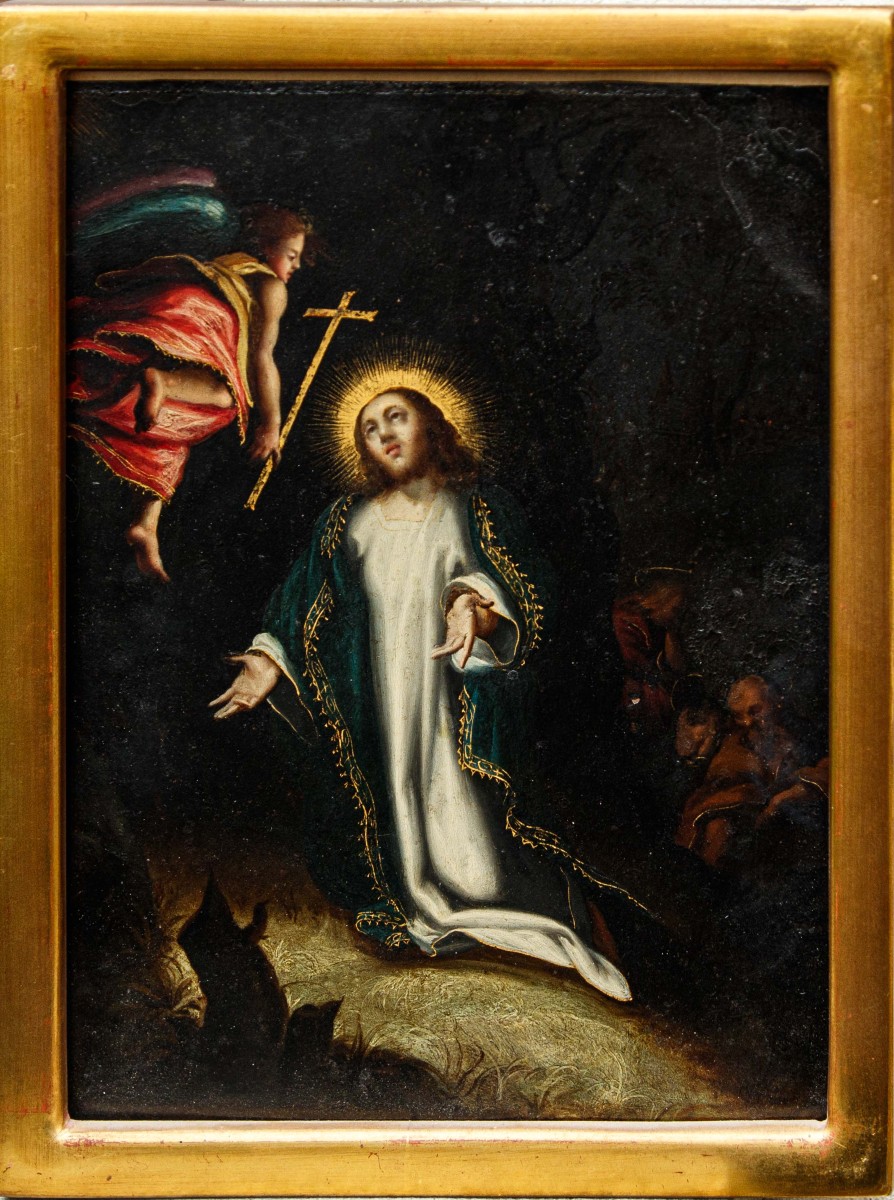
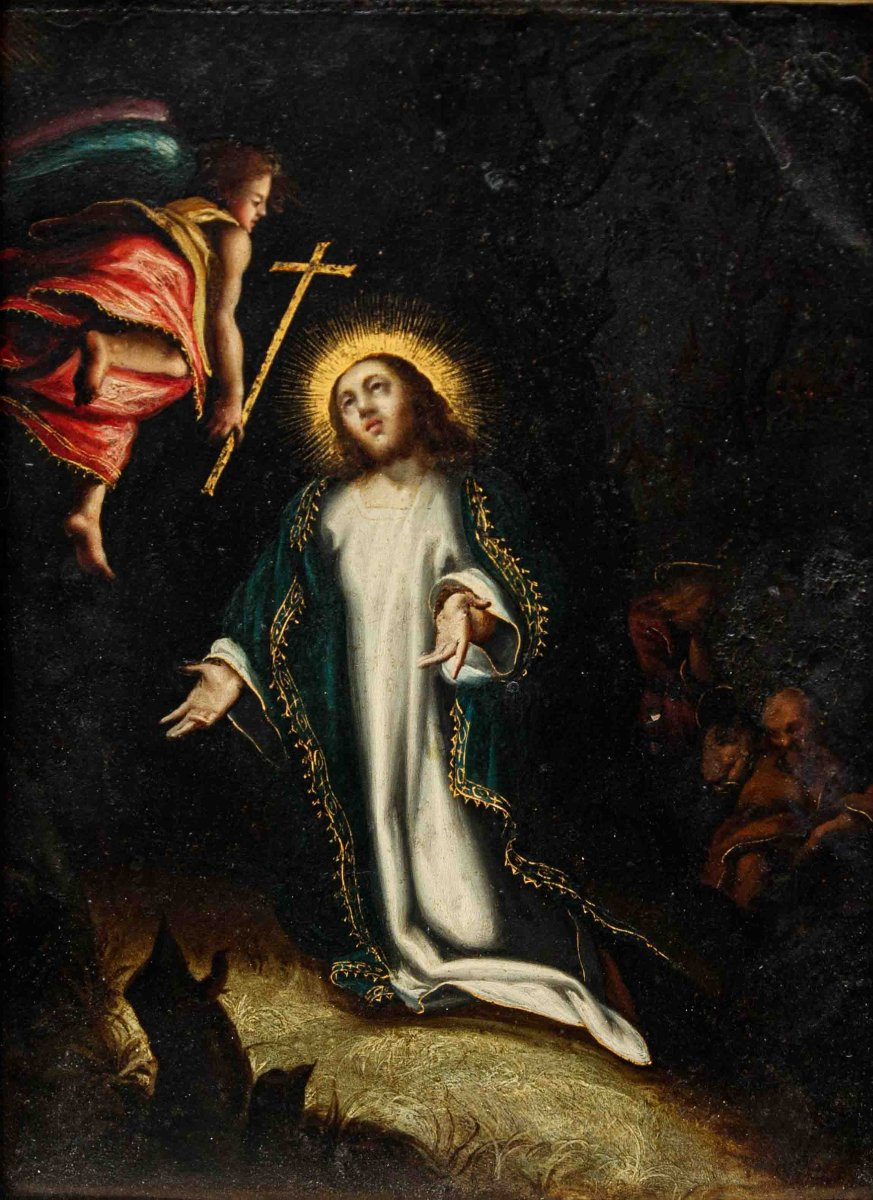
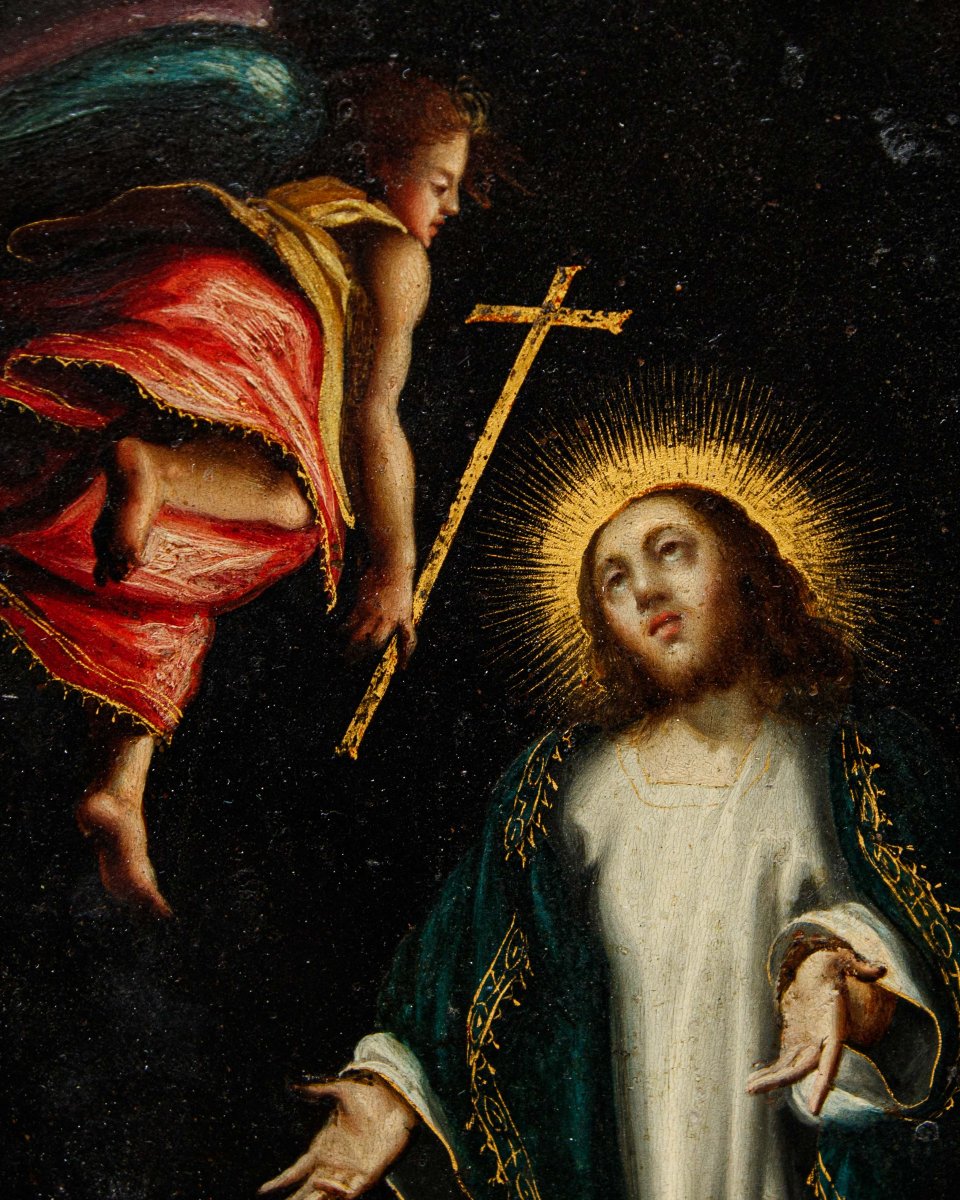
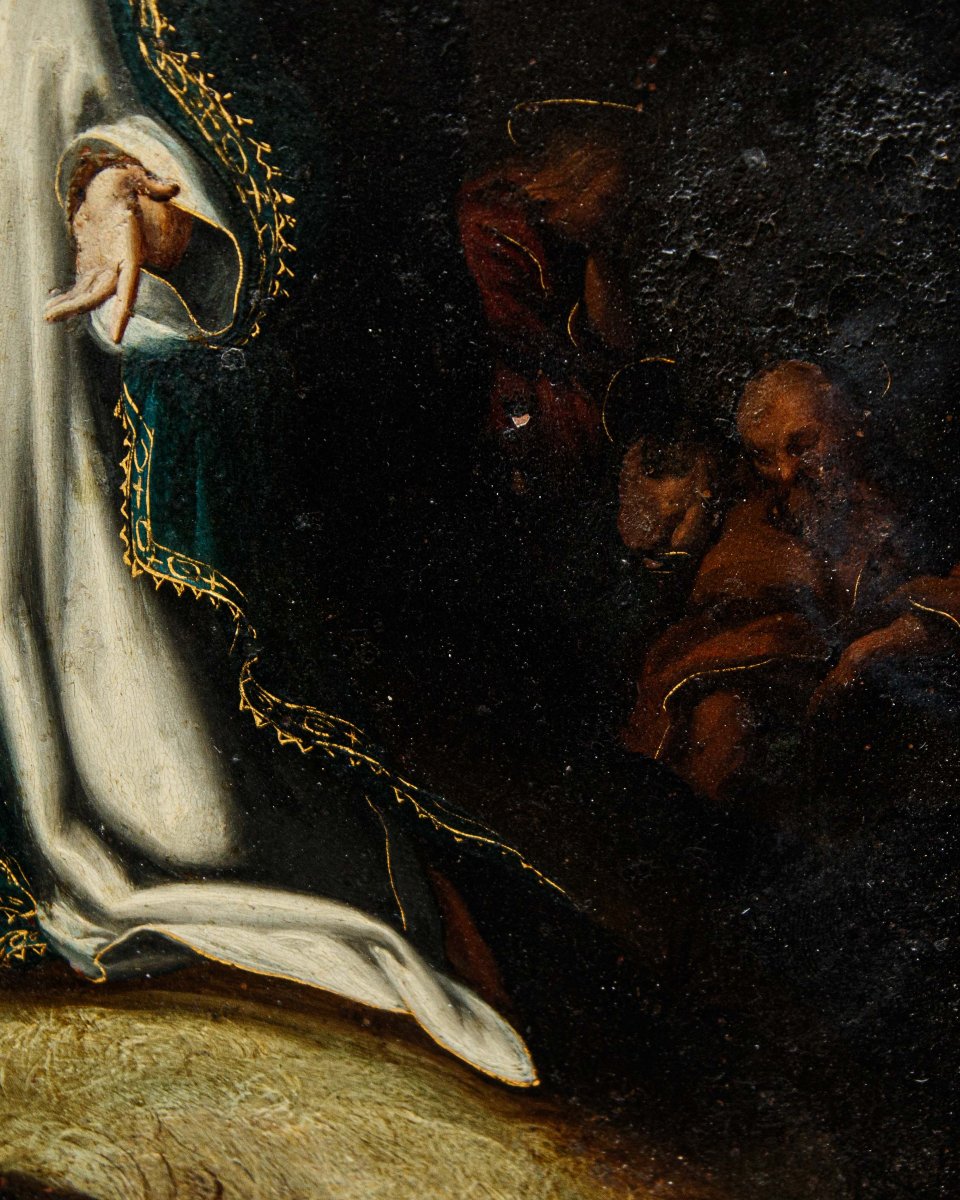
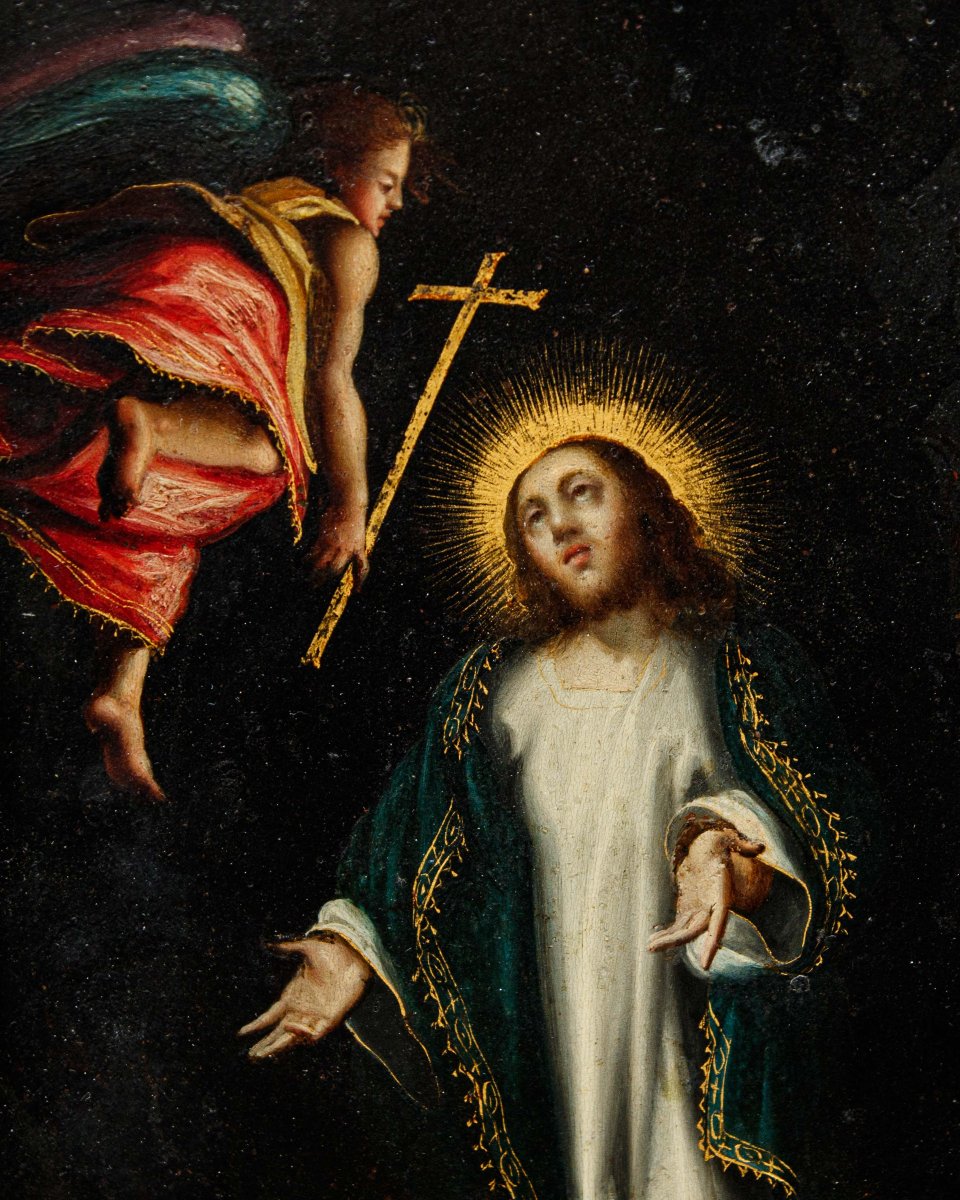
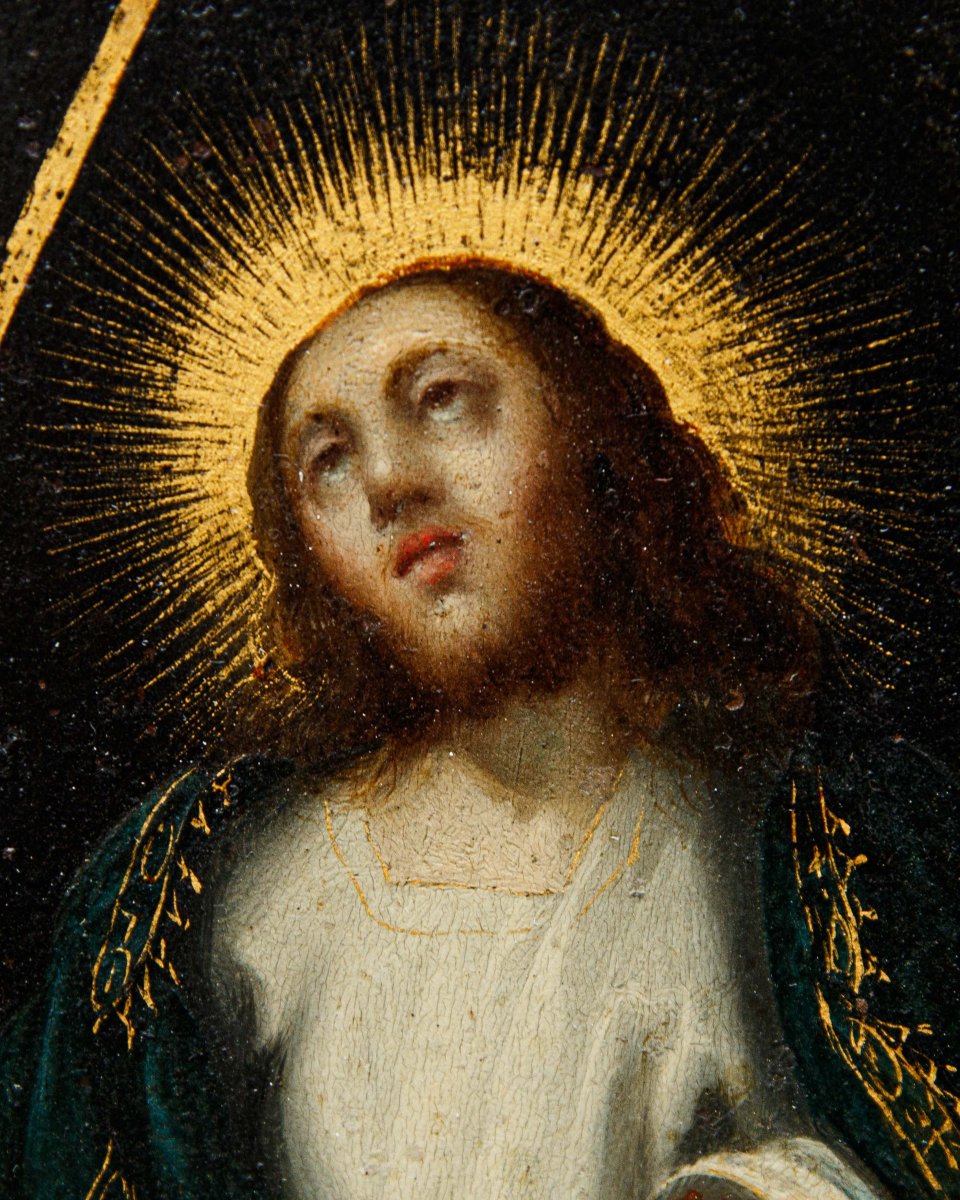
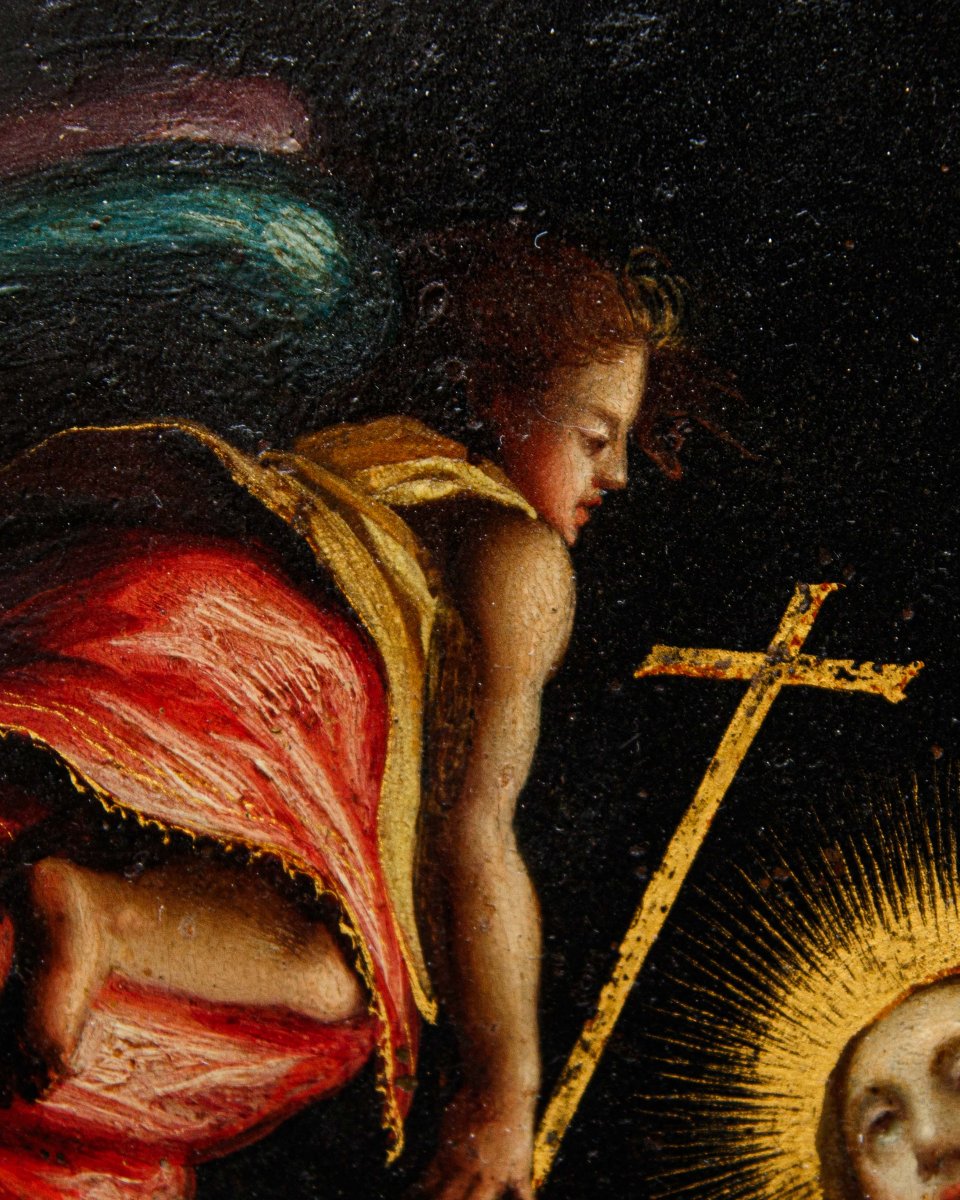
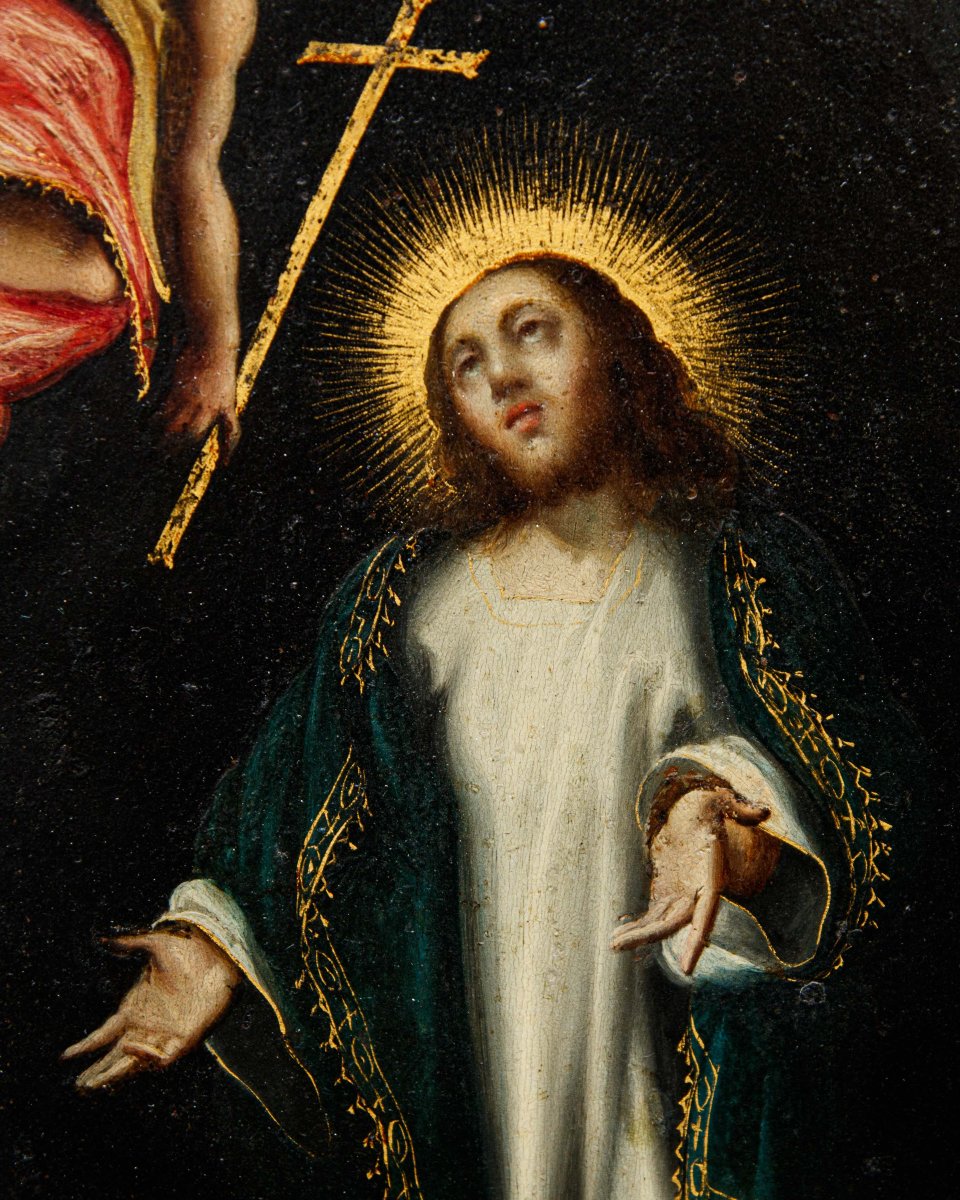
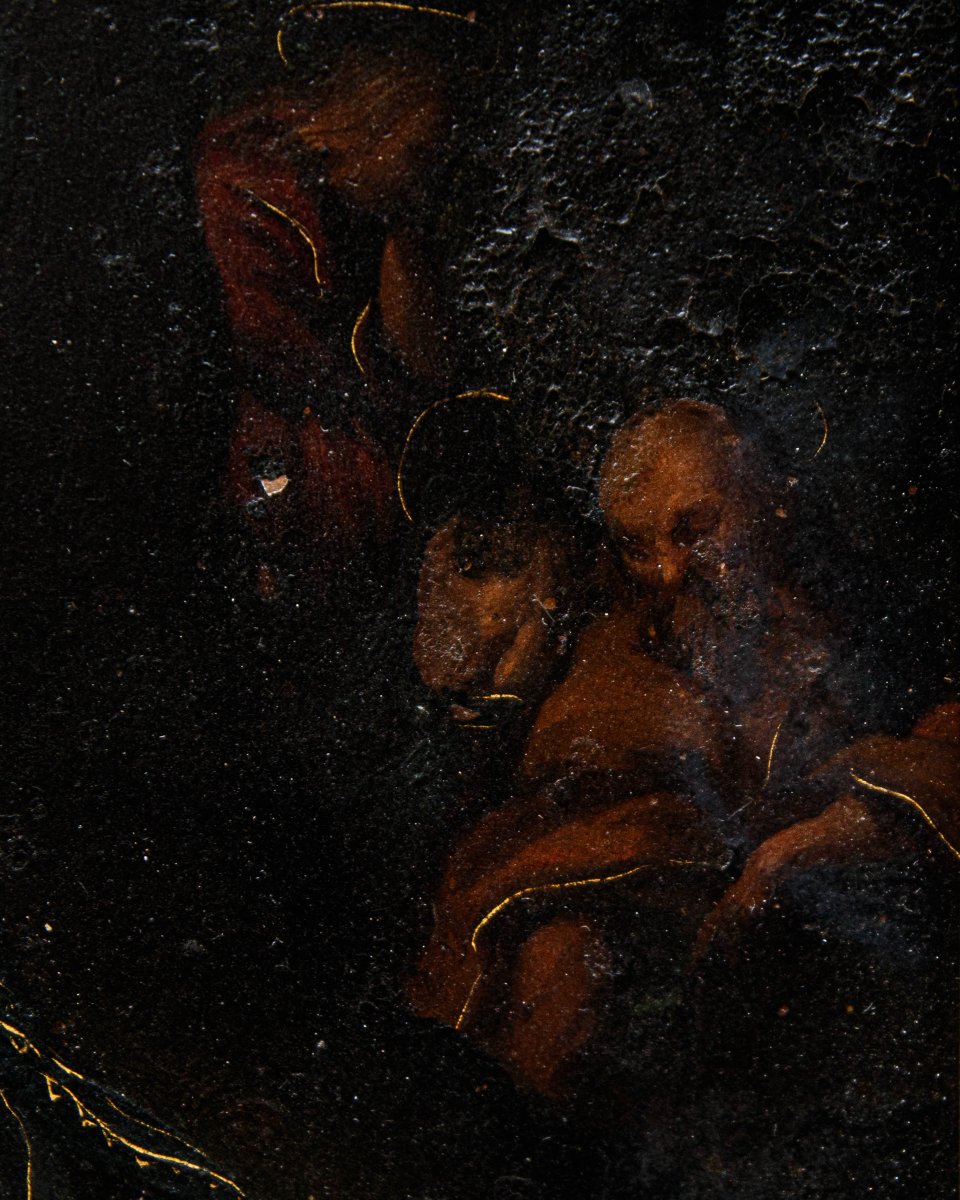
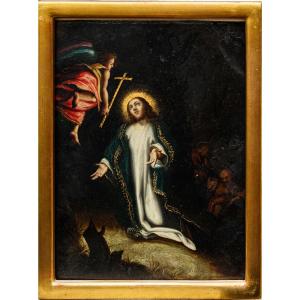
This valuable work, executed using the oil-on-copper technique, offers an intense and painful interpretation of the Agony in the Garden, a key theme of Christian devotion that finds here a profoundly emotionally evocative expression, attributable to the hand of a talented follower of Correggio. The scene unfolds in a space dominated by a twilight atmosphere, where, against the backdrop of a shady forest, Christ is depicted kneeling in the foreground, his head raised upward and his arms open in a gesture of welcome and abandonment, ready to receive the apparition of the angel offering him the cross, a symbol of the impending sacrifice. Light plays a decisive role in the compositional economy: it emanates from the angel and directly affects the face and white robe of Jesus, creating a vibrant contrast with the surrounding darkness and with the figures of the apostles, portrayed in a deep sleep on the right, almost alienated from the spiritual drama that is unfolding. Far away, on the right, a hint of dawn brightens the horizon, while the torchlight, barely discernible in the background, preludes the tragic arrival of Judas and the soldiers.
This painting is closely and openly related to the famous panel of the Agony in the Garden by Antonio Allegri, known as Correggio, now kept at Apsley House in London. The master's original work, created around 1524, represents one of the most significant chapters of his production, marking a turning point in the history of painting for the bold management of volumes and, above all, of light, expertly articulated between the divine source of the angel, the natural one of dawn and the artificial, almost nocturnal one of torches, in a true compositional tour de force that would consecrate Correggio, together with the famous Notte di Reggio, as the undisputed master of the night scenes. The innovative power of this invention lies in its clear detachment from the previous iconographic tradition, favoring an asymmetrical structure and a profound spatial scansion, in which the landscape-like openness guides the gaze towards the infinite, while Christ, facing the observer head-on rather than in profile or from behind, establishes a direct and moving communication, recalling the iconography of the Vir dolorum.
Antonio Allegri, born in Correggio in 1489 and died early in 1534, was a key figure of the Italian Renaissance, capable of developing a unique pictorial language, characterized by a refined nuance and an extraordinarily modern handling of light, which anticipated Baroque influences. The success of the composition of the Agony in the Garden was immense and immediate, exerting a profound fascination both on the painters contemporary with the master and on those of the generations immediately following, who found in this model an essential reference for tackling sacred themes steeped in pathos and psychological realism. The small original panel, although today in a less than optimal state of preservation, became an object of worship, admired and described with enthusiasm already by Giorgio Vasari, and our oil on copper perpetuates its fortune, testifying to how Correggio's inventive capacity, perhaps also nourished by Nordic suggestions coming from the engravings then in circulation, he was able to translate the mystery of pain and divine acceptance into images of universal beauty and empathy. The work, in its small format, admirably condenses the motion of Christ's soul, suspended between human anguish and submissive obedience to the Father's will, offering the viewer's gaze an instant of mystical suspension that, throughout the centuries, maintains intact all its expressive power and its capacity for emotion.
Prayer in the garden
Oil on copper, cm 23.7 x 17.4
This valuable work, executed using the oil-on-copper technique, offers an intense and painful interpretation of the Agony in the Garden, a key theme of Christian devotion that finds here a profoundly emotionally evocative expression, attributable to the hand of a talented follower of Correggio. The scene unfolds in a space dominated by a twilight atmosphere, where, against the backdrop of a shady forest, Christ is depicted kneeling in the foreground, his head raised upward and his arms open in a gesture of welcome and abandonment, ready to receive the apparition of the angel offering him the cross, a symbol of the impending sacrifice. Light plays a decisive role in the compositional economy: it emanates from the angel and directly affects the face and white robe of Jesus, creating a vibrant contrast with the surrounding darkness and with the figures of the apostles, portrayed in a deep sleep on the right, almost alienated from the spiritual drama that is unfolding. Far away, on the right, a hint of dawn brightens the horizon, while the torchlight, barely discernible in the background, preludes the tragic arrival of Judas and the soldiers.
This painting is closely and openly related to the famous panel of the Agony in the Garden by Antonio Allegri, known as Correggio, now kept at Apsley House in London. The master's original work, created around 1524, represents one of the most significant chapters of his production, marking a turning point in the history of painting for the bold management of volumes and, above all, of light, expertly articulated between the divine source of the angel, the natural one of dawn and the artificial, almost nocturnal one of torches, in a true compositional tour de force that would consecrate Correggio, together with the famous Notte di Reggio, as the undisputed master of the night scenes. The innovative power of this invention lies in its clear detachment from the previous iconographic tradition, favoring an asymmetrical structure and a profound spatial scansion, in which the landscape-like openness guides the gaze towards the infinite, while Christ, facing the observer head-on rather than in profile or from behind, establishes a direct and moving communication, recalling the iconography of the Vir dolorum.
Antonio Allegri, born in Correggio in 1489 and died early in 1534, was a key figure of the Italian Renaissance, capable of developing a unique pictorial language, characterized by a refined nuance and an extraordinarily modern handling of light, which anticipated Baroque influences. The success of the composition of the Agony in the Garden was immense and immediate, exerting a profound fascination both on the painters contemporary with the master and on those of the generations immediately following, who found in this model an essential reference for tackling sacred themes steeped in pathos and psychological realism. The small original panel, although today in a less than optimal state of preservation, became an object of worship, admired and described with enthusiasm already by Giorgio Vasari, and our oil on copper perpetuates its fortune, testifying to how Correggio's inventive capacity, perhaps also nourished by Nordic suggestions coming from the engravings then in circulation, he was able to translate the mystery of pain and divine acceptance into images of universal beauty and empathy. The work, in its small format, admirably condenses the motion of Christ's soul, suspended between human anguish and submissive obedience to the Father's will, offering the viewer's gaze an instant of mystical suspension that, throughout the centuries, maintains intact all its expressive power and its capacity for emotion.
2 400 €
Period: 17th century
Style: Other Style
Condition: Good condition
Material: Oil painting on copper
Width: 17,4
Height: 23,7
Reference (ID): 1729842
Availability: In stock
Print