THIS OBJECT WAS SOLD
Screen With A Silkscreened Mirror Design Depicting The 4 Seasons After Alfons Mucha
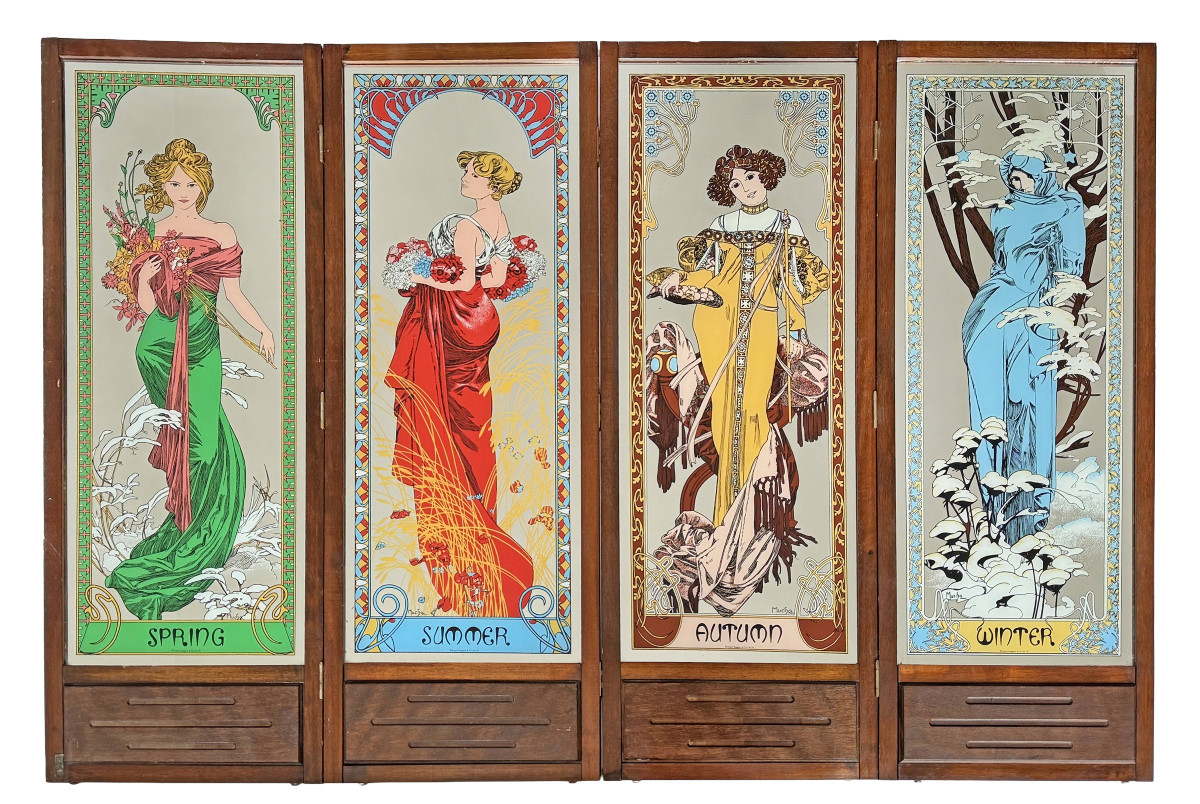
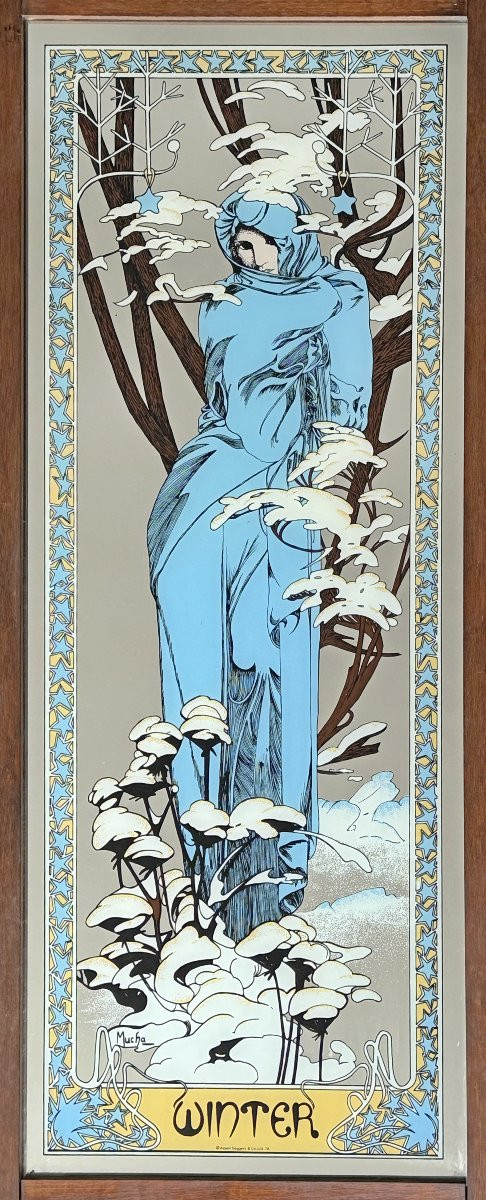
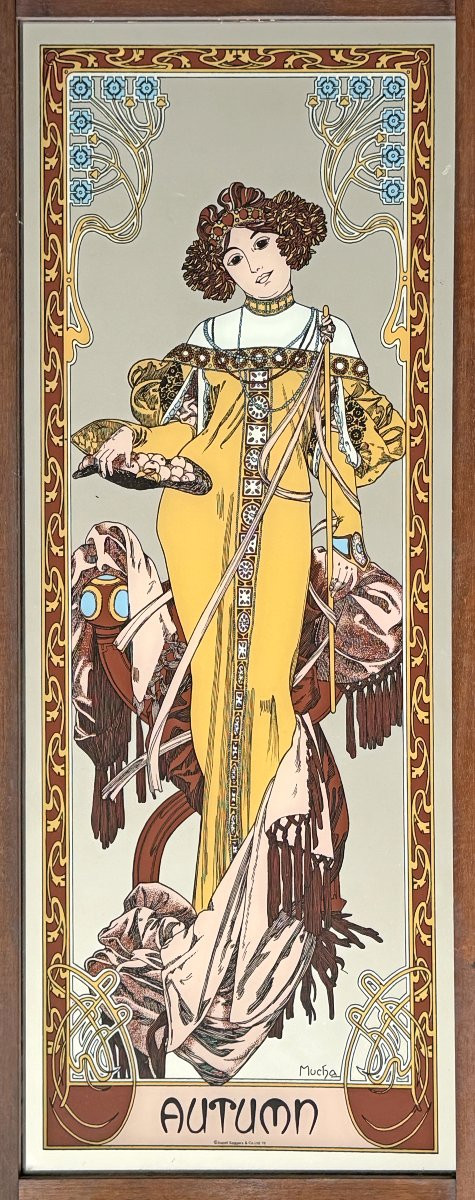
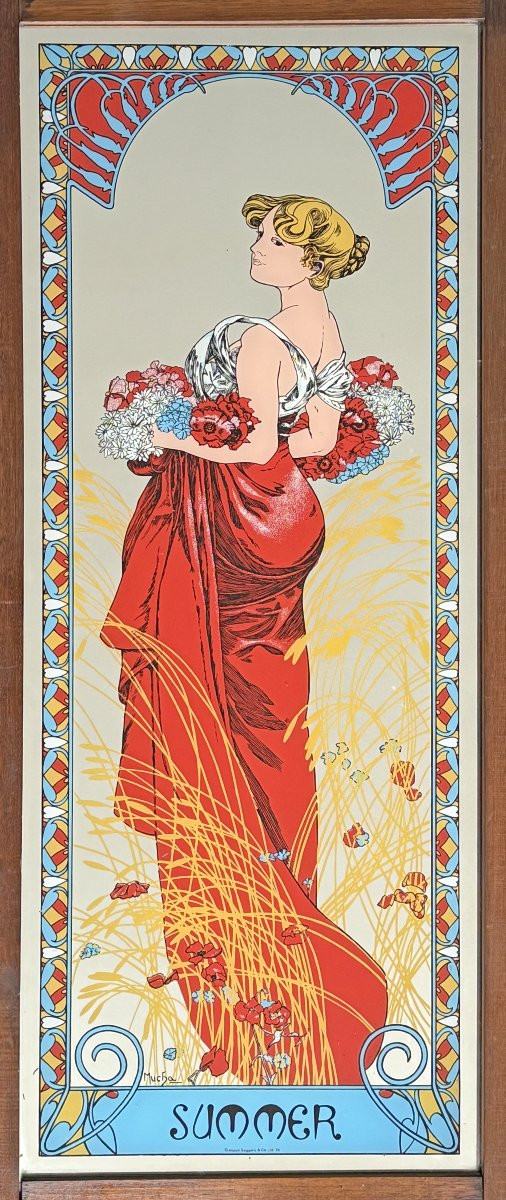
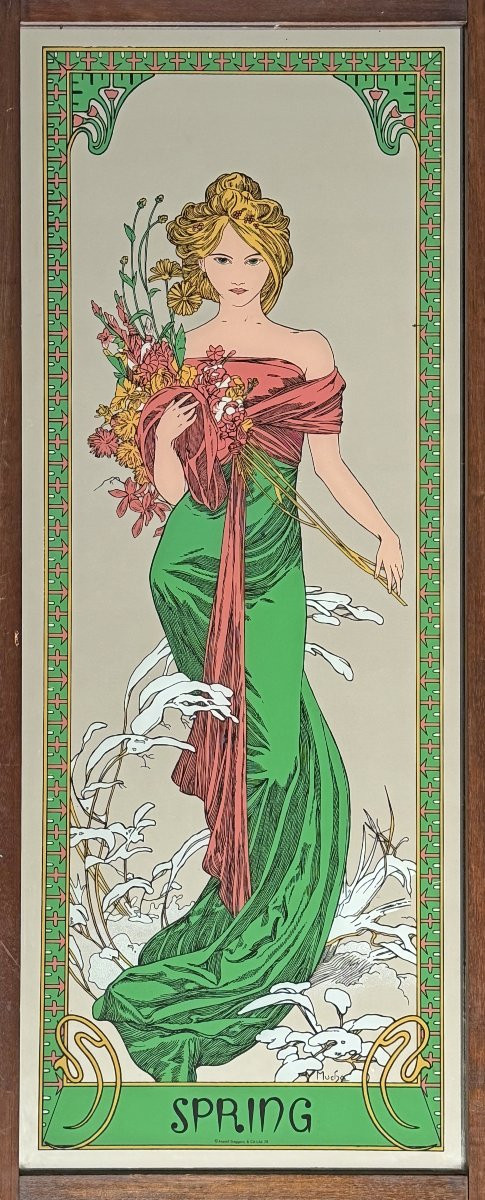
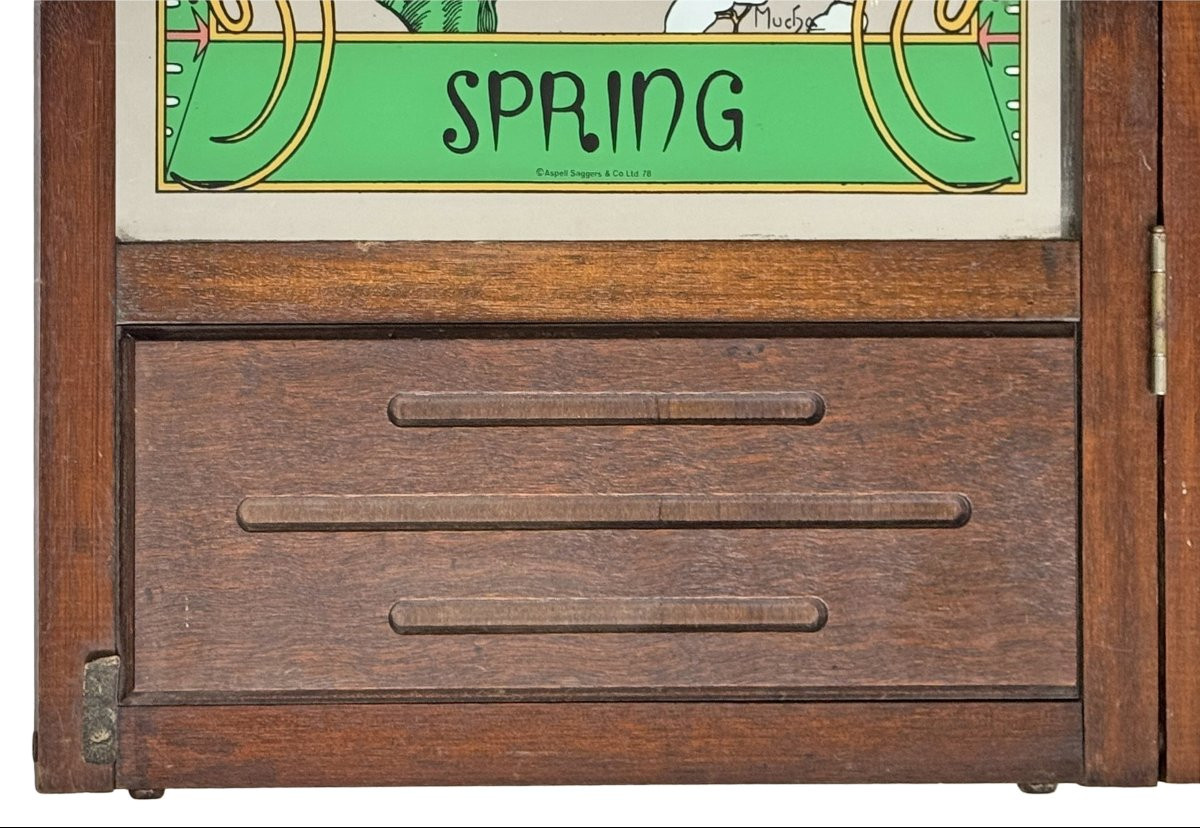
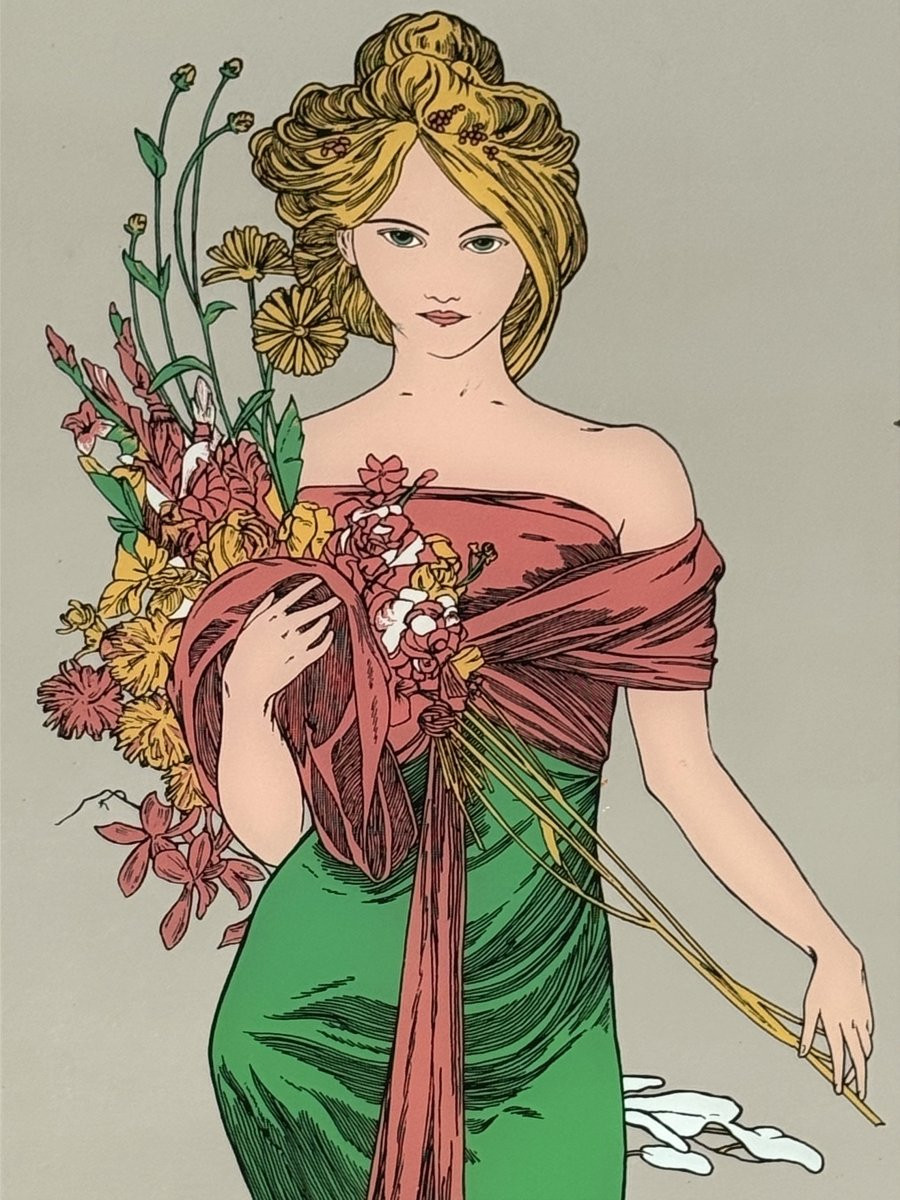
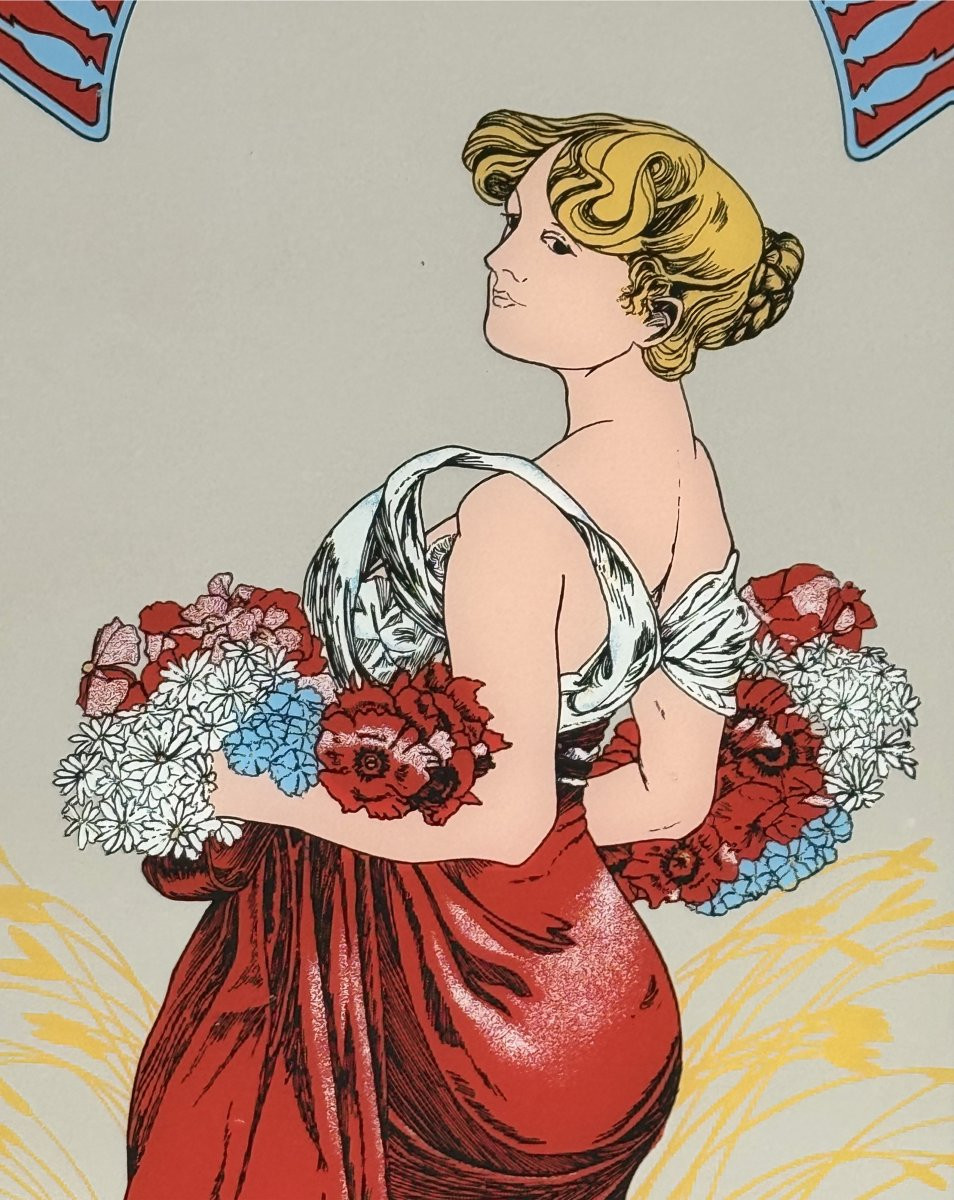
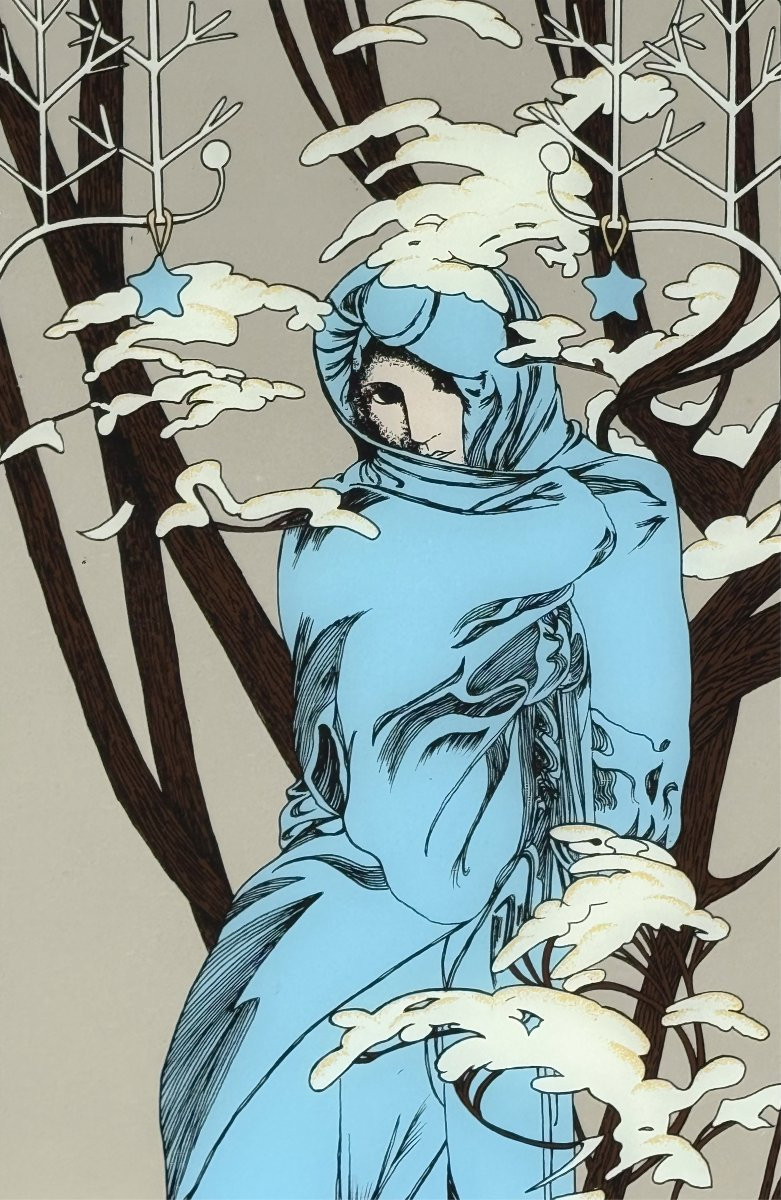
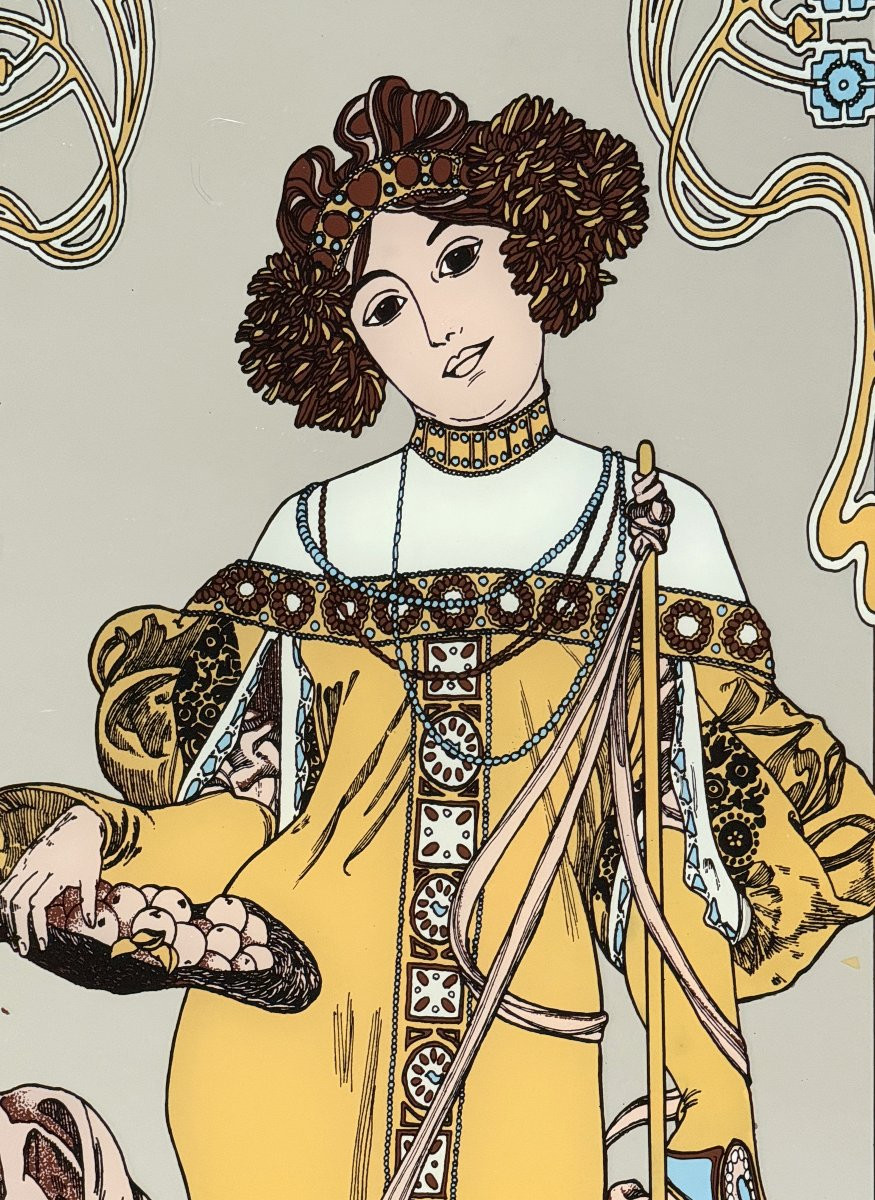
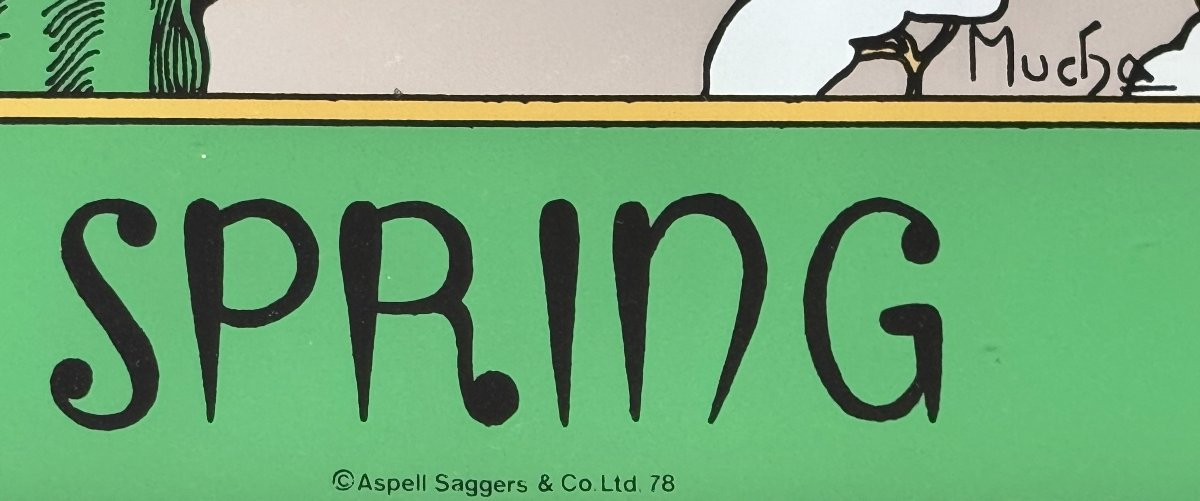
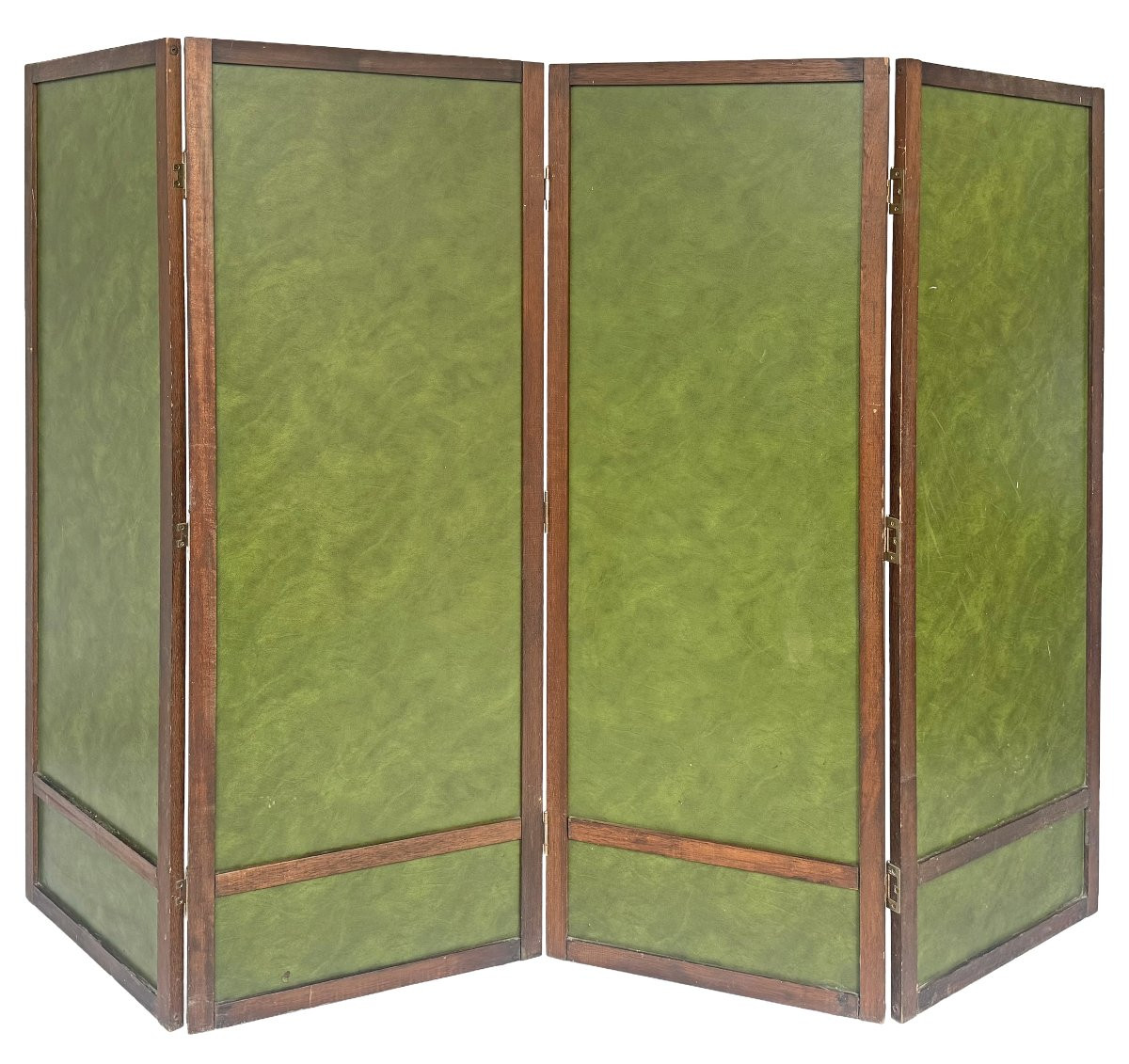
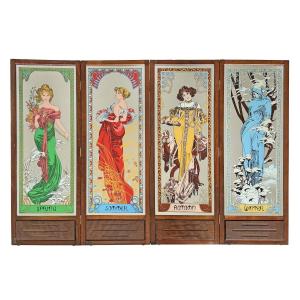


A four-panel screen decorated with silkscreened mirrors depicting the four seasons after the works of Alfons Mucha (1860-1939). Each season is personified by a woman with symbolic attributes. The names of the seasons are inscribed in English. Each mirror is signed at the bottom: Aspell Saggers & Co Ltd 78. Style: Art Nouveau. Dimensions: H 135.5 cm, W 195 cm, D 3.5 cm. Born in Moravia, now part of the Czech Republic, Mucha spent years practicing decorative painting in his native country and in Vienna before creating illustrations for Parisian magazines. In 1894, he designed a poster for the Parisian production of a new play by Victorien Sardou, Gismonda, which earned him the favor of Sarah Bernhardt, the star of the show, and sparked considerable enthusiasm for his distinctive style. In the years that followed, he harnessed his seemingly inexhaustible creativity to work on a wide range of projects, including numerous lucrative commissions such as posters, decorative panels, printed advertisements, and models of goods, not to mention the 1900 Paris Exposition. The popularity of his creations was such that he often felt overwhelmed by his success, to the point of resentment. Although he fulfilled his greatest aspiration—to enrich people's lives by providing affordable and accessible art—Mucha often suffered from the pressure of balancing profitable assignments with more noble artistic work. Indeed, Mucha's mass-produced panels constituted a new art form that allowed anyone to own beautiful decorative pieces. One of his most famous works, published in 1900 and titled The Seasons, is part of a long artistic tradition of representing the seasons through personification. Despite their classical themes, these are unique and seductive representations of femininity and its many facets. Sensual female figures are key elements of Mucha's visual vocabulary, which also includes harmonious compositions, stylized depictions of the natural world, and a profound respect for Byzantine culture.
Explore similar pieces and discover your ideal find:
Screens, Room Dividers