THIS OBJECT WAS SOLD
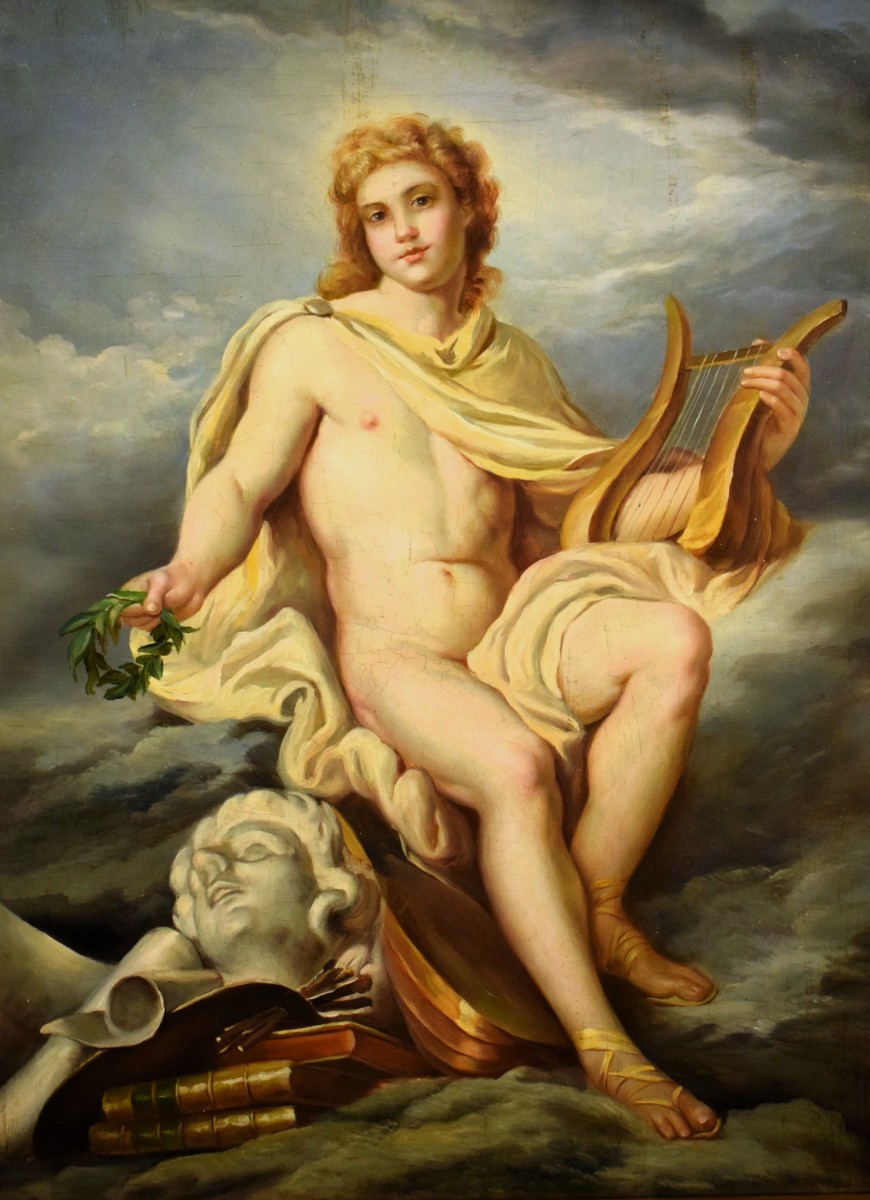
"apollo" - Oil On Canvas - Late 18th Century





"Apollo"
Oil on canvas
Late 18th century
Canvas 50 x 60 cm
Frame 64 x 74 cm
Excellent condition
Apollo is perhaps the deity who most embodies the essence of the Greek world: complex, multifaceted, capable of bringing salvation or destruction. His cult spread to every corner of Greece, reaching as far as Rome. The main center of his cult was at Delphi, home of his most famous oracle.
Son of Zeus and twin brother of Artemis, no god in Greek mythology is associated with such an important and varied series of expressions of human existence as Apollo.
He is the god of art and music, of light and the sun, of beauty, wisdom, and prophecy, but also of war and medicine.
Apollo is the protagonist of mythical, often tragic, love affairs, the most famous of which are with the nymph Daphne, transformed into a laurel tree to escape him, and with the young Spartan prince Hyacinthus. Hyacinthus was fatally killed during a discus throwing competition, deflected by the god Zephyr, jealous of the homosexual relationship between the two beautiful lovers.
Despite his luminous appearance, Apollo is also the god of merciless punishment. He is the one who causes the death of Patroclus in the Iliad, invisibly intervening in the duel with Hector and unleashing Achilles' wrath. He also inflicted cruel torture on Marsyas who dared to challenge him to a musical contest, ultimately resulting in his being flayed alive.
Alongside his destructive power, Apollo possesses a beneficial function: that of healing and purifying. In myths, Apollo often appears as the one who rids the earth of monsters and brings order and civilization, founding cities and building temples. In ancient art, he is always depicted as an athletic young man, tall, handsome, and with long, curly hair.
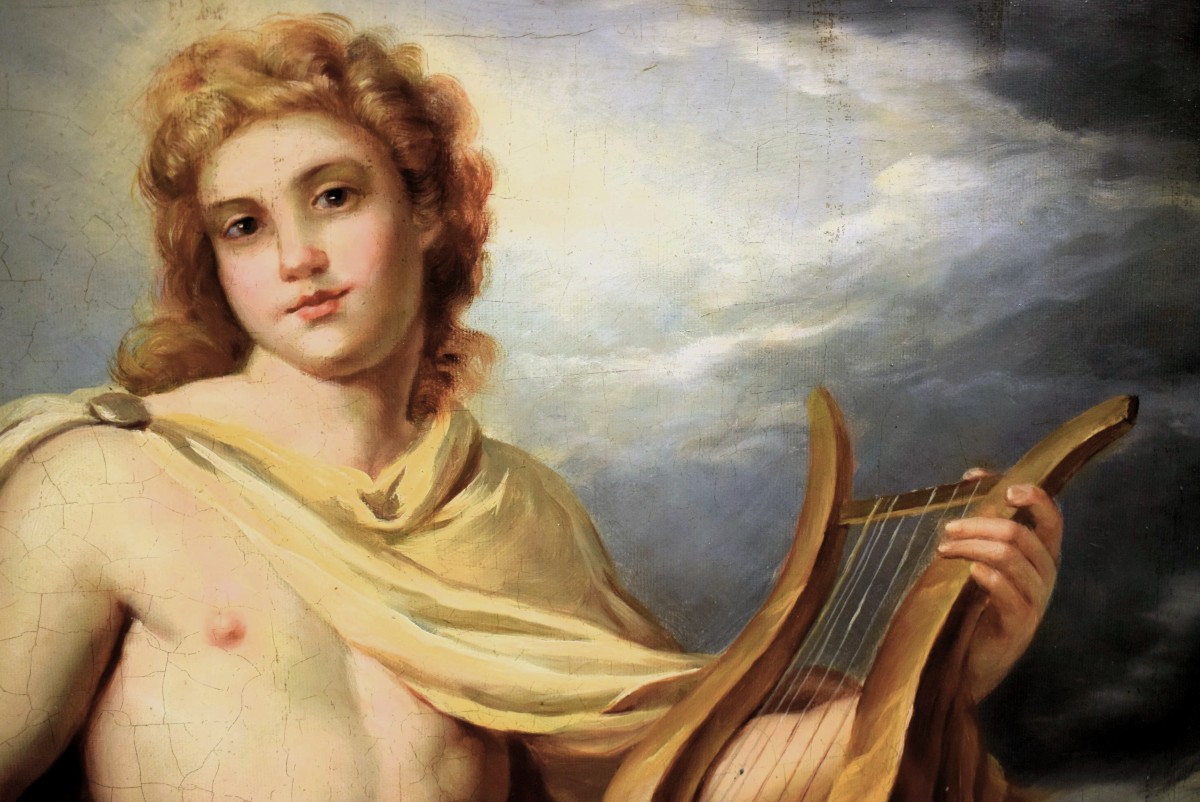
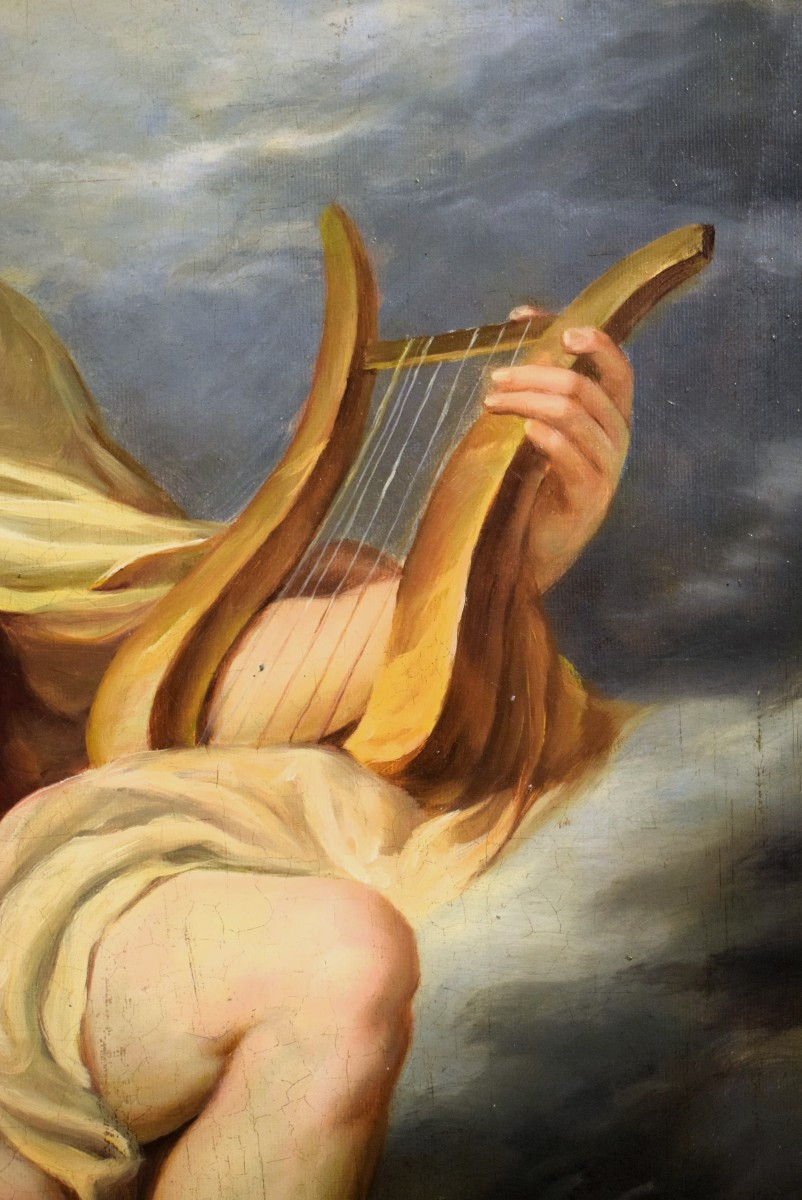
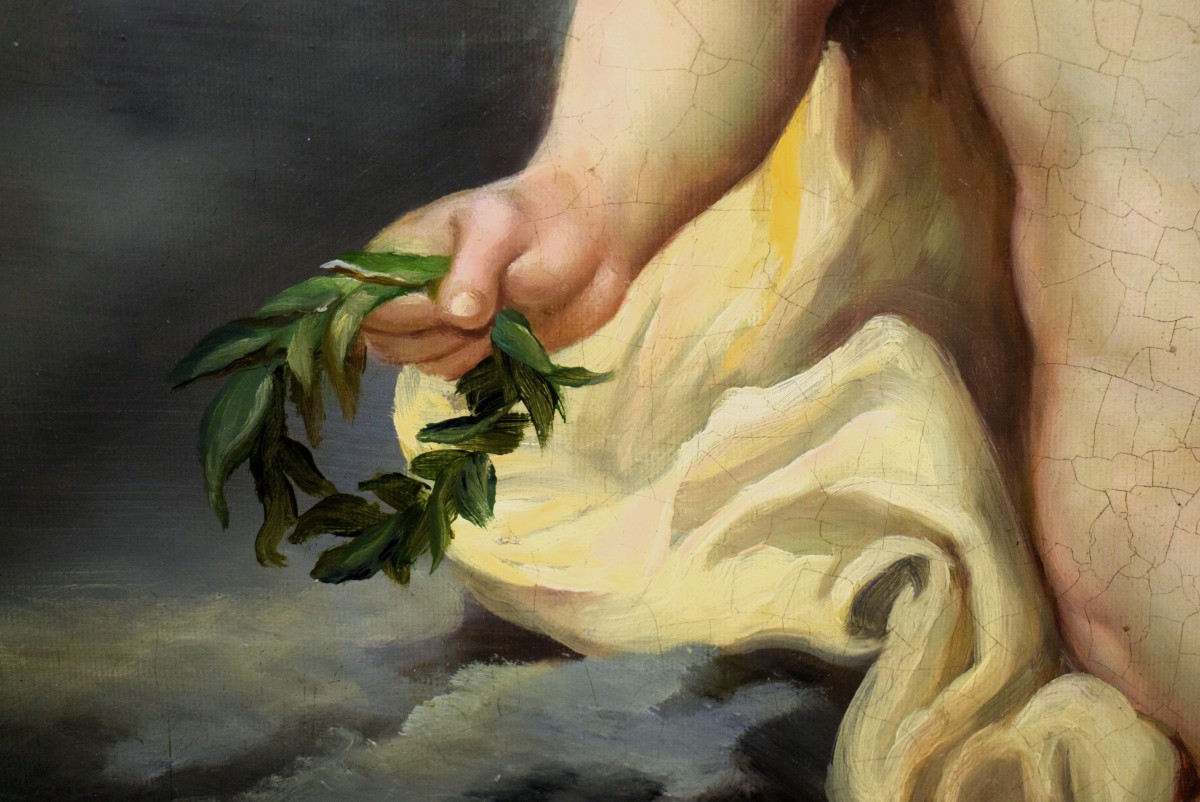
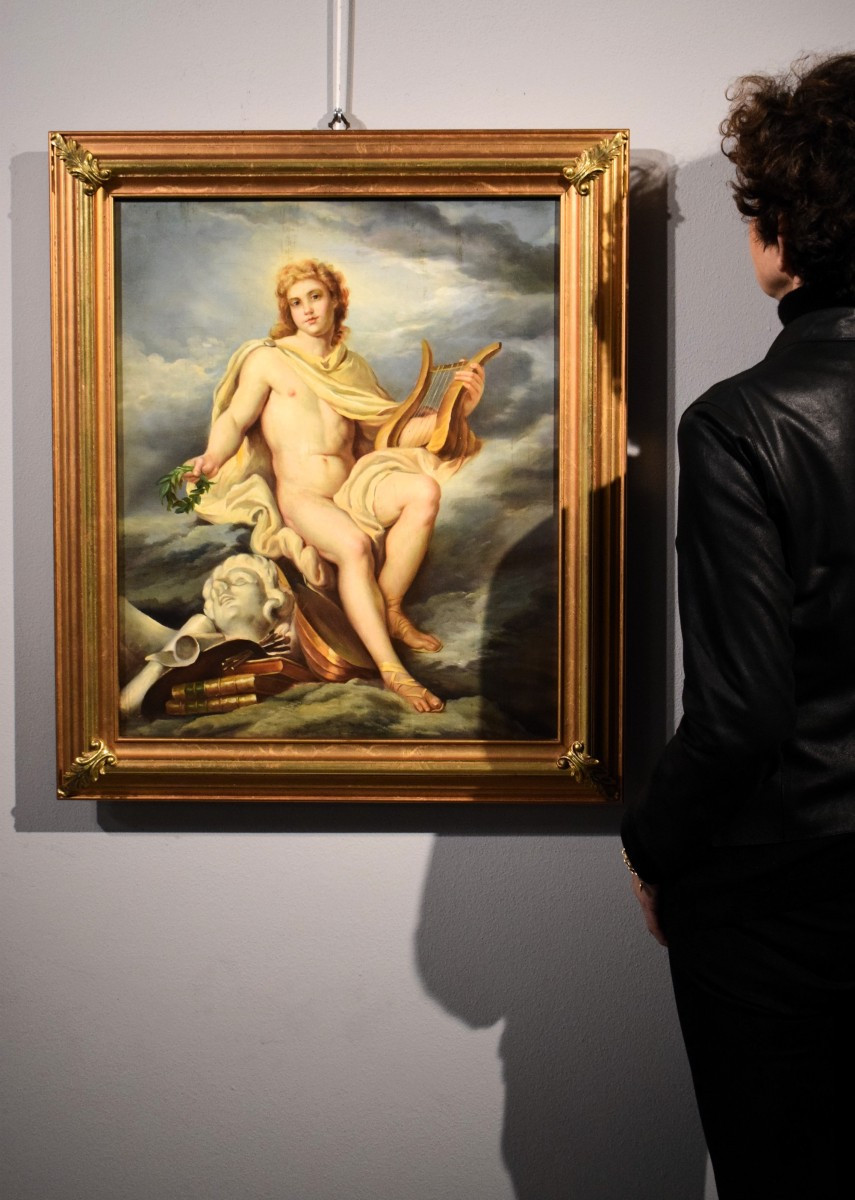
The painting presented here shows him half-naked and seated, holding the ever-present lyre in his left hand and a laurel wreath in his right.
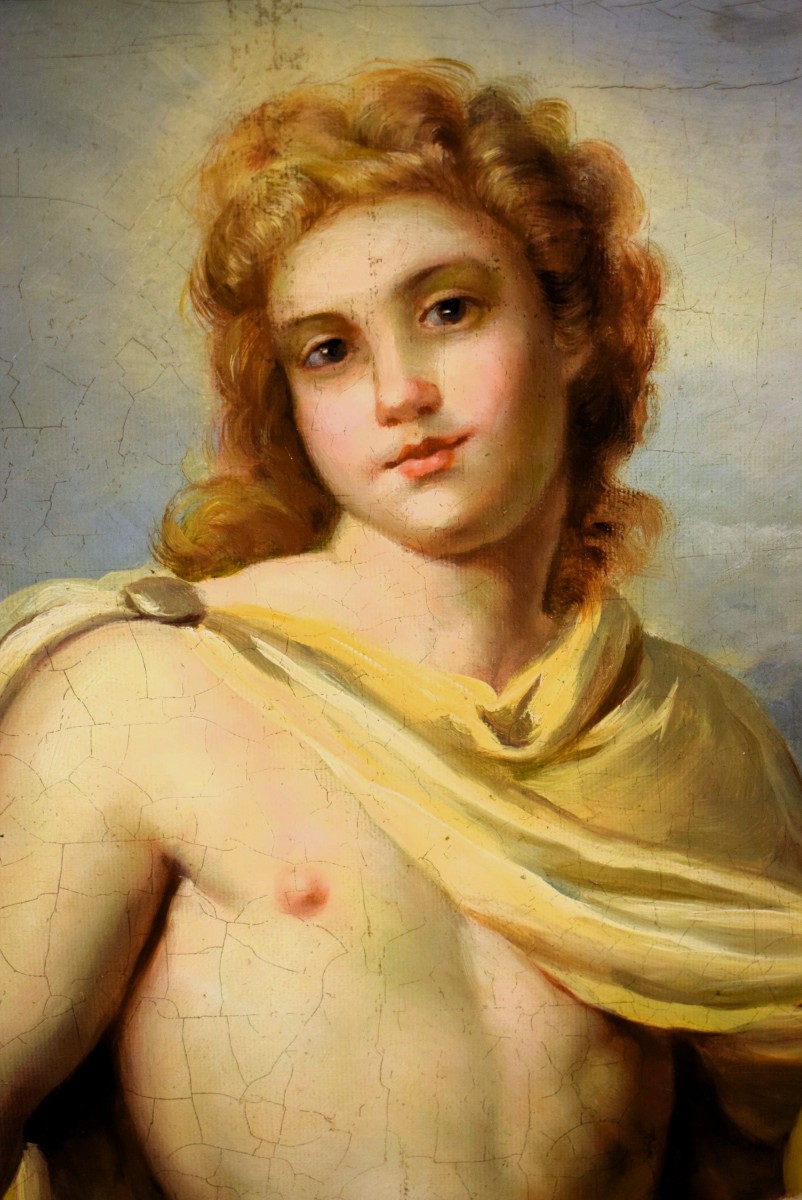
His face is the supreme ideal of male beauty and conveys serenity and harmony, characterized by effeminate and beardless features.
It is the quintessential expression of classical balance and Olympian perfection.
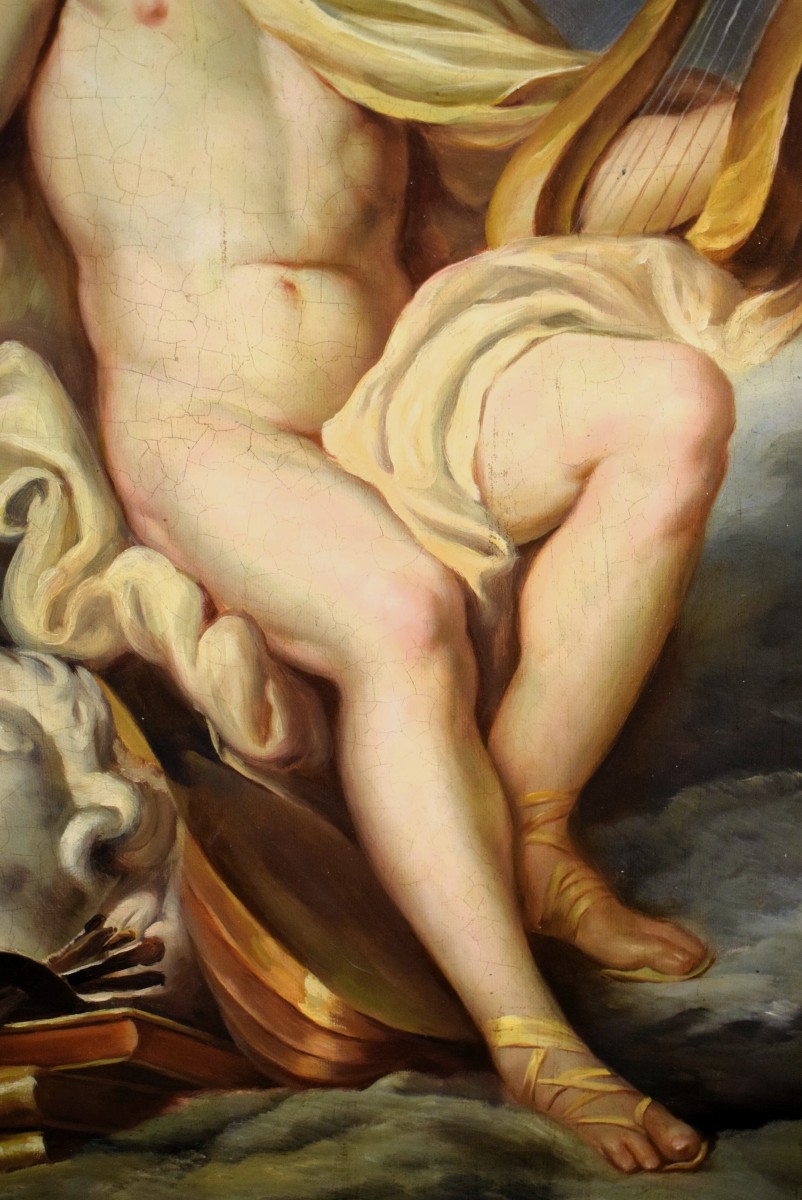
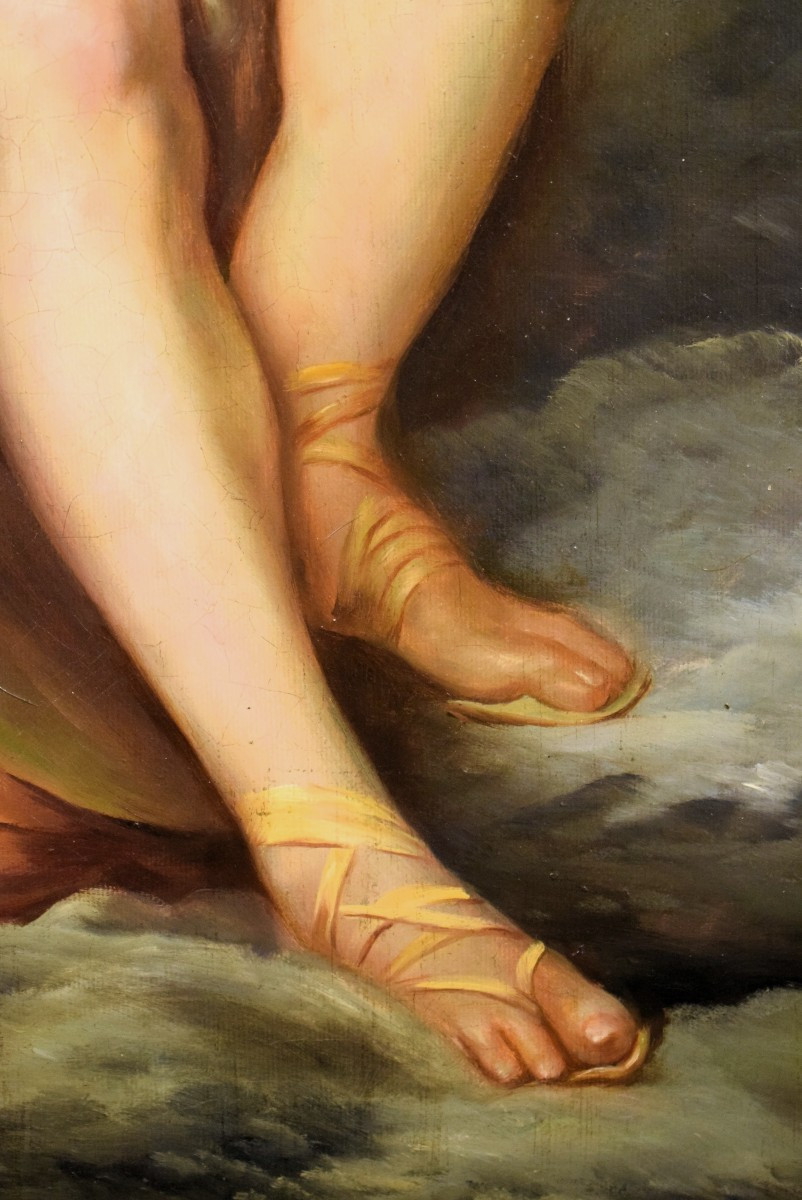
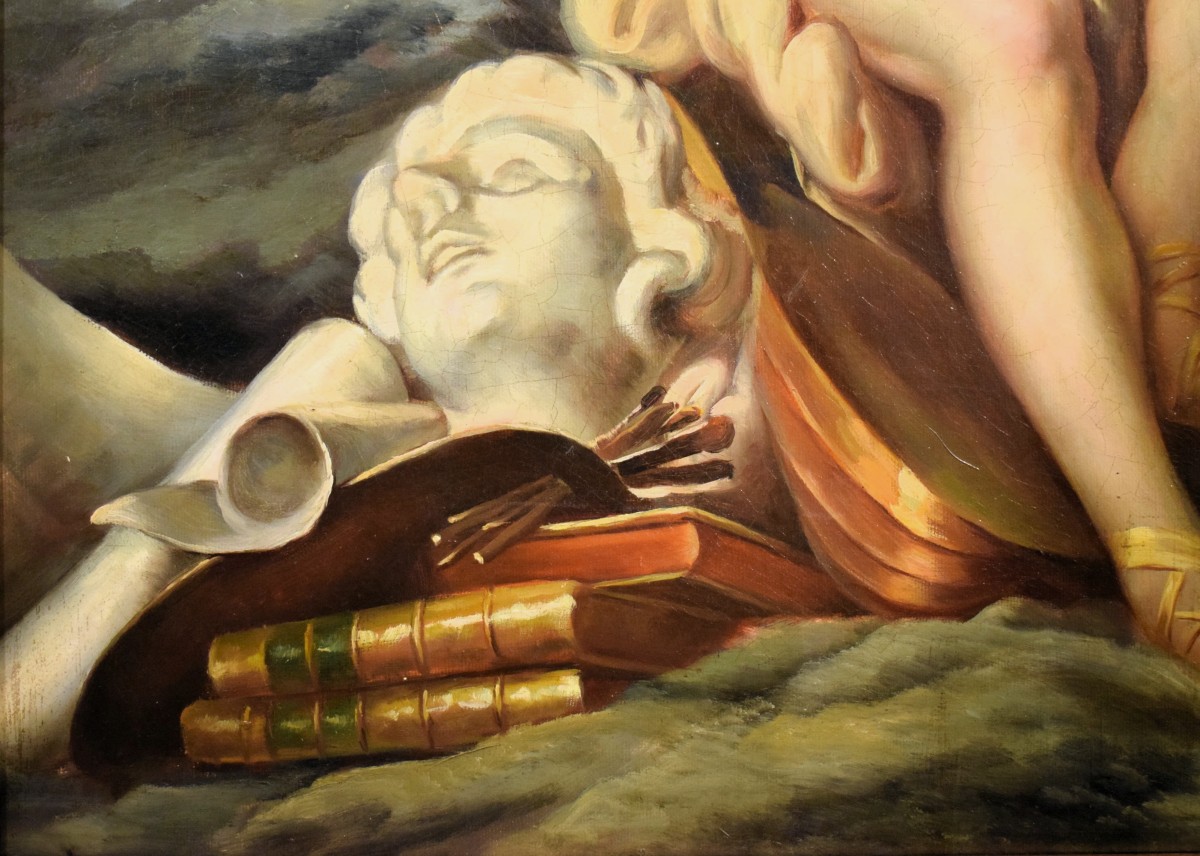
She wears only a tunic that covers her shoulders and private parts, and sandals on her feet. She opens her arms to offer her sensual body to the viewer. At the bottom are the symbols of music, sculpture, painting, and poetry.
This extremely graceful image is made even more captivating by the canvas's unique background. The splendid figure of Apollo is suspended in the gray, cloudy sky, in a disturbing atmosphere that, besides recalling the merciless version of the god, illuminates him in a magnificent three-dimensional effect.
Oil on canvas
Late 18th century
Canvas 50 x 60 cm
Frame 64 x 74 cm
Excellent condition
Apollo is perhaps the deity who most embodies the essence of the Greek world: complex, multifaceted, capable of bringing salvation or destruction. His cult spread to every corner of Greece, reaching as far as Rome. The main center of his cult was at Delphi, home of his most famous oracle.
Son of Zeus and twin brother of Artemis, no god in Greek mythology is associated with such an important and varied series of expressions of human existence as Apollo.
He is the god of art and music, of light and the sun, of beauty, wisdom, and prophecy, but also of war and medicine.
Apollo is the protagonist of mythical, often tragic, love affairs, the most famous of which are with the nymph Daphne, transformed into a laurel tree to escape him, and with the young Spartan prince Hyacinthus. Hyacinthus was fatally killed during a discus throwing competition, deflected by the god Zephyr, jealous of the homosexual relationship between the two beautiful lovers.
Despite his luminous appearance, Apollo is also the god of merciless punishment. He is the one who causes the death of Patroclus in the Iliad, invisibly intervening in the duel with Hector and unleashing Achilles' wrath. He also inflicted cruel torture on Marsyas who dared to challenge him to a musical contest, ultimately resulting in his being flayed alive.
Alongside his destructive power, Apollo possesses a beneficial function: that of healing and purifying. In myths, Apollo often appears as the one who rids the earth of monsters and brings order and civilization, founding cities and building temples. In ancient art, he is always depicted as an athletic young man, tall, handsome, and with long, curly hair.
The painting presented here shows him half-naked and seated, holding the ever-present lyre in his left hand and a laurel wreath in his right.
His face is the supreme ideal of male beauty and conveys serenity and harmony, characterized by effeminate and beardless features.
It is the quintessential expression of classical balance and Olympian perfection.
She wears only a tunic that covers her shoulders and private parts, and sandals on her feet. She opens her arms to offer her sensual body to the viewer. At the bottom are the symbols of music, sculpture, painting, and poetry.
This extremely graceful image is made even more captivating by the canvas's unique background. The splendid figure of Apollo is suspended in the gray, cloudy sky, in a disturbing atmosphere that, besides recalling the merciless version of the god, illuminates him in a magnificent three-dimensional effect.
Explore similar pieces and discover your ideal find:
Other Paintings