THIS OBJECT WAS SOLD
Cruciform Reliquary Sundial, Rome, 1585


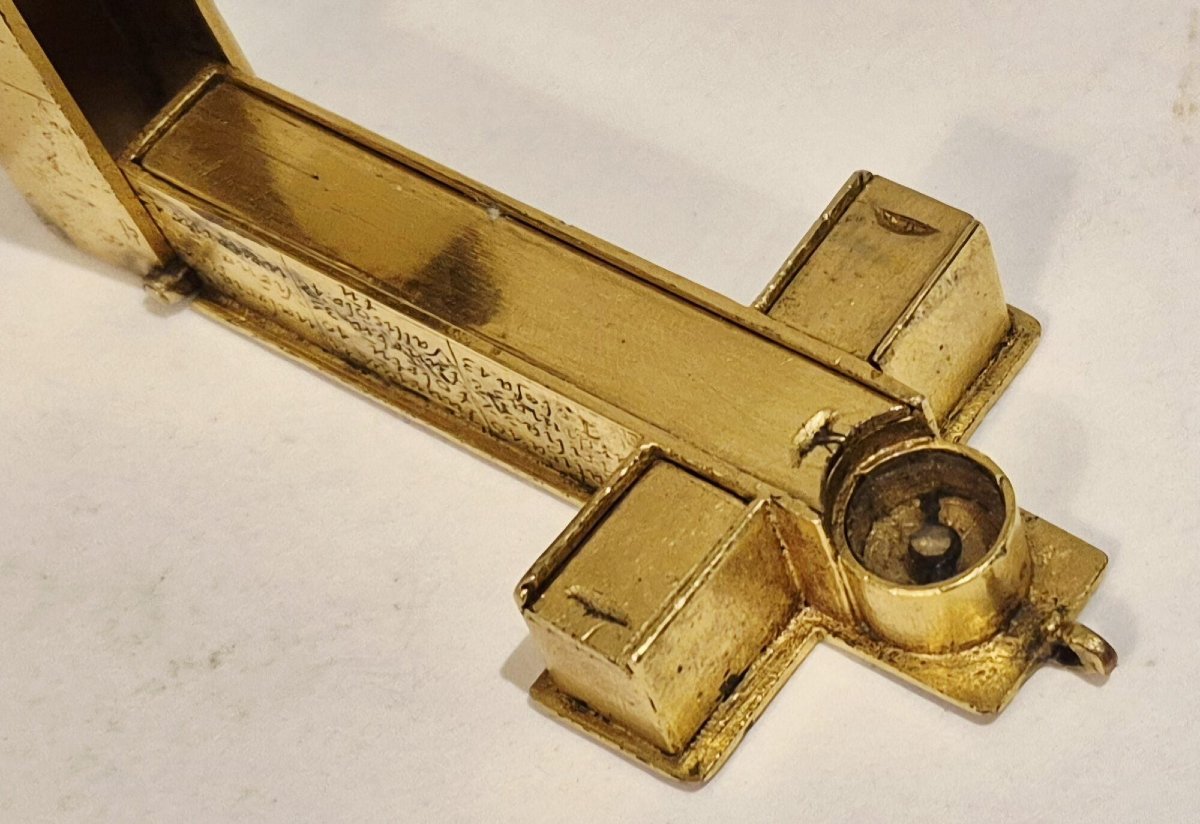
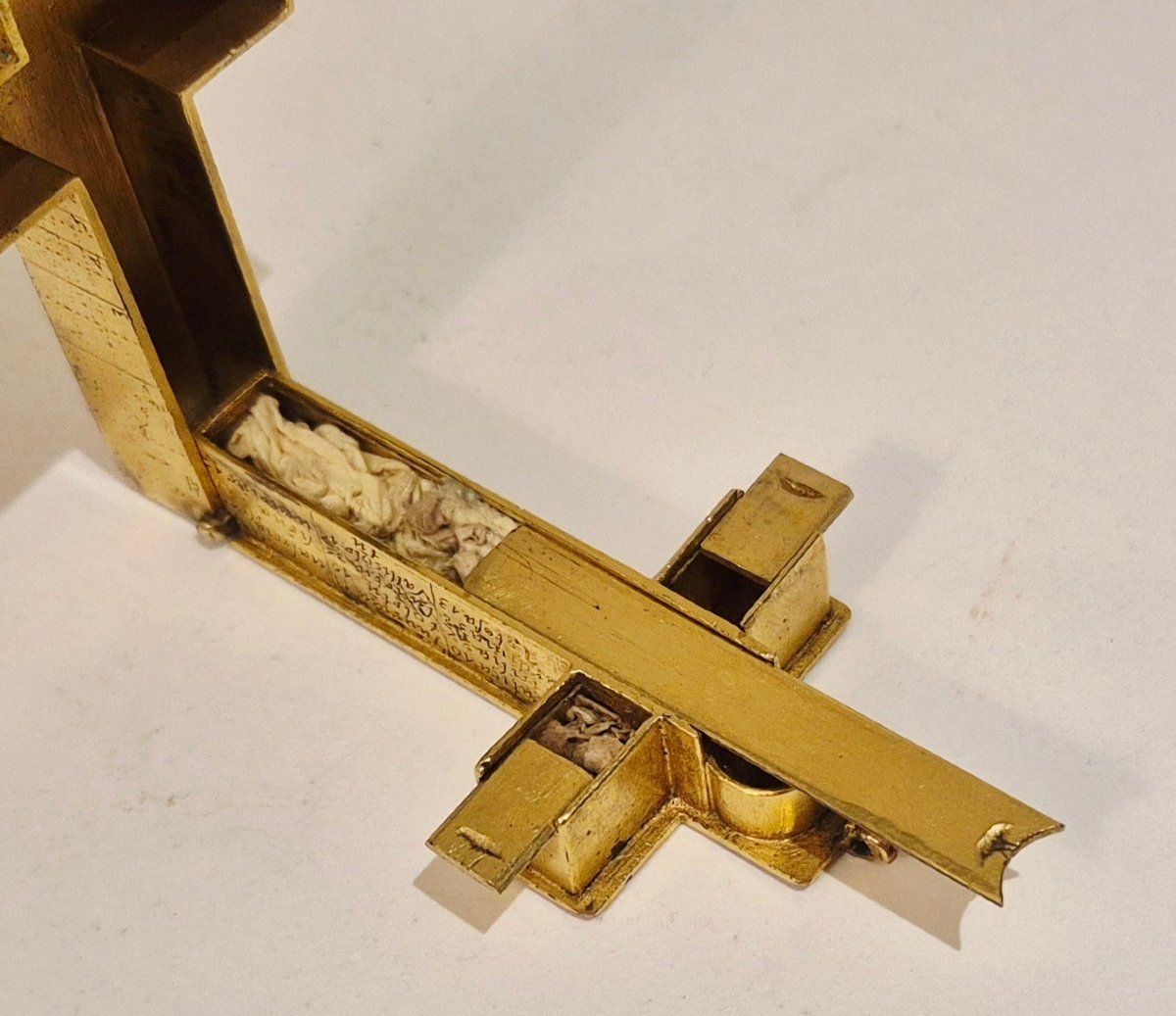
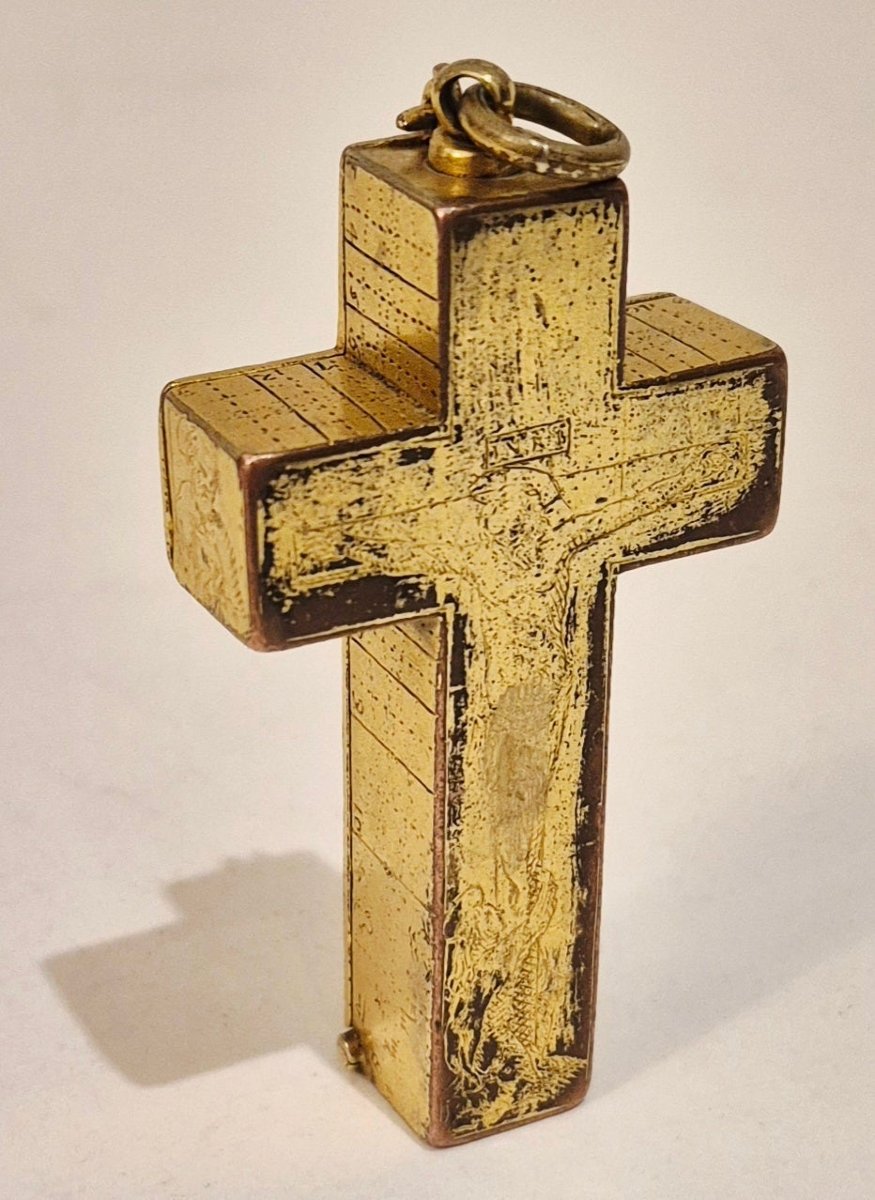


Reliquary dial in the shape of a cross with unicorn decoration, Rome, 1585. Gilt brass; dimensions of the dial when closed: 6.7x3.8x1.5 cm. Some loss of gilding on the exterior and an old repair in the center of the cross. This diptych sundial in gilt copper bears the date "1585" and the inscription "Romae," referring to the city of Rome. These cruciform sundials from the last quarter of the 16th century are usually attributed to the Flemish workshop of Adrien Zeelst in Leuven. However, the overall design of this particular model, the style of its engraving, and the inscription of Rome contradict this traditional attribution. This diptych sundial is engraved with a double hour scale (3-6, 1-3, 7-12, then 9-7, 12-9, 6-1) and a zodiac scale on the upper arms and along the cross. The latitude scale (0 to 80 degrees) is inscribed along the rectangular base. The sundial is also engraved with the names and latitudes of 60 cities. A small compass is fixed to the top of the cross, and two saints are engraved on either side. This sundial is particularly interesting for its iconography: on the back, the usual Christ on the cross with Mary Magdalene at his feet; on either side of the cross, two apostles: Saint Christopher carrying Christ and likely Saint Thomas; and finally, more rarely and originally, in the lower part of the cross, the engraver has depicted a unicorn as a symbol of Christ and the Passion. Two of the three lower sections, which close with a zipper, contain small relic bones encased in paper. This rare sundial, a scientific, mathematical, and astronomical instrument, thus has a religious function as well as a protective one, acting as an amulet. A very rare Italian example in beautiful condition and perfectly usable.
Explore similar pieces and discover your ideal find:
scientific instruments