



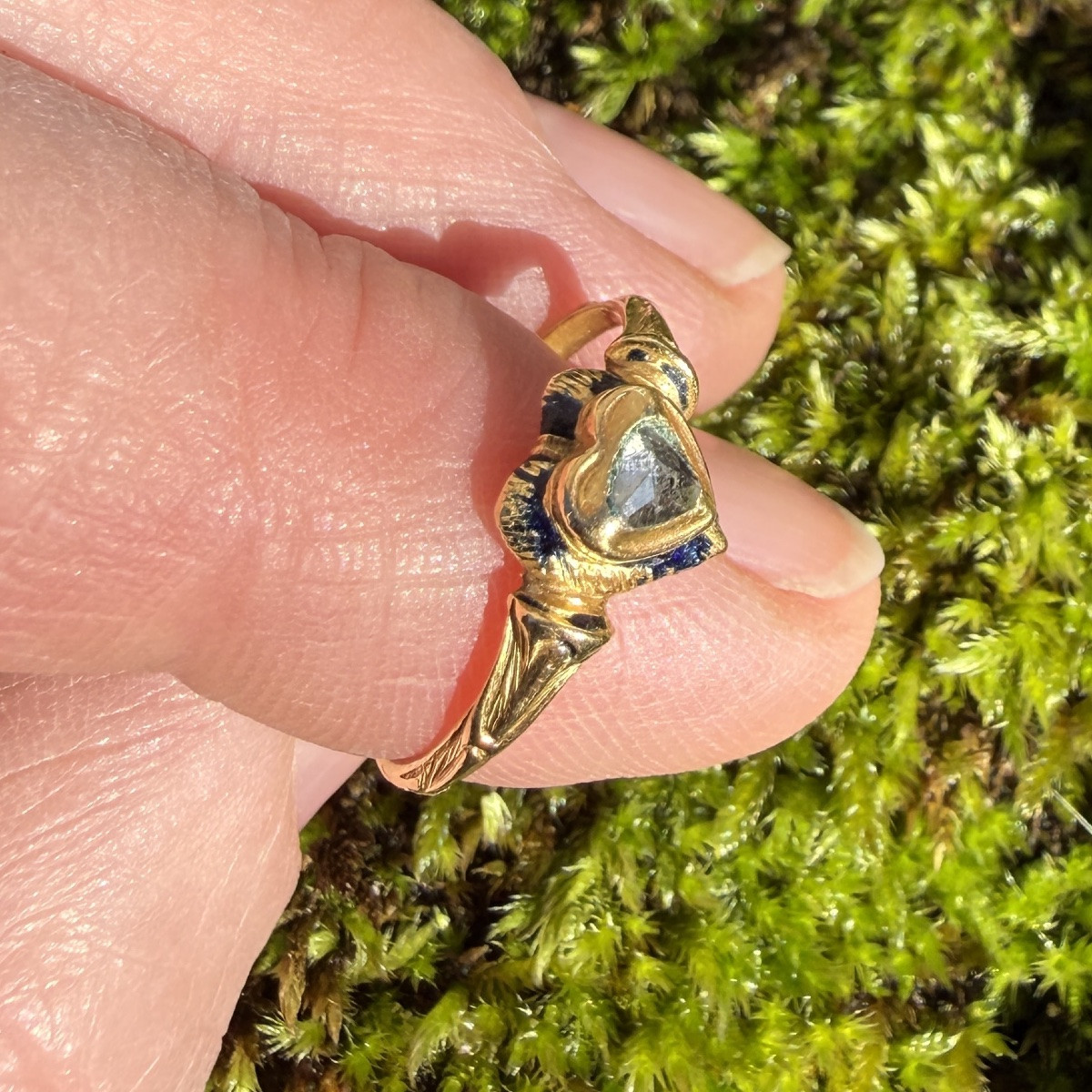


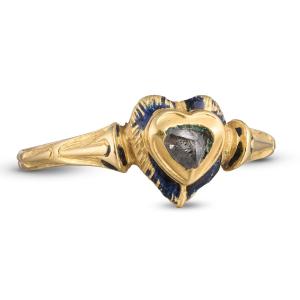


Heart-shaped Diamond And Enamel Love Ring. Western Europe, 17th Century.
Heart-shaped diamond and enamel love ring.
Western Europe, 17th century.
Measurements: Ring size J½ (UK) / US 5 / EU 49.5; weight 2.1 g.
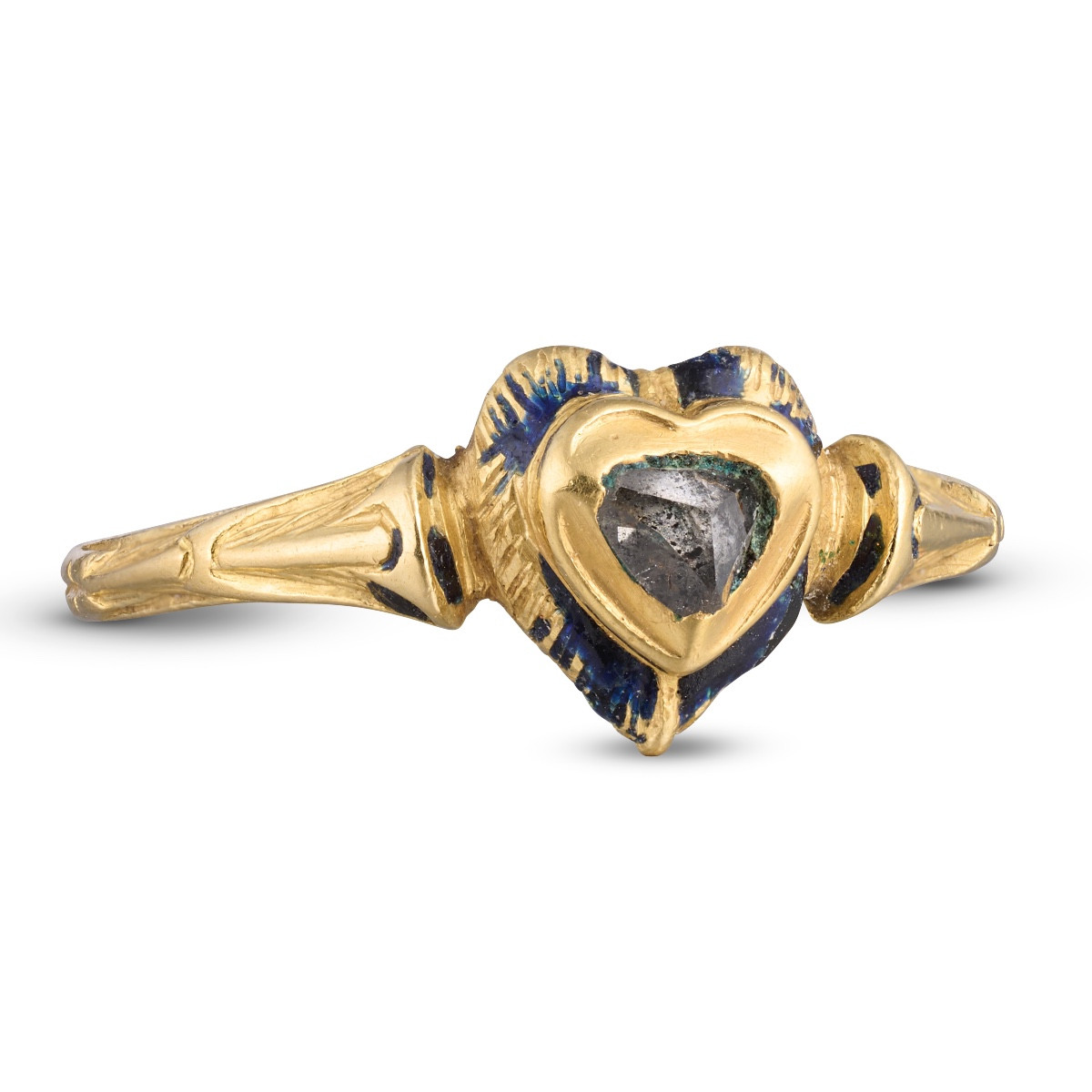
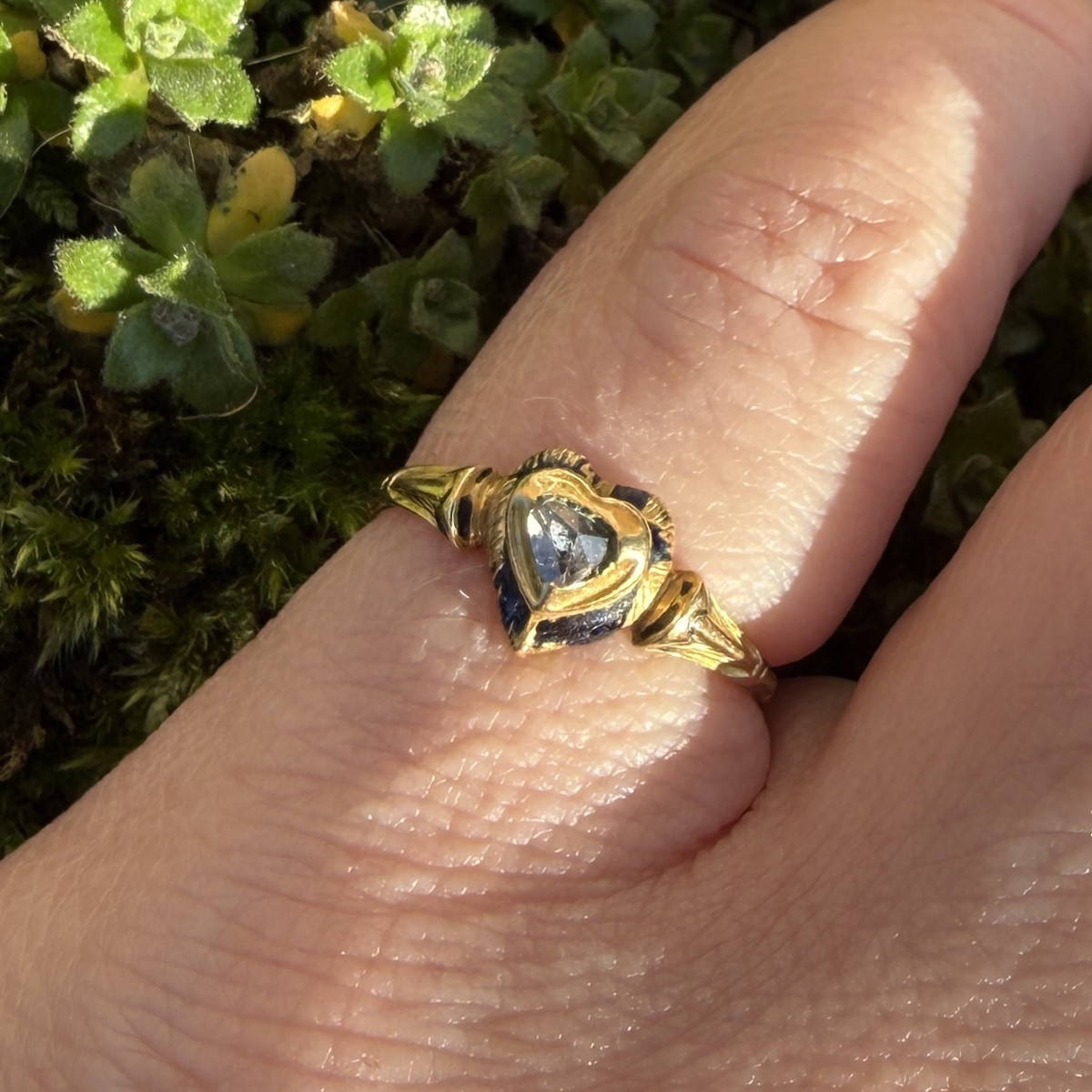
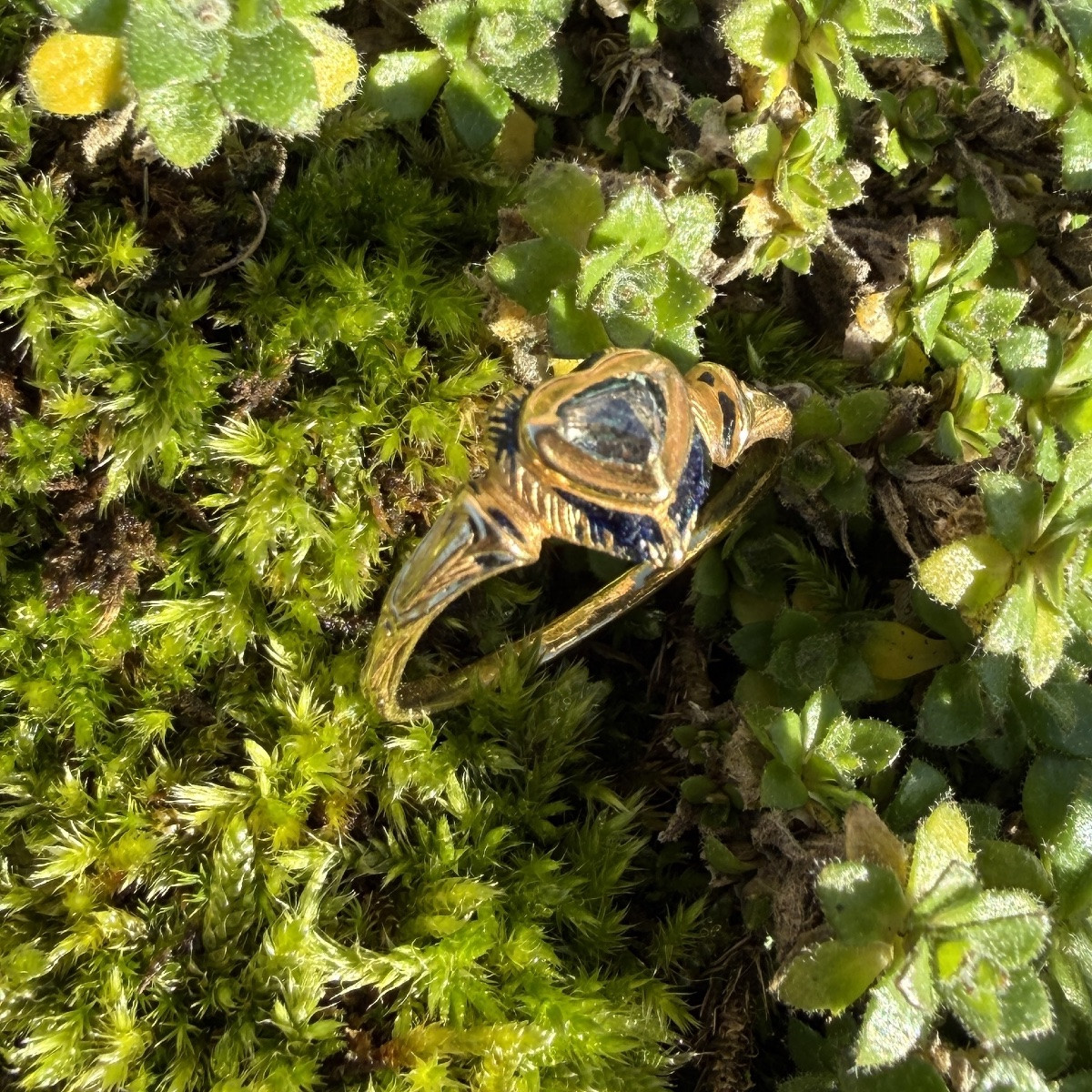
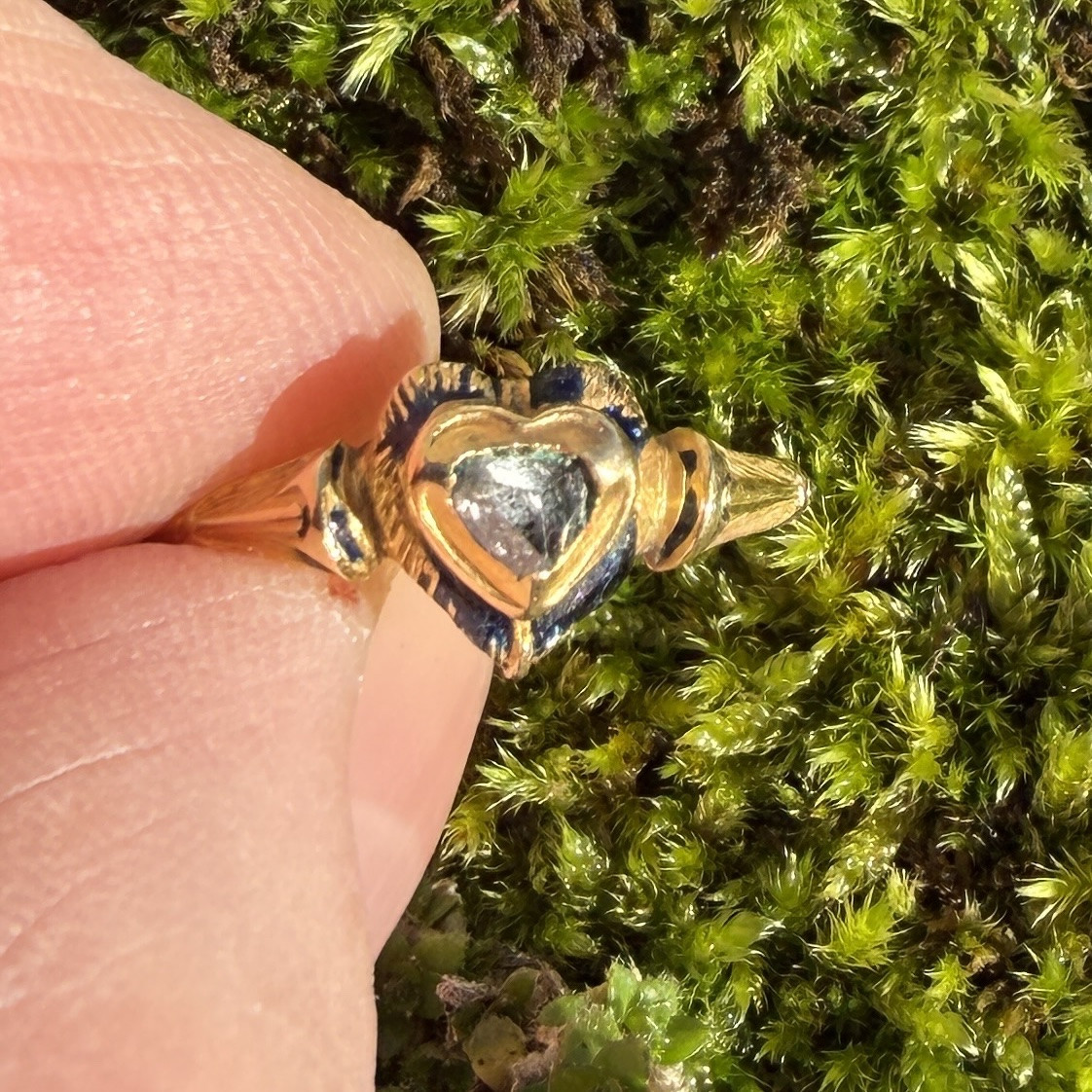
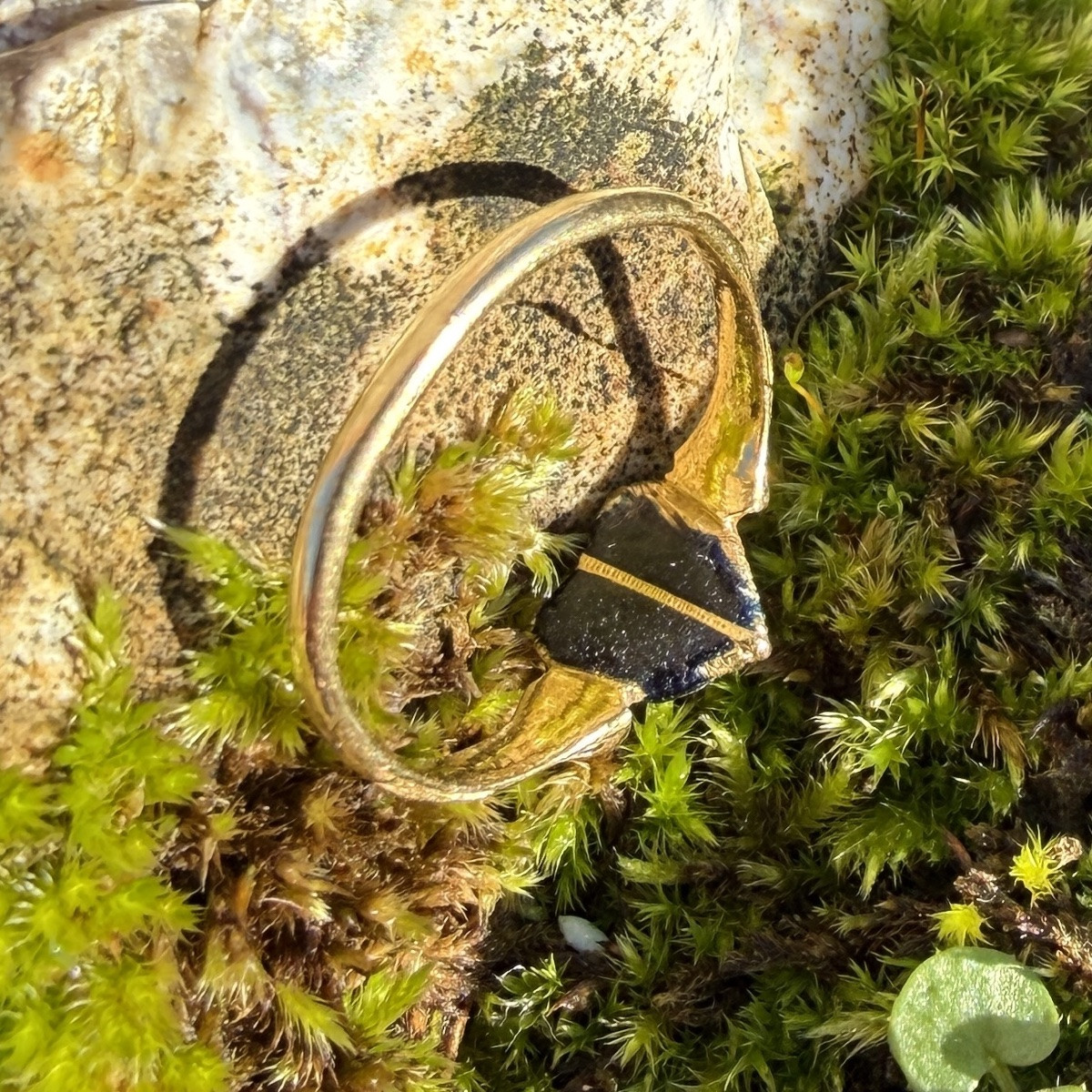
Description. A small 17th-century gold love ring centred on a heart-shaped cartouche set with a rose-cut diamond in a closed bezel. The heart is decorated with blue enamel to both front and reverse; much of the original blue remains though with losses. The half-round band is joined to the setting by carved shoulders; the piece is mounted in gold and retains its intimate scale and fine modelling typical of personal jewellery of the period. The rose-cut diamond is set back within the heart; it remains secure in its bezel and is in original, untouched condition.
Condition. Original condition; no restorations. Notable losses to the blue enamel; diamond intact and setting secure.
Provenance. English Art Market.
Remarks. The heart motif and applied blue enamel identify the object as a love ring of the 17th century. These symbols represented love and fidelity. The ring was likely a token of love symbolising everlasting devotion, or possibly a betrothal ring. The presence of a rose-cut diamond — a highly valued and comparatively rare gem in early modern European jewellery — would have conferred significant material and social value on the wearer. Historically such early diamonds were commonly sourced from the Golconda region of India; while the specific origin of the present stone cannot be demonstrated here, its form and setting are consistent with seventeenth-century practice.
References. A closely related enameled heart ring in the collection of the Victoria and Albert Museum (acc. no. M.224-1975) shows a heart motif enclosing a bezel-set diamond (c.1600–1650). See also the published catalogue entry by Diana Scarisbrick for the collection of Benjamin Zucker, which illustrates comparable enameled examples of seventeenth-century composition.
Western Europe, 17th century.
Measurements: Ring size J½ (UK) / US 5 / EU 49.5; weight 2.1 g.
Description. A small 17th-century gold love ring centred on a heart-shaped cartouche set with a rose-cut diamond in a closed bezel. The heart is decorated with blue enamel to both front and reverse; much of the original blue remains though with losses. The half-round band is joined to the setting by carved shoulders; the piece is mounted in gold and retains its intimate scale and fine modelling typical of personal jewellery of the period. The rose-cut diamond is set back within the heart; it remains secure in its bezel and is in original, untouched condition.
Condition. Original condition; no restorations. Notable losses to the blue enamel; diamond intact and setting secure.
Provenance. English Art Market.
Remarks. The heart motif and applied blue enamel identify the object as a love ring of the 17th century. These symbols represented love and fidelity. The ring was likely a token of love symbolising everlasting devotion, or possibly a betrothal ring. The presence of a rose-cut diamond — a highly valued and comparatively rare gem in early modern European jewellery — would have conferred significant material and social value on the wearer. Historically such early diamonds were commonly sourced from the Golconda region of India; while the specific origin of the present stone cannot be demonstrated here, its form and setting are consistent with seventeenth-century practice.
References. A closely related enameled heart ring in the collection of the Victoria and Albert Museum (acc. no. M.224-1975) shows a heart motif enclosing a bezel-set diamond (c.1600–1650). See also the published catalogue entry by Diana Scarisbrick for the collection of Benjamin Zucker, which illustrates comparable enameled examples of seventeenth-century composition.
6 400 €
Period: 17th century
Style: Renaissance, Louis 13th
Condition: Condition of use
Material: Gold
Reference (ID): 1720494
Availability: In stock
Print