

Antique Painted Panel - Holy Family - Venetian-cretan School, 16th Century
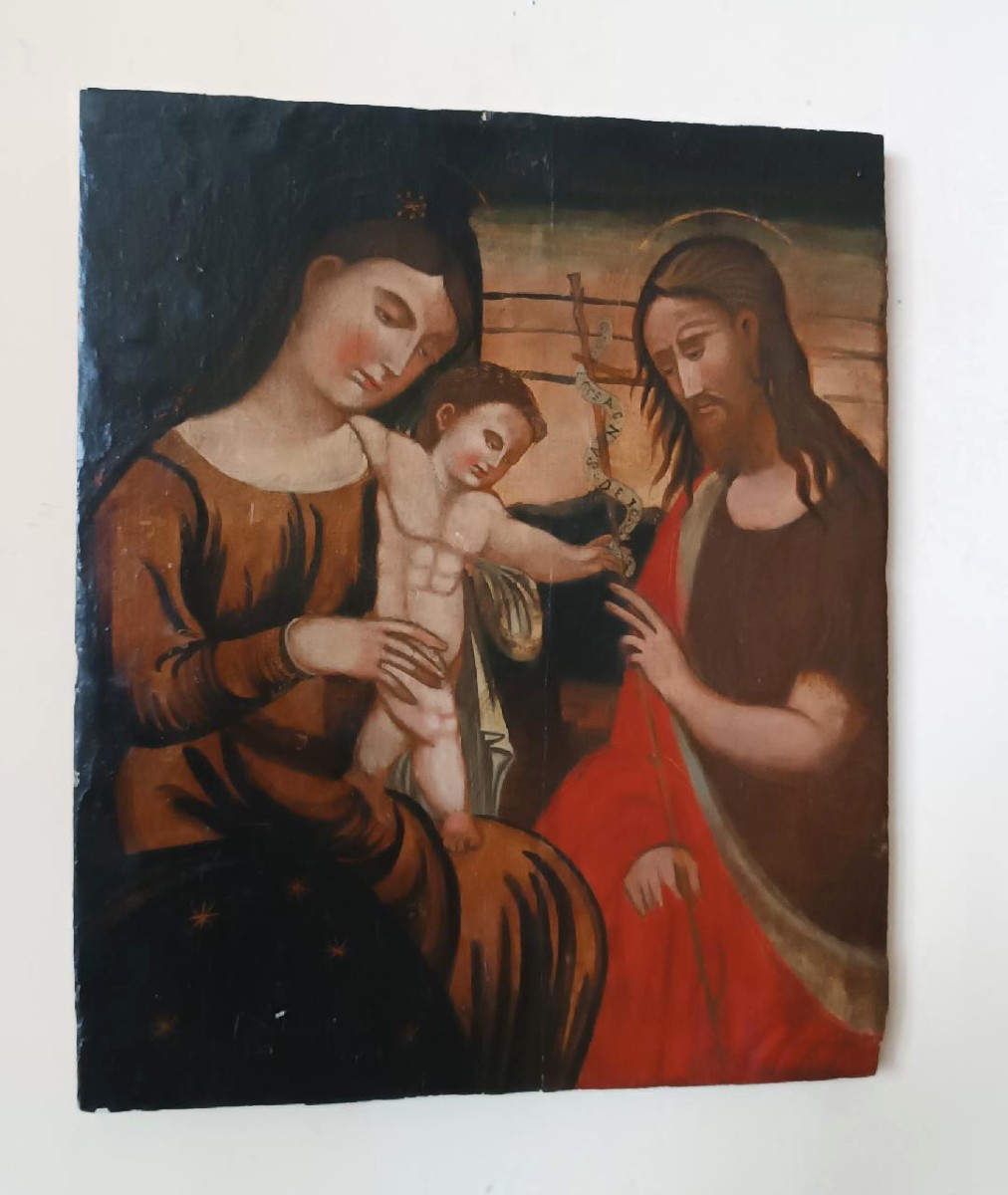
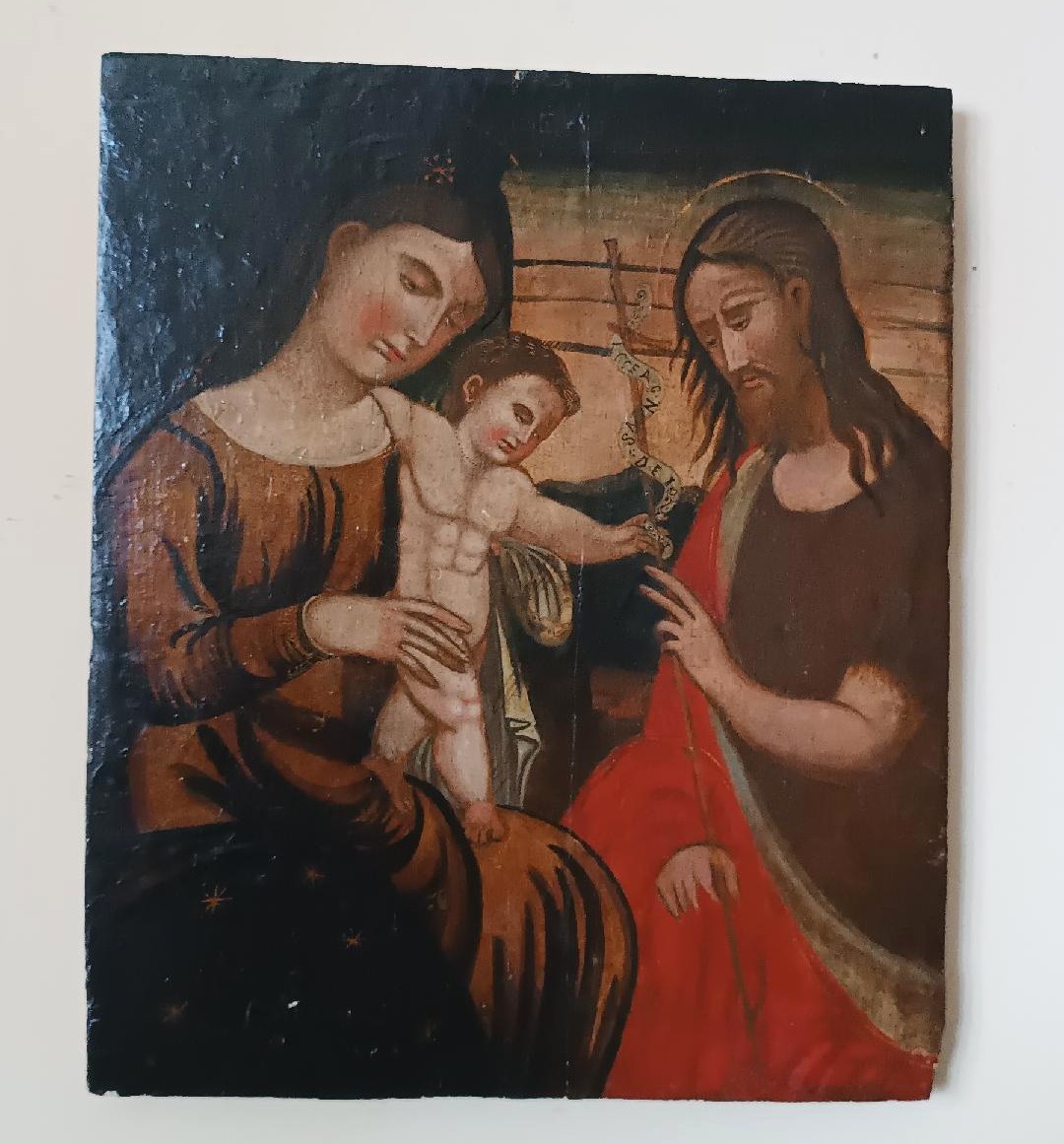
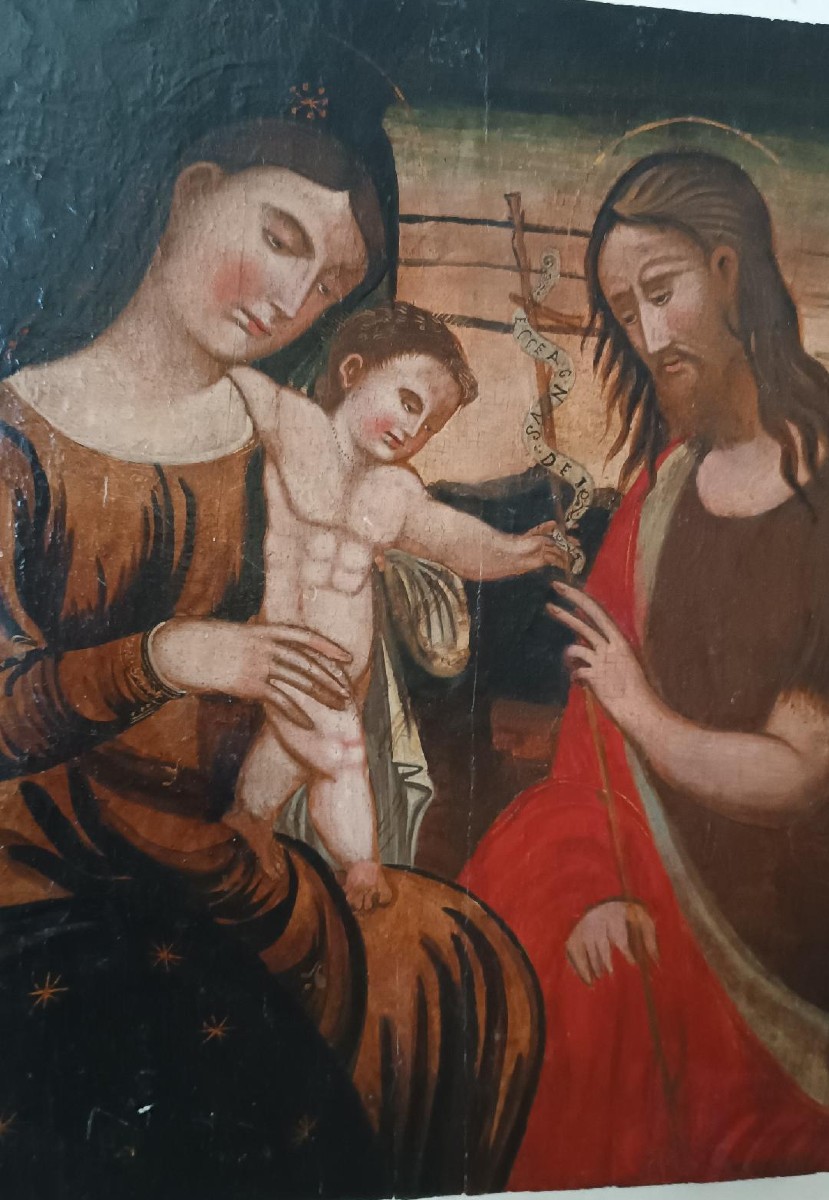
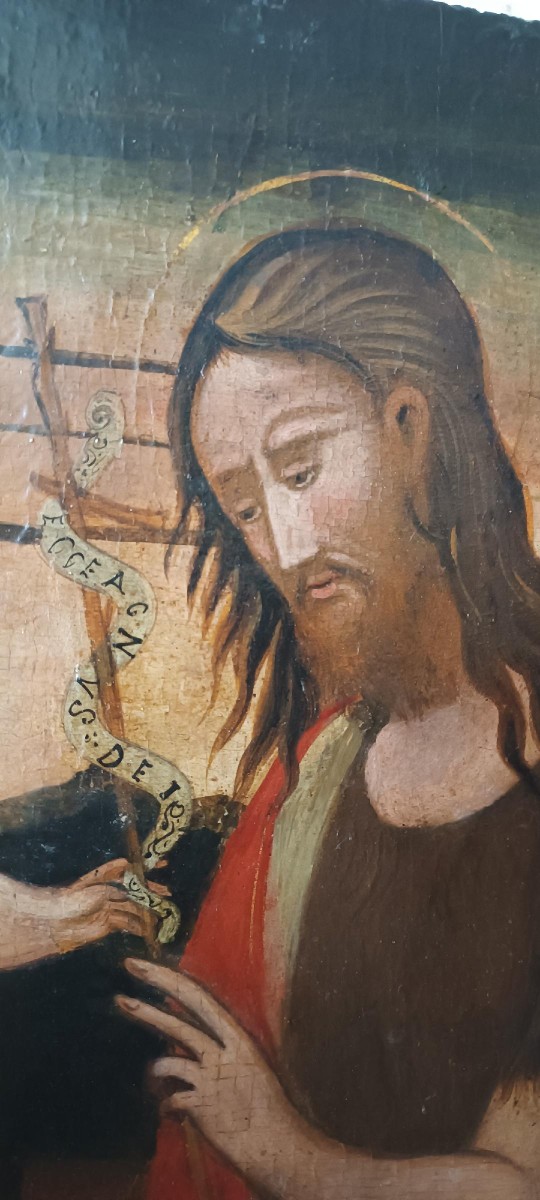
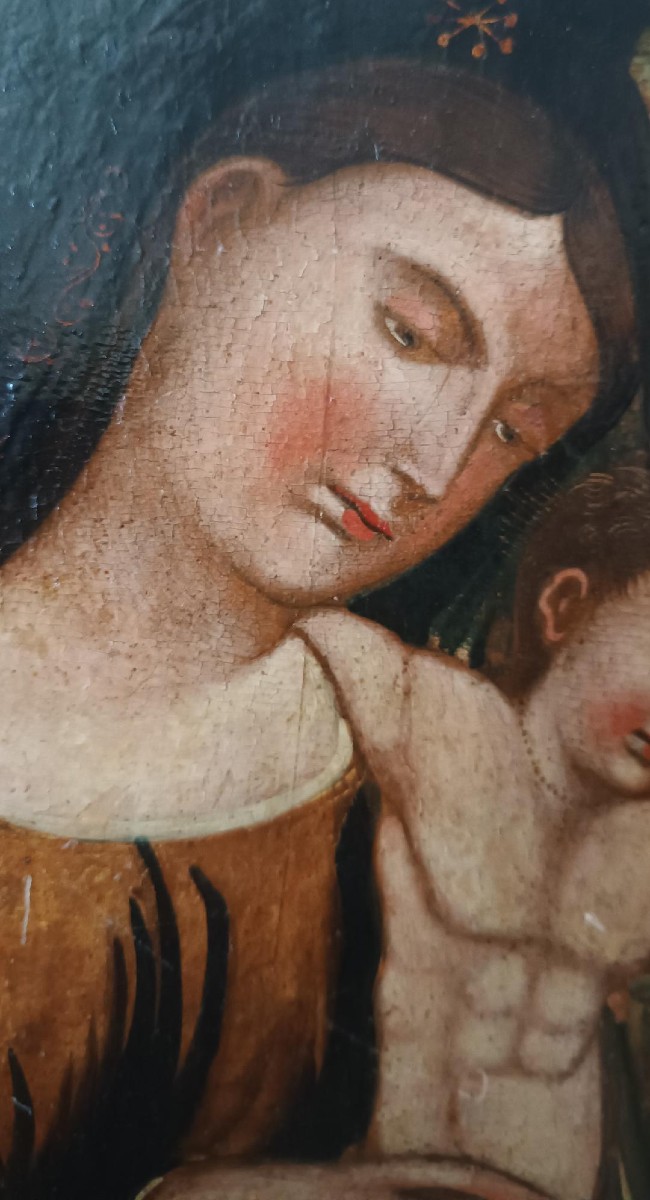
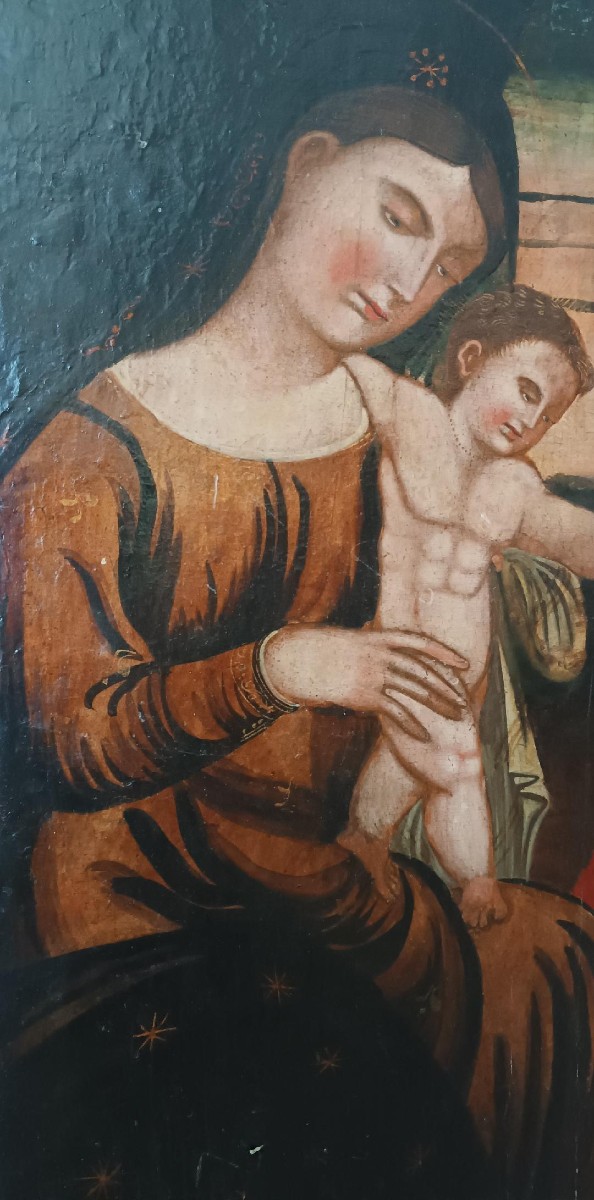
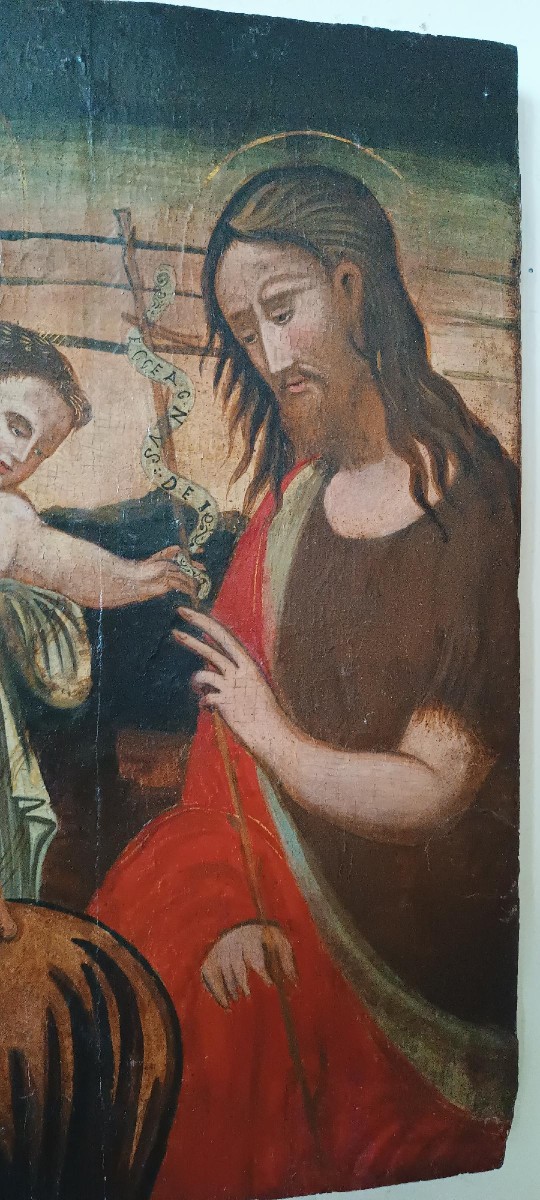
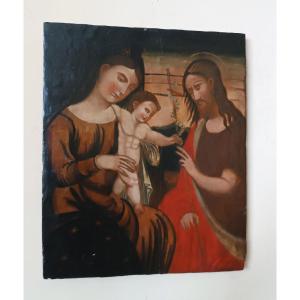
Antique oil painting on panel depicting the Madonna and Child with Saint Joseph.
Cretan Venetian School dating back to the 16th century.
The Cretan-Venetian (or Post-Byzantine) school is a pictorial movement that flourished in Crete under the rule of the Serenissima (1204-1669), characterized by the fusion of Byzantine icons and Venetian Renaissance influences. This production, active between the 15th and 17th centuries, blends Eastern tradition with Italian colors and volumes.
Iconography: Developed between the late 15th and 17th centuries, with Crete as its driving force.
Style: Fusion of Eastern tradition (gold background, hieraticism) and Venetian stylistic modules.
Themes: Virgin Hodegetria, Glikophilousa, Galaktotrophousa.
Technique: Mainly tempera on panel, with influences from Venetian painting (often with intense colors and highlights).
Artists: The Cretan-Venetian context produced painters who combined the two artistic worlds.
The works of this period represent a unique artistic language, born from the absorption of Venetian stylistic innovations by Orthodox artists working on the island.
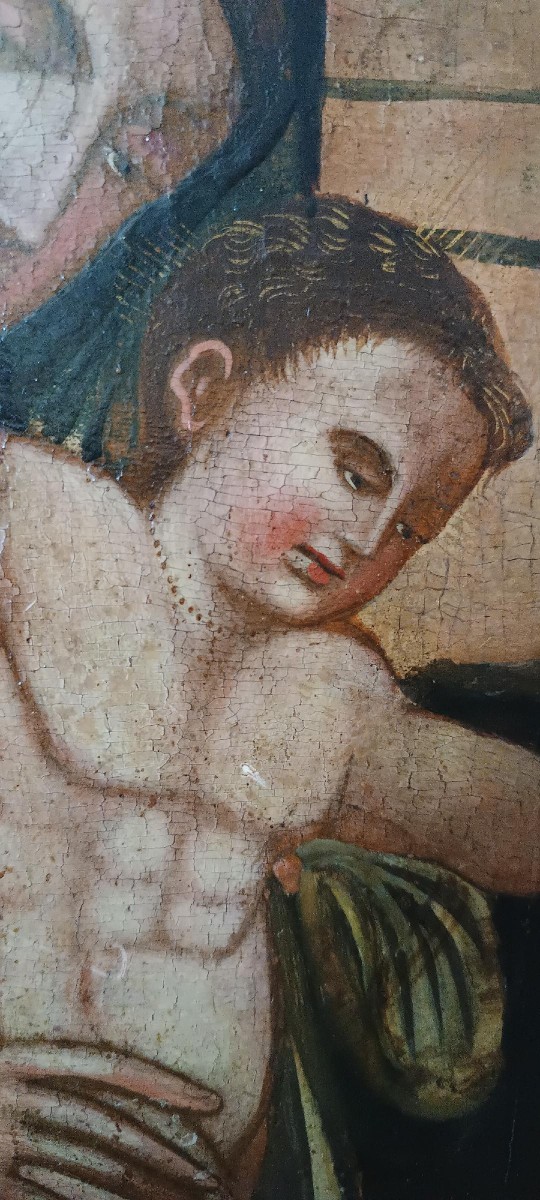
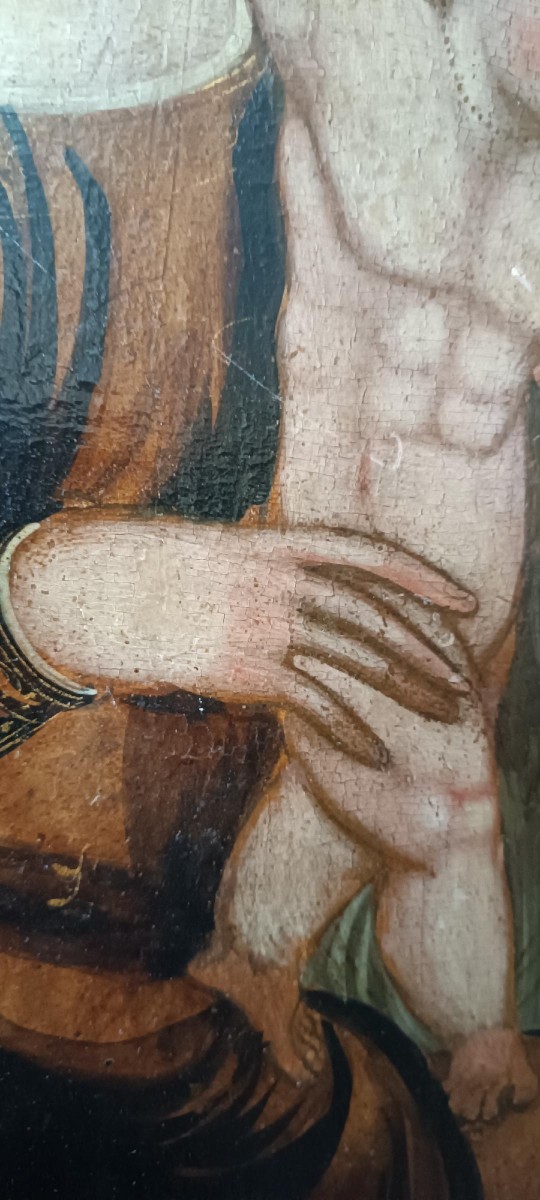
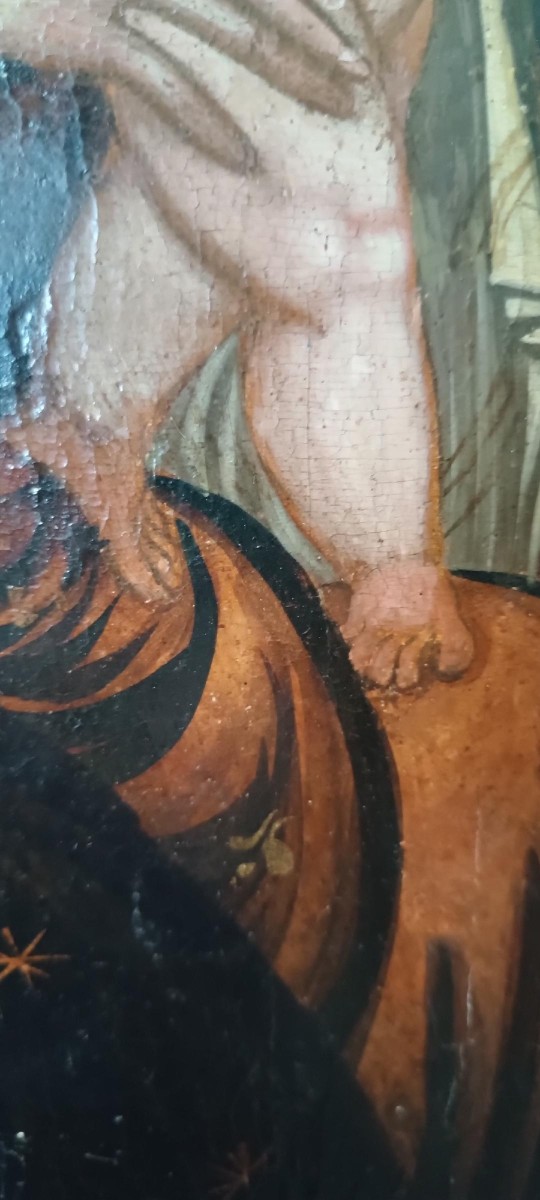
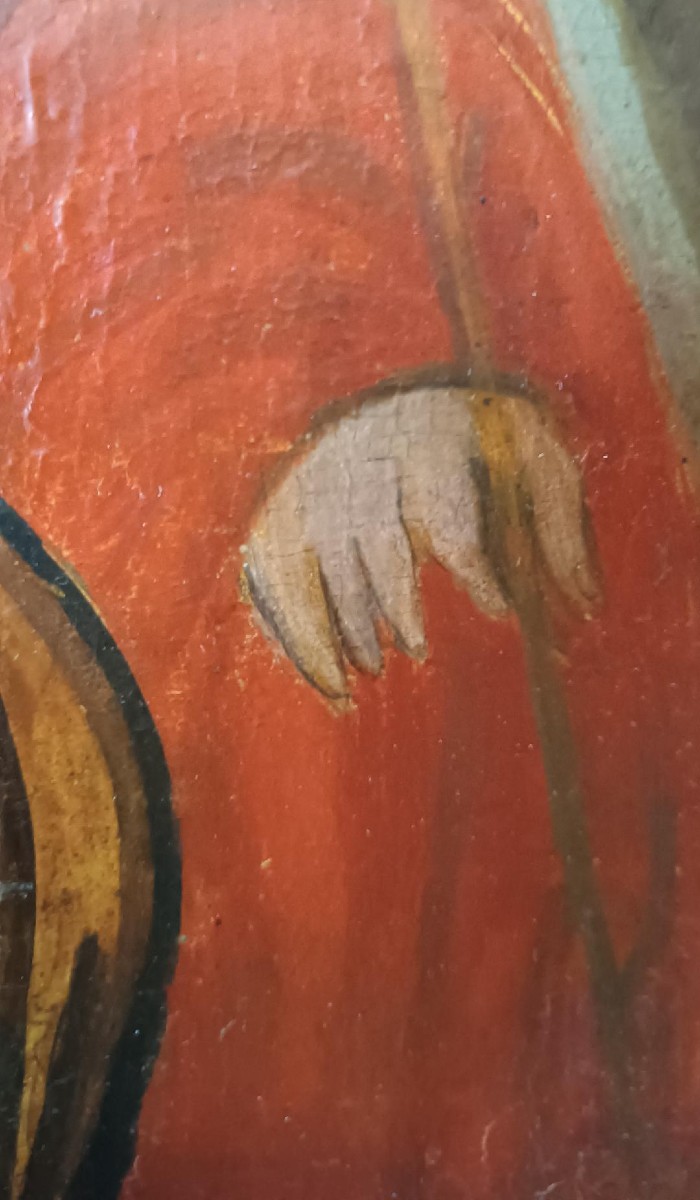
The panel features pictorial restorations, especially the feet of Baby Jesus and Joseph's hand.
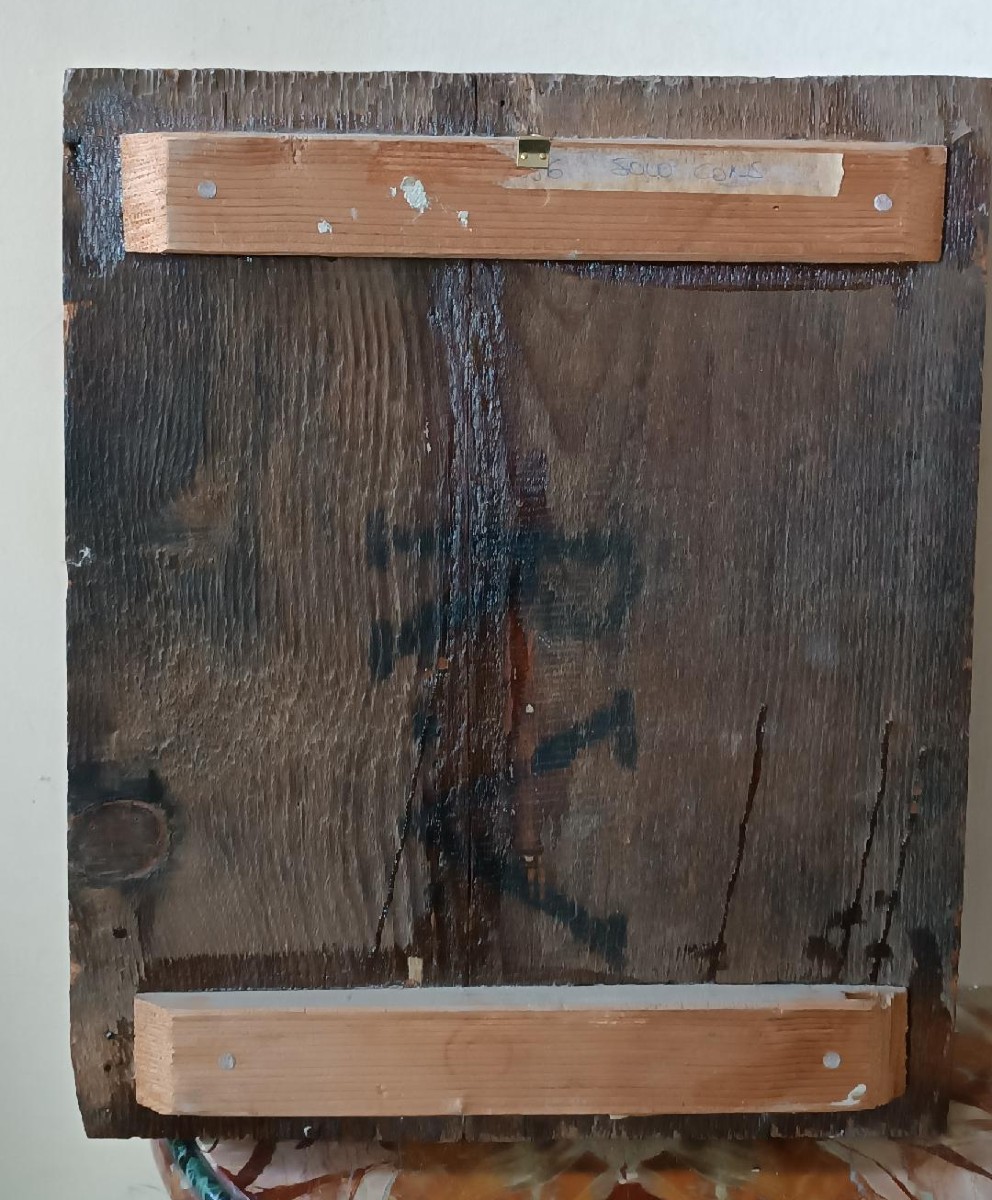
SIZE: H. 52 CM - W. 43.5 CM - THICKNESS: 1.5 CM
Cretan Venetian School dating back to the 16th century.
The Cretan-Venetian (or Post-Byzantine) school is a pictorial movement that flourished in Crete under the rule of the Serenissima (1204-1669), characterized by the fusion of Byzantine icons and Venetian Renaissance influences. This production, active between the 15th and 17th centuries, blends Eastern tradition with Italian colors and volumes.
Iconography: Developed between the late 15th and 17th centuries, with Crete as its driving force.
Style: Fusion of Eastern tradition (gold background, hieraticism) and Venetian stylistic modules.
Themes: Virgin Hodegetria, Glikophilousa, Galaktotrophousa.
Technique: Mainly tempera on panel, with influences from Venetian painting (often with intense colors and highlights).
Artists: The Cretan-Venetian context produced painters who combined the two artistic worlds.
The works of this period represent a unique artistic language, born from the absorption of Venetian stylistic innovations by Orthodox artists working on the island.
The panel features pictorial restorations, especially the feet of Baby Jesus and Joseph's hand.
SIZE: H. 52 CM - W. 43.5 CM - THICKNESS: 1.5 CM
1 200 €
Period: 16th century
Style: Renaissance, Louis 13th
Condition: Excellent condition
Material: Oil painting on wood
Reference (ID): 1711567
Availability: In stock
Print