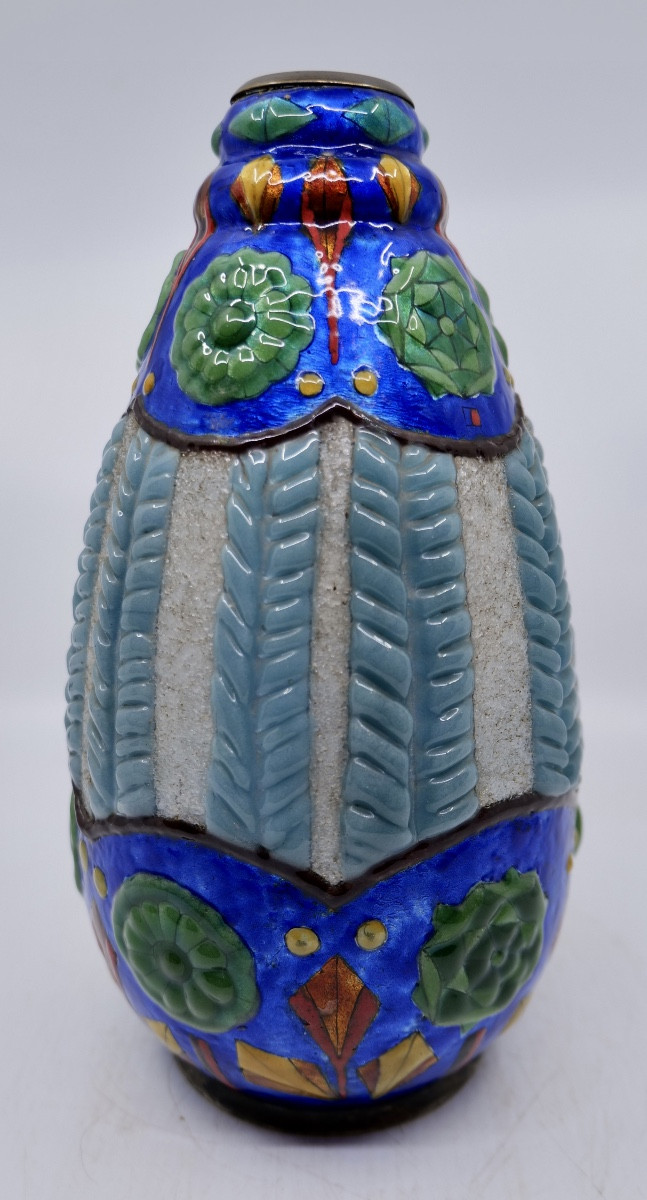


Jules Sarlandié Vase (1874 - 1936) - Large Shell Vase In Enameled Brass - Circa 1925 - Limoges
Artist: Jules Sarlandié (1874 - 1936)
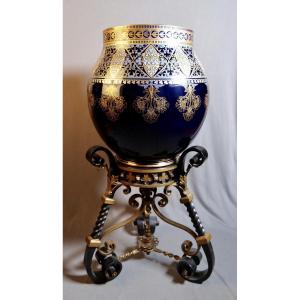
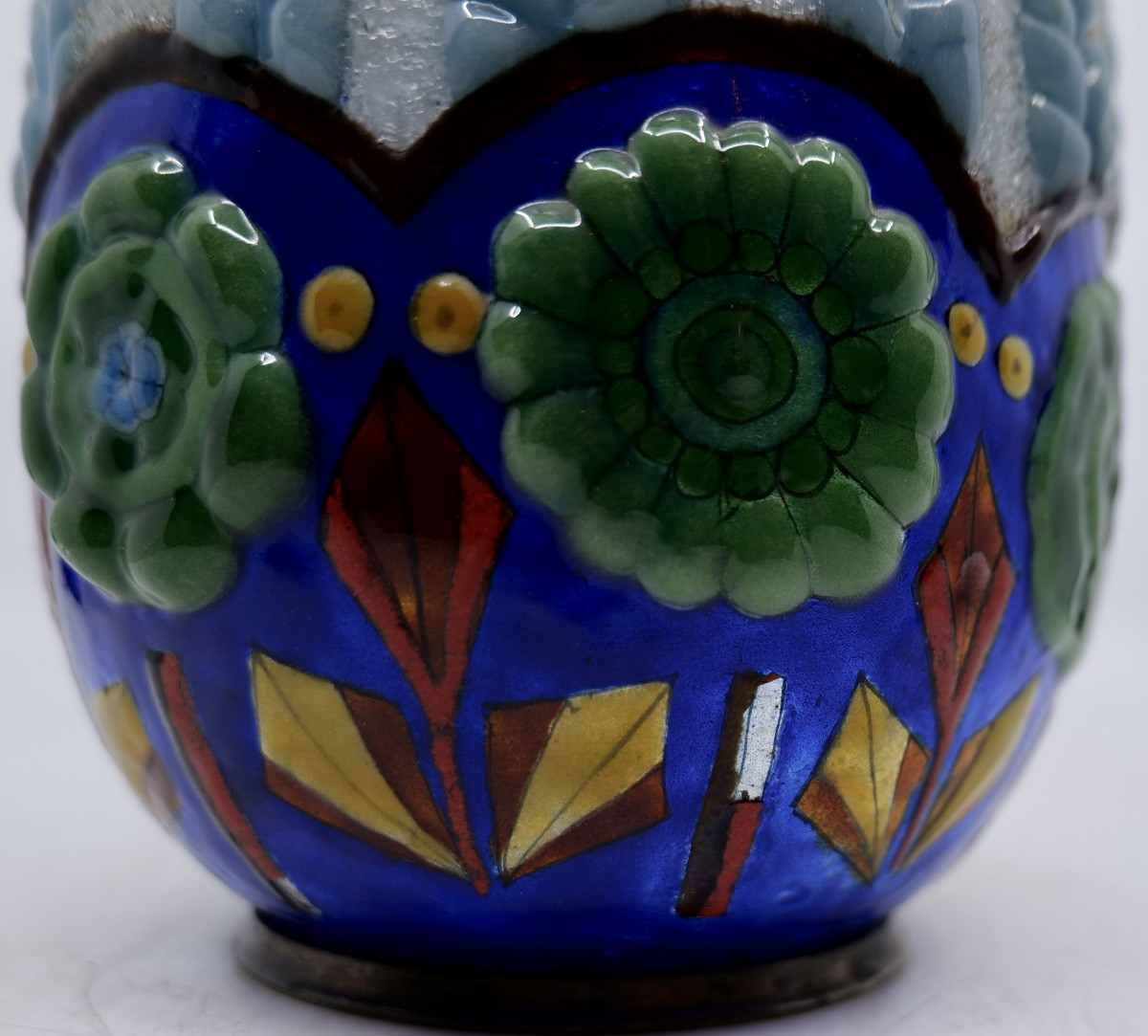
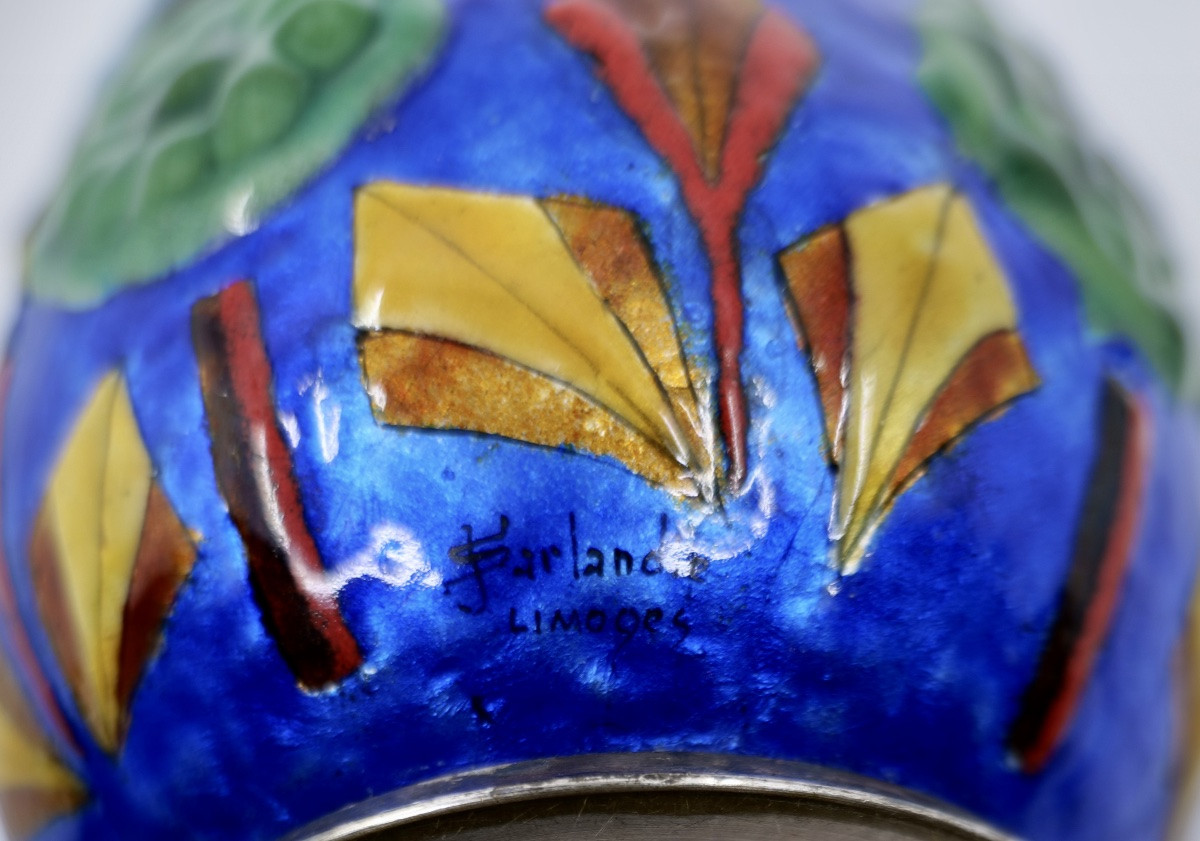
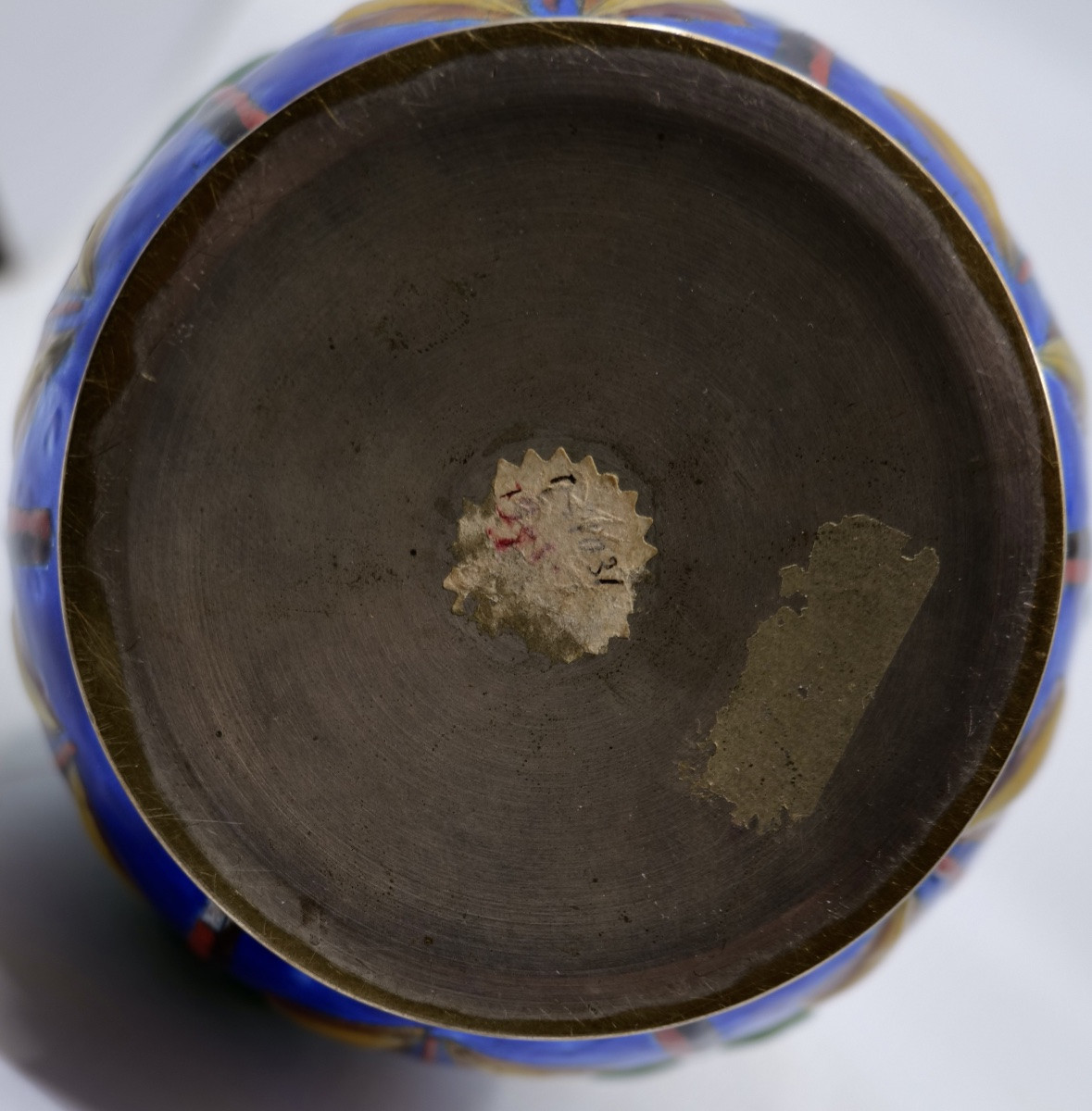
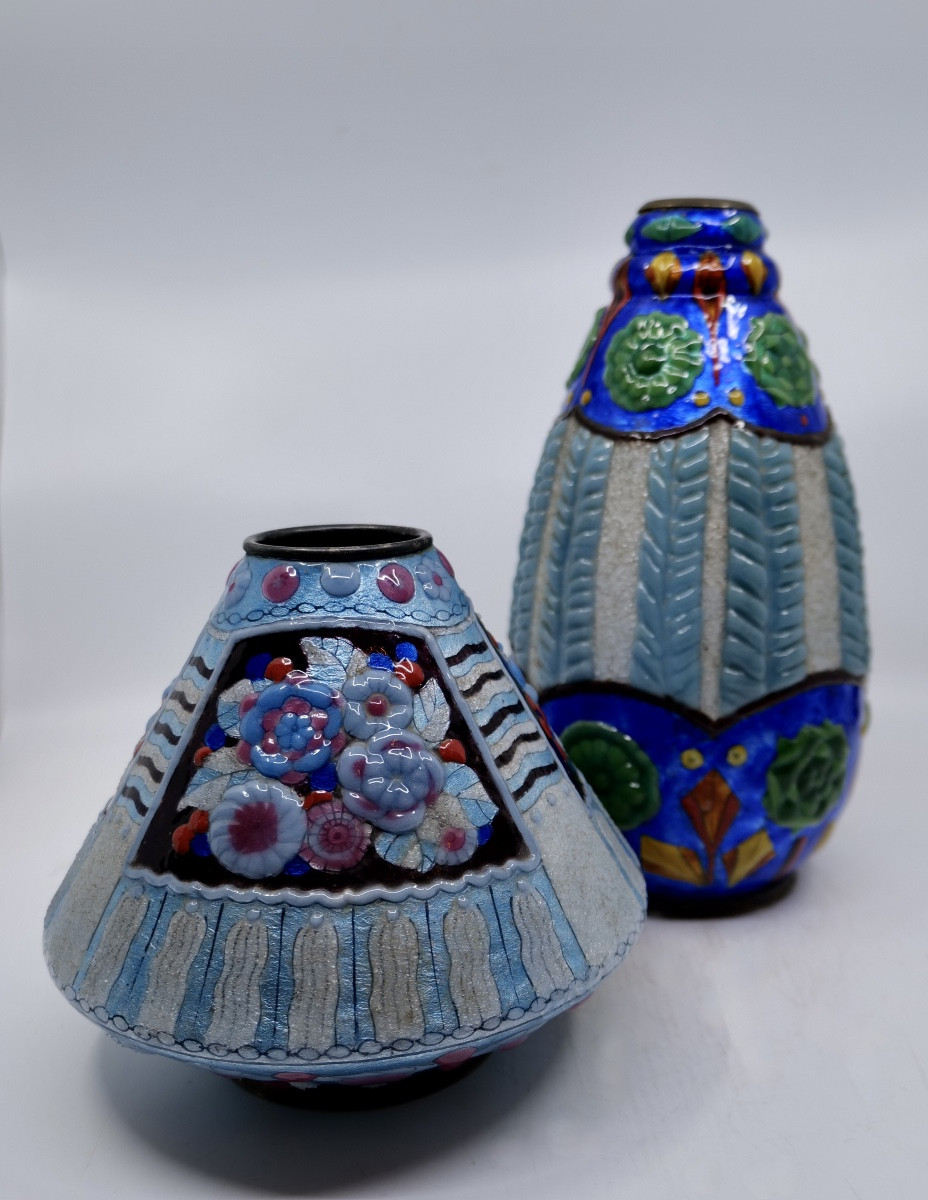
Jules SARLANDIE (1864 - 1936) in Limoges. Very rare shell-shaped vase resting on a foot with a stepped neck. Brass piece with a continuous decoration of vertical bands and highly stylized flowers in reserves towards the base and neck, executed in translucent and opalescent enamels on a silver foil background, partially colored blue, green, red, orange, and turquoise. Good overall condition. Two small losses, however (see photograph). Circa 1925. Signed J. SARLANDIE (with intertwined J&S) and inscribed Limoges near the base. Height: 28 cm. Provenance: - private collection, Alsace. This very rare shell-shaped vase by Jules Sarlandie, made around 1925, is a particularly refined example of the excellence of Limoges enameling at the beginning of the 20th century. Signed J. SARLANDIE—with the intertwined J&S monogram—and marked Limoges near the base, it unequivocally affirms its place within the great enameling tradition, while revealing a distinctly Art Deco sensibility. The so-called "shell" shape rests on a discreet foot and rises into a curvaceous and compact silhouette, punctuated by a stepped neck that accentuates the overall verticality. This volumetric architecture reflects a search for balance between stability and slenderness, typical of the 1920s, when the stylization of natural forms tended towards a measured geometrization. The brass piece serves as a support for a swirling decoration of remarkable chromatic richness. The background, partly composed of silver foil, creates an internal shimmer that is magnified by the translucent and opalescent enamels. The dominant tones—deep blue, luminous turquoise—converse with green and orange accents, producing a vibrant contrast. Vertical bands, alternating between smooth areas and slightly granular textures, structure the body and reinforce the vase's upward tension. The reserves near the base and neck feature a decoration of highly stylized flowers with simplified petals and almost geometric forms. These motifs, inscribed within circular or oval cartouches, demonstrate a synthetic decorative language, akin to the decorative explorations of Art Deco, where nature is transposed into ornamental symbols. The use of opalescent enamel lends the floral elements a luminous softness, while the underlying silver foil intensifies the depth of the colors. The technical quality is remarkable: the enameled surface, with its dense and homogeneous sheen, reveals a perfect mastery of successive firings and layering. Any imperfections or restorations, common on this type of object subjected to thermal stress, do not detract from the overall aesthetic appeal, whose decorative integrity remains intact. At 28 cm tall, this vase stands out as a showpiece, designed as much to impress with its precious material as to affirm the prestige of the Sarlandie firm in Limoges. It fully illustrates the transition between the naturalist heritage of the late 19th century and the modernized decorative impulse of the 1920s, where color, light, and stylization unite in an elegant synthesis. This vase thus constitutes a rare and significant example of Jules Sarlandie's production, embodying the technical refinement and decorative aesthetic of Limoges enamel at its zenith between the two World Wars.
3 950 €
Period: 20th century
Style: Art Deco
Condition: En l'etat
Material: Enamel
Diameter: 15cm
Height: 28cm
Reference (ID): 1710923
Availability: In stock
Print