THIS OBJECT WAS SOLD
Joseph Levin (1894-1979), Russian: "composition," Abstract Watercolor, New York Period, Dated 1967

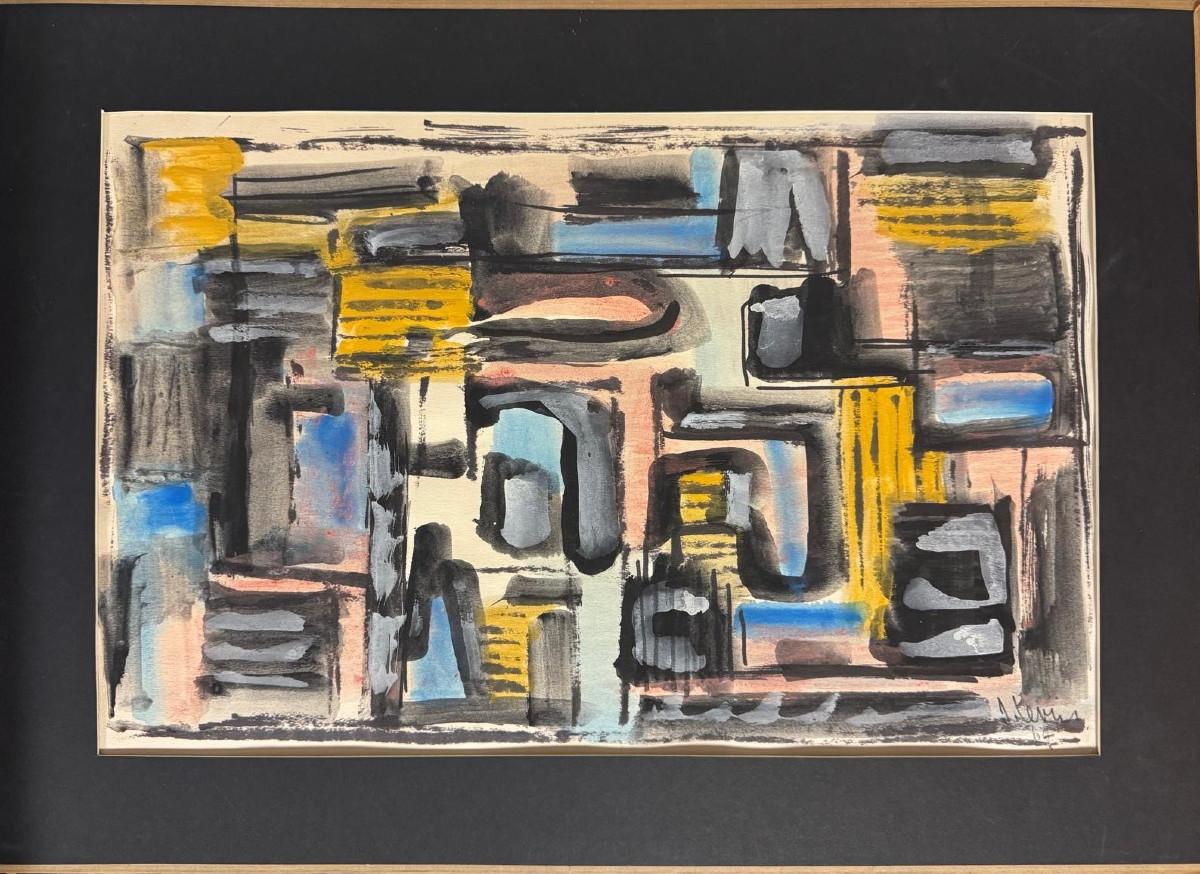
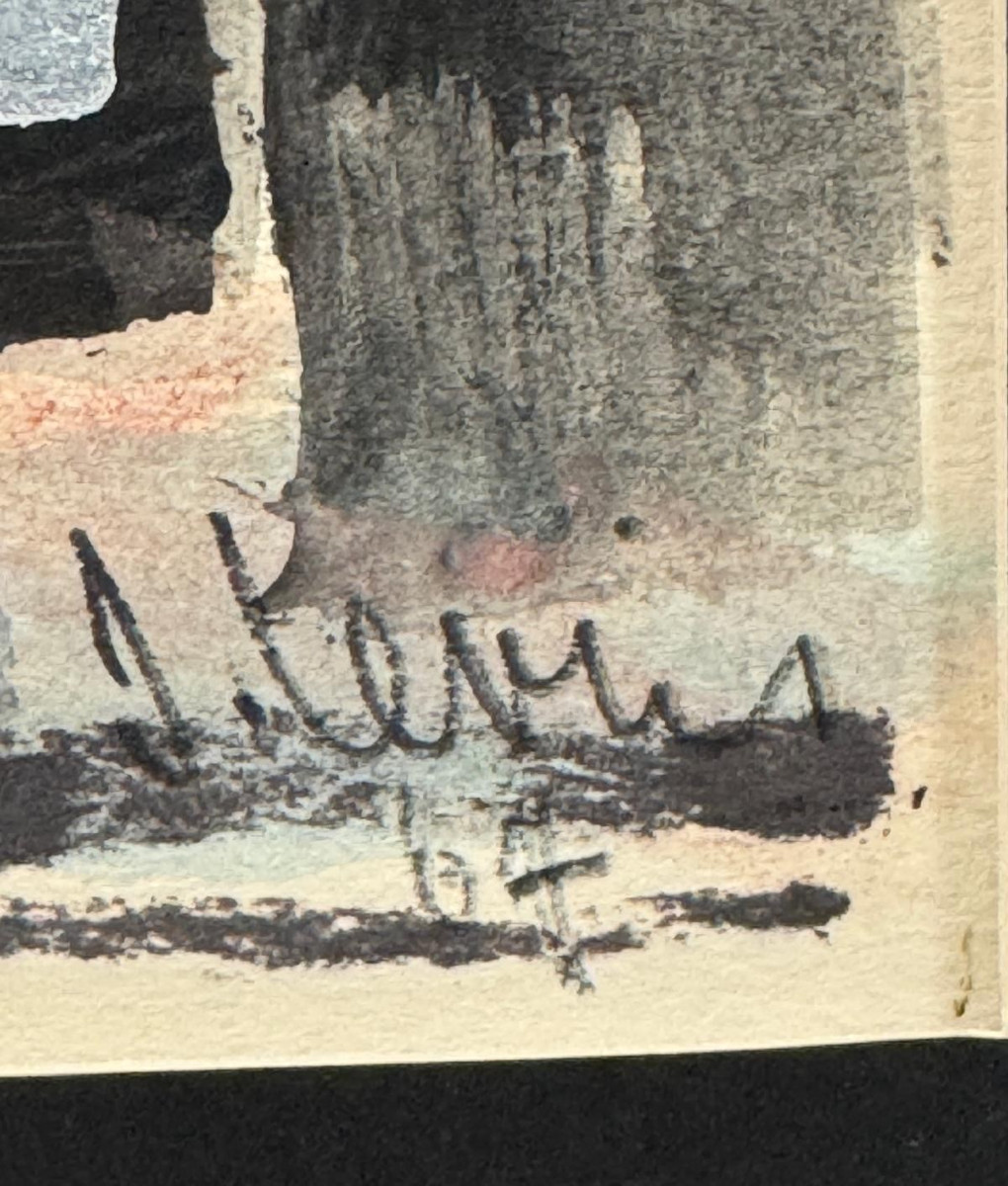


Joseph Levin (1894-1979), Russian: "Composition," abstract watercolor, signed lower right, New York period, dated 1967. Joseph Levin lived not just through the 20th century, but through the history of the 20th century. He began his life between the heady, oligarchic Saint Petersburg and the exuberant, colorful anthill of New York. His yearning for utopia led him to take part in the communist revolution in Russia, where, amidst the intellectual ferment, he contributed to the development of a new society founded on concepts that broke with those of the time. After a life dedicated to this struggle, he found himself, as was the case for many theorists, at odds with the political class and gravitated towards France in the 1920s and 30s. There, the artistic effervescence reigned, making the "School of Paris" the world center of art. Levin found his place in this exceptional milieu, where he mingled with modernist thinkers from all backgrounds. We know that the Russian and Jewish communities played a leading role. In 1935, with the rise of extremism, Levin, like many other artists, set sail for America. There, he reunited with numerous Eastern European Jews who understood that the Old World was on the verge of being consumed by its old demons and that the future now belonged to the New World. This rupture precipitated a transformation: like the "New York School," he embraced abstraction. As we can see, Levin's trajectory mirrors the history of the 20th century, especially since, at the end of the 1960s, in the midst of the anti-communist "witch hunt" in the United States, he returned to settle in France. His stylistic conclusion, a kind of ultimate utopia, would be "Super-Consciencilism," a new "ism," somewhat loaded in its terminology, but which defines a personal approach to art based on the summation of key experiences in modern art. We must reread Joseph Levin to hear the message that the 20th century and its magnificent artistic epic are sending us.
Explore similar pieces and discover your ideal find:
Watercolors