



19th Century Paris Porcelain Cache-pot With Hand-painted Flowers
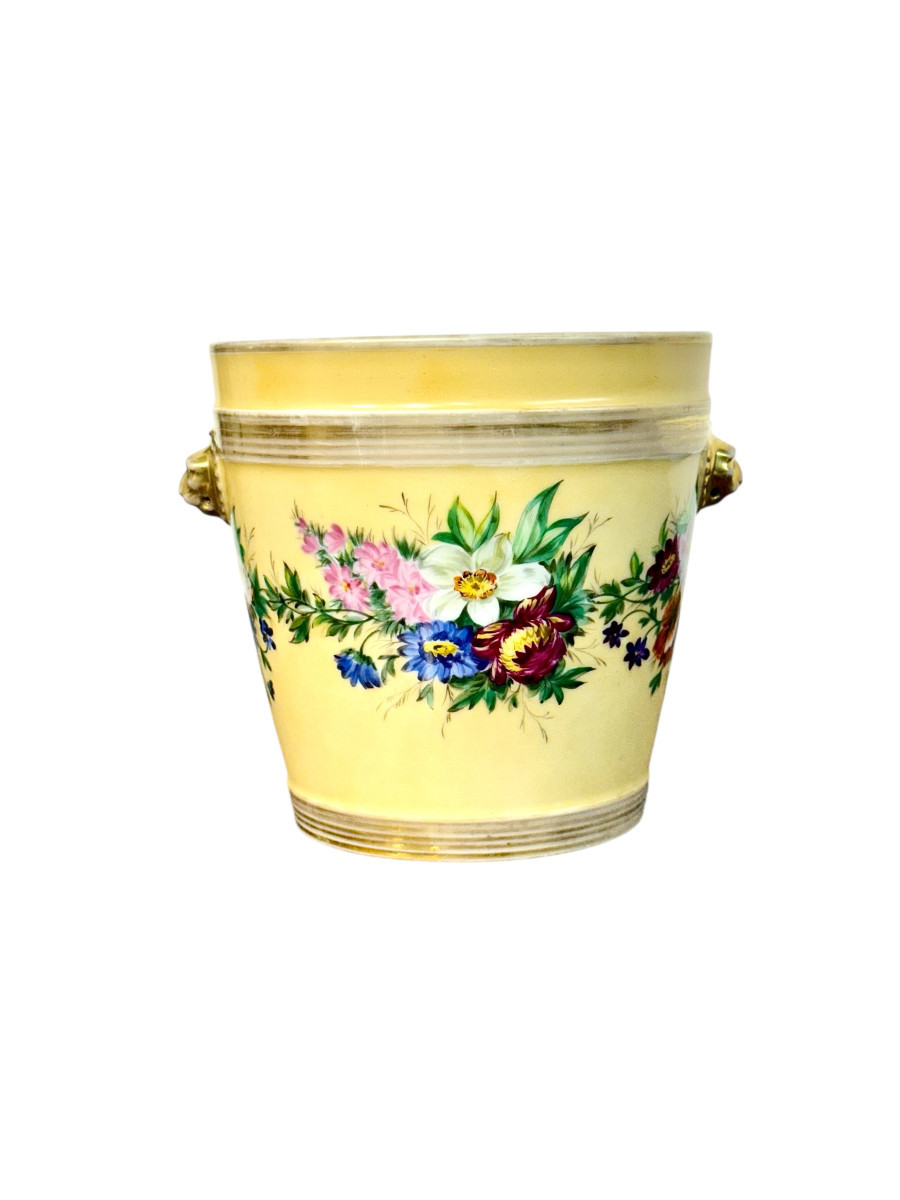
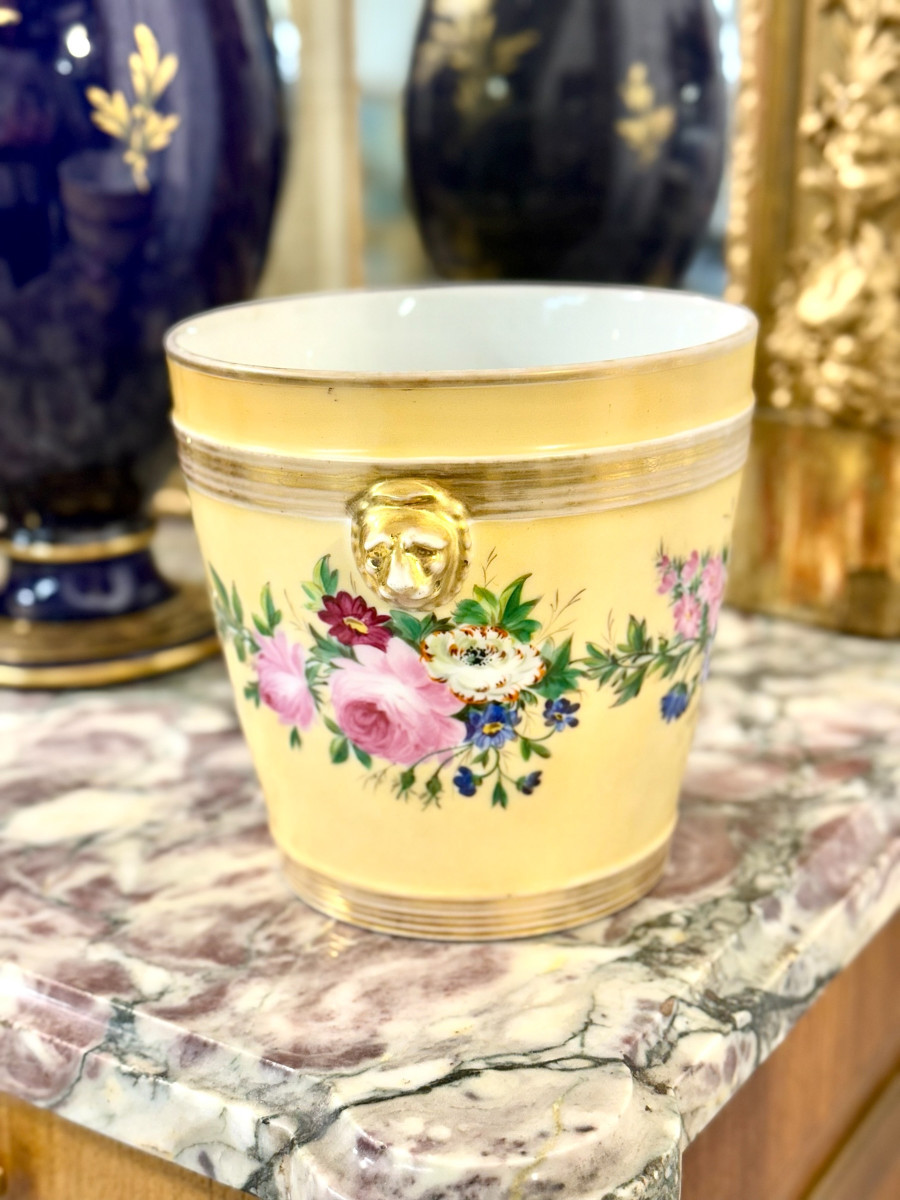
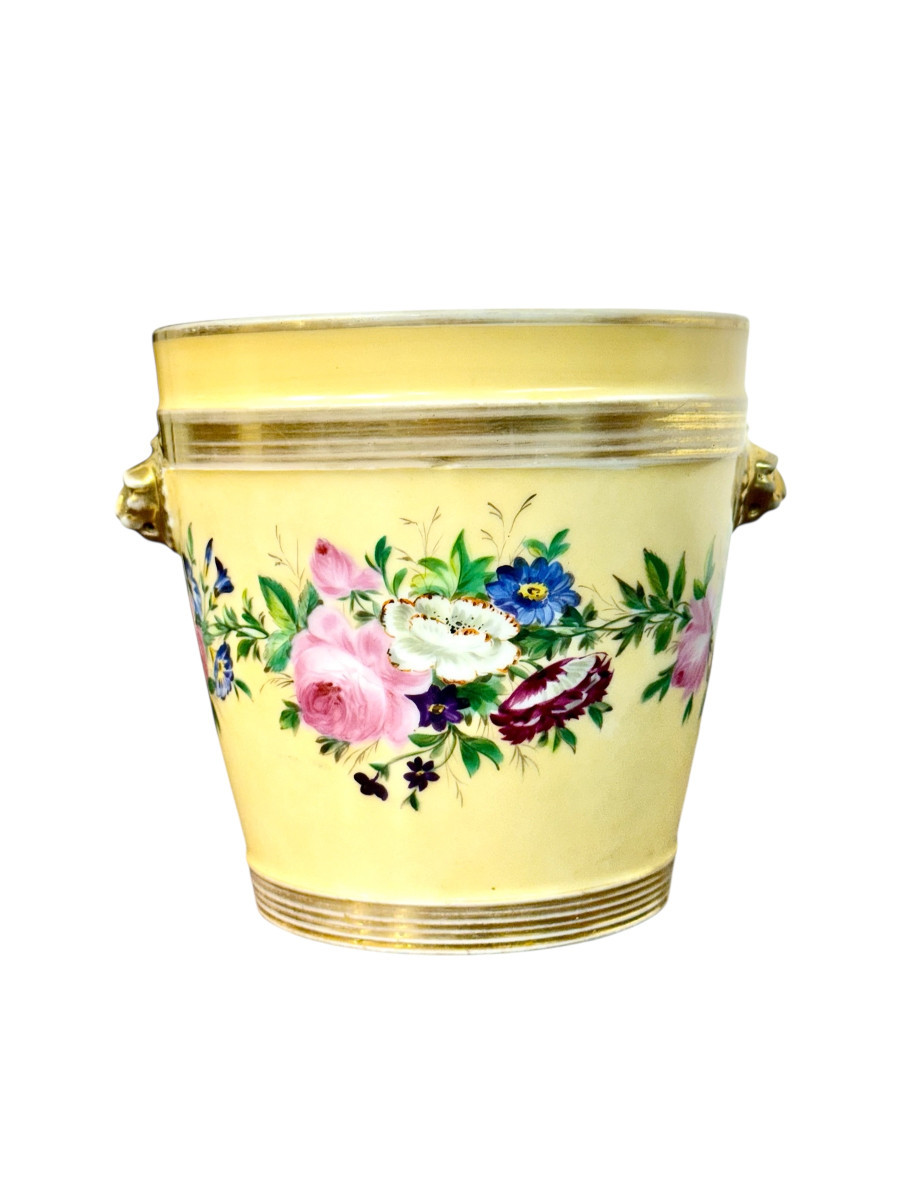
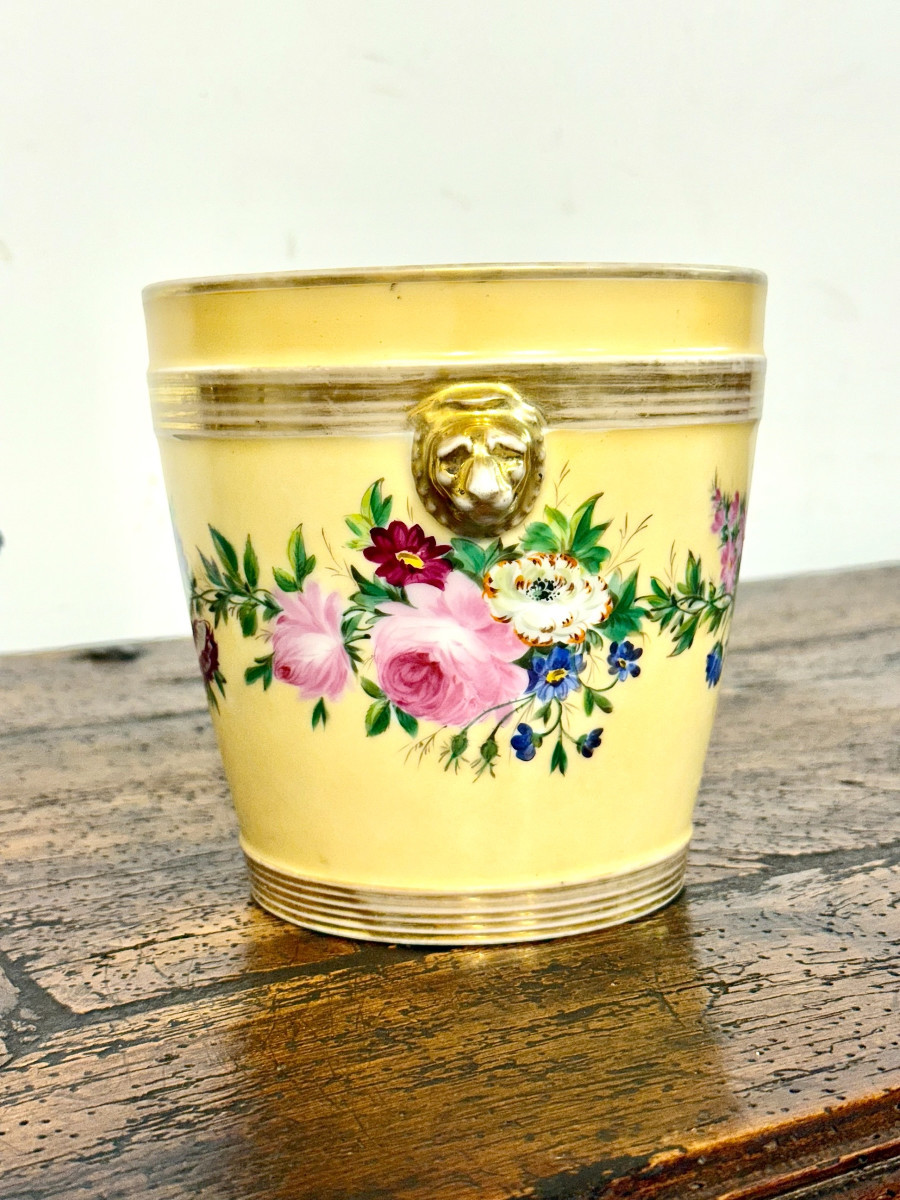
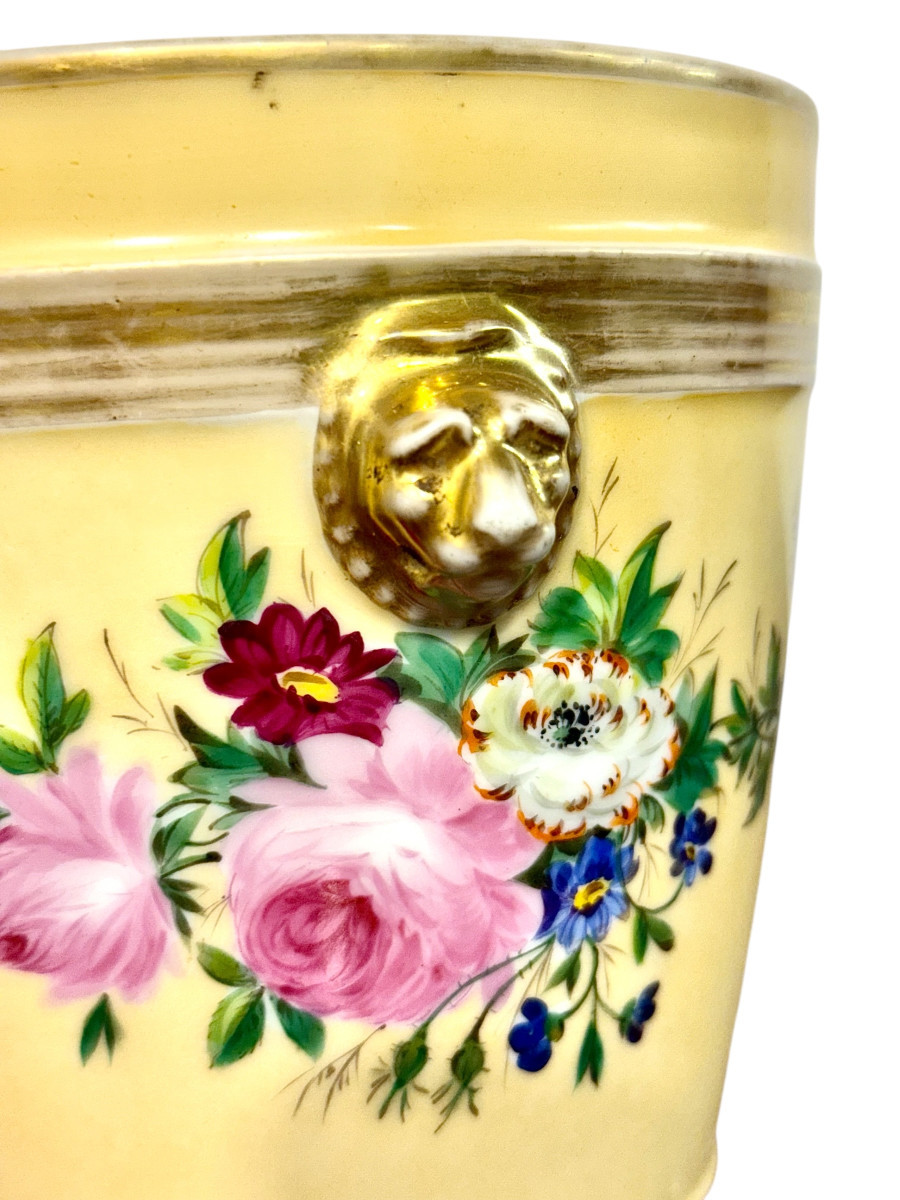
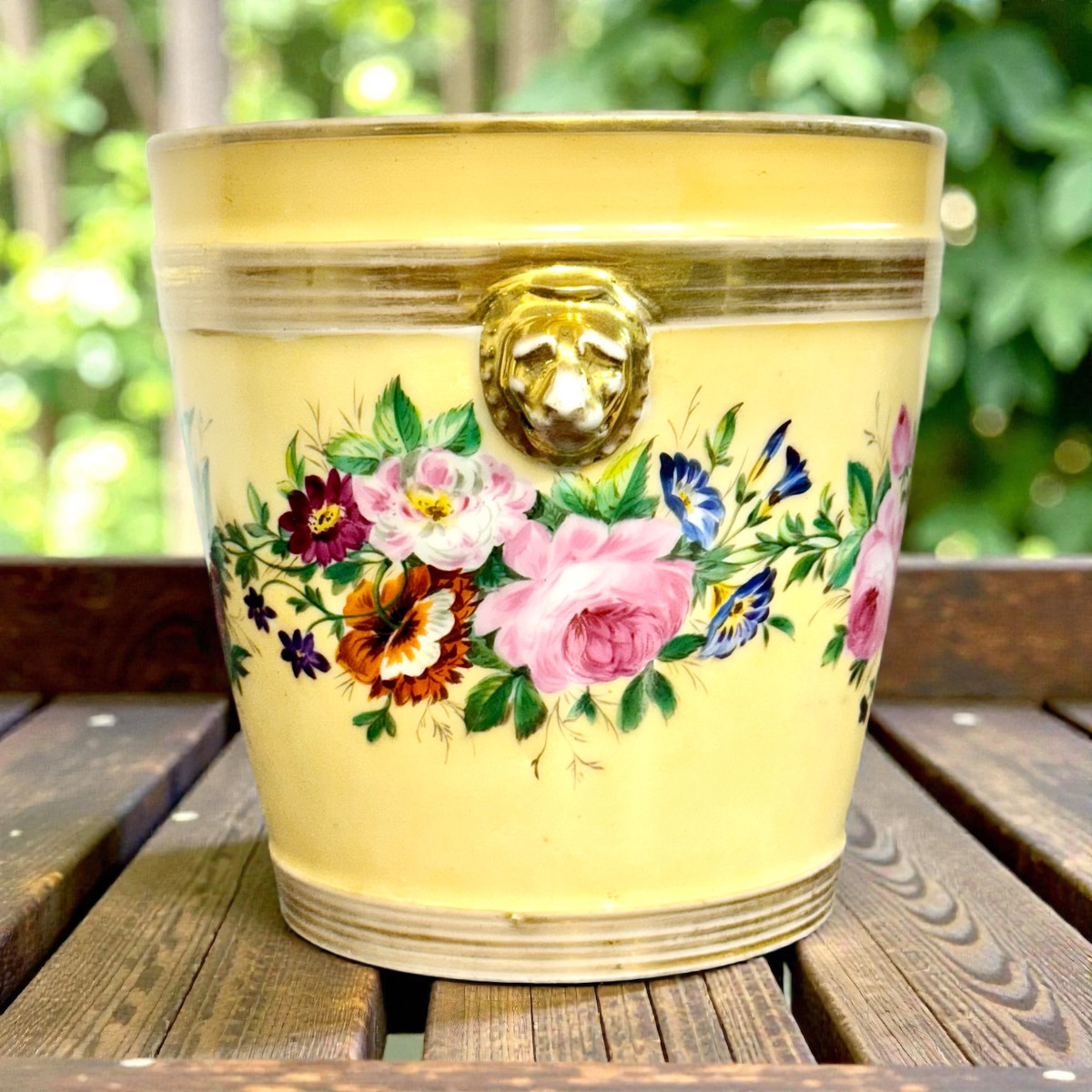
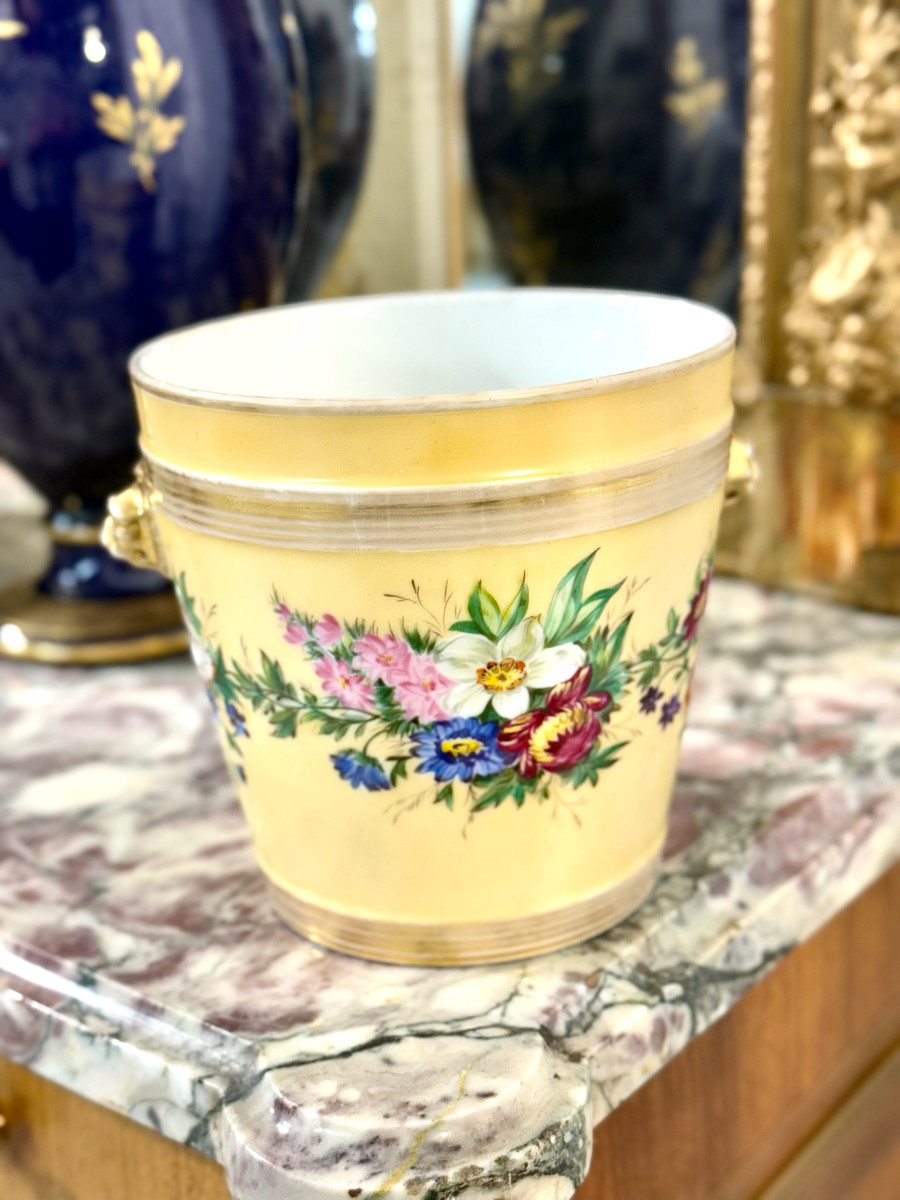
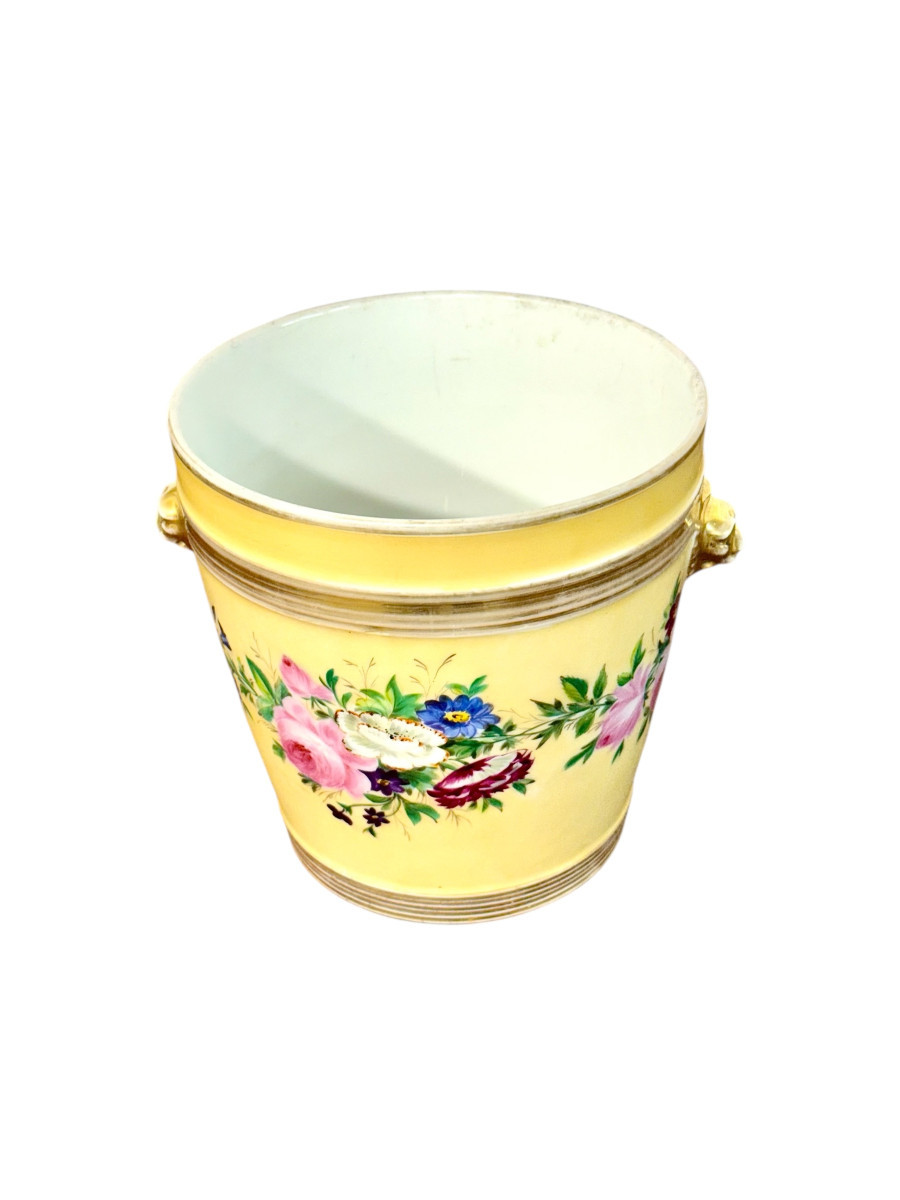
This elegant cache-pot is crafted in Paris porcelain and dates to the mid–19th century, circa 1850–1870. It features a refined baluster form resting on a subtly stepped base, characteristic of decorative porcelain produced in Paris workshops during this period. The soft buttery yellow ground provides a warm and luminous backdrop for the finely hand-painted floral garlands that encircle the body, composed of roses, peonies, and delicate wildflowers rendered in vibrant yet harmonious tones.
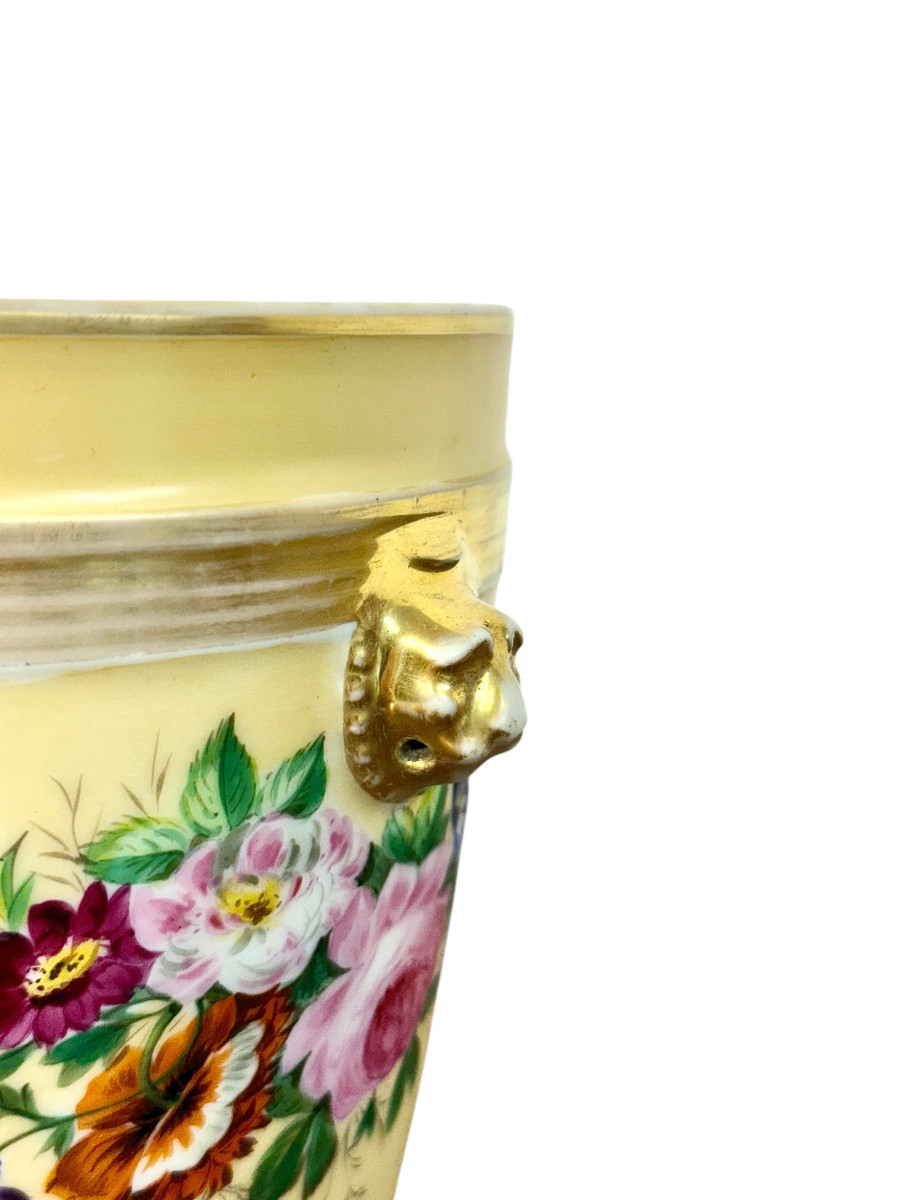
The decoration is executed with remarkable finesse, displaying the painterly quality and attention to detail associated with high-end Paris porcelain. Gilded horizontal bands accent the upper rim and base, adding a discreet touch of elegance and framing the composition beautifully. The cache-pot is further enhanced by two applied lion mask handles, richly gilded and finely modeled, lending both sculptural interest and a neoclassical influence.
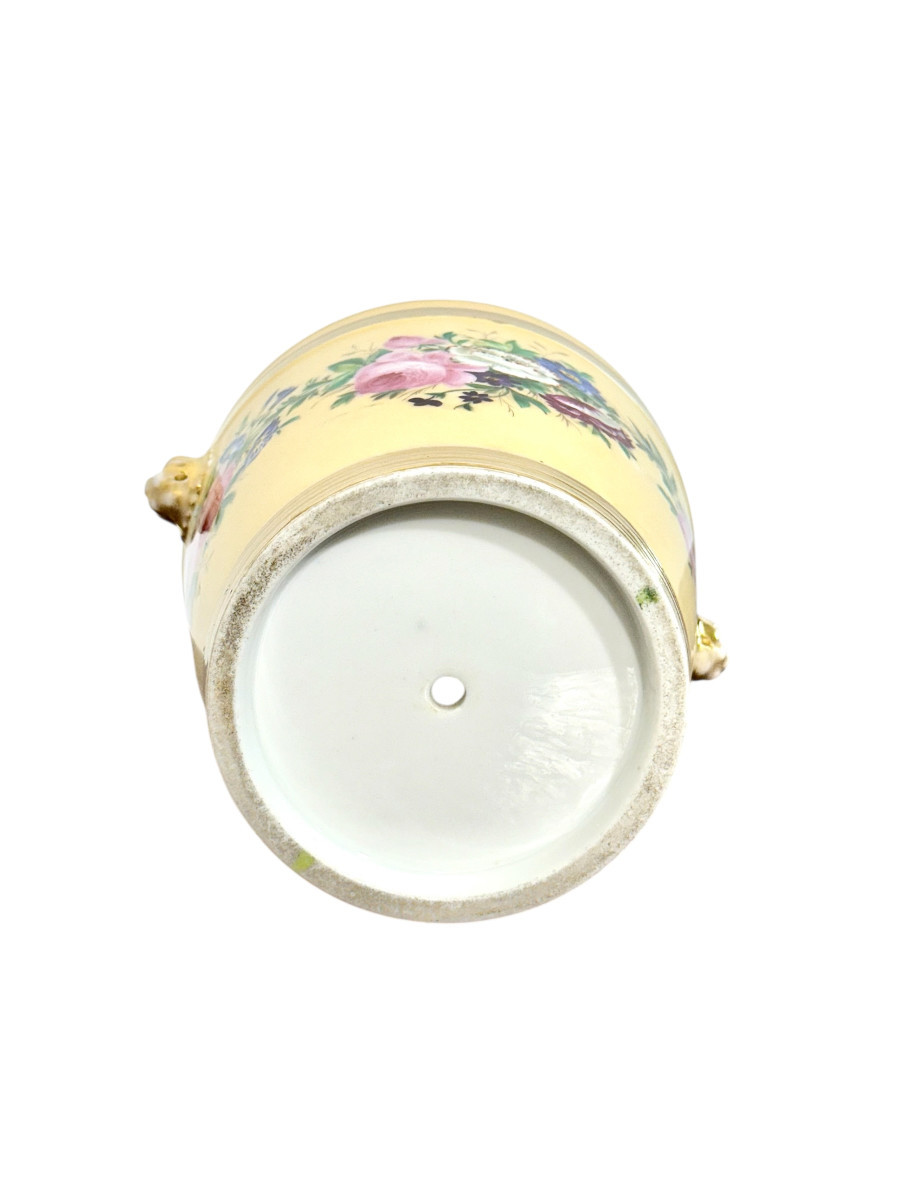
The interior is glazed in white and pierced with a central drainage hole, confirming its intended use as a cache-pot rather than a simple decorative vessel. This piece reflects the refined taste of the 19th century, when Paris porcelain was highly sought after for both grand interiors and intimate decorative settings.
A charming and versatile object, ideal for displaying plants or as a decorative accent in a classic or eclectic interior.
Period: 19th century
Style: Louis 16th, Directory
Condition: Good condition
Material: Porcelain
Diameter: 19 cm
Height: 15 cm
Reference (ID): 1699554
Availability: In stock