THIS OBJECT WAS SOLD
Ancient Roman Unguentarium, Iridescent Blown Glass, 1st–2nd Century
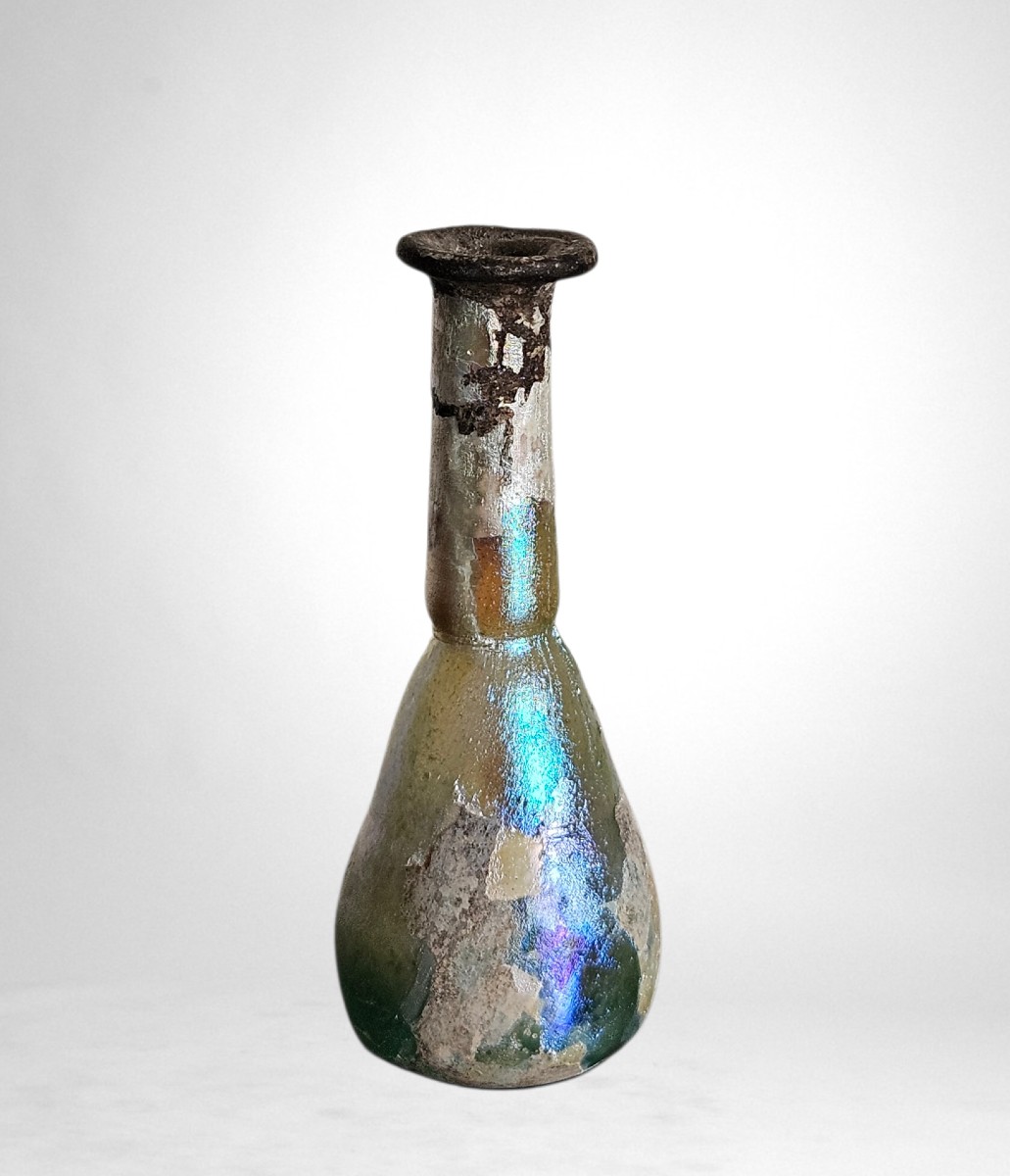
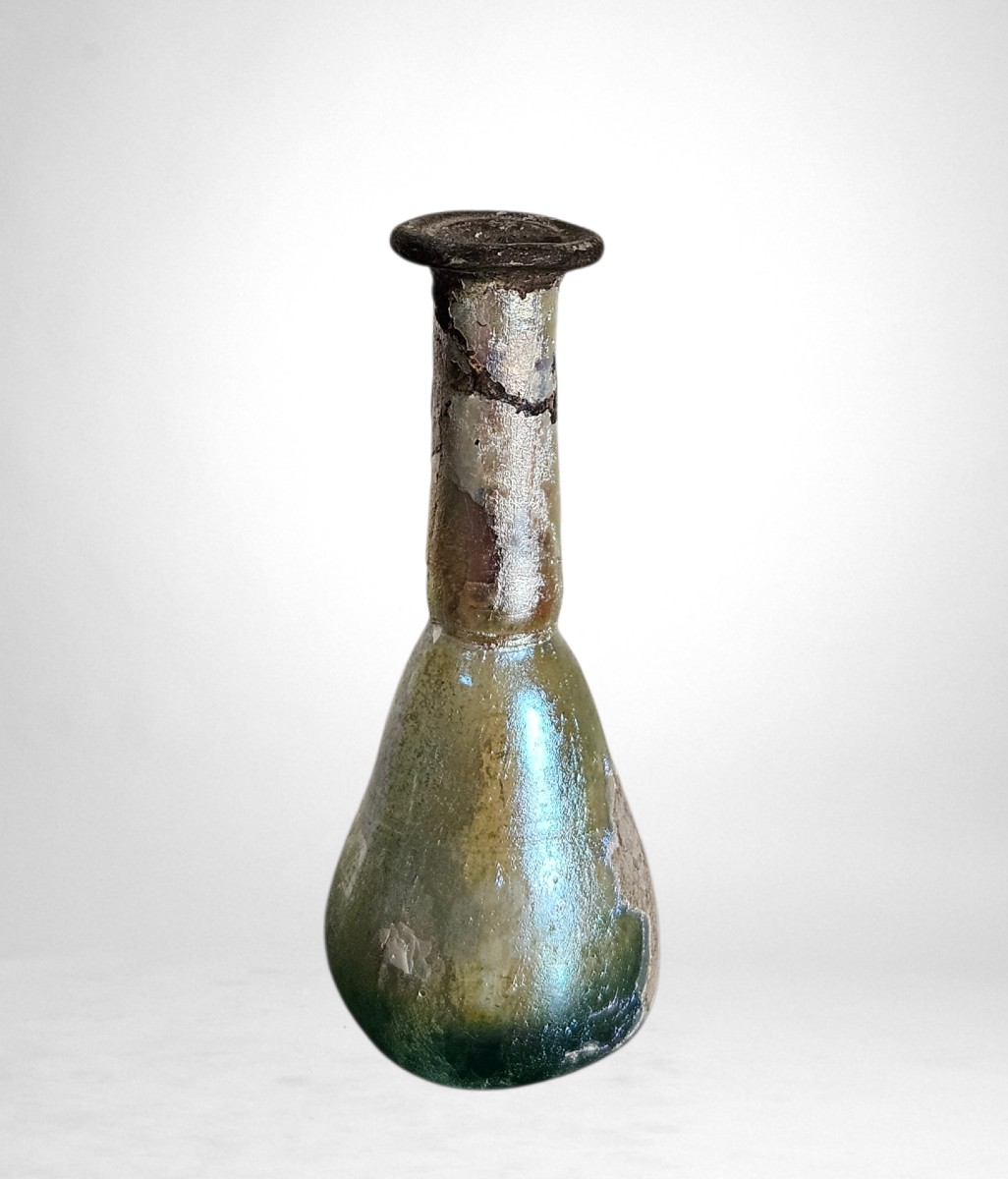
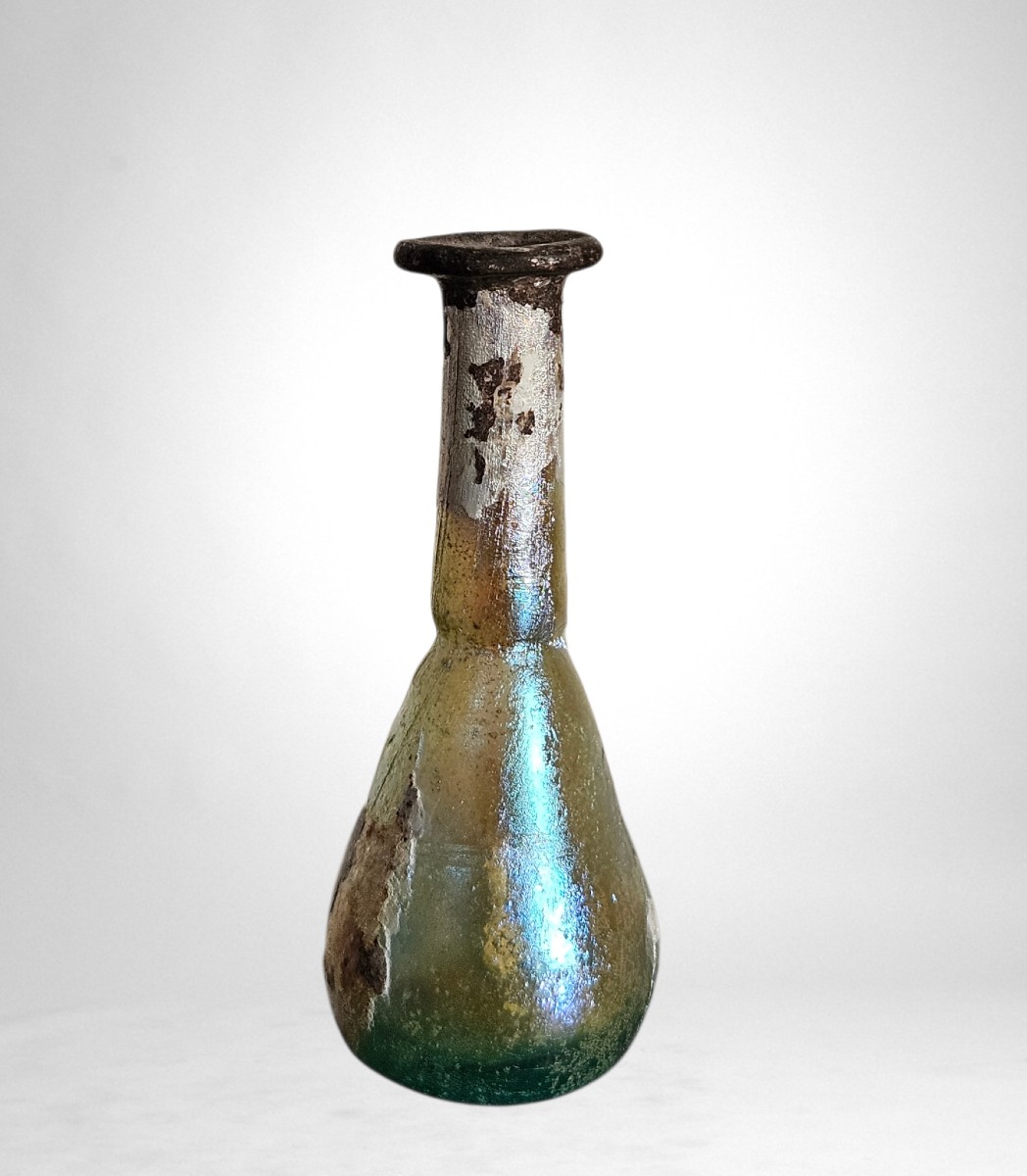
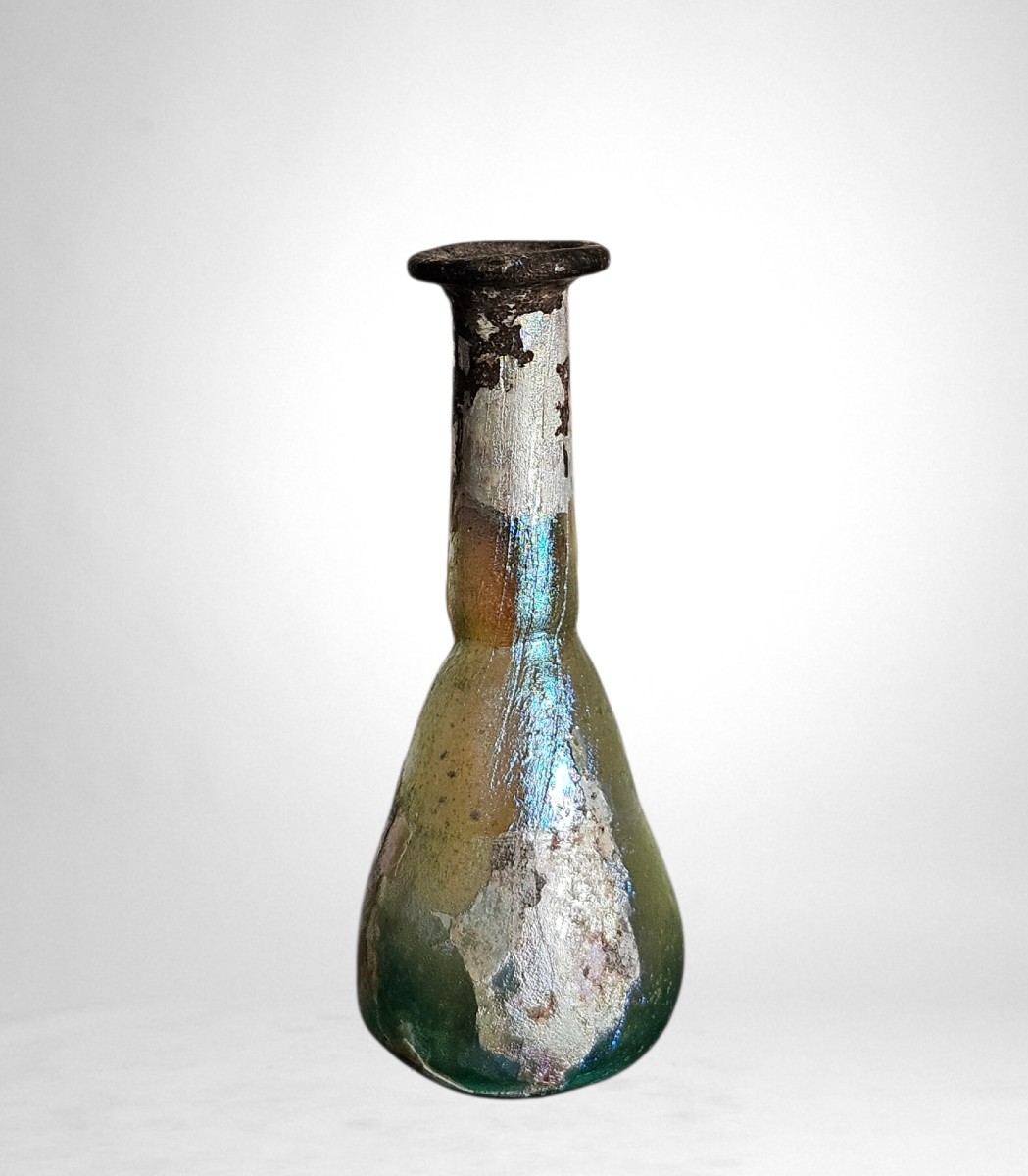

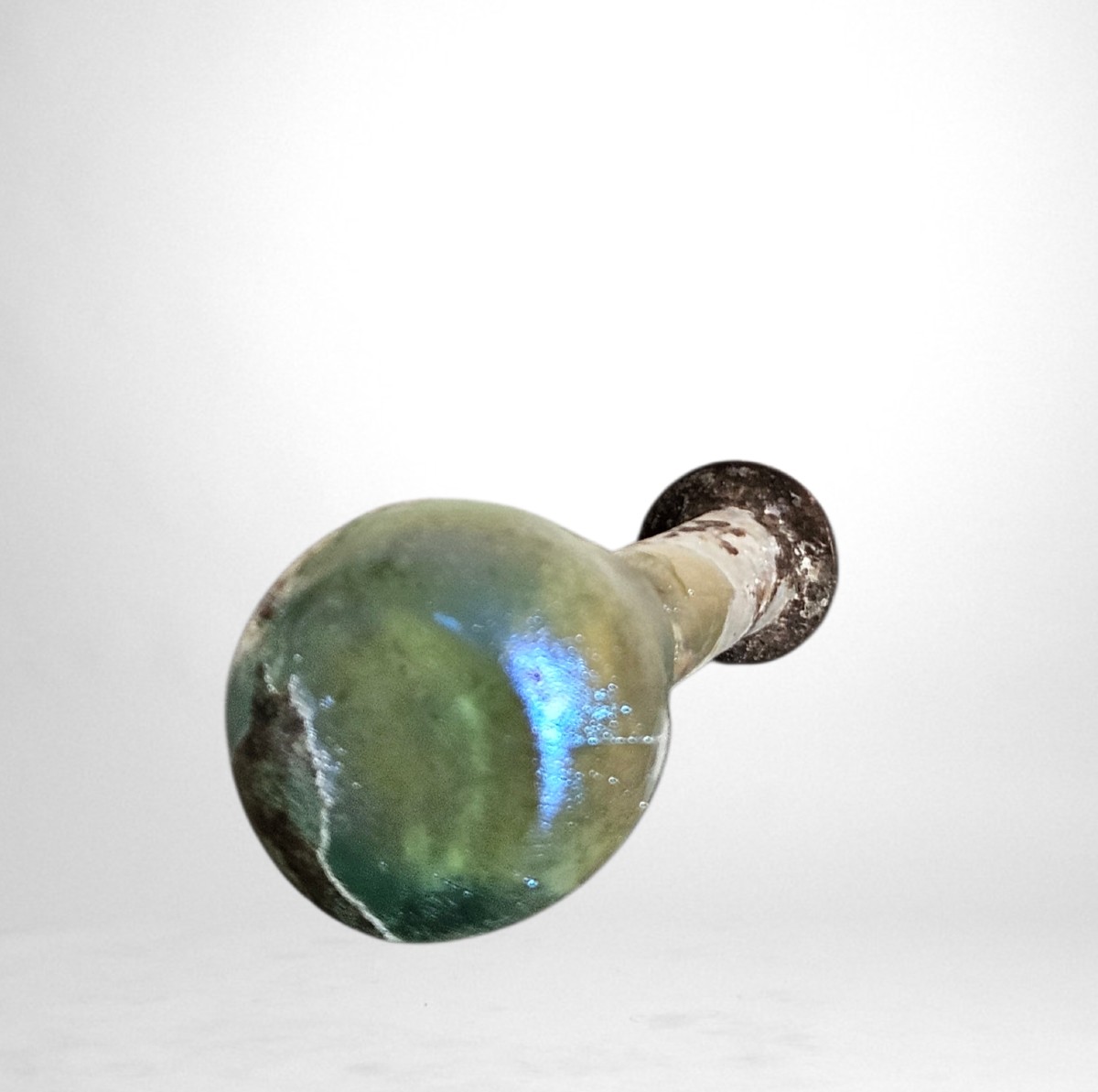

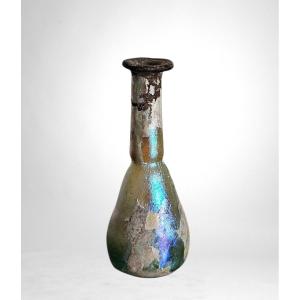


A blown glass balsamarium with an elongated, pear-shaped body, rising from a rounded base to a slightly constricted neck. The slender, cylindrical neck terminates in a flat, regularly shaped rim. The translucent glass displays beautiful pearly and multicolored iridescence, highlighting the body's contours. The upper part of the neck is partially covered with ancient calcareous concretions. The overall effect is an elegant and balanced silhouette, characteristic of Roman balsamaria from the Imperial period. Mediterranean Basin, Roman period, 1st–2nd century AD. Height: 9.1 cm Width: 3.5 cm Provenance: former Parisian collection following an inheritance, Drouot auction, Thierry de Maigret auction house, Paris. Sold with a certificate of authenticity from expert S. Reynes and an invoice from Galerie Ocarina.* Shipping costs upon request. "From the 1st century AD onwards, the widespread use of blown glass facilitated the production of small containers for personal hygiene and body care. Balsamaria of this type were used to hold perfumes, scented oils, balms, or medicinal preparations—essential elements of hygiene and cosmetic practices in the Roman world. The pear shape, combined with a narrow neck, allowed for optimal preservation of precious substances while facilitating measured use. These objects illustrate the importance placed on personal care and the technical mastery of glassmaking in imperial Roman culture."
Explore similar pieces and discover your ideal find:
archeology